By Brian Mugenyi
mugenyijj@gmail.com

Ssembabule: The Kampala International University law graduate, Mr. Geoffrey Tumusiime, a lawyer and emerging political voice in Ssembabule District, has called for far-reaching reforms in the district, saying the future of Ssembabule will depend on leadership that puts citizens, justice and economic transformation at the centre of governance.

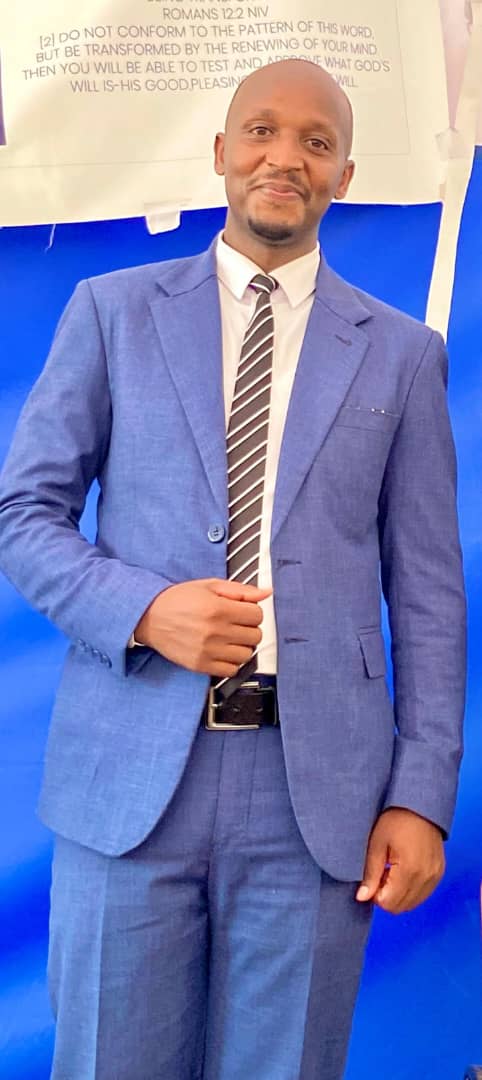
Speaking during an exclusive interview on Sunday, 23rd, August 2026, Tumusiime clad in blue suit, who is eyeing the Lwemiyaga parliamentary seat, says his political ambition is not simply about occupying an elected office but about becoming part of a new generation of leaders seeking to reshape Ssembabule through improved service delivery, stronger community awareness, agricultural transformation, youth empowerment and respect for the rule of law.

He has also appealed to President Yoweri Museveni to intervene in conflicts and insecurity in Lwemiyaga, arguing that communities cannot prosper when disputes and insecurity continue to cast a shadow over their livelihoods.

“If possible, I call upon President Museveni to intervene in the conflicts of Lwemiyaga and the insecurity in Lwemiyaga,” Tumusiime said.
His intervention call comes as he seeks to build a political profile in a constituency whose politics have for years been strongly associated with former Member of Parliament Theodore Ssekikubo.
From Ssekikubo admirer to political challenger
Tumusiime’s political story carries an unusual twist.
The politician he now hopes to challenge was once his role model.

As a young man growing up in Ssembabule, Tumusiime admired Ssekikubo’s confidence, public speaking and ability to engage political questions.
“He was open, articulate and most of the time I felt that Ssekikubo would lead us into the Promised Land as the people of Ssembabule,” Tumusiime recalls.
But time, he says, has changed his political perspective.
“I grew up with political ambitions and, as a young man, Ssekikubo was my role model. He was such a kind man, hardworking, but his nerve on the constituency has drastically changed,” he says.
Tumusiime now wants to move from watching politics to actively shaping it, presenting himself as part of a younger generation that believes it can offer a different direction for Lwemiyaga and the wider Ssembabule District.
A lawyer with a reform agenda
Tumusiime’s reform argument is grounded in his legal training and his understanding of community development.
He is a graduate of the Law Development Centre and holds a diploma qualification. He is also a graduate of Kampala International University, where he pursued law, and is currently continuing his academic journey at the university.

His legal background, he says, has taught him that development without justice and public awareness can leave communities vulnerable.
“As a lawyer, creating community awareness and letting people embrace powerful leaders and standing where there is a need in the community welfare is important,” he says.
For Tumusiime, citizens must understand their rights, responsibilities and the government programmes intended to improve their livelihoods.
He argues that political leaders should not merely announce programmes but should follow them to the grassroots and ensure that ordinary citizens benefit.
Agriculture: Ssembabule’s sleeping giant
In the villages of Lwemiyaga, Tumusiime sees an economic opportunity that he believes has not been fully exploited.
Agriculture and livestock farming dominate the local economy, with many households depending on cattle, crop production and related businesses.
Tumusiime’s own upbringing has given him a personal connection to agriculture.
Born to David Ndengana and Jovans Kyonyunyu, he grew up in a family where his father was a cattle herder.
He says this background exposed him to both the opportunities and vulnerabilities of rural livelihoods.
“It is blindingly obvious that agriculture is the booming business in Ssembabule, much as the community is still struggling with infrastructure development such as roads and health centres,” he says.
He wants government agricultural programmes to be implemented more effectively so that farmers can move from subsistence production to commercially oriented agriculture.
For him, agricultural transformation must go hand in hand with better roads, markets, health facilities and access to information.
Land conflicts and social justice
Tumusiime also identifies land conflicts as one of the challenges holding back communities in Ssembabule.
He says citizens need greater awareness of the law and mechanisms through which they can seek justice.
He believes community sensitisation can reduce disputes while empowering citizens to participate more confidently in governance.
His argument is that the law should not remain confined to courtrooms and legal books but should become a practical instrument for protecting ordinary citizens.
This, he says, is where his legal background can make a difference.
Calling for presidential intervention
Tumusiime says the security situation and conflicts in Lwemiyaga require serious attention.
He has therefore appealed directly to President Museveni to intervene where necessary, arguing that presidential leadership could help calm tensions and restore confidence among communities.
“If possible, I call upon President Museveni to intervene in the conflicts of Lwemiyaga and the insecurity in Lwemiyaga,” he reiterates.
He says a peaceful environment is essential for farmers, traders, investors and young people to pursue economic opportunities.
A political journey that started at 18
Tumusiime’s political ambitions began when he was still a teenager.
At the age of 18, he wanted to contest for Parliament, but his mother, Jovans Kyonyunyu, advised him to first complete his education.
“You’re still young to involve yourself in politics. The doors are more open for you in business if you finish with studies,” Tumusiime recalls her telling him.
Rather than abandoning politics, he followed the advice to study.
His academic journey later opened the door to leadership.
At Kampala University, he served as guild president in 2016, gaining early experience in mobilisation, representation and leadership.
He later contested for guild leadership at the Law Development Centre, although he lost to Ivan Busulwa.
For Tumusiime, defeat became part of his political education.
“One of my lecturers at Kampala University, Mr Nkugwa, who also taught me political science, had it that politics in general is a zero-sum game. You go for it expecting victory or losing. Personally, I’ve ever been in such a stance, so I know what I am chasing,” he says.
Youth must inherit leadership
Tumusiime believes Uganda’s young people should be given a greater role in shaping the country’s future.
He says the youth have the energy, education and creativity required to transform communities if they are given opportunities to lead.
“The youths today are the ones who hold the vigour to lead the country where it is destined to be,” he says.
His argument, however, is not that experience should be discarded.
Rather, he believes younger leaders should learn from those who came before them while bringing fresh ideas to governance.
The family influence
Behind Tumusiime’s political ambition is also a family that he says has encouraged his journey.
He particularly credits his grandfather, Elia Kalemire, whom he describes as an influential figure in Ssembabule.
“My grandfather has been very supportive both financially and materially. He is a focal person in Ssembabule and that’s why I strongly believe that as a family we are destined for leadership,” he says.
Tumusiime says the support has strengthened his belief that leadership should be treated as a responsibility to communities rather than a privilege for individuals.
A new chapter for Ssembabule
Tumusiime’s ambition comes at a time when the political landscape of Ssembabule continues to evolve.
Having grown up admiring Ssekikubo, he now wants to challenge the political establishment and persuade voters that a younger generation can provide new energy and fresh ideas.
But his proposed political programme extends beyond personalities.
He wants to see a Ssembabule where farmers can prosper, young people can find opportunities, land disputes are resolved through lawful mechanisms, citizens understand their rights and government programmes reach the people for whom they are intended.
He also wants improved roads and health services, arguing that economic transformation cannot happen when communities remain disconnected from markets and essential services.
For Tumusiime, therefore, the Lwemiyaga contest is not simply a race for a parliamentary seat.
It is a test of whether a young generation can translate education, professional experience and community mobilisation into political leadership.
As he puts it, the youth have the “vigour” to lead.
And in Ssembabule, Tumusiime appears ready to test that conviction at the ballot box.
His message is simple but ambitious: the district needs reforms, Lwemiyaga needs peace, and its people deserve leadership that turns promises into measurable results.