Union Transport Alliance says digital finance can ease school-fees pressure while opening new opportunities for Uganda’s small businesses
Kampala: For a parent staring at a school-fees deadline without enough cash in hand, the mobile phone could increasingly become more than a communication device—it could become a financial lifeline.

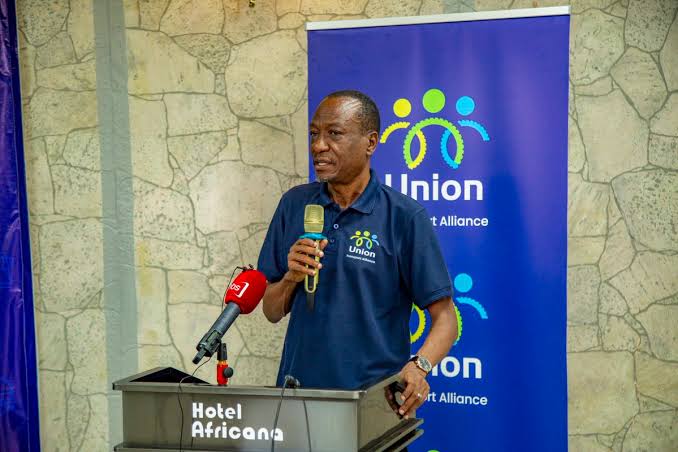
That is the vision being advanced by Fred Ssenoga, Chief Executive Officer of Union Transport Alliance (UTA), as the organisation expands its partnership with RukaPay into digital commerce, financing and everyday economic services.
Ssenoga says the emerging digital ecosystem is designed to make it easier for Ugandans to access money, pay for services and participate in commerce without depending entirely on physical cash.
“In an era where the majority of Uganda’s 45 million people can access money digitally, there should be no more worries for a scholar or a businessman planning to have his or her children in school by paying school fees digitally using a phone,” Ssenoga said.
He said eligible users can register on the Union digital platform and access financial services through the available payment channels, including merchant-code arrangements for school-fees payments.
The development comes as UTA positions itself beyond conventional transport, seeking to build what Ssenoga describes as a complete economic cycle connecting transport, finance, commerce, education and other everyday needs.
School fees enter the digital economy
School fees are among the most persistent financial pressures facing Ugandan households.
For a parent whose income arrives in cycles, a school deadline can arrive before the next payment, salary or business proceeds.
Ssenoga believes digital finance can help bridge that gap.
According to him, parents and students can access school-fees financing through a merchant-code arrangement, enabling the required payment to be made digitally under the Union ecosystem.
The significance is not merely that money changes hands electronically.
It is that a traditionally cash-dependent obligation—paying school fees—can become part of a broader digital financial relationship.
A parent can register, access an eligible financial product, make the payment and later meet the repayment obligation according to the applicable terms.
RukaPay’s partnership with Union is central to this process. The company says eligible customers can access Union loan products through the RukaPay platform, including school-fees loans for parents and other financing products.
For families, the attraction is convenience.
For businesses, the implications could be even wider.

From transport to a digital marketplace
UTA was originally built around organising transport workers, but Ssenoga now sees the network as an economic platform.
The organisation describes its model as an umbrella ecosystem bringing together boda bodas, taxis, buses and truck operators while connecting them to commercial products and digital services.
That gives the transport sector a new role.
A boda boda rider is not only a transporter.
He or she is also a consumer, potential merchant, distributor and customer.
A taxi operator interacts daily with passengers, traders and businesses.
Those daily interactions create an enormous economic network.

UTA’s ambition is to connect that network to digital commerce.
The road becomes the distribution channel. The phone becomes the marketplace. The digital payment becomes the bridge.
RukaPay powers the transaction
The UTA–RukaPay partnership is therefore central to Ssenoga’s digitalisation strategy.
RukaPay provides payment infrastructure supporting the Union digital ecosystem, while eligible customers can access Union financing through the platform.
This is particularly important because digital commerce cannot grow on advertising alone.
A customer must be able to discover a product, make a decision and complete the transaction.
That is where payment infrastructure becomes the engine of online commerce.
The partnership has also supported the launch of Union Online Duuka, a digital marketplace offering customers access to products, promotions and financing options.
The model effectively links marketing, commerce and finance in one cycle.
A new audience for Ugandan businesses
For small and medium-sized businesses, the emerging ecosystem could provide something that traditional advertising does not always guarantee: access to an organised economic community.
A business can promote a product.
A consumer can discover it online.
The customer can make a digital payment.
The transaction can then become part of the customer’s relationship with the business.
This changes the meaning of online marketing.
It is no longer simply about putting an advertisement in front of a potential buyer.
It becomes about creating a complete journey from visibility to transaction.
That is particularly relevant for businesses targeting transport workers and their families, who collectively form a large consumer market.
Digital records could change small-business financing
Another potential benefit of digital transactions is the creation of commercial records.
Many informal businesses operate successfully without extensive formal documentation.
But the absence of records can make it difficult to demonstrate the size and consistency of a business when seeking financing or other commercial opportunities.
Digital transactions can begin creating a history of economic activity.
A trader can track sales.
A stockist can monitor purchases.
A distributor can understand customer demand.
And a financial provider can potentially use transaction information alongside other eligibility criteria when assessing customers.
This is where Ssenoga’s vision moves from simple digital payments towards financial inclusion.
The objective is not merely to move money faster.
It is to connect economic activity to a digital infrastructure that can make commerce more visible and accessible.
Transport workers at the centre
Ssenoga’s model places the transport worker at the centre of the ecosystem.
A rider needs fuel.
A driver needs working capital.
A family needs food.
A child needs school fees.
A household may need healthcare.
A business may need stock.
Instead of treating each need as a separate transaction, Ssenoga wants technology to connect them within one economic cycle.
“We are joining and hoping to digitalise our system,” Ssenoga said, describing UTA’s ambition to connect transport workers, families, consumers and businesses through one ecosystem.
The philosophy is straightforward: organise the people, connect the services and digitise the transactions.
Union Online Duuka widens the marketplace
The launch of Union Online Duuka gives the model another dimension.
The platform has been designed around the idea of making everyday products accessible digitally, with financing available to eligible customers.
This means a parent can potentially use the same broader ecosystem for household shopping and school-related financial needs.
A retailer or stockist can access financing.
A consumer can buy goods.
A transporter can participate as a customer or distributor.
And RukaPay facilitates the digital payment journey.
The pieces begin to fit together.
Beyond the payment
The most important question surrounding digital finance is therefore not simply whether Ugandans can send money by phone.
It is what they can accomplish after they gain digital access to money.
Can a parent keep a child in school?
Can a small business restock?
Can a transporter access working capital?
Can a trader reach more customers?
Can a consumer purchase goods without travelling to a physical shop?
Can transactions generate useful commercial histories?
These are the possibilities that UTA and RukaPay are seeking to explore.
A complete economic cycle
Ssenoga describes the Union ecosystem as a complete cycle because its ambition extends across several sectors.
Transport provides the network.
Digital technology provides the connection.
Online commerce provides the marketplace.
RukaPay provides payment infrastructure.
Financing responds to eligible household and business needs.
And digital transactions create a record of economic activity.
The model is therefore no longer simply about transporting passengers.
It is about using an existing transport network to connect people to products, services, finance and markets.
The bigger opportunity
Uganda’s digital economy is entering a stage where access alone will not be enough.
The bigger challenge will be turning digital access into productive economic participation.
For Ssenoga, the transport sector could provide one of the strongest pathways into that future because it already touches millions of daily economic activities.
If the model succeeds, a boda boda rider could be more than a passenger carrier.
A taxi stage could be more than a waiting point.
A mobile phone could be more than a communication device.
And a digital payment could be more than the end of a transaction.
It could be the beginning of a commercial relationship.
That is the larger proposition behind the UTA–RukaPay partnership: to turn Uganda’s organised transport network into a digital economic highway where people, products, payments and opportunities can move together.
For the parent facing a school-fees deadline, the transformation could be as simple as accessing an eligible financial service through a phone.
For the small businessman, it could mean reaching customers and accessing financing digitally.
For the transporter, it could mean becoming an active participant in a wider economic ecosystem.
And for Uganda, it could mark another step in the journey from a largely cash-driven informal economy towards a more connected digital marketplace.