As Kyanamukaka gets its first-ever tarmac road, Mutebi says infrastructure must translate into businesses, markets and higher daily earnings
By Brian Mugenyi

mugenyijj@gmail.com

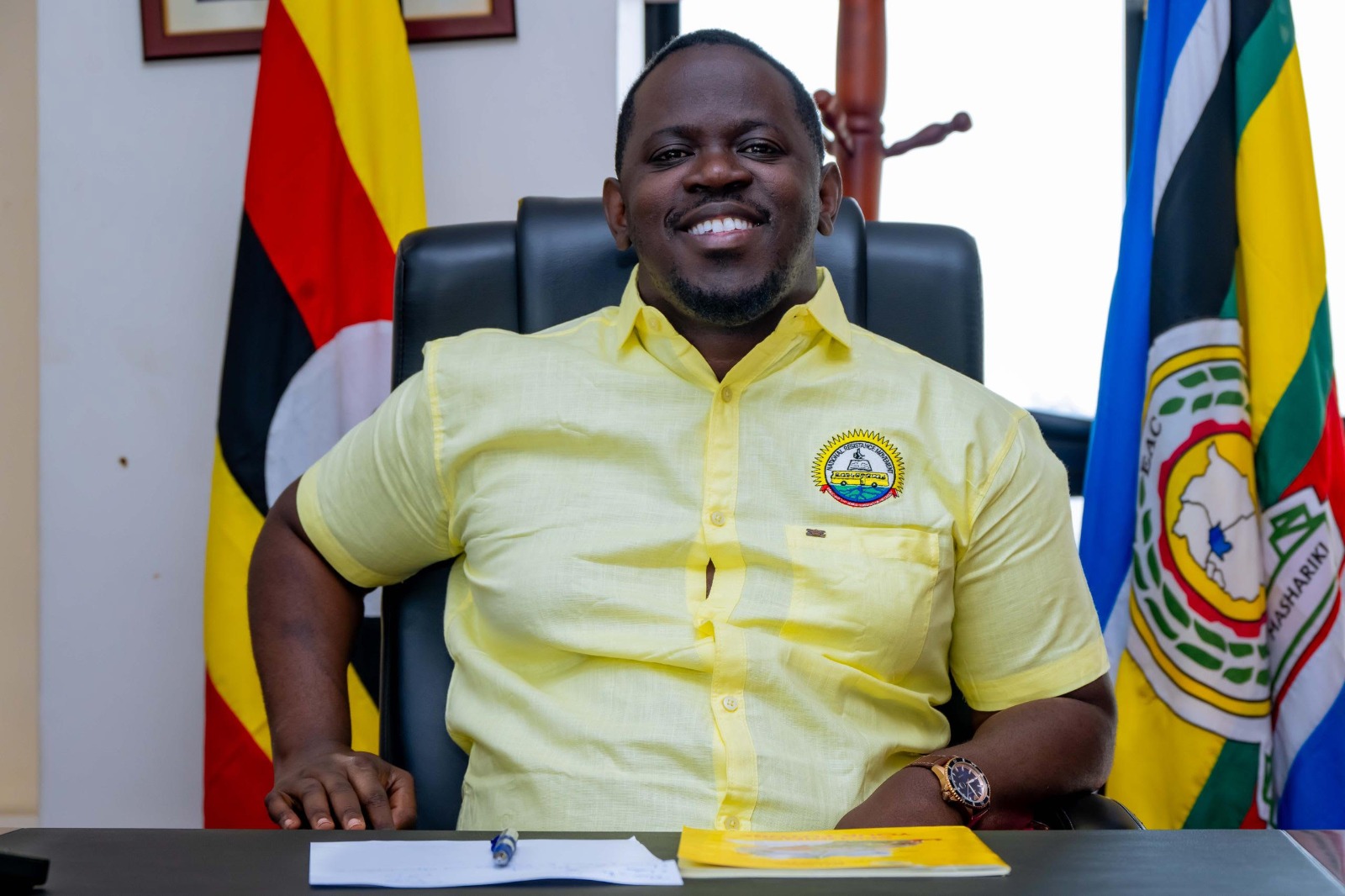
Masaka: Oscar Mutebi has urged residents of Masaka District to seize the opportunities created by new infrastructure associated with former Vice President Edward Kiwanuka Ssekandi, saying roads, electricity and water should not merely change the landscape but change what ordinary families earn from their daily work.
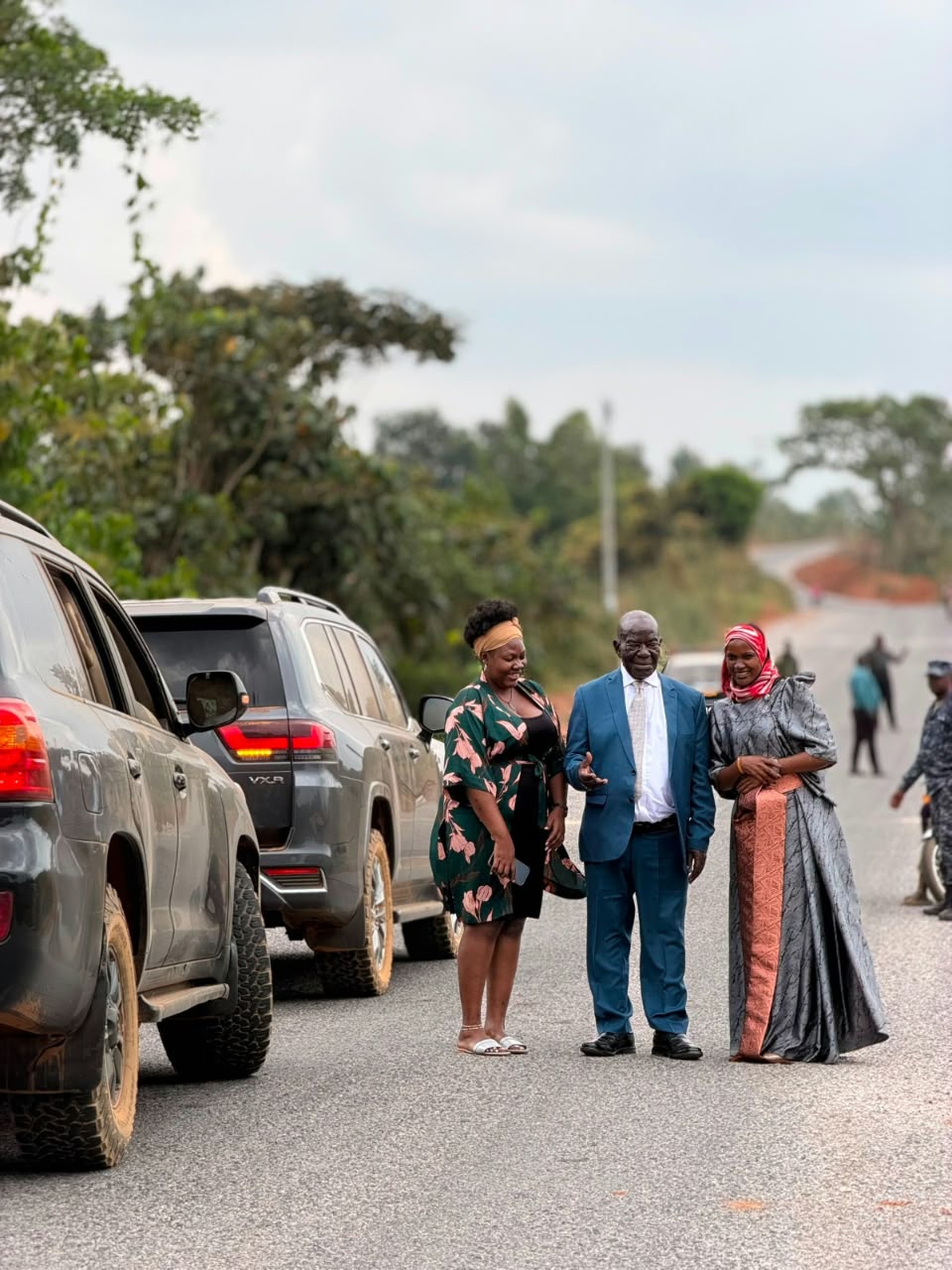
Mutebi, Personal Assistant to former Vice President Ssekandi and Private Secretary at State House, made the call as Kyanamukaka witnesses the construction of its first-ever tarmac road, a development that residents say could open a new chapter for trade, agriculture, healthcare and small businesses.

“When you look at this place, several businesses such as carpentry workshops, salons and other small enterprises are going to be boosted. Development begins with accessibility. When people can easily move, businesses grow, investments come and communities transform,” Mutebi said.
His argument is simple: infrastructure should eventually be visible in the household economy.
A farmer should be able to move produce to market more easily. A trader should attract customers from beyond the immediate village. A salon, workshop or shop should have better access to suppliers and customers.
And a family should be able to turn improved connectivity into increased earnings.
KYANAMUKAKA’S FIRST TARMAC ROAD
The five-kilometre Bukunda–Kamuzinda road was among the feeder roads whose tarmacking began in Masaka District in June, with the Ministry of Works and Transport identifying the project as part of efforts to improve transport infrastructure and stimulate socio-economic activity.
The road is part of a wider network serving communities including Bukunda, Kamuzinda, Bulegeya, Kitafaali Trading Centre, Buyaga, Namirembe and Zimbwe, while other road sections connect Sserinya, Baale, Bulegeya, Kamuzinda and Kanoni.
For years, residents struggled with muddy roads, particularly during rainy seasons.
Farmers faced difficulties moving produce.
Patients encountered challenging journeys to health facilities.
Businesses remained confined to small local markets.
Now, the road is changing the calculation.
Kyanamukaka Town Council Mayor Hajjat Zaina Nakidde described the project as a historic turning point.
“For many years, our people suffered because of poor roads. Farmers failed to access markets and businesses struggled to grow. Today, we are witnessing history being made. These roads will change the future of our communities,” she said.
MUTEBI: SSEKANDI’S VISION IS ABOUT PEOPLE
Mutebi links the infrastructure developments to the long-standing development interests of Ssekandi in Bukoto Central.
“Bukoto Central would not have been what it is today if it was not because of Mr. Edward Kiwanuka Ssekandi. Kyanamukaka will never be the same again. Seeing people develop is what is at the heart of him, and Kyanamukaka is always in his heart,” Mutebi said.
He also pointed to the area headquarters, which he said were constructed on land provided by Ssekandi.
“Even the headquarters of this area were constructed on the land he gave. He has always believed that development requires people to have infrastructure, institutions and opportunities that can change their lives,” he said.
For Mutebi, the infrastructure is only the beginning.
The bigger task is for residents to use it.
WHAT THE MINISTRY DATA SHOWS
The importance of the Kyanamukaka road becomes clearer against Uganda’s wider infrastructure challenge.
The Ministry of Works and Transport estimates Uganda’s overall road network at 159,623 kilometres, comprising national, urban, district and community access roads. Community access roads alone account for about 79,948 kilometres, or 50.1 per cent of the network.
In a recent statement on the state of the country’s roads, Works and Transport Minister Fred Byamukama said Uganda’s road network stood at 159,561 kilometres, of which only 5.57 per cent was paved, with 94.43 per cent remaining unpaved. He identified road infrastructure as important for connectivity, trade and socio-economic transformation.
The figures put the Kyanamukaka project into a bigger national context.
For a rural community, moving from a difficult feeder road to a paved surface is not simply a transport improvement.
It can reduce the cost and difficulty of reaching markets and services.
The Ministry’s 2026–2030 Strategic Plan similarly identifies increased transport infrastructure and lower transport costs among its intended outcomes.
FROM ROAD TO HOUSEHOLD INCOME
This is where Mutebi wants residents to shift their thinking.
He argues that electricity should support enterprises such as carpentry, welding, salons, refrigeration and food processing.
Water reservoirs, meanwhile, can support irrigation and agricultural production.
Roads can then connect that production to markets.
“Our people must understand that development infrastructure is not an end in itself. Roads, electricity and water should help a household produce more, sell more and earn more,” Mutebi said.
The idea turns infrastructure into an economic chain:
Water supports production.
Electricity supports enterprise.
Roads connect production to markets.
Markets generate income.
And income improves household welfare.
‘WE HAVE WAITED FOR THIS’
For elder and councillor Ms. Vecencia Namulindwa, the most important difference is that residents can now see the project taking shape.
“We have lived through many promises. What makes this different is that we can now see the roads being worked on. This is the development we have been waiting for,” she said.
The road is expected to improve access to markets, schools, health facilities, religious institutions and businesses across the area’s communities.