


By Brian Mugenyi
Kampala: Often times, Generals are renowned for being listeners of few words and taking noted points mostly into action.

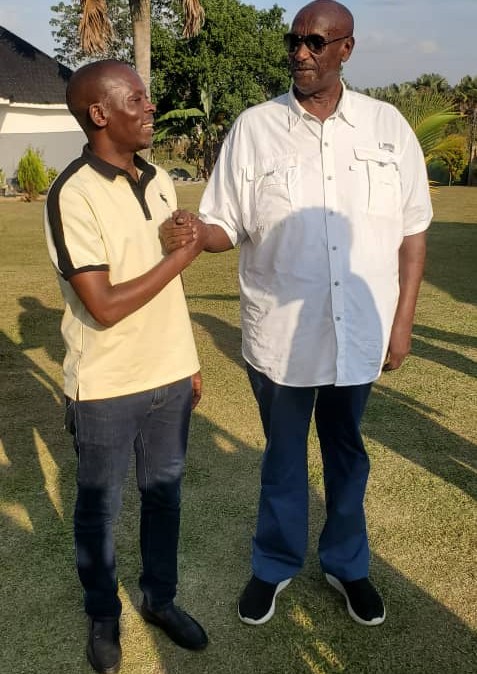
History often remembers military commanders for the battles they fought. Yet for Gen. Salim Saleh Akandwanaho, one of Uganda’s most influential liberation war veterans, a significant chapter of his legacy is increasingly being written not on the battlefield but in the coffee gardens, dairy farms, banana plantations, and household enterprises transforming Uganda’s countryside.

A man known for his calm demeanor, strategic thinking, and passion for economic empowerment, according to Mr. Edison Kirabira also the operation Wealth Creation civil coordinator of Greater Kampala Metropolitan , Gen. Saleh has spent the last decade championing initiatives aimed at helping ordinary Ugandans escape poverty through production, enterprise, and wealth creation.
Among those initiatives, none has become more visible than Operation Wealth Creation (OWC), the government programme launched in July 2013 to accelerate household incomes through commercial agriculture and entrepreneurship.

Thirteen years later, the programme continues to shape livelihoods across Uganda and remains one of the government’s most recognizable poverty-eradication interventions.
Its impact is unfolding against a backdrop of encouraging national trends highlighted by the Uganda National Household Survey (UNHS) and data from the Uganda Bureau of Statistics (UBOS).
According to UBOS, Uganda has an estimated 10.8 million households, with agriculture remaining the backbone of livelihoods for millions of citizens.
The survey shows that approximately 65.4 percent of households depend on agriculture according to Uganda National House Hold survey either as their primary or secondary source of income.
Agriculture continues to employ the majority of rural Ugandans and 97% are into crop growing and remains one of the country’s most important economic sectors.
The same survey indicates that poverty levels have gradually declined to 5.2 % of poverty dynamics data with a Percentage of 64.3% and 35.7% of both male and female respectively leading households over the years as more households engage in productive economic activities.
For government planners under local government Permanent Secretary Mr. Ben Kumumanya and development practitioners, these statistics underline the importance of investing in agriculture as a pathway to wealth creation and household transformation.
For beneficiaries of Operation Wealth Creation, however, the numbers tell a more personal story.
Across Greater Kampala Central Uganda, Northern Uganda, and other regions, households that once depended solely on subsistence farming are increasingly embracing commercial agriculture.
Coffee gardens are replacing idle land.
Livestock farms are expanding.
Banana plantations are growing.
And young people who once viewed farming as a symbol of hardship are beginning to see it as a pathway to prosperity.
According to the Federation of Uganda Social media influencers Mr. Edison Kirabira, one of the programme’s greatest successes has been changing mindsets of youth approximately 200 mostly in Gulu today working in factories from crimes.
“For many years, agriculture was viewed as a last option. Today, young people are beginning to appreciate that farming is business. It creates wealth, employment, and long-term economic security,” Kirabira says.
He notes that continuous sensitisation campaigns and community mobilisation have encouraged more Ugandans to participate in wealth-creation programmes and take advantage of government support.
Kirabira believes that Uganda’s economic future lies in production, value addition, and empowering ordinary citizens to turn available resources into wealth.
That transformation is evident in Kampala’s Makindye Division.
According to Mr. Ronald Bwire, the Operation Wealth Creation Coordinator for Makindye, hundreds of households have directly benefited from the programme.
“We have witnessed remarkable progress. More than 200 beneficiaries have received support under Operation Wealth Creation interventions, and women account for nearly 70 percent of the participants,” Bwire explains.
The beneficiaries initially received startup support packages valued at approximately Shs1 million, enabling organised groups to establish farming enterprises and small businesses capable of generating sustainable income.
The programme has also facilitated the distribution of coffee seedlings, banana suckers, goats, cattle, and other agricultural inputs aimed at increasing productivity.
For many families, these interventions have become a stepping stone toward financial independence.
The impact is particularly significant among women.
According to national household survey findings, women continue to play a central role in household economic management and agricultural production. Across rural communities, female-headed households and women farmers remain key contributors to food security and household welfare.
Bwire says women have emerged among the strongest participants in Operation Wealth Creation initiatives because they often reinvest earnings directly into education, healthcare, nutrition, and family development.
Across rural Uganda, success stories continue to emerge.
In districts such as Kiboga, Masaka, Mbarara, Gulu, and other parts of the country, beneficiaries report increased agricultural production, improved incomes, and greater participation in local markets.
Observers say the programme has also contributed to reducing rural unemployment by encouraging self-employment through farming and agribusiness.
For supporters of Operation Wealth Creation, the statistics help explain the programme’s significance.
With nearly two-thirds of Uganda’s households depending on agriculture, interventions that provide livestock, improved seedlings, technical guidance, and entrepreneurship support have the potential to transform millions of lives.
Supporters argue that this explains why Gen. Salim Saleh’s wealth-creation agenda continues to resonate in communities where agriculture remains the most accessible pathway out of poverty.
However, stakeholders believe the next phase of transformation must focus on value addition.
“Value addition remains critical. Farmers should not only produce raw materials but also process them. That is where greater profits, job creation, and sustainable wealth can be realised,” Bwire says.
His call echoes Gen. Saleh’s long-standing advocacy for production, industrialisation, and wealth creation through manufacturing and agro-processing.
Indeed, one of the recurring messages from Gen. Saleh’s engagements at Kapeeka Industrial Park and other economic forums has been the need for Ugandans to move beyond consumption and embrace production.
Mr. Edison Kirabira says that this philosophy has helped shape the direction of Operation Wealth Creation over the last thirteen years.
The operation Wealth Creation has contributed to the country’s GDP growth from 5% to 7.6% in 2025-2026 of the country’s according to Mr. Edison Kirabira.
They are challenged by corruption in some parts of the country but the gross rate has increased in operation Wealth Creation.
Among the outstanding countries include Japan with 10% strategy of economic development for 10 years planning strategy in the 40 years vision of the country economic development strategy through agriculture production.
While challenges such as climate change, fluctuating commodity prices, limited access to credit, and market instability continue to affect farmers, many beneficiaries remain optimistic.
The evidence of change is visible.
Coffee gardens are expanding.
Milk production is increasing.
Livestock populations are growing.
Household incomes are improving.
Most importantly, hope is returning to communities that once felt trapped by poverty.
As Uganda continues pursuing its Vision 2040 development agenda under local government led by Mr. Ben Kumumanya as permanent secretary, Operation Wealth Creation remains one of the country’s most recognisable household empowerment programmes.
For Gen. Salim Saleh, the programme represents more than statistics and economic indicators. It represents a belief that ordinary Ugandans, when given the right support and opportunities, can transform their own lives.
And across Uganda’s villages, where coffee trees are maturing and livestock herds are multiplying, that belief continues to bear fruit.
Thirteen years after its launch, Operation Wealth Creation is not merely distributing agricultural inputs.
It is cultivating confidence.
It is restoring dignity.
It is creating wealth.
And it is planting the seeds of hope for generations to come.
As Uganda’s more than 10 million households continue pursuing better livelihoods, the success of programmes such as Operation Wealth Creation offers a powerful lesson: when strategic leadership, community mobilisation, and productive investment come together, poverty can be challenged, opportunities can be created, and a nation’s prosperity can be built from the ground up—one household at a time.
For clarity, no corruption reports have been scored in operation Wealth Creation as the program is reaching out to the ordinary Ugandan with ease and only a few rumours have been soiled on some officials but no verified evidence.
In reference to this, Parish Development Module has been given away to see other Ugandans out of poverty thus fa..