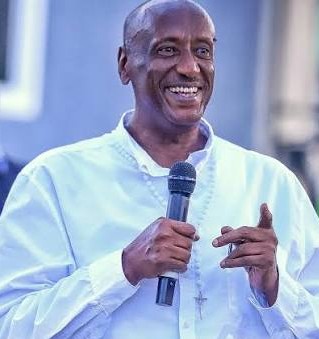
Kampala: Operation Wealth Creation coordinator Gen. Caleb Akandwanaho, popularly known as Salim Saleh has emphaised the need for security operatives in Uganda for working hard to protect the people and also ensure their economic development wealth are protected under a peaceful government.
During the inaugural African Chiefs of Defence Forces Conference on Military Operations Other Than War (MOOTW) held in Kampala, Gen. Salem Saleh said, the future of the country under peaceful government depends on economic development.
The four-day conference brought together African defence leaders and security experts to examine how military institutions can respond to threats beyond conventional warfare, including terrorism, organised crime, cyber threats, climate-related emergencies, pandemics and disasters.
Under the theme “Strengthening Adaptive Non-Combative Military Response to Emerging Complex Security Threats in Africa,” the conference carried a broader message:
One Continent. One Vision. One Secure Future.
For Gen. Saleh, the changing security environment requires African countries to think beyond the traditional battlefield and strengthen the resilience of the communities they are protecting.
A NEW SECURITY REALITY
For decades, military preparedness was largely associated with conventional warfare, territorial defence and armed conflict.
But the security challenges facing Africa today are increasingly complex.
Terrorist networks can cross borders.
Cyberattacks can disrupt critical infrastructure.
Climate emergencies can displace communities.
Disease outbreaks can threaten national stability.
Organised crime can undermine economies.
Natural disasters can require rapid mobilisation of national resources.
The conference therefore challenged African defence institutions to develop more flexible capabilities capable of supporting national authorities during emergencies while maintaining clear legal and institutional responsibilities.
SALEH’S MESSAGE: SECURITY MUST SUPPORT DEVELOPMENT
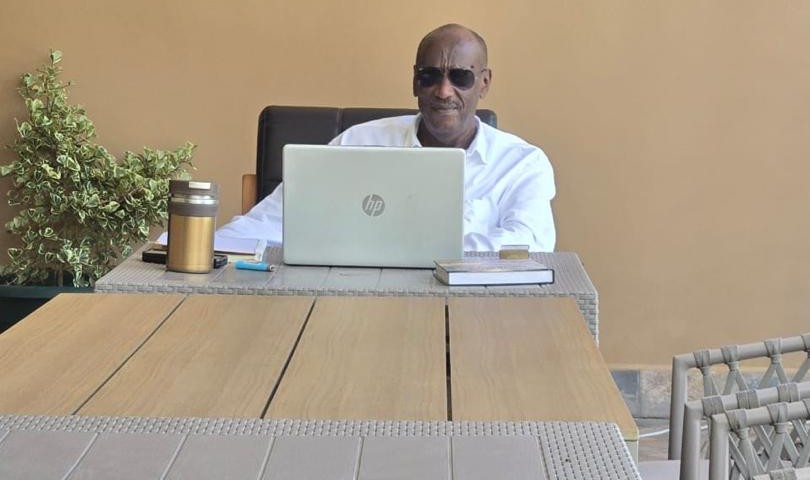
Speaking through a Zoom meeting on Thursday at 8am Gen. Saleh shared Uganda’s perspective on security and economic development, emphasising the connection between national security and the resilience of ordinary households.
His intervention placed development alongside security as an important component of national stability.
“Our approach to security must also consider the economic wellbeing of our people. A secure country is one where communities are able to produce, earn incomes and build resilient households.”
Saleh’s message reflected Uganda’s experience with programmes designed to mobilise communities towards productive economic activity.
Among the examples associated with his wider development work is Operation Wealth Creation (OWC), which has focused on agricultural production, household income generation and mobilisation of communities into productive enterprises.
The approach presents a broader understanding of security — one in which economically resilient households are better positioned to withstand social and economic shocks.
FROM SECURITY TO HOUSEHOLD RESILIENCE
For Uganda, the relationship between security and development is particularly visible in rural communities.
Farmers require secure access to land.
Agricultural programmes require protection from disruption.
Markets require safe roads and trading environments.
Development projects require accountability.
And households require productive opportunities to generate income.
This is where programmes such as OWC have been linked to the wider national development agenda.
Gen. Saleh’s intervention therefore encouraged defence leaders to consider how institutions can contribute to national resilience without losing sight of their core security responsibilities.
KIRABIRA: SALEH’S MESSAGE COMES AT THE RIGHT TIME
According to Mr. Edson Kirabira, Civil Coordinator for Operation Wealth Creation, the intervention came at an important moment for Africa as countries continue strengthening their security systems and preparing for emerging challenges.
Kirabira praised Saleh’s contribution to the security and development discussion.
“The message of Gen. Salim Saleh has come at the right time. As Uganda and Africa continue strengthening their security measures, we must also remember that development and security move together.”
Kirabira said communities cannot fully benefit from development programmes if they remain vulnerable to insecurity and economic disruption.
He also highlighted the importance of protecting programmes aimed at improving household livelihoods.
LAND MANAGEMENT AND DEVELOPMENT SECURITY
Kirabira further credited Gen. Saleh with supporting efforts to strengthen land management committees and security around Operation Wealth Creation programmes.
“We thank Gen. Salim Saleh for creating and supporting land management committees and for strengthening security around Operation Wealth Creation programmes. These efforts are helping protect productive resources and support household development.”
Land remains one of Uganda’s most important productive assets, particularly for rural households.
Proper land management can help reduce disputes, protect agricultural production and create a stronger foundation for household investment.
For development programmes to succeed, communities need not only inputs and financing but also secure and productive environments in which to use them.
MILITARY OPERATIONS BEYOND WAR
The Kampala conference has therefore opened a broader conversation about the role of African defence institutions in non-combat situations.
The concept of Military Operations Other Than War recognises that armed forces may be called upon to support national authorities during humanitarian emergencies, disasters, pandemics, peace-support operations and other crises.
But such responsibilities require professionalism, clear mandates, training, coordination and accountability.
They also require cooperation between military institutions, civilian authorities, regional organisations and communities.
AFRICAN SOLUTIONS TO AFRICAN SECURITY CHALLENGES
The conference has brought together defence leaders from across the continent to exchange experiences and consider common approaches to emerging security threats.
The underlying philosophy is that African countries can strengthen their security by sharing intelligence, training, experience and operational capabilities.
No country can independently confront every emerging threat.
Cybercrime does not respect borders.
Terrorism does not respect borders.
Climate emergencies do not respect borders.
Disease outbreaks do not respect borders.
The security response must therefore increasingly involve cooperation.
THE ECONOMIC DIMENSION OF SECURITY
Perhaps the most important lesson from Saleh’s intervention is that security cannot be viewed entirely through the lens of military hardware.
A country’s resilience is also reflected in the strength of its communities.
When farmers are productive, households earn incomes.
When young people have opportunities, social vulnerability can be reduced.
When public programmes are protected, development resources are more likely to reach intended beneficiaries.
When land is managed responsibly, productive investment becomes easier.
And when communities trust institutions, cooperation during emergencies becomes stronger.
That is the broader security-development connection.
THE ROAD AHEAD
As African defence leaders conclude their discussions in Kampala, the continent faces a clear challenge: building security institutions capable of adapting to a world where threats are increasingly interconnected.
For Gen. Saleh, Uganda’s experience demonstrates that security and economic development should not be treated as completely separate conversations.
For Kirabira, the protection of development programmes and productive resources remains essential to strengthening household resilience.
And for Africa’s defence institutions, the future may require a new balance between preparedness, prevention, cooperation and support to communities.
The battlefield of tomorrow may not always be defined by soldiers facing one another.
It may be a cyberattack.
A pandemic.
A climate disaster.
A terrorist network.
A disrupted food system.
Or an economic shock that leaves communities vulnerable.
That is why the message from Kampala carries significance beyond the conference hall.
Africa’s security future will depend not only on how effectively it responds to threats, but also on how successfully it builds communities strong enough to withstand them.
And in that mission, the vision is increasingly clear:
One Continent. One Vision. One Secure Future.