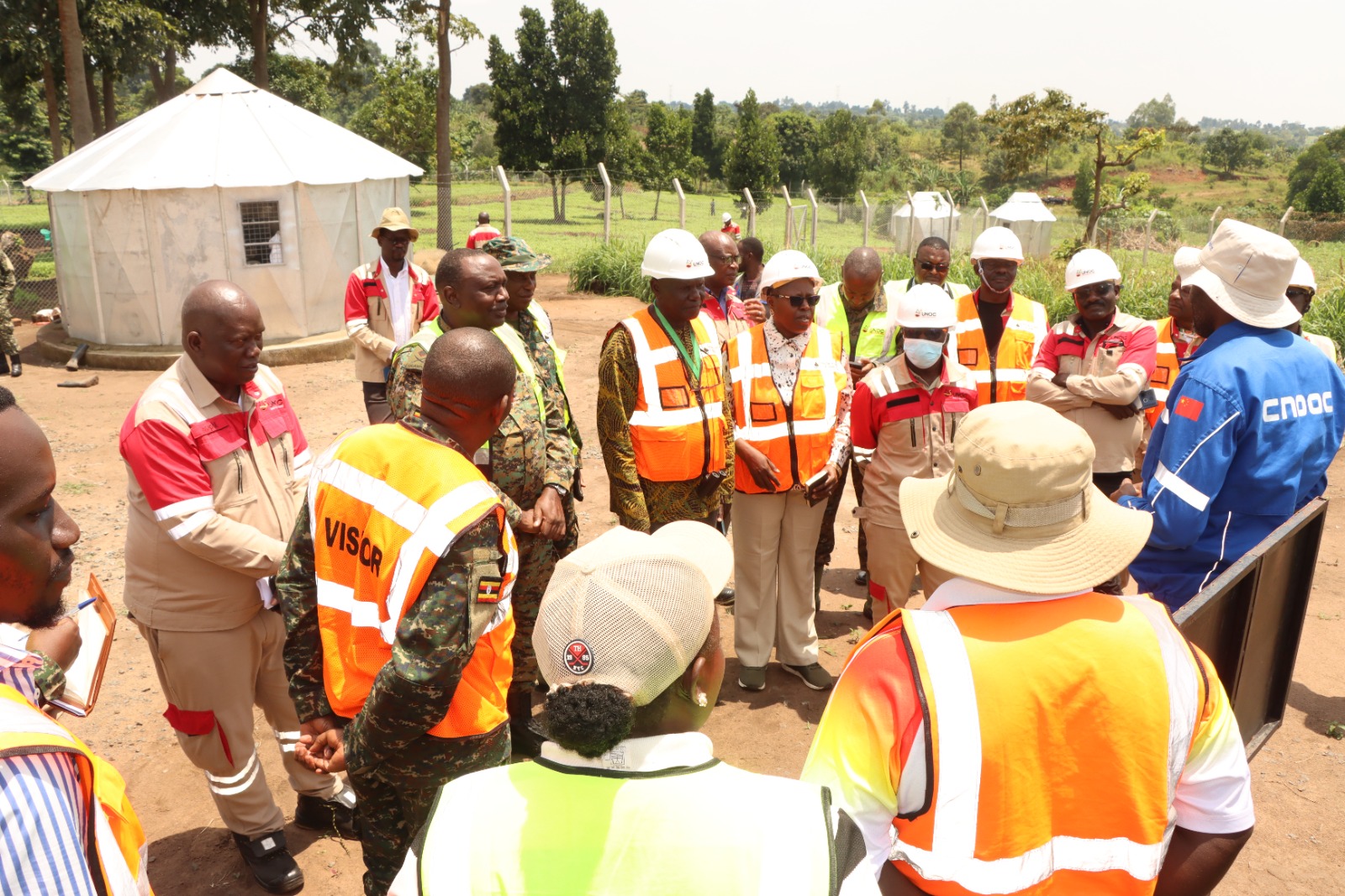
The National Agricultural Research Organisation (NARO) has begun harvesting seed of four newly released potato varieties, bringing farmers a step closer to accessing the much-anticipated planting materials
The varieties-NAROPOT 7, NAROPOT 8, NAROPOT 9 and NAROPOT 10-were officially launched by the Minister of Agriculture, Animal Industry and Fisheries, Hon. Frank Tumwebaze, during last year’s World Food Day celebrations.
Since their release, farmers have been eager to access seed of the new varieties, which promise improved productivity, disease resistance and suitability for different market needs. The start of seed harvesting therefore offers e aray of hope that the varieties will soon move from research stations into farmers’ fields across Uganda.

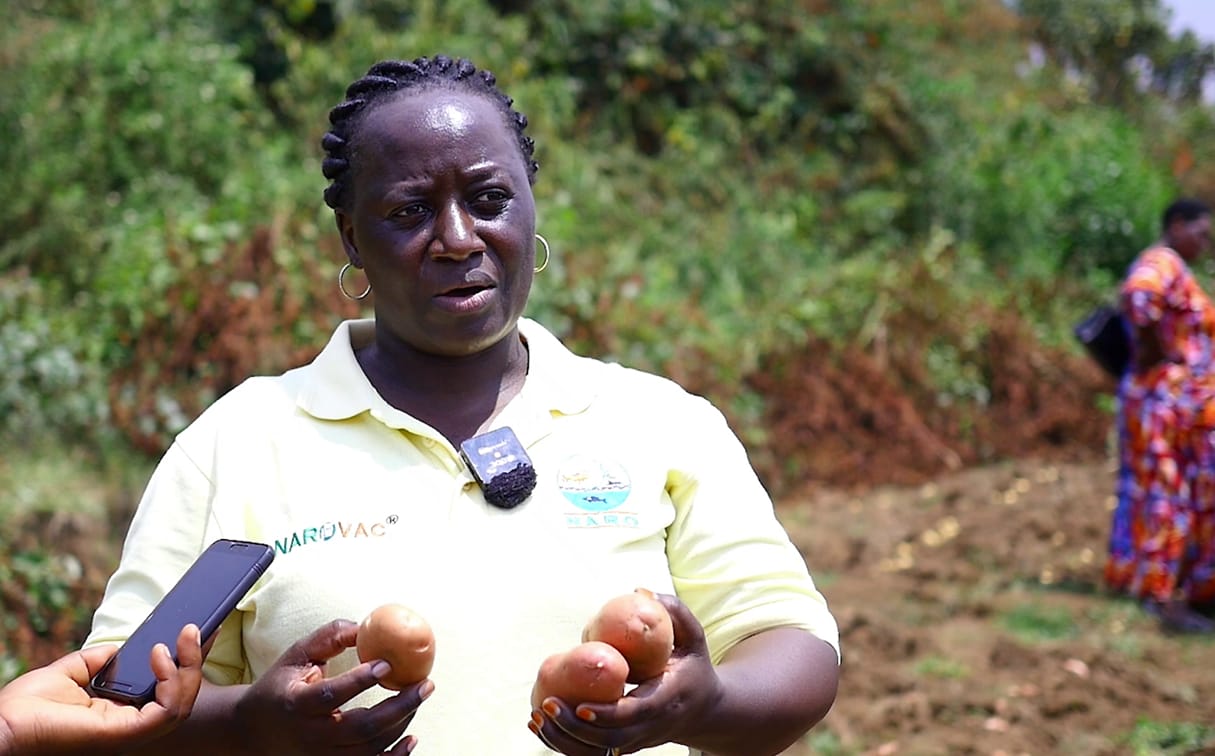
According to the Director of Research at NARO’s Kachwekano Zonal Agricultural Research and Development Institute (KAZARDI), Dr. Jerome, NARO is working with a network of individual farmers, farmer cooperatives and seed companies to multiply the seed and facilitate its distribution to farmers across the country.

“We are working with different partners in the seed multiplication chain to ensure that adequate quantities of quality seed are produced and made available to farmers,” Dr. Jerome said.
What sets the four varieties apart is not simply their productivity or resilience. They were deliberately developed with the farmer, the market and the processor in mind–responding to the changing demands of Uganda’s potato value chain.

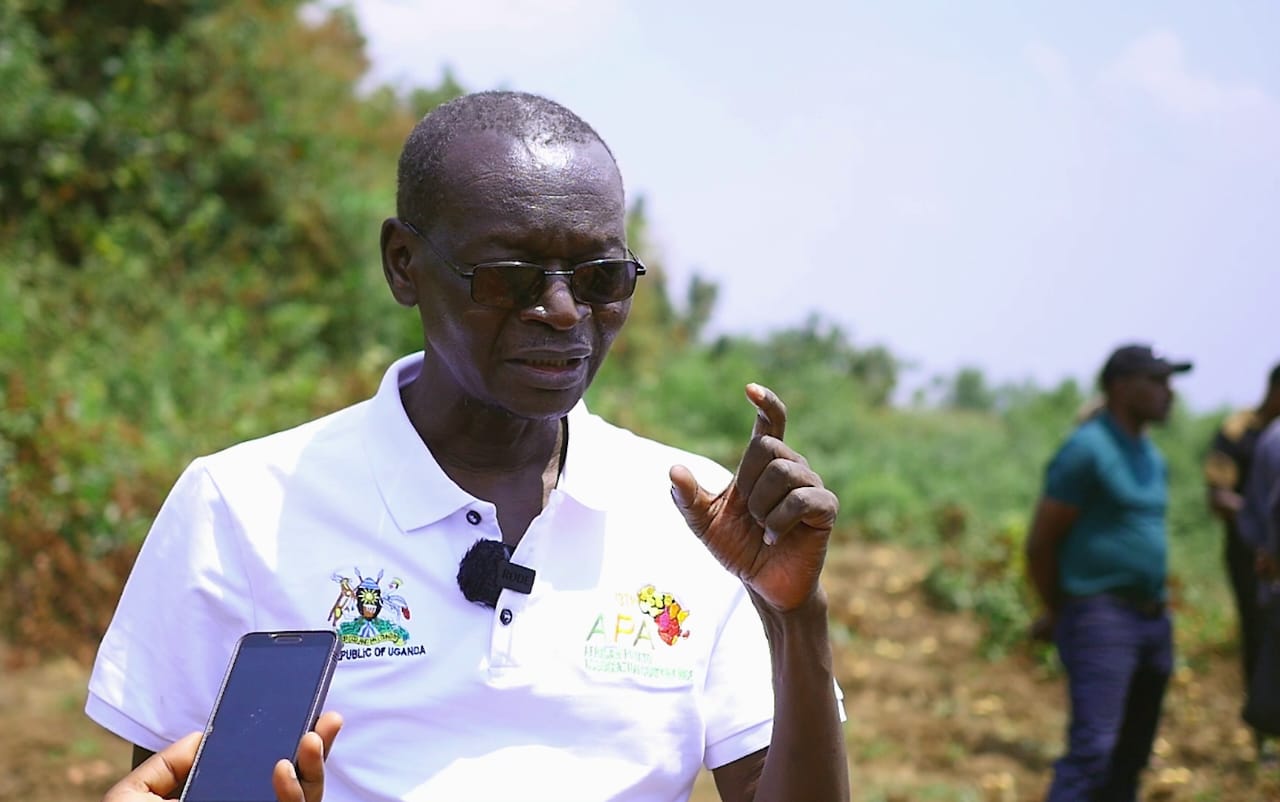
According to NARO potato breeder Dr. Prossy Namugga, NAROPOT 7 is an early- maturing variety that takes just 90-100 days to harvest and has a yield potential o 30.2 tonnes per hectare.
She describes it as a potential “money-maker” for farmers because its short maturity period creates an opportunity for farmers to produce two crops in a year, where growing conditions permit.,
‘NAROPOT 7 is the variety farmers are already calling the ‘money-maker’ because farmers can plant and harvest it twice in one year. lts high resistance to late blight also alows farmers to drastically cut expenditure on fungicides, with the savings: translating directly into higher incomes,” Dr. Namugga said.
For processors, NAROPOT 8 offers a different advantage. The variety has a 22.1 percent dry matter content, making it particularly suitable for processing into crisps and chips.
“This variety is a dream for crisp and chip manufacturers. lts stable performance across mid- to high-altitude regions makes it a dependable choice for farmers and processors alike,” Dr. Namugga said.
Its processing qualities could help strengthen the connection between potato producers and Uganda’s growing food-processing industry.
With a potential yield of 31.4 tonnes per hectare, NAROPOT 9 takes the lead among the four new varieties in terms of yield potential
Dubbed the “Yield Champion,” the variety combines high productivity with consisten performance, qualities that Dr. Namugga says make it particularly attractive for organised production and contract farming
Its ability to deliver both quantity and quality could make NAROPOT 9 a preferrec choice for farmers producing potatoes for structured markets.
Meanwhile, NAROPOT 10 stands out for its exceptionally high 28.1 percent dry matter content, a characteristic that gives it strong potential for industria processing.
Dr. Namugga describes it as an “Industrial Powerhouse.” The variety takes 100-120 days to mature and has strong disease resistance, making it suitable for farmers targeting both productivity and processing markets.
With Uganda seeking to expand its potato-processing industry, NAROPOT 10 could play an important role in ensuring that processors have access to varieties with the qualities required for industrial production,
From Research Stations to Farmers’ Fields
The release of the four varieties comes at a time when Uganda iS seeking to strengthen agricultural value chains under the Government’s Agro-Industrialisation Programme, linking farmers to processors and processors to markets.
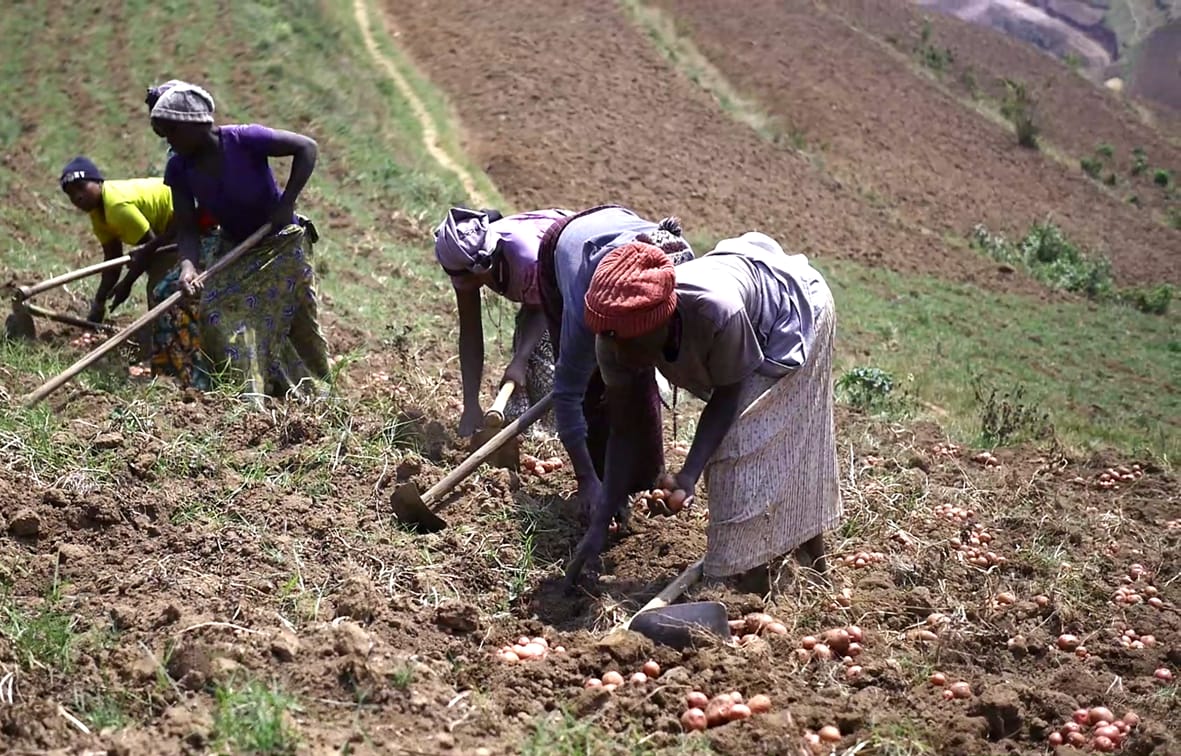
For NARO, the ongoing seed multiplication marks an important transition–fron developing technologies in research iaboratories and fields to ensuring that farmers can access and benefit from them.
With seed harvesting now underway, the journey of NAROPOT 7, NAROPOT 8, NAROPOT 9 and NAROPOT 10 is entering its next critical phase: moving from research plots to farmers’ fields and, ultimately, from farms to markets and factories.