On the face of it, the academic transformation of Kampala University has taken its toll. For a student in the Faculty of Arts and Social Sciences pursuing Journalism and Mass Communication, the changes taking place at the institution are not merely matters to observe from a lecture room; they present a story worth investigating.
At Kampala University Masaka Campus, that story can now be measured in one striking figure: 2,556 students.
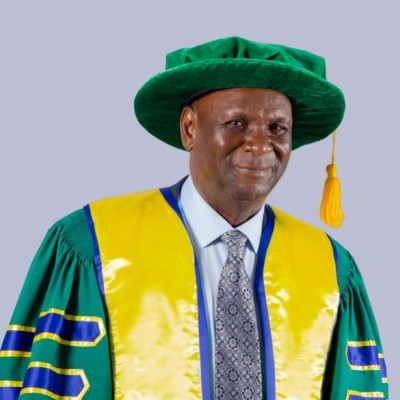
The figure, presented by the campus administrator on Wednesday during a visit by Kampala University Vice Chancellor Professor Badru Dungu Kateregga, offers a snapshot of a campus that has expanded its reach while simultaneously confronting the demands that come with rapid growth.

Of the 2,556 students, 1,080 are full-time students while 1,476 are in-service students.
On paper, it is an enrolment figure.
In reality, it is a measure of changing educational ambitions in Masaka and beyond.
It means more young people are choosing the campus for conventional university education, while an even larger population of working learners is returning to the classroom to improve qualifications, strengthen professional skills and create new opportunities.
But growth comes with a question that cannot be answered by a register alone: is the academic transformation keeping pace with the numbers?
That question sits at the heart of Kampala University Masaka Campus today.

2,556 STUDENTS — AND A DIFFERENT CAMPUS
The campus administrator attributed the growth partly to the university’s marketing department, which he said had helped increase the visibility of Kampala University and put the Masaka Campus on the map.
The significance of that claim lies in what the enrolment composition reveals.
The 1,476 in-service students form the larger share of the campus population, while 1,080 full-time students represent the conventional university intake.

Together, the figures portray an institution serving learners at different stages of life.
For the full-time student, the university years are often the beginning of professional preparation.
For the in-service learner, university can be a second chance, a career investment or a bridge to greater responsibility.
This makes the Masaka Campus more than a place where young people acquire certificates. It is becoming a space where education intersects with employment, professional advancement and lifelong learning.
And that creates a different kind of responsibility for the institution.
THE NUMBERS COME WITH PRESSURE
A growing student population is good news for any university.
But every additional student brings additional demand for lecturers, classrooms, learning materials, examination services, research supervision and student welfare.
The challenge, therefore, is not simply attracting students.
It is supporting them.
Professor Kateregga used his Wednesday engagement with the university community to underline the importance of keeping academics at the centre of the institution’s expansion.
He said changes were being introduced in the academic department to make university services more responsive to students’ demands.
The message was clear: growth must not be allowed to overtake quality.
CENTRAL MARKING: THE REFORM STUDENTS ARE WATCHING
One of the most significant academic reforms highlighted by Professor Kateregga was the introduction of central marking of examinations.
He said the system was intended to minimise disagreements between students and lecturers during examination marking.
The issue may sound administrative, but for students, examination assessment is one of the most consequential parts of university life.
A mark can determine progression.
A mark can delay graduation.
A mark can influence a student’s academic future.
The credibility of the process therefore matters almost as much as the result itself.
A student who spoke after the Vice Chancellor’s engagement welcomed central marking, saying it could help address disagreements between students and lecturers and increase confidence that examination scripts would be assessed fairly.
The reform consequently becomes part of a bigger conversation about trust.
As the student population grows, students want to know not simply that the university can accommodate them, but that its academic systems can treat them fairly.
SSENGENDO: GROWTH MUST COME WITH DISCIPLINE
For the Campus Director, Ibrahim Ssengendo, the expansion of the campus also brings a responsibility for students to protect the academic environment.
During the Vice Chancellor’s visit, Ssengendo introduced the academic and non-academic staff and handed over the land title registered in the names of Kampala University.
He also urged students to remain disciplined and work closely with their lecturers.
“Students should stay away from trouble and work hand in hand with their lecturers to achieve better results tomorrow,” Ssengendo told the students.
His message adds an important dimension to the enrolment story.
A university can invest in infrastructure and recruit lecturers, but students also influence the quality of the environment in which learning takes place.
Discipline, cooperation and active participation in academic work become increasingly important as the student population expands.
FROM A REGIONAL CAMPUS TO A NATIONAL ACADEMIC COMMUNITY
Professor Kateregga said Kampala University had also undergone a significant change in its reach.
He credited the marketing, management and finance departments with helping spread the university across the country.
“Kampala University is now both a national and international university, attracting different cultures compared to the past years when students mainly came from the Greater Masaka region,” he said.
The statement is significant in understanding the 2,556-student figure.
The campus is no longer serving only the community immediately around it.
Its student population is increasingly reflecting the wider country.
That means new cultures, new expectations and different academic experiences are entering the same learning environment.
Such diversity can enrich university life.
But it also requires stronger institutional systems.
THE 1,476 WHO ARE STUDYING AND WORKING
Perhaps the most revealing number in the entire enrolment figure is 1,476.
That is the number of students pursuing their education as in-service learners.
They constitute the larger share of the campus population.
Their presence offers a window into the changing face of higher education.
Education is increasingly not something people complete once and leave behind.
Workers return to university.
Professionals upgrade qualifications.
People change careers.
Others seek specialised knowledge to remain relevant in an economy that does not stand still.
For these learners, the university campus must become flexible enough to accommodate a life that does not revolve entirely around lectures.
That reality could become one of the defining strengths of Kampala University Masaka Campus.
EDUCATION BEYOND EXAMINATIONS
The campus administration also argues that student development cannot stop at academic results.
The Dean of Students said the institution was combining academic work with sports, music, dance and drama, saying these activities were helping students develop in other aspects of life.
The message is important.
Universities do not only produce examination grades.
They produce communicators, professionals, leaders, entrepreneurs and citizens.
The ability to work in teams, communicate, lead, create and adapt can be just as consequential after graduation as the certificate itself.
The Head of the Research Department therefore challenged first-year students to embrace research early in their studies.
Research, the department argued, should become a habit of inquiry rather than a last-minute requirement for graduation.
Students who learn to investigate, analyse and question evidence early may be better positioned to handle the intellectual demands of higher education.
A CAMPUS BUILDING ITS FOUNDATION
The transformation is also visible in the physical and institutional development of the campus.
The handover of the university land title during the Vice Chancellor’s visit was presented as an important institutional milestone.
Renovation and improvement efforts have also been undertaken at the campus.
But buildings, however important, cannot tell the whole story.
The real question is whether physical expansion is being matched by quality teaching, effective academic administration and meaningful support for students.
A university can count thousands of students.
The harder task is giving every one of them a learning environment worthy of that investment.
STUDENTS ARE ALSO THE UNIVERSITY’S BRAND
Professor Kateregga went beyond academic reforms and placed part of the institution’s reputation on the students themselves.
He told them that they are marketers and ambassadors of Kampala University.
He cautioned them against smoking, alcoholism and other conduct that could damage the image of the institution.
He also challenged students to make independent decisions based on reason and to behave like professionals.
The message has a direct connection to the campus’s growth.
Marketing may attract a student through the university gates.
But what that student experiences—and later becomes—will determine whether the institution earns the trust that brought them there.
Every graduate carries part of the university’s reputation into the workplace.
Every student’s conduct contributes to the public perception of the campus.
THE OTHER SIDE OF THE 2,556 STORY
The temptation when reporting an enrolment milestone is to celebrate the number and move on.
But 2,556 should also provoke scrutiny.
Can classrooms and academic resources keep pace with student growth?
Can lecturers provide adequate attention to an expanding population?
Can research supervision remain effective?
Can examination reforms strengthen confidence?
Can in-service learners receive the flexibility and support they need?
And can the university continue expanding without compromising the quality that students expect?
These questions do not diminish the achievement.
They make it more meaningful.
Because every enrolment figure represents an individual decision to trust an institution with a part of one’s future.
FROM ENROLMENT TO IMPACT
Kampala University Masaka Campus has clearly entered a new phase.
The 1,080 full-time students and 1,476 in-service students demonstrate a campus attracting a broad and increasingly diverse population.
The marketing department has helped raise visibility.
Management is investing in the campus.
Academic leaders are introducing reforms.
Students are demanding systems they can trust.
And the leadership is reminding learners that they themselves are part of the institution’s future.
The challenge now is to ensure that growth becomes more than a statistic.
Because a university is ultimately not judged by how many students enter its gates.
It is judged by what happens to them after they leave.
Do they graduate with knowledge?
Do they acquire practical skills?
Do they become professionals who can solve problems?
Do they create employment rather than simply search for it?
Do they contribute to their communities?
Those are the outcomes that will give meaning to the 2,556 figure.
For Kampala University Masaka Campus, the milestone is therefore both an achievement and an obligation.
The campus has attracted the numbers. The next test is to turn those numbers into academic excellence, professional competence and lives transformed by education.
That is where the real measure of Kampala University’s academic transformation will be found.