The Stanbic National Schools Championship (NSC) has reached a crucial stage as appraisal visits get underway involving the 12 regional finalist schools which emerged from the highly competitive one-week bootcamp hosted by Gayaza High School during May.
More detailed assessments are being carried out on the relevant school projects to determine which qualify for the grand finale in August. Held annually since 2016, the Championship organised by Stanbic Bank, helps identify Uganda’s most promising young entrepreneurs and innovators with the underlying goal of nurturing problem-solvers.
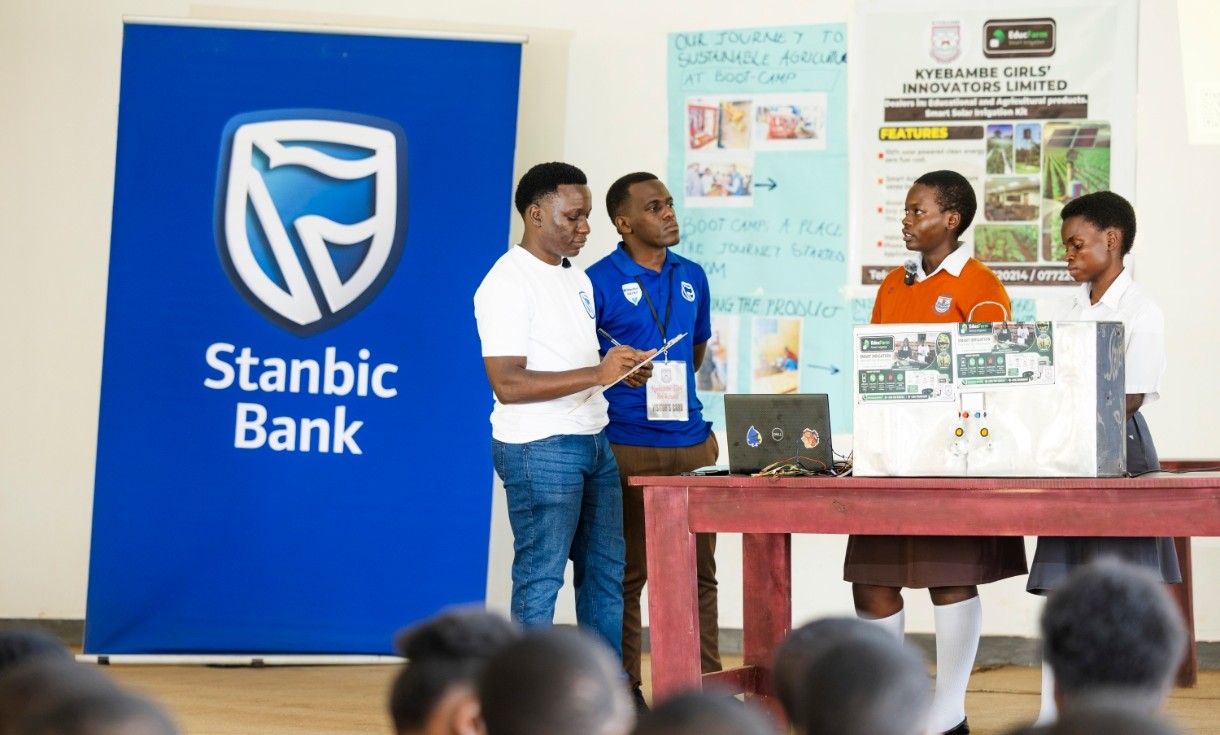
Diana Ondoga, the Manager Corporate Social Investment (CSI) said, “We see this programme as our contribution to building Uganda’s next entrepreneurs, employees and leaders.” The championship also aligns with Uganda’s competence-based curriculum by promoting Science, Technology, Engineering and Mathematics (STEM), critical thinking, creativity, collaboration and problem-solving skills that prepare learners for the future of work. She said the appraisal visits are not solely about selecting finalists, but also about measuring the impact of the programme on learners’ ability to solve real-life community challenges through innovation.
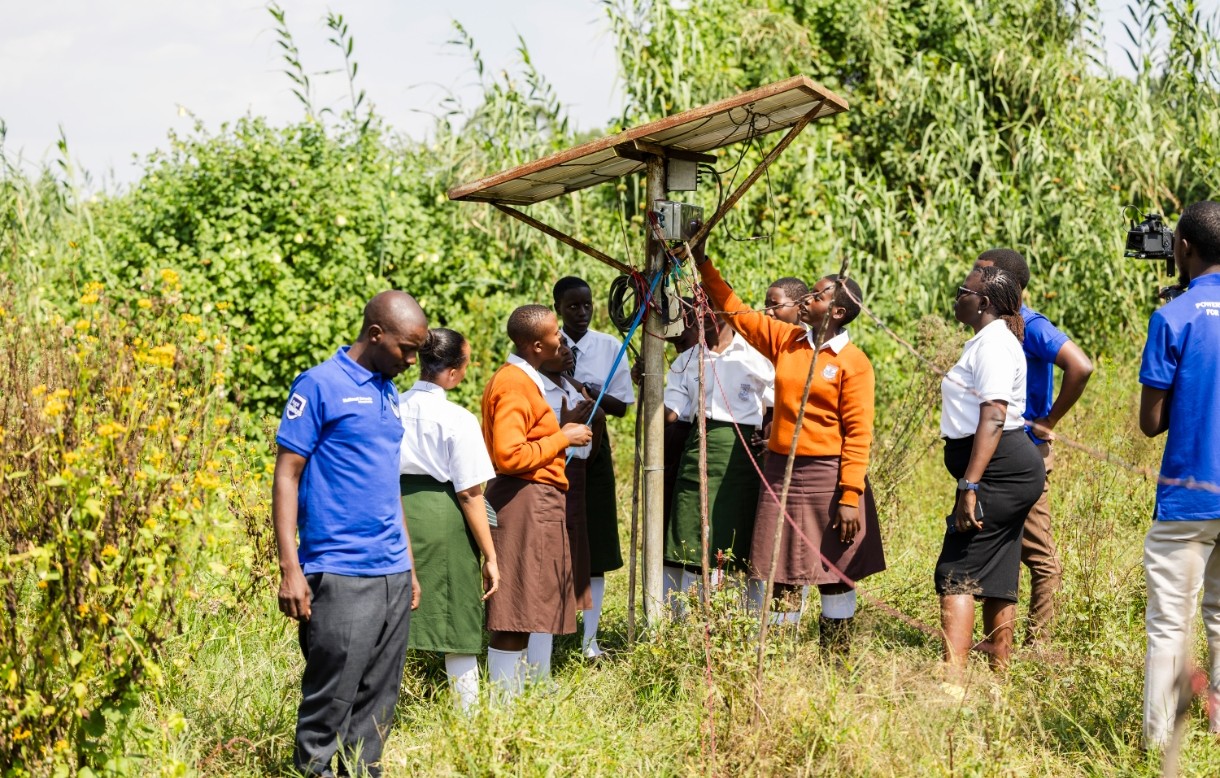
The first visit to Western Region showcased a farming innovation developed by Kyebambe Girls’ Secondary School. The school team demonstrated an enabled smart irrigation system. It automatically sends alerts to users, showing how students are applying emerging technologies such as Artificial Intelligence to improve agricultural productivity. Ondoga said, “This is exactly the kind of innovation we want to see. Young people are developing practical solutions using technology to address challenges within their communities. When we expose them to opportunity and nurture their confidence, they can achieve extraordinary things.”
She said the championship helps learners to discover their potential, develop confidence. “They are realizing that even with smallest capital, they can build sustainable businesses that create value within their communities,” she said. Headteacher, Mrs. Ruth Kwesiga, expressed appreciation to Stanbic Bank for organising the championship, and allowing students innovate and exercise their skills. She said, “I want to appreciate Stanbic Bank for being pioneers of change and transformation to this generation. We have participated in the National Schools Championship since 2018 and our students have not remained the same.”
“Back in my home, I do farming, and I also have an irrigation system that is solar but not automatic. And when the students came up with an automated smart irrigation system, it amazed me, and I have supported them. That’s why I want the school to also be one of the customers,” Kwesiga said.
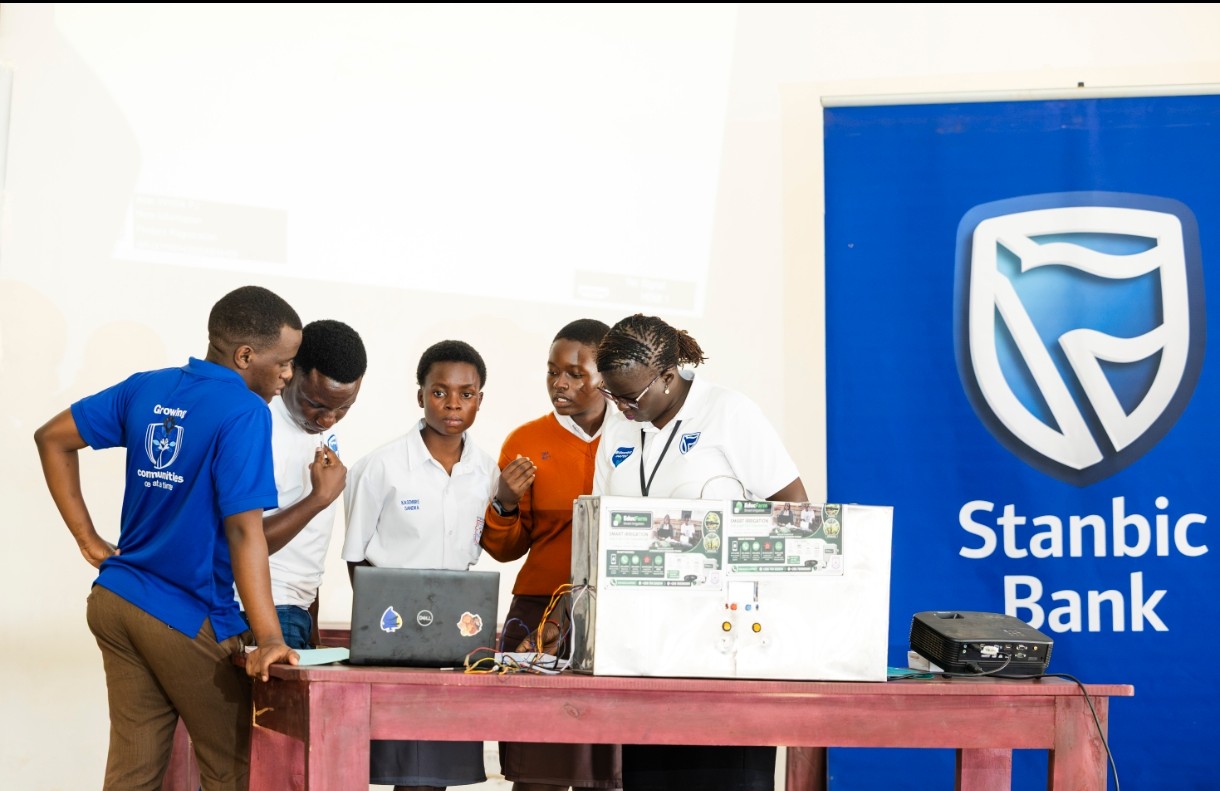
Apart from the 12 schools, six student-led businesses were also selected to advance.Ondoga said this year’s championship introduced a new approach that significantly expanded the programmer’s reach. “Instead of training only selected teachers through regional workshops as in previous editions, Stanbic Bank engaged 913 participating schools through a nationwide innovation challenge,” she said.
She said, “Schools were tasked with solving practical problem scenarios alongside their learners before the boot camp selection process. As a result, approximately 90 to 95 percent of participating schools benefited directly from entrepreneurship and innovation learning, regardless of whether they advanced to the bootcamp.”
According to Stanbic Bank, the new model has enabled the programme to reach more schools in a cost-effective manner while significantly improving the quality of innovations presented by learners. Ondoga said as the appraisal visits continue across the country, Stanbic Bank remains committed to equipping Uganda’s youth with the knowledge, confidence and entrepreneurial mindset required to drive sustainable economic growth and shape the country’s future.
Background
The appraisal visits will assess the 12 regional finalist schools to determine which innovations will advance to the Stanbic National Schools Championship Grand Finale in August. The schools include Aga Khan High School, which developed a circular economy innovation that transforms plastic waste mixed with sand into durable, eco-friendly bricks and pavers; Bishop Dunstan Nsubuga Memorial Secondary School, with a smart recycling machine that encourages proper plastic waste disposal while rewarding users.
St. Kizito High School, Namugongo, whose agribusiness innovation promotes sustainable food production, value addition and reduced food waste within the school ecosystem; Comboni College, which designed a conservation solution aimed at preventing wild animals from escaping protected reserves, and COTN Mirama Hills High School, whose environmental innovation captures carbon dioxide from polluted air and releases cleaner, breathable air.
Also in contention are Lira Town College, with a wearable seating solution that enables people to sit anywhere, anytime. Sedes Sapientiae Academiae Secondary School, which developed an affordable multi-purpose poultry feed-making machine to reduce production costs for poultry farmers. Kyebambe Girls’ Secondary School, with a smart irrigation solution for smallholder farmers.
St. Theresa Girls’ Secondary School, Nsenyi, whose wearable health technology helps women manage menstrual pain. Ngora High School, which developed an AI-powered mobile application for early livestock disease detection. Iganga Secondary School, with an affordable post-harvest storage innovation to reduce vegetable spoilage and losses, and Kakira Secondary School, which created an affordable and efficient seed-planting solution for small-scale farmers.