Airtel Uganda has called for the establishment of a national cyber resilience framework to strengthen the country’s ability to prevent, detect, respond to and recover from cyberattacks targeting critical infrastructure and essential services.
Airtel Uganda IT Director, Uwagboe Ehimwenman, made the call during a panel discussion at the inaugural National Cybersecurity Conference held at the Kampala Sheraton Hotel under the theme, “Building Cyber Resilience Through Collaboration: Strengthening Uganda’s Defence Against Emerging Cyber Threats.”


The conference, organised by the Uganda Communications Commission (UCC), brought together stakeholders from government, telecommunications, financial services, critical infrastructure and technology sectors to examine Uganda’s evolving cyber threat landscape.

Uwagboe said the proposed framework should be supported by mandatory information sharing, regular cross-sector cybersecurity drills and stronger protection of critical digital infrastructure. He said the growing interconnection between Uganda’s digital systems means organisations can no longer afford to manage cyber threats in isolation, as an attack on one institution can quickly create vulnerabilities or disruptions across other sectors.
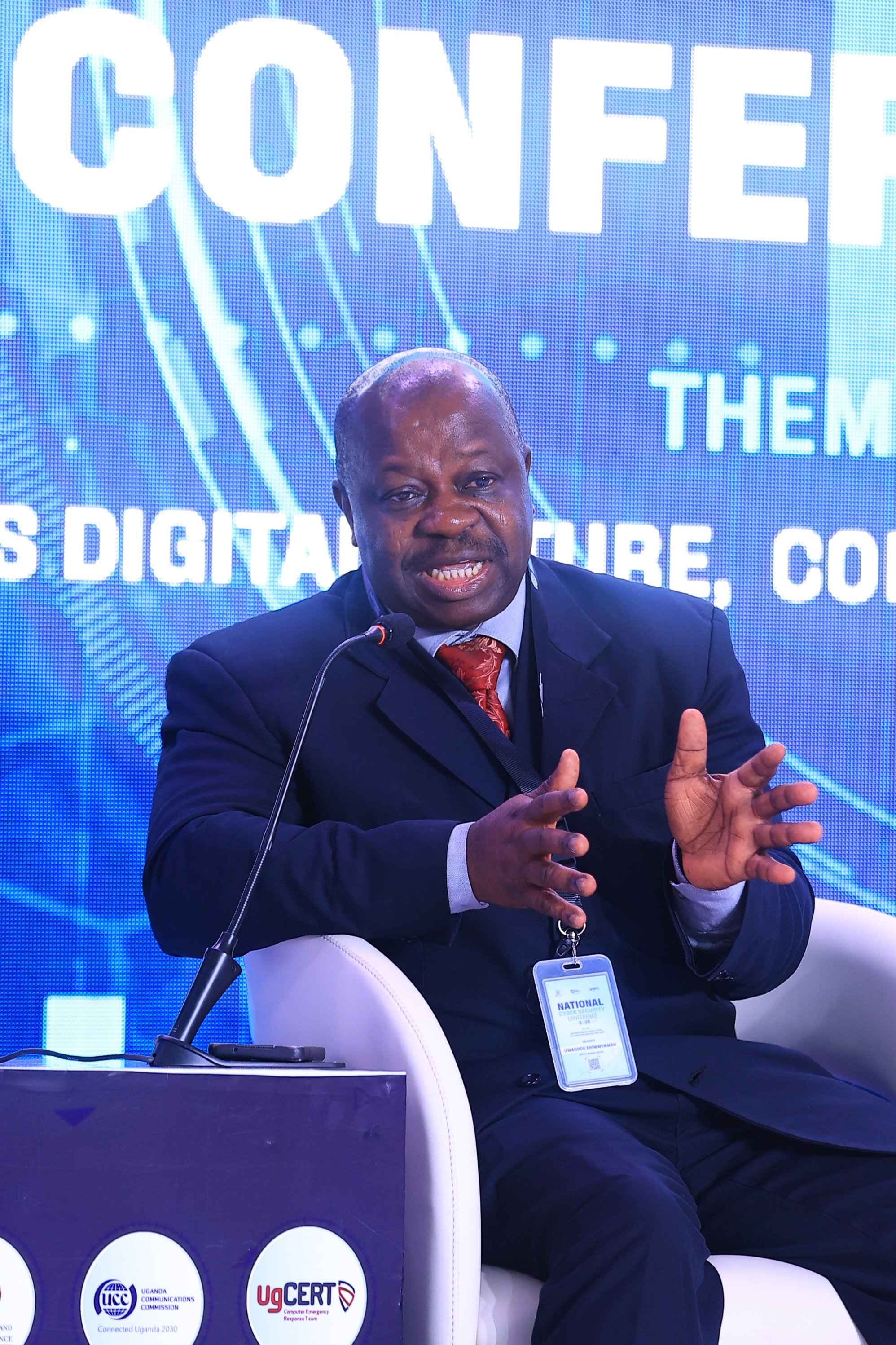
“A cyberattack is no longer just a technology issue. It is an attack on the economy. Because telecom sits at the centre of many critical services, an attack on us affects everyone,” Uwagboe said. He called for a national cyber coordination mechanism with clearly identified points of contact across government, telecommunications, banking and other critical sectors. Such a mechanism, he said, would enable faster information sharing and more coordinated responses when cyber incidents extend beyond a single organisation.

Uwagboe also cautioned organisations against making rushed decisions during cyber incidents, noting that panic and poor coordination can compound the impact of an attack. He said the telecommunications sector requires particular attention because of its role in supporting banking, digital payments, government services, education, business and emergency response.
Beyond responding to attacks, Uwagboe urged organisations to strengthen their preparedness by regularly testing backup and disaster recovery systems.He warned that organisations should not assume that recovery systems will work simply because they exist.

“The day you need your backup is not the day to discover it doesn’t work,” he said, adding that disaster recovery infrastructure should be regularly tested and, where possible, carry some live traffic to demonstrate that it can support operations during a major disruption. He further urged regulators to make cybersecurity resilience an integral part of the approval and development of new digital products and services, rather than focusing primarily on functionality.
Milton Sabiti, an IT forensics manager at the Uganda Revenue Authority also emphasized collaboration amongst institutions, because an attack on one institution like URA affects many others, due to digital integration.
“For URA, when an incident happens, it’s no longer an IT problem. It’s a fiscal problem. No money is being collected. Within no minute, you find the government now looking for loans to fill that gap. So, we need to collaborate. No one can sort everything alone” He said.
According to UCC data, Uganda’s growing digital ecosystem includes 45.7 million active mobile subscriptions and 17 million mobile internet subscriptions, increasing the number of people and services that depend on digital infrastructure. The country also recorded more than 1.58 million malware infections in 2023/24, highlighting the growing need for stronger preparedness and coordinated action.