By Brian Mugenyi
One by one, Edward Kiwanuka Ssekandi, the former Bukoto Central Member of Parliament also the presidential special Envoy on political affairs lives by example.
His political contribution to the national development is no longer a secret. From the field collected data for this feature and academic writing and bibliographic information from locals in the area about the old fogey’s contribution to the National Growth Development, Masaka District achievements are enormous.
From the deep village of Kyanamukaka suburbs on a Saturday, the area is no longer a village,“By nature, he is not a man of publicity and prefers to do the development under the cover before it gets out,” said John Kakande, the Masaka District chairman, describing former Vice President Edward Kiwanuka Ssekandi during an interview.
Kakande’s observation offers a starting point for examining Ssekandi’s contribution to communities in Bukoto Central and the wider Masaka District, where local accounts associate him with initiatives ranging from electricity extension and agricultural support to road construction, food relief and the provision of land for public infrastructure.
For communities that have experienced changes in access to roads, electricity and agricultural opportunities, the story of development is often found in interventions that do not always attract national attention.
Ssekandi’s reported contributions span several decades, including support for farmers, Kindu churches, youth groups and local infrastructure projects. His donation of 10 acres of land for the Masaka District headquarters has also placed him at the centre of an important discussion about public assets and the future location of district administration.
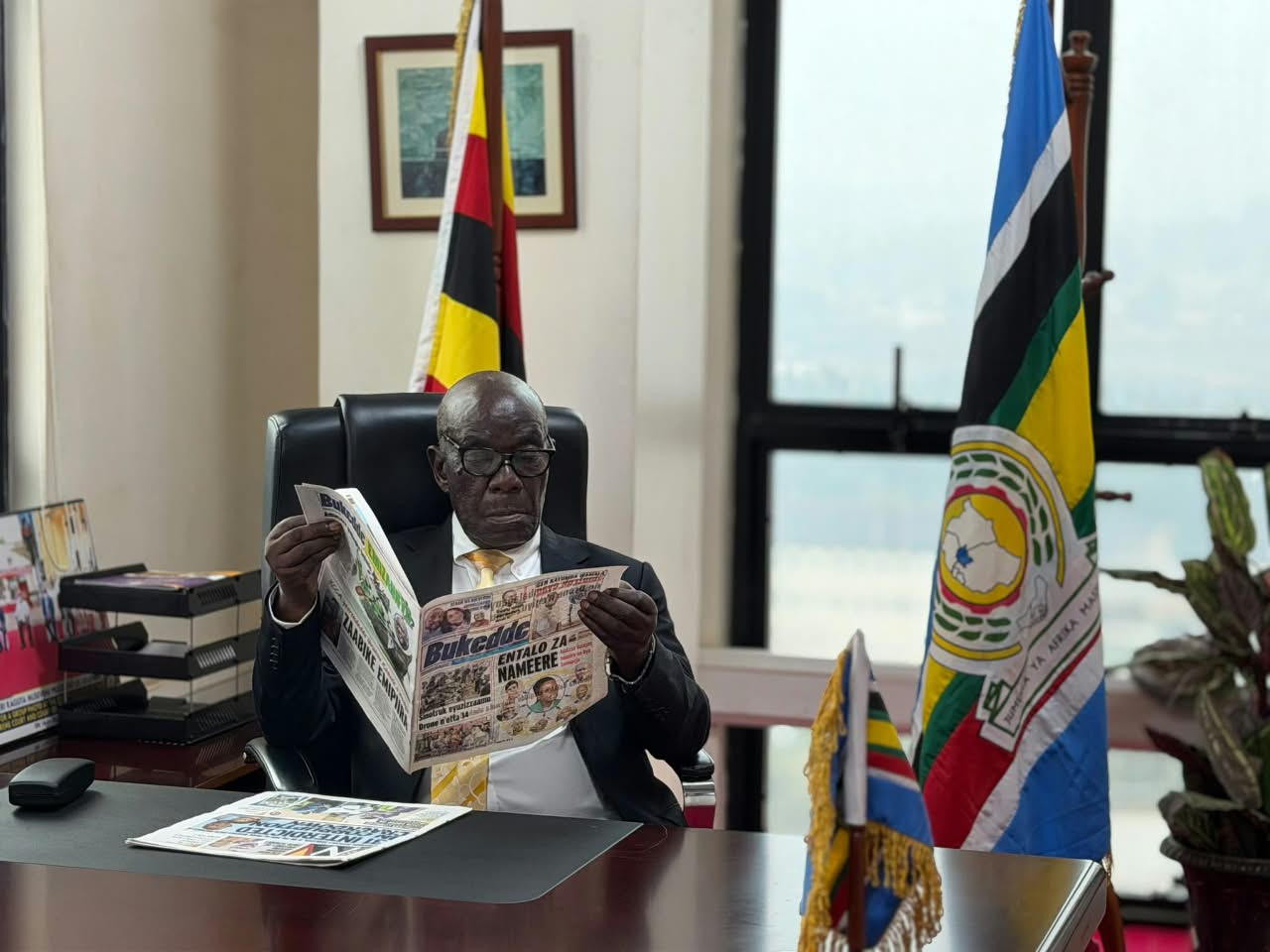
Electricity and the transformation of rural communities has been realised as the old fogey takes his seat on daily office duties and state assignments in his late 80s every working day at Kampala Kingdom offices Kampala of 4th floor.
Ssekandi lives by a legacy of a leader making headlines with development, contributing to the development of Paul Paul Hotel and many other development ventures – mostly schools, health and roads development.
He enjoys reading books, news and travels.
According to accounts of his work in the area, Ssekandi supported efforts to extend electricity to communities between 2006 and 2011, with further connections reportedly reaching several parts of the area, including landing sites, between 2011 and 2020.
For rural households and trading centres, electricity can open opportunities for small businesses, improve security through lighting and support the growth of commercial activity.
The extension of power to landing sites is particularly relevant to communities whose livelihoods depend on fishing and related businesses. However, the specific connections facilitated by Ssekandi and the respective roles of government agencies and other partners require confirmation from electricity authorities and residents.
Kakande’s account places these interventions within a wider pattern of development that, he says, should be assessed through the changes communities experience rather than publicity surrounding individual leaders.
Food relief when Kyesiiga faced scarcity
In 2006, during a period of dry weather and food scarcity, Ssekandi reportedly distributed food to residents of Kyesiiga.
The intervention illustrates the importance of emergency assistance to families facing shortages, particularly in communities where livelihoods depend heavily on seasonal agriculture.
For households with limited savings, prolonged dry spells can threaten both food security and income. Assistance during such periods can provide temporary relief while families work to restore their livelihoods.
Interviews with beneficiaries would help establish how many households received the food, the circumstances surrounding the distribution and the impact on affected families.
Coffee seedlings, cattle and support for farmers
Agriculture remains central to the livelihoods of many residents in rural Masaka. Ssekandi is credited by local accounts with supporting farming households through the provision of cattle, beans and other agricultural inputs.
He is also reported to have facilitated the distribution of approximately one million coffee seedlings with support from the Uganda Coffee Development Authority (UCDA).
If confirmed by programme records, the initiative would represent a substantial agricultural intervention, potentially helping farmers establish coffee gardens and expand their participation in commercial agriculture.
Coffee can provide an important source of household income, while beans contribute to food production and household consumption. Cattle can also support farming activities and provide an additional productive asset.
The precise number of seedlings distributed, the period covered and Ssekandi’s role in coordinating the initiative should be established with UCDA and local agricultural officers.
Roads that connect communities to opportunity
Ssekandi is also credited with lobbying for road improvements in Bukoto Central, including an approximately eight-kilometre tarmac road linking Kamuzinda to Kyanamukaka.
The road is associated with the wider transformation of Kyanamukaka, which has grown beyond its former village status into a town council and an increasingly important centre for public administration and commerce.
Better road access can reduce transport difficulties, improve the movement of agricultural produce and make it easier for residents to reach schools, health facilities and markets.
Local accounts further indicate that Ssekandi used personal resources to provide a grader to clear roads before government-funded construction works began.
Establishing which roads were cleared, when the work took place and how it related to subsequent government projects would help document the contribution accurately.
For farmers and traders, the value of road construction is ultimately measured in accessibility, transport costs and the ability to move goods and services between communities.
Churches and community institutions
Ssekandi’s reported contributions also include support for religious institutions. Between 2001 and 2006, he reportedly donated 200 iron sheets to Kkindu Church.
In 2019, he is also credited with supporting the construction of a priests’ residence and church facilities.
Churches often serve as centres of worship and community organisation, making their infrastructure important to the people who use them. Interviews with church leaders and records from the institutions would help establish the details and impact of these contributions.
His reported support for local institutions adds another dimension to the development story, extending beyond roads and other public infrastructure to facilities used by community members in their daily lives.
Youth empowerment and community unity
Ssekandi is further reported to have supported the Bukoto Central Youth Link Group through financial assistance and access to agricultural inputs, including coffee seedlings, beans and iron sheets.
Such support can help youth organisations pursue practical activities and identify opportunities for income generation. Its long-term impact, however, is best understood by speaking to the group’s members about the projects undertaken, beneficiaries reached and activities sustained.
Kakande also describes Ssekandi as someone who has helped bring people together in the area.
That aspect of his contribution is worth examining through the experiences of local leaders and residents, particularly where community cooperation has supported development projects that require collective participation.
Health services and the ambulance initiative
In 2020, Ssekandi reportedly helped extend ambulance services in Kyanamukaka and surrounding communities.
Emergency transport can be important in rural areas, where the distance to a health facility may delay access to treatment. The details of the reported initiative—including the service arrangements, communities served and whether the intervention involved a new ambulance or an extension of an existing service—should be confirmed with the relevant health authorities.
Meanwhile, Kyanamukaka Town Council Mayor Zaina Nakidde has highlighted other service-delivery efforts in the area, including improvements in health, education, water and roads.
“Our children are immunised in villages and monitored in schools,” Nakidde said, describing community-level health outreach.
Her remarks point to the importance of taking essential services closer to residents, particularly children and families who may face barriers to accessing facilities.
According to Zaina Nakidde the Mayor for Kyanamukaka Town Council, also highlighted the town council’s maternity ward, water extensions to Buyinja and Zzimwe wards, planned classroom construction at COP Primary School and youth training opportunities. These initiatives form part of the wider development context in which Ssekandi’s reported contributions are being discussed.
Ten acres for Masaka District headquarters
One of Ssekandi’s most prominent contributions to public infrastructure is his donation of 10 acres of land at Kyambazzi in Kyanamukaka for the Masaka District headquarters.
The donation was intended to provide the district with a permanent administrative location after several departments had operated from scattered premises, including buildings belonging to the Buganda Kingdom.
Ssekandi’s donation has the potential to reduce the need for government to purchase land for the headquarters. Its full public value will depend on the progress of construction, the efficient use of public funds and the ability of residents to access district services.
The project also raises a broader question about the stewardship of public assets in Masaka: how can leaders protect land and other resources so they serve communities over the long term?
A legacy measured by outcomes
Kakande’s description of Ssekandi as a leader who prefers development to publicity places the emphasis on documenting tangible interventions rather than relying on reputation alone.
The reported record includes electricity extension, agricultural support, food relief, road lobbying, assistance to churches and youth groups, an ambulance-related initiative and the donation of land for district administration.
Mayor Nakidde’s comments on local health outreach and other service-delivery priorities add a perspective on the services residents need as Kyanamukaka continues to grow.
According to Oscar Mutebi, the private secretary in State House also personal secretary to Ssekandi says, the latter is a news maker but prefers to work for the community away from limelight.
He says, the latter is qualified lawyer from Daresalam University and is a leader aiming to see improved Kyanamukaka Town Council and Masaka District as a whole.
” He is Kyanamukaka Town Council himself and it is known because of him,” said Oscar Mutebi.
Ssekandi has developed the area and he is reason behind the roads construction as may of the parts of the development.
” He is a my major strength and I have learnt from him. He is a grad father, a teacher and also ambassador of development,” said Mutebi before adding, apparently he is already working hard to ensure the area regains it’s strength academically with vocational training school for learners.
For clarity, he extended development of st. Mugaga Secondary school and extended Television and office chairs to learners and teachers as part of his new developments in the area.