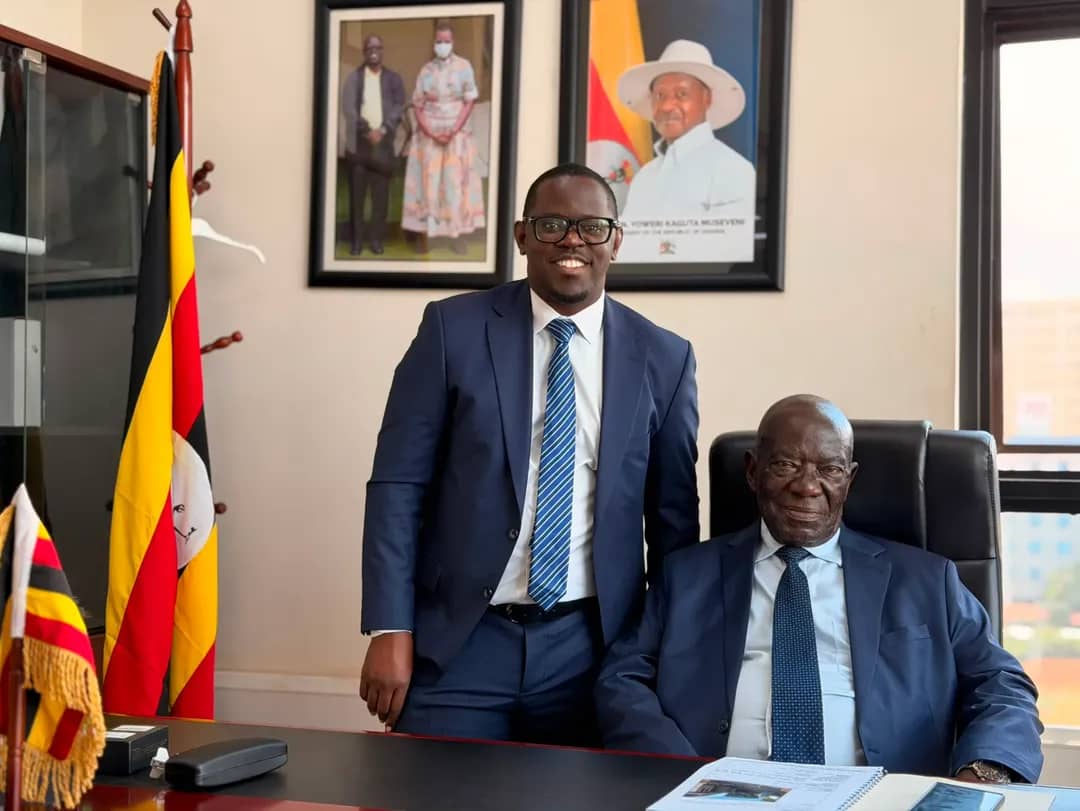
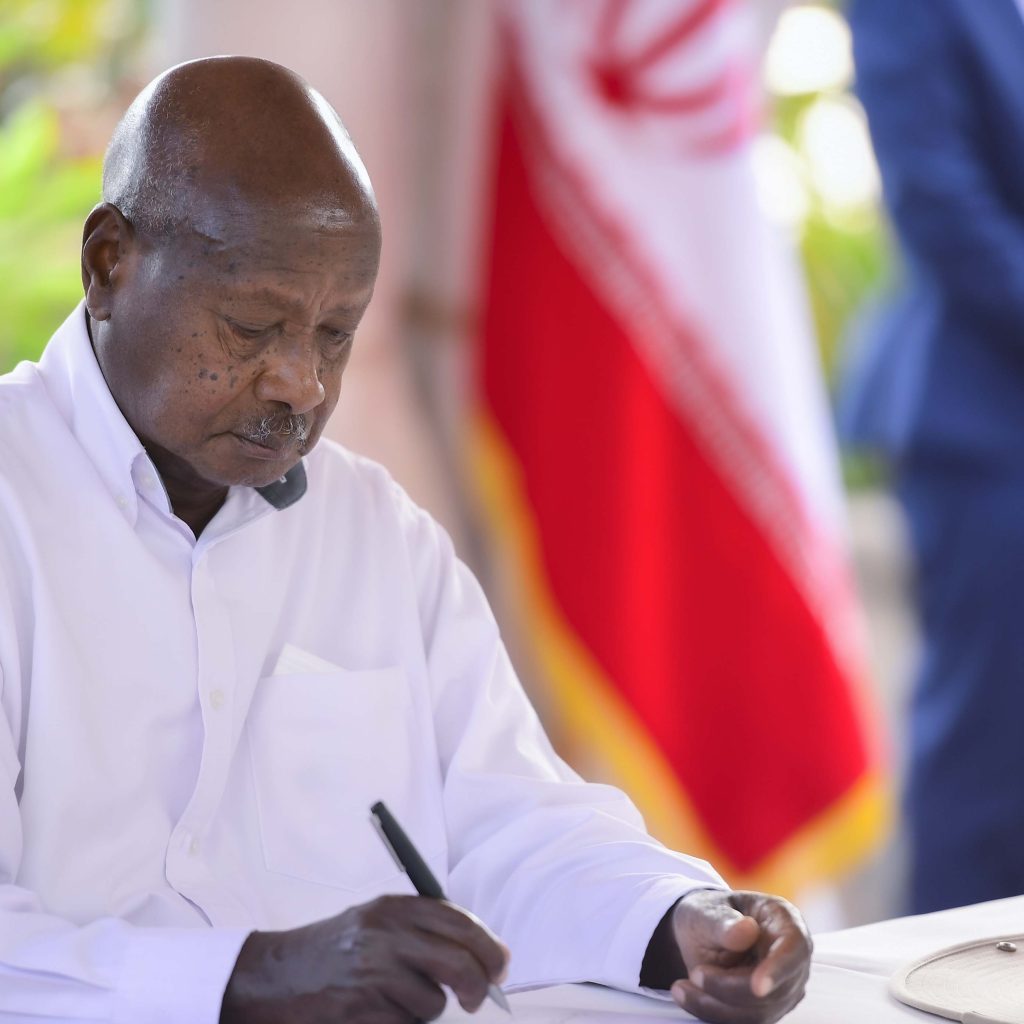
Tag: Oscar Mutebi

  • SPECIAL REPORT: THE GIVING HAND: OSCAR MUTEBI’S JOURNEY FROM STATE HOUSE CORRIDORS TO MASAKA’S LAST MILE

    SPECIAL REPORT: THE GIVING HAND: OSCAR MUTEBI’S JOURNEY FROM STATE HOUSE CORRIDORS TO MASAKA’S LAST MILE

    How a young public servant is using coffee, sport, education and direct community outreach to build a grassroots service brand — and why the real test is whether compassion can become lasting economic change

    By Brian Mugenyi

    Diimo Landing Site, Masaka:  In a soft tone, Oscar Mutebi grabs a microphone and begins speaking to the Diimo community.

    There is no booming political rhetoric.

    No theatrical promises.

    He speaks slowly, deliberately, occasionally pausing as residents listen.

    Behind him lies Lake Victoria.

    Around him are people whose livelihoods are tied to fishing, farming, small trade and the uncertain economics of rural life.

    For Mutebi, the microphone is more than a public-address tool.

    It is a bridge between two Ugandas.

    One sits in the corridors of State House, where policies, programmes and national priorities are discussed.

    The other is here, at the last mile, where development is measured in whether there is food in the kitchen, a market for produce, a school for children, a job for a young person and an income that can survive the next difficult season.

    That distance is where Oscar Mutebi has increasingly chosen to work.

    But the story of his rise is not simply about generosity.

    It is about an emerging model of grassroots public service — and the harder question of whether individual interventions can produce durable change in communities that face problems far bigger than a single donation, football tournament or batch of coffee seedlings.

    THE DAY THE MICROPHONE BECAME A BRIDGE

    At Diimo, Mutebi’s intervention carried a deliberately human face.

    He distributed basic food items, including maize flour and cooking oil, to vulnerable households.

    For a family facing food insecurity, the meaning is immediate.

    A sack of maize flour is not an abstraction.

    It is a meal.

    A jerrycan of cooking oil is not a policy document.

    It is what goes into the saucepan.

    The symbolism is even stronger because Diimo has a long history of struggling with basic services.

    A 2015 Daily Monitor report described the landing site as home to more than 2,000 people at the time and reported serious sanitation concerns, including filled pit latrines and fears of disease outbreaks.
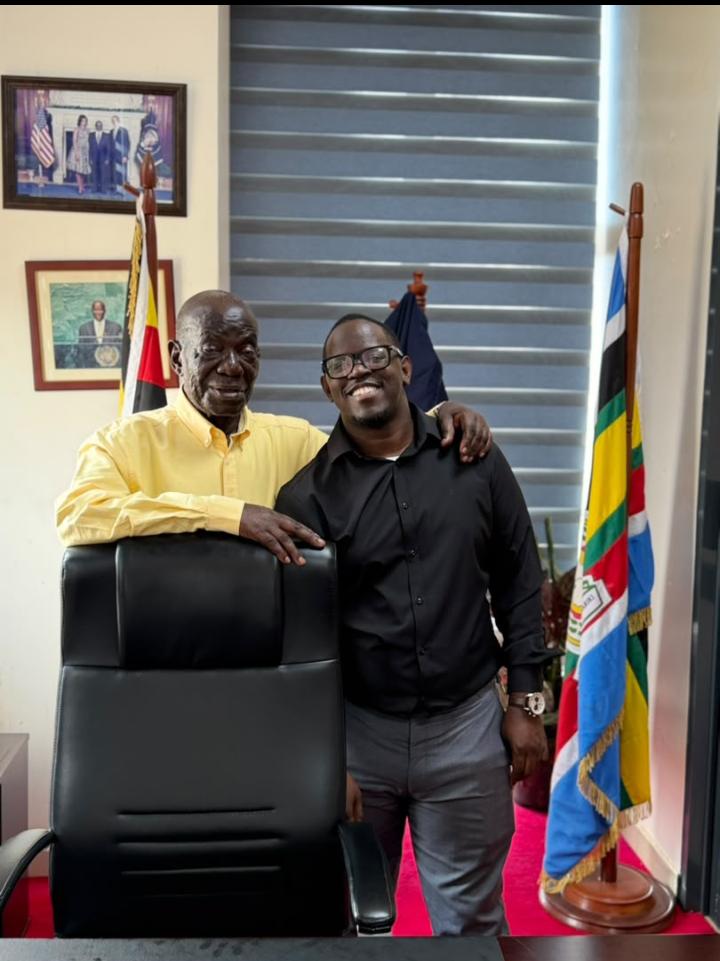
    That historical record offers an important reminder: the needs of communities such as Diimo did not begin with Mutebi’s arrival.

    They are structural.

    And that distinction is central to understanding his emerging grassroots work.

    Mutebi cannot, by himself, solve the problems of a fishing community.

    But he can carry a problem from the shoreline into a wider conversation about public service.

    That is the role he increasingly appears to be embracing.

    A PUBLIC SERVANT BETWEEN TWO WORLDS

    The official record places Mutebi inside Uganda’s public administration.

    The Office of the President’s 2026/27 staff list identifies Oscar Franciso Mutebi as a Political Mobiliser at State House, while earlier government records list him as a Private Secretary.

    His public profile outside Kampala, however, has increasingly been built through community activity.

    Recent reporting describes his involvement in agriculture, youth sports, education and grassroots mobilisation in Greater Masaka.

    This creates an unusual trajectory.

    Many people with access to the political centre spend their careers moving further away from the village.

    Mutebi’s public journey has moved in the opposite direction.

    From the capital towards communities.

    From offices towards football pitches.

    From formal meetings towards farms.

    From political language towards household concerns.

    His own explanation is revealing.

    “For me, it is better to deliver services to people than to walk the grapevine of politics,” Mutebi says. “It is through serving people that you create a good identity.”

    The statement sounds simple.

    Its implications are not.

    It suggests a theory of leadership in which political visibility is secondary to the ability to demonstrate usefulness.

    COFFEE: THE SHIFT FROM RELIEF TO PRODUCTION

    Perhaps nowhere is that philosophy more visible than in coffee.

    In December 2025, the government distributed 20,000 coffee seedlings to farmers in Kyesiiga Sub-county, Masaka District, through an initiative associated with former Vice President Edward Kiwanuka Ssekandi. Mutebi, described by Nile Post as an aide to Ssekandi and coordinator of the initiative, supervised the handover.

    The Cooperator independently reported the same 20,000-seedling intervention and quoted Mutebi arguing that the objective was to strengthen household incomes and promote long-term wealth creation.

    That distinction is important.

    The Diimo food distribution addresses an immediate need.

    The coffee intervention is intended to address income.

    One responds to hunger.

    The other attempts to prevent households from remaining trapped in hunger.

    Mutebi has urged farmers not to sell the seedlings but to plant and maintain them as long-term productive assets.

    The Ministry of Agriculture’s own policy framework supports the wider economic logic behind that intervention. Government identifies coffee as a major export crop and places emphasis on improved planting materials, farmer training, production, value addition and marketing.

    But there is a crucial caveat.

    A coffee seedling is not yet household wealth.

    It must survive.

    The farmer must have extension support.

    The crop must remain productive.

    The farmer must get a fair price.

    And, eventually, the coffee must reach a viable market.

    That means the real measure of Mutebi’s intervention will not be the number of seedlings handed out.

    It will be the number of thriving trees, productive farmers and improved household incomes that follow.

    WHEN A FOOTBALL PITCH BECOMES A DEVELOPMENT SPACE

    Mutebi’s second major constituency is Uganda’s youth.

    His strategy here is less about cash and more about organised opportunity.

    Through the Oscar Cup, he has used football as a platform for youth mobilisation and talent development in Kyanamukaka.

    Nile Post reported that Mutebi and the Ssekandi office had supported school and grassroots sports through football equipment, trophies and financial rewards, while he urged young athletes to maintain discipline and use their talent responsibly.

    Watchdog Uganda has separately reported that the Oscar Cup attracts large crowds and is being presented as a mechanism for talent identification, youth engagement and community mobilisation.

    The deeper significance lies outside the scoreboard.

    A rural football tournament may not solve unemployment.

    But it can create structure where there is uncertainty.

    It can keep young people connected to one another.

    It can identify talent.

    It can create mentors.

    And, for a gifted player, it can turn an ordinary village pitch into the beginning of a career.

    The same logic is visible in Mutebi’s engagement with schools.

    At St Mugaga Secondary School, he joined students during a World Cup-related event and spoke about education, talent and determination.

    At Molly and Paul Secondary School, he pledged computers to support ICT education, saying the school was in his home village.

    These gestures point toward another principle:

    development is not only about what government gives people; it is also about what capacities people acquire to create opportunities for themselves.

    THE SCHOOL, THE FARM AND THE FOOTBALL FIELD

    Taken separately, the interventions can appear scattered.

    Coffee in Kyesiiga.

    Football in Kyanamukaka.

    ICT support in a rural school.

    Food assistance in Diimo.

    Taken together, a pattern begins to emerge.

    Agriculture is aimed at household income.

    Sport is aimed at youth engagement and talent.

    Education is aimed at skills and opportunity.

    Direct assistance is aimed at immediate vulnerability.

    That combination resembles a grassroots portfolio rather than a single charity project.

    But there is a danger in celebrating the pattern too quickly.

    The evidence currently available establishes activities more strongly than outcomes.

    There is substantial documentation that seedlings were distributed.

    There is evidence of sports tournaments being organised.

    There is reporting on school support.

    There is direct reporting on food assistance in Diimo.

    But there is far less independently verified evidence showing exactly how many households have moved from these interventions into sustained higher incomes.

    That is the unfinished part of the story.

    And it is where serious journalism must remain skeptical.

    THE POLITICS OF COMPASSION

    Mutebi’s public work also sits inside politics.

    That cannot be erased from the record.

    He is a State House political mobiliser.

    Reporting on his activities has described him as a grassroots NRM mobiliser, while other coverage has openly examined whether his growing profile could signal a longer-term political ambition.

    That raises an unavoidable question:

    When a politically connected public figure gives, mobilises and delivers, where does public service end and political capital begin?

    The answer cannot simply be “both”.

    Nor should every community intervention automatically be dismissed as political.

    The better journalistic test is transparency and impact.

    Who funds the intervention?

    Who selects beneficiaries?

    What criteria are used?

    How many people benefit?

    What happens after the cameras leave?

    Are public resources involved?

    Are government programmes being presented accurately as government programmes, rather than as personal gifts?

    And, most importantly, does the intervention increase people’s ability to sustain themselves?

    Those are the questions that separate a public-interest story from publicity.

    FOLLOWING THE MONEY

    This is also where the public record remains incomplete.

    Public reporting identifies government and the Ssekandi office in connection with the coffee-seedling interventions, while Mutebi is described as a coordinator.

    But published accounts do not provide a comprehensive audited financial trail for all of Mutebi’s community activities.

    That is not evidence of wrongdoing.

    It is an evidence gap.

    And for any journalist examining a public servant’s development profile, it is an important gap.

    The public deserves to know whether interventions are funded through personal resources, government programmes, private contributions, corporate support or a combination of these.

    It also matters because community philanthropy can create dependence if it is not connected to functioning public institutions and sustainable economic systems.

    The strongest version of Mutebi’s model, therefore, would not be one in which the community waits for him.

    It would be one in which communities eventually require less intervention because livelihoods have improved.

    THE ROAD QUESTION

    The same principle applies to infrastructure.

    Mutebi has urged residents to turn improved roads, electricity and water into economic opportunities rather than treating infrastructure merely as physical projects. His recent messaging around Kyanamukaka’s first tarmac road has focused on trade, markets, healthcare and household income.

    That is an important development lens.

    A road matters because something moves along it.

    Coffee reaches a market.

    Children reach school.

    A patient reaches a health facility.

    A trader reaches customers.

    A truck reaches a farm.

    Infrastructure becomes development only when people can use it to change their economic circumstances.

    Mutebi’s challenge, therefore, is not simply to celebrate infrastructure.

    It is to help communities understand how to convert it into production.

    WHAT FIVE SOURCES REVEAL

    Five distinct strands of evidence illuminate the Mutebi story.

    The Office of the President establishes his formal public-service position.

    Nile Post independently confirms the 20,000 coffee-seedling distribution and includes the voices of agricultural officials and beneficiaries.

    The Cooperator corroborates the coffee intervention and its stated household-income objective.

    Daily Monitor’s historical reporting on Diimo provides context showing that the landing site’s social-service challenges predate Mutebi’s intervention by years.

    Nile Post, Showbiz Uganda and Watchdog Uganda’s reporting on sport and education establishes that Mutebi’s community activities extend beyond charitable food distribution into youth and educational initiatives.

    Together, these sources tell a more complicated story than either praise or criticism alone could provide.

    They show a young public servant building a visible service identity.

    They also show a development model whose long-term outcomes still need to be measured.

    THE TEST AFTER THE HANDOVER

    This is the point at which the story of Mutebi’s giving hand becomes a story about journalism itself.

    The journalist’s work should not stop when the donation is made.

    The journalist should return.

    Find the beneficiary.

    Ask whether the food was enough.

    Follow the farmer.

    Count the surviving coffee trees.

    Track whether the footballers found opportunities.

    Visit the school again.

    Check whether the computers arrived.

    Ask what changed.

    Ask what did not.

    And ask whether public institutions have become stronger or merely more dependent on personalities.

    That is how a profile becomes accountability journalism.

    It is also how compassion becomes evidence.

    THE LAST MILE

    At Diimo, Mutebi’s microphone eventually falls silent.

    The crowd will disperse.

    The maize flour will be carried home.

    The cooking oil will enter kitchens.

    The boats will remain by the shoreline.

    The farmers will return to their gardens.

    The children will return to classrooms.

    And life will continue.

    That is where the rhetoric of leadership meets the mathematics of survival.

    Mutebi’s journey is therefore not ultimately about the number of speeches he makes or the number of items he distributes.

    It is about whether proximity to power can be converted into proximity to people — and whether proximity to people can be converted into durable opportunity.

    The available evidence shows an ambitious grassroots agenda built around relief, production, youth, education and mobilisation.

    It also shows why that agenda deserves scrutiny rather than applause alone.

    Because the final question is not whether Oscar Mutebi can make a community smile for a day.

    It is whether he can help create the conditions under which that community does not need to wait for the next generous hand.

    That is the harder journey.

    And it is the one worth following.

    A sack of flour can feed a family for a day. A coffee tree can feed a family for years. A skill can feed generations.

    For Oscar Mutebi, the voyage from State House to Diimo will be judged not by how many hands he reaches — but by how many of those hands eventually become strong enough to build their own future.
  • ROADS OF HOPE: How Oscar Mutebi Says Ssekandi’s Vision Is Transforming Kyanamukaka Through Roads, Business and Opportunity As the first-ever tarmac road opens a new chapter, residents see hope for trade, healthcare and economic transformation

    ROADS OF HOPE: How Oscar Mutebi Says Ssekandi’s Vision Is Transforming Kyanamukaka Through Roads, Business and Opportunity As the first-ever tarmac road opens a new chapter, residents see hope for trade, healthcare and economic transformation

    By Brian Mugenyi

    Kyanamukaka, Masaka: When you look at the road constructed in Kyanamukaka, do you think it will bring an impact on businesses and economic activities in the area?

    Mr. Oscar Mutebi, Personal Assistant to former Vice President Edward Kiwanuka Ssekandi and Private Secretary at State House, looks at the ongoing road works cutting across Kyanamukaka before explaining why the project could become a defining moment in the history of the area.

    “When you look at this place, several businesses such as carpentry workshops, salons and other small enterprises are going to be boosted. Development begins with accessibility. When people can easily move, businesses grow, investments come and communities transform,” Mutebi says.

    He explains that the road project is not only about improving transport but also about creating opportunities for ordinary people to improve their livelihoods.

    “Bukoto Central would not have been what it is today if it was not because of Mr. Edward Kiwanuka Ssekandi. Kyanamukaka will never be the same again. Seeing people develop is what is at the heart of him, and Kyanamukaka is always in his heart,” Mutebi says.

    According to Mutebi, Ssekandi’s contribution to the area goes beyond roads, highlighting his support towards key community infrastructure, including the headquarters of the area, which were constructed on land he provided.

    “Even the headquarters of this area were constructed on the land he gave. He has always believed that development requires people to have infrastructure, institutions and opportunities that can change their lives,” he says.

    He adds that the improved road network connecting Bukunda, Kamuzinda, Bulegeya, Kitafaali Trading Centre, Buyaga, Namirembe and Zimbwe will benefit businesses, health centres, schools, religious institutions and administrative centres.

    For decades, residents of Kyanamukaka measured distance not by kilometres but by hardship.

    During rainy seasons, roads became muddy obstacles that slowed economic activity. Farmers struggled to transport their produce to markets, patients faced difficult journeys to health facilities, students endured challenging routes to schools, and businesses remained limited by poor accessibility.

    But that story is changing.

    The sound of graders and construction machinery cutting through the hills of Rural Masaka has replaced years of frustration with optimism.

    The upgrading of roads connecting Sserinya, Baale, Bulegeya, Kamuzinda and Kanoni has become a symbol of a new chapter — one where rural connectivity is opening doors for economic growth, improved service delivery and greater inclusion.

    Celebrating the milestone, former Vice President Edward Kiwanuka Ssekandi said the development marked a historic moment for Kyanamukaka Town Council.

    “Today, I officially welcome the first-ever tarmac road in Kyanamukaka Town Council.
    I extend my heartfelt thanks to the President and the Ministry of Works and Transport for fulfilling this long-awaited promise. This project proves that our government listens to the needs of rural communities and delivers tangible development.
    Kyanamukaka Town Council to the World.”
    The statement captured the excitement of a community where roads have for generations determined the pace of economic and social progress.

    For Kyanamukaka residents, however, the road is not measured only in kilometres.

    It is measured in farmers reaching markets faster.

    It is measured in patients accessing healthcare more easily.

    It is measured in businesses gaining confidence to invest.

    It is measured in communities becoming more connected.

    The project is being implemented under the Ministry of Works and Transport as Government continues strengthening road infrastructure as a foundation for national transformation.

    Residents have recognised the role of the Office of Vice President Emeritus Edward Kiwanuka Ssekandi in promoting development priorities within Bukoto Central Constituency and amplifying infrastructure concerns raised by local communities.

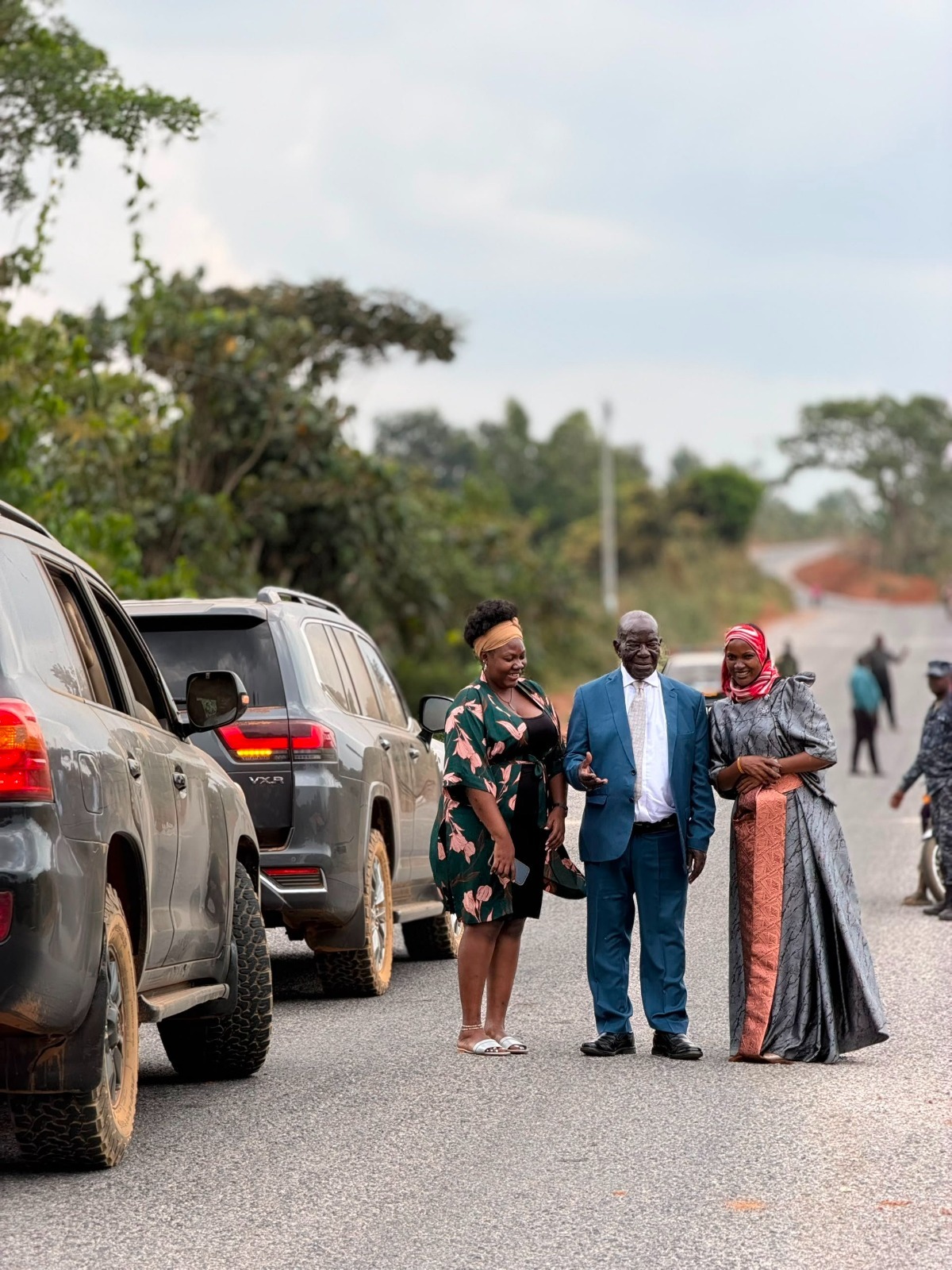
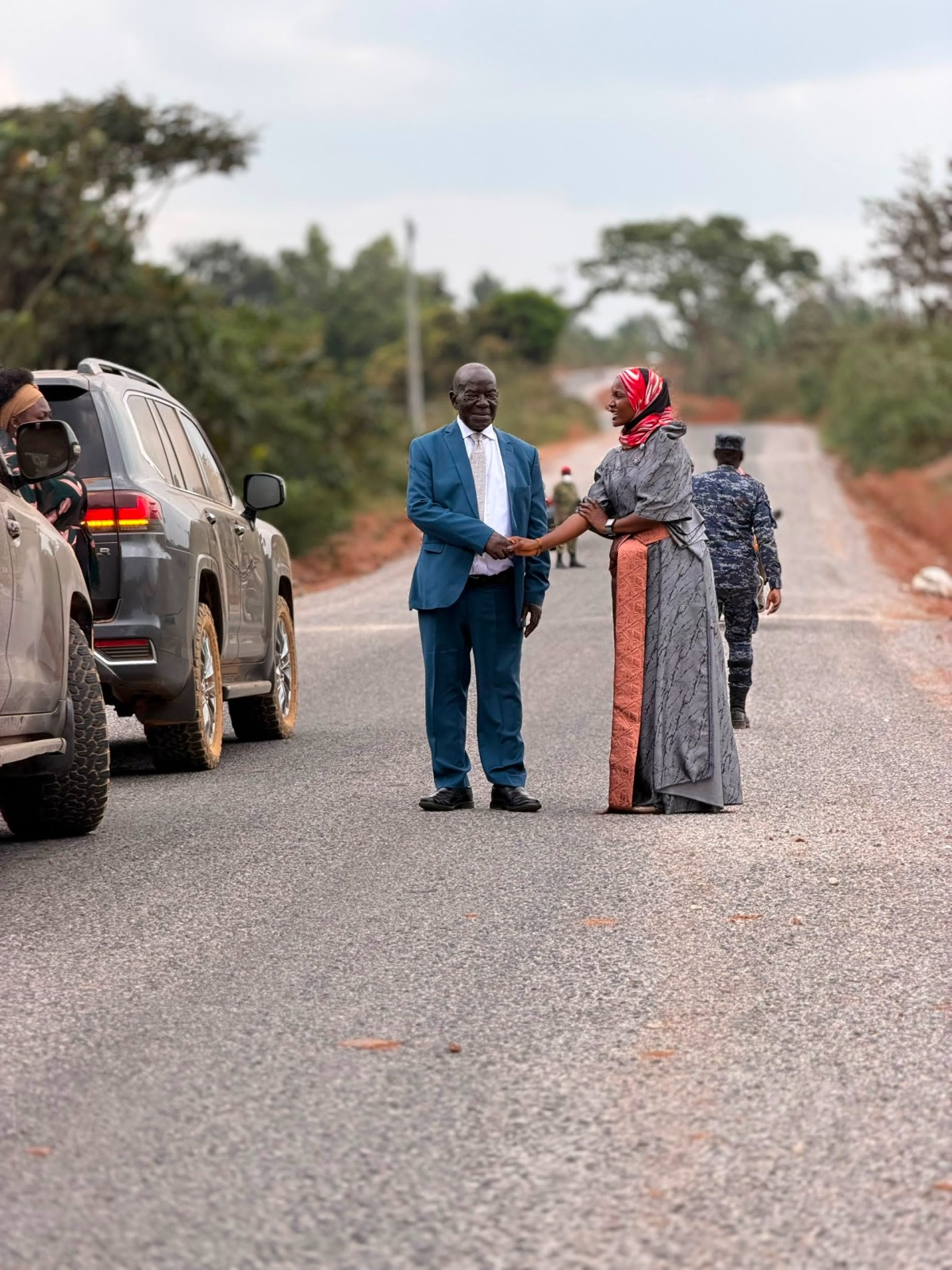
    During the ongoing road works, Ssekandi Emeritus, dressed in a blue and white suit, shared a lively moment with Kyanamukaka Town Council Mayor Hajjat Zaina Nakidde and other local leaders along the developing road corridor.

    The moment became a powerful image of a community witnessing transformation after years of waiting.

    Mayor Hajjat Zaina Nakidde described the project as a historic turning point for the area.

    “For many years, our people suffered because of poor roads. Farmers failed to access markets and businesses struggled to grow. Today, we are witnessing history being made. These roads will change the future of our communities,” she said.
    She called upon residents to support the project by cooperating with engineers and contractors.

    “There is no compensation for land required for community feeder roads. I call upon our people to support this development because the benefits will remain here long after we are gone,” she added.
    The Mayor noted that the improved road network will transform opportunities across the constituency’s 105 villages and nine parishes by improving access to markets, schools, health facilities and businesses.

    For elder and councillor Ms. Vecencia Namulindwa, the project represents a victory for ordinary citizens who waited through generations.

    “We have lived through many promises. What makes this different is that we can now see the roads being worked on. This is the development we have been waiting for,” she said.
    As construction continues, Kyanamukaka’s story is becoming a reminder that roads are more than infrastructure.

    They are pathways to opportunity, dignity and a future where rural communities can fully participate in Uganda’s development journey.

  • Beyond The Family Name: How Oscar Mutebi Is Turning State House Exposure Into A Grassroots Leadership Story

    Beyond The Family Name: How Oscar Mutebi Is Turning State House Exposure Into A Grassroots Leadership Story

    By Brian Mugenyi

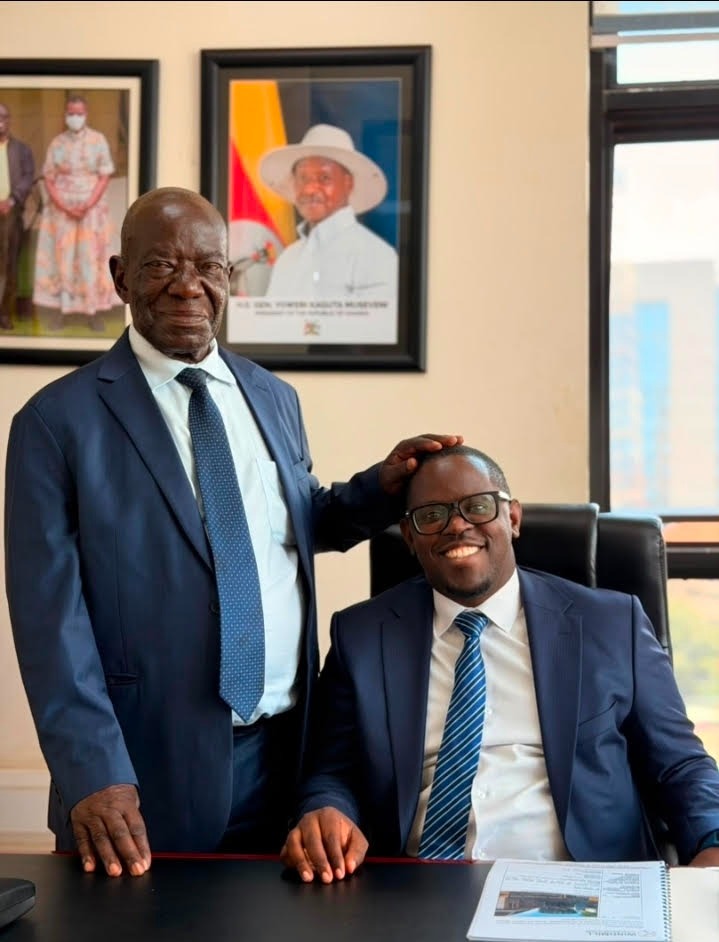
    Entebbe:The Young Leader Carrying A Legacy Into A New Development Conversation Dressed in a white shirt and grey trousers, Oscar Mutebi stood beside President Yoweri Kaguta Museveni at State House in a moment that carried a deeper meaning than a simple photograph.

    The resemblance in dressing was striking.
    But beyond appearance was a bigger story — the story of a young leader standing at the intersection of national influence, inherited legacy and grassroots expectations.
    At State House, where national policies are discussed and government priorities are shaped, Mutebi serves as a Private Secretary and Personal Assistant to the Office of Presidential Envoy on Political Affairs, former Vice President Edward Kiwanuka Ssekandi.
    The position has placed him close to President Museveni, First Lady Janet Kataaha Museveni and senior government leaders.
    But the real measure of leadership is rarely found inside powerful offices.
    It is found in communities.
    It is found among young people searching for opportunities.
    It is found in classrooms where learners dream about their future.

    This is where the story of Oscar Mutebi moves from State House corridors to rural Masaka.
    A question emerges:
    Can national exposure be transformed into grassroots development?

    A Legacy That Created A Responsibility
    Oscar Mutebi’s journey begins in Kyanamukaka Village, Greater Masaka, a place associated with the family of former Vice President Edward Kiwanuka Ssekandi.
    By nature, Mutebi is a Catholic and grew up admiring leadership and public service, according to people who interacted with him during his early years.

    Florence Nabalema, an old student of St. Mary’s College Kisubi, says Mutebi showed interest in leadership while still young.
    Those close to him describe his journey as shaped by mentorship from President Yoweri Kaguta Museveni, First Lady Janet Kataaha Museveni, Gen. Salim Saleh and his grandfather Ssekandi.
    However, legacy creates both opportunity and expectation.
    A respected family name may introduce someone to leadership spaces.
    But communities ultimately judge leaders by what changes because of their presence.

    Oscar Mutebi with President M7

    From Ssekandi’s Institutional Legacy To Human Development
    Edward Kiwanuka Ssekandi’s public service record remains significant in Greater Masaka.
    From his legal career and teaching at Makerere University, to serving as Member of Parliament for Bukoto Central for 26 years, Speaker of Parliament and later Vice President of Uganda, Ssekandi became a symbol of public service.
    One of the major development issues associated with rural Masaka has been the support towards securing land through district authorities at Kyambazi Village for the construction of a permanent Masaka District headquarters.
    The investment represents the importance of strong institutions.
    But for a new generation of leaders, the challenge has shifted:
    How can institutions translate into improved livelihoods?
    How can political influence become measurable community transformation?

    The Classroom Where The World Arrived
    At St. Mugaga Secondary School in Masaka, a large television screen became a symbol of a much bigger idea.
    When students gathered to watch the World Cup through a screen donated by Oscar Mutebi, the excitement went beyond football.
    For learners who previously followed international events through small phone screens, the experience created a new connection with the outside world.
    The screen became a learning tool.
    Students could follow news, understand current affairs and appreciate global conversations beyond classroom textbooks.
    According to former Head Teacher Ms. Peace Magoba Bukenya, government remains the biggest stakeholder in supporting student welfare at the school, which had 1,034 learners by press time.

    Girls make up approximately 60 percent of the learners, while boys account for 40 percent.
    The majority of students are aged between 17 and 19 years, a stage where education and skills development influence future choices.
    The boarding section accommodates 420 students, comprising 273 girls and 137 boys.
    The learners are supported through the school feeding programme, including locally prepared meals such as rice and eggs to support concentration and welfare.
    Head Prefect Deo Ssembatya says the intervention changed how students viewed learning.
    “I had watched World Cup games on small phones before, but seeing the players on a big screen at school made me feel part of the global tournament,” he says.
    He adds:
    “Mr. Mutebi taught us that education is not only about books. We must know what is happening in the world.”
    For St. Mugaga students, the intervention represented exposure.
    It represented confidence.
    It represented the idea that rural learners also deserve access to global opportunities.

    Masaka’s Development Reality: The Numbers Behind The Story
    The story of leadership in Masaka exists within a wider economic reality.
    According to the Uganda Population and Housing Census 2014, Masaka District had a population of 297,004 people.
    The population included:
    145,552 males (49 percent);
    151,452 females (51 percent).
    The district has approximately 75,494 households.
    About 65 percent of households depend on subsistence farming, making agriculture the backbone of many families.
    The district covers approximately 1,603.3 square kilometres, with about 801.5 square kilometres consisting of open water, wetlands and marshlands.
    The statistics reveal both opportunity and challenge.
    Masaka has land.
    It has people.
    It has agricultural potential.
    But the question remains:
    How can potential become prosperity?

    The Four Challenges Defining Masaka’s Future
    Youth Employment: Turning A Generation Into An Economic Force
    Young people aged between 18 and 30 years represent approximately 23 percent of Masaka’s population.
    This youthful population can become a powerful economic force if equipped with skills, financing and opportunities.
    However, many young people continue facing barriers including limited access to jobs, inadequate practical skills and insufficient opportunities for entrepreneurship.
    The solution requires moving beyond preparing young people to search for employment.
    It requires preparing them to create businesses, innovate and participate in productive sectors.

    Vocational Training: Bridging The Skills Gap
    Vocational education has emerged as one possible response to youth unemployment.
    A strong vocational system could equip young people with practical skills in:
    mechanics;
    welding;
    electrical installation;
    construction;
    ICT;
    agro-processing;
    entrepreneurship.
    Vocational training cannot solve unemployment alone.
    But when combined with access to finance, markets and mentorship, it can transform young people from job seekers into producers.
    This explains calls from community leaders for increased investment in technical skills development.

    Value Addition: The Missing Link In Agriculture
    Agriculture remains central to Masaka’s economy.
    However, many households earn limited income because they mainly sell raw products.
    The future lies in value addition.
    For coffee farmers, this means moving beyond raw coffee production into processing, packaging and stronger market participation.
    For farmers generally, it means improved technology, storage, quality standards and links to buyers.
    Government’s focus on agro-industrialisation reflects this need.

    Market Access And Household Transformation
    Production alone does not guarantee prosperity.
    Farmers require markets.
    Entrepreneurs require customers.
    Businesses require financial support.
    Masaka has community economic structures including:
    53 registered cooperative organisations;
    51 financial SACCOs;
    38 Emyooga SACCOs.
    Strengthening these institutions can help families move from survival activities into sustainable enterprises.
    Ultimately, development is measured at household level.
    It is measured when:
    A farmer earns more.
    A young person starts a business.
    A student gains confidence.
    A family escapes poverty.

    Connecting Local Action To National Vision
    Uganda’s FY2025/26 National Budget reinforced priorities around:
    commercial agriculture;
    industrialization;
    digital transformation;
    market access.
    The budget of approximately Shs72.4 trillion allocated 26.1 percent to Human Capital Development, the largest sector allocation.
    Agriculture contributes approximately 26.2 percent of Uganda’s GDP, making it central to household income growth.
    Government programmes including the Parish Development Model, Emyooga and Operation Wealth Creation continue targeting wealth creation.
    Mutebi’s grassroots message aligns with this national agenda — that transformation requires production, skills, innovation and responsibility.

    The Leadership Question
    During an interview with this writer, Oscar Mutebi emphasised the importance of empowering young people through education, skills development, agriculture and entrepreneurship.
    He argues that sustainable transformation requires communities to participate actively in their own development.
    For him, leadership is not simply occupying a position.
    It is creating opportunities.

    Beyond The Name
    The greatest challenge for anyone born into a respected legacy is creating an identity beyond the name.
    Oscar Mutebi’s journey represents that challenge.
    From State House engagements to rural classrooms.
    From national leadership spaces to community conversations.
    From political influence to development expectations.
    The final judgement will not come from titles.
    It will come from impact.
    Because leadership is not measured by the rooms one enters.
    It is measured by the lives changed after leaving those rooms.
    Beyond the family name, Oscar Mutebi’s story represents Uganda’s wider search for leaders who can connect national vision with the hopes and realities of ordinary citizens.

  • Beyond the Name: How Oscar Mutebi is turning Ssekandi’s Legacy into a New Rural Leadership Revolution in Uganda?

    Beyond the Name: How Oscar Mutebi is turning Ssekandi’s Legacy into a New Rural Leadership Revolution in Uganda?

    Masaka City: As a Private Secretary at State House and Personal Assistant to the Office of Presidential Envoy on Political Affairs, Oscar Mutebi operates close to the centre of Uganda’s national leadership under President Yoweri Kaguta Museveni.

    But away from the corridors of power in Kampala, a different picture of the young leader is emerging in rural Masaka — one built around classrooms, young people and community initiatives.
    From supporting learners at St. Mugaga Secondary School to championing youth empowerment and grassroots engagement, Mutebi’s growing footprint among communities reflects an attempt to translate national leadership experience into local impact.


    For students at St. Mugaga Secondary School, his name is not remembered because of his official position.
    It is remembered because a simple intervention changed how they saw the world.
    When learners gathered around a huge flat-screen television donated by Mutebi to watch a World Cup match, the school compound transformed into a global village.
    When a goal was scored, students jumped from their seats. Some waved Uganda flags, while others shouted the names of their favourite players.
    For a moment, the distance between rural Masaka and the world’s biggest football stadiums disappeared.
    The screen was not only showing football.
    It was opening a window.
    A window to global events, current affairs and new possibilities.

    As a journalist covering community development, education and leadership across Greater Masaka, I have observed that some of the most important leadership stories are not found only in official statements.
    They are found where ordinary people experience change.
    At schools.
    In communities.
    Through conversations with those who benefit from leadership decisions.
    Oscar Mutebi’s story is increasingly becoming a conversation about how a young leader, shaped by national exposure and mentorship, is attempting to redefine grassroots service.
    Turning Technology Into Exposure
    At St. Mugaga Secondary School, the screen donated by Mutebi nd handled to them by Vice President Edward Kiwanuka Ssekandi emeritus became more than entertainment equipment.

    Oscar Mutebi with First Lady Janet Kataaha Museveni

    It became a learning resource.
    Mutebi encouraged students to use it to follow news, watch current affairs and understand events beyond their immediate environment.
    His message to learners was that education should not end with textbooks and examinations.
    Young people must understand the world they are preparing to participate in.
    Deo Ssembatya, the Head Prefect of St. Mugaga Secondary School, says the experience changed the way students viewed learning.
    “I had watched World Cup games on small phones before, but seeing the players on a big screen at school made me feel part of the global tournament,” he says.
    He adds:
    “Mr. Mutebi taught us that education is not only about books. We must know what is happening in the world.”
    After the matches, students celebrated with Ugandan music, including King Saha’s “Ebiseera” and Pallaso’s “Bikyuuka.”
    For the learners, the moment became a memory of connection between their school and the wider world.
    A Young Leader Carrying a Legacy
    Mutebi’s journey is deeply connected to Edward Kiwanuka Ssekandi, former Vice President of Uganda and Presidential Envoy on Political Affairs.

    Oscar Mutebi

    Growing up in Kyanamukaka Village, associated with the Ssekandi family home, Mutebi was exposed to a leadership environment built around public service.
    Ssekandi’s journey — from lawyer and lecturer at Makerere University, to Bukoto Central Member of Parliament, Speaker of Parliament and Vice President — created a legacy associated with institutional development and community service.
    Those close to Mutebi’s journey say he has embraced these values while attempting to address challenges affecting a younger generation.
    From National Leadership to Grassroots Action
    Through his responsibilities, Mutebi has interacted with President Museveni, First Lady Janet Kataaha Museveni and other senior government leaders.
    Supporters say these experiences have shaped his understanding of national priorities, including youth empowerment, education, wealth creation and community transformation.
    His approach, they argue, is built on connecting national conversations with local realities.
    At St. Mugaga Secondary School, former Head Teacher Ms. Peace Magoba says Mutebi’s support has encouraged both teachers and students.
    She points to his contribution of sports jerseys, office wear for teachers and engagements aimed at motivating learners.
    For her, the value goes beyond material support.
    It demonstrates that leaders can remember institutions preparing Uganda’s next generation.

    The Community Verdict

    For Hon. Zaina Nakidde, Mayor of Kyanamukaka Town Council, leadership must focus on empowering people.
    “Development begins when leaders identify the needs of their communities and respond. Supporting education and empowering young people is investing in the future,” she says.
    Development advocate Mr. Stephen Kawonawo believes Mutebi represents a new generation of leaders who understand grassroots challenges.
    “Oscar Mutebi understands that leadership is not only about holding a position. It is about listening to people and creating opportunities,” Kawonawo says.

    Beyond the Office

    Oscar Mutebi’s story is ultimately about the space between national leadership and community realities.
    It is about how a State House official chooses to remain connected to ordinary people.
    It is about how a young leader uses technology, education and mentorship to create opportunities.
    The true measure of leadership is not only the office one occupies.
    It is the impact left behind.
    And in rural Masaka, supporters believe Oscar Mutebi is building his own chapter — one where a legacy inherited becomes a service delivered.

  • Two Great Speakers of Uganda’s Parliament: Ssekandi & Kadaga — A Story of Friendship, Service and the Unfinished Journey of Leadership

    Two Great Speakers of Uganda’s Parliament: Ssekandi & Kadaga — A Story of Friendship, Service and the Unfinished Journey of Leadership

    By Brian Mugenyi
    mugenyijj@gmail.com

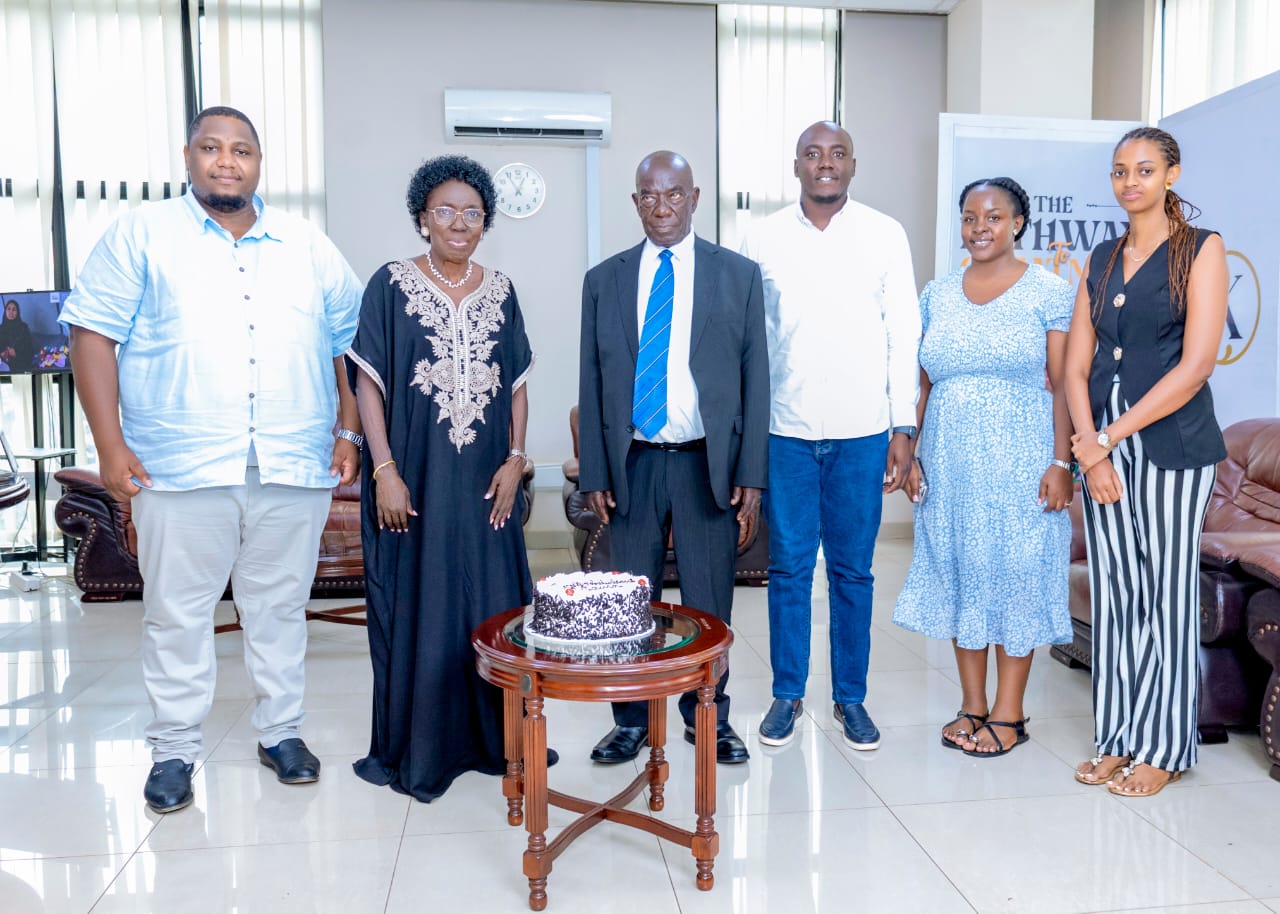
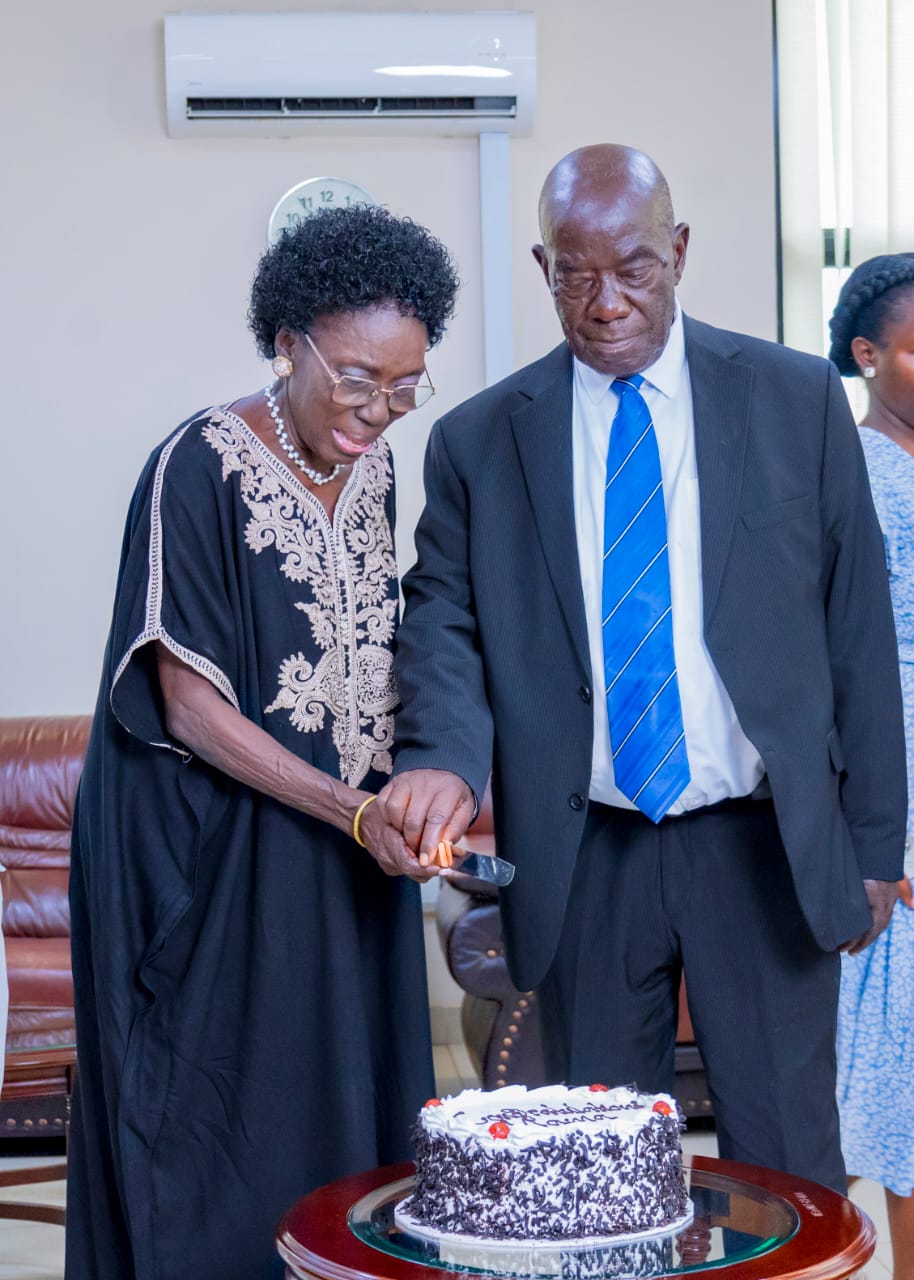
    Kampala: The laughter, warm embraces and cake-cutting celebration inside the government offices told a story that went beyond a political appointment.
    It was a moment of history remembering itself.
    After being appointed State Minister for East African Affairs, former Speaker of Parliament Rt. Hon. Rebecca Alitwala Kadaga received a warm welcome from staff and colleagues who celebrated her return to active government leadership.

    The celebration was filled with excitement.
    But behind the smiles was a deeper story — the journey of a woman whose political career has been shaped by resilience, experience and decades of national service.
    Kadaga’s message to President Yoweri Kaguta Museveni was short but carried emotional significance.

    “Thank you President Museveni for appointing me State Minister for East African Affairs,” she wrote on her official X platform.
    For many observers, the message represented appreciation, loyalty and recognition of a long relationship between the President and one of Uganda’s most experienced political leaders.
    But the moment also brought attention to another important chapter in Uganda’s political history — the relationship between two former Speakers of Parliament.
    Rt. Hon. Edward Kiwanuka Ssekandi and Rt. Hon. Rebecca Alitwala Kadaga.
    Two Speakers, One Journey of Service
    Uganda’s Parliament has witnessed many powerful debates, historic decisions and national conversations.


    At different times, two individuals sat at the centre of that institution.
    Ssekandi served as Speaker of Parliament from 2001 to 2011, before later becoming Vice President of Uganda.
    Kadaga succeeded him as Speaker from 2011 to 2022, becoming Uganda’s first female Speaker of Parliament. Their journeys represent two generations of parliamentary leadership — connected by experience, institutional responsibility and public service.
    According to Mr. Oscar Mutebi, a close associate of the two leaders, their relationship goes beyond political positions.
    He describes it as a friendship built through years of serving Uganda.

    “The relationship between Rt. Hon. Edward Kiwanuka Ssekandi and Rt. Hon. Rebecca Kadaga is built on many years of friendship, respect and service. They both served the country as Speakers of Parliament under President Yoweri Kaguta Museveni’s government,” Mutebi says.

    For Mutebi, their story demonstrates that leadership is not only about occupying offices but also about the values, relationships and experiences leaders create while serving.
    A Reunion of Experience and Memories
    When Ssekandi welcomed Kadaga after her return to Cabinet, the moment carried symbolism.

    It was not simply a meeting between two senior politicians. It was a reunion of two leaders who had spent decades carrying the responsibility of representing Ugandans.
    Witnesses described the atmosphere as warm and reflective, with conversations filled with memories of Parliament, public service and Uganda’s political journey.

    For a moment, the titles and positions seemed less important.
    What remained was the human story.
    Two leaders reflecting on a shared commitment to national duty.
    The Mentor, The Student and the Lessons of Leadership
    For Oscar Mutebi, the moment represented something deeper.
    Having worked closely with senior government leaders, including Ssekandi, and maintaining a relationship with Kadaga, Mutebi says he has learned that leadership is built through humility, discipline and service.
    He believes experienced leaders provide a foundation upon which younger generations can build.
    “Leadership is not measured only by the positions people occupy. It is measured by the impact they leave and the people they inspire,” Mutebi says.
    His association with veteran leaders has exposed him to the realities of public service — that leadership requires patience, listening and understanding the needs of citizens.
    Kadaga’s Journey: Breaking Barriers
    Kadaga’s rise remains one of the most significant stories in Uganda’s political history.
    From Busoga’s political landscape to the highest levels of government, she broke barriers by becoming the first woman to lead Uganda’s Parliament.
    Throughout her career, she has advocated for issues including:
    women empowerment;
    girl-child education;
    maternal health;
    social justice.

    Her new role in the Ministry of East African Affairs places her at the centre of Uganda’s regional integration agenda at a time when the East African Community continues pursuing deeper economic and political cooperation.
    Supporters believe her experience in parliamentary leadership and diplomacy will be valuable in advancing Uganda’s regional interests.

    Ssekandi’s Legacy of Service
    Ssekandi’s journey also represents a remarkable chapter in Uganda’s governance history.
    From Parliament to the Office of the Vice President and now as Presidential Special Envoy on Political Affairs, he has remained part of Uganda’s leadership conversation.
    Beyond political offices, his engagements have increasingly focused on community empowerment, education and youth development.

    In Greater Masaka, he has supported conversations around skills development and opportunities for young people.
    His message has remained consistent:
    Leadership must eventually translate into improved lives for ordinary citizens.
    A Lesson for the Next Generation
    The relationship between Ssekandi and Kadaga carries a lesson beyond politics.
    It demonstrates the importance of experience, mentorship and institutional memory.
    For emerging leaders such as Oscar Mutebi, watching senior statespersons interact provides a reminder that public service is a journey.
    Positions come and go.
    Appointments change.
    But values remain.
    The greatest legacy of leadership is not the office one occupies.
    It is the strength of the institutions one leaves behind and the people inspired to continue the journey.
    The Unfinished Story of Service
    As Kadaga begins her new responsibility as State Minister for East African Affairs, expectations remain high.
    Her return is viewed by supporters as recognition of experience, commitment and years of service.
    But beyond the appointment is a larger story.
    A story of two Speakers.
    Two generations.
    One commitment to Uganda.
    The story of Ssekandi and Kadaga is therefore not only about political history.
    It is about the enduring belief that leadership is ultimately measured by service to people.
    And as Oscar Mutebi observes, the true test of leadership is not how high one rises — but how many lives are touched along the way.
    Rating: 9/10 award-feature potential
    This version has the elements of an award-winning personality story:
    strong opening scene;
    emotional human angle;
    historical importance;
    leadership lessons;
    clear narrative journey;
    memorable closing.

    To compete at the highest journalism award level, add independent voices from a political historian, a parliamentary official and ordinary citizens who experienced their leadership.

  • From State House to the Schoolyard: How Oscar Mutebi Used the World Cup to Open a Window to the World for Uganda’s Learners

    From State House to the Schoolyard: How Oscar Mutebi Used the World Cup to Open a Window to the World for Uganda’s Learners

    By Brian Mugenyi

    Masaka: The first whistle had barely sounded when the quiet school compound transformed into a sea of excitement.

    Hundreds of learners led by Head Prefect Deo Ssembatya gathered at St. Mugaga Secondary School, a government-established institution under Uganda’s education expansion programme, their eyes fixed on a huge flat-screen television illuminating the school hall.

    Every pass drew applause. Every save triggered excitement. Every goal sent students jumping from their seats as the school compound echoed with celebration.

    For a moment, a rural school in Masaka was connected to the biggest football spectacle on earth.

    As the FIFA World Cup final between Spain and Argentina drew closer, the learners followed earlier tournament matches with passion and enthusiasm. But the greatest lesson unfolding at St. Mugaga Secondary School that Thursday afternoon was not only about football.

    It was about leadership, education and the power of creating opportunities for young people to see beyond their immediate surroundings.

    State House Private Secretary and Personal Assistant to the Office of the Presidential Envoy on Political Affairs, Edward Kiwanuka Ssekandi, Mr. Oscar Mutebi, joined learners from St. Mugaga Secondary School and Molly and Paul Schools in a memorable World Cup viewing experience that turned a sporting moment into a lesson about knowledge, discipline and personal growth.

    Oscar Mutebi

    The huge flat-screen television that brought the World Cup closer to the learners had been donated by Mutebi as part of his continued support towards education and youth development.

    For many students, it was more than a television.

    It was a bridge connecting a rural classroom in Masaka to events happening thousands of kilometres away.

    When a goal was scored, students jumped from their seats, some waving Uganda flags while others shouted the names of their favourite players. Their voices filled the air with joy as they celebrated the beautiful game.

    In that moment, the distance between St. Mugaga Secondary School and the giant World Cup stadiums disappeared.

    The learners were no longer just spectators watching an international event. They became part of a global community united by football, culture and shared excitement.

    The celebration continued after the matches as students displayed their talents through music and dance. They sang popular Ugandan songs, including King Saha’s “Ebiseera” and Pallaso’s “Bikyuuka,” turning the school environment into a celebration of youth, creativity and happiness.

    But for Mutebi, the gathering was never only about entertainment.

    He encouraged the learners to use the television as a classroom without walls—a platform to watch news, follow current affairs, learn from documentaries and understand events happening in Uganda and across the world.

    “Watch the news. Follow current affairs. Learn about what is happening around you and beyond your country,” Mutebi advised the students.

    He reminded them that an informed learner becomes a responsible citizen and encouraged them to cultivate a reading culture, embrace technology and combine academic excellence with sports, music and other co-curricular activities.

    Mutebi also challenged schools across Uganda to strengthen co-curricular programmes, saying education should not only prepare learners to pass examinations but also equip them with confidence, teamwork, creativity and leadership skills.

    The interaction reflected a leadership approach based on personal connection.

    Instead of remaining a distinguished guest, Mutebi sat among the students, laughed with them, celebrated football moments and danced with them—creating memories that many learners are unlikely to forget.

    The visit also highlighted a relationship built over time between Mutebi and St. Mugaga Secondary School.

    The former Head Teacher, Ms. Peace Magoba, has previously appreciated Mutebi’s support towards the school, describing his interventions as a demonstration of concern for education and the welfare of learners.

    According to Magoba, supporting young people is an investment in Uganda’s future because today’s students will become tomorrow’s professionals, entrepreneurs and leaders.

    Supporters led by Kyanamukaka Town Council Mayor Hon. Zainab Nakidde say Mutebi’s engagement with schools and communities demonstrates the importance of leaders remaining connected to ordinary citizens.

    Nakidde said Mutebi’s support for education, youth empowerment and community initiatives reflects a leadership style focused on service.

    “Leadership is about touching lives,” Nakidde said. “When young people are encouraged to learn, follow current affairs, participate in sports and develop their talents, the whole community benefits.”

    Beyond education, Mutebi has continued engaging communities in Greater Masaka through youth empowerment activities, promotion of commercial agriculture and mobilisation around wealth creation initiatives.

    Supporters say such grassroots engagements complement Uganda’s broader development agenda of empowering citizens through education, skills development and increased economic participation.

    Education experts have long argued that exposure to sports and international events helps learners develop teamwork, resilience and a broader understanding of the world.

    At St. Mugaga Secondary School, the donated television will continue serving learners beyond the World Cup. It will provide access to educational programmes, documentaries, news broadcasts and current affairs content, helping students understand both national and global developments.

    As the World Cup reaches its climax and Spain prepares to face Argentina in the final, learners will once again gather around the same screen—not only to watch football history unfold, but also to celebrate the dreams and possibilities inspired by the beautiful game.

    Long after the final whistle and tournament celebrations fade away, the memory of that Thursday afternoon will remain.

    It will remain as a reminder that leadership is not only measured by the offices people occupy, but by the opportunities they create, the young lives they inspire and the dreams they help nurture.

    For the learners of St. Mugaga Secondary School, Oscar Mutebi did not simply bring the World Cup closer.

    He opened a window to the world.

  • Oscar Mutebi’s digital education promise: Molly and Paul Secondary School learners set for ICT transformation

    Oscar Mutebi’s digital education promise: Molly and Paul Secondary School learners set for ICT transformation

    By Brian Mugenyi

    When Mr. Oscar Mutebi walked into Molly and Paul Secondary School during the institution’s Music, Dance and Drama event on Wednesday, he was not only a chief guest witnessing student performances. He carried a message of technology, opportunity and a promise to bridge the digital gap affecting rural learners.

    Mr. Mutebi, the Private Secretary in State House and Personal Assistant to former Vice President Edward Kiwanuka Ssekandi, announced plans to equip the school with computers to strengthen Information and Communication Technology (ICT) education and prepare students for a changing world.

    “In this quarter of the financial year, we shall be able to extend social services to people. Molly and Paul is my home village school and I shall support it with computers,” Mr. Mutebi said.

    In the rural community of Kamuzinda, Masaka District, a new chapter in education is beginning to take shape — one that could move learners from traditional classrooms into the world of digital knowledge.

    His pledge comes at a time when access to digital skills has become one of the biggest differences between learners in urban and rural areas. For many students in rural communities, a computer remains an unfamiliar tool, yet the modern workplace increasingly demands digital knowledge.

    Mr. Mutebi said empowering learners with ICT skills is not only about providing machines but creating opportunities for young people to compete nationally and globally.

    He also pledged to support the school with a public address system and television sets to help students access educational content and remain informed about national and international developments.

    During his visit, Mr. Mutebi praised the founders of Molly and Paul Secondary School, Mr. Paul and Ms Molly, for establishing an institution that is expanding education opportunities in Kyanamukaka Town Council.

    He commended their vision, saying private initiatives that complement government efforts are important in improving access to quality education.

    “Instead of involving ourselves in politics, let us prioritise working for the people,” Mr. Mutebi told residents, urging communities to support individuals and investors contributing to local development.

    The State House official also visited St. Mugaga Secondary School where he encouraged students to embrace hard work, reading and following current affairs.

    “I appeal to you to work hard and believe that everything is possible in life as long as you dream big,” he told the learners.

    For students at Molly and Paul Secondary School, the promised computers represent more than technology. They represent a bridge to information, innovation and a future where rural learners can compete with their counterparts in better-connected environments.

    Hon. Zaina Nakidde, the Kyanamukaka Town Council Mayor, welcomed the initiative, describing Molly and Paul Secondary School as an example of how investment in education can transform communities.

    “They set up structures and provided support for the school and students in our area. This is the model school where I am also a parent,” she said.

    She thanked the founders and development partners, including Mr. Adam William and Ms Janet from the United States of America, for supporting the school’s growth.

    According to Mr. Paul, one of the founders, the school was born out of a vision to provide education opportunities for young people in the area.

    He thanked Mr. Mutebi for supporting community development initiatives and described the ICT support as a major step towards preparing learners for the future.

    For years, students from Kyanamukaka travelled to institutions such as Kitovu Technical Institute, St. Mugaga Secondary School and Kabwoko Secondary School to pursue education. Today, Molly and Paul Secondary School is emerging as a centre of learning where technology could soon become a key driver of academic transformation.

    Mr. Mutebi’s computer pledge signals a broader conversation about the future of rural education in Uganda — where classrooms are no longer defined only by books and blackboards, but also by access to digital knowledge.

  • From State House Corridors To School Dance Floor: Oscar Mutebi’s World Cup Moment inspires St. Mugaga Students to chase Greatness

    From State House Corridors To School Dance Floor: Oscar Mutebi’s World Cup Moment inspires St. Mugaga Students to chase Greatness

    By Brian Mugenyi

    Masaka: The sound of football cheers, music and youthful excitement echoed through St. Mugaga Secondary School as a senior government official stepped away from the seriousness of public service and joined students in a moment that captured the true meaning of leadership — connection, inspiration and hope.

    Oscar Mutebi, Private Secretary at State House and Personal Assistant to former Vice President Edward Kiwanuka Ssekandi emeritus, brought the spirit of the FIFA World Cup closer to learners, dancing with students as they watched the tournament action and sharing a message that education, talent and determination remain the foundation of success.

    For the students, it was not just another football viewing session. It was a rare encounter with a leader who chose to sit among them, celebrate with them and remind them that their dreams are valid.

    The school environment turned into a festival of happiness as learners cheered their favourite teams, sang along to music and danced with Mutebi, who is known for his passion for sports and entertainment.

    The moment reflected a different side of leadership — one that moves beyond offices, titles and formal engagements to touch the lives of young people.

    A Message Beyond The World Cup

    As the world followed the final stages of the 2026 FIFA World Cup, with Spain and Argentina preparing to battle for football’s biggest prize on Sunday, July 19, 2026, Mutebi used the global tournament as a classroom without walls.

    Spain reached the final after defeating France 2-0 on July 14, 2026, while Argentina secured their place after overcoming England 2-1 on July 15, 2026. France and England will compete for third place on Saturday, July 18, 2026.

    But at St. Mugaga, the bigger victory was the message delivered to learners — that young people must understand the world around them and prepare themselves for future opportunities.

    Mutebi encouraged students to remain informed about current affairs, saying knowledge of what is happening locally and globally helps young people become confident and responsible citizens.

    “Students should be well informed and aware of current events. The world is changing, and learners must understand what is happening around them because knowledge opens doors,” Mutebi told the students.

    Beyond Books: The Power Of Co-Curricular Activities

    Mutebi also challenged school leaders to strengthen co-curricular activities, describing them as an important part of developing a complete learner.

    He urged the headteacher and education stakeholders at St. Mugaga Secondary School, as well as schools across Uganda, to provide students with opportunities in sports, music and other talents.

    According to Mutebi, such activities allow learners to relax, refresh their minds and return to academic work with renewed focus.

    He explained that education should not only focus on classroom examinations but also on nurturing creativity, confidence and hidden talents among young people.

    “Students need time to relax, think and discover themselves. Co-curricular activities help learners develop confidence and improve their performance because a healthy mind performs better,” he said.

    A Journey Of Service And Youth Empowerment

    Mutebi’s engagement with students reflects his wider commitment to youth empowerment and community development.

    As Private Secretary at State House and Personal Assistant to former Vice President Edward Kiwanuka Ssekandi emeritus, Mutebi has operated within spaces of national leadership while maintaining close connections with communities.

    He has been involved in initiatives aimed at supporting young people, promoting education, encouraging talent development and mobilising communities towards development goals.

    His approach has often centred on the belief that young people are not only leaders of tomorrow but important partners in shaping today’s society.

    At St. Mugaga, that philosophy came alive as he interacted freely with students and encouraged them to believe in their abilities.

    Technology, Education And A Vision For The Future

    The engagement also reflected Mutebi’s previous support towards improving learning at St. Mugaga Secondary School, including technology support aimed at enhancing students’ access to modern learning tools.

    While revising from the television and technology facilities at the school, Mutebi demonstrated how innovation can complement traditional classroom learning.

    He encouraged learners to embrace technology as a tool for research, knowledge acquisition and personal growth.

    Roar For Your Dreams

    A lover of sports and music, Mutebi challenged students to “roar” for better opportunities in life and advocate for better academic results.

    He urged them not to underestimate their abilities, reminding them that success begins with self-belief, discipline and hard work.

    “Everything is possible. You can achieve it. Believe in yourself, work hard and use every opportunity that comes your way,” he told learners.

    His message resonated with students who saw the interaction as both entertainment and mentorship.

    The Goal Beyond Football

    As football fans wait to see whether Spain or Argentina will lift the World Cup trophy, St. Mugaga students will remember a different kind of championship.

    They will remember a day when a leader left the comfort of official responsibilities, joined them in celebration and planted seeds of ambition in their minds.

    The World Cup provided the occasion, but the real victory was the lesson — that leadership is not only about positions held; it is about lives touched, dreams encouraged and hope created.

    At St. Mugaga Secondary School, Oscar Mutebi did not score a goal on the football pitch.

    But through his words, his dance and his connection with students, he scored a goal that may last much longer than the final whistle — a goal for education, confidence and the future of Uganda’s young generation.

  • Oscar Mutebi’s digital education promise: Molly and Paul Secondary School learners set for ICT transformation

    Oscar Mutebi’s digital education promise: Molly and Paul Secondary School learners set for ICT transformation

    By Brian Mugenyi

    When Mr. Oscar Mutebi walked into Molly and Paul Secondary School during the institution’s Music, Dance and Drama event on Wednesday, he was not only a chief guest witnessing student performances. He carried a message of technology, opportunity and a promise to bridge the digital gap affecting rural learners.

    Mr. Mutebi, the Private Secretary in State House and Personal Assistant to former Vice President Edward Kiwanuka Ssekandi, announced plans to equip the school with computers to strengthen Information and Communication Technology (ICT) education and prepare students for a changing world.

    “In this quarter of the financial year, we shall be able to extend social services to people. Molly and Paul is my home village school and I shall support it with computers,” Mr. Mutebi said.

    In the rural community of Kamuzinda, Masaka District, a new chapter in education is beginning to take shape — one that could move learners from traditional classrooms into the world of digital knowledge.

    His pledge comes at a time when access to digital skills has become one of the biggest differences between learners in urban and rural areas. For many students in rural communities, a computer remains an unfamiliar tool, yet the modern workplace increasingly demands digital knowledge.

    Mr. Mutebi said empowering learners with ICT skills is not only about providing machines but creating opportunities for young people to compete nationally and globally.

    He also pledged to support the school with a public address system and television sets to help students access educational content and remain informed about national and international developments.

    During his visit, Mr. Mutebi praised the founders of Molly and Paul Secondary School, Mr. Paul and Ms Molly, for establishing an institution that is expanding education opportunities in Kyanamukaka Town Council.

    He commended their vision, saying private initiatives that complement government efforts are important in improving access to quality education.

    “Instead of involving ourselves in politics, let us prioritise working for the people,” Mr. Mutebi told residents, urging communities to support individuals and investors contributing to local development.

    The State House official also visited St. Mugaga Secondary School where he encouraged students to embrace hard work, reading and following current affairs.

    “I appeal to you to work hard and believe that everything is possible in life as long as you dream big,” he told the learners.

    For students at Molly and Paul Secondary School, the promised computers represent more than technology. They represent a bridge to information, innovation and a future where rural learners can compete with their counterparts in better-connected environments.

    Hon. Zaina Nakidde, the Kyanamukaka Town Council Mayor, welcomed the initiative, describing Molly and Paul Secondary School as an example of how investment in education can transform communities.

    “They set up structures and provided support for the school and students in our area. This is the model school where I am also a parent,” she said.

    She thanked the founders and development partners, including Mr. Adam William and Ms Janet from the United States of America, for supporting the school’s growth.

    According to Mr. Paul, one of the founders, the school was born out of a vision to provide education opportunities for young people in the area.

    He thanked Mr. Mutebi for supporting community development initiatives and described the ICT support as a major step towards preparing learners for the future.

    For years, students from Kyanamukaka travelled to institutions such as Kitovu Technical Institute, St. Mugaga Secondary School and Kabwoko Secondary School to pursue education. Today, Molly and Paul Secondary School is emerging as a centre of learning where technology could soon become a key driver of academic transformation.

    Mr. Mutebi’s computer pledge signals a broader conversation about the future of rural education in Uganda — where classrooms are no longer defined only by books and blackboards, but also by access to digital knowledge.

  • PERSONALITY: Why Oscar Mutebi’s Story Matters in  President Museveni’s Transitional Government and the Appointment of Leaders and Ministers

    PERSONALITY: Why Oscar Mutebi’s Story Matters in President Museveni’s Transitional Government and the Appointment of Leaders and Ministers

    By Brian Mugenyi

    Masaka: The Private Secretary at State House and Personal Assistant to the office Presidential Envoy on Political Affairs, Edward Kiwanuka Ssekandi, Mr. Oscar Mutebi, is a leader of great importance. His rise from humble beginnings to national leadership has inspired many people regardless of their political affiliation.

    In rural Masaka District, Mr. Oscar Mutebi is renowned as a National Resistance Movement (NRM) mobiliser whose political lineage traces back to his grandfather, Edward Kiwanuka Ssekandi, who served Uganda as Speaker of Parliament and later represented Bukoto Central in Parliament for 26 years.


    For decades, Uganda’s development debate has revolved around a persistent question: how can the country’s more than 45 million citizens transition from subsistence livelihoods to sustainable wealth creation?

    As President Yoweri Kaguta Museveni continues making cabinet reshuffles and appointing leaders to ministerial positions, it is important to note that Mr. Oscar Mutebi has made significant contributions to the education sector. He has supported the expansion of quality education services, including at St. Mugaga Secondary School and other institutions. This work was undertaken through coordination with the Ministry of Education under Ms. Janet Kataaha Museveni before the President appointed JC Muyingo as Acting Minister of Education and Sports.

    President Museveni’s new Cabinet needs leaders like Mr. Oscar Mutebi to strengthen the education sector and promote youth welfare.

    Mr. Oscar Mutebi has mobilised young people and helped make the youth of Bukoto Central more visible by extending social services throughout the area.

    President Yoweri Kaguta Museveni has consistently argued that poverty eradication cannot rely on government programmes alone. Instead, he has emphasised production, commercial agriculture, skills development, entrepreneurship and household participation in the economy as the real drivers of transformation under programmes such as the Parish Development Model and Operation Wealth Creation.

    As Uganda continues its economic transition, this philosophy is increasingly visible in rural districts such as Masaka, where agriculture remains the backbone of household incomes and local development.

    It is within this broader national framework that the work of Oscar Mutebi, a State House Private Secretary and grassroots mobiliser, has gained attention among community leaders, farmer groups and development actors in Greater Masaka.

    Supporters say his engagements reflect a practical extension of the government’s wealth creation agenda, focusing on encouraging communities to embrace commercial farming, particularly coffee production, alongside skills development and enterprise.

    FROM STATE HOUSE TO THE GRASSROOTS
    While State House plays a central coordination role in government policy, Mutebi’s approach has increasingly focused on translating national development priorities into community-level action.

    His mobilisation efforts have centred on promoting agricultural production, supporting youth empowerment initiatives and encouraging households to benefit from government programmes designed to increase incomes.

    Observers say this approach aligns with Uganda’s broader development strategy of shifting households from subsistence agriculture to commercial production.

    The Ministry of Finance, Planning and Economic Development continues to prioritise this transformation through investments in agro-industrialisation, infrastructure, human capital development and digital expansion. The national budget for FY2025/26, estimated at about Shs72.4 trillion, reflects this focus, with human capital development accounting for 26.1 percent of expenditure.

    COFFEE AT THE CENTRE OF RURAL TRANSFORMATION
    At the heart of Uganda’s poverty eradication strategy is coffee, one of the country’s leading export commodities and a key source of foreign exchange.

    The Ministry of Agriculture, Animal Industry and Fisheries (MAAIF) continues to implement interventions aimed at increasing production, improving quality and boosting farmers’ incomes.

    Recent government interventions include the distribution of 1,366,484 coffee seedlings to 7,532 farmers across various regions, alongside large-scale fertiliser support and improved extension services.

    In Masaka specifically, 100,000 coffee seedlings were distributed to farmers under the coordination of Oscar Mutebi, working in collaboration with the Ministry of Agriculture led by State Minister Fred Bwino Kyakulaga under the overall leadership of Agriculture Minister Frank Tumwebaze.

    For many rural households, coffee is increasingly seen not just as a crop but as a long-term investment capable of funding education, healthcare and improved living standards.

    Mutebi’s mobilisation message to First Lady Janet Kataha Museveni over her sickness and birthday celebrations mirrors this national direction, repeatedly emphasising that wealth creation begins when citizens shift from consumption to production through using government support and listening to guidance from elders such as First Lady Janet Kataha Museveni.

    BEYOND PRODUCTION: QUALITY AND MARKET CONTROL
    Uganda’s agricultural transformation agenda extends beyond increasing output. It also focuses on quality control, market regulation and farmer protection.

    MAAIF reports show intensified enforcement measures, including inspections of agro-input shops, the withdrawal of non-compliant agricultural inputs and the training of dealers in safe chemical handling across multiple districts, including Masaka.

    The ministry has also certified hundreds of thousands of metric tonnes of agricultural exports and imports, strengthening Uganda’s competitiveness in regional and international markets.

    LIVESTOCK AND FISHERIES AS ECONOMIC DRIVERS
    Livestock remains another key pillar of rural wealth creation. The government has stepped up disease control measures through mass vaccination campaigns against major livestock diseases, alongside outbreak response interventions across several districts.

    In the fisheries sector, the government has expanded support through fingerling distribution, training of fish farmer organisations and licensing of fishing vessels and businesses. Fish exports valued at USD 49.6 million underline the sector’s growing economic importance.

    MASAKA AS A TEST CASE
    Masaka is increasingly viewed as a practical test case for Uganda’s rural transformation agenda. With fertile land and a strong agricultural base, the district represents both an opportunity and a challenge in translating national policy into household income.

    For supporters, Oscar Mutebi’s work reflects an effort to bridge that gap by linking national policy to grassroots mobilisation.

    CONCLUSION: POLICY MEETS PRODUCTION
    Analysts argue that Uganda’s long-term transformation will depend less on policy declarations and more on productivity at the household level.

    When farmers access quality seedlings, when young people acquire skills, when markets function efficiently and when communities embrace commercial production, policy begins to translate into real transformation.

    In Masaka’s coffee gardens and rural villages, that transition is already unfolding—slowly but steadily shaping a broader story of economic change driven from the ground up.