From district headquarters and community development to the grooming of a younger generation, what Edward Kiwanuka Ssekandi’s Masaka story says about leadership
Masaka: A phone call is not enough. An appointment and person interview with Vice president Edward Kiwanuka Ssekandi emeritus or even Personal Assistant Oscar Mutebi could be relevant for this story of a century.
History has a stubborn way of asking one question of every leader who seeks higher responsibility: What did you leave behind for the people? When I Idi Amin Dada , Uganda’s militaristic president died what is remembered of him are the roads, or even chasing away the Arabs from operating their businesses in Uganda.
Not the title. Mr. President sir, Your Highness blah blah that matters, what is important is services you offered to the people whom you served during your life tenure in office that counts!
Not the convoy. 30 cars and infinity of soldiers at the back, what matters is what can be seen by people that impacts their lives.
Not the political slogan.
Not the number of times your name appeared on a campaign poster.
The road.
The school.
The health centre.
The water.
The market.
The jobs.
The institution that remains standing after the political microphone has gone silent
As a student of pursuing A A Barcelors Degree in Journalism and Mass Communication at Kampala University as seen in this photo , I believe as a reporter who has spent years moving between the newsroom, the classroom and the field, I have learnt that communication is not merely about transmitting a message.
It is about meaning.
It is about what people see, what they experience and what they remember.
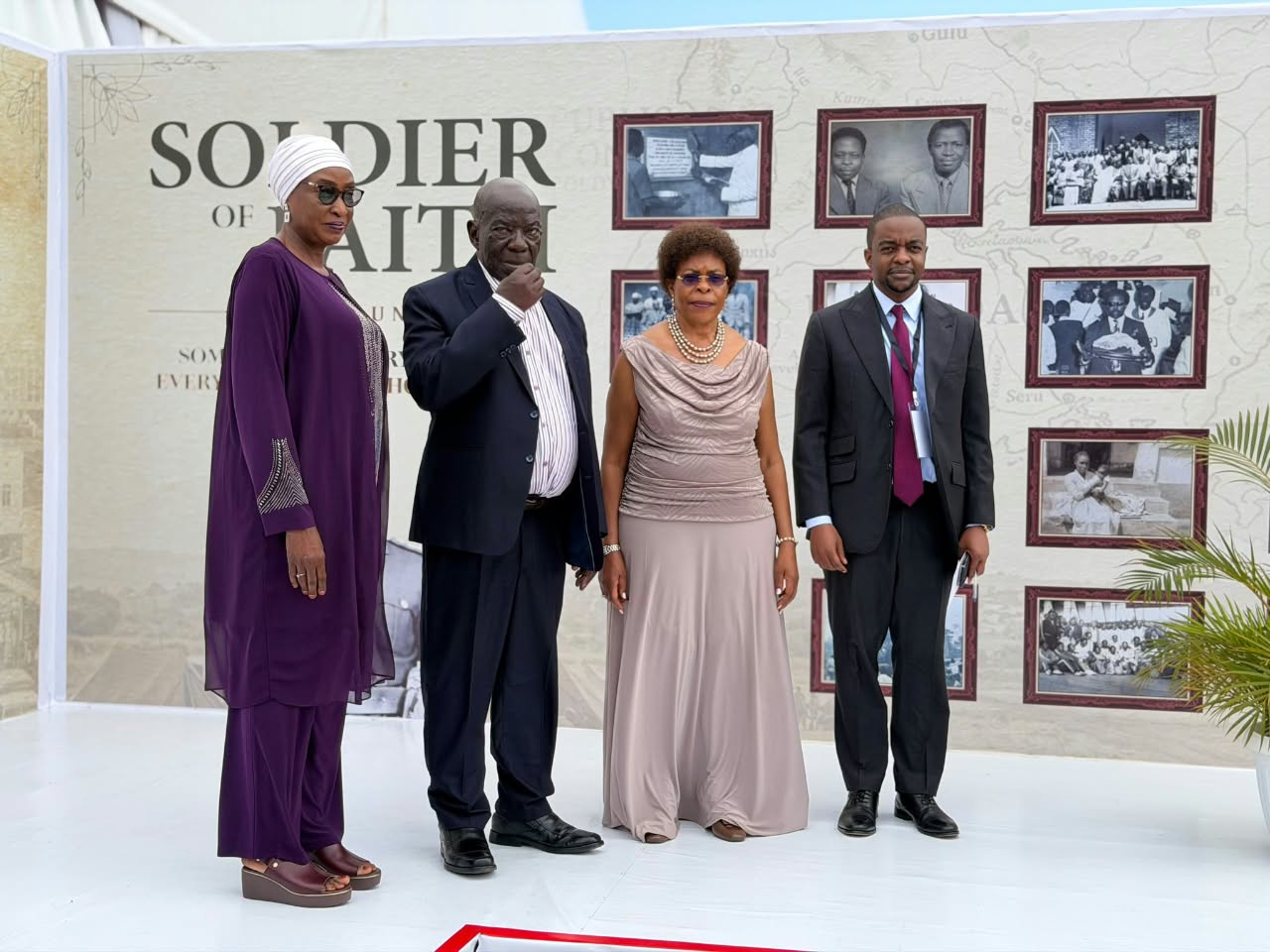
That is why, while reflecting on decentralisation and leadership in Uganda, my mind travelled back to Masaka — to the public life of former Vice President Edward Kiwanuka Ssekandi.
And, more importantly, to what I have observed on the ground.
WHEN DECENTRALISATION LEAVES THE TEXTBOOK
In journalism school, we learn that communication theories help us understand how messages move from the source to the receiver and, ultimately, how people interpret those messages.
But development has its own language.
A road communicates.
A functioning health centre communicates.
A school communicates.
A district headquarters communicates.
Water flowing from a tap communicates.
These are not political speeches.
They are development messages received directly by citizens.
Uganda’s Ministry of Local Government defines decentralisation as the transfer of political, administrative and financial authority to local governments to strengthen participation, improve public-service delivery and accelerate local economic development.
That definition takes decentralisation away from the lecture room and places it in the village.
This is where I believe Ssekandi’s Masaka story becomes interesting.
THE KYAMBAZZI TEST
One of the clearest examples is the question of the Masaka District headquarters.
The story was not always straightforward.
In 2022, Daily Monitor reported that Ssekandi had offered land at Kyambazzi Village in Kyanamukaka for the district headquarters, but district councillors had initially voted for another site at Nkuke in Buwunga.
By July 2025, the position had changed.
Daily Monitor reported that Cabinet had decided the new Masaka District headquarters would be established at Kyambazzi, with the decision being implemented through the Ministry of Local Government. The same report said Ssekandi had provided land for the project.
This is where the story becomes bigger than Ssekandi himself.
A district headquarters is not simply a building.
It is an administrative centre.
It is where citizens seek services.
It is where officials coordinate development.
It is where decentralised government becomes physically present.
For a journalist looking at development through the lens of communication, the building itself becomes a message:
Government is closer.
That is the language of decentralisation.
SSEKANDI’S LONG SHADOW IN MASAKA
I was young during some of Ssekandi’s most active years in national politics.
But journalism has taught me another important lesson: you do not have to witness every historical moment personally to investigate its consequences.
You read.
You interview.
You travel.
You observe.
You compare records.
You listen to communities.
And then you report.
Ssekandi’s public career took him from Parliament to the Speakership and eventually to the Vice Presidency.

His political journey therefore gives him a rare connection to both national institutions and the communities of Greater Masaka.
But titles alone do not make a development story.
The more important question is what happens when experience returns to the community.
In Masaka, that question is increasingly being answered through discussions around district administration, agriculture, youth, education, infrastructure and local economic development.
FROM THE GRANDFATHER’S OFFICE TO THE VILLAGE
This is where Oscar Fransisco Mutebi enters the story.
Mutebi, associated with Ssekandi’s office, has increasingly become visible in grassroots engagements across Greater Masaka.
I have interviewed him.
I have interacted with him.
I have watched his community engagements.
And I have followed his activities as a journalist rather than merely as a spectator.
His public work has touched agriculture, youth, education, sports and community mobilisation.
Earlier this year, Watchdog Uganda reported on his coffee-seedling mobilisation campaign across parts of Greater Masaka, linking the initiative to household income and agricultural productivity.
Another Watchdog Uganda profile documented his engagement with schools, sports and grassroots communities, including activities at St Mugaga Secondary School.
These are important because development communication is strongest when the message is connected to the needs of the receiver.
A farmer understands a seedling.
A student understands scholastic materials.
A young footballer understands a jersey and a football.
A trader understands a road.
A resident understands piped water.
That is communication without a microphone.
THE FARMER AS A RECEIVER
Consider coffee.
For years, Greater Masaka has been identified with coffee-growing communities.
But telling a farmer that agriculture can transform household income is one thing.
Providing practical support and connecting farmers to productive opportunities is another.
This is where community mobilisation becomes part of development communication.
The message changes from:
“Government wants you to develop.”
to:
“Here is an opportunity. Here is the knowledge. Here is the support. Now participate.”
That distinction matters.
The Ministry of Local Government itself identifies local economic development and productive infrastructure among the areas central to its mandate.
THE SCHOOL AS A DEVELOPMENT MESSAGE
At St Mugaga Secondary School, Mutebi’s interventions involving sports and educational support provide another example.
Education is not simply about classrooms.
It is about confidence.
It is about opportunity.
It is about preparing young people to participate in the economy.
When a student receives scholastic materials, the intervention may look small from the outside.

But to that student, it may be the difference between participation and exclusion.
When a school receives sports equipment, it communicates something else:
Talent matters.
This is why development reporting should not always chase the largest project.
Sometimes the strongest story is hidden in the small change visible to an ordinary person.
THE ROAD SPEAKS TOO
My own field observations in Greater Masaka have taken me through communities where development is visible in roads, water projects and local institutions.
In Kyanamukaka Town Council, road construction has become part of the local development conversation.
In Kamuzinda and Kyantale, piped water is another practical concern affecting everyday life.
At Bulegeya, the agricultural landscape around Ssekandi’s home area provides another reminder that Masaka’s economy is closely connected to land, coffee and rural production.
These are not abstract development indicators.
They are lived experiences.
And this is where I return to my Journalism and Mass Communication training.
A journalist must distinguish between what is said and what can be observed.
The statement is one source.
The field is another.
The document is another.
The citizen is another.
The best reporting brings these pieces together.
SERVICE BEFORE POLITICS
The Permanent Secretary in the Ministry of Local Government, Ben Kumumanya, has repeatedly placed emphasis on strengthening local government leadership and service delivery. In June 2026, he said the Ministry was strengthening induction of newly elected local government leaders as part of improving governance and service delivery.
That principle is important.
Uganda’s decentralisation system was not designed to create village kings.
It was designed to bring decision-making and services closer to citizens.
The Ministry describes its vision as an effective and efficient local government system providing quality, equitable and sustainable services to the population.
So the leadership question should be straightforward:
Who is serving the people?
Not:
Who speaks the loudest?
Not:
Who has the biggest convoy?
Not:
Who has the strongest political slogan?
Service.
That is the measuring instrument.
MUTEBI AND THE POLITICS OF POSSIBILITY
Mutebi’s increasing visibility has naturally generated political discussion in Greater Masaka.
There has been speculation among supporters and observers about his future political ambitions, including possible interest in Bukoto Central.
But journalism must be careful here.
A journalist should not convert possibility into fact.
An ambition is not an election result.
A mobilisation exercise is not a parliamentary mandate.
A political conversation is not a declaration by the electorate.
The role of the journalist is to document what exists and allow citizens to interpret what may come next.
That is where media ethics and consciousness become important.
We inform.
We interrogate.
We verify.
We give context.
We allow the audience to decide.
THE COMMUNICATION THEORY OF SERVICE
Perhaps the most interesting lesson from this story is that leadership itself can be understood as communication.
The leader is the source.
The intervention is the message.
The community is the receiver.
The response from citizens is the feedback.
If the road is usable, the feedback is visible.
If the health centre functions, the feedback is visible.
If students remain in school, the feedback is visible.
If farmers increase production, the feedback is visible.
If citizens continue demanding better services, that too is feedback.
This is why development journalism requires more than political reporting.
It requires observation.
It requires fieldwork.
It requires listening.
It requires understanding the community before writing about it.
THE Ssekandi-Mutebi QUESTION
Ssekandi’s role in this story is therefore not merely that of a former Vice President.
It is also the story of an older generation interacting with a younger generation.
Mutebi’s association with Ssekandi provides him with exposure to a political and administrative environment that few young people experience.
But mentorship is not inheritance.
A name can open a door.
Only service can keep it open.
The next generation must therefore demonstrate its own capacity.
For Mutebi, the evidence will ultimately be found in the communities where he works — in the farmers he reaches, the young people he supports, the schools he engages and the development issues he takes to government.
That is where political rhetoric ends and public accountability begins.
MASAKA NEEDS DELIVERERS
After nearly nine years moving between journalism, newsroom assignments, fieldwork and studies in Journalism and Mass Communication, I have reached one conclusion:
People are tired of being spoken about. They want to be served.
The woman in the village wants a road to the market.
The farmer wants productive agriculture.
The parent wants a functioning school.
The patient wants a health centre.
The youth wants skills and employment.
The trader wants infrastructure.
The community wants government to listen.
That is why decentralisation remains important.
And that is why leaders must be judged by what they help communities achieve.
Ssekandi’s contribution to the Masaka District headquarters question is one documented part of that story.
Mutebi’s grassroots activities are another part of the emerging story.
But the final judgment belongs neither to me nor to the newsroom.
It belongs to the people.
A JOURNALIST’S LAST WORD
I do not write this as a campaign speech.
I write it as an observation.
I write it as a student of Journalism and Mass Communication who understands that the foundation of media is not simply publication.
It is responsibility.
The journalist observes society.
The journalist questions power.
The journalist gives citizens information.
The journalist documents change.
The journalist also has a responsibility to avoid confusing advocacy with evidence.
Masaka’s development story deserves that consciousness.
Ssekandi’s generation has its record.
Mutebi’s generation has its opportunity.
The roads will speak.
The schools will speak.
The health centres will speak.
The farmers will speak.
The young people will speak.
And history will eventually record what each generation did with the opportunity it received.
For now, one lesson stands above the political noise:
Leadership is not the privilege of being served. It is the responsibility to serve.
And perhaps that is the most practical meaning of decentralisation — taking government from the pages of policy documents and placing it where the citizen can touch it, see it, use it and benefit from it.
That is the Masaka story.
That is the story I observed.
That is the story I report.