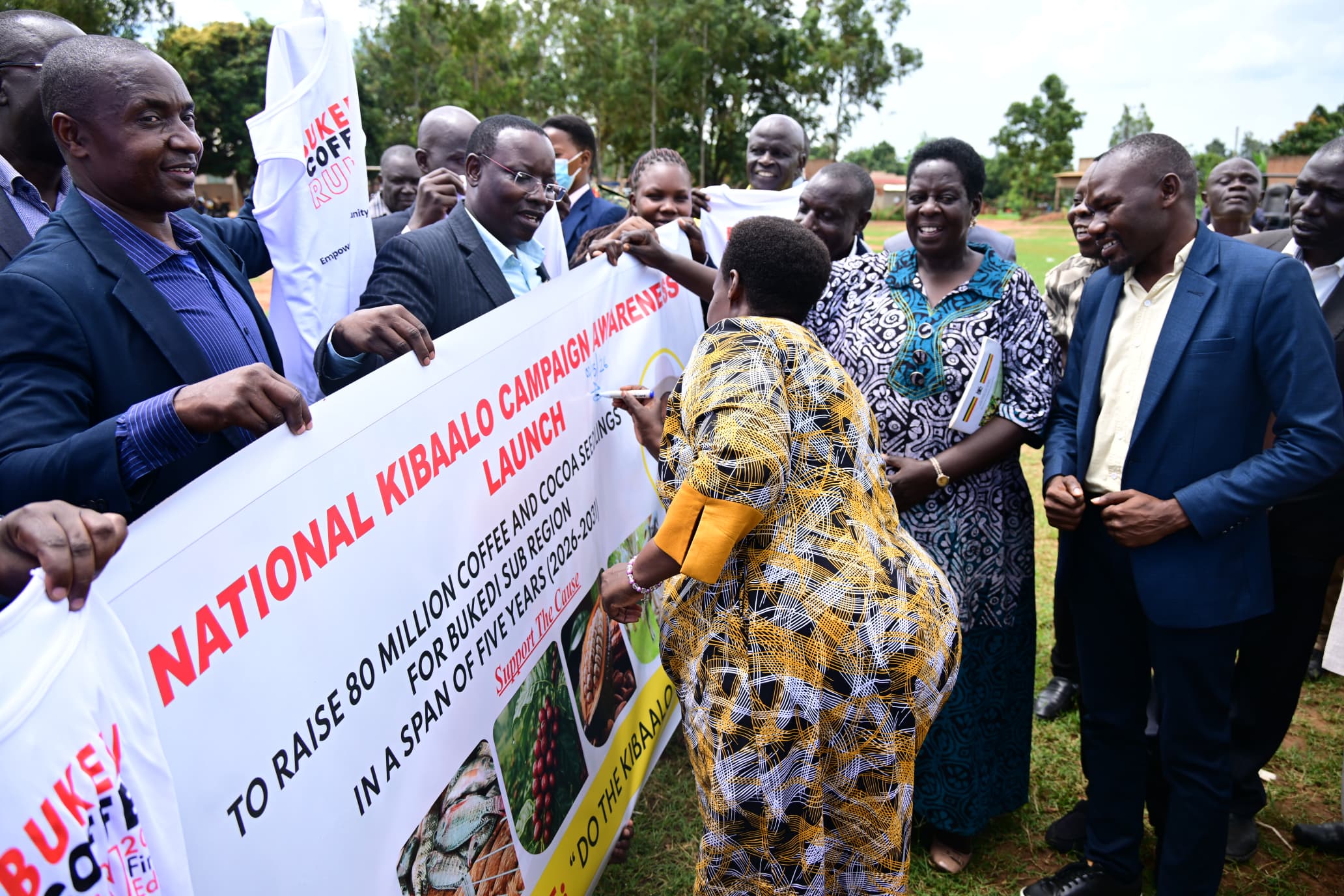
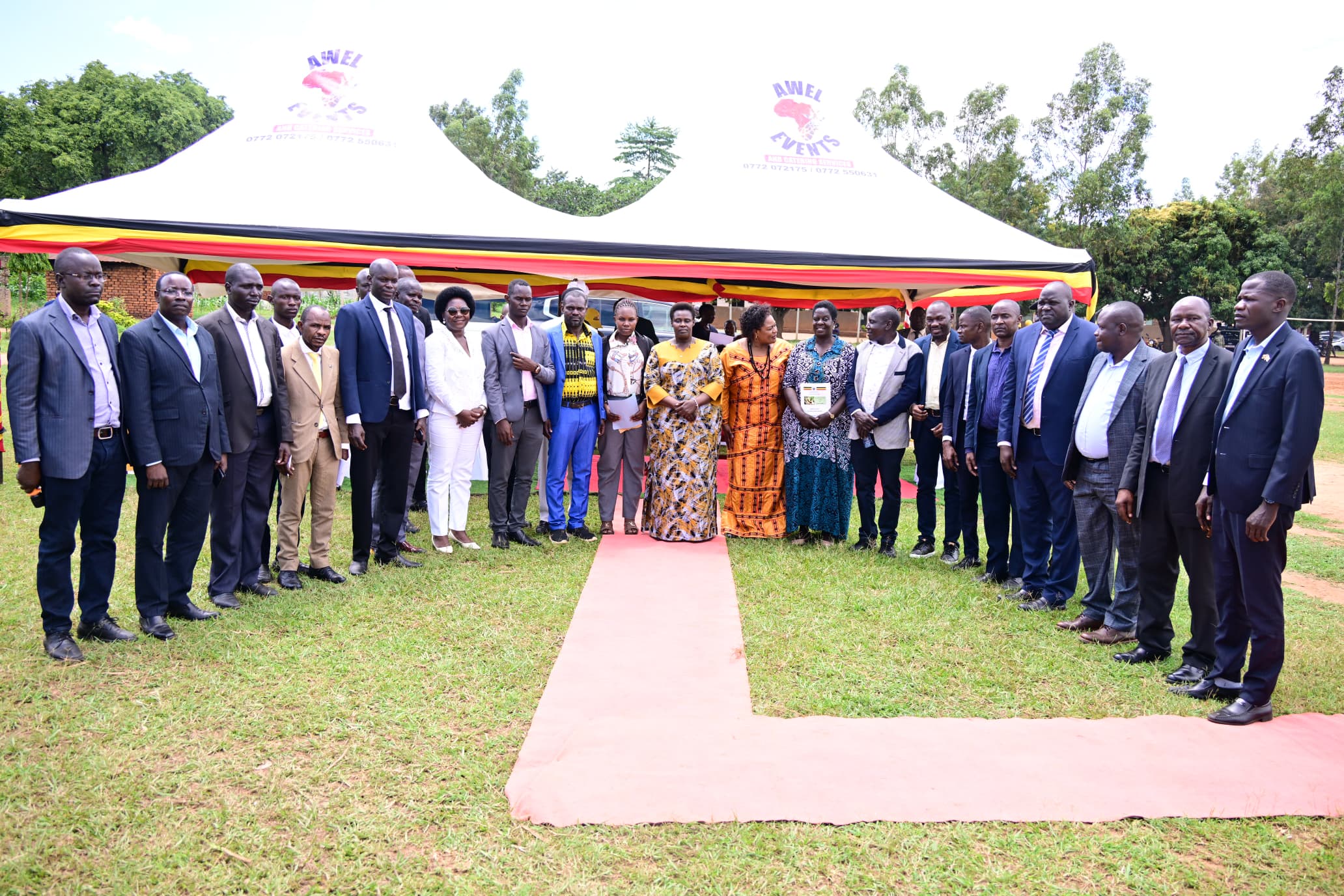
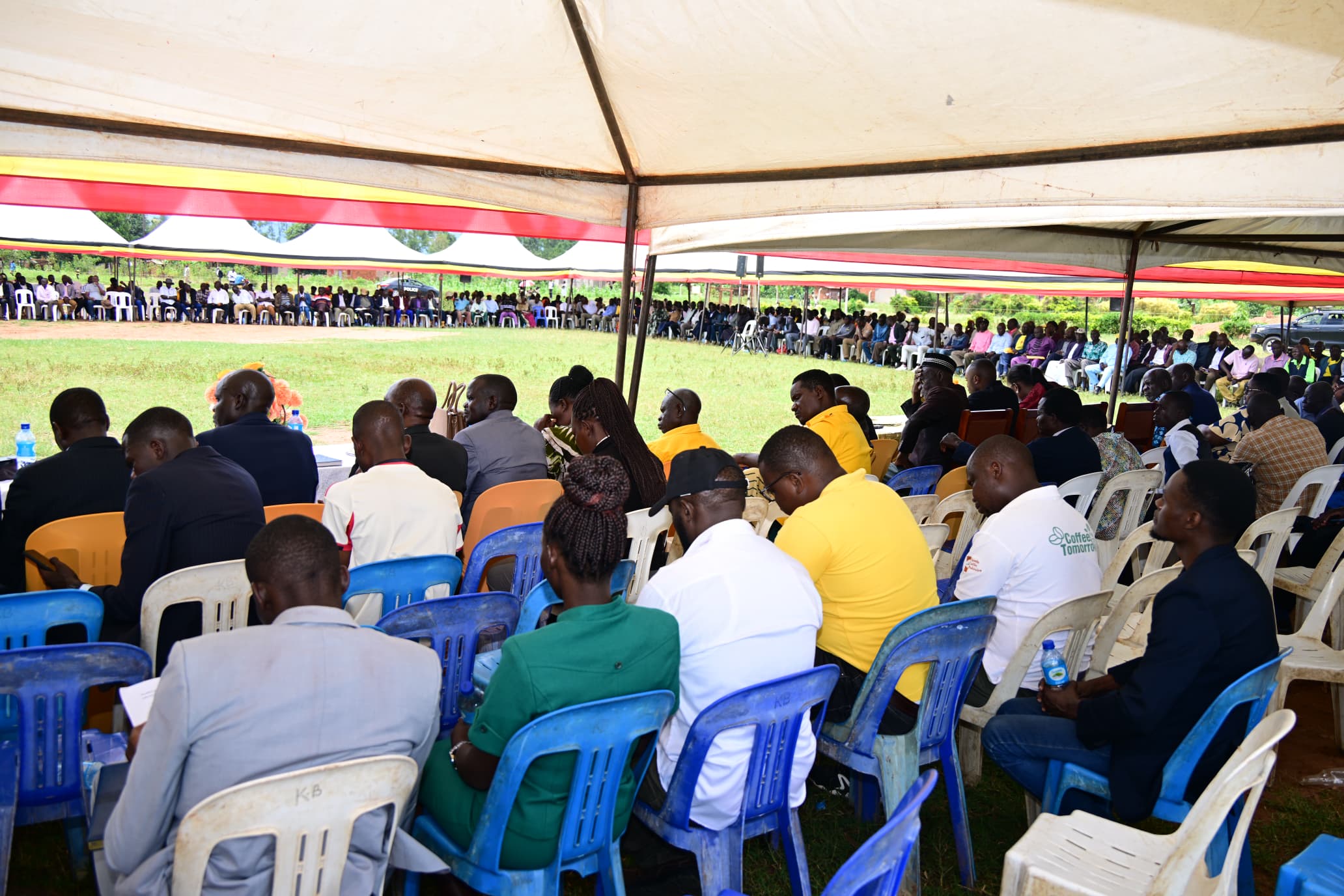
Budaka: The Vice President Jessica Alupo together with leaders of Bukedi Sub-Region have launched a national campaign to boost Coffee and Cocoa production to fight poverty.
The initiative code-named, “the National Kibaalo Concepts Awareness Campaign,” is aimed at raising 80-million seedlings of Coffee and Cocoa through multiplication of seedlings which would be distributed to farmers across the region.

“When you produce millions of bags of coffee and cocoa, it means we shall need factories and industries here to process them for export markets. This will create thousands of jobs that will benefit our people,” Alupo as she represented President Museveni during the launching ceremony in Budaka district.

She applauded the initiative and called on the Ministry of Agriculture to strengthen support systems for farmers from planting to harvest. “Be helpful to us as we introduce crops of high value to our economy. They should be preserved from the time of planting up to harvest,” Alupo said.
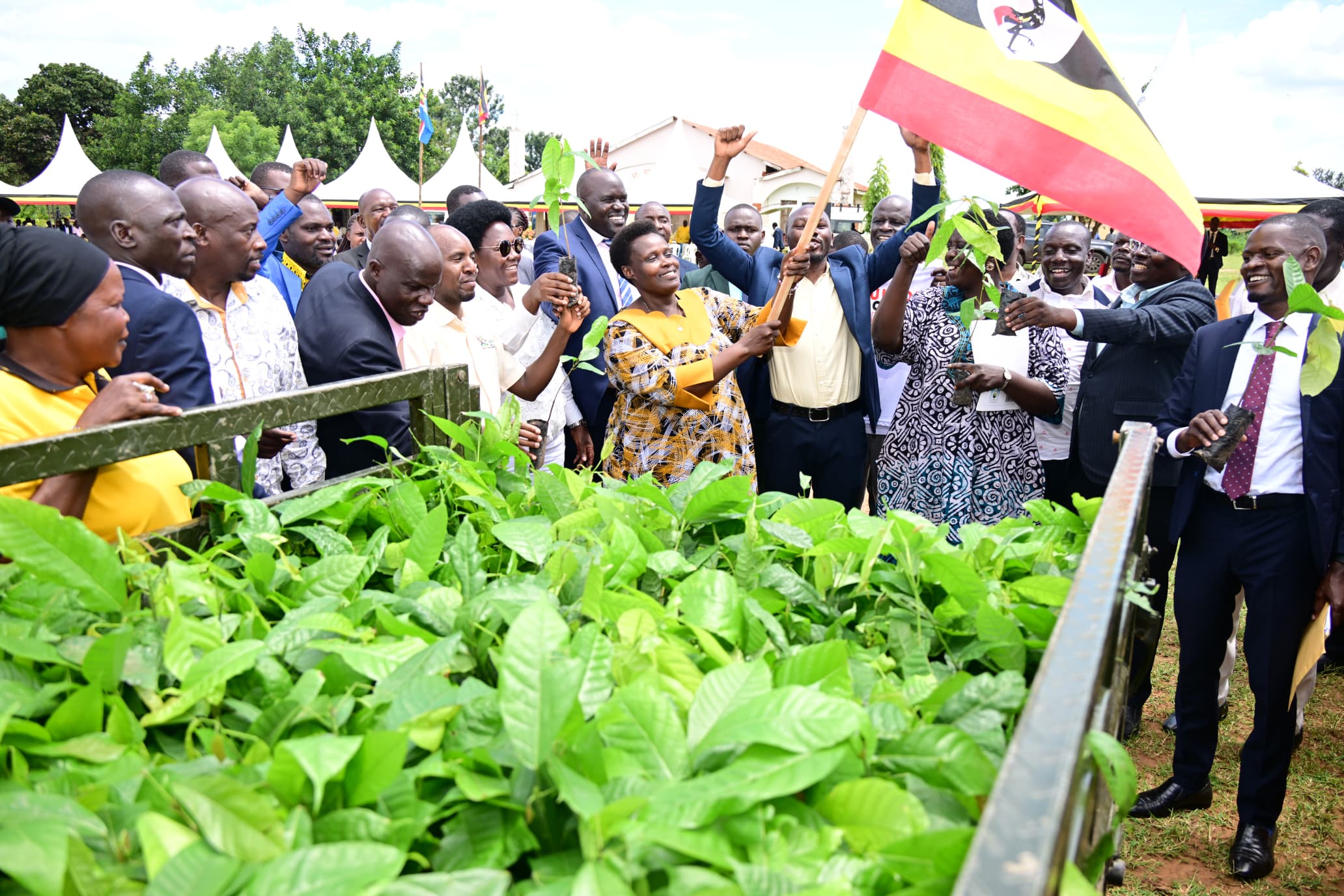
She expressed optimism that the initiative could drive industrialization, create jobs, and increase household incomes in the region.
The campaign comes at a time when the Ministry of Agriculture says scientific studies have confirmed that Bukedi’s soils are highly fertile and suitable for coffee production.

The vice president emphasized that African societies have always been highly productive. “When you read books written by the early European travelers to go through the great lakes region, like Henry Morton Stanley, you will find that they wrote about the huge wealth they found here,” she said.

Alupo stressed that Europeans found bananas, sweet potatoes, cattle, fishing, however, the whole society was still in the pre-capitalist stage of development without a money economy, relying on the less efficient system of Okuchurika (barter trade).
“There were some pre-mordial efforts at using money in the form of cowrie-shells (ensiimbi). Even now, in some of our dialects, money (esente), is still called ensiimbi (Cowrie-shells), empiiha (Rupiah), still capturing those early efforts at entering the money economy,” she said. Alupo went on to emphasize that when the British defeated our divided Kings and took over Uganda, they introduced the money economy, based on the shilling.

“By 1962, when the British left, they had created a small island of money economy, surrounded by a sea of under-development (the economy of okukolera ekidda kyoonka – working only for the stomach). In the Universities, in the 1960s, the description for those colonial and neo-colonial economies was “enclave economies” – small islands of money economy, surrounded by a sea of pre-money traditional economic activities,” she said.
She further explained that in the case of Uganda, our small enclave economy, was being described as an economy of the 3Cs and 3Ts. The 3Cs, were: Coffee, Cotton and Copper; while the 3Ts, were: Tea, Tobacco and Tourism.
She noted that the percentage of the homesteads inside this small island by 1969, was 4% adding that when Idi Amin came in, in 1971, much of this small island, was destroyed, only coffee and tobacco, kept limping on.
“Therefore, from our analysis and given our orientation formed throughout the formative years of the Student Movement in the 1960s, our long-term goal was to achieve a total socio-economic transformation by building a modern society of the middle class and a skilled working class, as has happened in Europe since 300 years ago. In order to achieve this and given Uganda’s natural resources base, we developed a plan for a modern economy based on four money-making sectors,”.
These are: commercial agriculture with ekibaalo (cura, otita, aimar); manufacturing (industry); services; and ICT. Our strategic goal is to make every adult Ugandan of working age, join one of these sectors, either as an owner or as an employee.
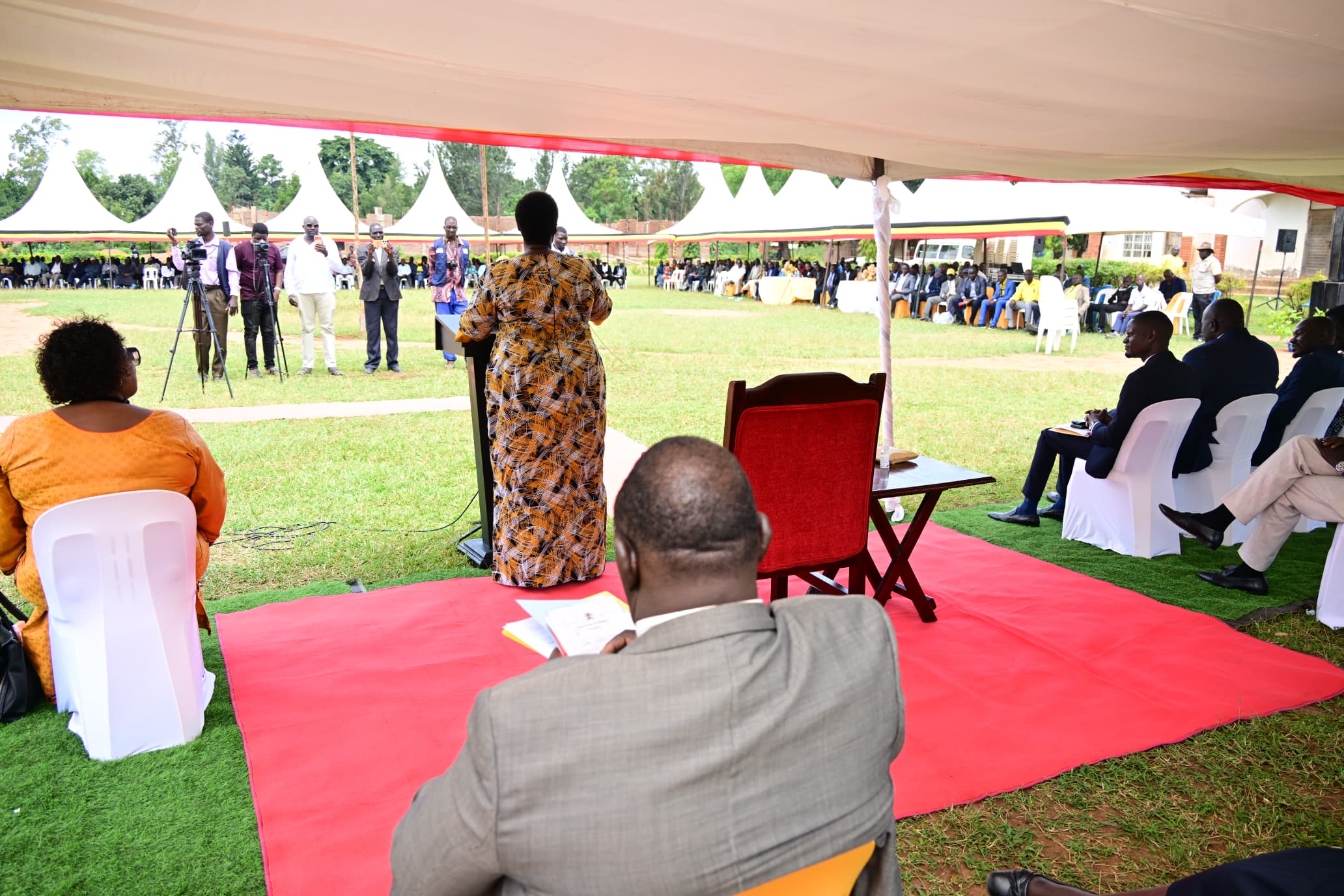
Alupo told farmers that since the NRM government came to power, in 1986, they have, successfully, attained four phases. These are: the minimum economic recovery (by bringing back the 3Cs and 3Ts and also reformalizing the economy that had become informal, with magendo, etc.); expanding the enclave of the 3Cs and 3Ts; diversifying the enclave products by bringing into the money economy, new products such as milk, beef, bananas, maize, fruits, irish potatoes, cassava, etc.; and starting the knowledge economy of using science to create products such as vaccines, auto–mobiles, electronic products.
She however added that all this could not have happened, if they did not work on some elements of the infrastructure (the roads, the electricity, the ICT backbone, etc.)
The vice said that as a result, the economy has expanded from USD 1.5 billion in 1986 to now USD 61 billion, albeit still being a raw materials producing economy.
“This is why you hear me insisting that this economy will jump to USD 500 billion by simply adding value to most of our raw materials – agricultural, minerals, forest products, our fresh – water products,” she said.
To support the initiative, leaders also launched the annual Bukedi Coffee Run, aimed at raising funds for seedling production and distribution to farmers.
Tororo County North MP-elect Nicholas Owino described the initiative as a major economic shift for the region.
“It means Bukedi is finally returning to the money economy,” Owino said.
Bukedi Leaders Forum Coordinator Jona Oboth said the annual run will be held for the next ten years to ensure sustained seedling support and farmer participation.
“The run will be organized annually for the next ten years as we target raising all these seedlings and even more for our farmers,” he explained.
Coffee currently contributes nearly 20 percent of Uganda’s export earnings, and leaders in Bukedi believe that with consistent farmer engagement and government support, the region could become a key agricultural growth hub.