


By Brian Mugenyi
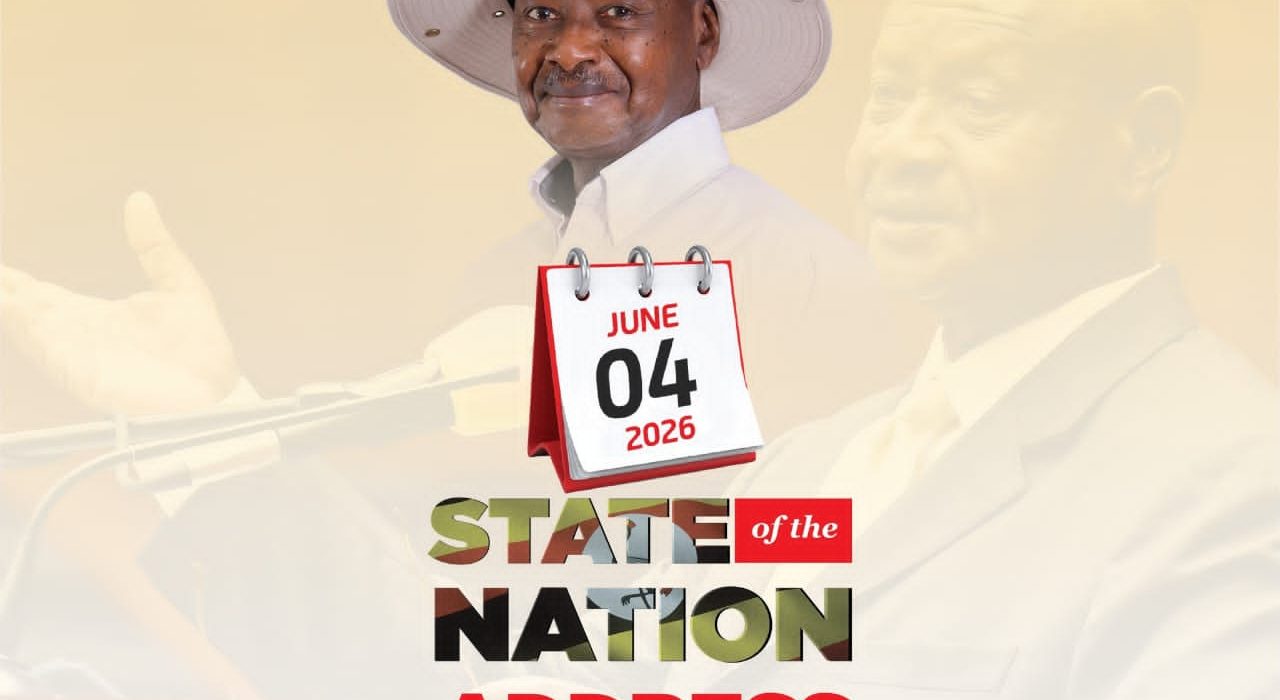
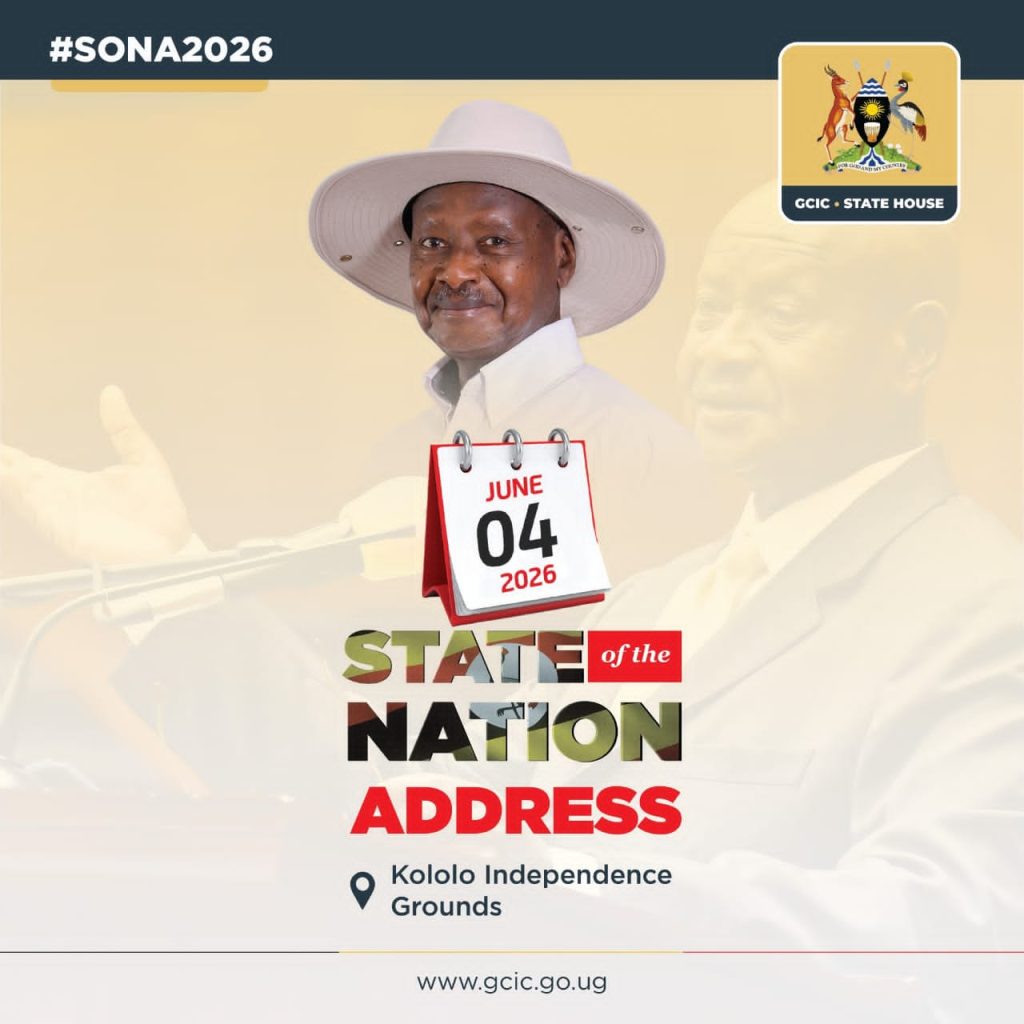
Kampala: President Museveni is scheduled to address the country at Kololo Independent grounds on Thursday 4th June 2026. This marks his maiden state address ever since he sworn in at the same venue lately in May and trade and economy which are like two identical twins are expected to be impacted as the latter address the country.

Trade, and e-commerce under economy, one supports another and the succession of both gives the country a stable economic development.

On this, lays an African proverb that says: “A village without order harvests poverty even in seasons of abundance.” The same principle applies to economies.
As Uganda races towards achieving middle-income status and the ambitions outlined in Vision 2040, policymakers, economists such as Mr. Fred Ssenoga the brain behind Union Transport Alliance; Union Oil, Union water and Boda Boda and governance experts increasingly agree on one fundamental truth: economic transformation cannot thrive where disorder, corruption and weak institutions persist.

From bustling markets in Kampala; Kiseka Market, Owino Market and Nakasero Market to trading centres in Masaka such as Nyendo Market and Masaka Central Market, Gulu, Mbarara and Arua, the future of Uganda’s economy may largely depend on how effectively local governments enforce trade order, collect revenue, fight corruption and create an environment where businesses can flourish.
At the centre of these reforms is the Ministry of Local Government under the leadership of Permanent Secretary Ben Kumumanya, whose administration continues to champion accountability, organised trade and efficient service delivery as pillars of national development.
Local Governments: Uganda’s Economic Engine
According to Mr. Edison Kirabira, the Federation of Uganda Social media influencers Director and Operation Wealth Creation Civil coordinator Greater Kampala region, few Ugandans realise the enormous role local governments play in the country’s economy.
Under the Local Governments Act, district and urban authorities Mr. Kirabira appreciates the role they play such as mandated tasks to regulate trade, license businesses, manage markets, collect local revenue and oversee community development programmes.
“Trade is good, for us who are mobilising people to get out of poverty under the support of government and Gen. Salem Saleh Akandwanaho through Operation Wealth Creation, it is good to have order in economy,’ he said.
According to findings from the Uganda National Household Survey (UNHS) conducted by the Uganda Bureau of Statistics, Uganda has more than 10 million households, with over 70 percent relying directly or indirectly on agriculture and small-scale business activities for survival.
The survey further indicates that the private sector contributes nearly 80 percent of Uganda’s Gross Domestic Product (GDP), making business regulation and local governance critical drivers of economic growth.
Every day, millions of Ugandans participate in commerce through farming, transportation, manufacturing, retail trade, hospitality and service provision.
Yet economists warn that without effective regulation and enforcement, markets can easily descend into disorder, leading to tax leakages, unfair competition and declining public services.
Understanding Trade Order
Trade order refers to systems and regulations that guide how business transactions are conducted.
In financial markets, trade orders include market orders, limit orders and stop orders. However, in Uganda’s broader economic context, trade order extends beyond buying and selling.
It encompasses business licensing, market management, tax compliance, quality assurance, consumer protection and adherence to established commercial regulations.
For example, a coffee farmer in Masaka who insists on selling coffee at a fixed price of Shs35,000 per kilogram is exercising a limit order, while a vehicle owner who accepts an immediate offer of Shs45 million is engaging in a market order transaction.
Business experts argue that organised trade systems create predictability, attract investment and reduce market conflicts.
“Investors are attracted to environments where rules are clear and consistently enforced,” notes one economic analyst. “No serious investor wants to operate in chaos.”
Constitutional Foundation for Economic Freedom
Uganda’s commitment to trade and enterprise is firmly anchored in the Constitution.
Article 40 of the 1995 Constitution guarantees every citizen the right to practise a lawful profession, occupation, trade or business.
The same provision protects workers’ rights to organise through trade unions while promoting safe and satisfactory working conditions.
Additionally, the National Objectives and Directive Principles of State Policy require government to stimulate agricultural, industrial, scientific and technological development.
These constitutional provisions have shaped several laws, including the Trade Licensing Act, the External Trade Act and Uganda’s participation in regional economic blocs such as the East African Community> and COMESA.
Together, these frameworks aim to create an environment where businesses can compete fairly while contributing to national development.
Corruption: Uganda’s Invisible Tax
Despite these legal frameworks, corruption remains one of the biggest threats to economic growth.
Governance experts often describe corruption as an “invisible tax” because it silently increases the cost of doing business while reducing the quality of public services.
Transparency advocates estimate that developing countries lose billions of dollars annually through bribery, procurement fraud, embezzlement and abuse of office.
In Uganda, corruption affects virtually every sector—from road construction and healthcare to education and public procurement.
Resources meant for classrooms, hospitals, water projects and community infrastructure sometimes disappear before reaching intended beneficiaries.
To combat the vice, government has established several institutions including:
The Inspectorate of Government (IGG)
The Directorate of Public Prosecutions (DPP)
The Criminal Investigations Directorate (CID)
The Office of the Auditor General
The Directorate for Ethics and Integrity
The Anti-Corruption Act of 2009 and provisions under the Local Governments Act empower authorities to investigate, prosecute and remove public officials implicated in corruption and abuse of office.
Government officials maintain that strengthening accountability mechanisms is essential for restoring public trust and ensuring value for taxpayers’ money.
Masaka’s Drive Towards Orderly Trade
Masaka City has emerged as one of the local governments actively pursuing trade order reforms.
According to city authorities, organised markets and regulated business operations improve sanitation, public safety, revenue collection and investor confidence.
Town Clerk Emmanuel Kaweesi says sustainable urban development depends on structured business environments where traders operate within designated markets and licensed premises.
The city has intensified efforts to streamline market operations while discouraging illegal street vending that often disrupts traffic flow and compromises sanitation standards.
Economic planners argue that well-organised markets not only improve customer accessibility but also create opportunities for long-term business growth.
New Cabinet, New Expectations
Following President Yoweri Kaguta Museveni’s latest Cabinet appointments in seventh term since 1986 expectations remain high for reforms that strengthen governance and accelerate economic transformation.
Within the Local Government Ministry, State Ministers Justine Nameere and Balaam Barugahara are expected to support initiatives aimed at improving accountability, service delivery and citizen participation.
Meanwhile, leaders in the finance and trade sectors, including David Bahati, Wilson Mbasu Mbadi and Sandra Alum Santa, face the challenge of advancing policies that encourage business formalisation and investment growth.
Lessons from Successful Economies
History offers valuable lessons.
Countries such as Singapore and Rwanda transformed their economies by building strong institutions, enforcing regulations and creating predictable business environments.
Their success demonstrates that economic growth is not merely about attracting investors—it is about creating systems that allow businesses, workers and governments to thrive together.
The Road Ahead
For Uganda, trade order should not be viewed as a punishment imposed on traders or entrepreneurs.
Rather, it should be seen as a framework that protects businesses, consumers, investors and government revenues.
When traders operate legally, taxes are collected efficiently. When corruption is reduced, public services improve. When accountability prevails, investors gain confidence. And when local governments function effectively, communities prosper.
As Uganda advances towards Vision 2040, the challenge is ensuring that trade order, accountability and service delivery move hand in hand.
Because nations do not prosper by chance. They prosper when institutions work, leaders are accountable and citizens embrace lawful enterprise.
And as Uganda continues its journey towards economic transformation, one truth remains undeniable: where integrity guides leadership and order guides commerce, prosperity inevitably follows.