By Brian Mugenyi
mugenyijj@gmail.com
Mbale City: Permanent Secretary in the Ministry of Local Government Mr. Ben Kumumanya has intensified his institutional reform agenda aimed at strengthening accountability, professionalism and transparency in Uganda’s local governments after directing the immediate interdiction of four senior technical officers in Mbale City over allegations of gross negligence of duty, abuse of office, mismanagement of public resources and possible financial impropriety.
The directive, issued on 22 July 2026, was addressed to Mbale City Town Clerk Mr. Assy Abirebe Tumwesigire, instructing him to immediately implement the interdictions in accordance with the Public Service Standing Orders, 2021, to allow independent investigations into the allegations.
The officers affected include Principal Civil Engineer Eng. Kasaata Edson, Principal Health Officer (Environmental Health) Mr. Wandera, Senior Civil Engineer Eng. Anthony Wanasolo, and Senior Physical Planner Mr. Fred Nambafu.
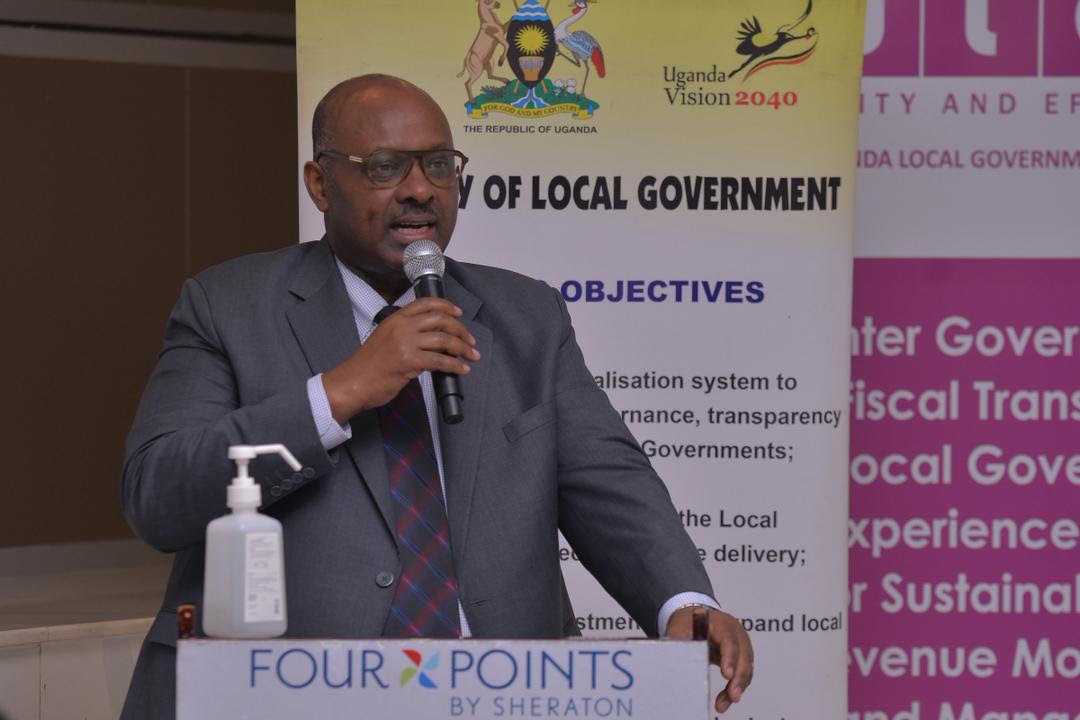
According to the Ministry of Local Government, the allegations are serious and require investigations by relevant government accountability institutions, including the State House Anti-Corruption Unit and other competent government agencies.
In his communication, Mr. Kumumanya directed the Town Clerk to ensure immediate implementation of the interdiction process, emphasising the need to safeguard the integrity of investigations, protect public resources and uphold public interest.
However, beyond the administrative action in Mbale City lies a bigger governance question:
Can Uganda’s local governments build systems strong enough to prevent corruption before it happens, rather than only responding after public resources have already been lost?
Beyond Interdictions: A Wider Institutional Reform Agenda
The Mbale City action represents more than a disciplinary measure against individual officers.
It forms part of a wider institutional reform agenda aimed at strengthening Uganda’s decentralised governance system, where local governments remain the frontline institutions responsible for delivering services directly to citizens.
For decades, Uganda’s decentralisation policy has sought to bring government closer to the people through districts, municipalities and cities.
However, challenges including weak supervision, misuse of public resources, delayed projects, poor accountability and gaps in public administration have continued to affect service delivery and citizens’ confidence in some institutions.
It is within this environment that Mr. Kumumanya’s approach has focused on strengthening systems, enforcing standards and promoting professionalism within local government structures.
2022: Reforming Government Recruitment Systems
Mr. Kumumanya’s institutional reform journey did not begin with the Mbale City action.
Since 2022, the Permanent Secretary has issued directives aimed at protecting the integrity of Uganda’s public service recruitment system, particularly by fighting corruption in the recruitment process.
One of the key reforms was the directive against the illegal practice of selling government jobs and recruiting individuals through unofficial channels.
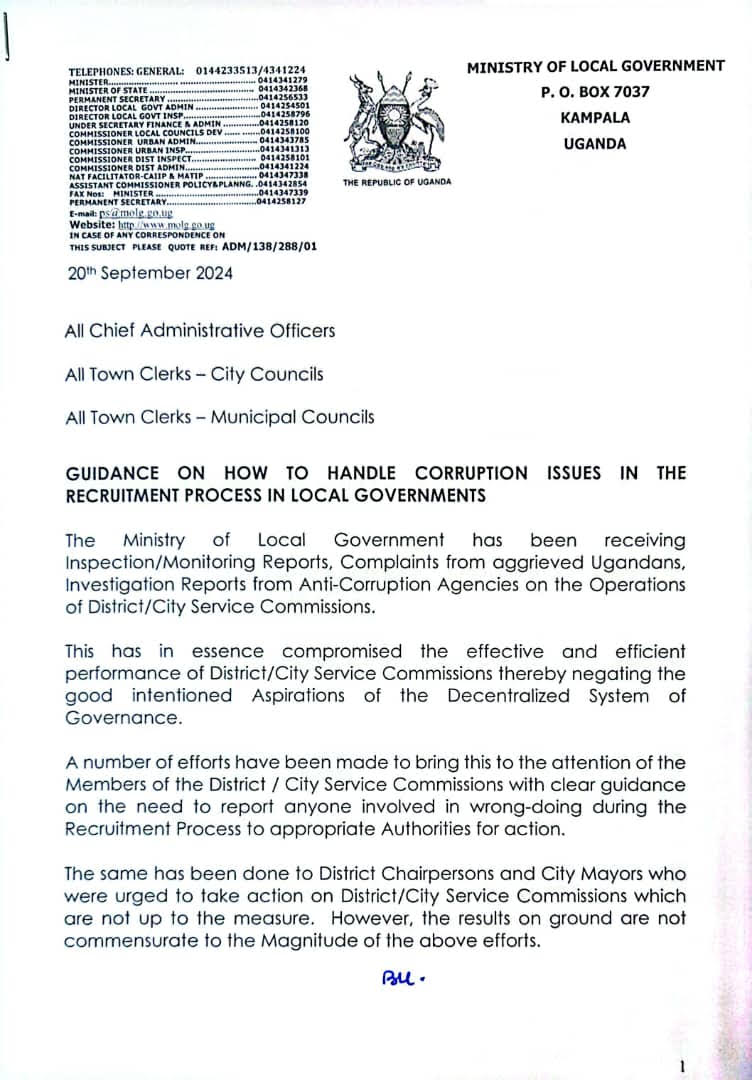
Mr. Kumumanya directed local governments and public institutions to ensure that government vacancies are openly advertised, recruitment processes follow established procedures and appointments are based on merit and competence.
The reforms were aimed at eliminating corruption loopholes where citizens seeking employment opportunities could be exploited by individuals demanding money in exchange for government positions.
The Permanent Secretary warned that selling government jobs undermines public confidence, creates inequality and weakens the professionalism required in public institutions.
The principle was clear: a strong public service begins with a transparent recruitment system where qualified Ugandans compete fairly.
2026: From Prevention to Accountability Enforcement
Four years after strengthening recruitment procedures, the focus has expanded to ensuring that public servants entrusted with government responsibilities uphold professional standards.
The interdiction of the four Mbale City technical officers represents another stage of the institutional reform journey — ensuring that accountability remains central after officials enter public service.
Governance experts argue that sustainable reforms require both prevention and enforcement.
Transparent recruitment alone cannot guarantee effective service delivery without strong accountability mechanisms, while disciplinary action alone cannot solve institutional weaknesses without addressing the systems that allow misconduct to occur.
The connection between the 2022 recruitment reforms and the 2026 Mbale action demonstrates a broader philosophy: strong institutions require fair entry systems, professional leadership and consequences for failure.
Town Clerk Assy Abirebe at the Centre of Implementation
While the directive originated from the Ministry headquarters, the responsibility of implementing the decision now rests with Mbale City Town Clerk Mr. Assy Abirebe Tumwesigire, who heads the city’s technical administration.
The Town Clerk has been tasked with ensuring that the interdiction process follows the law, investigations proceed without interference and the rights of the affected officers are respected.
As the chief technical officer of the city, Mr. Assy Abirebe plays a key role in translating national government reforms into practical action at local government level.
Experts argue that Town Clerks, City Clerks and Chief Administrative Officers are critical actors in Uganda’s decentralisation system because they supervise technical teams responsible for planning, budgeting and service delivery.
The success of institutional reforms therefore depends on how effectively local government leaders implement national standards within their respective jurisdictions.
Protecting Public Resources and Service Delivery
For ordinary Ugandans, corruption is not simply a governance issue discussed in official reports.
It is experienced through unfinished roads, delayed health projects, poor sanitation, stalled classrooms and public services that fail to reach communities.
Every shilling lost through negligence, misuse or mismanagement represents a lost opportunity for citizens waiting for improved healthcare, education, infrastructure and livelihoods.
Analysts argue that Uganda’s major development programmes, including the Parish Development Model (PDM), infrastructure projects, health investments and education reforms, can only achieve meaningful results when institutions responsible for implementation are transparent and accountable.
Development requires not only financial resources but also strong systems and responsible leadership.
A Warning Across Local Governments
The directive was copied to key accountability institutions, including the Minister of Local Government, Minister of State for Local Government, Inspector General of Government, Head of Public Service and Secretary to Cabinet, State House Anti-Corruption Unit, Resident City Commissioner and Mayor of Mbale City.
The involvement of multiple oversight institutions highlights the seriousness attached to strengthening accountability mechanisms.
However, governance experts emphasise that interdiction is an administrative process and does not amount to a finding of guilt.
The affected officers remain entitled to due process as investigations continue.
Nevertheless, the action sends a strong signal across Uganda’s local government structures that accountability and professionalism remain central pillars of public service.
The Future of Uganda’s Decentralisation
As Uganda continues implementing multi-billion-shilling development programmes, the success of decentralisation will depend not only on government budgets but also on the strength of institutions entrusted with managing public resources.
The Mbale City case therefore represents a bigger conversation about the future of public administration in Uganda.
Can local governments build systems that prevent corruption, reward professionalism and protect taxpayers’ money?
For Mr. Kumumanya, institutional reform means building systems where accountability becomes a culture rather than a reaction.
For Mr. Assy Abirebe Tumwesigire, the responsibility is ensuring that national reforms translate into effective administration at city level.
And for Ugandan citizens, the expectation remains simple — public resources must deliver public value.
From stopping the sale of government jobs in 2022 to enforcing accountability in Mbale City in 2026, the message remains clear: public trust must be protected, and when citizens’ resources are at stake, there are no sacred cows.