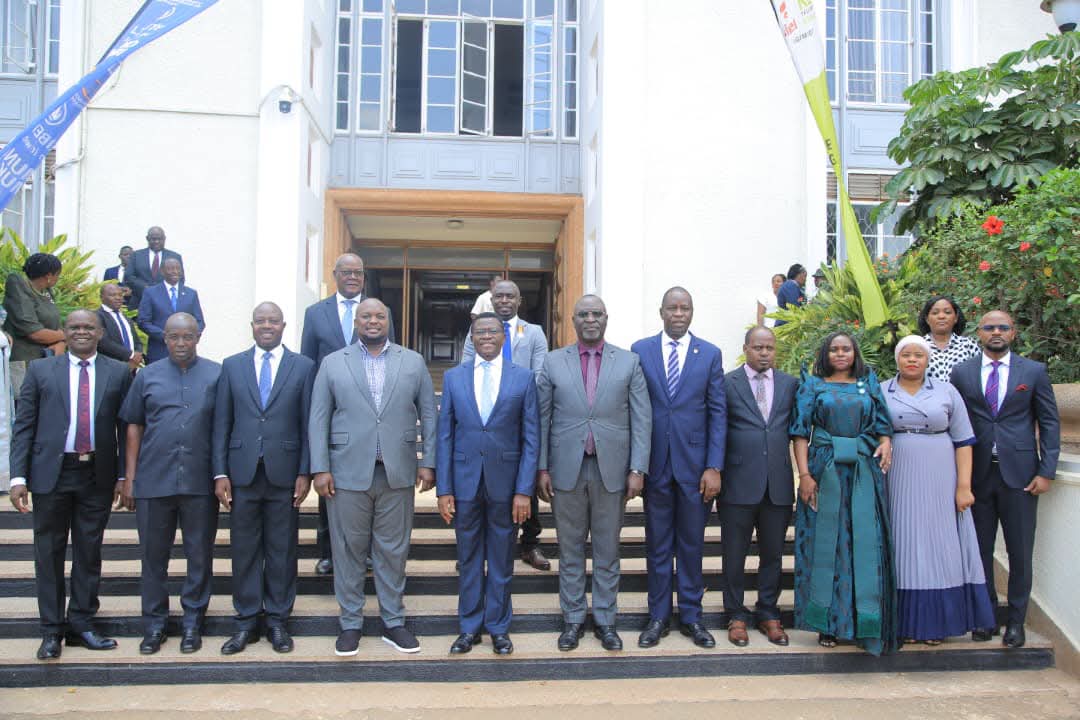
By appointing Africa’s most influential digital transformation entrepreneur, Innocent Kawooya, NIM, to its Board of Directors, Buganda Kingdom’s K2 Telecom is reinforcing its ambition to build a telecommunications champion that creates long-term value for the Kingdom while advancing Uganda’s digital transformation agenda.
Dated 1 July 2026 to 30 June 2029, the appointment reflects a growing recognition across Africa that the future competitiveness of telecommunications companies will increasingly depend not only on network infrastructure, but also on their ability to participate in broader digital ecosystems that connect financial services, digital commerce, healthcare, government services, entrepreneurship, and emerging technologies.
Innocent Kawooya joins the Board with more than twenty years of experience operating at the intersection of telecommunications, financial technology, digital payments, innovation ecosystems, digital public infrastructure, financial inclusion, and public policy through HiPipo, the organisation he leads as Chief Executive Officer.

During that period, HiPipo evolved from a social networking technology platform into one of Africa’s most connected digital ecosystems, bringing together telecommunications operators, banks, mobile money providers, regulators, governments, development partners, innovators, investors, payment companies, and entrepreneurs through research, policy engagement, regional programmes, industry platforms, and strategic partnerships.
The organisation became particularly influential within the telecommunications and digital financial services sectors by creating platforms that encouraged collaboration between mobile network operators, value-added service providers, financial institutions, payment companies, regulators, and technology innovators long before digital transformation became a central policy priority across the continent.

That work helped shape conversations on interoperability, mobile money expansion, customer experience, financial inclusion, digital payments, and regulatory innovation at both national and regional levels, positioning HiPipo as a convening platform that connects ecosystems across Africa and international markets.
Financial inclusion emerged as one of the defining pillars of that work. Through programmes implemented in partnership with governments, regulators, financial institutions, and development organisations, HiPipo has helped expand access to digital financial services for women traders, micro-enterprises, youth entrepreneurs, and underserved communities across multiple markets.
Partnerships with institutions such as the Gates Foundation and the COMESA Business Council further strengthened the organisation’s regional footprint and reinforced the growing role of African-led institutions in designing and delivering programmes that generate continental impact.
The appointment also highlights the increasing strategic importance of telecommunications infrastructure within modern economies. Mobile payments, digital health consultations, online commerce, government services, education technology platforms, and digital identity systems all depend on reliable connectivity, transforming telecommunications companies from communications providers into critical enablers of economic participation and national competitiveness.
For K2 Telecom, the challenge and opportunity extend beyond traditional telecommunications services. As Uganda accelerates investments in digital public infrastructure, financial inclusion, artificial intelligence, digital identity, healthcare technology, and digital commerce, telecommunications operators are increasingly being called upon to become platforms for economic inclusion rather than simply providers of connectivity.
Buganda Kingdom’s long-standing influence in commerce, education, entrepreneurship, and cultural leadership places it in a unique position to participate in this transformation. The Kingdom’s investment in telecommunications infrastructure through K2 Telecom reflects a broader ambition to ensure that traditional institutions remain active participants in shaping Uganda’s digital economy rather than passive observers.
The appointment of a board member whose career has centred on ecosystem building, institutional partnerships, and inclusive innovation therefore carries significance beyond governance. It represents an acknowledgement that the next phase of telecommunications growth in Africa will require leaders capable of understanding how infrastructure, finance, policy, innovation, and entrepreneurship increasingly operate as interconnected systems.

Those who have worked closely with Innocent often describe his professional philosophy as institution-building rather than organisation-building. The objective has consistently been to create platforms that enable others to succeed, ecosystems that outlive their founders, and partnerships capable of compounding value over long periods.
That philosophy aligns closely with the challenges facing African telecommunications companies as they navigate a future increasingly defined by artificial intelligence, embedded finance, digital trade, healthcare technology, and digital public infrastructure.
For Buganda Kingdom and K2 Telecom, the appointment may ultimately be remembered less as a governance decision and more as a signal of strategic intent.
The future of telecommunications in Africa will belong not only to companies that connect people to networks, but to institutions capable of connecting entire economies to opportunity.
In that context, K2 Telecom’s latest appointment appears to be less about adding another director to a board and more about positioning for the next phase of Uganda’s digital economy.