Today at Makerere University’s 76th graduation ceremony, the College of Health Sciences (CHS) of Makerere University Kampala presented a PhD in Medicine to Dr. Bagasha Peace, a senior doctor at Mulago National Referral Hospital. Prior to her PhD in Medicine, Dr. Peace attained Bachelor of Medicine and Surgery from Mbarara University of Science and Technology (MUST) and a Masters in Medicine from Makerere University.
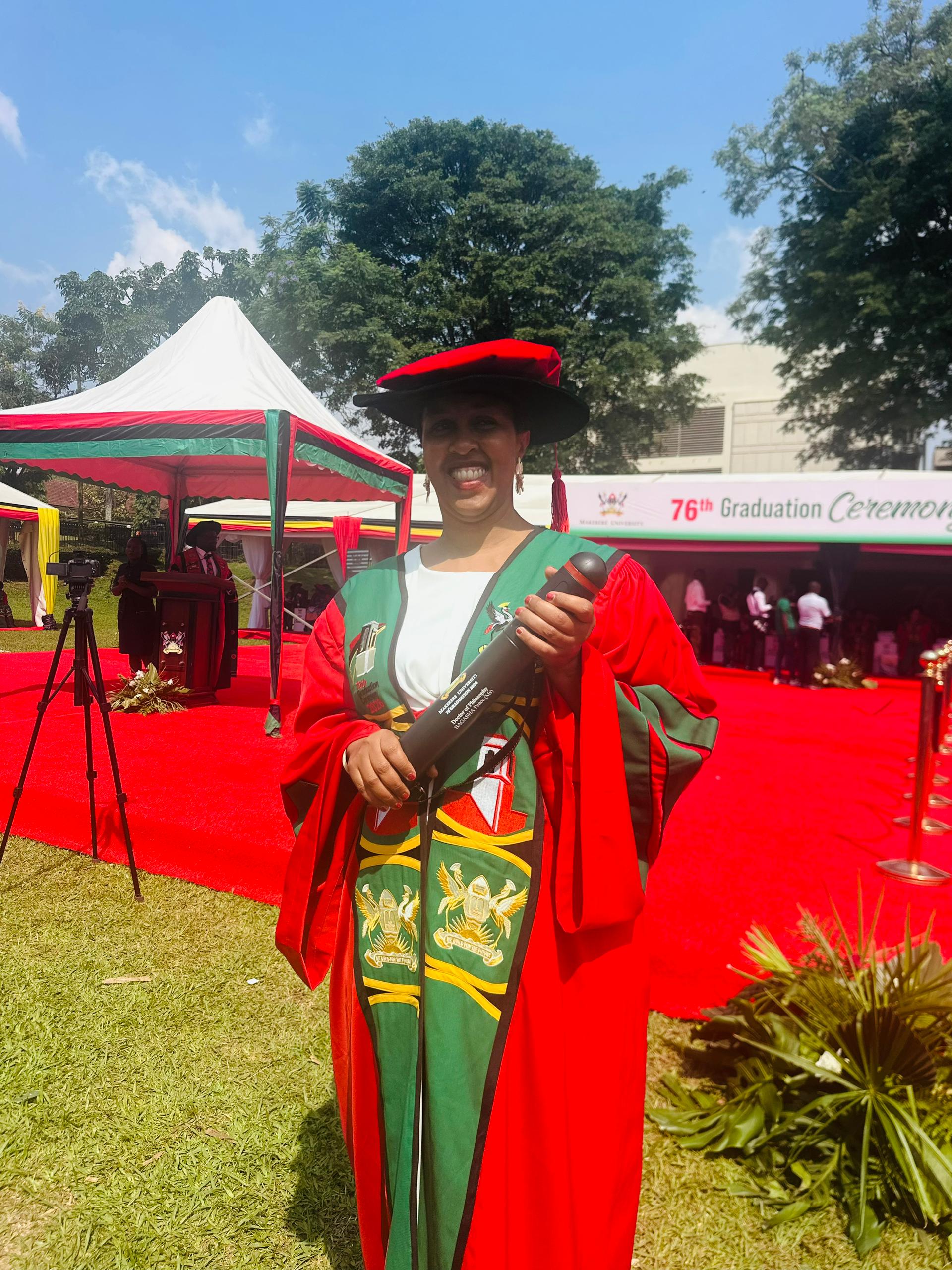
Today Dr. Peace Bagasha, who is a specialist and a consultant in Kidney disease treatment at Mulago National Referral Hospital and Kirrudu National Referral Hospital is being celebrated as one of the few who have attained the rare PhD class. The communities of MUST, Mulago, Kirrudu and family members are all excited to have an achievement from one of their own.

Below is Dr. Peace’s research which led to her confirmation of attaining Doctor of Philosophy (PhD) at MAK’s 76th graduation ceremony.
Title: Quality Of Life Among Patients With Kidney Failure: A Mixed Methods Prospective Analysis, Exploring Dynamics, 12 Months Survival And Associated Factors.
Kidney disease is increasing globally, with many patients in resource-limited settings presenting with kidney failure. High dialysis costs drive non-dialysis care, yet quality of life (QoL) and survival remain poorly understood. This mixed-methods cohort study assessed 12-month QoL, associated factors, and survival among Ugandan adults with kidney failure, comparing dialysis and non-dialysis care, and culturally adapted the KDQOL-SF tool.

In the quantitative arm, 364 patients were recruited (124 on haemodialysis, 240 non-dialysis). Overall QoL was extremely low, with 94.3% scoring below 50 and no significant differences between care groups. Twelve-month survival was poor (26.6%), with no clear survival benefit from dialysis. QoL improved in most subdomains over time but declined in social support, sleep, overall health, and staff encouragement. Qualitative findings highlighted heavy symptom burden, poor mental well-being, financial strain, declining social support, reliance on faith, and limited resources. The KDQOL-SF demonstrated acceptable reliability and validity for use in Uganda.