As the first-ever tarmac road arrives, villages once separated by poor infrastructure look toward a future of business growth, better healthcare and new opportunities
By Brian Mugenyi

KYANAMUKAKA, MASAKA DISTRICT: For generations, the people of Kyanamukaka measured distance not by kilometres, but by hardship.

A journey to the market was a battle against muddy roads. A farmer’s profit was often determined by whether produce could survive the rough terrain. A patient’s hope depended on how quickly they could reach a health facility. A business owner’s dream was limited by a road network that struggled to connect communities.
But today, the landscape is changing.

The roar of construction machinery cutting through the communities of Sserinya, Baale, Bulegeya, Kamuzinda, Kanoni, Bukunda, Kitafaali Trading Centre, Buyaga, Namirembe and Zimbwe has become the sound of a new beginning.
For residents, the road is more than a transport project.
It is a bridge between villages and markets, between patients and healthcare, between entrepreneurs and opportunity.
“When you look at the road constructed in Kyanamukaka, do you think it will bring an impact on businesses and economic activities in the area?”
The question was posed to Mr. Oscar Mutebi, Personal Assistant to former Vice President Edward Kiwanuka Ssekandi and Private Secretary at State House, during an inspection of the ongoing works.
Mutebi looked at the developing road corridor before explaining why he believes the project will reshape the economic future of the area.
“When you look at this place, several businesses such as carpentry workshops, salons and other small enterprises are going to be boosted. Development begins with accessibility. When people can easily move, businesses grow, investments come and communities transform,” Mutebi said.
He explained that the impact of the road will go beyond transport, touching education, healthcare, trade and community development.
“Bukoto Central would not have been what it is today if it was not because of Mr. Edward Kiwanuka Ssekandi. Kyanamukaka will never be the same again. Seeing people develop is what is at the heart of him, and Kyanamukaka is always in his heart,” Mutebi said.
According to Mutebi, Ssekandi’s contribution to the area has involved supporting critical infrastructure, including the headquarters of the area, which were constructed on land he provided.
“Even the headquarters of this area were constructed on the land he gave. He has always believed that development requires people to have infrastructure, institutions and opportunities that can change their lives,” he said.
The improved road network is expected to benefit health centres, schools, religious administrative centres, trading centres and communities that for years struggled with accessibility.
For farmers, poor roads meant expensive transport costs and reduced earnings from agricultural produce.
For patients, they meant difficult journeys to health facilities.
For students, they meant challenging routes to schools.
For businesses, they meant limited opportunities.
However, across the hills of Rural Masaka, the sound of construction machinery is now replacing years of frustration.
The upgrading of roads connecting Sserinya, Baale, Bulegeya, Kamuzinda and Kanoni has become a symbol of a new chapter — one where rural connectivity is opening doors for economic growth, improved service delivery and greater inclusion.
Celebrating the milestone, former Vice President Edward Kiwanuka Ssekandi said the development marked a historic moment for Kyanamukaka Town Council.
“Today, I officially welcome the first-ever tarmac road in Kyanamukaka Town Council.
I extend my heartfelt thanks to the President and the Ministry of Works and Transport for fulfilling this long-awaited promise. This project proves that our government listens to the needs of rural communities and delivers tangible development.
Kyanamukaka Town Council to the World,” Ssekandi said.
The words captured the emotions of a community where roads have for generations determined the pace of economic and social progress.
For Kyanamukaka residents, however, this road is not measured only in kilometres.
It is measured in lives changed.
It is measured in farmers reaching markets faster.
It is measured in patients accessing healthcare more easily.
It is measured in businesses gaining confidence to invest.
It is measured in communities becoming more connected.
The project is being implemented under the Ministry of Works and Transport as Government continues strengthening road infrastructure as a foundation for national transformation.
Residents have recognised the role of the Office of Vice President Emeritus Edward Kiwanuka Ssekandi in promoting development priorities within Bukoto Central Constituency and amplifying infrastructure concerns raised by local communities.
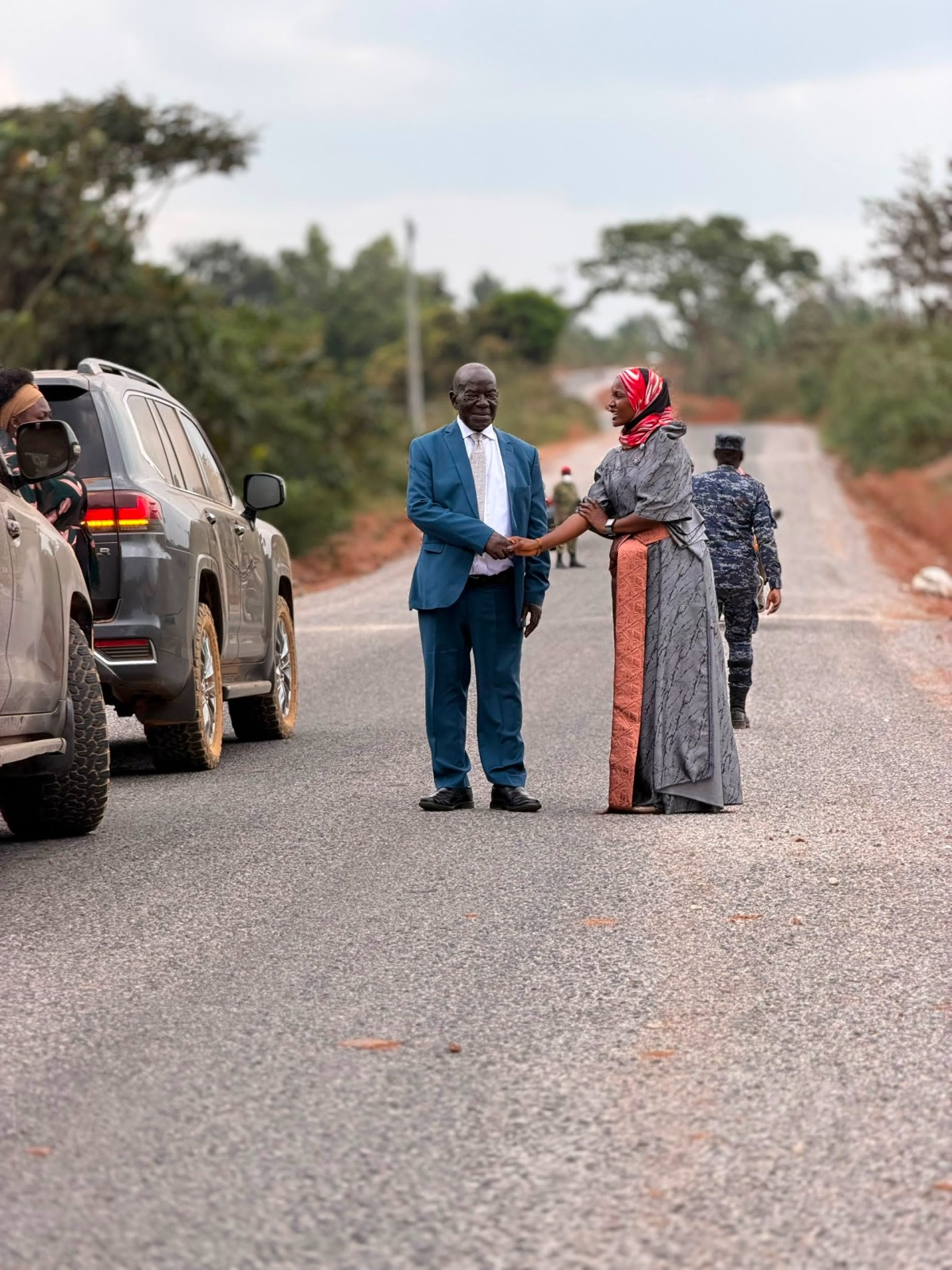
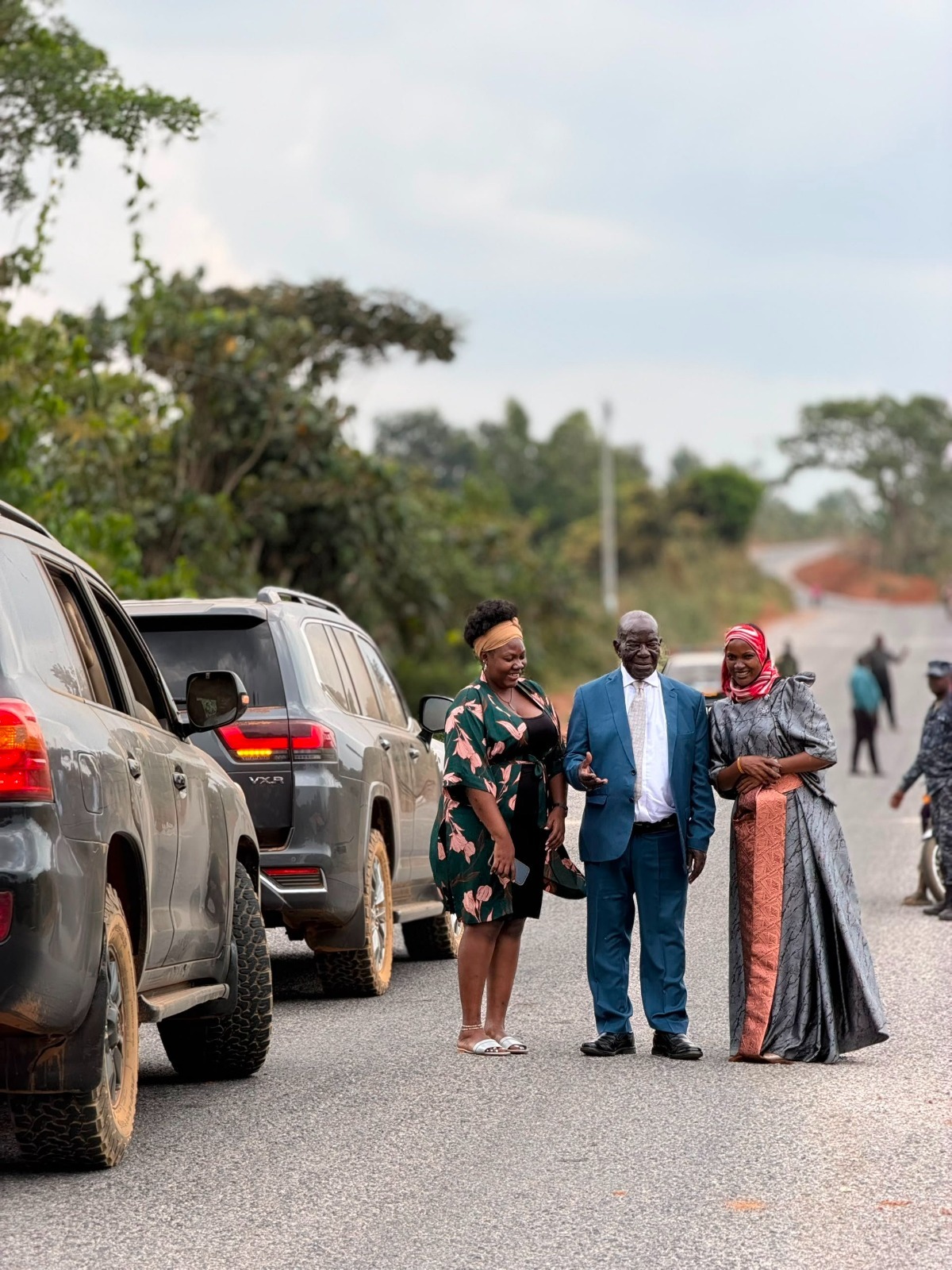
During the ongoing road works, Ssekandi Emeritus, dressed in a blue and white suit, shared a lively moment with Kyanamukaka Town Council Mayor Hajjat Zaina Nakidde and other local leaders along the developing road corridor.
The moment became a powerful image of a community witnessing transformation after years of waiting.
Mayor Hajjat Zaina Nakidde described the project as a historic turning point.
“For many years, our people suffered because of poor roads. Farmers failed to access markets and businesses struggled to grow. Today, we are witnessing history being made. These roads will change the future of our communities,” she said.
She called upon residents to support the project by cooperating with engineers and contractors.
“There is no compensation for land required for community feeder roads. I call upon our people to support this development because the benefits will remain here long after we are gone,” she added.
The Mayor noted that the improved road network will transform opportunities across the constituency’s 105 villages and nine parishes by improving access to markets, schools, health facilities and businesses.
For elder and councillor Ms. Vecencia Namulindwa, the project represents a victory for ordinary citizens who waited through generations.
“We have lived through many promises. What makes this different is that we can now see the roads being worked on. This is the development we have been waiting for,” she said.
As construction continues, Kyanamukaka’s story is becoming a reminder that roads are not just infrastructure.
They are pathways to dignity.
They are engines of economic growth.
They are bridges connecting communities to opportunity.
From mud paths that once defined hardship to milestones that now represent hope, Kyanamukaka is beginning a new journey — one built on roads, resilience and the belief that rural communities deserve to share fully in Uganda’s development story.