Masaka City: The journey from public service to agricultural entrepreneurship is rarely an easy one. It requires vision, resilience, investment and a willingness to embrace hard work beyond the comfort of an office.
For Mr Ronald Ssegawa Gyagenda, the founder and proprietor of Rona Farm, agriculture represents more than a business venture. It is a personal commitment to creating employment, promoting food security and demonstrating that farming can become a profitable enterprise capable of transforming communities.
Located on a 20-acre piece of land at Kabale Bugonzi Hill in Masaka City along the Kampala Road corridor, Rona Farm has grown into a modern agricultural hub combining more than 50,000 layer birds, more than 400 pigs and 3 acres of CWDR( KR) mother garden for coffee production, maize processing and practical training for farmers with over 100 employees at the farm.
The farm has become an example of how private investment can support Uganda’s economic growth by creating jobs, promoting local production and inspiring communities to embrace agriculture as a source of wealth creation.
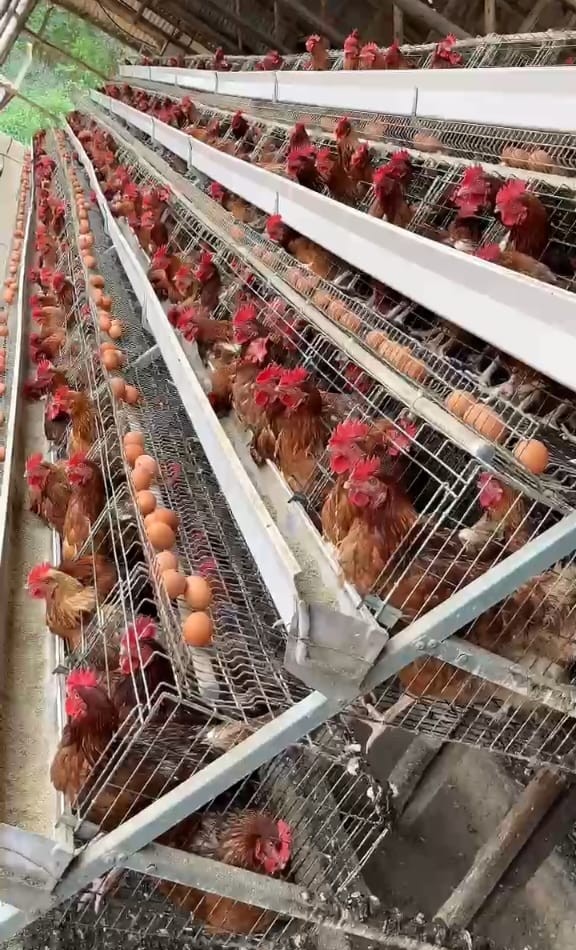
As visitors enter Rona Farm, the first impression is not only the size of the enterprise but the organisation, creativity and innovation behind its operations. The wooden-designed chicken shelters, well-managed coffee gardens, piggery units and agro-processing activities portray a picture of a business built around modern farming principles.
On Thursday, June 19, 2026, as the sun shone over the farm, Mr Ssegawa moved around the premises dressed in a blue overall, supervising activities, interacting with workers and ensuring operations were running smoothly.
To a first-time visitor, he looked like an ordinary farm worker. But this is the identity of the owner of Rona Farm — a businessman who believes leadership in agriculture requires personal involvement and practical participation.
“People normally say that if you have worked in government, you do not need to soil yourself in dirty projects. I am a living example that agriculture is a respectable business. I decided to work for people and create something that benefits the community,” Mr Ssegawa said.
Rona Farm, whose name originates from his first name Ronald, currently employs more than 100 workers involved in different activities, including poultry management, piggery, coffee nursery operations, records management, maize flour production and farm administration.
Turning Poultry Farming Into a Business Model
One of the biggest attractions at Rona Farm is its poultry section, where thousands of layer chickens are kept in specially designed wooden shelters constructed to provide adequate ventilation, space and a stress-free environment for the birds.
The farm keeps more than 50,000 layers birds for egg production, with the birds fed on carefully prepared feeds, including maize bran produced through the farm’s own Buddu Pure Maize brand.
The chickens are kept in different sections, including cages named after regions such as Buganda and Tooro, making management and monitoring easier.
Each bird receives approximately 120 grams of feed daily, while proper spacing, hygiene and timely feeding have improved productivity.
Ms Prossy Nalumu, one of the poultry attendants at Rona Farm, encourages Ugandans interested in poultry farming to focus on proper feeding and management.
“I encourage people to invest in chicken keeping. For starters, it is important to feed the birds properly without limiting their feeds because this determines productivity,” she said.
Ms Florence Tusiime, another employee at the farm, said the clean environment and proper management practices have enabled the chickens to produce quality eggs.
She explained that the birds are kept in well-ventilated structures, provided with clean water and monitored regularly.
According to farm management, Rona Farm collects more than 900 trays of eggs daily, which are sold to customers at approximately Shs12,000 per tray, depending on quantities purchased and market arrangements.
Piggery and the Science of Modern Farming
Beyond poultry, Rona Farm has invested in improved piggery, keeping breeds such as Cambra pigs for pork production and breeding purposes.
The pigs are housed in modern structures with water systems and strict hygiene measures to prevent disease outbreaks.
Visitors entering the piggery section are required to follow sanitation procedures, including disinfecting footwear, to protect the animals from infections.
More than 400 pigs kept indoor are sold after reaching market weight, with some weighing between 100 and 120 kilogrammes and fetching approximately Shs800,000 and above, depending on market conditions.
The farm also supplies pig semen to farmers interested in improving their breeds, with each package sold at approximately Shs40,000.
Piglets sourced from different parts of Uganda, including Gulu District, are raised at the farm before being sold to farmers interested in starting their own piggery businesses.
Growing Uganda’s Coffee Future
Coffee production is another key pillar of Rona Farm’s agricultural model.
The farm produces improved coffee seedlings, including varieties labelled KR6, KR5 and KR4, which are supplied to farmers seeking quality planting materials.
The coffee seedlings are sold at approximately Shs5,000, depending on quantities purchased and customer negotiations.
Mr Ssegawa believes Uganda’s coffee potential can only be fully realised when farmers focus on quality production and proper management rather than simply increasing acreage.
“People should not only think about planting huge acres of coffee. What matters is how you look after your coffee and how much income you can generate from it,” he said.
Agriculture as a Training Centre
Beyond commercial production, Mr Ssegawa plans to transform Rona Farm into a practical agricultural learning centre where students, farmers and researchers can acquire hands-on skills.
He said discussions are underway to establish training programmes targeting universities, secondary school students and farmers who want to learn modern farming methods.
“We want learners, professors and farmers to come here and gain practical skills. Agriculture should not only be studied in classrooms; it must also be practised on the ground,” he said.
The farm also produces Buddu Pure Maize flour, which is supplied to households and institutions, including schools.
Mr Ssegawa encourages Ugandans to support locally produced goods as a way of strengthening domestic industries and promoting economic independence.
Creating Wealth Through Agriculture
Rona Farm has also embraced environmental innovation through the production of organic fertilisers using black soldier flies. The insects are raised through different stages before being processed into fertilisers used within the farm and incorporated into animal feeds.
For Mr Ssegawa, agriculture remains one of the strongest tools for reducing unemployment and improving household incomes.
“I want our people to have employment opportunities instead of spending most of their time only in politics. Agriculture gives us skills, jobs and income,” he said.
He believes President Yoweri Kaguta Museveni’s emphasis on wealth creation through practical skills and enterprise development remains relevant, especially in encouraging Ugandans to engage in productive sectors.
“Let us invest in activities that are practical and create jobs. Agriculture gives people an opportunity to work, produce and transform their communities,” he added.
As Rona Farm continues expanding its coffee nurseries, livestock projects and training programmes, Mr Ssegawa hopes the enterprise will grow into one of Uganda’s leading agricultural demonstration centres.
For farmers, students and investors seeking inspiration, Rona Farm presents a powerful message: agriculture is not merely survival — with innovation, discipline and commitment, it can become a pathway to wealth creation and national transformation.