



By Brian Mugenyi
Masaka: Uganda’s poverty rate has decreased to 16% under the seventh term of President Museveni. Holding the seventh term, President Museveni is holding a Ten days retreat in Kyankwanzi nurturing local leaders led by Permanent Secretaries and Ministers and other local leaders in local government under Public service management in Uganda.

As the old fogey aligned with leaders, his great emphasise remains eradicating poverty among people in the area through their leaders and Mr. Oscar Mutebi is no exception.

Every generation is presented with a defining opportunity. For Masaka District, that opportunity may be arriving in the form of technology, skills development, and a growing movement aimed at transforming the district into a model centre of socio-economic progress.
Hope, celebration, and political symbolism recently engulfed Kyanamukaka Town Council as newly elected Mayor Hon. Zaina Nakidde officially took oath of office before hundreds of cheering residents, youth leaders, traders, and government mobilisers gathered under the scorching Masaka afternoon sun.


The colourful swearing-in ceremony did not merely mark the beginning of a new political term. To many residents, it symbolised a fresh chapter of unity, grassroots mobilisation, and renewed hope for development in one of Greater Masaka’s steadily growing urban centres.
From the early morning hours, motorcycles ferried residents from nearby villages while women wrapped in gomesi and youths dressed in both yellow political colours and neutral attire flooded the town council grounds chanting songs of victory.

At the conclusion of the ceremony, applause echoed throughout the venue as residents welcomed what many described as a new era of leadership and opportunity.
As the old African proverb reminds us, “When spider webs unite, they can tie up a lion.”
Within this atmosphere of renewed civic energy, development conversations in Masaka are increasingly being framed around President Yoweri Kaguta Museveni’s long-standing agenda of poverty eradication, wealth creation, and socio-economic transformation.
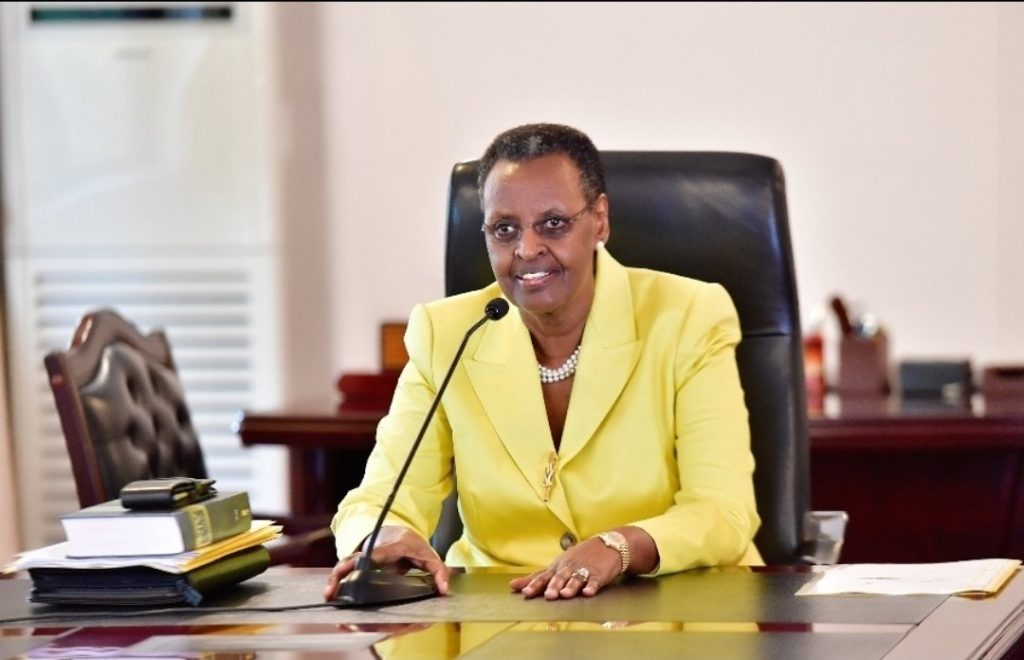
For decades, President Museveni has maintained that Uganda’s path to sustainable development lies in moving households from subsistence living into the money economy through commercial agriculture, industrialisation, skills development, entrepreneurship, and mindset transformation.
The government’s commitment to this agenda was reinforced in the FY2025/26 National Budget, themed “Full Monetization of Uganda’s Economy through Commercial Agriculture, Industrialization, Expanding and Broadening Services, Digital Transformation and Market Access.” The national budget of approximately Shs72.4 trillion prioritises sectors considered critical to wealth creation and poverty reduction.
According to the Ministry of Finance, Planning and Economic Development, Human Capital Development received 26.1 percent of the national budget, the largest allocation among all sectors, while Agro-Industrialisation received 4.2 percent, underscoring government’s continued focus on agriculture as a driver of household income growth and national prosperity.

The Ministry further reports that Uganda’s economy remains on a positive growth trajectory, with the agriculture sector expanding by 6.6 percent, industry by 7.0 percent, and services by 5.4 percent. Agriculture alone contributes approximately 26.2 percent of Uganda’s Gross Domestic Product (GDP), making it one of the most important pillars of the country’s economy and a central component of government wealth-creation programmes.
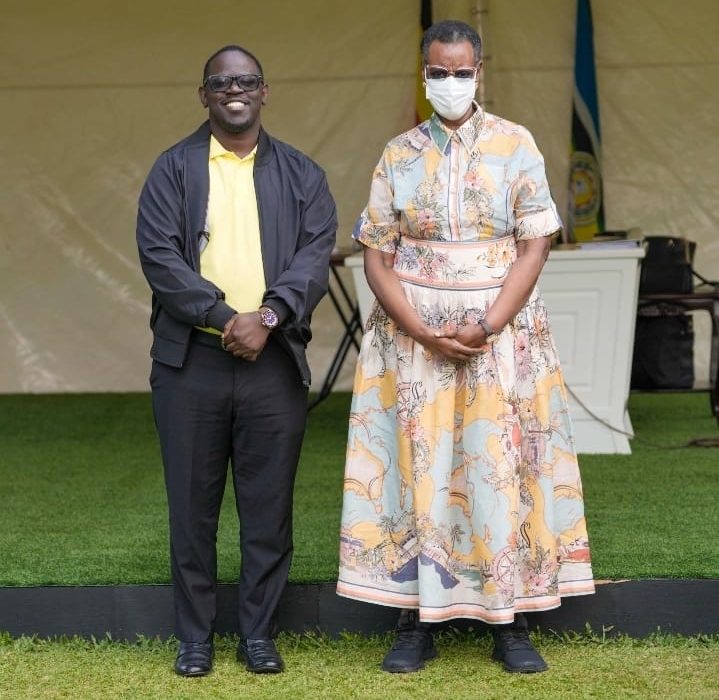
It is within this broader national framework that the development agenda championed by youth mobiliser Oscar Mutebi is attracting growing attention across the Central Region.
Observers note that Mutebi’s vision closely mirrors several pillars of President Museveni’s strategy for lifting communities out of poverty, particularly the emphasis on agriculture, vocational skills, entrepreneurship, digital innovation, and productivity.
His message remains consistent: poverty cannot be defeated through dependence or consumption alone. Sustainable prosperity requires production, value addition, skills acquisition, and a culture of enterprise.
“Masaka has the potential to become a model district in Uganda,” Mutebi has repeatedly told youth groups, community leaders, and local stakeholders. “But that future depends on our willingness to work hard, embrace innovation, and support initiatives that uplift our people.”
At the heart of both Museveni’s national development agenda and Mutebi’s grassroots mobilisation efforts lies agriculture, especially coffee production.
Coffee remains one of Uganda’s most important export commodities and a key driver of household income generation. Uganda currently exports more than six million 60-kilogram bags of coffee annually, generating close to USD 1 billion in export earnings, according to government statistics. President Museveni has consistently encouraged farmers to embrace commercial agriculture as a pathway out of poverty, identifying coffee as a strategic crop capable of transforming rural livelihoods.
Yet despite Uganda’s strong coffee performance, many farmers in districts such as Masaka continue to face challenges including limited value addition, inadequate access to modern farming technologies, fluctuating markets, and insufficient processing infrastructure.
Mutebi argues that addressing these challenges requires deeper implementation of development programmes at the grassroots level.
“Uganda produces a lot of coffee,” he notes. “But to maximise the benefits, our people must participate in value addition, adopt modern farming methods, and strengthen their connection to profitable markets.”
His position resonates with government’s emphasis on agro-industrialisation and value addition as key drivers of economic transformation. Through programmes such as the Parish Development Model (PDM), Emyooga, Operation Wealth Creation, the Agriculture Credit Facility, and financing through the Uganda Development Bank, government has sought to increase production, improve productivity, and expand access to affordable capital for farmers and entrepreneurs.
Beyond agriculture, Mutebi has placed significant emphasis on Information and Communication Technology (ICT), viewing digital literacy as a critical component of future economic competitiveness.
His engagements with national institutions, including the Uganda Communications Commission (UCC), have focused on expanding ICT access in schools and promoting technology-based learning opportunities for young people in rural communities.
This vision aligns strongly with the FY2025/26 budget’s emphasis on digital transformation as one of the key pathways for accelerating economic growth and improving service delivery.
Education stakeholders argue that Mutebi’s approach closely reflects government’s investment in human capital development, which now accounts for over a quarter of the national budget. They contend that improving access to technology and modern education systems will better prepare young people for participation in an increasingly digital economy.
Mutebi also advocates for expanded vocational and technical training opportunities that would equip young people with practical skills in agro-processing, carpentry, welding, electrical installation, mechanics, and entrepreneurship.
Supporters believe such interventions can contribute significantly to employment creation while reducing youth dependency and unemployment.
Importantly, both Museveni’s national message and Mutebi’s local mobilisation efforts emphasise mindset change as a prerequisite for development.
President Museveni has repeatedly argued that economic transformation requires citizens to embrace a culture of work, productivity, and wealth creation. Mutebi echoes this view, maintaining that no development programme can succeed without active community participation and individual responsibility.
According to this perspective, a model district is not built by government action alone.
It is built by farmers embracing commercial production.
By teachers nurturing skilled and disciplined learners.
By entrepreneurs creating businesses and jobs.
By young people acquiring practical, employable skills.
And by communities collectively committing themselves to progress and innovation.
As Uganda advances toward the aspirations outlined in Vision 2040, Masaka is increasingly viewed as a district with strong potential for transformation due to its fertile agricultural land, strategic location, vibrant population, and expanding urban economy.
Many analysts argue that if districts such as Masaka fully utilise opportunities provided through government wealth-creation programmes, strengthen agricultural value chains, embrace digital transformation, and invest in skills development, they could become leading examples of President Museveni’s vision for socio-economic transformation.
The challenge, they say, lies in ensuring effective alignment between national policy and grassroots implementation.
If that alignment is achieved, Masaka could emerge as a living example of President Museveni’s poverty eradication and wealth creation agenda in action—where agriculture, technology, skills development, entrepreneurship, and community mobilisation work together to improve livelihoods.
In such a scenario, Oscar Mutebi’s efforts may ultimately be remembered not as a separate initiative, but as part of a broader national movement aimed at translating President Museveni’s development vision into tangible results for ordinary Ugandans at the grassroots level.