New Union coffee project reveals how Uganda’s transport network is being turned into a wider ecosystem of products, services and economic opportunities
By Brian Mugenyi
Kampala: When Fred Ssenoga, the chief executive officer of Union Transport Alliance, says, “Union Transport Alliance is a complete chain,” he is describing an organisation that is increasingly difficult to confine to the traditional definition of a transport company.
The latest illustration is coffee.
Ssenoga has revealed that Union is working on a new coffee product for taking tea, a product whose formulation is still under process and also a target of $2billion Annual Coffee industry.
The coffee has not yet reached the market.
But its emergence has opened another window into what Union is becoming.
Behind the proposed coffee stands a growing family of products and services—including Union Oil, Union Water and Union Sanitary Pads—all being developed under the Union brand.
Together, they point to a strategy that is moving the organisation from simply transporting people and goods to building what Ssenoga describes as a complete chain.
And that chain is increasingly connecting transport, products, technology, finance, distribution and the everyday needs of consumers.
The coffee is not the story. The chain is
Coffee, by itself, is not unusual.
What is unusual is a transport alliance deciding that its economic future can also be found in the cup of coffee people drink.
That is where Ssenoga’s statement becomes important.
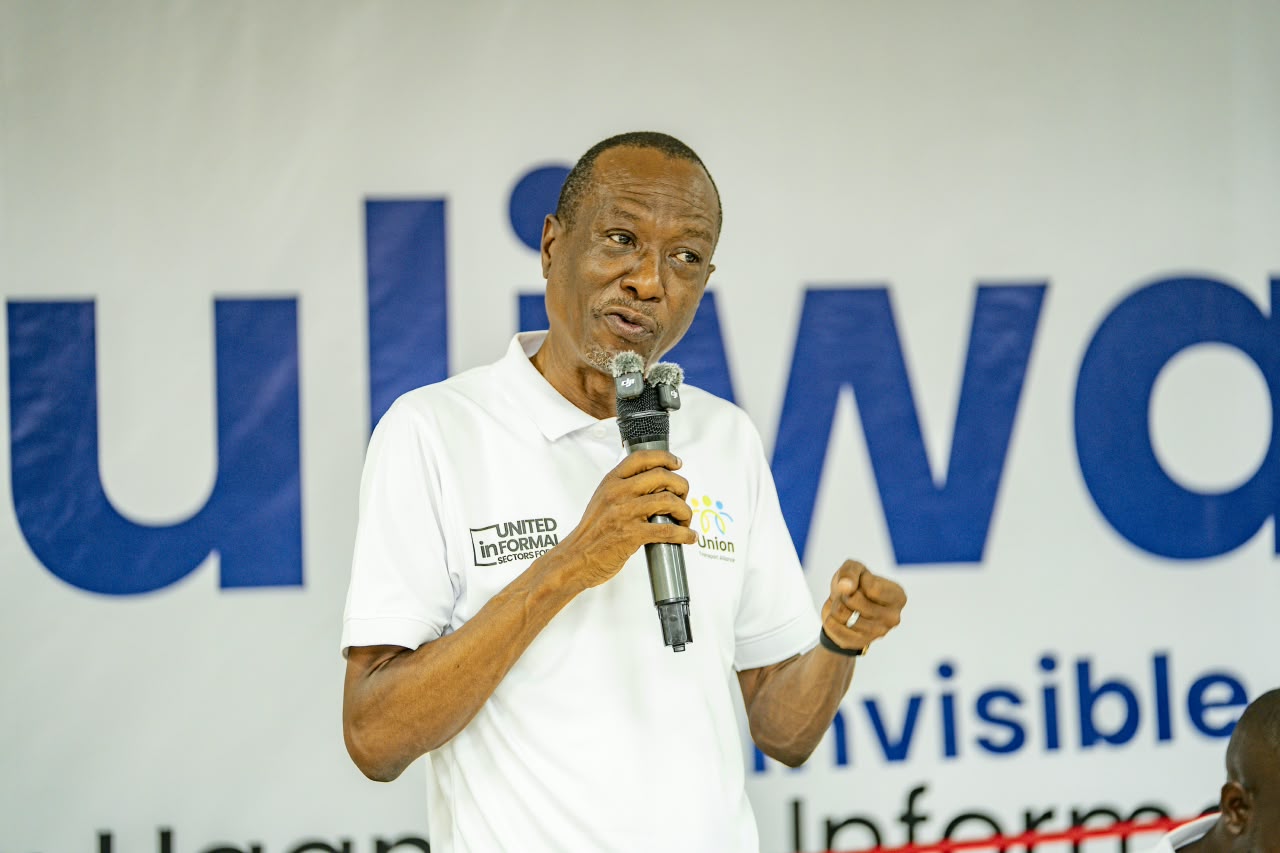
When he calls Union a “complete chain”, the implication is that transport is only one link in a much larger commercial system.
A rider can provide mobility.
A digital platform can connect a buyer and seller.
A transport operator can participate in delivery.
A Union-branded product can enter the same network.
A consumer can become part of that market.
The proposed coffee represents another link.
It shows an organisation attempting to connect movement with consumption.
From Union Oil to coffee
Union’s expansion did not begin with coffee.
Union Oil placed the organisation directly inside the operating economy of transport.
For riders and drivers, fuel and lubricants are not luxuries. They are part of the daily cost of doing business.
Union Water then moved the brand into an everyday consumer category.
Union Sanitary Pads took Union further into household and social needs.
Now coffee is being formulated.
The products may appear unrelated.
But from Ssenoga’s “complete chain” perspective, they share one thing: they can move through the same economic ecosystem.
That is the emerging Union picture.
A transport network with products attached to it.
The road becomes a market
This is perhaps the most interesting part of the Union experiment.
Uganda’s transport operators already have something many businesses spend heavily trying to build: reach.
Boda-boda riders and other transport operators move through communities every day.
They reach trading centres.
They reach neighbourhoods.
They reach markets.
They reach households.
That network can carry more than passengers.
It can carry products.
This is particularly relevant as Union expands its digital-commerce ambitions.
The organisation has been developing Union Online Duuka, an electronic marketplace intended to connect buyers, sellers and transport operators in a wider commercial ecosystem.
In such a model, transport becomes part of the distribution infrastructure.
The rider does not only take a passenger from point A to point B.
The rider can potentially become the final link between a product and its customer.
That is what makes Ssenoga’s “complete chain” argument more than a slogan.
Coffee and Uganda’s value-addition challenge
There is also a national economic dimension to the coffee idea.
Uganda is a major coffee-producing country, but the economic conversation increasingly goes beyond growing and exporting raw agricultural commodities.
Value addition means processing, branding, packaging, distribution and ultimately creating products that reach consumers in finished form.
Union’s proposed coffee sits within that broader logic.
The final formulation is still being worked on, meaning the product’s specifications, packaging, price and commercial scale are yet to be established.
But the direction is significant.
The idea is to move coffee closer to the final consumer under a Ugandan brand.
And behind that brand is a transport network capable of helping move the product.
The consumer is at the centre
Perhaps the biggest strength of Union’s model is that it is built around people who are simultaneously workers, entrepreneurs and consumers.
The boda-boda rider is not only a transporter.
He buys water.
He needs oil.
His family uses sanitary products.
He buys food.
He takes tea.
He drinks coffee.
His customer is also a consumer.
The shopkeeper is a consumer.
The driver is a consumer.
The wholesaler is a consumer.
That creates a potentially large market around the same network.
The challenge—and opportunity—is to organise that demand into a sustainable commercial system.
Innovation is beginning to look different
For many people, innovation means an application, artificial intelligence, an electric motorcycle or a new piece of technology.
But Union’s coffee experiment suggests another form of innovation:
connecting things that already exist in a new way.
Transport already exists.
Coffee already exists.
Digital payments already exist.
Retail already exists.
What changes is the architecture connecting them.
That is the logic behind the “complete chain”.
A product is developed.
A market is identified.
A transaction is made.
A digital platform facilitates it.
A transport operator delivers it.
The consumer receives it.
Money circulates.
Economic activity expands.
But the chain must create value
The idea remains an experiment.
A complete chain is only meaningful if every link works.
The coffee will have to meet consumer expectations.
The products will have to maintain quality.
Distribution will have to be efficient.
Prices will have to remain competitive.
The digital infrastructure will have to be reliable.
And, most importantly, the wider ecosystem will have to translate innovation into real economic opportunity.
That is where Union’s greatest test lies.
A growing catalogue of products is not enough.
The real measure will be whether those products create jobs, incomes, markets, value addition and better economic opportunities for the people connected to the Alliance.
The Union picture is becoming clearer
Seen separately, Union Oil is an oil product.
Union Water is water.
Union Sanitary Pads are sanitary products.
The proposed coffee is a beverage.
But viewed together, they tell a different story.
They reveal an organisation trying to build an ecosystem in which transport is the starting point rather than the destination.
That is the meaning behind Ssenoga’s words:
“Union Transport Alliance is a complete chain.”
The coffee is only one more link.
The oil keeps the transport economy moving.
The water serves daily consumption.
The sanitary pads meet a household need.
The digital platform connects commerce.
The transport network moves people and products.
And the consumer completes the cycle.
For Uganda, the larger question is whether this kind of locally built ecosystem can turn the country’s enormous transport network into something more than a means of movement.
Can it become a platform for production, distribution, consumption and wealth creation?
Union is attempting to find the answer.
For now, the coffee is still being formulated.
But the chain Ssenoga describes is already taking shape.
The road is no longer simply leading somewhere. At Union, the road itself is becoming part of the market.