Tag: Coca-Cola Beverages Africa

  • CCBA toasts to fifth (5th) anniversary since merger

    CCBA toasts to fifth (5th) anniversary since merger

    Kampala, UgandaThis week, Coca-Cola Beverages Africa celebrates five (5) years since its merger. This is yet another exciting and key milestone in the history of the beverage manufacturer. In Uganda, it brought about the merger between Rwenzori Bottling Company, the leading mineral water brand in Uganda, and Century Bottling Company, bottler of Coca-Cola products in Uganda, signifying economic growth and shared prosperity.


    Over these past five (5) years in Africa, several opportunities were identified for realising the continents growth potential, including to expand into territories the company had not operated in before, and to consolidate existing territories.

    CCBA has since introduced many initiatives to improve on the impact of its operations on the environment, focusing on the reduction of water consumption, energy usage and waste generation. “Here in Uganda, we are very enthusiastic and proud of our contribution to waste management via our Plastics Recycling Industry in Nakawa – where we have a firm commitment to ourselves as bottlers, to Uganda as our consumers and to Africa as our collective home,” said MD CCBA in Uganda, Melkamu Abebe.

    The company has also managed to contain its energy efficiency to 0.32 Megajoules for manufacturing a litre of product, despite facing the challenges to incorporate manufacturing its own supply of PET preforms and expanding into new countries, in many cases inheriting older equipment with less energy efficient profiles.

    Coca Cola bottling plant opperated by Amalgamated Beverage Industries, the soft drink devision of SAB Miller, Olifantsfontein, Johannesburg, South Africa, Tuesday, September 5, 2006. Photographer: Henner Frankenfeld / Bloomberg News

    CCBA has significantly reduced the amount of water required to produce one litre of product over the past five years and in 2020 alone reduced its usage by 463 Megalitres, equivalent to 186 swimming pools of Olympic size.

    Research by Fitch Solutions shows that the global soft drinks industry was worth around $295 billion in 2018 and is expected to grow to $377 billion by 2023. Africa accounts for only 3% of this total value, despite representing 16% of the global population, which is expected to reach 25% by 2050.

    By October 2020, the company had successfully concluded acquisitions in four new countries, increasing its markets to 14 countries, and acquired significant business interests in Kenya.

    The company now boasts a diverse African footprint, with more than 40 bottling plants servicing over 650 000 outlets that serve a combined population of over 450 million people across the continent. “We fully understand that selecting and nurturing the right talent will aid in the continuous growth of Coca-Cola Beverages Africa. The opportunities set before all of us as a company are limitless as long as we believe and execute our overall goals,” said Manufacturing Director, Edward Ojede.

    It directly employs more than 17 000 people and enjoys the number-one market position in most of its territories.

    “We continue to focus on growth and inclusion where creating opportunities for more and more Ugandans is a part of our priority. We operate full capacity plants in both Namanve and Mbarara where we are keen on best practises to deliver to our customers and consumers quality products. We challenge ourselves everyday on our delivery and it is a commitment we deliver daily,” said Ojede.

    As a stronger, more successful beverage bottling business, we can create greater shared opportunity for the business as well as the communities we serve across the value chain through job creation, skills development and support for small-to-medium sized enterprises.

    “At CCBA in Uganda, it is key for us to create difference; even when it is just one person. If we as a company can impact change, then we will be celebrating multiple achievements. This allows us to accelerate growth and social development in our value chain, something we can all be proud of as a company and Ugandans,” said SHEQ Manager, Sauyah Nalukenge, in charge of Quality Assurance at CCBA in Uganda.

    We have focused on accelerating growth and social development in our value chain and making clear commitments on waste, energy, water and land use to lead the way as a responsible business in Africa.”

  • Global Recycling Day calls on us to work together for a World Without Waste

    Global Recycling Day calls on us to work together for a World Without Waste

    By Jacques Vermeulen

    Along with its devastating human and economic costs, the COVID-19 pandemic has put renewed focus on sustainability. The experience of mass human vulnerability to the accidents of nature has reminded us of the need to live in harmony with the natural environment if we are to survive as a species.

    As James Quincey, Coca-Cola CEO and Chairman, recently put it: “COVID-19 has highlighted the urgent need for collaborative, cross-sector solutions to climate change, plastic waste and other critical environmental and social issues. The crisis has shone a light on the interconnected nature of our world and the lessons we learn must be applied to help us emerge stronger and get to a more sustainable and inclusive economic future.”

    The question, against the backdrop of the severe economic damage caused by the pandemic, is how social partners can work better together to build this future.

    Global Recycling Day on March 18 gives us the chance to think anew about how to advance the prosperity of Africa by growing our economies inclusively, while reducing the impact of packaging waste on the environment.

    A big part of the answer is to build a circular green economy that enables recycling and draws in the public and private sectors, communities and other stakeholders in a collaborativeeffort. In Uganda, we have entered partnerships with companies such as KCCA, Stanbic Bank, Nice House of Plastics and Tooro Kingdom to conserve the environment and promote proper waste management.  The Coca-Cola Foundation also extended USD30,000 to support plastic waste collectors across the country affected by COVID-19 to provide basic relief items and equip them with tools to work better. We can’t achieve our recycling goal without their support.

    For our part, Coca-Cola Beverages Africa (CCBA) has made our ambitious recycling targets a top business priority, alongside key performance metrics for growth and profitability.

    In other words, we measure our business success not only according to growth and profits, but also by doing business the right way – following our values and working toward solutions that benefit not only us all but also future generations.   Profitability is important, but not at any cost. We don’t believe there’s another way of doing business the right way.

    Our commitment is to invest in our planet and our packaging, to help make the world’s packaging problem a thing of the past.

    The Coca-Cola Company and its bottling partners are leading the industry with a bold, ambitious goal: to help collect and recycle a bottle or can for everyone we sell by 2030. We want to support local governments’ waste management objectives by making recycling more accessible and to achieve 100% collection and recycling by 2030.

    We also have a fully-fledged recycling plant located at Nakawa whose main purpose is not only to recycle plastic but also an equal system that makes people take away plastic from the environment. This year, we invest USD 61,000 in equipment and plan to inject another USD 70,000 in a new line to increase our recycling volume to match with our 100% recycling goal. We are also extending our recycling commitment by aiming to collect 5,000T (500 million plastic bottles), which is a big improvement on the 857T (71 Million Plastic bottles) we collected in 2020.

    In addition, as a system our goals include to make all our consumer packaging 100% recyclable globally by 2025 and use at least 50% recycled material in our packaging by 2030. This is part of our larger strategy to grow with conscience as we become a total beverage company.

    In the 14 markets where CCBA operates, we are on track to meet these targets well ahead of schedule.

    Holistic solutions to challenges like packaging waste require partnerships, and it is important that we work together to ensure transformation, inclusion and sustainability of the circular economy across the continent.

    For their part, governments can contribute by creating an enabling regulatory environment to help stimulate sustainable practices.

    Regulators also play a crucial role in facilitating public-private partnerships, setting packaging standards and driving policies that encourage the circular economy to thrive for greater economic inclusion of people.

    What we need is for communities, countries, governments and regulators to accelerate the shift towards circular, or closed-loop business models. However, for it to be implemented successfully requires high levels of collaboration.

    We believe that the concept of Extended Producer Responsibility (EPR) is the most efficient means to support the circular economy. Paying EPR fees and striving to increasingly use recycled plastic, even if it costs more than virgin plastic, ultimately enables the circular economy.

    PETCO is a great example – this model was initiated in South Africa in 2004 as an industry-led initiative for collection and recycling of PET bottles. It has since been established in Kenya and Ethiopia, with Tanzania launching soon and other markets in planning.

    We know that for developing economies these costs can be a real challenge as it potentially adds cost at the level of the consumer. However, closed-loop business models are more efficient at retaining value than recycling that results in non-circular products. This is why we support the use of recycled plastic within the Coca-Cola system so that we can create new bottles from recycled bottles.

    A more sustainable, more inclusive Africa, free of waste, is possible if we work together in collaboration for the common good of our continent.

    Jacques Vermeulen is CEO of Coca-Cola Beverages Africa..

  • CAFOMI, Coca-Cola launch Relief Distribution to Support Plastic Waste Collectors Across Uganda

    CAFOMI, Coca-Cola launch Relief Distribution to Support Plastic Waste Collectors Across Uganda

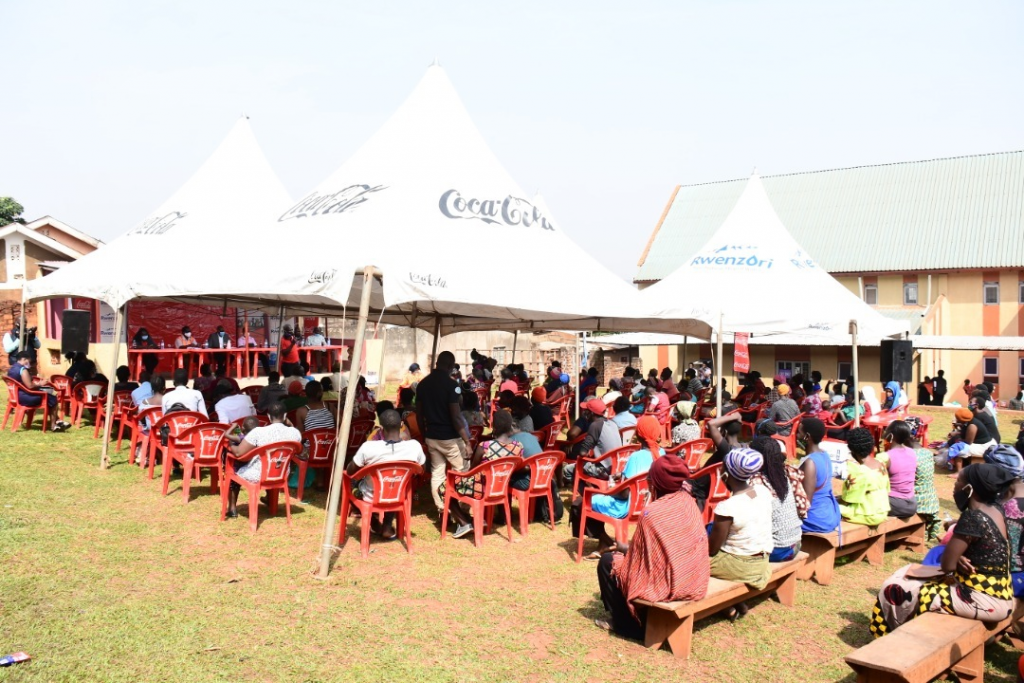
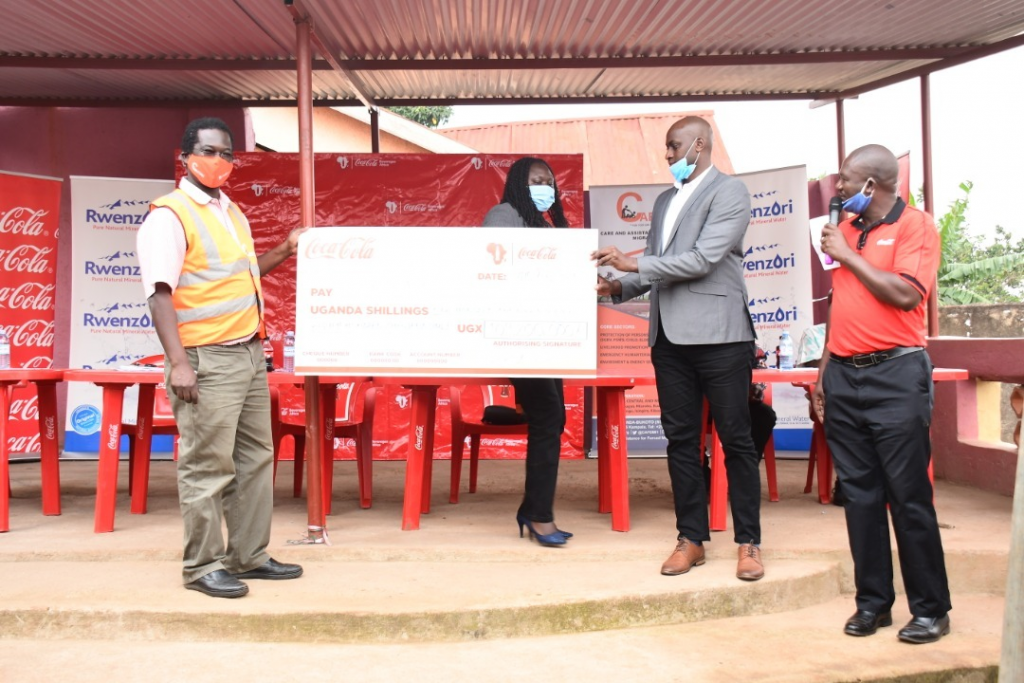
    Kampala: The Coca-Cola Foundation, through Care and Assistance for Forced Migrants (CAFOMI) and Coca-Cola Beverages Africa In Uganda, has launched a UGX110million programme to help plastic waste collectors in Uganda to resume their business in spite of the COVID-19 pandemic.

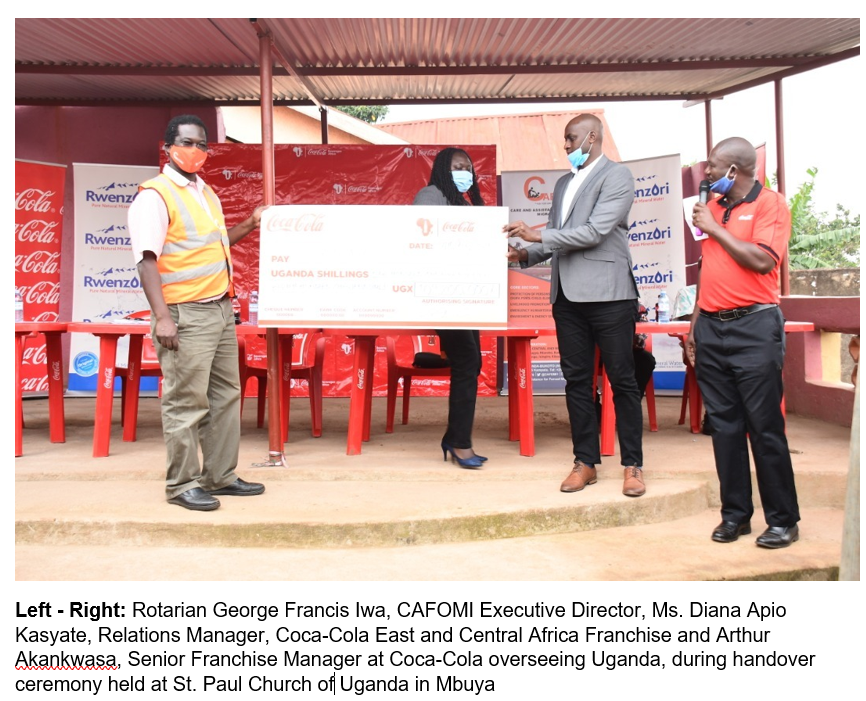
    Announcing the programme in Kampala, Rotarian George Francis Iwa, CAFOMI Executive Director, said the organisations would support 833 families across Uganda with interventions that will help them return to their employment as plastic waste collectors.

    The 833 direct beneficiaries are 411 women and 422 men, from 22 districts across Uganda, of whom 63% earn less than UGX1million annually. Iwa said 21.6% of the beneficiaries are below 22 years of age.

    “As a national NGO, CAFOMI deeply appreciates Coca-Cola for this private sector initiative to support those who are collecting plastics and keeping our environment clean. The plastic waste collectors play a vital role in our communities today and we hope that others, especially in the private sector, will emulate Coca-Cola especially during this difficult time of COVID-19. These plastic waste collectors are our environmental heroes, so we commit to continue supporting them,” said Rtn. Iwa at the handover ceremony held at St. Paul Church of Uganda in Mbuya.

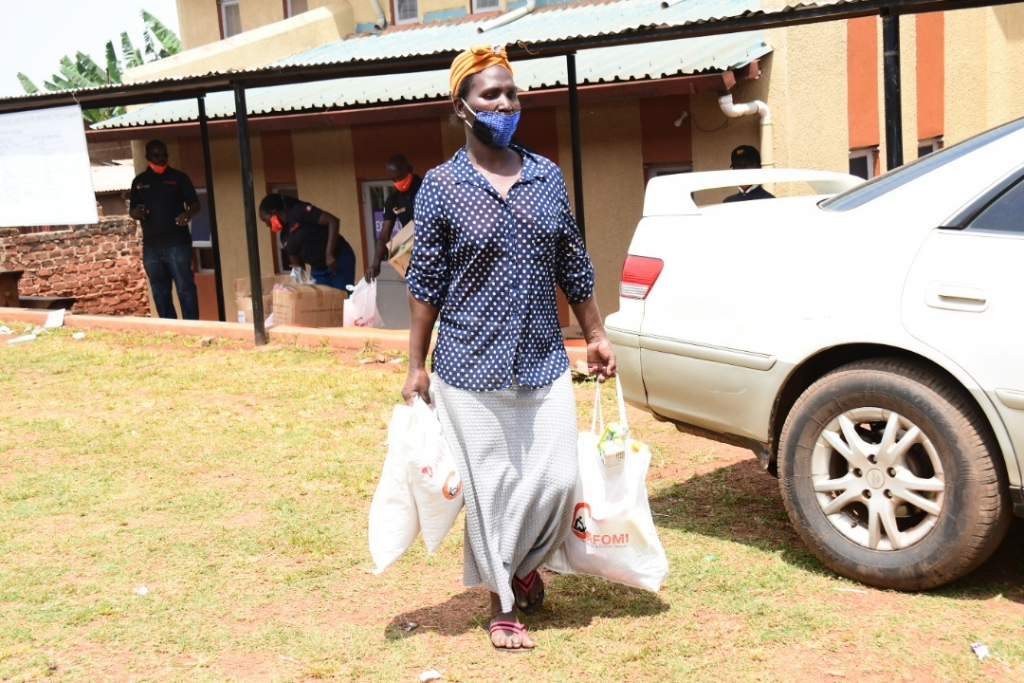
    The UGX110million assistance was contributed by The Coca-Cola Foundation to the plastic waste collectors to give them relief from months of not earning income from plastic waste recycling, and to equip them to return to work safely.

    The beneficiaries will receive a package of essential items to enable them to work safely to avoid contracting COVID-19, including face masks and heavy-duty safety gloves, and COVID-19 booklets with guidelines to follow. They will also receive relief care items that include Dry food rations.


    After the
    COVID-19 pandemic was announced, about 8,000 plastic waste collectors lost their jobs because of the temporary closure of recycling plants, restrictions to transportation, and the dropped value of plastic waste due to global trading conditions.

    Of the 8,000 plastic waste collectors, 4,400 are estimated to be women. All plastic waste collectors are said to be low income earners whose main source of livelihood before COVID-19 improved when they focused on the sale of plastic waste.

    “Having made a significant improvement in our collection efforts in 2019, the system was hugely affected by the negative impact of the lockdown. Our operations were stopped due to lack of market for our flakes, and consequently the entire chain was brought to a standstill as we couldn’t take in any more due to high stocks of materials previously collected,” said Samuel Kangave, Plant Manager of Plastic Recycling Industry (PRI).  

    “The collectors who were earning a living from this business were left with no option, making it difficult to survive during the hard times. With no collection of plastic, the impact to the environment has been quite devastating as the collectors abandoned the business leaving the plastic to pile up in thousands. The good news is, we have resumed our normal operations and are taking back as much plastics as possible this year,” he added.

    As part of their commitment to conduct sustainable business, in 2018, the Coca-Cola company launched the ‘World without Waste’ initiative with a simple, focused purpose: make the world’s packaging waste problem a thing of the past. The campaign was built on three fundamental goals: Make 100% of our packaging recyclable globally by 2025—and use at least 50% recycled material in its packaging by 2030; collect and recycle a bottle or can for each one the company sells by 2030; and working together in partnerships to support a healthy, debris-free environment

    “We know we cannot do it alone. That is why we work with different partners on the ground to see that we collect and recycle as much plastic as we produce. Plastic waste collectors are dear to Coca-Cola since we depend on each other in many ways. Collecting plastic waste is a source of livelihood to them and yet at the same time, they are ridding our environment of the would-be harmful plastics which helps us in our cause,” said Ms. Diana Apio Kasyate, Relations Manager, Coca-Cola East and Central Africa Franchise.

    “As a business, we believe that we can only be successful to meet our sustainability goal of collecting all the plastic we put out by encouraging and supporting the women and men who labor day and night to ensure this is done consistently. We can’t be successful without them, and therefore we are in this together all the way,” she said.

    This support will provide relief and reduce their current financial burden due to lost income and boost plastic waste collection target in tons to over 5,000 tons annually. In turn, the support will contribute to overall achievement of the key environment conservation in line with the UN sustainable Development Goals.

    “As Coca-Cola, we have a dream to collect all the plastic and cans that we produce as a company by 2030. We are working with communities, partners and other companies to support plastic collection and taking them to our recycling plant for processing. We can have the best technology but without, the plastic waste collectors, our efforts would be futile,” said Arthur Akankwasa, Senior Franchise Manager at Coca-Cola overseeing Uganda.

    Study estimates suggest that an average of 1,500 tons of plastic waste is generated daily with only 500 tons of that being properly managed. This implies that most of the waste generated is not recycled and goes back to the environment, affecting the land and water, and our future.

    Coca-Cola has signed various partnerships with government, private sector and community organizations to address this issue over the years. Last year, the company joined hands with Tooro Kingdom, in a campaign dubbed ‘Save River Mpanga’ to conserve and promote proper waste management in Western Uganda. River Mpanga is a source of livelihood for many and is connected to River Rwizi which supplies water to the Coca-Cola manufacturing plant based in Mbarara.

    The company also recently signed a partnership with Stanbic Bank, Nice House of Plastics and Kampala Capital City Authority to encourage, promote and support proper waste management across the country.

  • Stanbic Bank, KCCA, Coca-Cola Beverages Africa and Nice House of Plastics sign MOU to promote recycling of plastics & waste management in Uganda

    Stanbic Bank, KCCA, Coca-Cola Beverages Africa and Nice House of Plastics sign MOU to promote recycling of plastics & waste management in Uganda

    Stanbic Bank, Kampala City Council Authority (KCCA), Coca-Cola Beverages Africa in Uganda and Nice House of Plastics have joined hands to form a collaborative partnership to promote responsible use and re-cycling of plastic waste and sustainable environmental protection.

    Formalizing the collaboration at a ceremony signing Memoranda of Understanding, the three companies together with KCCA agreed to support various waste management initiatives in communities and help plastic waste collection centers increase their capacity to collect, safely dispose and recycle plastic waste.  


    Studies estimate that i
    n Uganda, an average of 1,500 tonnes ofplastic waste are generated daily, with only 500 tonnes properly managed. This indicates a collection efficiency of 30%, implying that most of the waste generated is not safely recycledand goes into the environment.

    Stanbic Bank’s Executive Director and Head of Corporate & Investment Banking, Emma Mugisha said the collaboration would bring together various private sector players to promote sustainable recycling of plastics through an ecosystem underpinned by value addition to create end products and ultimately protect the environment.


    As part of the collaboration, Stanbic Bank will be providing financial support and advisory services needed to achieve sustainable waste management. We are proud to be part of thisinitiative as it’s aligned to SEE priorities that seek to address the Social, Economic and Environmental needs of the people we serve,Emma said.

    She added;Being great advocates of the UN Sustainable Development Goal, the Bank aims at doing business the right way which means being aware of the indirect impact of our actions onto the societies we operate and future generation. If we want to preserve our environment we operate in, the time to act is now.”

    Coca-Cola Beverages Africa Public Affairs & Communications Director, Simon Kaheru, said the beverages firm was a committed leader in developing sustainable ways to manufacture, distribute and sell soft drinks while protecting the environment through pro-active recycling.

    “We believe in doing business the right way – and insist on this throughout our value chain. Plastic Recycling Industries is an initiative under which we fund the collection and delivery of plastic waste from the environment and recycle it into raw materials that can be put to end use manufacture. This collaboration is an important step in the journey we are on to achieve 100% collection and recycling of the products our consumers buy,” Kaheru said.

    Kaheru added that Coca-Cola globally pledged that by 2030 the company would redesign packaging to make it more recyclable, and help collect and recycle 100% of the plastic waste generated through its business.

    “Forming collaborations such as this landmark partnership we have signed on today is an integral part of that pledge. Bringing people together to actually do the work or encourage more individuals and companies out there to also do business the right way is a big step in changing our world. First, we change ourselves, then we change other people,” he said.

    In the collaboration, Coca-Cola Beverages Africa’s Plastic Recycling Industries will collect PET bottles from the environment through a system of collection partners countrywide, recycle them into PET Flakes and then supply them as raw materials for Nice House of Plastics to create finished products.

    Barbara Mulwana, Executive Director of Nice House of Plastics, said the plastics manufacturer will use the PET flakes to make final products such Yarn-Fibre, Wood Plastic Composite and PET.

    “Recycled PET is one of the major raw materials that we use in our work. We have previously imported some of it and this collaboration will go a long way in solving our raw material problem and promoting a safe environment,” she said.

    The Kampala Capital City Authority Executive Director,Dorothy Kisaka, thanked the companies for technically and financially supporting KCCA in its effort to safely dispose of plastic waste.

    We are grateful that you have officially joined hands with us once again, in another form, to supplement our efforts to clean up the city and make our environment better. Kampala City and the Greater Kampala Metropolitan Area are supposed to be green – providing a sustainable plastic waste recycling infrastructure is an essential qualification of that ‘green-ness’,” she said.

    Waste management is a key component for achieving a sustainable safe environment. Together, we shall be able to create an ecosystem that guarantees the continue survival of nature as well as provide a market for valued added recycled plastics that can be locally consumed, Kisaka added.

  • Coca-Cola Continues Hand Washing Campaign, Donates Handwashing Stations to the Muslim Community

    Coca-Cola Continues Hand Washing Campaign, Donates Handwashing Stations to the Muslim Community

    WakisoCoca-Cola Beverages Africa in Uganda (CCBA) have so far distributed more than 3,000 handwashing jerrycans and stations across the country with the recent donation to the Muslim community. Salam Charity Foundation received over 250 handwashing jerrycans that will be distributed in Wakiso District and later areas of Mpigi, Mukono and Kampala. 

    Coca-Cola has been at the forefront of championing the handwashing campaign in partnership with different stakeholders such as government, local NGOs, schools, health centres and community organizations to boost public hygiene in the fight against Covid-19 pandemic.  


    The donation was received by Wakiso District Khadi, Sheikh Erias Kigozi at a brief handover even attended by Hajji Haruna Mubiru, General Manager Salam Charity, Hajji Karim Kaliisa and Sheikh
    Muhamood Walukaga who officiated over the event held at the headquarters of Salam Charity Foundation and Salaam TV.

    During his speech, Khadi Sheikh Erias Kigozi said that Islam encourages and loves cleanliness of the mind, soul, and body and this calls for all places of worship to have hygiene stations. 

    “Wakiso district has 1,500 mosques where people congregate. This COVID-19 period has been very challenging as there were worship places that lacked proper water storage and hygiene facilities. I am glad Coca-Cola has provided these handwashing stations and we are going to make sure they get to the places that need them the most,” he noted.

     “Thank you, Coca-Cola, for thinking of the lives of Ugandans. Islamic region holds life in high esteem and that we must do everything to protect it. The work you are doing is not just for the Muslim community, but all Ugandans stand to benefit,” said Sheikh Muhammad Walukaga.

    The handwashing jerrycans are to be distributed in densely populated areas in Wakiso which include Kira, Masulita, Nabweru, Gombe, Kakiri, Kasanje, Katabi, Nsangi and Ssabagabo

    Washing hands with clean water and soap for at least 20 seconds is among the recommended Standard Operating Procedures issued by the Ministry of Health and the World Health Organization. At the start of the pandemic, CCBA diverted all ofits commercial budgets to different COVID-19 interventions across the country. 

    Emmanuel Otim, Coca-Cola Beverages Marketing Representative reiterated the company’s commitment to continue supporting its people in the face of this pandemic.

    “People have always been at the centre of our business operation and that is not about to change any time soon. This is our ethos. We place the health and safety of communities we operate in as a priority and thereby engage in activities that protect lives directly and with other community players,” he said.

     “We will continue to engage with government and other sector players as we work on stabilizing our economy. COVID-19 is now at community level thus very contagious. This places responsibility on each of us to observe the SOPs for our safety and loved ones,” he added.

    Currently, Uganda has registered 39,424 positive cases and 318 deaths as of 27th according to the Ministry of Health. The cases are expected to increase as the infections are now at a community level. 

  • ‘Conserving Our Environment is a Business for You & Me’ – King Oyo Nyimba Kabamba Iguru Rukidi IV

    ‘Conserving Our Environment is a Business for You & Me’ – King Oyo Nyimba Kabamba Iguru Rukidi IV

    The Tooro Kingdom has intensified its efforts to conserve the environment under its ‘Save River Mpanga’ campaign. The Save River Mpanga campaign involves clean-up activities to physically remove plastic waste from River Mpanga, and to mobilise and sensitise the community about the dangers of irresponsible waste management.

    Campaign activities were stepped up in November with Tooro Kingdom officials running community education programmes through Music, Dance and Drama to teach them how to conserve the river and the environment.

    The Tooro King, Omukama Oyo Nyimba Kabamba IguruRukidi IV, in a message delivered by Tooro Minister of Tourism Owek. Joan Else Adyeeri, said his vision is to see Tooro Kingdom return to greeness.

    “We have identified youth in the community who are currently cleaning and collecting plastic to make sure there is a change at river Mpanga by Christmas. With the financial boost from Coca-Cola, we have provided themwith drinking water, gloves, slashes, gumboots and vests,” the Omukama said.

    In October, Coca-Cola Beverages Africa contributed UGX20million (Twenty Million Shillings) to bolster the ‘Save River Mpanga’ campaign.

    Keeping our environment clean is a business for you and me. River Mpanga serves water to more than one million people for domestic and business purposes in and around Fort Portal City. We appeal to other business ventures to join the crusade of ‘SAVE RIVER MPANGA’. Currently we have engaged the community to clean the river. Everybody gets life from River Mpanga so it’s important we partner with everybody,” Hon Adyeeri said.


    She explained that
    River Mpanga is a lifeline for an estimated 1.2 million people in Western Uganda. From its origin in the Rwenzori Mountains, the river flows 250kilometres through the Kabarole, Kamwenge and Kyenjojo districts before reaching Lake George. Human activities along the riverbanks are threatening the flow and quality of the water.

    Land encroachment, sand and stone extraction, poor waste management, pollution and poor agricultural practices have all taken a toll on the river. The National Environment (Wetlands, Lake Shores and Riverbanks management) Management Authority regulations of 2000 state that any activity carried out near a river should be one hundred meters away from the riverbank.

    Contacted for comment, Coca-Cola Beverages Africa General Manager in Uganda, Melkamu Abebe, said the ‘Save River Mpanga’ campaign is important to the entire country because the water flow supports other water systems as well.

    He explained that the Coca-Cola bottling plant in Mbarara, Century Bottling at Makenke, uses water linked to River Rwizi, which is also linked to River Mpanga.

    “We support the ‘Save River Mpanga’ campaign because the community needs this support, the Country needs clean water access wherever possible, and we are also keen to grow a culture of responsible waste disposal and management,” Melkamu said.

    Coca-Cola Beverages Africa runs plastic collection and recycling operations under Plastic Recycling Industries, in Kampala.

    Abebe said the Ugx20million contribution to ‘Save River Mpanga’ will also support the global ‘World Without Waste’ initiative under which The Coca-Cola Company aims to help collect and recycle 100% of all plastic and aluminiumwaste generated by its operations by 2030.

    “As well as being at the heart of everything we do, water is crucial for the life and communities our planet sustains. Using water sustainable is essential to the future of our business and thus we have the responsibility to look after it,” Abebe added.

    Our current approach is designed around four strategies – protect, reduce, recycle and replenish – that touch every aspect of our operations, both inside and outside our factories. We act in ways to create a more sustainable and better shared future. To make a difference in people’s lives, communities and our planet by doing business the right way,” he said.

    Water is not only a key raw material in beverage manufacturing processes but is also heavily used through the operation process in various ways.

  • The Coca-Cola Foundation Joins Hands with Uganda Red Cross Society to Promote Public Hygiene in the Fight Against COVID-19

    The Coca-Cola Foundation Joins Hands with Uganda Red Cross Society to Promote Public Hygiene in the Fight Against COVID-19

    The Coca-Cola Foundation (TCCF) has today handed over a substantial financial donation to the Uganda Red Cross Society (URCS) as a contribution towards Water, Sanitation and Hygiene (WASH) activities that will be implemented in high traffic areas and other activities relating to coronavirus pandemic.

    The one hundred eighty six million shillings (Ush186,000,000) donated will go towards promotion of mandatory hanwashing and support Risk communication for COVID-19 with URCS as the implementing partner.


    Speaking
    at the handover event at UMA Showgrounds in Lugogo, the Uganda Red Cross Society Secretary General, Mr. Robert Kwesiga applauded Coca-Cola for its humantarian efforts at both a national and global level and for being a reliable partner in saving lives.  

    Even before the outbreak of coronavirus, we were partners with Coca-Cola. We have implemented several initiative with them as our partners. Last year when there were landslides in Budibugyo, Coca-Cola was among the first companies to respond in saving lives of the people affected in the area. Now with CVID-19, Coca-Cola has been responsive both at a national- working with us locally and globally – supporting the International Red Cross,” said Mr. Robert Kwesiga.


    Globally, The Foundation has extended support to both international and local NGOs, such as the International Federation of the Red Cross and Red Crescent Socieities (IFRC) and Amref Health by deploying a range of resources, including capabilities, funds and products to support governments, communities and local enconomies in their urgent efforts to contain the spread and impact of coronavirus.

    At the on-set of COVID-19, The Coca-Cola Foundation donated food relief  packages worth Ush360million to vulnerable households in Mukono District through the Uganda Red Cross Society. The company also donated WASH materials to ensure that people wash their hands as one of the key preventative measures against COVID-19.


    Robert Kwesiga further added that, scientists ealier this year predicted that November and December would be the peak of COVID-19 cases. Uganda now has 23,200 COVID-19 cases so far. Of those, 2017 people have sucumbed to the virus. Yesterday, the Minstry announced the highest number of cases registered in a day – 701.

    If we behave, we can manage this virus. If you wash your hands, keep your mask on, keep social distance, we can manage COVID-19. As much we are doing everything possible (all state actors), COVID-19 has now reached stage 4; that is now community which is difficult to control.  How do we manage this?

    Medical aspects becomes one of the elements but the bigger element right now is around community engagement; people need to take responsibility, people need to take charge,” Mr. Rober Kwesiga cautioned.

    The Government of Uganda under the guidance of the President, His Execellency Yoweri Kaguta Museveni through the National TaskForce set up a committee last month to roll our the community engagement strategy. The Uganda Red Cross Society as a member of the committee will be leveraging on its huge network and volunteer base across the country at district level.

    This calls for people at village level forming committes where they can do surveilence, carry out education and also learn howto make refferals where its necessary. With the support we have received from Coca-Cola, this will be made possible,” he shared.

    The project is to be implelmented in the areas of western Uganda; Mbarara, Kabale, Kisoro, Kanungu, Isingiro, Ntungamu and Mutukula. In the Central region, the focus will be on the two Taxi parks in Kampala which have very high foot-traffic.

    “The Coca-Cola system is bulit on a ‘people first approach’. It is our north star in all our business dealings. Supporting our people and the economy to full recovery is our biggest priority right now. We believe a business is as strong as the community it operates in that’s why we put the safety of our people first at all times – our employees, their families, our customers and the community,” said Melkamu Abebe, General Manager, Coca-Cola Beverages Africa in Uganda (CCBA).

    All of us have an individual responsibility to follow the guidelines given by the Government so that we avoid contracting the disease, and so that we protect others. At Coca-Cola Beverages Africa we say a pledge every single day – ‘I am my Sister’s Keeper, I am my Brother’s Keeper and I am my Family’s KeeperWe have a responsibility for everybody else,” he added.

    During this COVID-19 pandemic, the CCBA engaged in various interventions from public awareness worth UGX460million and three pick-up trucks for the Ministry of Health COVID-19 Task Force, UGX85million to the Ministry of Health to buy medical equipment and sundries.

    The company also commited to support the Minsitry of Health to set-up 5,000 handwashing stations across the country. As of today, five (5) 5,000litre Community Handwashing Stations for the general public use have been set-up in Mukono (Namanve), Kampala (Kyambogo) and Mbarara (Makenke and Municipality) and distributed over 1,700 handwashing jerry cans in the community. In total, the company has invest 1.3billion to the wider community.

    “We continue to work with different partners to support COVID-19 relief responses for the communities in which we operate across the region. This includes provision and distribution of medical supplies, bulk water and soap to vulnerable communities, donating beverages to healthcare workers and setting up hand-washing stations in areas of need. We have also put a lot of effort in disseminating public health messages to foster behavior change, which we believe it critical in fighting the spread of COVID-19,” said Ms. Diana Apio Kasyate, Relations Manager Coca-Cola East and Central Africa Franchise.

  • More than 600 Youth Enroll for Elevate Mentorship Program

    More than 600 Youth Enroll for Elevate Mentorship Program

    More than 600 youth are currently benefitting from the mentorship program which was launched by Boundless Minds in partnership with Coca-Cola Beverages Africa in Uganda (CCBA) in October this year.

    Dubbed ‘Elevate’ the program seeks to empower youth with work ready skills to support their school-to-work transition. There is no doubt COVID-19 disrupted the lives of young people in various ways. This program provides youth with a meaningful way to spend their time.

    “The progress and impact we have made with Elevate! keeps surprising me. Before this year started, it didn’t seem possible that we’d be able to train and impact the career and work fortunes of hundreds of young people, in one go. To be able to do that now, with numbers exceeding 600 mentees, for me is the epitome of what we seek to achieve,” commented Benjamin Rukwengye, Founder and Chief Executive of Boundless Minds.

    “Of course, I know that we can, should and will definitely do more but I am excited that we are introducing this many young people to skills and knowledge that will prepare them for life, work and entrepreneurship,” he further added.

    Elevate! is designed to be low-cost and low maintenance so that the youth can engage in it fully online. As part of the program, Boundless Minds is lead in administering the training, assessments and tracking engagement and participation. The talk topics involve staff of Coca-Cola Beverages Africa, professionals and Alumni of Boundless Minds.

    Participants are enrolled on a rolling basis, primarily using The Mentor to access content in form of best practices, graphics and text. This is supplemented with WhatsApp groups for on-spot learning through mentorship sessions, thematic articles and videos. The mentorship period will run till December 10th, 2020.

    “Well, I joined it after two weeks of it starting, to be honest I didn’t know what I would gain. But so far! I’ve learnt a lot, I’ve learned how to write my CV, what I need to fill my CV, my presentation skills have become better. I’ve been experimenting with apps like PowerPoint, WordPress, all that. Basically, for me, it has helped to get out of my shell. So many youths feel shadowed by Peers knowing “more” than them, yet all it needs is to find the right mentors and inspiration. I believe Elevate does that,” said Kukundakwe Precious Liz, Elevate Program Mentee.

    Among the Corporate Social Investments priorities for Coca-Cola is investing and supporting youth and women in communities they operate in. This program aligns with the overall objective of the company to empower communities in which they operate in thereby creating a shared future for all.

    “Our Vision; Refresh the world and make a difference is our north star. At Coca-Cola, we are always committed to support the communities and the youth are a big portion of the communities that we have in Uganda. We have energized youth in Uganda that we must empower to harness their full potential.

    As part of our initiatives, we have different programs in Coca-Cola. One of them is a program called the “ Graduate Trainee Program where we bring a lot of young energetic people from different universities across Uganda and we give them all the mentorship they need to give for them to achieve what they want to achieve in life. I can attest to the power of mentorship in my own professional growth having gone through the same program. School is important but I believe there are far more important things that we can learn from different leaders across the organization and industry,” Melkamu Abebe, General Manager, Coca-Cola Beverages Africa in Uganda.

    The first cohort under the program runs till December 20th and with the second cohort expected to start enrollment next year. Dates and timelines will be communicated once confirmed.

  • SafeBoda and Coca Cola Reward SafeBoda Food & Shop Driver Champions at ‘Coca-Cola Egabudde’ Festival

    SafeBoda and Coca Cola Reward SafeBoda Food & Shop Driver Champions at ‘Coca-Cola Egabudde’ Festival

    Kampala; SafeBoda and CocaCola Beverages Africa in Uganda today rewarded SafeBoda riders who have done an exceptional job in delivery of Food/Shop products especially during the COVID-19 pandemic.

    The SafeBodas were given special recognition at the inaugural CocaCola Egabudde Festival this morning.


    The
    exemplary SafeBodas, today given the title of ‘Food and Shop Champions, were singled out for working hard with a focus on excellence at their work. The SafeBoda Food and Shop Champions were commended for consistently showing that they could be relied upon to provide high quality service and safe, hygienic deliveries.

    “In line with our Covid-19 commitment to uphold safety and health our community, through this partnership we want to provide a safe way to deliver both food and products to our clients. And as an exclusive partner with SafeBoda kitchen, this is a crucial initiative for public safety. Creating a safe and hygienic environment for our product delivery is key,” said Newton Lee Ogong, Special Events and Promotion Manager, Coca-Cola Beverages Africa.


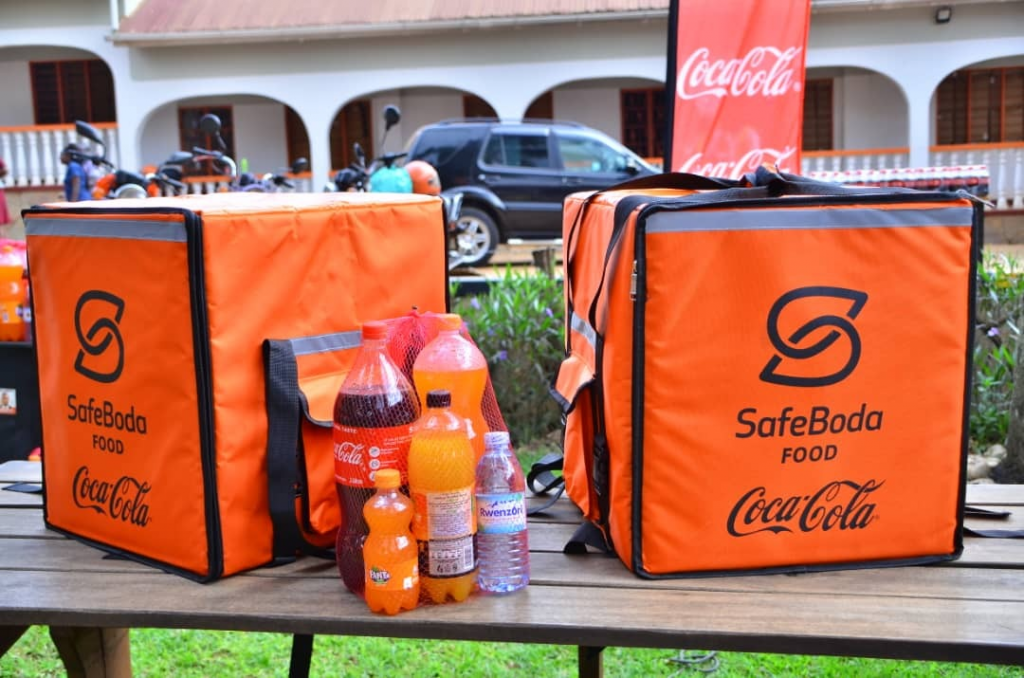
    “These are food grade delivery bags and a consignment of just over 800 bags have so far been received with the target of 2000,” he added.

    The event was an opportunity to not only celebrate and reward their hard work, but engage the drivers on what SafeBoda is doing to create an environment where riders feel appreciated and supported to improve their service delivery and continue to join SB Food/Shop champions and take more orders.

    In addition to co-hosting the event with SafeBoda, CocaCola also sponsored delivery bags for the drivers. The bags they have donated will help solve the problems of spillage and ensure that food is delivered at optimum temperatures thus improving health and safety for our customers.

    “Coca-Cola was our first partner for Safeboda Shop and has supported the launch and growth of our delivery product enormously through the Covid-19 period.  We look forward to continued partnership with Coca-Cola – as a key distributor of their products, strategic partner in the market and key sponsor to help us fulfil our mission of empowering local communities to thrive through our business,”  said Francesca Hine, VP Food and Shop, Safeboda.


    On the
    importance of this partnership for SafeBodas, Operations Verticals Manager (Shop), Moses Musinguzi said,

    The Operations team has been waiting for this moment and weare so excited about this Coca-Cola – SafeBoda partnership because we believe that with these delivery bags, we are cementing our strong brand in the delivery market space too. We have been known for offering safer rides and for having top notch quality drivers. We believe that drivers will now transport food with convenience and ease because they are well facilitated with these bags.

  • “Don’t relax on the SOPs” – Tororo RDC Calls upon Ugandans

    “Don’t relax on the SOPs” – Tororo RDC Calls upon Ugandans

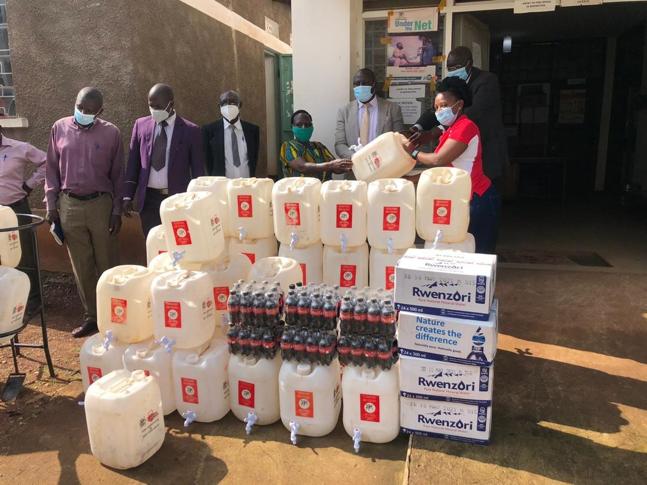
    Tororo; Mr. Were Yahaya, the Tororo District Resident Commissioner (RDC) has called upon the general public to work together with the respective district Covid-19 taskforce and government officials in the fight against COVID-19 in the country. These remarks were made during a brief event where Coca-Cola Beverages Africa in Uganda handed over new handwash jerrycan stations at the Tororo district offices today.

    “We have been working as a team to see how we can mitigate the spread of corona virus within Tororo and Uganda at large. As the leadership of Tororo, we have been sensitizing our communities, tracing contacts and have even managed to treat some of the cases who have since been cured of this disease. This fight won’t stop now, let us not allow the fire to burn out,” encouraged Were.

    “We will be distributing these handwash jerrycan stations to Merrikit Sub-county, some within the district and health facilities. We shall also prioritize places of worship. The only way we can prevent this pandemic is to work together as a team and sensitize the community because right now, we have so many community cases within Uganda. We should inform the public to continue adhering to the Standard Operating Procedures that the Ministry of Health passed in our respective communities. Wash your hands with clean water and soap, keep social distancing and endeavor to wear a mask while in public,” he cautioned.

    As part of its support to the Ministry of Health and in fulfilment of its pledge to fights COVID-19 by improving hand washingand sanitation in public and high risk areas, Coca-Cola Beverages Africa in Uganda pledged to distribute 5,000 handwashing jerrycan stations across the country and has stayed true to that commitment. The 150 handwashing stations, 10 cartons of soda and 10 cartons of water that the company handed over to Tororo District officials brings the total number of jerrycans distributed so far to 1,750 in different parts of the country including Kampala, Mbarara, Mukono, Buikwe, Kalungu and Tororo Districts.

    Tororo Deputy Chief Administrative Officer (CAO), Mr. OkwirSamuel applauded the company for being invested in supporting the community and economic recovery. “We are grateful to Coca-Cola for always prioritizing the wellbeing of Ugandans in the different communities across the country. This means you love Tororo District, as well as the community. By doing this, you are supporting the community to buy your products. Once they are alive, they can buy,” he noted.

    “Our commitment to the communities we serve knows no boundaries. Businesses can only thrive in a healthy environment, thus our investment in the health and safety of our people always takes priority. We are, because of the loyalty and continued support from our customers and we are linked together by similar interests to see our communities thrive and prosper,” reiterated Newton Lee Ogong, Special Events and Promotion Manager, Coca-Cola Beverages Africa.

    “Right now, our focus is supporting the economy to recovery by doing what we can to ensure there is no second wave which could lead to another lockdown. This will tremendously affect our economy as it is now. If there is anything to pick from this pandemic, we cannot act alone. We need to continue to work together with the government, civil society organizations, NGOs, and in partnership with fellow businesses to help us emerge stronger and secure the economy,” he added further.

    The handwashing stations form part of Coca-Cola Beverages Africa’s UGX1.3billion contribution to the Government of Uganda through the Ministry of Health, which also includes three pick-up trucks, PPEs for health workers, and COVID-19 awareness and sensitization advertising.