Tag: China

  • Affordable smartphones drive digital inclusion in Africa

    Affordable smartphones drive digital inclusion in Africa

    With mobile connectivity now integral to the modern economy, a key part of any national development programme must be digital inclusion. This is being achieved by expanding mobile broadband coverage, but there is another important consideration: smartphone affordability.

    A recent GSMA report shows that smartphones make up 39% of the 774 million mobile connections in Sub-Saharan Africa. This is projected to grow significantly, but for Africa’s people to fully reap the dividends of mobile connectivity, it is critical that 4G-enabled smartphone handsets be made more easily attainable for the entry-level market.

    This calls for financial innovation alongside the technological innovation that characterises the sector. Smartphones must become cheaper if Africa is to unlock the full potential of its people.

    Fortunately, there are already encouraging signs that manufacturers, policymakers and network operators are partnering to integrate such financial innovation into the drive towards digital inclusion.

    In Kenya, Safaricom recently rolled out a device financing programme, in partnership with Google and Teleone, allowing low-income earners in Kenya to access quality 4G phones at low instalments from as little as Kshs 20 (R3) a day.

    The country has a high mobile telephony penetration, but this has traditionally involved 2G phones. The campaign aims to bring a million more customers into the digital economy.

    Airtel Africa has expanded 4G adoption on the continent with its “more for more” data offers, increasing average data use, with 4G now accounting for more than 60 per cent of its data revenue.

    However, one of the most effective means of encouraging smartphone adoption is reducing the tax burden on mobile phones and services in the form of import duties and sales taxes. In this context, policymakers have a powerful role to play in empowering citizens with easier access to digital connectivity.

    As smartphones become the norm, broadband spectrum can follow suit, and network operators can transition to a 4G- and 5G based platforms, with all the high-speed, mass-connectivity benefits that brings.

    A surging demand for 4G handsets indicates when a market is ready for the 4G network transition, and it becomes possible to shut down the 3G spectrum, as India was recently able to do.

    At the recent LTE World Summit 2020, Sandeep Gupta, executive vice president of Barthi Airtel in India, said the decision to shut down the 3G network was motivated by two considerations – smartphone penetration, and the right network assets, such as SDR (software Defined Radio) and singleRAN radio, which supports 4G VoLTE.

    However, core to this transition is affordable handsets. In China, 4G adoption has been hastened by the introduction of 100 Yuan (R238) handsets, catapulting millions into the 4G and 5G future.

    In South Africa, smartphones have also become significantly more affordable, with handsets such as the Huawei Y5 Literetailing for around R1 300. However, there remains scope to make 4G-enabled smartphones even more affordable, and to truly democratise connectivity.

    Perhaps the simplest way to hasten digital inclusion is a change in our understanding of the place of 4G handsets in our society.

    Once smartphones are seen as a commodity, a basic right instead of a luxury, they can be marketed, sold and taxed accordingly, bringing all of humanity into the new digital economy.

  • Huawei’s Meng Wanzhou accuses US of giving Canadian court ‘grossly misleading’ evidence summary in extradition case

    Huawei’s Meng Wanzhou accuses US of giving Canadian court ‘grossly misleading’ evidence summary in extradition case

    • Meng’s lawyers want the extradition case thrown out because of the alleged abuse of process
    • Defence team says US misled British Columbia court about a PowerPoint presentation Meng gave to a HSBC banker, forming the basis of US fraud case

    Huawei executive Meng Wanzhou has accused the United States of providing a “grossly inaccurate [and] misleading” summary of evidence to the Canadian court hearing her extradition case, arguing that the case should be thrown out as a result.

    The new claims in Meng’s bid to avoid extradition to the US to face fraud charges include that the US misrepresented and omitted details of a crucial PowerPoint presentation that Meng delivered to a HSBC banker in Hong Kong.

    The 2013 presentation forms the basis of the US claims that she defrauded HSBC by lying about Huawei’s business in Iran, allegedly in breach of US sanctions, and that she should be sent to New York to face trial.

    “Ms Meng will submit that the Requesting State’s summary of evidence … is grossly inaccurate and based on deliberate and/or reckless misstatements of fact and material omissions, thereby constituting a serious abuse of the extradition process that should disentitle the Requesting State to proceed,” her lawyers said in a memo, released on Monday by the Supreme Court of British Columbia.

    Meng was arrested by Canadian police, acting on a US request, at Vancouver’s airport on December 1, 2018, throwing China’s relations with Canada and the US into turmoil.

    The new claims also allege that the US falsely asserted that only junior HSBC employees were aware of the nature of Huawei’s relationship with Skycom, a company in Iran that the US says conducted business there on behalf of Huawei.

    “Evidence will demonstrate that it is inconceivable that any decision to modify or terminate HSBC’s relationship with Skycom or Huawei would not have been reviewed by the most senior management of HSBC,” said the memo.

    The memo, dated Friday, was made public after a hearing in Vancouver to discuss the management of Meng’ssprawling extradition case, which has been thrown into disarray by the Covid-19 pandemic.

    Meng’s team submitted a schedule that would see hearings last until at least May 25, 2021, while the Canadian government lawyers representing US interests in the case proposed hearings until March 26. Appeals could ultimately stretch the case out for years.

    But Associate Chief Justice Heather Holmes did not endorse either schedule and questioned the order that both sides wanted various arguments addressed.

    As a result, the hearing was adjourned until June 23, with Meng – who is Huawei’s chief financial officer and the daughter of company founder, Ren Zhengfei – bound over until then.

    Meng and both sets of lawyers attended Monday’s hearing by phone, as part of the court’s Covid-19 precautions.

    In the memo, Meng’s lawyers also take issue with “false statements” in the US record of the case that “as a result of [Meng’s] misrepresentations, HSBC extended US$900 million of credit to Huawei”.

    “In fact, there never was a US$900 million credit facility between Huawei and HSBC,” the memo says. Instead, it says, HSBC and eight other banks jointly provided HSBC with a US$1.6 billion credit facility, of which HSBC’s contribution was US$80 billion.

    The claims about misrepresentation in the US record and supplemental record of the case – summaries of evidence provided to the court – represent a new third branch of an abuse-of-process argument by Meng’s lawyers.

    The other two branches are that Meng was unlawfully searched and interrogated by Canadian border officers at Vancouver’s airport at the behest of the US FBI, before she was formally arrested, and that the case is a matter of political abuse, highlighted by US President Donald Trump’s comments on it.

    “This is a very unusual extradition case. It has been described as unique,” said one of Meng’s lawyers, Richard Peck, at Monday’s hearing. “It does give rise to three arguments on abuse … [one] in relation to the president of the requesting state and his assertion that he would effectively do what he wanted with Ms Meng, which we consider to be an outrageous comment.”

    That was a reference to comments made by Trump on December 11, 2018, when he told Reuters news agency that he would intervene in Meng’s case if it was in the interests of US national security or it helped the US seal a trade deal with China.

    “Whatever’s good for this country, I would do … If I think it’s good for what will be certainly the largest trade deal ever made – which is a very important thing – what’s good for national security – I would certainly intervene if I thought it was necessary,” Trump said.

    Meng’s lawyers have seized on those comments as proof that the case against Meng is politically inspired.

    As part of the other plank of the abuse claim, Meng’slawyers have described a report written by Canada’s Security Intelligence Service (CSIS) on the morning before her arrest, which they say provides evidence of “coordinated state misconduct” between the US and Canada against her.

    The spy agency’s report predicted the impending detention would “send shock waves around the world”, and stated that “advanced communication to the CSIS came from the FBI”. The report’s existence was made public last week.

    According to Chinese state news agency Xinhua, foreign ministry spokesman Zhao Lijian said on Monday that the CSIS report “shows once again that the whole MengWanzhou case is a serious political incident. It speaks volumes about the US political calculations to purposefully suppress Huawei and other Chinese hi-tech companies.”

    Meng’s arrest more than 18 months ago triggered a crisis in Chinese relations with the US and Canada. China arrested Canadians Michael Spavor and Michael Kovrigand accused them of espionage, moves that are widely believed in Canada to represent retaliation and hostage taking.

    Meng, 48, is living under partial house arrest in Vancouver on C$10 million (US$7.36 million) bail.

  • Huawei: A Year and Beyond

    Huawei: A Year and Beyond

    Huawei held its 17th annual Global Analyst Summit in Shenzhen, both onsite and online. At the event, Huawei was joined by over 2,000 analysts, key opinion leaders, and media representatives from a range of industries, including telecoms, the Internet, and finance.

    Together, they discussed how the industry can work together to weather the difficult times, achieve win-win outcomes, and accelerate the arrival of the intelligent world.

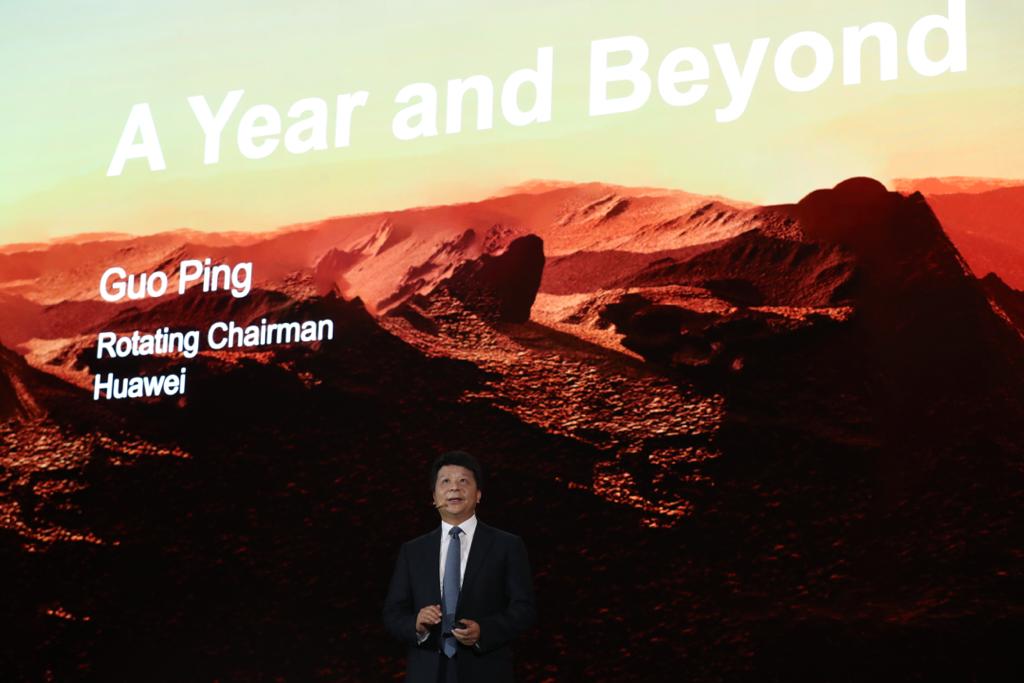
    Guo Ping, Huawei’s Rotating Chairman, delivers a keynote speech at the 17th annual Global Analyst Summit

    At the opening of the event, Huawei’s Rotating Chairman Guo Ping delivered a keynote speech titled “Huawei: A Year and Beyond”. Guo Ping started by sharing Huawei’s experience and business results of the past year. He said, “Over the past year, many technologies became unavailable to us. Despite this, Huawei struggled to survive and is striving to move forward.”

    Huawei has long been an active contributor to the ICT industry. Since it was founded, Huawei has been committed to bringing digital to more people, homes, and organizations, in order to move the world forward. In the past 30-plus years, Huawei has deployed over 1,500 networks in more than 170 countries and regions, serving over 3 billion people worldwide. We also provide smart devices to 600 million consumers. US actions against Huawei will not only harm Huawei, but also harm the experiences of customers and consumers that use Huawei’s products and services.

    ICT infrastructure is the foundation of the intelligent world. By 2025, the digital economy will represent an industry worth 23 trillion US dollars. The ICT industry still has great potential. Standing at the threshold of the intelligent world, we can see more opportunities than challenges for the ICT industry.

    Looking ahead, Huawei will continue investing and innovating in three domains: connectivity, computing, and smart devices. We will work with customers, partners, standards organizations, and all other industry players in domains like supply chain, standards, and talent cultivation, to encourage open collaboration, promote inclusive industry development, and explore the future together.

    Guo Ping stated, “Today the world is an integrated collaborative system. The trend of globalization shouldn’t and will not likely be reversed. Fragmented standards and supply chains benefit no one, and further fragmentation will have a severe impact on the entire industry. The industry as a whole should work together to strengthen IPR protection, safeguard fair competition, protect unified global standards, and promote a collaborative global supply chain.”

    The first Huawei Global Analyst Summit took place in 2004, and has been held annually ever since. This year’s summit runs from May 18 to 20, with a series of parallel sessions. Attendees include industry experts from around the world, who discuss and share their insights into industry trends, tech trends, and global collaboration. For more details, please visit: https://www.huawei.com/en/press-events/events/has2020

  • Tech for humanity: Preparing for the next phase

    Tech for humanity: Preparing for the next phase

    ICT has been critical to fighting the Covid-19 pandemic and transforming society over the long term. But the key to progress is laying the foundation for constant evolution, writes Chen Lei, President of Huawei Southern Africa Region.

    With the outbreak of the COVID-19 pandemic at the beginning of this year, organisations across the planet began to shift into action. But as critical as it was to react appropriately, it has also been important to proactivelyprepare for the next phase.

    At Huawei, we are aware of the massive effect of the pandemic, as well as how seriously communities would beaffected. However, we are also conscious that as well as protecting lives, we need to help lay the foundation for the next stage of society’s technological advancement – the Fourth Industrial Revolution.

    I’ve been inspired by a recent YouTube video of young South African dancer Hlumelo, who has been under lockdown in hishome township of Gugulethu. A member of the Zama Dance School, Hlumelo has not let the lockdown hold him back, and has continued practising his steps for the moment when he and his friends can perform together again.

    Similarly, during the Chinese lockdown, members of the Shanghai ballet continued to practise – wearing facemasks – for their upcoming performance of Swan Lake. They took precautions, but remained focused on the next phase of their development.

    This reminds me of a saying from a Chinese poem that “Good honing gives a sharp edge to a sword. Bitter cold adds keen fragrance to plum blossom”. It implies that preparation is essential to being effective, and that hardship can shape ultimate success. Indeed, chance favours the prepared mind.

    We understand that ICT has a great role to play in terms of keeping us all connected during lockdown, quarantine and social isolation. But technology is also fundamental to economic recovery for Africa.

    Now that we have spent several weeks with shuttered schools and locked-down business, our conversation is turning to how to reopen the economy. It’s becoming increasingly clear that the way to do that is not to rush back to the same busy, concentrated work and social environments we had before.

    When we re-open, communities and workplaces will have to continue practicing social distancing. We will continue to rely on high-speed connectivity to bind us together. In many cases, ICT networks support the fight against the coronavirus, but also the evolution of human society itself.

    During the pandemic, once Huawei had secured our people and our operations, we looked at how we could support our business partners on the African continent through our core competences in the ICT sector. We were fortunate to be able to assist with social distancing by African organisationsthrough our technologies.

    The video conferencing systems we provided in some African countries enabled information sharing domestically and experience exchange internationally between epidemic prevention experts in China and Africa.

    Our remote videoconferencing systems have helped medical institutions communicate more efficiently. We have also implemented an AI-based diagnosis solution in severalmedical institutions. CT scan reviews can now be completed in two minutes, 80% faster, in a race with time, critical for saving lives.

    Huawei will continue using our core information and communication capabilities to support Africa’s epidemic control efforts.

    When the dust settles, and we begin to arrive at the much-heralded “new normal”, we will have seen the immense potential for ICT to build social cohesion.

    A new business model is taking shape across sectors, one characterised by remote work, distance education, remote healthcare, online shopping and mobile money. These business models span transportation, security, finance, medicine, education and entertainment.

    This new paradigm is driven by vastly greater data consumption, facilitated by the mass connectivity of 4G/5G technology.

    Governments are coming to understand the need to prioritise ICT as a basic necessity. As a recent white paper noted, the Covid-19 pandemic is seeing 5G transform healthcare response mechanisms to become digital, accurate and smart.

    The epidemic has brought home to policymakers the importance of ICT in national development. This is likely to accelerate the establishment of a national data centres, optical fibre networks and communication base stations.

    This kind of “big network” deployment also presents ahistoric opportunity for Africa to use ICT to catch up with, and overtake other nations in terms of human development and quality of life for all its citizens.

    We are seeing the first signs of digital transformation not just in healthcare systems, but across entire economies, and society itself.

    ICT platforms are likely to provide the foundation of Africa’s future economy. The key is to continue honing and perfecting them, expanding their use even now, so that once the lockdown ends, we can recover more quickly.

    As the old poem notes, good honing does indeed give a sharp edge to a sword. Like Hlumelo and the dancers of the Shanghai ballet, we should spend this time honing our abilities. When the new dawn arrives – as it surely will – let it find us well prepared to seize the day!

  • Huawei releases Huawei ICT Academy Program 2.0, Set to Develop 2 Million ICT Professionals Over the Next Five Years

    Huawei releases Huawei ICT Academy Program 2.0, Set to Develop 2 Million ICT Professionals Over the Next Five Years

    Shenzhen, China: At the Industrial Digital Transformation Conference-Live, Huawei officially released the Huawei ICT Academy Program 2.0. Through this program, Huawei aims to develop 2 million ICT professionals and popularize digital skills over the next five years by collaborating with universities. This is part of Huawei’s digital inclusion initiative, TECH4ALL, which is intended to expand the benefits of digital technology to everyone, everywhere. Huawei will set up the Huawei ICT Academy Development Incentive Fund (ADIF), with a total investment of at least US$50 million over the next five years.

    2013 saw the establishment of the Huawei ICT Academy program, under which Huawei has provided quality courses and support services to universities/colleges to help them train teachers, establish and optimize ICT majors, improve the curriculum system, and build standard labs. Huawei ICT Academy also introduces Huawei’s ICT technologies and products to students in universities around the world, encourages them to participate in Huawei certification, and develops innovative and application-oriented technical talent for society and the global ICT industry. Since 2015, Huawei has partnered with more than 600 international universities to set up Huawei ICT academies, helping the universities improve their ICT teaching abilities and train more than 1500 teachers.

    Hank Stokbroekx, Vice President of Enterprise Service, Huawei Enterprise BG, announce the Launch of Huawei ICT Academy 2.0

    To meet new requirements and challenges, the Huawei ICT Academy Program will enter the 2.0 phase in 2020. According to its five-year plan, Huawei will develop 2 million ICT professionals and continuously update its school-enterprise cooperation solutions in cutting-edge technologies, such as 5G and Artificial Intelligence (AI).

    To achieve this goal, Huawei will set up the Huawei ICT Academy Development Incentive Fund (ADIF), with a total investment of at least US$50 million over the next five years. This fund aims to help ICT academies operate stably by the following four actions:

    ● Providing teaching experiment equipment for cooperative universities to improve students’ practical skills.
    ● Training teachers through ADIF, providing free exam vouchers to encourage students to take Huawei’s certification exams, and setting up an education fund to reward excellent teachers and students.
    ● Holding the Huawei ICT Competition to provide a platform for students to communicate with their peers and show their talents.
    ● Cooperating with partners on ICT Talent Job Fairs to help students find jobs and promote efficient matching between talent supply and demand.

    Hank Stokbroekx, Vice President of Enterprise Service, Huawei Enterprise BG, said that, Huawei will continue to establish more ICT Academies. Every year, we will build 600-1000 Huawei ICT Academies. By doing so, we aim to benefit more university
    teachers and students in the digital world, enable more people to enjoy equal and high-quality education, enhance digital skills, and inject fresh impetus into the industry.

    The launch of Huawei ICT Academy Program 2.0 marks a new stage of Huawei’s talent ecosystem development. In the future, Huawei will deepen cooperation with all parties in the ecosystem, increase investment, and accelerate the construction of an all-round, full-cycle sustainable talent ecosystem to fuel the digital transformation of industries.

  • Sam Engola elected chairman FOCAC

    Sam Engola elected chairman FOCAC

    The State Minister for Housing Hon. Sam Engola has been elected the chair of Forum on China-Africa cooperation (FOCAC) study in China.

    The minister was elected last week at the ongoing training in Beijing, China which aims at developing skills of party leaders and government officials in eradicating poverty.

    “I want to thank my colleagues from Lesotho, Zambia, Malawi and Eritrea among others for electing me unopposed to chair them in achieving our objectives of fighting poverty and promoting agricultural led economy at the ongoing training in (Beijing), China which aims at developing skills of party leaders and government officials in eradicating poverty.

    While addressing participants at the Forum on China-Africa cooperation (FOCAC) study shortly after my election, I assured them of my commitment to work collaboratively in ensuring the mission of fighting poverty not only in Uganda but Africa is successfully achieved.

    I implored participants to productively utilize the already existing network to promote agribusiness in Africa so that Africans can benefit more from the agriculture value chain to enhance their investments in agriculture through value addition.

    I cited myself as an example of the very many farmers in Uganda who have embraced agriculture and are attaining better livelihood through it because of the new methods of farming which has enabled farmers to do farming in a small piece of land and harvest good yields without requiring to have a big chunk of land,” Sam Engola said.

  • Chinese to Invest 1 Billion Dollar in Energy Sector

    Chinese to Invest 1 Billion Dollar in Energy Sector

    China-African Investment and Development Co. Ltd (CAIDC), a Chinese investment conglomerate, are to invest one billion US Dollars (US$ 1bn) in Energy Sector in Uganda, highly placed source in the ministry of energy and mineral development has revealed.

    China African Investment and Development Corporation was co-founded by China Poly Group and China Development Bank, as a special purpose vehicle for infrastructure development investment in Africa.

    “CAIDC specializes in not only in Power Infrastructure Sectors and devoting into improving and promoting the basic development in Africa but also invest in Commercial Farming, Real Estate Development, Promote Culture Business and Investment business among others” Mr. Tom Ma its Project Manager Investment said.

    CAIDC signed a Memorandum of Understanding with the Uganda Government in the year 2015 after which a pre- feasibility study was carried out and Electricity Regulatory Agency (ERA) approved it to construct a 330 mega watts at KIBO under Build Operate and own arrangement.

    According to information available, Electricity Regulatory Agency (ERA) and in accordance with Electricity Cap 145 of 1999, the formal feasibility study phase is supposed to commence subject to the formal award of a permit from ERA whose Board has already approved.

    Chinese – Africa Development Fund (CADF) was inaugurated in June 2007 with an aim to encourage and support Chinese Investment in Africa with a total capital base of US$ 10billion.

    “We provide capital financing and investment in Africa, provide values addition investment and link African Projects with Chinese Companies and sensitize them on principles of fund utilization among other things the CAIDC local representative told this reporter.

    Recently Uganda, like other East African Countries of East Africa, Tanzania and Kenya reached a GDP to Debt ceiling of 50% borrowing to build and construct power dams hence resorting to build operate and own system.

    A senior Energy Ministry official on condition of anonymity explained to this reporter that due to Gross Domestic product (GDP) ratio to debt constraints on borrowing capacity in Uganda and the East African region, Hydro electric power projects like Ayago Dam cannot be financed under Engineering procurement and construction financing terms (EPC) like was done with the Isimba Dam (over 180 mega watts) and the Karuma HPP

    The official also intimated that with every 1% increase in GDP, meant there must be a correspondent 2.5 % increase in effective demand for electricity in order to maintain GDP growth figure and therefore generation capacity needed to increase despite the regions diminished capacity to borrow giving the increased need for private sector investments in electricity generation.

  • Uganda-China Economic investment and Trade Cooperation Forum debuts

    Uganda-China Economic investment and Trade Cooperation Forum debuts

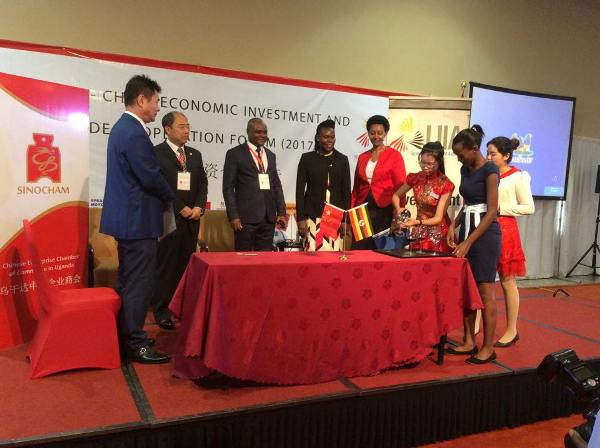
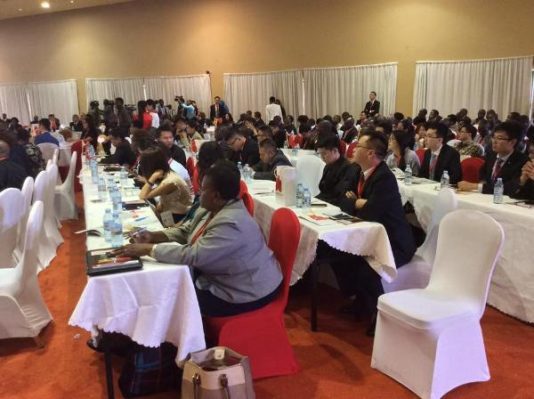
    The first ever Uganda-China Economic forum took place today morning at the Munyonyo Common Wealth Resort Hotel, Speke Ball Room. The forum was aimed at building closer ties in trade and technology between the two nations.

    Vice President HE Edward Ssekandi while opening the forum today morning said the Forum having been attended by knowledgeable business men, it will open up a space for candid dialogue.

    “I believe that for us to develop in areas that will bring significant ROI, this relationship (Uganda-China) is valuable and we must learn from each and help one another to achieve the greater economic progress.

    Chinese Ambassador to Uganda H.E Zheng Zhuqiang said the forum is beneficial to both nations as they strive to achieve development. “We are ready to help Uganda become one of the most developed countries in the world and with such forums, opportunities are opened and trade ties enhanced.

    Jolly Kamugira, Executive Director Uganda Investment Authority (UAI) said that as long as Uganda succeeds in industrial development, more jobs will be created developing the economy as a whole.

    Nkuutu Kirunda, one of the speakers at the Forum said, “When it comes to taking Uganda where it needs to be, we need to make sure we stop leaving things on paper”

    “Bureaucracy in Uganda is dealt with by politics. If people are not delivering, sack them,” Fred Muhumuza of the Ministry of Finance said.

    The Minister of State for Finance in charge of Investments Hon. Evelyn Anite said Uganda has taken a deliberate step to give our investors in Uganda land for free as a way of attracting more investors.

    Zheng Biao, acting Country Manager of China Communications Construction Company (CCCC) said with such forums, the trade ties between Uganda and China will be strengthened giving a conducive investing atmosphere in both countries. “If we build strong economic, investment and trade cooperation, our companies will find it easy to carry work in Uganda same as in China. Its key to maintain and strengthen current trade ties between the two countries,” Zheng said.

    The forum was sponsored by Chinese Enterprises Chamber of Commerce Uganda, Uganda Investment Authority (UAI), Toyota Uganda, Stanbic Bank, Blink, Spear Motors Limited, Hima Cement and Schenker.

  • 30 excellent Ugandan employees working in Chinese Enterprises Commended

    30 excellent Ugandan employees working in Chinese Enterprises Commended

    30 Excellent Ugandan employees working in Chinese enterprises have today been commended for their exceptional performance by the China Enterprise Chamber of Commerce in Uganda.

    The award ceremony that took place at China Communications Construction Company (CCCC) Headquarters at Sekiwunga Hill, Kitende, was the first of its kind and organized by the China Enterprises Chamber Of Commerce in conjunction with Chinese enterprises of Uganda. These awards seek to recognize the most hardworking, disciplined and diligent Ugandan employee.

    Some of the winners with their prizes pose with Minister John Byabagambi
    Some of the winners with their prizes pose with Minister John Byabagambi

    Mr. Lu Jing, President of CCCC, the Chairman of the China Enterprises Chamber of commerce noted that the chamber has up to the present created 40,000 jobs with its 83 Chinese Company members in the chamber and sought to recognize the most outstanding Ugandans among others.

    “On this occasion of the celebration of International Labor Day, the chamber is prepared to honor 30 excellent Ugandan employees to recognize their outstanding performances and sincere dedication to the Chinese business community. These employees are also honored for setting good examples, learning from role models and striving for better performance among their valued colleagues”, he said.

    On the same Occasion, Hon. Kamanda Bataringaya, the State Minister for Labor, industrial relations and employment appealed for more investors to open up more companies in other parts of the country to create more jobs for more Ugandans.

    DSC_0696

    “I appeal to the Chairman Mr. Lu that more companies should come to Uganda and not only open business in Kampala but to other districts because there are also fertile grounds for development and creating of more employment opportunities”, he said.

    The Chinese Ambassador to Uganda H.E Zhao Yali commended the government and people of Uganda for providing a peaceful environment for Chinese companies. He further sighted that because of the peaceful environment for business, there has been a socio-economic transformation brought by Chinese companies through tax, employment and training.

    DSC_0728

    “Every year, companies like Huawei and China Communication Construction Company (CCCC) pay approximately two and four million dollars respectively in tax. It’s a big contribution to the country. I thank Tian Tang Group who employ not below 1700 employees, that is commendable. All the 83 Chinese companies in the chamber have up to date employed 21,000 Ugandan employees. The total number of Ugandan employees work for Chinese companies in Uganda is more 44,000 according to a figure from Uganda Investment Authority. The Government of the People’s Republic of China every year puts 40 scholarships to the government of Uganda in bachelor degree, master degree and doctorate degree and 300 opportunities of short courses for government workers”, said Chinese Ambassador to Uganda H.E Zhao Yali.