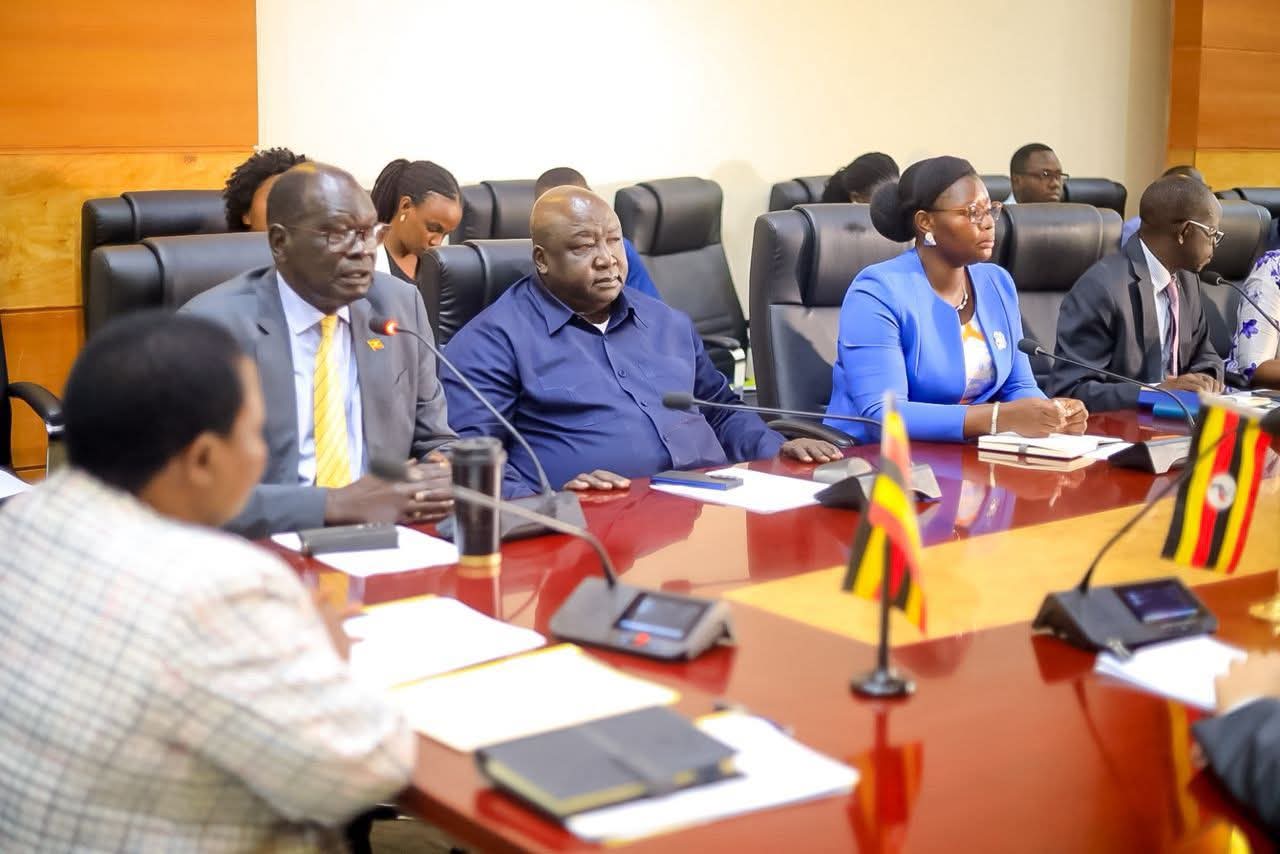
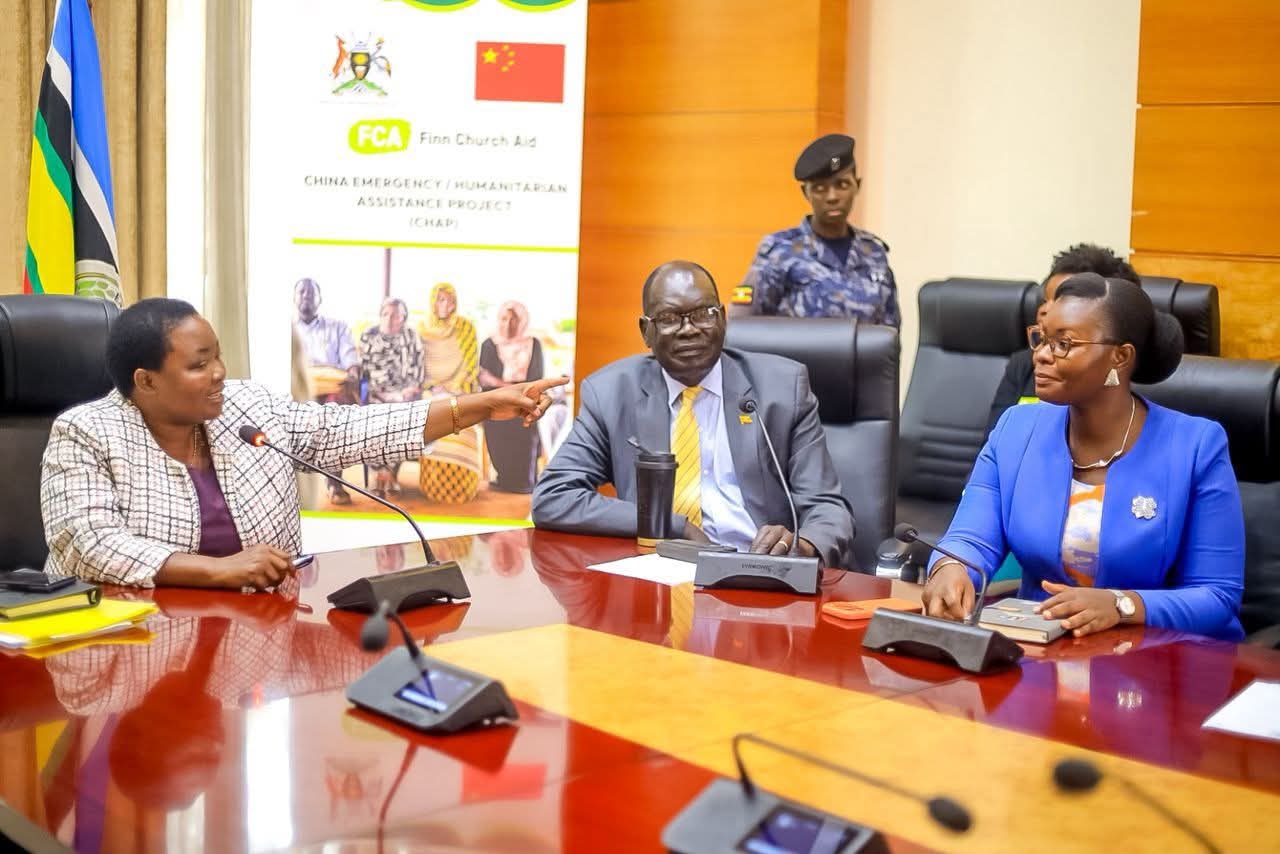
Prime Minister Rt. Hon. Robinah Nabbanja together with Hon. Eng Onek Hilary Obaloker, Hon. Okello Oryem Henry, the Chinese Ambassador to Uganda, Mr Fan Xuecheng and Hon. Lillian Aber together with other distinguished partners, officially launched the China-funded Humanitarian Assistance Grant Project (CHAP), supported with USD one million (1M$) by the Government of the People’s Republic of China.
This important initiative comes at a critical time as Uganda continues to uphold its progressive open-door refugee policy, even amid increasing humanitarian pressures. The project will significantly strengthen the country’s national response systems, particularly in priority refugee-hosting areas, ensuring that both refugees and host communities receive timely and effective support.
CHAP adopts an integrated approach, with a strong focus on psychosocial support, community engagement, and fostering social cohesion—key pillars in building resilience and promoting peaceful coexistence. In addition, its emphasis on coordination, monitoring, and evaluation will enhance accountability, transparency, and the delivery of measurable, sustainable outcomes.
“I extend my sincere appreciation to the Government of the People’s Republic of China for this generous and timely support, which further strengthens the long-standing ties of friendship and cooperation between our two nations. Together, we reaffirm our commitment to protecting, supporting, and empowering refugees, while building resilient communities and ensuring that no one is left behind,” Hon. Lillian Aber, the State Minister for Refugees, Relief and Disaster Preparedness said.
Entebbe: The Ministry of Agriculture, Animal Industry and Fisheries (MAAIF) has handed over a consignment of Jianzhou Big Ear goats from China to the National Agricultural Research Organisation (NARO) to support research and breeding initiatives. The goats, imported in July under the FAO-China-Uganda South-South Cooperation Project Framework, were cleared for release after successfully completing the mandatory 21-day quarantine.
Speaking at the handover ceremony on Thursday at the National Animal Genetic Resources Centre and Databank (NAGRC&DB) farm in Entebbe, the Minister of State for Animal Industry, Hon. Bright Rwamirama, said the goats will be used to improve local breeds through crossbreeding.
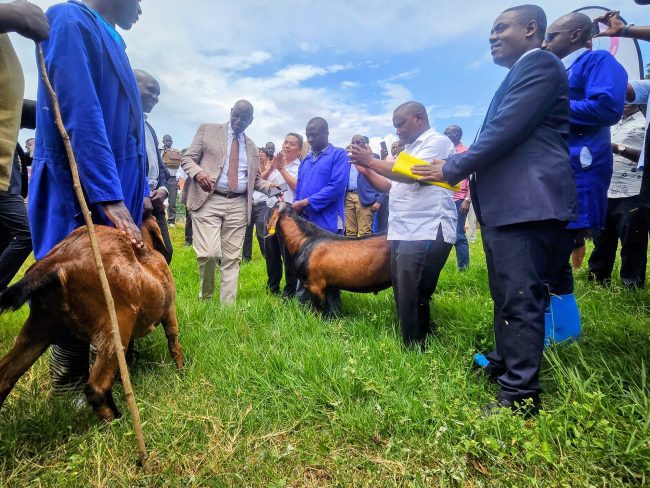
Minister Bright Rwamirama (center) presiding over the goat transfer event at NAGRC & DB in Entebbe
“We already have some competitive breeds, such as the Boer from South Africa. However, certain indigenous breeds like the Kigezi and Bitanga do not gain sufficient weight. With this new breed from China, we will conduct research to establish whether they are indeed ‘wonder goats.’ If proven, we shall import more and make them available to farmers,” Hon. Rwamirama said.
He recalled how Uganda received a foreign order for goats three years ago but failed to sustain supply after delivering only three consignments. The minister emphasized the need to adopt high-performing breeds to strengthen food security and expand opportunities for agro-industrialization.
Minister Bright Rwamirama (center) presiding over the goat transfer event at NAGRC & DB in Entebbe
“We are no longer talking about just production but productivity, because our population is growing while land remains static,” he added. Receiving the goats on behalf of NARO, Dr. Swidiq Mugerwa, Deputy Director General in charge of Research, said the Jianzhou Big Ear goats are known for their rapid growth and high meat yield, attaining an average weight of 45kg in just 18 months. “The purpose of introducing this breed is to enable Ugandan farmers to boost both milk and meat production, thereby increasing household incomes and improving livelihoods,” Dr. Mugerwa explained.
He noted that Uganda’s goat population is dominated by three indigenous breeds; Mubende, Small East African, and Kigezi goats. The Mubende can reach about 35kg in two years, while the Small East African averages 25kg in the same period. In comparison, the Jianzhou Big Ear goat reaches 45kg in just one and a half years, making it superior in growth performance.
Mr. Julius Twinamasiko, National Coordinator of the South-South Cooperation Project, said NARO will oversee research and breeding, while NAGRC & DB will lead multiplication. He praised FAO for facilitating the procurement and acknowledged the Chinese government’s support, calling for the project’s extension to consolidate the progress achieved since its inception in 2012.
Minister Bright Rwamirama (left) and Dr. Swidiq Mugerwa inspect the Chinese goats during the handover event at NAGRC & DB in Entebbe
So far, under the project, China has dispatched 64 experts and technical officers to Uganda in areas such as crop production, livestock, aquaculture, and value addition. FAO’s South-South Cooperation Project focal point, Mr. Martin Ameu, added that the Chinese goats are well-suited to Ugandan conditions and are expected to significantly enhance the productivity of local breeds.
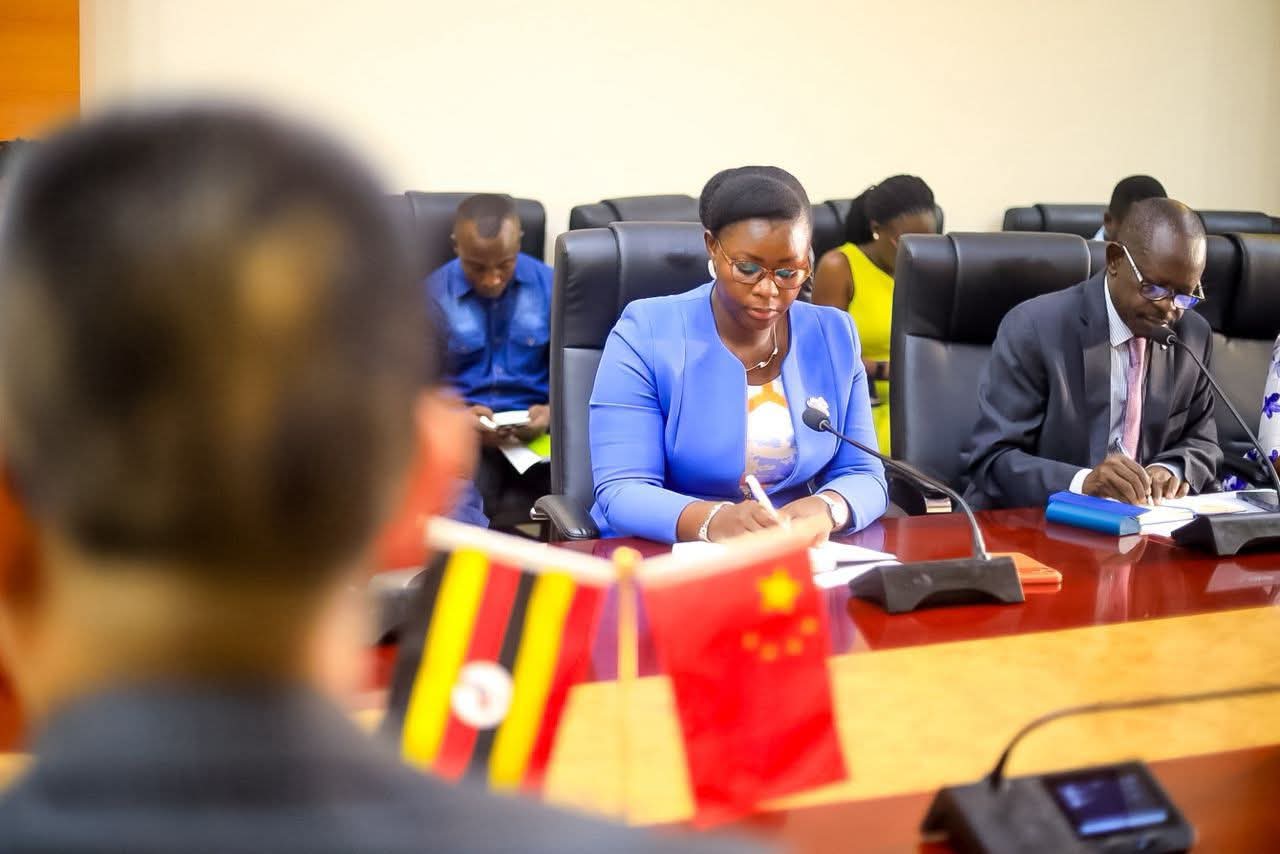
The Ministry of Agriculture, Animal Industry, and Fisheries (MAAIF) has signed a pivotal Memorandum of Understanding (MOU) with China Communications Construction Company (CCCC) to enhance Uganda’s agricultural capacity through the development of post-harvest handling infrastructure, small-scale irrigation systems, and agricultural mechanisation.
The agreement marks a significant step in strengthening Uganda’s food security and improving the livelihoods of farmers.
The MOU was signed during a formal ceremony in Kampala attended by senior government officials and CCCC representatives. Speaking on behalf of Uganda, Mr. Ronald Segawa Gyagenda, the Acting Permanent Secretary of MAAIF, underscored the importance of the partnership. He emphasised that the agreement represents a commitment to reducing the substantial losses incurred by farmers due to inadequate post-harvest handling and storage facilities.
“A significant percentage of food produced in Uganda is lost after harvest due to poor handling, storage, and processing. This is an issue that has plagued our farmers for too long,” Gyagenda said. “We welcome every partner with innovative solutions to address these challenges, and this MOU is a testament to our commitment to finding sustainable, long-term solutions.”
The initiative, Gyagenda noted, will enable Uganda to leverage modern agricultural technologies aimed at improving productivity, stabilising food prices, and safeguarding food security. He highlighted that the feasibility study arising from this MOU will guide the government in making informed decisions on the implementation of these critical projects.
CCCC, a prominent global player in infrastructure development, has operated in Uganda for nearly three decades. In his remarks, Mr. Hailiang Song, President of CCCC, expressed his enthusiasm for the collaboration, reiterating the company’s long-standing commitment to Uganda’s development.
“Uganda has immense agricultural potential, and under the leadership of President Museveni, the country has made remarkable progress in achieving political stability and economic growth,” Song said. “We are proud to support Uganda in advancing its agricultural sector by focusing on warehousing, irrigation, and food processing.”
Song highlighted Uganda’s lack of adequate food storage facilities as a critical issue affecting the sector, which the partnership aims to address through the construction of modern warehousing infrastructure. “Warehousing is not just an important initiative; it is critical for Uganda’s future,” he remarked, noting that such facilities would play a vital role in stabilising food prices and ensuring that farmers have better access to markets.
In addition to post-harvest handling, the MOU also seeks to bolster Uganda’s resilience to climate change by expanding access to small-scale irrigation systems. With erratic weather patterns affecting farmers across the country, irrigation has become a priority for both the government and its partners. Gyagenda stressed that improved water management is crucial to ensuring agricultural sustainability in the face of growing climate unpredictability.
“We are seeing periods of too much rain followed by prolonged drought. By harvesting and managing water efficiently, we can ensure our farmers have access to water when they need it most,” Gyagenda explained. “This MOU signals our commitment to addressing these challenges and providing farmers with practical solutions.”
Both parties emphasised the importance of adapting new technologies to Uganda’s specific needs and conditions. Gyagenda assured that the government would support the testing and adaptation of any new machinery before deployment to ensure its suitability for the country’s unique agricultural landscape.
Song reaffirmed CCCC’s dedication to Uganda, saying, “Our expertise in irrigation and agricultural processing will contribute to the sustainable development of Uganda’s agricultural sector. We are keen to collaborate across the entire agricultural value chain, from planting to processing and storage.”
The MOU builds on previous discussions between Uganda and China aimed at fostering agricultural cooperation. It follows a series of high-level meetings, including a visit by Uganda’s Minister of Agriculture to CCCC’s offices in China during the China-Africa Economic and Trade Expo in July 2021.
The signing of the MOU represents a key milestone in the longstanding partnership between Uganda and China. Both Gyagenda and Song expressed optimism about the future, with Song noting that the collaboration has the potential to significantly boost agricultural productivity in Uganda.
“The signing of today’s MOU is just the beginning of our journey together,” Song said. “We look forward to deepening our cooperation and exploring more opportunities in the future.”
The partnership comes at a critical time as Uganda seeks to modernise its agricultural sector and support the livelihoods of millions of smallholder farmers. By addressing post-harvest losses, enhancing irrigation systems, and facilitating access to modern technologies, the collaboration is expected to have a lasting impact on the country’s agricultural development.
Huawei ICT Competition 2022-2023 Global Final Held in Shenzhen — 146 Teams from 36 Countries and Regions Win Awards
Uganda Represented by Four Teams from Makerere, Kyambogo & Muni University
Team Uganda and the Ambassador Judith Nsababera
Kampala; Uganda teams have scooped second prize at the previously concluded seventh Huawei ICT global finals that took place in Shenzhen China, Huawei’s headquarter from 23rd to 28th May 2023.
The event’s culmination was a competition between finalists in 146 teams from 36 countries. Before the Final, more than 120,000 students from more than 2000 universities in 74 countries and regions around the world took part in the ICT Competition.
The competition results were announced on 27th May 2023 at the closing ceremony in Shenzhen and team Uganda took second prize in the network and cloud track out of 146 teams in each of their tracks. The Network team of Uganda comprised of teams from Makerere and Kyambogo, the cloud track team were comprised of team from Muni university each having three students.
Ambassador Judyth Nsababera welcomed and received a team of 17 Ugandans on 22nd May 2023 in China, Guangzhou that represented Uganda at the Huawei ICT Global Competitions.
The closing and awards ceremony on 27th May 2023 was graced by various delegates all over the world who represented their countries. Uganda was represented by Ambassador Judyth Nsababera, Consul General of Uganda to China, Guangzhou.
Ambassador Judyth in her remarks at the Awards ceremony stated that, “I am happy that Huawei has these opportunities where students all over the world can show case their talents in ICT. And even more proud of the students that worked so hard to get to this global stage. I am especially happy to see female students participate in such global ICT Competitions. There is a global disparity in access to ICT amongst women and girls. Uganda continues to lead the world in promoting women in all sectors. Congratulations to the students from all the 4 teams and 3 universities. They will lead us as a country into this digital age.”
Xiao Haijun, President of Global Partner Development and Sales Dept, Huawei Enterprise Business Group among many other Huawei delegates who attended the closing ceremony noted the importance of digital talents and skills as the foundation for the digital economy.
He said, “Digital talent and digital skills will be the foundation for the digital economy development. In the future, Huawei will bring ICT education resources to more schools around the world. We are projected to build 7000 Huawei ICT Academies in total by 2026, train more than 1 million students every year, greatly improving students’ digital literacy and skills for a more dynamic and inclusive digital world.”
The annual Huawei ICT Competition is a key piece of the ICT Academy Campaign. It targets university and college students worldwide, aiming to facilitate communication between schools, enterprises, and governments while building a robust talent ecosystem. Through this competition, Huawei aims to challenge the students’ ICT knowledge as well as the practical and application skills, and ultimately, inspire innovation.
The annual Huawei ICT Competition is a key piece of the ICT Academy Campaign. It targets university and college students worldwide, aiming to facilitate communication between schools, enterprises, and governments while building a robust talent ecosystem. Through this competition, Huawei aims to challenge the students’ ICT knowledge as well as the practical and application skills, and ultimately, inspire innovation with the theme of “connection, glory, future”.
As a key project of Huawei’s Seeds for the Future 2.0 initiative, the Huawei ICT Competition aims to provide a platform for global college students to compete and communicate with each other in the ICT field. As of the end of 2022, Huawei has cooperated with 2200 universities to build Huawei ICT Academies, helping to train more than 200,000 students each year. Since its initial launch in 2015, more than 580,000 students from 85 countries and regions around the world have participated in the competition.
Shenzhen, China; Huawei has signed a global commitment to join the International Telecommunication Union’s Partner2Connect digital alliance, which will bring connectivity to about 120 million people in remote areas in more than 80 countries by 2025.
Liang Hua, Chairman of Huawei, announced the decision at the company’s 2022 Sustainability Forum, Connectivity+: Innovate for Impact. The forum explored how ICT innovation could unleash the business and social value of connectivity and drive sustainability in the digital economy era.
Speakers at the event included senior leaders from the ITU and United Nations, telecom ministers and regulators in Cambodia, Nigeria, Bangladesh, and Pakistan, and business leaders, partners, experts, and customers from China, South Africa, Belgium, and Germany.”It is clear connectivity alone is not enough. It must be affordable, the content must be relevant and in the local language, and users must have the skills to make best use of it,” said ITU Deputy Secretary-General Malcolm Johnson.
“Thank you to Huawei for their support of the Partner2Connect (P2C) Digital Coalition, and for their announced P2C pledges in the key areas of rural connectivity and digital skills.”
Siddharth Chatterjee, United Nations Resident Coordinator in China, called for “multi-stakeholder partnerships” of policymakers, the private sector, academia, and civil society to close “the sobering reality” of a digital divide which excluded a third of the global population.
“Our dynamic world urgently needs improved digital cooperation to capitalize on the transformational potential of technology to create new jobs, boost financial inclusion, close the gender gap, spur a green recovery and redesign our world to be more prosperous and inclusive,” he said. “Now is the time to act”.
In his keynote address, Dr Liang stressed that access to a stable network was a basic requirement and right in the digital age. For many who remain unconnected, access to reliable connectivity would mark the first step towards transforming their lives. “Connectivity will be more than just a tool for convenient communications,” he said.
“Together with digital technologies like cloud and AI, connectivity will help bring everyone into the digital world, and provide them with access to more information and skills, better services, and wider business opportunities. This will, in turn, drive further social and economic development.”Cao Ming, President of Huawei Wireless Solution, said: “As an enterprise with the most complete ICT capabilities, Huawei integrates the full-technology innovation potential of equipment, sites, energy, transmission, and antennas to address the difficulties faced by traditional site deployment, such as high costs, restricted transportation, lack of power, and maintenance challenges. We have continuously upgraded the RuralStar and RuralLink solutions to extend quality coverage to remote areas, enabling more people, community hospitals, schools, local governments, and small- and medium-sized enterprises to enjoy the same high-speed broadband connectivity experiences as those in cities”.
The RuralStar series solutions have provided connections for more than 60 million people in remote areas in more than 70 countries.The construction of optical broadband networks offers another important route to realizing a universal service. Huawei has proposed an innovative AirPON solution for areas with low population density, including remote areas. This solution continuously reduces the footprint of equipment rooms, optical fiber installation costs, and network power consumption, while ensuring the rapid deployment of local communication networks. In Africa alone, Huawei has laid more than 250,000 kilometers of optical fibers, enabling 30 million households to access high-speed broadband. User experience has seen constant improvement. The average speed of home broadband already exceeds 30 Mbit/s, bringing smarter, faster, and smoother home network experience.As ICT infrastructure continues to evolve, innovative technologies like cloud and AI are allowing those in rural and remote areas to enjoy the convenience of a digital world. Huawei Cloud has proposed the Everything as a Service strategy and made Huawei’s more than 30 years of technical expertise and digital transformation experience available through cloud services. This means that access to Huawei’s digital infrastructure capabilities on the cloud is now just as easy, affordable, and sustainable as water and electricity.Digital transformation, digital talent, and new business models are all essential for balanced development in remote regions. Huawei previously announced that by 2025, with the improved ICT infrastructure, the company will work with partners to enable 500 million people to enjoy digital financial services and 500,000 people to enjoy inclusive education.
In Cambodia, the ITU’s first P2C partner country, Huawei will work with government departments through the Ministry of Posts and Telecommunications and universities to provide 10,000 training opportunities for ICT professionals in the next five years.Huawei is committed to inclusive development. Through its ongoing technological innovation, Huawei is contributing to a higher level of digitalization in remote regions, enabling everyone to enjoy the convenience of a digital life, and promoting the balanced development of the global digital economy.
Teams from Uganda and Nigeria emerged winners of the recently concluded Huawei Global ICT Competition.
The 2021-2022 ICT Competition Awards and closing ceremonies were held in Shenzhen, China on June 25th, 2022 with 130 teams from 43 countries competing fiercely.
The Southern Africa Region represented a great success in the competition, which lasted for one year and attracted 150,000 students from 85 countries all over the world.
The Southern Africa team won two grand prizes, four first prizes and three second prizes.Uganda was represented by nine students; six from network track (Makerere University), and three from cloud track (Muni University).
The grand prize was pocketed by Nigeria ABU and Nigeria University of Port Harcourt WHEREAS Nigeria ABU, Uganda’s Makerere University (team 1&2) and Kenya’s Kenyatta University (Innovation competition) scooped the first prize.
On the other hand, Tanzania’s University of Dodoma, Nigeria’s University of Ibadan, Ghana KNUST (Innovation Track & Woman in Tech Awards) won the second prize.
The third prize was won by KU Kenya, Machagos University, U Zimbabwe, KNUST Ghana, UOM Mauritius, MU Uganda, and UDSM Tanzania. The success of the competition highlighted the resilience of South African students in the world competition platform. In addition, the success of the competition further enhanced the business environment. The presidents and ministries of various countries praised Huawei, which inspired young Africans to learn ICT technologies, strengthened their soil fertility, cultivated Huawei fans and provided a strong moat for the brand.
Huawei ICT Competition is a competitive ICT talent exchange program developed globally for university, college and TVET students. This aims to promote the healthy development of the ICT talent ecosystem and support the integration of industry and education.
Launched in the African region just six years ago, the Competition has developed into the largest ICT skills competition in Africa and the world at large.
In May, 2022, Huawei, the leading ICT global solutions provider, awarded the 2021 Seeds for the Future Finalists and the 2021-2022 Huawei Regional ICT Competition finalists.Under the theme of “Connection, Glory, Future”, the nine month long Huawei ICT competition for Sub Saharan Africa was finalized on 19th February, 2022 with over 16 countries and 38 teams sitting for written and laboratory exams.
The competition attracted over 15,000 participants from Sub-Saharan Africa from 500 universities.Globally, the Huawei ICT Competition 2021 covered over 83 countries worldwide, with 150 000 contestants from more than 2,000 universities and colleges.
Xiao Haijun speaking at the Closing Ceremony of the 6th annual ICT Competition
Huawei Uganda Public Relations Director, Mr Gaojian said, “Huawei Uganda approached over 15 universities and interested them in the 2021 ICT Competition. We registered 750 students and opened for them our free online learning platforms in the various courses of Network and cloud. The network track consists of Datacom, Security and Wireless Lan while Cloud track consists of Artificial intelligence, Big Data, Cloud Computing and Storage.These studied and were subjected to preliminary exams, national exams and Regional exams where we attained the first and second position.”
According to the company, Huawei has, over the past two decades, helped advance the ICT skills of more than 80,000 people across the sub-Saharan Africa region. In doing so, it says it has helped increase youth employability and bridge the gender gap in the ICT industry.
Huawei itself is an employer of choice in the region. Its subsidiaries in 9 Sub-Saharan African countries earned the Top Employer seal in 2021.
With a series of talent ecosystem campaigns in Sub Saharan Africa, including the ICT competition, Huawei hopes to skill up more than 700,000 ICT professionals by 2023.
Airtel Uganda has joined Huawei Uganda and the Ministry of ICT and National Guidance in a campaign to improve Uganda’s service delivery, social and economic transformation through offering quality and affordable ICT services.
This was executed through a Memorandum of Understanding that was launched between Huawei Uganda and the Ministry of ICT on 19th May 2022 in the National Innovation Hub at Uganda Institute of Communications Technologies (UICT), Nakawa.
The MOU will see an establishment of the Huawei ICT Academy at the UICT. This MOU will provide adequate skills, training and certification courses such as 5G, A.I, Cloud, Security, Data communications and others that are required by employers to UICT students and ICT officers.
At the launch, Airtel Uganda pledged to offer internship placement opportunities to UICT students who are the direct beneficiaries of the MOU.
Speaking at the event, Airtel’s Chief Technical Officer Mr. Rajesh Agrawal said Airtel was excited to be part of the digital transformation drive that would foster Uganda’s ICT vision.
Mr. Agrawal noted that Huawei has promoted and built a strong foundation of knowledge base for the students of ICT and Engineers to prepare them to become excellent cyber experts who will efficiently serve the ICT industry as well as the people of Uganda at large. “We are proud of being part of this transformational journey for a very strong Digital Uganda,” he said.
Mr. Agrawal added that ICT has become the backbone for all the segments of society without any bias to the gender, age, demography and economic status. “ICT is no more a luxury but has become the basic need of one and all who need to survive and thrive in this competitive world.”
Airtel was commended at the launch by the Permanent secretary Ministry of ICT and National guidance Dr. Aminah Zawedde and the Minister Hon. Dr. Chris Baryomunsi for being part of the digitization journey of Uganda.
“The Government of Uganda is driving national ICT development and pursuing the 4IR while ICT technologies such as 5G, AI, Cyber Security. ICT is the enabler of digital transformation, the application of AI, Cloud and Big Data will change people’s lives and future business enormously and Cyber Security is key to secure the network,” Dr. Aminah Zawedde said.
“Today we launch this MOU, but I do not want us to stop at launching rather to see to it that the students are trained, certified and get jobs. I thank Airtel for offering us the jobs,” she added.
The ICT and National Guidance Minister Hon. Dr. Chris Baryomunsi then awarded Airtel Uganda with a plaque confirming Airtel Uganda’s offer as an internship center for the students from the ICT Academy.
Kampala: The Vice President of Uganda H.E Maj (rtd) Jessica Alupo has described Huawei Technologies (Uganda) Co., Ltd as a force to reckon with when it comes to developing the country’s budding Information and Communications Technology (ICT) sector.
The Vice President made the assertion during the awarding ceremony of the 2021 Seeds for the Future finalists and the 2021-2022 Huawei Regional ICT Competitions finalists.
H.E Jessica Alupo, The Vice President of Uganda delivering her remarks
The event took place at the National Innovation Hub at UICT, Nakawa on Friday 20th May 2022. H.E Alupo said Uganda’s ICT sector is one of the primary drivers for achieving economic growth and status as a middle-income country and that she was glad that the government’s partnership with Huawei was fostering the country’s ICT vision 2040.”…..Because of your Huawei programs such as the Huawei ICT Academy, seeds for the future and ICT Competition, we have managed to produce globally competitive human resources for our country. This is a good example indeed on how a global company can contribute to the ICT sector’s growth and advancement in technology by boosting ICT infrastructure and introducing cutting-edge technologies. Again, I do sincerely thank Huawei,” H.E Alupo appreciated.
Mr Rogers Irumba Kaija, the Undersecretary Ministry of Education and Sports
She further encouraged all public and private higher learning institutions to open their doors for Huawei and their ICT talent development programs that could be of great value or benefit.
“As a woman who has risen to a high office, I would like to encourage more women out there to take up opportunities more so in ICT. I thank my daughters, Ms. Michelle Chemtai one of the participants of the 2021-2022 ICT Competitors who took up first position at the regional stage and the other girls who participated in these competitions. Thank you once again for representing your country and I wish you all the best as you prepare for the global competitions,” the Vice President added.
H.E Jessica Alupo, The Vice President of Uganda Awarding Olinga John Peter, Huawei Instructor who led the Uganda team to take first position in Africa Region
“Congratulations to Huawei Uganda for awarding our Ugandan students upon completing 2021-2022 seeds for the future program and 2021- 2022 Regional ICT Competitions. Congratulations to the new higher institutions that have partnered with Huawei to join their ICT Academy and congratulations again to the students who have been awarded.”
The Chinese Ambassador to Uganda Mr. Zhang Lizhong applauded the Government of Uganda for creating an enabling environment for foreign investors including Huawei.
He further noted that the Focac meeting by President Xi JingPing in Senegal in November 2021 announced a series of new significant initiatives for China-Africa cooperation, including the nine programs on health, poverty reduction and agriculture, trade promotion, investment promotion, digital innovation and capacity building among others.
H.E Jessica Alupo, The Vice president of Uganda flagging off the Global Finalists to participate in the competition on 18th June
“About Capacity Building Program, statistics show that by the end of 2021, China has provided more than 5,000 training opportunities for Ugandan professionals, technical talents and students through short-term seminars, training workshops and full scholarships provided by elite Chinese Universities.”
He said “Since 2019, Huawei has trained over 6000 excellent Ugandan university students through the “A Better U for A Better Uganda” ICT talents training programs encompassing Huawei ICT Academy, Seeds for the Future Program and ICT Competition. Many of these young talents have already begun working the field and achieved good results. During the COVID-19 pandemic, Huawei Uganda has donated a large amount of medical supplies and daily necessities to communities in Busoga Kingdom, Nwoya District and Kiboga District,” Mr Lizhong said.
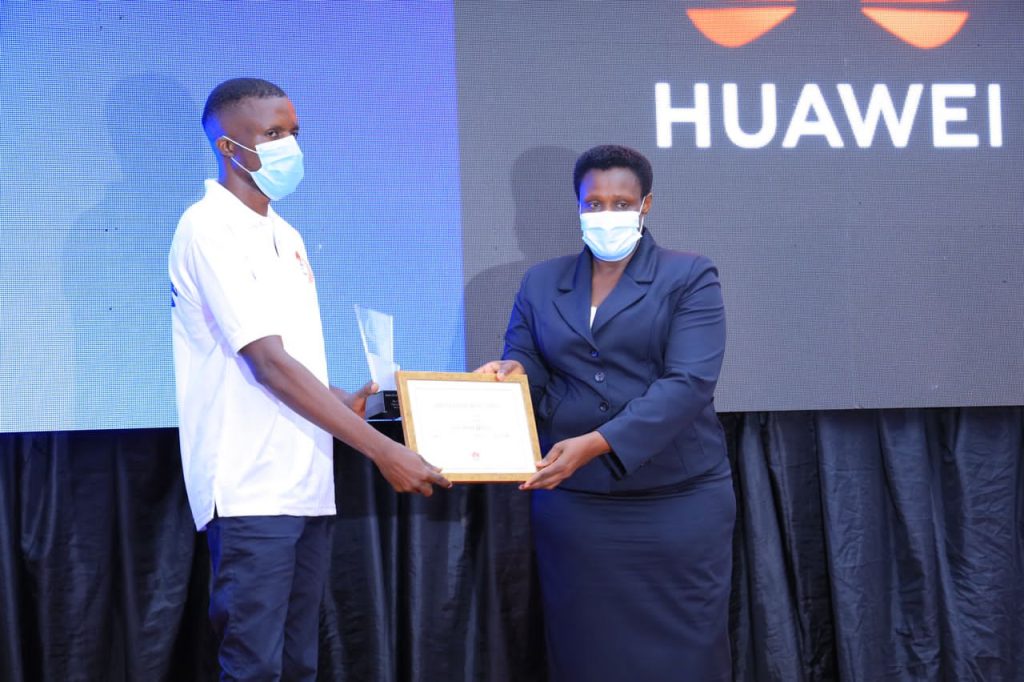
Chinese Ambassador Zhang Li Zhong awarding Chemtai Michelle, Africa Regional Winner
“In Huawei Uganda, we see a fine example of Chinese company who not only look for profits for itself, but also look for win-win results by giving back to the local community and its young generation so that business and friendship could last.”
On her part, Dr Aminah Zawedde, the Ministry of ICT Permanent Secretary, said the Government of Uganda aspires to increase access and use of ICT across the entire population and its banking on reputable companies like huawei to drive the national agenda.
Dr. Aminah Zawedde, The PS of Ministry of ICT & NG with the Innovation team Regional Participants
“This will serve as a way of improving service delivery, employment, and social transformation through utilization of quality as well as affordable ICT services in all spheres of life. We are excited and proud that young Ugandans are fully embracing ICT through participation in competitions such as these and later on performing excellently till the top. I am happy that HUAWEI creates such initiatives and supports GoU in this journey of digital transformation,” Dr Zawedde stated.
Mr Rogers Irumba Kaija, the Undersecretary Ministry of Education and Sports said the Ministry partnered with Huawei for the Seeds for the future program and over the years they have always made it a point to play an active role in the implementation of the digital upskilling initiatives in schools and universities across the country.
“I call upon Huawei Technologies Uganda to begin exploring the possibilities for delivery of infrastructure that will bring our education and sports sector up to speed with the dynamic changes and resulting challenges that have been presented by the 21st century. We believe that these skills that are being imparted through programs such as the ICT Academy, ICT Competition and Seeds for the Future are relevant to our transformational agenda. They act as a crucial platform for sharing the latest ICT technologies, enriching students’ work experience and equipping them with relevant skills for the dynamic world of work,” Mr Irumba assured.
Mr Gao Fei, the Huawei Managing Director thanked the government of Uganda through the Ministries of ICT and that of Education for making the tech company’s work in Uganda so easy through providing an enabling environment and maintain a very good investment climate.
“In this new era of digital, Huawei looks forward to accelerate scientific and technological innovation among Ugandan Youth; invest in knowledge innovation and talent development to bridge the gap between schools and enterprises. Huawei through its ‘Training’ initiatives aligns school majors and industry sectors, course content and professional qualifications, teaching structures and production processes, and talent development and employment. Huawei provides a comprehensive solution that covers the entire ICT talent development process from course development, trainer enablement, to lab environment setup, and from talent certification, competition, to employment,” Mr Gao Fei explained.
He also disclosed that Huawei has already set up 17 ICT academies, trained over 5000 youths, certified over 2800, trained over 4500 through the ICT Competition and given over 400 internships up to date.
“We are so enthusiastic to do more in regard to digital upskilling because of the understanding ICTs have enormous opportunities that Uganda can exploit to transform the economy and peoples’ lives through job creation, accelerated economic growth and significantly increased productivity just as the Uganda 2040 digital vision.”
“We have started to see big fruit from our digital upskilling. Recently we have a group of Makerere University through our ICT Competition Innovation track who used our A.I, CLOUD AND STORAGE technology to design an app project that can test HIV and Malaria using phone finger print scan and they presented this project at the competition. These are going are to be awarded today.”
Catherine Nakyanzi, one of the finalists at the Regional ICT competition, thanked Huawei for giving her a life time opportunity to develop her ICT skills.
“The competition motivated me and encouraged me to make more research and become innovative. Our quicktest mobile app as Kilo-Tech diagnoses HIV malaria without pricking of blood from the patient. We did this to save Ugandans the queues at health facilities,” said Nakyanzi, who is also a Makerere University student.
After it was launched by the Information Office of Beijing Municipal Government, the 100-episode of the micro-documentary The Chinese Dream – 365 Stories Season 4 will be available on StarTimes’s digital television network and online video platform in English, French and Portuguese throughout the African continent, beginning on December 27.
The StarTimes combined network and platform cover 32 sub-Saharan African countries, including Kenya, Uganda, South Africa, Nigeria, Zambia, Tanzania, Rwanda, Mozambique, Cote d’Ivoire and Ghana, reaching 14 million African households of digital TV users and 28 million African mobile phone users. This means that Ugandans will have a chance to enjoy yet the forth season of this documentary on both decoder and StarTimes On platform.
The Chinese Dream – 365 Stories produced by Beijing Radio & Television Station, is the only micro-documentary series in China with 365 story units, focusing on the Chinese dreams of various Chinese people, with a vision of telling “the original and authentic stories of ordinary people”.
It presents unique character narratives that portray the features of the current era, all through extraordinary film-shooting techniques.
The Chinese Dream – 365 Stories, now Season 4, has investigated the viewing preferences of audiences in Uganda, Nigeria, Tanzania, Mozambique, Cote d’Ivoire, Gabon and other African countries, using the data of the previous three seasons, and carefully selected narratives based on their viewing habits and demands.
This fans of this documentary will, this time around, have a chance to not only leave their comments in the comment section but also enter a lucky draws through the social media site Facebook to further improve audience participation and interaction.
This show will provide access for African audiences to learn more about China, and enable them to have a vivid understanding of the capital city Beijing currently.
Johannesburg; A Huawei solution to support network operation centres during the COVID-19 pandemic has won the COVID-19 Response Award at the AfricaCom Virtual Awards.
The Huawei O&M Autin grid-based operations solution won the prize, which recognises organisations and initiatives that have successfully deployed technology solutions in the battle against the COVID-19 pandemic. Huawei was chosen as the winner from a shortlist of five initiatives on the continent.
The AfricaCom Virtual Awards acknowledge the contributions of Africa’s tech community in fields including corporate leadership, entrepreneurship, innovation, connectivity, pandemic response and building a more accessible, inclusive digital world.
Huawei developed the Autin grid-based operations solution for network operations and maintenance (O&M), using new technologies such as blockchain, grid-based transformation and the intelligentisation of operations to enable decentralised network management during the COVID-19 pandemic.
About 170 million mobile subscribers in Nigeria – the most populous country in Africa – are served by four main operators from around 30 000 sites nationwide. Maintaining these large infrastructures requires hundreds of field technicians and 24/7 monitoring.
Lockdown and mobility restrictions during the pandemic placed additional challenges on operators, with increased trafficandrestrictions on the number of workers permitted at network operations centres (NOCs).
To address these challenges, Huawei developed the Autingrid-based Operation, which decentralises network management by empowering field technicians with digitised tools to proactively monitor network quality indicators and respond to any degradation before subscribers are affected.
The solution not only provides a contingency for operators’ NOCs – essentially working as a “portable NOC” – but expands network monitoring capability with a grid-based operation. A cloud-based, big-data digital platform is at the heart of the solution, leveraging machine-learning/AI, prediction algorithms and knowledge-based intelligent rules.
A monetary incentive mechanism linked to network quality indicators motivates the field workers to embrace this mindset change. Finally, an intelligent command centre – a “magnifier in the sky” – provides real-time visibility of network status, staff geolocation and incident-resolution tracking.
“Grid-based network operation improves prediction capability and increases the agility of operators in responding to network incidents,” said Leo Lu, Huawei’s VPGlobal Technical Services for Southern Africa. “Field workers shift from being passive-reactive to being proactive thanks to cloud-based technology that gives them visibility and access to a knowledge database to resolve network faults.
“Intelligent dispatching and a network quality–based incentive plan are additional mobile features that improve field workers’wellbeing and reduce their exposure to the pandemic,” concluded Leo Lu.











 Chinese Ambassador Zhang Li Zhong awarding Chemtai Michelle, Africa Regional Winner