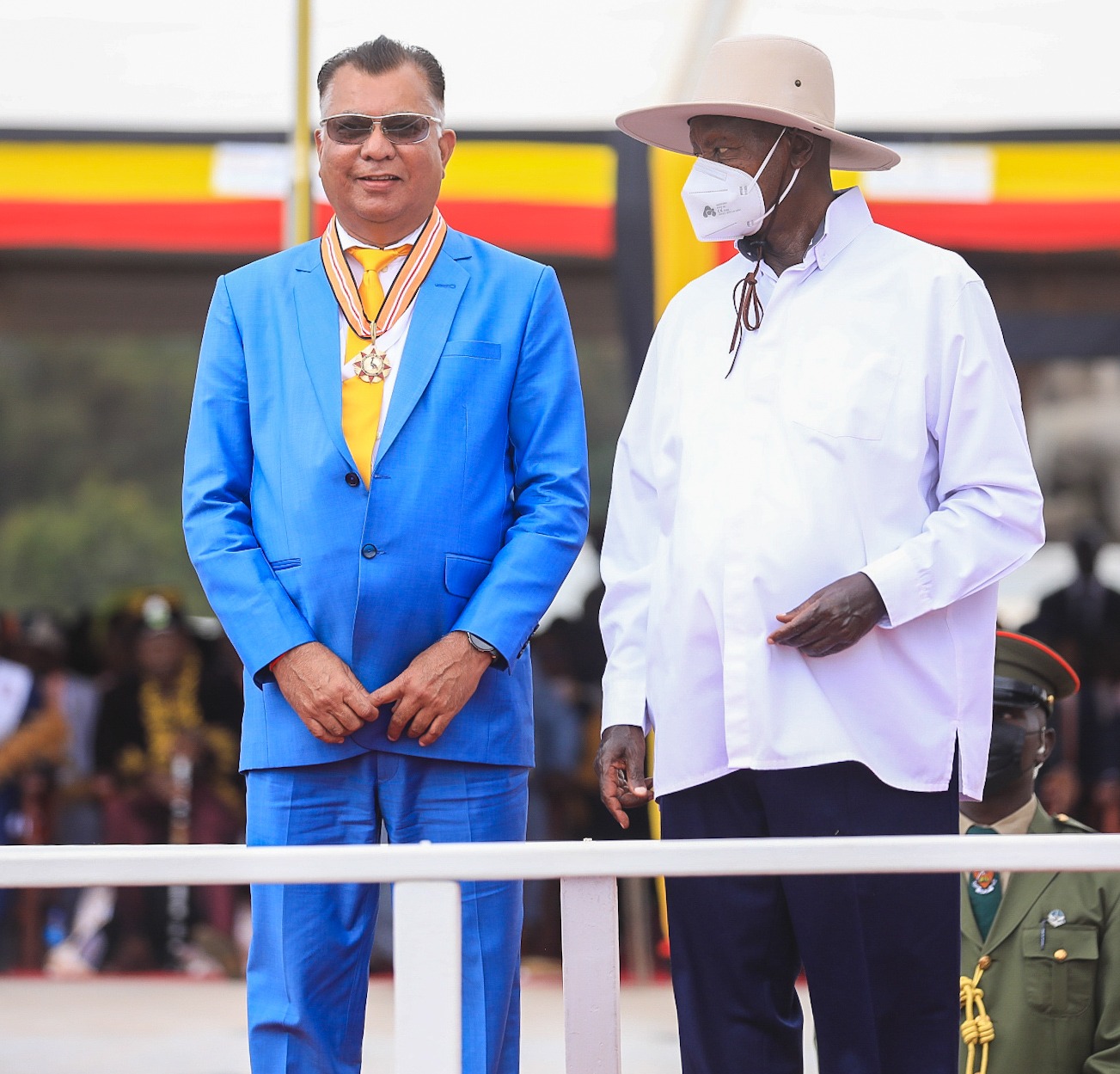
A leading figure in Uganda’s real estate sector, Mr. Barot Harshad Maganbhai, has been recognised for redefining infrastructure development through inclusive planning. Awarded the Distinguished Order of the Crested Crane (Grand Officer), Barot’s honour reflects decades of work focused on affordability, sustainability, and SME empowerment. on January 26, 2026, at Kololo Ceremonial Grounds, as Uganda marked forty years since the guns of liberation fell silent, Mr Barot stood out among the roll of honourees. For many watching from the stands, his story was familiar. Yet woven into Uganda’s urban skyline, rural trading centres, and bustling SME hubs is a legacy that has been quietly taking shape for more than three decades.
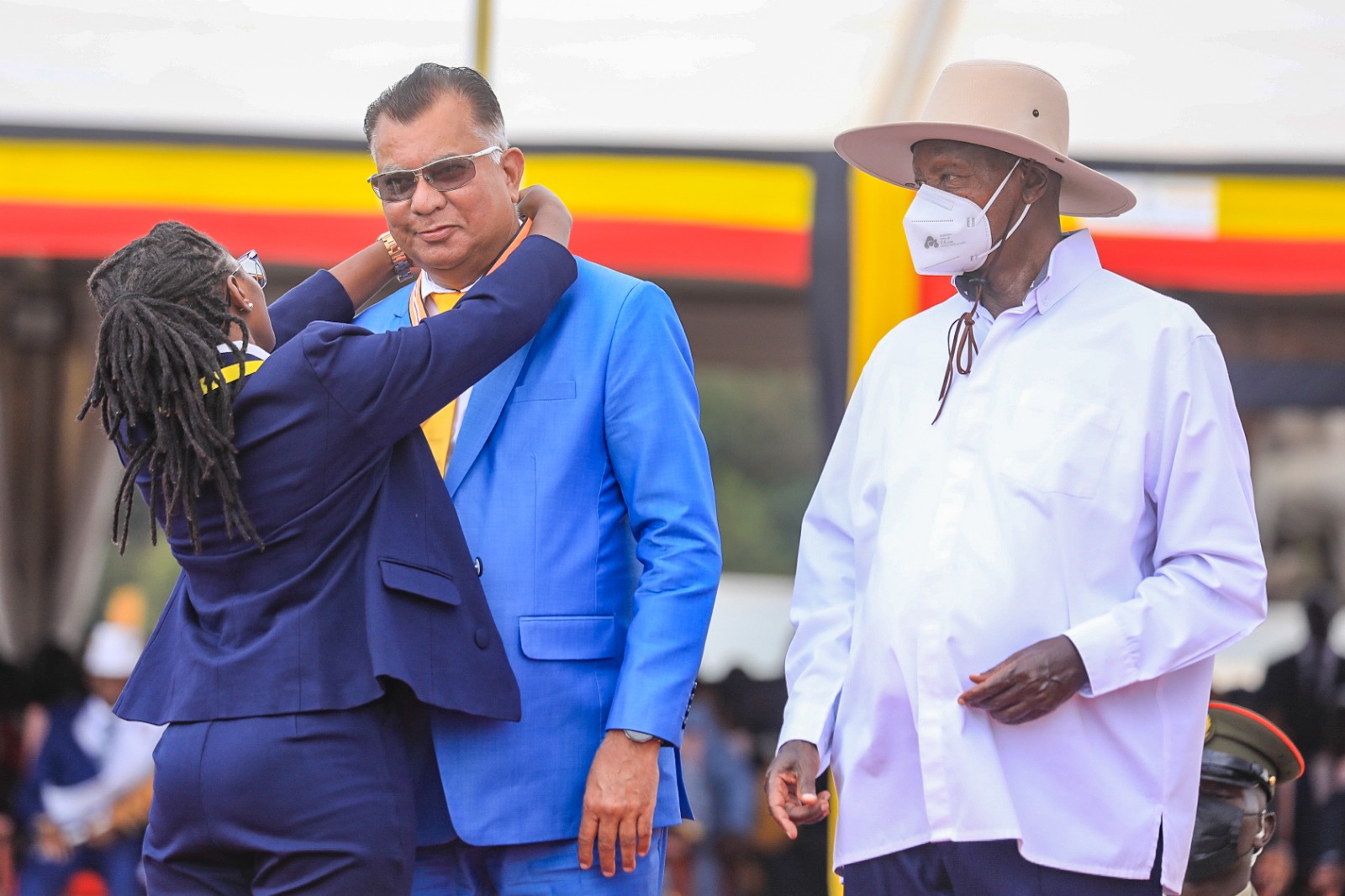
When President Yoweri Museveni pinned the Distinguished Order of the Crested Crane (Grand Officer) on Mr. Barot during the 40th NRM/A Liberation Day celebrations, it was not just recognition of a businessman, but of a journey defined by patience, belief, and the long view of development.
Born on January 3, 1959, in India, Mr. Barot arrived in Uganda in 1993 with a capital of USD 150 and an untested dream. He began humbly, selling household goods door to door, learning the country not from boardrooms but from verandas, shop fronts, and village paths. Those early years, he would later say, taught him more about Uganda than any market report ever could. Uganda in the 1990s was rebuilding — politically stabilising, economically reopening, and cautiously optimistic. For Mr. Barot, that stability mattered. The relative peace and investment-friendly policies under the NRM Government gave him the confidence to stay, reinvest, and think long-term.
Opportunity, he believed, was not found overnight; it was built steadily. By 2006, his outlook had matured beyond survival and profit. He noticed a persistent challenge: while cities were expanding, small and medium enterprises, especially in rural and peri-urban communities, lacked affordable and well-planned infrastructure. Entrepreneurs had ideas and energy, but nowhere decent to operate from.
Instead of chasing elite real estate, Mr. Barot chose a different path — one rooted in inclusive development. His projects focused on affordable commercial spaces, SME parks, and housing designed to stimulate local economies while easing pressure on congested urban centres.
That philosophy found its clearest expression in Kyebando Business Park, located along the Northern Bypass. Today, it hosts over 200 SMEs, supporting more than 2,500 jobs. For many small business owners, it represents more than space — it is stability, visibility, and the chance to grow.
But bricks and mortar were never the end goal. Mr. Barot’s work also extended into public service infrastructure, including the construction of a Health Centre IV in Adjumani, developed in partnership with UNHCR. In regions hosting both refugees and local communities, access to healthcare can be transformative, and the project stands as a reminder that development must serve people first.
His impact did not go unnoticed. Over the years, Mr. Barot received several accolades, including Investor of the Year (UIA) 2009 for innovative real estate development and Investor of the Year 2010 for pioneering Uganda’s first bio-waste medical facility — an early nod to sustainability in a sector often criticised for environmental neglect.
Away from construction sites and board meetings, another chapter of his story unfolded quietly. Long before formal registration, Mr. Barot was involved in charitable work across borders. In June 2019, these efforts were consolidated under the LEELA Foundation, now active in Kampala, Kawempe, and surrounding communities. The foundation provides monthly food assistance to over 300 elderly people, alongside educational sponsorships and empowerment programmes for youth and women.
For Mr. Barot, philanthropy is not an afterthought. It is a responsibility that grows alongside success. As Uganda reflects on four decades of liberation, his recognition offers a broader lesson: nation-building is not confined to politics or policy alone. It also happens through patience, ethical enterprise, and a willingness to invest where others see risk. The honour bestowed upon Mr Barot is, in many ways, a tribute to what becomes possible when personal ambition aligns with national progress.