A new generation of young Ugandan dancers is taking audiences back to the stories, traditions and dances that shaped earlier generations through Kakalabanda, a new dance theatre production by Batalo East featuring the Wakiso Dance Kids.
The one-hour production will be staged on 9 September at the National Theatre in Kampala and again on 12th September at Kavumba Recreational Centre in Wakiso. Both performances will run from 7:30pm to 8:40pm.

The production brings together children and young dancers, using movement, traditional dance and contemporary urban styles to explore Uganda’s cultural heritage and the stories that have traditionally been passed down from one generation to another.

According to Albert Mubiru, the Production Manager, Kakalabanda is not simply an attempt to recreate performances from the past. Instead, the production seeks to present familiar cultural ideas in a way that speaks to today’s generation.
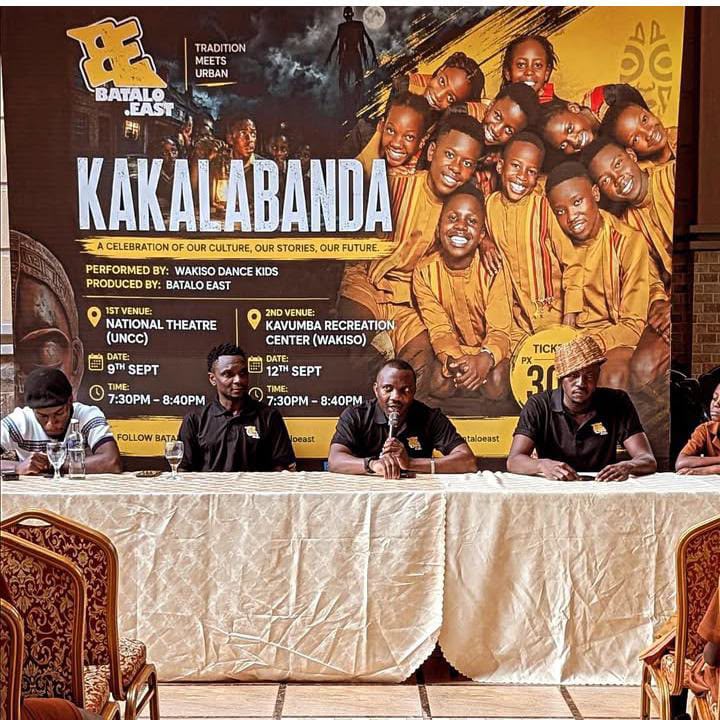
“What we’re trying to do with Kakalabanda is not necessarily a remake of what we did 10 years ago, but saying the same thing differently, in a different timeline or different dimension,” Mubiru explains.

Tradition Meets Urban Dance
Kakalabanda is rooted in Batalo East’s broader approach of bringing traditional African dance into conversation with contemporary and urban movement.
Batalo East was founded by young artists passionate about dance and performing arts. The organisation developed its work around the idea of “Tradition Meets Urban,” seeking to reconnect younger generations with Uganda’s rich dance heritage while giving traditional forms a contemporary expression.
The organisation has worked with cultural practitioners and elders to learn about traditional dances, techniques and cultural practices before incorporating elements of those traditions into contemporary dance theatre.
The result is a fusion of traditional Ugandan movement with styles such as street dance, popping, breaking, contemporary dance and other urban forms.
For the young performers in Kakalabanda, this approach provides an opportunity to learn about their heritage while expressing it through a language they understand.
Using Dance to Tell Stories
Kakalabanda also goes beyond dance as entertainment.
The production explores how traditional stories were historically used to communicate important lessons about behaviour, discipline, community and growing up.
Mubiru explains that many of these stories carried hidden meanings and were used by older generations to guide children and young people.
Today, however, many of these oral traditions are becoming less familiar to younger audiences.
Kakalabanda therefore seeks to bring some of those stories back to the surface and present them through performance.
Rather than simply telling the stories in their original form, the production reinterprets them through the experiences and artistic language of today’s children.
Giving Young Dancers a Platform
At the heart of the production are the Wakiso Dance Kids, who have been trained and mentored as part of the project.
The choreography combines hands, feet, body movement and traditional dance vocabulary with contemporary forms, allowing the young performers to explore different ways of communicating through movement.
For the choreographers and production team, working with children is also an opportunity to nurture a new generation of Ugandan performers while helping them understand the cultural roots behind the movements they perform.
Kakalabanda is therefore both a performance and a learning experience — connecting young dancers with traditions that risk being forgotten while giving those traditions a new life on stage.
From Uganda’s Heritage to Contemporary Theatre
Batalo East has previously developed and presented dance productions and collaborated with artists from different creative disciplines and countries.
The organisation’s work demonstrates how dance can be used to explore social, cultural, economic and political themes while creating opportunities for artistic exchange.
With Kakalabanda, that approach is being placed in the hands and feet of young performers from Wakiso.
The production ultimately asks a simple but important question: How can Uganda preserve its stories and traditions while allowing a new generation to interpret them in its own language?
Audiences will get the opportunity to experience that answer when the Wakiso Dance Kids present Kakalabanda at the National Theatre on 9 September, followed by a second performance at Kavumba Recreational Centre in Wakiso on 12 September.
Show times: 7:30pm–8:40pm
Duration: Approximately 1 hour
9 September: National Theatre, Kampala
12 September: Kavumba Recreational Centre, Wakiso
Performers: Wakiso Dance Kids
Production: Batalo East
Production Manager: Albert Mubiru