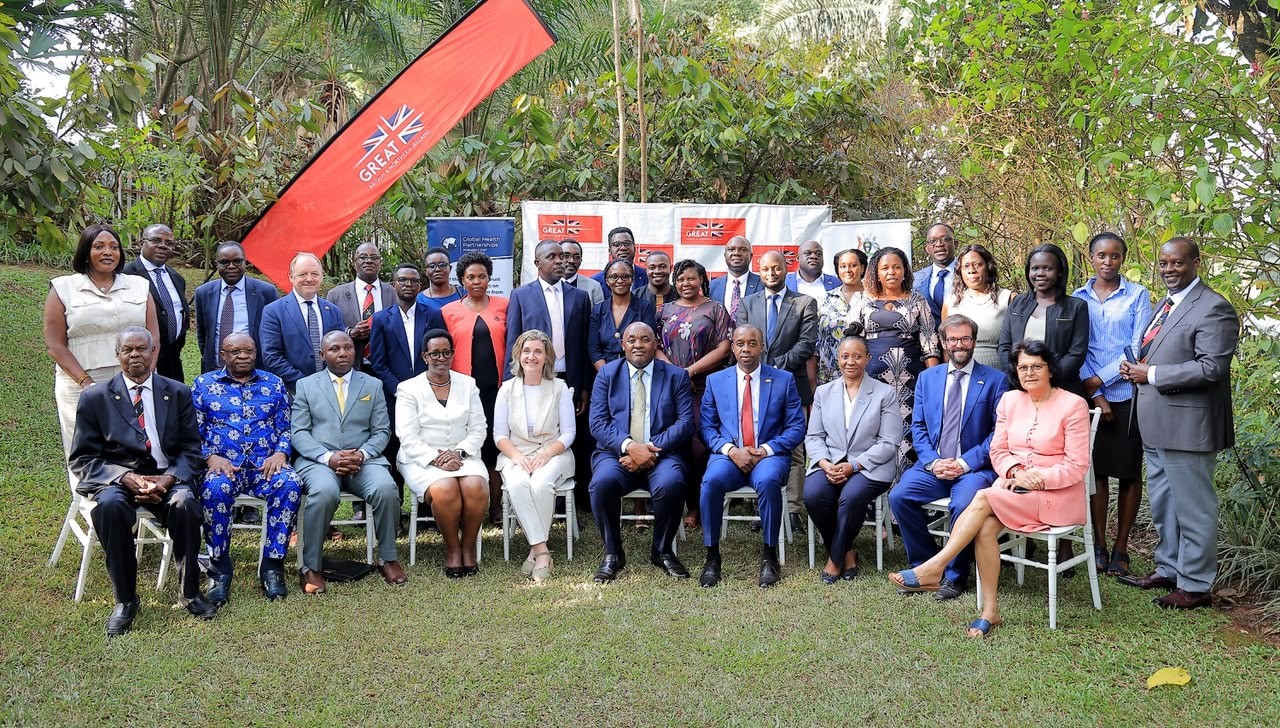
Kampala: Health leaders from Uganda and the United Kingdom gathered on 29 July 2026 in Kampala for the 2nd Uganda–UK Summit, a flagship event which brought together NHS trusts, Ugandan Ministry of Health officials, diaspora health professionals and global health partners to celebrate and strengthen health partnerships between Uganda and the UK.
The Summit, hosted in partnership with the British High Commission Kampala and the Ministry of Health Uganda, coincided with a visit to Uganda by Hon Dr Beccy Cooper MP, Chair of the UK All-Party Parliamentary Group on Global Health and Security, who travelled to learn directly from Uganda’s health system — including its strength in primary care and its recent, widely-praised response to an Ebola outbreak introduced via cross-border movement from the Democratic Republic of Congo.
The event showcased the impact of what can be achieve through mutually beneficial and sustainable health partnerships between Ugandan and UK hospitals and health facilities, featuring collaborative projects in critical care, cardiology, kidney transplantation, and maternal-foetal medicine. Emphasis was placed on maternal, neonatal and child health, including initiatives focused on emergency obstetric and newborn care training, neonatal workforce development, and sepsis reduction programmes.
Delegates explored private sector investment opportunities in Uganda’s health sector, and considered the future shape of global health architecture, including reflections on epidemic preparedness and South-to-North knowledge transfer following Uganda’s Ebola response.
The Summit was opened by Acting High Commissioner to Uganda, Tiffany Kirlew, H.E. Nimisha Madhvani, Ugandan High Commissioner to the UK and Ireland, and Hon Dr Charles Ayume, Uganda’s State Minister for Health. The event was closed with a fireside conversation with Dr Diana Atwine, Permanent Secretary of Uganda’s Ministry of Health and British High Commissioner’s Development Director, Phil Elks.
Ben Simms, CEO, Global Health Partnerships, said:
“This second Uganda–UK Summit builds on a health partnership that has been decades in the making, and this year’s event is a celebration of what that partnership can achieve. Health professionals in Uganda and the UK learn from one another, and that exchange runs in both directions — never more so than in Uganda’s skilled and swift response to the recent Ebola outbreak, from which the UK has much to learn. We are proud to support this partnership, and grateful to the British High Commission Kampala for its continued backing of a model that puts Ugandan expertise and leadership at its centre.”
Hon Dr Chris Baryomunsi, Ministry of Health, Uganda said:
“Uganda and the UK have enjoyed a long and productive partnership in health, and we are committed to deepening this collaboration in ways that respond to today’s evolving health challenges. We must move beyond isolated projects and build partnerships that strengthen institutions, develop lasting national capacity and deliver measurable improvements in the health and wellbeing of our people and region. Uganda has over the years gained immense experience in epidemic preparedness, disease surveillance and community-based health interventions, and we believe there is a lot that both our countries can learn from each other. We also re-affirm the importance of investing in our health workforce through ethical recruitment, quality training and sustainable institutional partnerships that benefit both nations.
Tiffany Kirlew, Acting British High Commissioner to Uganda, said:
“The Uganda–UK Health Summit is a powerful reflection of the enduring partnership between our two countries and our shared commitment to improving health outcomes for all. As Uganda continues to strengthen its health systems and advance health coverage, collaboration with UK institutions, investors, researchers, and healthcare professionals remains invaluable to both nations. We look forward to deepening our cooperation and unlocking new opportunities that will contribute to healthier communities and stronger health systems in Uganda and across the region.”