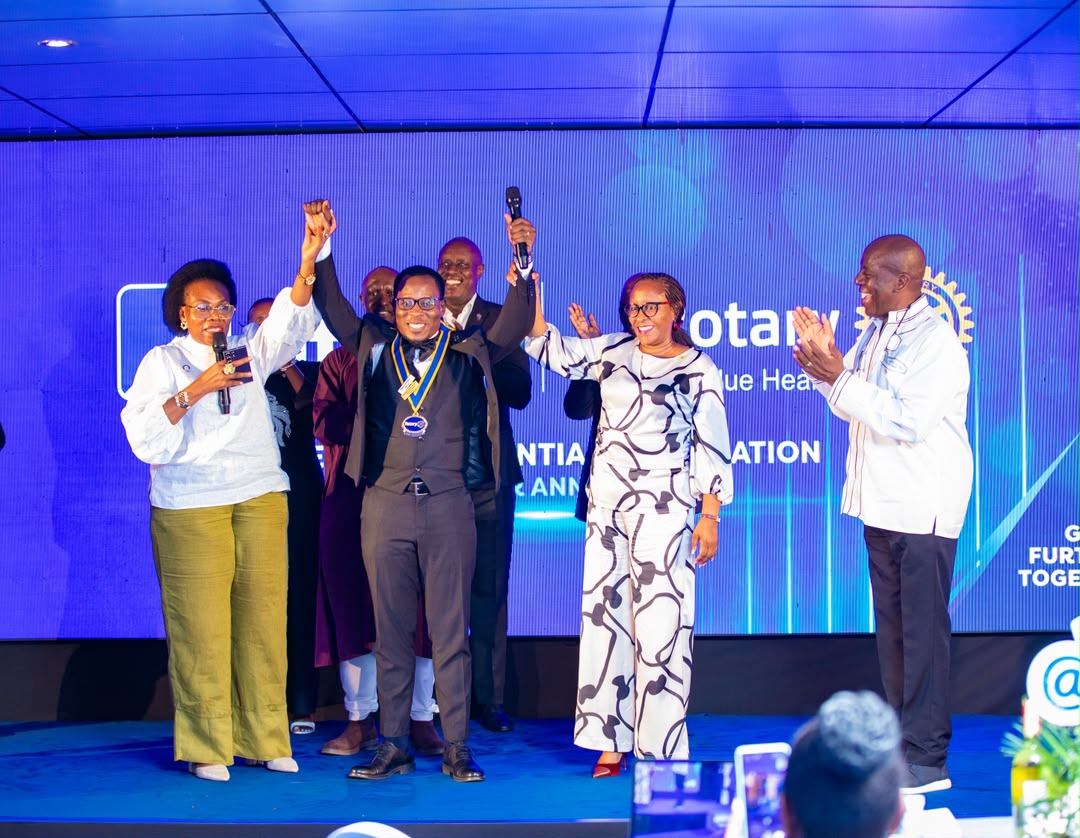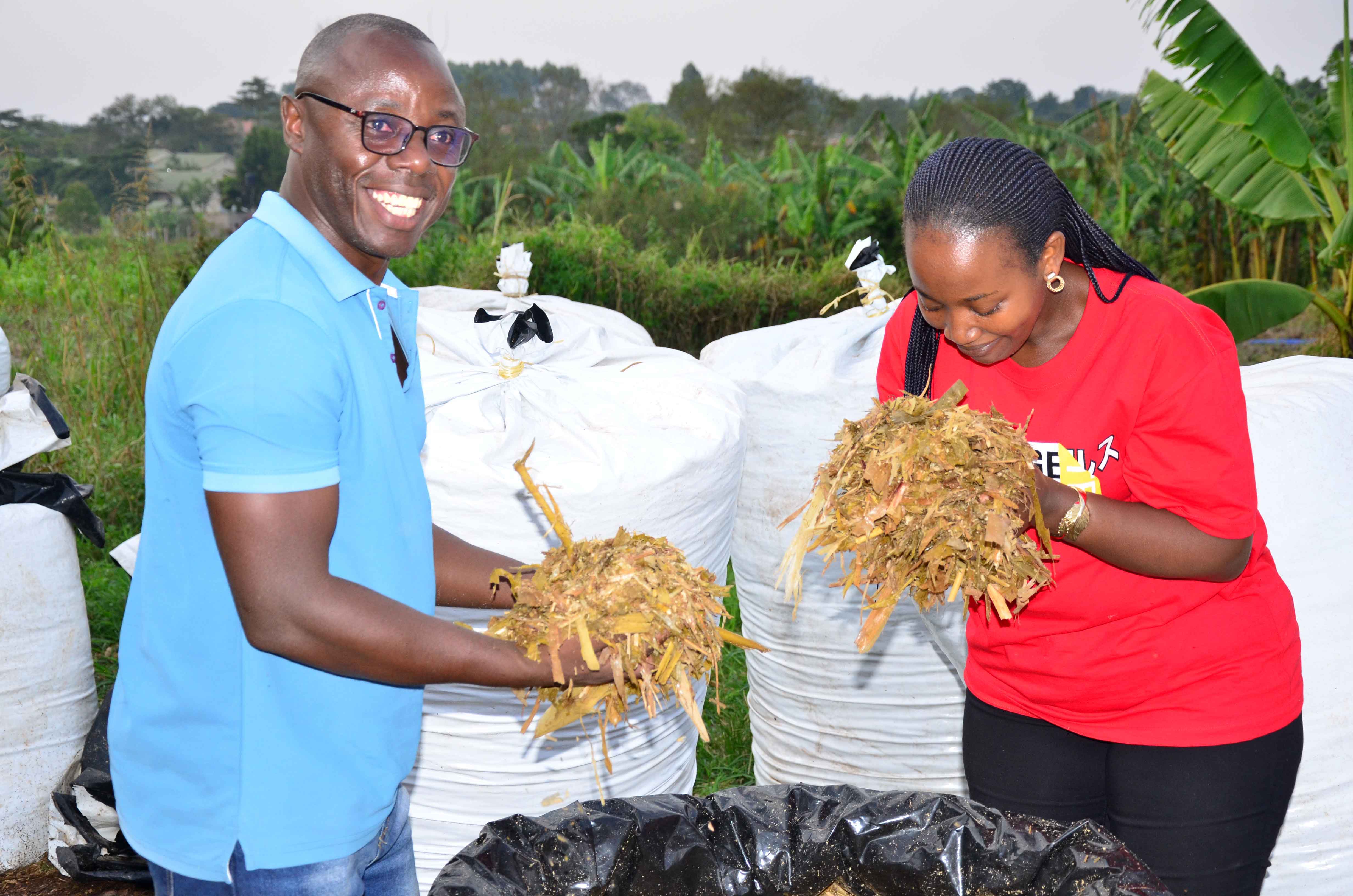
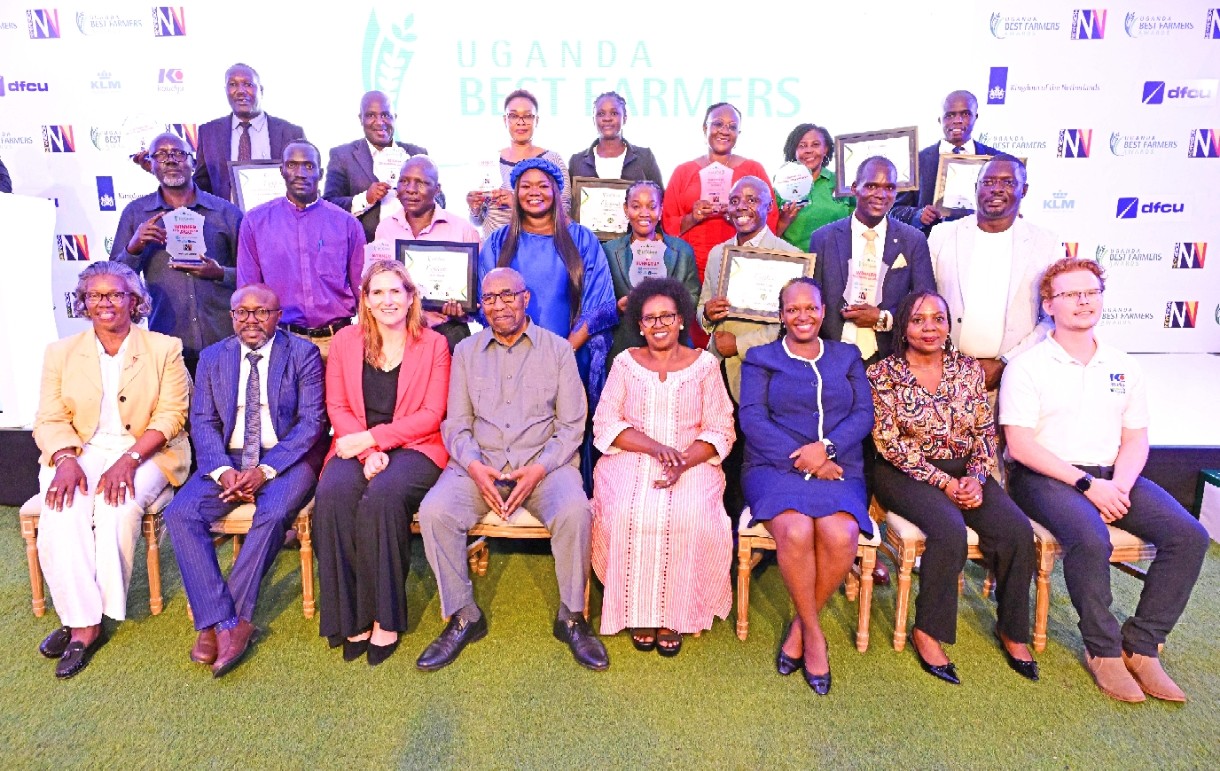
For 62 years now, dfcu Bank has positioned itself as an agricultural bank, providing tailored financial solutions, capacity building, market linkages, and knowledge exchange that have empowered thousands of farmers to grow sustainable agribusinesses. Through the Best Farmers Awards, the Bank in partnership with Vision Group, KLM Royal Dutch Airlines, the Embassy of the Kingdom of the Netherlands, De Heus Koudijs Nutrition BV, and New Vision Foundation continues to recognize and celebrate innovators who are redefining agriculture and inspiring others to embrace commercial farming. Among the 2025 winners is Pison Busingye, Co-Director of Itungo Pastures, whose pioneering pasture enterprise has revolutionized livestock feeding through climate-smart innovation, mechanization, and value addition.
Picture by Herbert Musoke
In this Q&A, Busingye reflects on his entrepreneurial journey, the impact of partnering with dfcu Bank for growth, lessons from the Netherlands exposure visit, and his vision of building a multi-generational agricultural enterprise that creates opportunities for farmers and young people across Uganda.
QN: Tell us about your journey into farming, what enterprise do you run, and what inspired you to venture into agriculture?
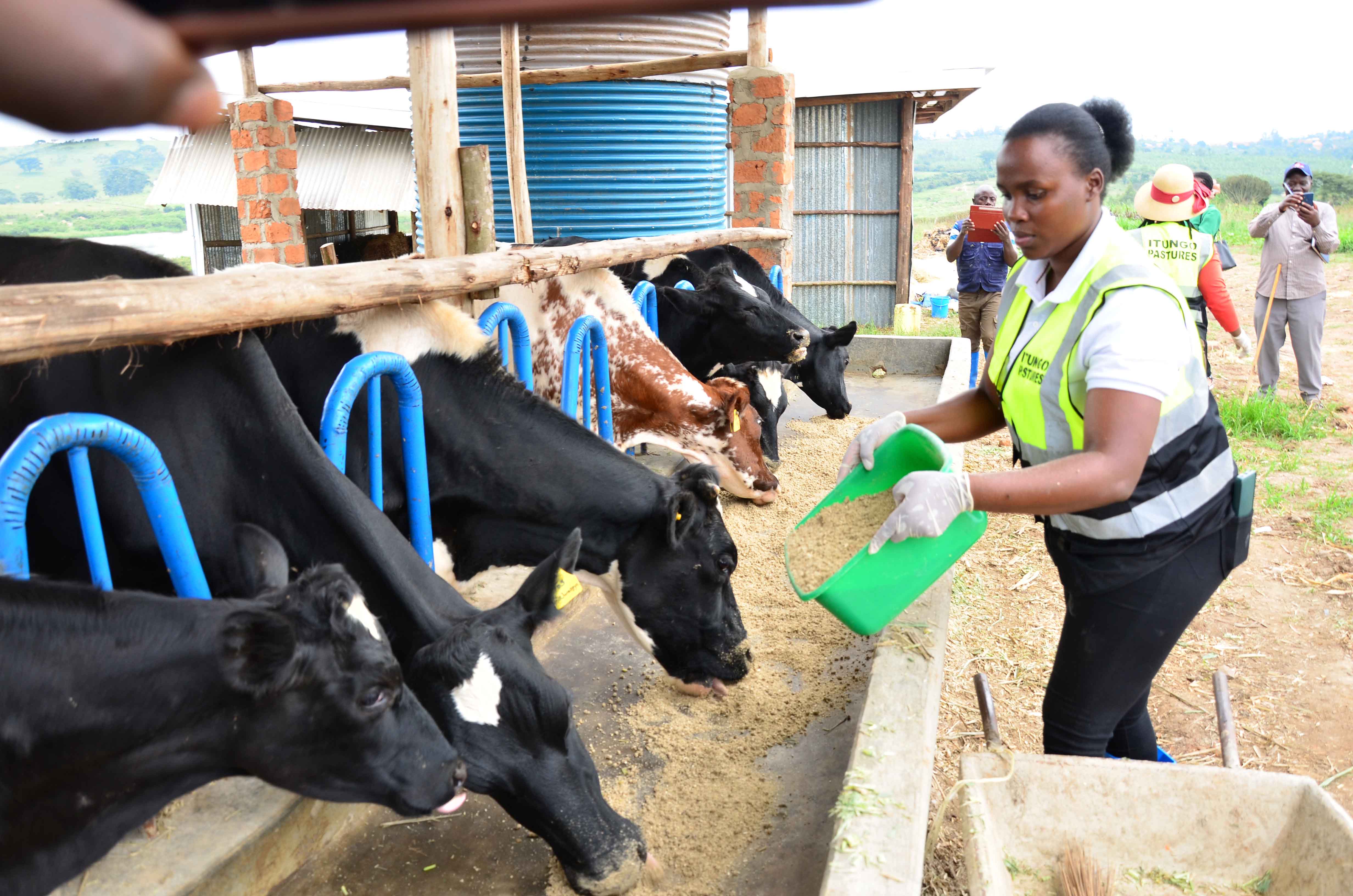
Busingye: My wife Jalasim and I run Itungo Pastures as directors. We started in 2016 in Namayumba, which remains our mother farm for pasture production, before shifting our main operations to Wakiso Town to access larger markets. My journey began after attending a farmers’ workshop where everyone complained about feeding their animals. I realized people lacked quality feed. Feeding takes 60% of farm production costs, so I believed that by establishing these pastures, we should have helped farmers in good feeding animals, increasing both beef and meat production.
QN: The Best Farmers Awards recognise excellence, innovation, and impact. What key practices, innovations, or business strategies set your farm apart, and contributed to your recognition?
Busingye: What set my business apart from the very beginning was the complete lack of direct competition because most traditional farmers in Uganda focused on coffee or standard livestock rearing. I carved out a unique niche through value-addition mechanization, climate-smart resource management, and circular farming. Nobody was producing pastures when I started, and that made us stand out. My climate-smart farm turns cow dung into cooking gas, and despite being in a dry corridor, our irrigation kept our pastures green while neighboring farms watched their grasses wither away.
QN: What does being named a Best Farmers Awards 2025 winner mean to you, personally, professionally, and for your enterprise? How has dfcu Bank supported your growth along this journey?
Busingye: Winning the 2025 Best Farmers Award completely changed the direction of my business. It gave Itungo Pastures the visibility and credibility we needed to grow. Today, people know and trust our brand, opening doors I never imagined, including hosting respected leaders like former Prime Minister Dr. Ruhakana Rugunda. My relationship with dfcu Bank also pushed me to become more professional. I now maintain accurate monthly financial records, which has strengthened my operations and enabled me to access bigger loans and financial support that many farmers struggle to secure.
QN: Access to appropriate financing is critical in agriculture. How has access to finance, particularly through dfcu Bank, enabled you to grow, invest, or improve your farming operations?
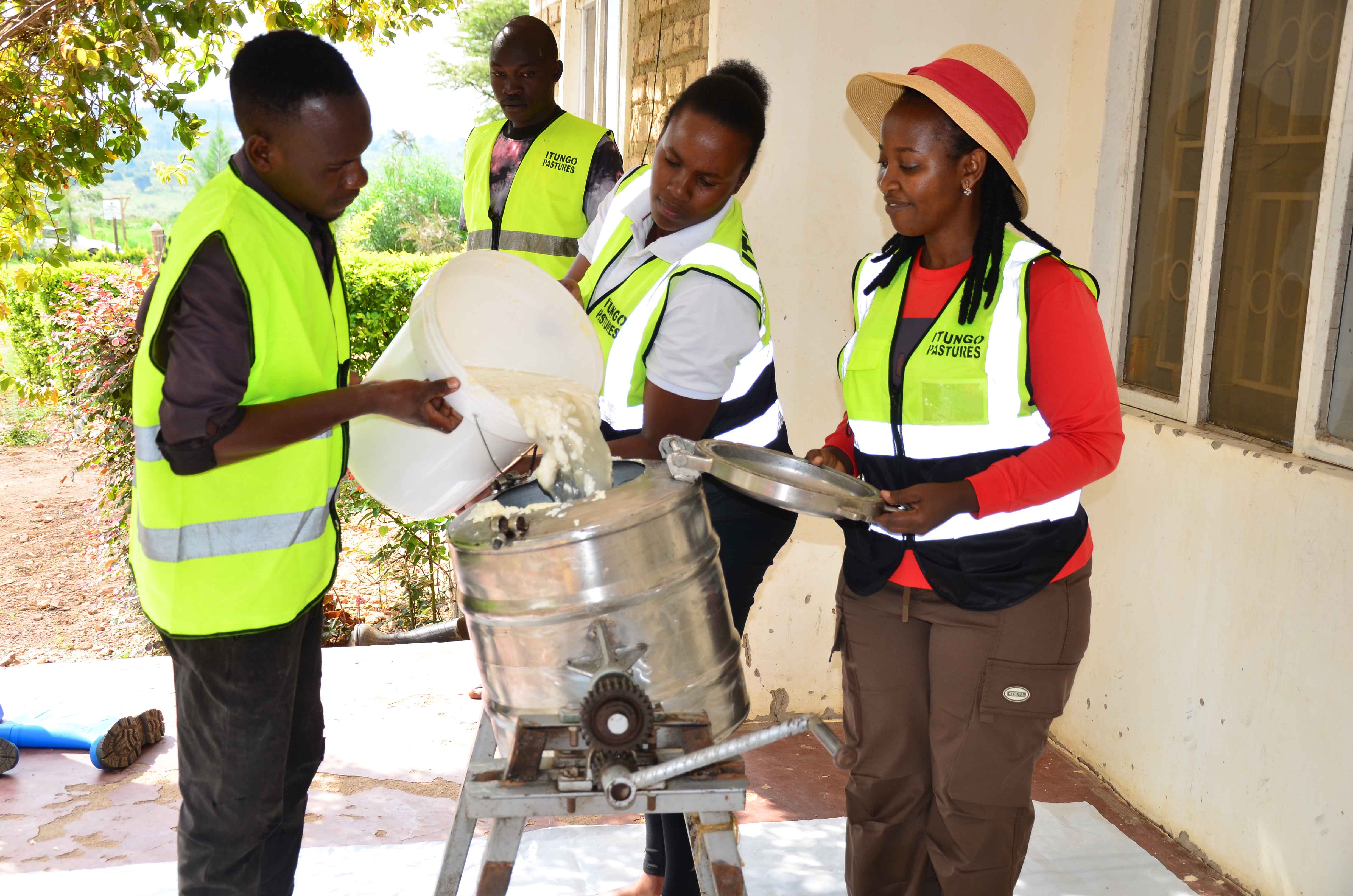
Busingye: Building a transparent banking relationship with dfcu Bank transformed my business. By consistently conducting all my transactions through the bank and maintaining proper records, I built the credibility needed to access bigger financing. The bank also helped me strengthen my financial management and bookkeeping. Today, I can access up to UGX 1 billion in financing, allowing me to invest confidently across my business. My income now comes from milk production, pasture seed sales, silage processing, machinery services, and selling silage and hay, giving my business multiple, sustainable revenue streams.
From your experience, what are the key financing needs or gaps that farmers in Uganda face today? What role can financial institutions like dfcu Bank play in addressing these challenges?
Busingye: One of the biggest gaps I see in Ugandan agriculture is that many financial institutions still assess farming using traditional corporate metrics, yet agriculture is highly exposed to unpredictable risks. You can invest in tomatoes, and then floods wipe out everything something you could never have planned for. In places like Karamoja, communal land ownership also locks farmers out of credit because they lack individual land titles. I believe dfcu can change this by promoting financial literacy, organizing record-keeping workshops, and bringing leading farmers and banks together to shape practical agricultural financing solutions.
The exposure visit to the Netherlands is a highlight of the programme. Before the trip, what were your expectations, and what were you most keen to learn or experience?Busingye: I never saw the Netherlands study trip to Europe as a holiday. I went with one purpose and that was to gain exposure. Before anything else, I wanted to learn how developed markets operate, how they do business, how they farm, and how they manage specialized value chains. I had seen Africa, and now I wanted to experience Europe firsthand. Everywhere I looked, I studied their systems. I wasn’t there to sleep or sightsee. I was intentional every step of the way because I knew those lessons would strengthen my business.QN: During your visit, what stood out most in terms of agricultural practices, innovations, or systems, and why were these particularly impactful for you?Busingye: One of my biggest takeaways from Europe was the value of sustainability through generations. I saw farms that have remained productive for four generations, while many of our farms in Uganda struggle to survive beyond the second. That changed how I think about building a lasting agricultural legacy. I was also impressed by how efficiently they use every acre. In pasture production, I realized many of their practices, like manuring pastures, are things I can easily adopt. I knew about them before, but seeing them in action convinced me that I can significantly increase pasture yields on my own farm.
Which of the practices or technologies that you observed are most relevant to your own enterprise? How do you plan to adapt or implement them in your context?
Busingye: When I returned, my priority was making Itungo Pastures sustainable enough to outlive its founders. I have intentionally involved my wife, my children, and close friends in the farm so they can help shape its future for generations. Additionally, I am introducing the advanced nutrient management, fertilization, and pasture maneuvering techniques I learned abroad to improve productivity. Among everyone who traveled, I believe I gained the most, and you’ll continue seeing those lessons reflected in how I grow my farm.
Did the Netherlands visit create any opportunities for collaboration, such as business partnerships, market linkages, technology adoption, or knowledge exchange? Please share any emerging opportunities.
Busingye: The exposure visits opened doors to meaningful international collaborations that will strengthen our farm’s technical capacity and improve how we share knowledge with local farmers. We are already working with a company called PAM, which will support us with technicians and trainers to help us better organize and disseminate information about our farm and products. This partnership will enable us to expand our extension services and reach more farmers across the country.
How do you plan to transfer the skills and insights gained to other farmers and your wider community?
Busingye: I believe true success only matters when it uplifts others. That’s why every Saturday at our Wakiso Farm, I personally open our doors to train youth, men, and women, sharing practical knowledge and experience in modern farming. I’m also proud to employ more than 15 young people, equipping them with hands-on skills in silage making, welding, and operating farm machinery so they can build sustainable livelihoods.
Looking ahead, what opportunities in Uganda’s agricultural sector excite you most, and what changes or support do you believe are needed to accelerate growth and competitiveness?
Busingye: I am excited by the modern, non-traditional opportunities emerging across the agricultural value chain because they offer young people a smarter way to build successful businesses. Agriculture is no longer just about growing crops or keeping livestock. I encourage the youth to explore the commercial ecosystems around production, from digital marketing and machinery sales to producing and selling silage or hay. These are profitable ventures with growing demand, giving young entrepreneurs multiple pathways to earn, innovate, and create lasting impact without being limited to traditional farming.
As a Best Farmers Awards winner and ambassador for modern agriculture, what legacy do you hope to build over the next 5 to 10 years?
Busingye: In the next five to ten years, I see Itungo Pastures becoming a nationally recognised agricultural institution and a model for sustainable farming, commercial success, and multi-generational business continuity. Winning the Best Farmers Awards has already attracted government leaders and corporate partners to my farm to explore collaboration. To strengthen this vision, I recently launched my book, which captures my farming journey and practical strategies plus help bridge the gap between corporate investors and local producers.