The International Community of Ankole (ICOA) is thrilled to announce its highly anticipated convention, scheduled for October 11-14, 2024, at The Westin Copley Place in Boston, MA, USA.
Themed Enhancing East African Community Competitiveness in Global Value Chains, this event aims to be a cornerstone gathering for business leaders, entrepreneurs, innovators, and stakeholders across the region.
Key Highlights
Prestigious Speakers and Panels:
The convention will feature a distinguished lineup of speakers, including prominent government officials, business leaders, entrepreneurs, innovators, and creators.
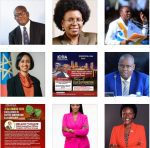
Hon. Evelyn Anite is Regional Vice President, Investment Promotion & Private Sector Development
These experts will share invaluable insights on strategies to enhance economic growth and innovation within the East African Community (EAC).
Hon. Dr. Monica Musenero, Minister of Science, Technology and Innovation, Uganda will also speak at the convention
Emphasis on Economic Advancement: Participants will delve into strategies to integrate the EAC more effectively into global value chains, with a focus on vital sectors such as agriculture, manufacturing, and technology. Attendees will acquire critical knowledge on leveraging regional strengths to compete on the global stage.
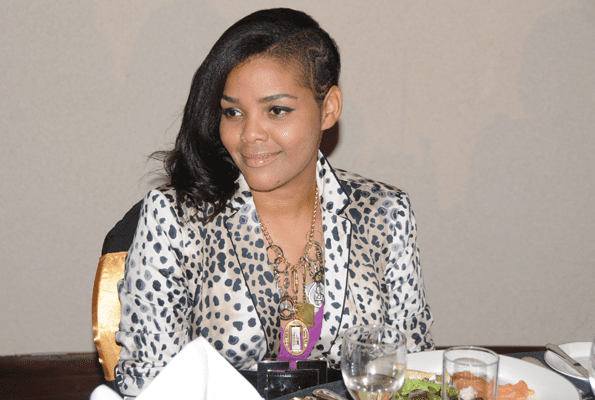
Sandrah Kahumuza, Senior Vice President, PR & Public Affairs ICOA
Networking Opportunities:
The event will offer unparalleled networking opportunities with international investors, industry experts, and policymakers. These interactions are designed to foster partnerships that can drive future growth and development.
Hon. Florence Hashaka Kabahweza Board Director, Uganda Railways Corporation, ICOA Executive Vice President of Strategy and Impact
Innovation and Entrepreneurship Focus: Sessions will spotlight the transformative power of innovation and entrepreneurship in regional economies, featuring success stories from East Africa, Africa at large, and the rest of the world. Discussions will cover digital transformation, sustainable practices, and inclusive growth strategies.
“This convention comes at such a pivotal time for the East African Community. Our aim is to equip stakeholders with the necessary tools and knowledge to elevate their enterprises and economies globally. By sharing best practices and fostering collaboration, we seek to enhance the region’s competitiveness and drive sustainable growth,” Julius Murinzi, President and CEO ICOA.
The International Community of Ankole (ICOA) is committed to promoting economic development and cooperation across Africa. By fostering trade, investment, and innovation, ICOA seeks to position the continent as a key player in the global economy.
Hon. Balaam Barugahara Ateenyi: ICOA Ambassador Plenipotentiary to Uganda, State minister for gender, labour, and social development in charge of children and youth affairs
The convention will also have motivational speakers from across the whole of Africa with speakers from Ethiopia, South Africa and many other African countries.
Dr. Lia Tadesse, former Ethiopian Health Minister , Executive Director, Harvard Ministerial Leadership Program
For more information about the ICOA Convention and to register, please visit www.icoainc.org
Dr. Efa Muleta Boru, State Minister, Ministry of Agriculture, EthiopiaDr. Thomas Nyirenda, Strategic Partnerships & Capacity Development Manager and Head of the Africa Office, EDCTPPhillip N. C. Springer, CEO Global-African Diaspora Development Institute. ICOA Ambassador Plenipotentiary to the Caribbean
Uganda’s top 60 most powerful and influential young entrepreneurs and corporate Executives 2021 have been named.
The Economic Stakeholders Journal has published a list of Uganda’s top 60 most powerful and influential young entrepreneurs and corporate executives 2021.
The list features both public and private sector young entrepreneurs.
Among the listed 60 are; 1. Gloria Wavamunno, 2. Hamis Kiggundu aka Ham, 3. Alexander Saleh,4. Andrew Karamagi, 5. Baguma Steven Naphatali, 6. Dr. Busingye Kabumba, 7. Byamukama Innocent, 8. Dennis Onyango,9. Male Mabirizi Kiwanuka, 10. Doreen Nyanjuura, 11. Dr. Aggrey Kyobuguzi, 12. Dr. Akankwasa Yahaya Barirega, 13. Dr. Beine Peter, 14. Rugiirwa Katatumba, 15. Ismail Masaba, 16. Dr. Kitata Francis Jr, 17. Dr. Ssempereza Malik, 18. Dr. Innocent Nahabwe, 19. Edrisah Musuuza aka Eddy Kenzo, 20. Edwin Karugire, 21. Elison Karuhanga, 22.Eng. Mark Namungo, 23. Hon. Evelyn Anite, 24. Francis Harimwomugasho, 25. Gen. Muhoozi Kainerugaba, 26. Gideon Kirumira, 27. Haruna Mwanga, 28. Haruna Ssentongo, 29. Hassan Mukiibi, 30. Hon. Dennis Namara, 31. Rt Hon. Thomas Tayebwa, 32. Inga Kutesa, 33. Hon. Joel Ssenyonyi, 34. John Jet Tumwebaze, 35. Ismail Mpanga Bumba, 36. Julius Galisonga, 37. Lewis Rubongoya, 38. Liz Kakooza, 39. Lucy Bunyenyezi, 40. Luzindana Buyinza Adam, 41.Miraj Barot, 42. Moses Matsiko, 43. Mugisha Odrek Rwabwogo, 44. Mohammed Nsereko, 45. Musangala Simon Peter, 46. Noami Namara Karekaho, 47. Nataliey Patricia Bitature, 48. Abu Kiganda, 49. Ngyenzi Nunu Mugyenyi, 50. Phiona Nabasa Gladys Wall, 51. Prince Jjunju Kiwewa, 52. Rajiv Rupaleria, 53. Hon. Robert Ssentamu Kyagulanyi, 54. Sadat Muhinda, 55. Sarah Kagingo, 56. Siki Kigongo, 57. Stephen Sembuya, 58. Umar Katongole, 59. Wambogo Moses, 60. Wandera Julius John.
It was early October 1990 and we had just picked our brown envelopes having checked our names on the notice boards at the main building where they were printed with a stencil and type writer. For some of us from rural schools with limited educational facilities, we had finally made it to Makerere University. The crowding and craning around the notice boards was intense; many of us strangers trying to see if there was anyone from one’s area or former school and if they were residents or non residents. The milling around the hall filled us with a measure of excitement as well as curiosity for we wanted to know what portended for us in this ‘wider world’
given it had been our first step out of our villages. The air was filled with a taste of
bitter rivalry between two-contending university factions in previously concluded guild elections that pitted two candidates, Nobert Mao who had emerged winner and the late Noble Mayombo, who had lost by a narrow margin.
RIP Jacob Oulanyah
The aftermath of the race
seemed to signify a dying era of UPC symbolisms and an incoming, not yet well
understood NRM. In many ways, the race was a sign of the times, bringing up
underlying but unmistakable fears, largely stereotypical, that divided the country at
the time.
One of these was that for the first time an army officer hailing from Kabarole district and a refractory student leader from Gulu had locked horns over leadership.
The language alone was divisive. For many of us, one camp represented the new order of ‘no party politics’ and the other a temporarily dying one, of ‘multiparty politics’.
Mao had allied with another candidate called Charles Vvuba in what Mayombo termed an alliance only comparable in terms and proportion to the 1962 UPC/KY alliance, to defeat Benedict Kiwanuka.
It is a strange irony that Mao would some twenty years later, lead the Democratic Party (DP).
In a few days of my joining university, curiosity and the love of debates got the better part of me. I went to the main hall one evening and watched a Guild Representative Council (GRC) in session for the first time.
And there, even I who was warming up to the villain camp of Mayombo, was struck by this young, tall, dark orator who when he took to the floor, spoke as if his nose was a little pressed for air and he had a rhythmic flow of words that one would simply want to listen more. It was Jacob Oulanyah.
He had a developed command of oratory for his age and even though as speaker of GRC, he needed to show impartiality, he would mercilessly cut the other side to size to make a point. It is partly this grandiloquence that drove students into the strike of December 10, 1990 over the scrapping of student allowances. Police shot at us and killed the two Thomases Okema and Onyango.
In opposition to this strike, our side mobilized students to sing and match in the night through freedom square protesting the strike and denouncing strike leaders and asking students to go back to class.
Police fired at us again in the night and near the old social science building, I fell headlong into a large ditch left off an unfinished construction site and broke my back. I would lie in bed for days.
Fate really has a sense of irony. Both Noble and Jacob on two extreme sides of student politics would end up on one side of the political spectrum some sixteen years later.
Jacob joined the Movement after his loss in the 2006 Omoro constituency MP race in which he had held the banner of a now severely reduced UPC while, sadly, Noble died in May 2007 without seeing how this had turned out that in May 2011, one of his protagonists in the 1989 race, Jacob would be the deputy speaker of parliament on an NRM ticket and ten years later, speaker of Uganda’s 11th parliament.
I suppose in death, these two men have met not as protagonists but rather as rekindled souls of smart, insightful, discerning and consensus builders of their generation on earth. I
suppose too they have embraced, giving us a strong signal to always work and govern from the middle in order to accommodate each other.
No extremes are sustainable in life and in public matters. Extremists never build anything.
I got to know Jacob better when he married a fiery friend of mine, a colleague minister in the guild government, the late Dorothy Nangwale, herself of the UPC stock (her father, Eng. Abner Nangwale had been minister of works in Obote II Government).
Dorothy was a keen slash and burn, no holds-barred debater too, a human rights
activist and a leader in the National student Movement. We were both elected in Mbale in September 1993 to lead the student organization and to work on setting up the Uganda National Youth Councils. I wasn’t surprised Jacob ended up with Dorothy as a couple.
They both had an independent streak, they were often decidedly anti authority and rebellious, challenging status quo; they were intellectually excellent to
spar on any issue and they were firmly confident in their views. They were a couple destined for greatness in every way in their country. Dorothy once came to church one Sunday morning a few years before her death. Holding her baby in arms, she took
to the microphone and asked the preacher of the day, whether it was right to “obey government rulers as written in Romans chapter 13 especially if that government was undermining the rights of its citizens”. Dorothy was confident we would take no offense and that we would challenge her position both spiritually and intellectually given we had background with the couple as my friends for a long time.
Two things the country will miss about Jacob, things that will stand out as probably his legacy for the young people. In the 2016 speakership race in which he calmly ceded ground for his opponent before the elders of the party, I came to see him. He was deeply troubled by the talk that he was ‘less NRM simply because he had had a UPC background’. He told me, “When I make a decision, I have very well considered all aspects of an issue, calmly and maturely. When I left UPC, I didn’t leave any part of me. I left wholeheartedly and completely and I had no intention of going into any other party. I had seen the internal UPC fights decimate a party that had built a record
and I noticed how so fundamental it was to rally behind a strong, smart, firm,
intellectually superior African leader, Yoweri Museveni, whose devotion to Uganda and Africa is unmatchable”. The lesson here is two fold – that those who claim to be the best NRM pedigree simply because of the accident of history or position, are really often the demobilizers for the Movement whether they know it or not. If we had missed Jacob even for the short time we had him, simply because he came into the party late, would Uganda not have missed the contribution of this illustrious son? The other embedded lesson is that it doesn’t matter when people come. It only matters that they come anyway and come with no preconditions.
When they do, they are replenishing the ranks of our leadership if they are good. They bring fresh experience that the party might not have. We must always welcome them with open arms and try their skills and not hold them against their past.
The second thing we will miss is his fight to level on ideas not pettiness. In the 2021 race, he worried much about the shallow campaign that had more talk ‘about money and less enriching’ on what candidates wanted to do. In a country where politics has been monetized, it is always refreshing to hear someone begin their race with what they want to change not how much they plan to spend. We will miss this original thinker and level headed gentleman of our generation.
God keep his soul in eternal peace
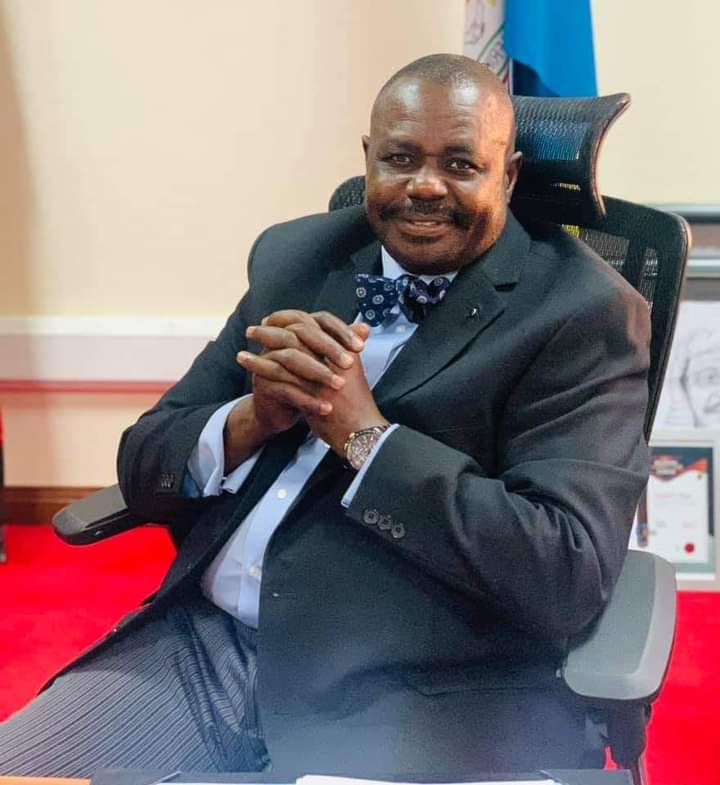
Tomosi Group boss Odrek Rwabwogo has said they must come together if they are to end compliance issues in export trade.
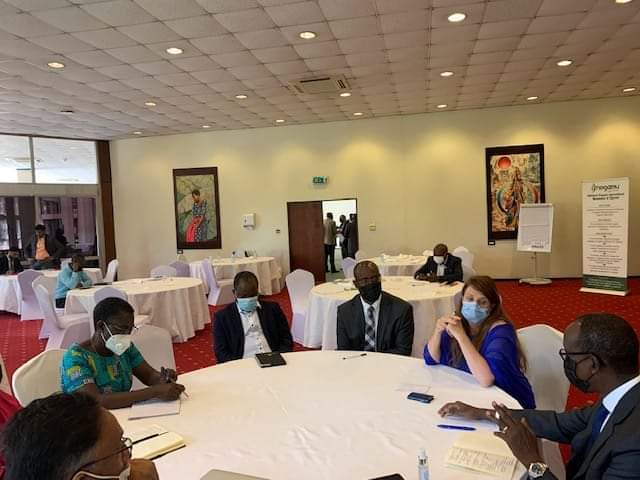
Rwabwogo hosted a small session of exporters to plan for an exporter’s meeting in the coming month.
The aim of the meeting will be to bring together exporters to deal with compliance issues affecting export trade.
“Here, we had a session with a small committee of exporters to plan for an exporter’s Meeting in December. We want to bring together all exporters to deal with compliance issues affecting our trade with the world,” Odrek Rwabwogo said.
Entrepreneur Odrek Rwabwogo recently trained 3000 in entrepreneur and leadership skills in Bushenyi district.
The 3000 youth enjoyed and acquired skills in Agribusiness from the Tomosi Group boss at Bushenyi Multipurpose Hall.
“The Bushenyi district youth training session this morning at the multipurpose community hall in Bushenyi town.
The session which covered business Managment and leadership was attended by 3000 youth from all the sub counties. We spoke about mindset change for this generation, including building knowledge in finance, marketing and product development for youth start ups in the district.
I was pleasantly rejuvenated in my spirit by the thirst I saw with the youth of this district in starting and Managing agribusinesses. This will keep our country growing and preparing for the future,” Odrek Rwabwogo posted.
President Yoweri Kaguta Museveni yesterday launched a new dairy plant in Kiruhura. The plant is Vital Tomosi Dairy who are the producers of Milkman brand.
“Today afternoon, in Rushere, Kiruhura District, I commissioned the Vital Tomosi milk processing factory, producers of the Milkman brand of UHT milk and yoghurt.
This is one of the fruits of our sensitization efforts dating back to 1966 when Mwesigwa Black and I, started to dissuade our parents and community from the practices of nomadism and subsistence cattle keeping.
The mindset at the time was largely pre-capitalist but we took a lesson from the exposure we had at school in Mbarara and brought the knowledge back home.
When we had made headway with the general concept, we then started sensitization on enterprise selection. At the time, there had been mass conscription of wanainchi into growing of cash crops such as tobacco, coffee and cotton.
The local people, without vast lands, ultimately could not get out of poverty. So we encouraged our people to look into high milk-yielding breeds of cows, instead of depending entirely on our local breeds.
Therefore, I am pleased to commission this factory, which processes 100,000 litres of milk daily. I commend the Israeli investor, Eytan Stibbe of Vital Capital Fund, and their local partners, Odrek and Patience Rwabwogo, for setting up this facility.
I am pleased to see such partnerships and hope that more of the same can be fostered in different parts of the country, especially with focus on value-addition to agricultural produce,” M7 said.
Odrek Rwabwogo one of the brains behind the factory said launching of the dairy plant is a culmination of 55 years of hard work on this land from peasantry when his parents, born again Christians, settled on the land and begun to raise production of crops and animals. “My wife and I begun changes on this land in 1997 and by 2012 we had found strategic partners to support our vision to process products within our community. Work on the plant begun in 2014, completed in 2016 and our first products went to the market at the beginning of 2017. I thank God for our community of faithful farmers, my family, the Tomosi group staff and board and all our customers and suppliers who believed this vision of “Made in Africa”,” Rwabwogo said.
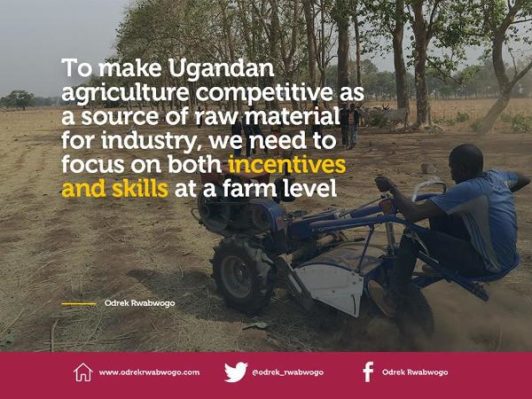
To make Ugandan agriculture competitive as a source of raw material for industry, we need to focus on both incentives and skills at a farm level. A tractor at the farm with no trained operators in the neighborhood as a talent pool, no service, repair and parts workshop at each district level, means we will continue to attract more rudimentary tools to grow food for an expanding population.
Over 60% of our food consumed in cities by the elite is still grown by a mother in a Gomesi (local busuti) at the back of her house in one or two acre plots. Without large commercial agriculture, it will be difficult to guarantee food security for a growing population. To deal with commercial farming, we have among other reasons to deal with the archaic multiple land tenure systems that prohibit fast, efficient and commercial convertibility of land”
What does Archer Daniels Midland (with a net income of USD1.2bn in 2012), Bunge (a net income of USD57bn) Dreyfus (USD67bn in 2014) and Cargill (USD1.5bn net income in 2015), all American and European owned companies, have in common? They purchase, process and distribute 90% of the world’s grain (corn, wheat, sun flower, sorghum, sim sim) production, buying cheaply from areas with a temporarily surplus due to either subsidies (in the West where USD374bn is spent annually- more than a billion dollars per day) to keep prices for farm produce artificially high) or by nature’s providence -when it rains deep and on time in Africa.
These companies trade the grain at reasonably better prices than they bought at- at their pace and time, on commodity exchanges across the world. With their combination of large silos in grain producing countries, control and ownership of ports and ships for export; they are able to take a lion’s share of the world’s food import bill, currently standing at USD1.09 trillion. In between these grain companies, they generated gross revenue of USD348bn in 2013 or about 32% of the global food import bill. How does our agriculture play in this league? This is the question for our generation.
Odrek Rwabwogo is exploiting all the opportunities available to sell his product. Latest info reaching our desk has it has Rwabwogo hosted a Chinese delegation at his Tomosi Farm in Kiruhura to discuss prospects of beef production and export. The delegation was on a tour of prospects for beef in the area.
“Brunch at Tomosi’s farm with the Chinese delegation after the tour of the prospects for beef in the area. The farm presentation, the spraying of ticks, tree planting tradition at Tomosi’s farm and the visit to Lake Mburo National Park,” Odrek posted.
Rwabwogo said China imported 314,000 metric tonnes of beef in 2015 from Australia, Canada, India, Vietnam and Brazil. The price of a pound of beef is USD5.06, about USD8 a kilo. “Our beef costs less than USD2.5 a kilo and it is largely organic. Can we not come together as beef ranchers and exploit this market? This is what we are interesting this team in the cattle corridor using the dairy example at the Tomosi’s farm today www.odrekrwabwogo.com ,” Rwabwogo said.
Communication skills both at a personal and business level are fundamental to success in any endeavor. Nothing we can sell, no feedback we can expect, no repeatable action will bring the desired change to rely on can we adopt or adapt ourselves to, unless we open up the clogged up pipe called listening.
This session will discuss some tools to enhance our listening skills and how to improve personal and business performance. The session will cover key sales and marketing principles, important tactics in business negotiation and key tools to close sales calls, help get new markets and how to react to new forms of competition in the digital age.
The key expectation for this month is to improve our communication (writing, speaking and technology knowledge) skills and get as closer as possible to the needs of our customers, especially new ones that are demanding different approaches and styles of care and we are unresponsive or simply don’t know how to relate with them. We also hope to uncover some of the etiquette traits and organizational character was that hold down our business processes and proffer some solutions. www.odrekrwabwogo.com
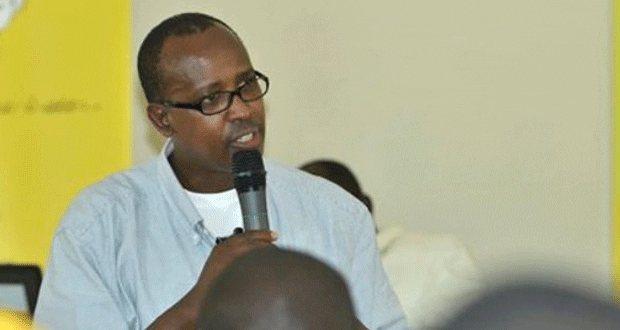
Tomosi Group chief, Odrek Rwabwogo held lecturing lessons at Tomosi Group headquarters in Luzira. Odrek tackled the issue of effective communication which he said is very key for any business to prosper.
The monthly sessions are also aimed at giving employees capacity to compete well on the market and know well the product and services they sell. He urged the staff members to always practice effective communication because it is a key component of effective work.
“Our second Tomosi Group monthly session on communication at our Luzira headquarters ended well this morning. These are leadership and communication training seminars to build our teams’ capacity to compete on the market and to be able to understand the products and services we sell. We were joined with honor by the staff of Covenant Nations church team in this session. I thank our corporate services division, The TERP group and all our units for sponsoring these important sessions,” Odrek Rwabwogo.