Tag: NSSF

  • CEO Summit Uganda & NSSF Enhance Women Leadership in the Corporate Space with Pathfinder Catalyst Academy

    CEO Summit Uganda & NSSF Enhance Women Leadership in the Corporate Space with Pathfinder Catalyst Academy

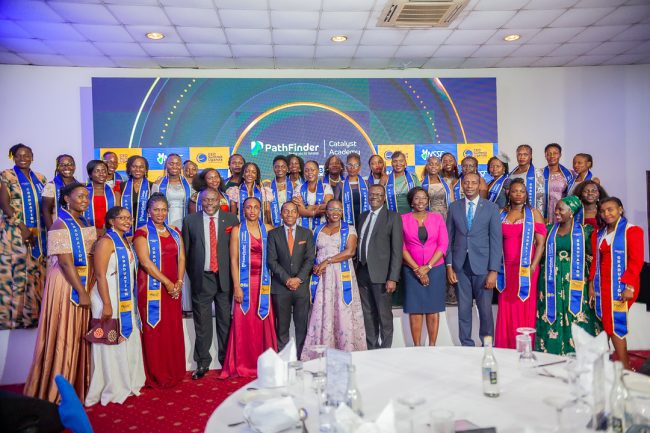
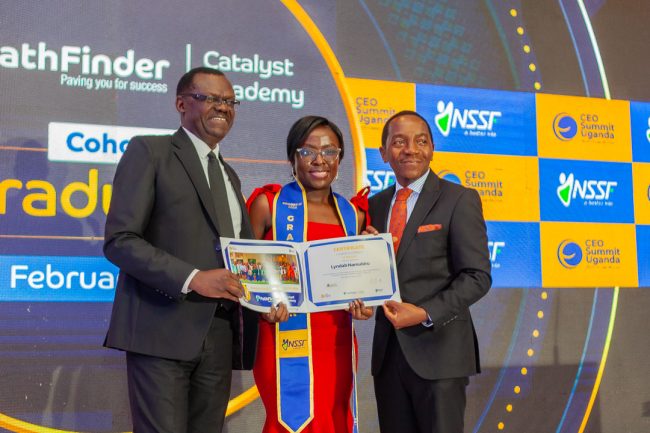
    Kampala: CEO Summit Uganda, a think-tank aimed at developing well-rounded selfless leaders together with the National Social Security Fund (NSSF) graduated the 3rd cohort of the NSSF Pathfinder Catalyst Academy where women leaders are trained and given the necessary insights to excel in the workspace.

    The event marked another milestone in the Academy’s mission to equip women leaders with the tools and insights necessary to excel both inside and outside the workplace.

    The NSSF Pathfinder Catalyst Academy is one of the bespoke programs under the CEO Summit Uganda belt which is tied down to particular organizations. This is a 6-months leadership initiative designed to empower and elevate select ladies in leadership positions at the National Social Security Fund (NSSF).

    The ladies are facilitated through a number of modules with a faculty comprising of women leaders in different industries such as oil & gas, banking, among others.

    Speaking at the 3rd graduation ceremony, Stephen Mukasa, the Managing Director, CEO Summit Uganda urged the graduates to find meaning in the work they do and the journey that they take from here.
    He said, “As we stand here today, it is important to know that the unexamined life is not worth living. Throughout this program, you have gained invaluable skills, insights, and connections that will serve as stepping stones in your careers and personal lives. But beyond all the technical knowledge and professional development, there is one lesson that stands out: the power of love.”

    “As graduates of the PathFinder Catalyst Academy, you now step into the world with a responsibility to lead, to inspire, and to create meaningful impact. And at the heart of it all, let love be your guide. Love your work, and it will never feel like a burden. Love your colleagues, and your workplace, and it will become a space of collaboration and shared success. Love the people you serve, and you will always find fulfillment in what you do,” he added.

    Phiona Kamukama, the class president of the graduating cohort highlighted the impact achieved and implored her fellow graduates to continue investing in themselves. She said, “Ladies, you have showed up. Keep showing up because the opportunities find those that show up, opportunities find those that are prepared for them, opportunities find those that look towards them, lean towards them. So, if you don’t do your steps, no matter how much management continues to invest in you, you will not get to the next mile. So, let us do our part.”

    “We are proud of being ladies at the fund and I guarantee you that this is just a stepping stone. From here we are going to do great things. You will not regret the investment you have made in us and we appreciate it. I want to appreciate CEO Summit Uganda for opening up our eyes to these opportunities,” she added.
    Investing in staff skilling, especially for women, is essential for fostering innovation, productivity, and inclusivity in the workplace. Equipping women with relevant skills enhances their confidence, career growth, and leadership potential, ultimately contributing to a more diverse and competitive workforce. In an evolving business landscape, continuous learning ensures employees stay adaptable, enabling organizations to thrive. Empowering women through skilling also bridges gender gaps, creating equal opportunities and driving overall economic and social progress.
    CEO Summit Uganda continues to offer open leadership programs which transform the lives of leaders of institutions with interactive modules. Some of the programs include; the LEAN Forward Modular program, and the CEO Apprenticeship Program (CAP) among others.

  • Creating Intergenerational wealth in turbulent times – dfcu Bank tips customers on creation and stewardship of legacies

    Creating Intergenerational wealth in turbulent times – dfcu Bank tips customers on creation and stewardship of legacies

    Kampala: In 2012, dfcu Bank was one of the first local banks to develop personalised banking services for individual affluent customers in a bid to protect and increase their individual and business assets.

    It’s upon this background that dfcu Bank hosted a selection of customers to a learning and networking event under the theme ‘Enabling Intergenerational Wealth creation in Turbulent Times’, held last week.

    The event was held at the Kampala Serena Hotel and featured Patrick Ayota, the Managing Director of the National Social Security Fund as the keynote speaker.

    Various speakers including the CEO of dfcu Bank, Charles Mudiwa expounded on the strategies required for safeguarding and expanding wealth across generations amidst ongoing global uncertainties.

    Mary Kansiime, Head- Pinnacle Banking at dfcu Bank, noted that the Bank is equipped to guide customers in making informed investment decisions through its diverse range of products, designed to provide a comprehensive suite of short and long-term financial solutions.

    Julius Kateera, Head of Financial Markets at dfcu addressed the impact of regional and global developments on wealth creation and management.

    In particular, he pointed to opportunities for investment such as the projected growth of Uganda’s economy (between 5.5 and 6.5% in FY 2023/2024 up from 5.3% in FY 2022/2023), bolstered by investments in Oil & Gas, manufacturing, and construction.

    Charles Mudiwa, the CEO of dfcu Bank, shared his insights on achieving intergenerational wealth continuity. He emphasized the dual nature of wealth transfer which requires the passing on of values as well as material assets. He highlighted some of the Bank’s such as its Bancassurance offering which reflects dfcu’s commitment to safeguarding and managing wealth across generations.

    The keynote speaker at the breakfast event, Patrick Ayota, the NSSF Managing Director, shed light on the principles of wealth accumulation, stressing the importance of converting cash into income-generating assets and advising guests against accumulating debt. Ayota also highlighted the need for diversification while making investment choices. Overall, he underscored the value of legacy planning and the role it plays in ensuring smooth wealth transition and minimization of family conflicts.

    Guided by its purpose to ‘Transform Lives and Businesses in Uganda’, dfcu Bank is committed to being an enabler of the conversations and activities that will ensure the continuity, increase and responsible management and once again passed on to even more future generations.

  • NSSF, Mastercard Foundation boost 66 women businesses with UGX 4.8b seed funding 4,000 female business owners skilled in entrepreneurial management

    NSSF, Mastercard Foundation boost 66 women businesses with UGX 4.8b seed funding 4,000 female business owners skilled in entrepreneurial management

    Kampala: The National Social Security Fund (NSSF) in partnership with Mastercard Foundation have awarded UGX 4.8bn seed funding to 66 women entrepreneurs through their Hi-innovator Women Accelerator program.

    The businesses funded anticipate to create 15,000 job opportunities for women and youths countrywide.In addition to the seed funding, the entrepreneurs were trained in business management skills through the program’s self-directed online Business Academy, with support from renowned entrepreneurial support organizations countrywide.

    NSSF Ag. MD Patrick Ayota speaking

    Specifically, the women entrepreneurs were skilled in financial literacy, compliance, marketing, and bookkeeping among others between November 2022 and January 2023.The NSSF Hi-Innovator Women Accelerator is a women-only cohort aimed at giving women entrepreneurs across all sectors an even opportunity to improve their business skills and grow their businesses into resilient enterprises that are more competitive and better placed to receive financial services.

    ​It is the third cohort of the NSSF Hi-innovator Programme, an Innovation initiative by the National Social Security Fund in partnership with Mastercard Foundation. It aims to create an ecosystem where Small and Growing Businesses by Ugandan entrepreneurs can be supported to mature into viable businesses.

    Patrick Ayota, the NSSF Ag. Managing Director said, “Whereas 66 businesses have received funding today, I am pleased to note that the program has enabled over 500 women entrepreneurs formalize their businesses, giving them a steppingstone to access funding easily.”

    “We believe this will help bridge the funding gap for women-owned enterprises,” he said.

    Alex Rumanyika, NSSF’s Strategy and Planning Manager congratulates the proprietor of Laika African Store upon winning shs75m seed funding from the Hi-innovator Women Accelerator Program

    The successful businesses were assessed using a criterion that included the potential for scalability, sustainability, good governance, and impact on the community. A panel of experts ranging from investment experts to renowned manufacturers helped select the winning businesses.

    Each of the winning businesses was awarded USD20,000 (approximately shs75m each) and will receive tailored technical support in the next few months.The majority of the winning entrepreneurs intimated that they would want to use the funding to expand their product base, scale up the reach of their products and obtain quality certification for their products and services.

    Adrian Bukenya, the Mastercard Foundation Country Director said, “The businesses selected for funding today affirm our commitment to creating more jobs for women and youth in Uganda. At Mastercard Foundation we believe that supporting businesses to scale will expand employment opportunities and that’s why we partnered with NSSF in this initiative.”

    The beneficiary businesses were from the agriculture, energy, health, nutrition, real estate, ICT, fashion, and education sectors. Richard Zulu, Founding Partner, and Team Lead at Outbox Uganda which is the implementing partner for the Hi-innovator programme, said that the women accelerator has shown that women entrepreneurs are willing to participate in initiatives if they see the impact they will have on their livelihoods.

    “We, therefore, intend to continue training entrepreneurs through the online Business academy. Entrepreneurship training is a prerequisite to receiving seed funding from the program. We encourage entrepreneurs to log in to the NSSF Hi-innovator Business Academy to kickstart their journey of growth.”

    To date, 220 businesses have received seed funding worth UGX 18bn and skilled 12,000 youths of which 30% are female, since the programme began in 2021.

  • COULD RON KAWAMARA BE THE SILVER LINING FOR NSSF?

    COULD RON KAWAMARA BE THE SILVER LINING FOR NSSF?

    Reports indicate that Ron Kawamara, former CEO of Jumia, is emerging as the leading contender for the position of Managing Director at the National Social Security Fund (NSSF).

    The NSSF is currently led by Acting Managing Director Patrick Ayote, following the departure of Richard Byarugaba due to the end of his temure. The government is increasingly looking to appoint business executives to lead the fund as a bona fide commercial enterprise, rather than a government-run organization.

    Kawamara, an Oxford graduate, is renowned for his expertise in e-commerce in East Africa and his tenure as Jumia’s CEO for nine years. He also owns and operates a range of high-end restaurants and hotels in Uganda.

    The current NSSF board, senior managers, and Minister of Gender, Labour and Social Development Betty Amongi are all embroiled in allegations of mishandling workers’ funds.

    Reports suggest that Statehouse is taking a more active role in finding the next Managing Director, indicating an increased urgency to overhaul the NSSF’s leadership and accelerate the transition to a business-minded management.

    At present, there has been no response from Kawamara regarding the potential appointment

  • NSSF Management refutes Minister Amongi’s claim that the Fund purchased a 400b piece of land

    NSSF Management refutes Minister Amongi’s claim that the Fund purchased a 400b piece of land

    The National Social Security Fund (NSSF) management has clarified to Parliament that the purported purchase of Nakigalala land has not yet taken place, and the UGX 400b that Minister Betty Amongi claimed was used to purchase one piece of land was actually budgeted for 2 pieces of land – one at Nakigalala and another at Nakawa following a proposed partnership with Uganda Police.

    The minister of Gender, Labour and Social Development Hon. Betty Amongi had earlier claimed that NSSF budgeted to purchase land at Nakigalala at UGX 400 billion whereas she had obtained a valuation of UGX. 246 billion for the same.

    While appearing before the Parliament Committee investigating corporate governance failures at NSSF headed by Mbarara City South MP Hon Mwine Mpaka, NSSF management led by Ag. Managing Director Patrick Ayota refuted the Minister’s claims.

    “The prospect of the acquisition of the Nakigalala land has been ongoing since 26th February 2019. The Fund’s Management evaluated the prospect, via the established processes and procedures, and initially deemed it attractive but was mindful of the risks and the need for thorough due diligence. A provision for UGX 250 billion, including VAT and other contingencies, was made initially in the 2019/2020 budget paper. The Fund considered the purchase subject to resolution of all the legal due diligence issues and compliance with the procurement regulations,” Mr. Ayota said.

    NSSF Chief Investments Officer, Mr. Gerald Kassato further clarified that as part of the Fund’s efforts at sourcing for new land, on 9th August 2021, NSSF received a letter from the Inspector General of Police (IGP) requesting a meeting to discuss a potential partnership with the Fund for the development of key infrastructure for a potential purchase of approximately 40 acres of police owned land in Naguru.

    “A budget of UGX 150 billion including VAT and contingencies for the Naguru land (including existing developments) then informed a budget estimate of UGX 150 billion. The budget amount for both Nakigalala (UGX 250b) and land at Naguru (UGX 150b) informed the total amount of UGX 400 billion for “Strategic land Purchases” in the FY 2022-2023 budget paper that was submitted to the Minister of Gender for approval”, Kassato also told the committee.

    Former Managing Director (MD) Richard Byarugaba also confirmed the same information while facing the committee and insisted that what was indicated in the budget was “purchases” for 2 pieces of land and not “purchase” for a single piece.

    Mr. Ayota also told the Parliament Committee that it is important to note that the land has not yet been purchased and will follow all due diligence if at all the Fund goes ahead to undertake the transaction.

    “The Fund uses a zero-based budgeting methodology meaning that all spend in the year must be anticipated and budgeted for otherwise without which, no procurement can be undertaken. The budgets reflect an intention to deploy resources on strategic and operational activities, in practice, due to the lengthy due diligence and approval processes, it does not always happen. In the case of Nakigalala, the due diligence reports indicate numerous claims on the property and the transaction is on hold until further notice” Ayota said in his submission to the Parliamentary Committee.

    The Ag. MD affirmed that the Fund will have to go through the process of approvals before the final decision is made.

    “The Board has not yet approved the procurement of the Nakigalala land pending the completion of the due diligence process per the Board’s earlier directive. The due diligence process has not yet been concluded mainly due to multiple claims on the land which have not yet been resolved by the potential vendor,” he said.

    Other members of the committee investigating the Fund include Workers MP Hon Charles Bakkabulindi Hon Karim Masaba (Industrial Division, Mbale City), Hon Michael Kakembo (Entebbe Municipality), Hon Fortunate Nantongo (Kyotera District Woman), Hon Laura Kanushu (Persons with Disabilities), and Hon Amos Kankunda (Rwampara County).

  • Minister’s claim of 400b land purchase false – NSSF Management

    Minister’s claim of 400b land purchase false – NSSF Management

    The National Social Security Fund (NSSF) management has clarified to Parliament that the purported purchase of Nakigalala land has not yet taken place, and the UGX 400b that Minister Betty Amongi claimed was used to purchase one piece of land was actually budgeted for 2 pieces of land – one at Nakigalala and another at Nakawa following a proposed partnership with Uganda Police.

    The minister of Gender, Labour and Social Development Hon. Betty Amongi had earlier claimed that NSSF budgeted to purchase land at Nakigalala at UGX 400 billion whereas she had obtained a valuation of UGX. 246 billion for the same.

    While appearing before the Parliament Committee investigating corporate governance failures at NSSF headed by Mbarara City South MP Hon Mwine Mpaka, NSSF management led by Ag. Managing Director Patrick Ayota refuted the Minister’s claims.

    “The prospect of the acquisition of the Nakigalala land has been ongoing since 26th February 2019. The Fund’s Management evaluated the prospect, via the established processes and procedures, and initially deemed it attractive but was mindful of the risks and the need for thorough due diligence. A provision for UGX 250 billion, including VAT and other contingencies, was made initially in the 2019/2020 budget paper. The Fund considered the purchase subject to resolution of all the legal due diligence issues and compliance with the procurement regulations,” Mr. Ayota said.

    NSSF Chief Investments Officer, Mr. Gerald Kassato further clarified that as part of the Fund’s efforts at sourcing for new land, on 9th August 2021, NSSF received a letter from the Inspector General of Police (IGP) requesting a meeting to discuss a potential partnership with the Fund for the development of key infrastructure for a potential purchase of approximately 40 acres of police owned land in Naguru.

    “A budget of UGX 150 billion including VAT and contingencies for the Naguru land (including existing developments) then informed a budget estimate of UGX 150 billion. The budget amount for both Nakigalala (UGX 250b) and land at Naguru (UGX 150b) informed the total amount of UGX 400 billion for “Strategic land Purchases” in the FY 2022-2023 budget paper that was submitted to the Minister of Gender for approval”, Kassato also told the committee.

    Former Managing Director (MD) Richard Byarugaba also confirmed the same information while facing the committee and insisted that what was indicated in the budget was “purchases” for 2 pieces of land and not “purchase” for a single piece.

    Mr. Ayota also told the Parliament Committee that it is important to note that the land has not yet been purchased and will follow all due diligence if at all the Fund goes ahead to undertake the transaction.

    “The Fund uses a zero-based budgeting methodology meaning that all spend in the year must be anticipated and budgeted for otherwise without which, no procurement can be undertaken. The budgets reflect an intention to deploy resources on strategic and operational activities, in practice, due to the lengthy due diligence and approval processes, it does not always happen. In the case of Nakigalala, the due diligence reports indicate numerous claims on the property and the transaction is on hold until further notice” Ayota said in his submission to the Parliamentary Committee.

    The Ag. MD affirmed that the Fund will have to go through the process of approvals before the final decision is made.

    “The Board has not yet approved the procurement of the Nakigalala land pending the completion of the due diligence process per the Board’s earlier directive. The due diligence process has not yet been concluded mainly due to multiple claims on the land which have not yet been resolved by the potential vendor,” he said.

    Other members of the committee investigating the Fund include Workers MP Hon Charles Bakkabulindi Hon Karim Masaba (Industrial Division, Mbale City), Hon Michael Kakembo (Entebbe Municipality), Hon Fortunate Nantongo (Kyotera District Woman), Hon Laura Kanushu (Persons with Disabilities), and Hon Amos Kankunda (Rwampara County).

  • Opinion: Geraldine Ssali Busuulwa, Ex NSSF Deputy MD writes to Finance Minister over NSSF COVID-19 relief for its members

    Opinion: Geraldine Ssali Busuulwa, Ex NSSF Deputy MD writes to Finance Minister over NSSF COVID-19 relief for its members

    Former NSSF Deputy Managing Director Geraldine Ssali Basuulwa has written a letter in response to the NSSF’s letter to the Minister of Finance, Planning and Economic Development over Covid-19 relief for its members; Paying of 20% of each member’s balance. She wrote in support of the idea for NSSF to rescue its members in hard times. Below is her full letter addressed to the Minister;

    RESPONSE TO NSSF’S LETTER TO THE MINISTER OF FINANCE, PLANNING AND ECONOMIC DEVELOPMENT.

    Good afternoon Sir. Yesterday you asked for my opinion on the letter NSSF wrote to the Minister with regards to the Covid-19 relief for its members: Paying of 20% of each member’s balance.
    I’m not sure if the minister also asked Management to indulge in the Macro economic impact of this “transaction” but I think that would be MoFPED and Central Bank to competently handle Macroeconomic policy and give the final position. NSSF manage should concern themselves with their primary strand of responsibility- providing social security to it’s members.

    There’s a school of thought on the theory of the half glass. Basically stating that the Optimistic mind (sighting opportunities and possibilities) sees the glass half full and the Pessimistic mind(seeing difficulties, impossibilities and challenges) will always see the same glass half empty! A quick scan of the document would suggest the Fund’s managers have decided to fall under the later, in order to discourage such a proposal from ever seeing the light of day. An optimistic Fund manager on the other hand would have used this opportunity to (“do what it says on the tin”) and entice/attract a bigger (including voluntary savers) membership to the Fund by demonstrating their relevance and usefulness to existing members at such a time when most governments are extending financial assistance to their vulnerable citizens in form of social welfare programs- I trust you have been following at International level so I shall not belabour ……….
    Of course, the UGX 380 m that NSSF gave to the National Task Force efforts under the Prime Minister’s office was appreciated by the country at large but now it’s core members need NSSF support for some of their money to bail them out as they struggle to sustain their families and meet their day to day obligations.

    The Fund management in citing dire negative economic consequences is stealthily and technically avoiding their natural responsibility – The purpose and cause on which NSSF was formed. Any systemic economic risk that was meant to happen due to the global pandemic, Covid-19, is happening right now and there’s nothing NSSF can do about it. This risk is already crystallising in the Ugandan market and every player in the market will feel its heat! So whatever must go wrong is going wrong as we speak. However, the non- systematic risk anticipated by the Fund managers prior to Covid- 19 can be hedged by simple instruments going forward. For example if the treasury desk officers finds that their asset interest rates are falling, they can acquire a liability whose interest rate will offset any loss on that asset. There are simple Zero cost financial instruments being offered by banks in our market like Stanbic, Stanchart, Equity and the like. I’m fully aware that the Fund has got a risk management framework, that takes into account scenarios and simulations like “a run on the Fund” and any competent crisis management plans would have been put in place to cater for such contingencies as standard procedure for any given financial or quasi financial institutions in this market.

    So the net Cash of UGX 2.5 Trillion needed within the next one year (12 months) to fulfil this obligation, boils down to affordability, without any political innuendo or undertones.

    Going by the content of the letter you shared and their last published Financial statements of Financial Y/E June 2018/19, my unbiased/unprejudiced thoughts are as follows:-

    In order for NSSF to fulfil the liquidity needs of 20% of member balances alluded to, they would need to look at their liquidity position. First the UGX 125 Bn tacked away in reserves for a rainy day; it’s raining now! Secondly, the Current assets at about UGX 280 Bns are immediately available if they chose to operate an Accident and Emergency system – it attends to the most fatal not who came first or who is more important. Like a case by case basis. Secondly, those Government Securities held by the Government of Kenya that are over a UGX 1 Trillion! In a nutshell, this is Ugandan saver’s money being used to build Kenyan infrastructure, and this is okay! Thirdly, a phased liquidation of their treasury bills, bonds and Fixed deposits within the Ugandan market. This assured fixed income albeit with different maturity tenures falling under 3 – months, 6- months, 1- year, 5 years, 10- years, etc.They would have dive in and look at these assets concurrently with the monthly contributions they collect from members. These assets never have the same maturity times. This asset class accounts for over 70% of the whole investment portfolio of NSSF so a phased transaction can be used to cushion any negative effects anticipated on this asset class alone without needing to touch the real Estate and Equities classes. The payments required for the fulfilment of the contractual obligations under the real estate contracts ( which contracts normally span over 5-years plus, are already planned for and fall under business as usual. Management is not required to pay 100% of these obligations upfront in one year and each contract has pre-negotiated terms in case of delayed payments. Never mind that an average NSSF saver will not be able to afford those houses for example in Lubowa. You heard right, 75% of the Fund is owned by 100K members (who are 4% of members) who probably already own homes anyway. This lot may not even need their 20% at this time. The Fund collects UGX 100 bn cash from savers every month and only approximately 3% of this goes to paying monthly benefit claims to members. The rest of the cash can also be added on the 20% settlement.

    There’s an artificially amplified impact on the Ugandan economy. Uganda’s GDP alone without crossing to the rest of East Africa is currently USD 27.46 Bn (UGX 92.7 Trn). The UGX 2.5Tr (20%) is a mere 3% of this but would still be spent and re-invested within the economy by its members without significant economic leakages. This is still a boost in the economy because more money in circulation to buy goods in the market. The impact of this pay out on exports as NSSF suggests is decimal because no one knows for sure how much of that money once paid, would be channeled towards exports, sufficient enough to cause an impairment on our Balance of Trade/Payments position as a country. Uganda’s economy is said to be growing at 6% p.a. Core inflation is currently running at 3.4 % and with all the projected doom as a result from Covid -19; is projected to stand at 4.6% in 2021! A difference of only 1.2%. Uganda has in addition along all the other EA countries got a lot of external budgetary support coming to a total of UGX 3.2 Trn. The total effect of all this should be enough to mitigate any shock in the market resulting from a cash outflow of UGX 2.5 Trn. It should be mentioned that most of this money is coming in as the much needed USD and EUROs forex. The spokes person for Bank of Uganda and MoFPED must throw more light on this aspect.

    From a human perspective alone, when I weigh the cost of defaulting on a real estate project, the so called “damage” to the east African securities markets, the sell of securities at a discount against the UGX 2.5Tr ( 3% of GDP) and the Financial reporting implications alluded to by the Fund’s management AGAINST the need to bail out Fund members with a small amount of their own hard earned savings needed to survive, I feel the very purpose of the Fund’s existence has been obliterated the inept mindset of the Fund’s management that’s contingent on chance survival and smoke screens!

    The citation of Jamwa’s case totally has no place in this debate. I’m not a lawyer but as you know, ignorance of the law has never been a defence. This precedent has been misinterpreted in this case and misapplied. Every situation is unique and carries unique merits, context and circumstances. If the Fund’s managers in this case chose to exit a financial position on any securities in the market prior to Maturity to acquire liquidity in order to save lives, the courts of law would apply the Spirit of the law and not literally or mischievously interpret the law to lock them up! A legal opinion can be officially sought by NSSF from the Attorney General’s office or even from their own external lawyers! You can further consult your legal associates on this.
    The Legal aspects of concern to be revisited is the aspect of retaining reserves from the annual profits made. All remaining profits after costs are supposed to be distributed.The law only allows the Fund managers to remove their operating costs and distribute the rest to the members whose money was used to generate those profits. Any retention is illegal. Should a member exit the Fund leaving some of their earnings under reserves, they will not have benefited and that money will probably go to future members whose earnings were not used to generate those profits. One of these days a serious Member will file a law suit against the Fund only to expose the Fund to litigation waste of resources. They should also seek AG’s on this matter.

    It’s my strong view that management at this stage must remind themselves the very justification of NSSF’s existence – to provide a social security safety net for its members whenever their social security is under threat, not single handedly trying to save the East African Economy as they would like us to believe (sec 2.2 of the letter). Besides, year on year, members are reminded how NSSF Uganda is the largest Fund in East Africa. This statement is always met with a Thunderous applause from its members and the public at large. But what does this exactly mean to a layman who has been contributing to NSSF for the last 20 years? NSSF has to walk the walk and talk the talk! This is the time for members to size up this “largest” Fund in EA.
    And for the humour: My brother T. Mirundi would say; If a man keeps preaching and boasting about his size, test that size by first asking him to buy you a small Toyota Rav 4. If he switches off his phones and relocates to another village, just know he was a Fake-master (Mufere)

    For simplicity’s sake, ILO and ISSA have put forward a range of standards and guidelines that are really a whole topic for another day, but simply put, for one to be socially secure is to have a roof over your head, have a daily meal, care for medical, have some gainful employment, and an income of sorts. For example members of NSSF in companies that are economically stressed have been laid off due to the prolonged effects of the Covid lockdown. If you step out for example and go to the sugar plantations across the country, people are counting on the arrival of Posho and beans from the National Task force. Other people have even lost their homes due to water bodies like Lake Victoria naturally claiming their homes and other property. Some members and their families not only starving but with rent and loan arrears and some have lost all their properties. Now if NSSF cannot come in at such a time for it’s desperate members, when shall they step in to “ease the noose” around their necks? Where is the better life that members have always been promised when they need it?

    The Fund has sufficient headroom on profitability to play in the Fixed Income asset class without the need to call on the rest of its real estate and Equities portfolios. The Fund can afford this transaction especially if it’s staggered over time without causing any significant negative impact. The powers that be should find the political will to pull down this facade painted by NSSF management and pay the 20% especially to those members that need it. most first. A rejection of this proposal would be anything but economic!

    GERALDINE SSALI
    14/05/2020