Tag: Kalangala

  • How Stanbic Bank is transforming the Livelihoods of Palm Farmers in Kalangala

    How Stanbic Bank is transforming the Livelihoods of Palm Farmers in Kalangala

    When David Balironda Mukasa walks through his oil palm plantation in the island district of Kalangala, he sees more than a source of income. He sees the results of a remarkable journey one that has transformed a community with limited financial literacy and little access to formal banking into one where farmers can save, access credit, invest in their businesses and build more secure livelihoods.

    For Mukasa, the transformation has been gradual, but its impact is visible in the growth of his farm, the opportunities available to his family and the wider development of Kalangala’s economy.
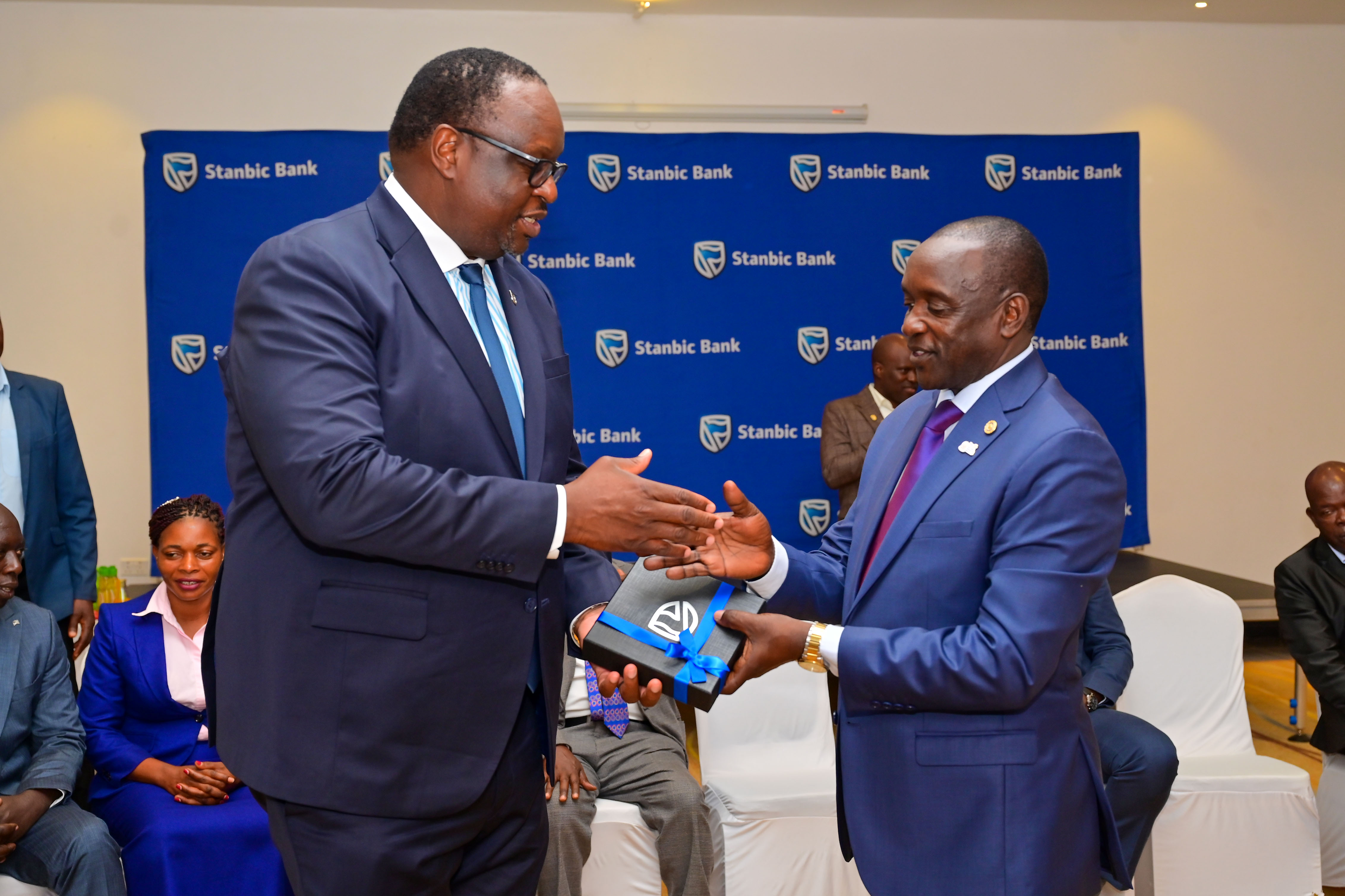
    Fred Badda (R), the Resident District Commissioner and current Chairperson of the Kalangala Palm Oil Growers Trust receives a gift from Mumba Kalifungwa the Chief Executive Stanbic Bank Uganda

    He has served in the leadership of the Kalangala Oil Palm Growers Trust (KOPGT) for more than two decades and has witnessed the sector’s evolution firsthand. “Stanbic came to Kalangala way back in 1989 when our people were poor, barely had shoes on their feet and there was little financial literacy. Our people struggled to meet basic needs, including educating their children, but today, with the support of partners like Stanbic Bank Uganda, farmers have greatly transformed. Their quality of life has improved significantly, and many have moved from low-income to middle-income status,” Mukasa says.
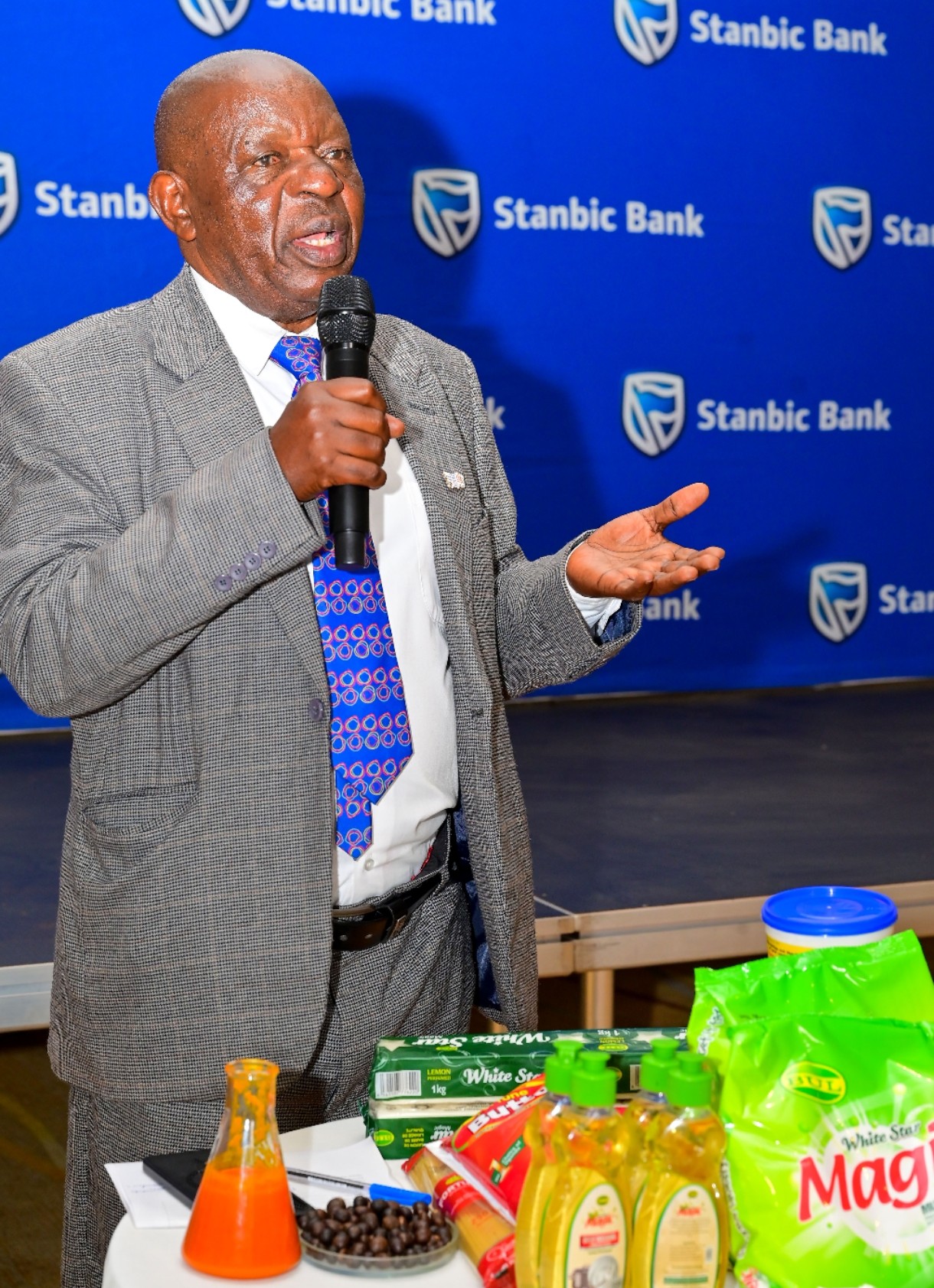
    Although several banks have since established operations in Kalangala, Mukasa says many farmers continue to bank with Stanbic because of the trust, customer service and long-standing relationship the bank has built with the community. “The bank has walked this journey with the farmers from the very beginning. They have stood with us throughout, and I don’t think we are leaving them anytime soon,” he says.

    Mukasa’s experience reflects the broader impact of a financing model that combines organised savings, access to affordable credit and reliable payment systems to support farmers across the oil palm value chain.
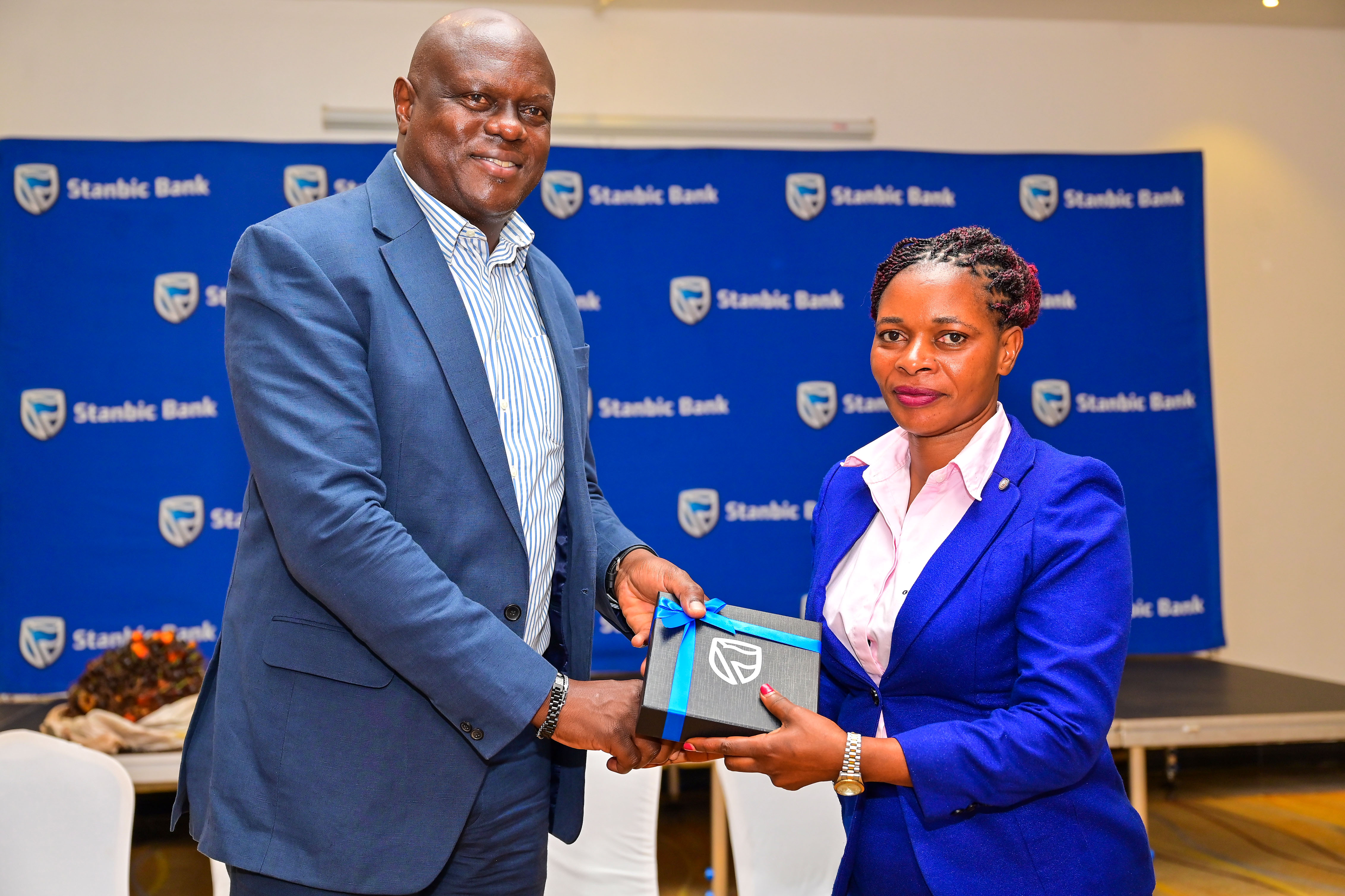
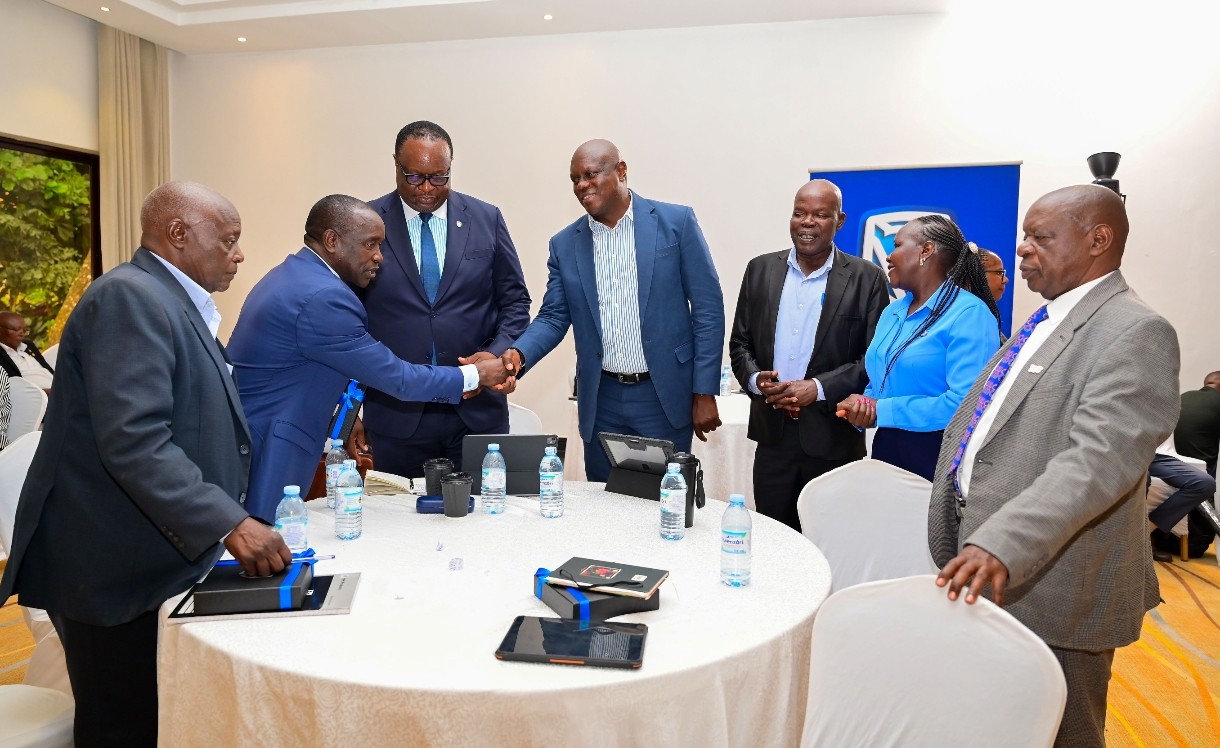
    Mark Ocitti, the Stanbic Uganda Holdings Limited (SUHL) Chief Executive handing over a gift to Milly Nambatya, Manager of Sesse Oil Palm Growers SACCO during a client engagement in Kalangala

    Once known for its remoteness and underdevelopment, Kalangala District made up of 84 islands is today experiencing rising household incomes and expanding economic opportunities, largely driven by the oil palm project launched in 2002. The initiative, a partnership between the Government of Uganda, the International Fund for Agricultural Development (IFAD) and the World Bank, also includes Wilmar International through its subsidiaries, Oil Palm Uganda Limited (OPUL) and Bidco Uganda Limited (BUL).

    Under the project, large tracts of land were developed for oil palm cultivation by OPUL, which supplies crude palm oil to BUL for the manufacture of edible oils, soaps, detergents and other consumer products.

    To promote local participation, the project established the Registered Trustees of the Kalangala Oil Palm Growers Trust, which organised more than 2,500 out-growers across seven production blocks.
    For over two decades, these farmers have supplied fresh fruit bunches to OPUL’s palm oil mill in Bwendero on Bugala Island. Following the project’s success, the Government began transitioning the out-grower scheme in 2018, leading to the formation of the Ssese Oil Palm Growers Cooperative Society (SOPGCO), with David Balironda Mukasa also served as General Manager.

    Financing a Growing Agricultural Economy

    Stanbic Bank was the first commercial bank to establish a branch in Kalangala, building a presence that has grown alongside the island’s oil palm industry. For more than two decades, the bank has supported the sector by managing farmers’ payments, providing financing and strengthening the financial systems that underpin the industry.

    Since commercial production began in 2006, proceeds from palm oil sales have been processed through Stanbic Bank, with between UGX60 billion and UGX70 billion transacted annually on behalf of farmers. In addition, farmers receive annual dividends from their shareholding in Oil Palm Uganda Limited, amounting to between UGX7 billion and UGX10 billion, which are also processed through Stanbic.
    Beyond providing a secure payment platform, the arrangement has enabled farmers to build a savings culture, access financing and invest in expanding their plantations and other income-generating enterprises.

    The Stanbic SACCO Financing Model

    At the heart of Stanbic’s agricultural financing approach is its partnership with Savings and Credit Cooperative Organisations (SACCOs), which enable farmers to save collectively, access affordable credit and strengthen their financial resilience. Melissa Nyakwera, Stanbic’s Head of Commercial Banking, says the bank provides unsecured loans of up to UGX4 billion to registered SACCOs at a competitive interest rate of 10 per cent.

    She adds that Stanbic has also introduced unsecured financing for individual farmers in selected agricultural value chains, including palm oil, coffee, dairy, sugarcane and cocoa.

    “Eligible individual farmers can access financing of up to UGX200 million, enabling them to invest in their enterprises and respond to their financial needs. The model ensures that farmers have access to affordable financing not only when they receive payments for their produce but also when they need capital to expand production, improve productivity or meet other business needs,” Nyakwera says.

    Milly Nambatya, Manager of the Ssese Oil Palm Growers SACCO, says the partnership has strengthened farmers across the value chain by increasing their confidence in formal financial services and improving their livelihoods.She notes that the SACCO initially borrowed only UGX35 million but has since grown its borrowing capacity to access unsecured financing of up to UGX2 billion. Membership has also expanded from just 30 members to more than 1,000 today, the majority of whom are women and young people.

    “The SACCO financing model has enabled us to expand our operations and respond to the needs of our members. It has also strengthened our confidence in the financial services available to us,” she says. According to Nambatya, the cooperative model gives farmers greater bargaining power and access to financing that would otherwise be difficult to obtain individually.

    “Through the SACCO model, farmers pool their resources, strengthen their borrowing capacity and access financing collectively. The approach also promotes financial discipline, as members are encouraged to save consistently and use credit productively,” she says.

    Transformation Beyond Loans

    Mumba Kalifungwa, Chief Executive of Stanbic Bank Uganda, says the bank’s work in Kalangala reflects its purpose: “Uganda is our home, we drive her growth.”He says the bank remains committed to advancing financial inclusion, enterprise development and sustainable economic growth, particularly among women, youth and farmers. Through its Positive Impact Agenda, launched in 2025, Stanbic aims to mobilise up to UGX1 trillion by 2028 to support inclusive economic growth.

    The agenda focuses on five strategic pillars: financial inclusion; enterprise development and job creation; infrastructure investment; climate resilience; and corporate social investment.

    A New Phase of Growth

    The success of the first phase of the oil palm project has prompted the Government to expand the initiative into Kalangala’s second county, opening up new opportunities for investment and farmer participation. The expansion follows the repayment of a UGX52 billion government loan by farmers in the first phase. The recovered funds will be reinvested to finance the next phase of the project. Preparatory activities, including land opening, farmer registration and institutional strengthening, are already underway. The new phase is expected to cover approximately 2,600 hectares and benefit around 1,000 farmers.

    Fred Badda, Resident District Commissioner and current Chairperson of the Kalangala Palm Oil Growers Trust, says access to banking services will remain critical to the project’s continued success. He commends Stanbic for supporting Kalangala’s development agenda through inclusive and accessible banking services that have enabled island residents to transact with the same convenience enjoyed by customers in urban centres. He also appealed to Stanbic Bank to consider expanding its presence into Kyamuswa County, where the new phase of the project will be implemented, to support farmer payments, agricultural financing and extension services.

    Strengthening Farmers’ Capacity

    Mark Ocitti Ongom, Chief Executive of Stanbic Uganda Holdings Limited, says his recent familiarisation visit to Kalangala provided an opportunity to engage directly with farmers and better understand how the bank can deepen its support. He says Stanbic, through the Stanbic Business Incubator, will strengthen financial literacy, governance and business management skills among farmers and their cooperatives to help them build sustainable and well-managed enterprises. The additional support is intended to improve financial management, strengthen governance structures and equip farmer organisations with the skills needed for long-term growth. For farmers, this means their relationship with the bank extends beyond receiving payments or accessing loans to include the knowledge and advisory support required to make informed financial decisions and build lasting prosperity. As the oil palm industry continues to expand, demand for financing, financial literacy and enterprise development is expected to grow and Stanbic bank looks at this as an opportunity support government and drive socio economic Transformation.Kalangala’s experience demonstrates how collaboration between organised farmers, government, financial institutions and private-sector investors can unlock inclusive agricultural transformation and rural economic growth.

    For farmers such as Mukasa, the story is about more than oil palm trees.It is about access to financial services, the confidence to invest and the opportunity to build more secure and prosperous livelihoods.

  • Stanbic Bank unveils revamped Kalangala Branch to Boost Island Banking

    Stanbic Bank unveils revamped Kalangala Branch to Boost Island Banking

    Kalangala: Stanbic Bank Uganda has officially unveiled its newly refurbished Kalangala branch, combining a celebration of its 35th anniversary with a strong pledge to deepen financial inclusion across the Ssese Islands.

    The modernization project transformed both the interior and exterior of the facility, introducing state-of-the-art equipment designed to streamline operations and elevate the banking experience for island residents.

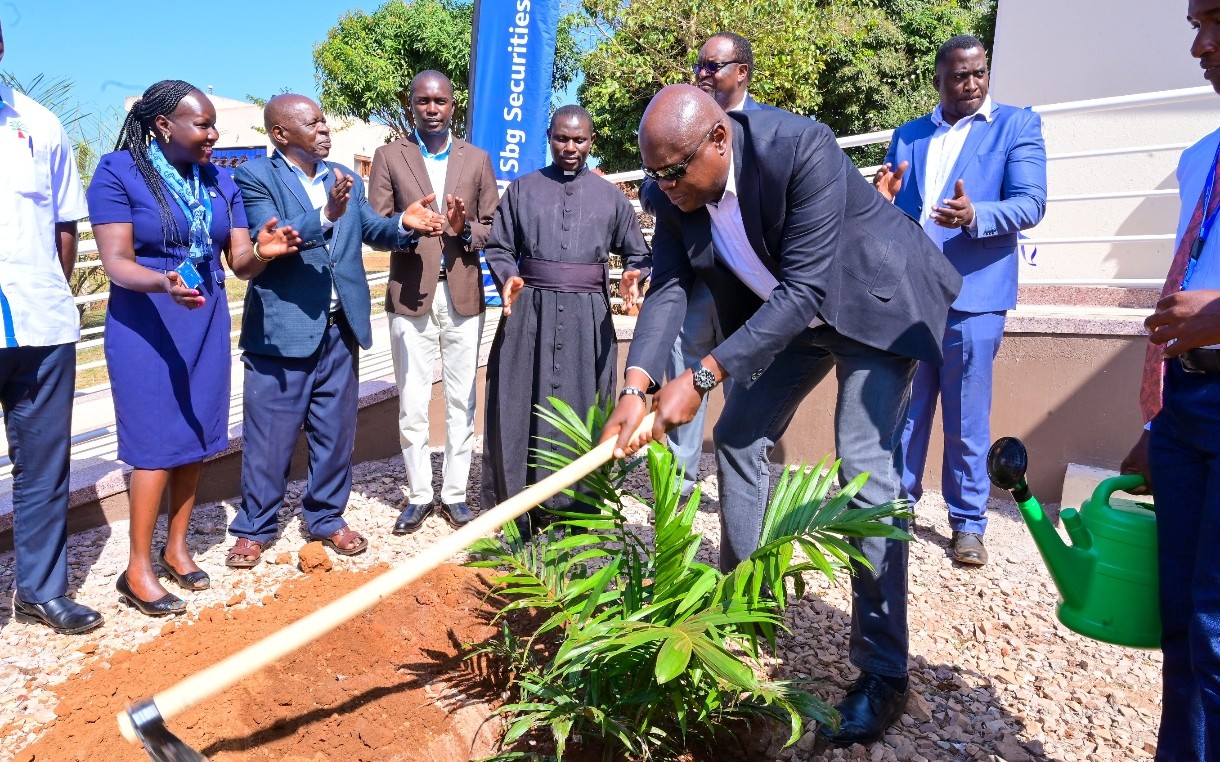
    The renewed branch was inaugurated by Mark Ocitti, Chief Executive of Stanbic Uganda Holdings Limited (SUHL), during his inaugural familiarization tour following his appointment in July.

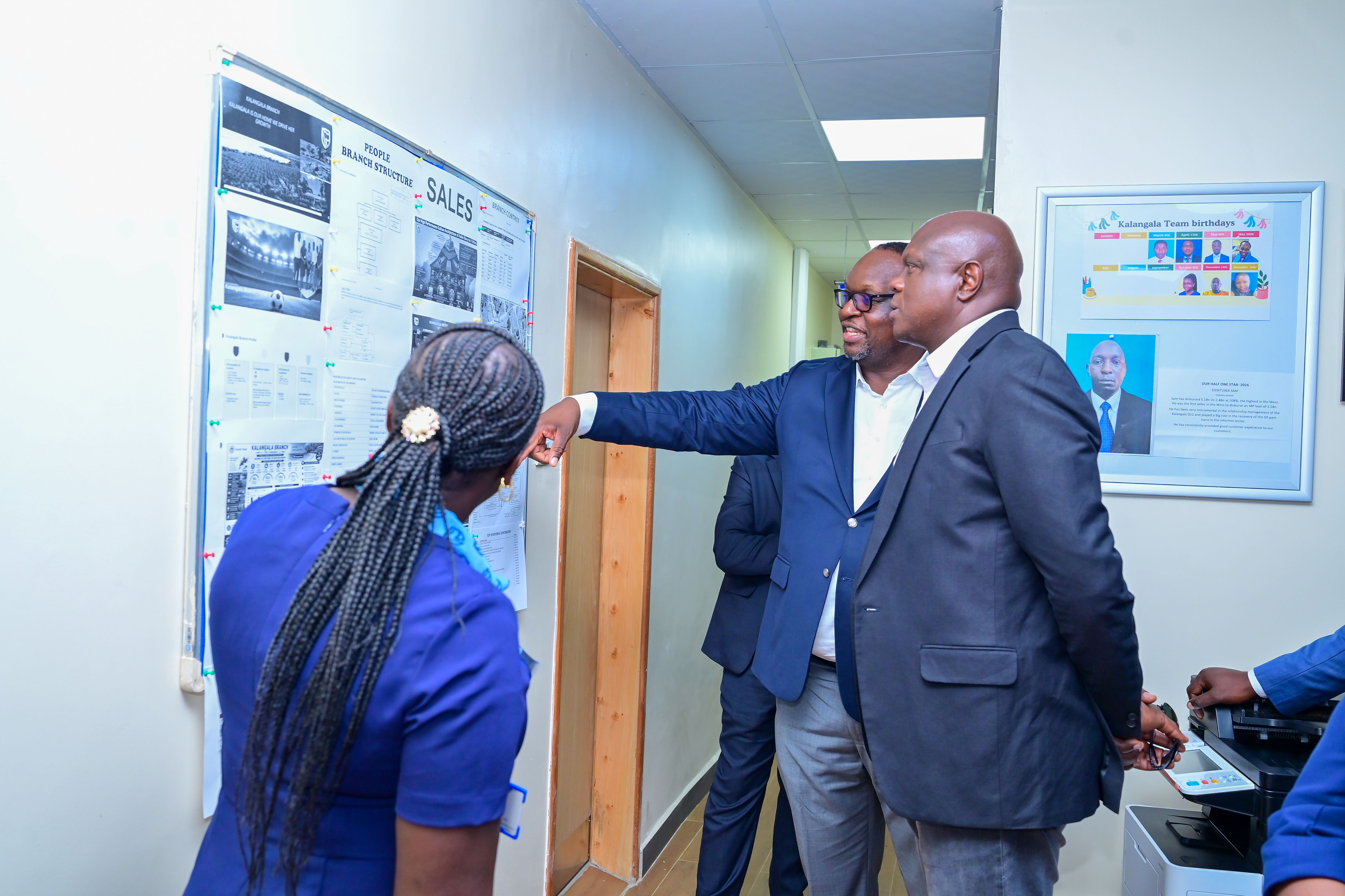
    Stanbic Uganda’s Mark Ocitti and Mumba Kalifungwa review the bank’s Customer Service Charter during their visit to the refurbished Kalangala branch

    Ocitti was accompanied by Mumba Kalifungwa, Chief Executive of Stanbic Bank Uganda, along with Sylvia Mulomi, Head of People and Culture, and local community leaders. Marking his first major regional tour at the helm of the holdings company, Ocitti expressed deep pride in the impactful work being driven across the group, highlighting how the anchor subsidiary continues to deliver shared value for customers, shareholders, and communities alike.

    “As we mark 35 years of operating in Uganda, seeing our anchor subsidiary continue to create shared value for our stakeholders—from customers and shareholders to the wider community—is a true reflection of our core purpose: Uganda is our home, we drive her growth,” Ocitti said.

    Speaking at the same engagement, Stanbic Bank Uganda Chief Executive Mumba Kalifungwa turned the focus directly to customer experience and the bank’s localized impact agenda, emphasizing the critical importance of bringing island communities into the formal financial fold. “Customer experience remains at the core of our growth strategy,” Kalifungwa noted.

    “This refurbishment ensures that our customers in Kalangala enjoy a modern, reliable, and exceptional banking environment. Through our positive impact agenda, we remain fully committed to driving financial inclusion that specifically empowers women, youth, and farmers across these island communities.”

    The Kalangala revamp forms part of a broader nationwide initiative to strengthen physical and digital touchpoints. As Uganda’s largest financial institution by assets and liabilities, Stanbic Bank operates a vast network comprising more than 83 branches and over 7,000 active bank agents across the country, ensuring that remote regions retain consistent access to vital financial services.

  • Standard Chartered donates Ugx 50 million Towards Entrepreneurship and Business Development for Youth with Disabilities in Kalangala District

    Standard Chartered donates Ugx 50 million Towards Entrepreneurship and Business Development for Youth with Disabilities in Kalangala District

    Kampala: Standard Chartered Bank Uganda has today made a donation of Ugx 50,000,000 to the National Union of Disabled Persons of Uganda (NUDIPU) during an event held at its Head Office and presided over by the Executive Director and Head, Corporate at Standard Chartered Bank, Mr. Charles Katongole and the CEO, NUDIPU, Ms. Esther Kyozira.

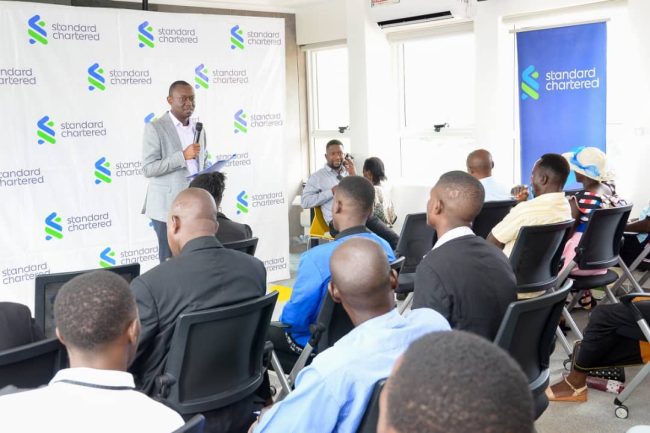
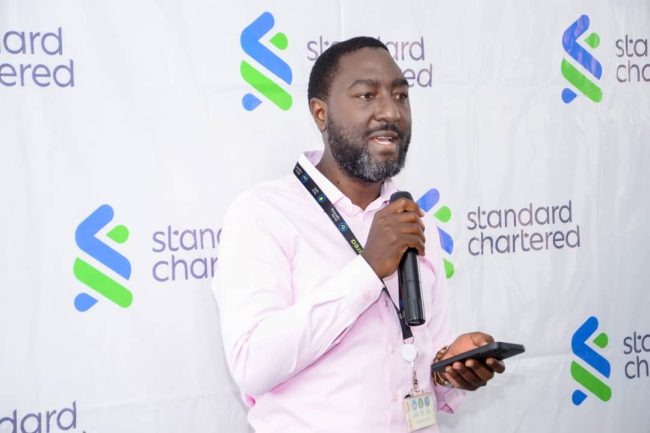
    The event that had participants from Kalangala district started off with a business mentorship session that was led by John Baptist Yawe, the Head of Business Banking at Standard Chartered before the ceremonial handover of the cheque.

    Bank executives and NUDIPU Executives during the cheque handover ceremony

    The funds aim to promote the socio-economic empowerment of youth with disabilities in Kalangala district through entrepreneurship and business skills development as well as their participation in livelihood programmes and processes that lead to increased access to employment, income generation and social security Services in 2025.

    The project will target young persons with disabilities of different impairments, aged 18-35 years who are out of school and interested or involved in entrepreneurship and business management. 60% of beneficiaries will be females with disabilities. Overall, 250 young persons will benefit directly and indirectly 750 household members will benefit indirectly through the different activities of the project.

    The project is expected to achieve 3 outcomes: increased incomes and asset acquisitions for youth with disabilities, Increased employment opportunities for both self and waged and increased access to financial and social services. These three outcomes shall lead to socio economic empowerment of Youth with disabilities and hence reduce vulnerabilities and poverty amongst them.

    While delivering his remarks, Mr. Charles Katongole the Executive Director and Head of Corporates at Standard Chartered Bank, said;

    “At Standard Chartered, our brand promise is Here for good and it embodies our commitment to this market, the community and inclusivity as part of our Diversity and Inclusion agenda. This partnership and donation to NUDIPU comes off the back of years of consistently promoting greater economic inclusion for persons with disabilities through our Futuremakers programmes. Our EmployABLE programme helps to create job-ready Persons with Disabilities by providing them with knowledge and soft-skills training, career mentoring and job placements. We have also previously empowered them by organising career-fairs where we linked over 100 people with disabilities to potential employers, renovated schools, donated braille machines and computers as well as planted trees at Salaama school for the blind located at Kisoga – Mukono.”

    CEO NUDIPU Esther Kyozira addresses the beneficiaries from Kalangala

    He added; “Additionally, in 2021 we embarked on the implementation of a Youth Empowerment, Entrepreneurship and Decent Employment programme worth Ugx 2.8 billion in partnership with Voluntary Service Overseas. This project has focused on the economic inclusion for 1,000 young people (60% women, and 10% PWDs) through improved employability, entrepreneurship, and strengthening of the enabling environment for entrepreneurship and jobs. We are therefore pleased to make an intervention to support more PWDs who are disadvantaged and look forward to empowering them through this project.”

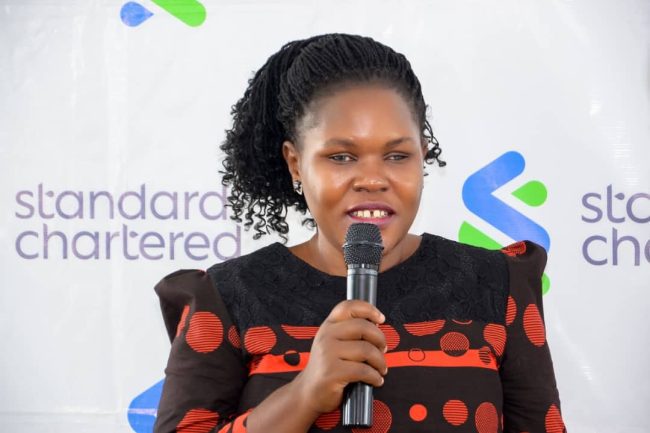
    On her part, the Chief Executive Officer, NUDIPU – Ms. Esther Kyozira while addressing the participants thanked standard Chartered for this generous donation stating;

    “On behalf of the Persons with Disability community, allow me to extend our deepest gratitude for the enormous contribution Standard Chartered Bank makes to uplift PWDs in the country. The Bank is one of the major partners of PWDs in the country and is always inviting us for various engagements as well as offering employment to our people and for that we are very grateful and remain hopeful.

    “As NUDIP we chose Kalangala as the district in which to make an intervention because we want to address challenges facing youth with disabilities. According to the 2014 population census there were 2,964 young persons aged 2-30 years in Kalangala out of a population of 7,260 persons with disabilities while youths aged 18-30 years were 1,998 (12.4%).

    11% of youths were out of school and 38.6% were household heads. The socio-economic hardships persons with disabilities face in Kalangala district are severe given there are 84 scattered islands leading to challenges of mobility and access to socio economic services. Furthermore, it is also reported that women with disabilities are involved in prostitution to earn a living, there is a high incidence of human trafficking, child defilement and Gender Based Violence especially taking advantage of their vulnerability due to impairment and poverty. This project therefore seeks to address challenge of limited incomes, unemployment and limited access to socio economic services facing youth with disabilities in Kalangala island. She concluded

    With the Ugx 50 million donation the youth with disabilities running MSEs will be linked to disability and Business networks and value chains that will ensure continued inclusion into the programmes of stakeholders.

    The training manuals developed and used to provide Business development services shall be the tools used in scaling up the project deliverables long after funding phase out. The lessons, data and knowledge generated and documented shall be used to source out more resources to sustain the MSEs.

  • Stanbic donates Furniture worth UGX 18 Million to Kalangala School

    Stanbic donates Furniture worth UGX 18 Million to Kalangala School

    Kalangala: Stanbic Bank has extended a helping hand worth UGX18 million to Bishop Dunstan Secondary School in Kalangala District.

    The donation includes 50 modern classroom desks valued at Ugx 12.5M and 250 reusable sanitary pads worth Ugx 5.5m.
    This timely support is part of the Stanbic Corporate Social Investment initiatives aimed at improving the learning environment and promoting menstrual hygiene for the girl students.

    Speaking at the handover, Francis Karuhanga, the Stanbic Uganda Holdings Limited (SUHL) Chief Executive, said the items will beef up the donation made by MTN Uganda to the same institution during the Yello Care activities.
    He said, “Recently, the Stanbic team escorted our brothers from MTN Uganda here when they had come to hand over their donation. During that specific visit, our regional manager saw a gap on the side of furniture, which we have to come to solve. Today I’m here to handover 50 modern hardwood classroom Desks and 250 reusable sanitary pads UGX 18 million”.

    “We believe that every student deserves access to quality education and dignity. This donation is a testament to our dedication and purpose fused to driving Uganda’s growth,” Karuhanaga added.
    The school administration led by the Headmistress Cathy Kawasaka, expressed gratitude for the timely support, citing the challenges faced due to limited resources.

    “They’re very many schools on this Island, but I want to thank Stanbic Bank for always choosing our school. This is not the first initiative extended to us by this great bank. Our students recently participated and got life changing mentorship during the Stanbic National Schools Championship. After the training, they were given a huge seed capital to bring their project ideas into life. Today, I’m glad to inform you that we have started making good revenue out of the hygiene products like squeezers and liquid soap made by our students here,” Kawasaka said.
    Henry Ssebunya, the deputy Resident District Commissioner (RDC) Kalangala saluted Stanbic for championing education, health and social welfare of the people on the island.
    He said the island residents are facing several socio-economic challenges, but he was grateful for the continuous support from corporate bodies like Stanbic Bank in helping to transform their lives.
    Ronald Mutebi, the Kalangala District Inspector of Schools said, “Last year, I met three headteachers from schools here in Kalangala, and we developed a concept on how we can acquire some computers. However what I established was that one computer was serving 29 students.

    He said, “This school managed to secure some computers from MTN Uganda and the gap immediately shifted to furniture where the students would sit while using these donated items. Therefore Stanbic coming here will help us to partly address this challenge, especially at a time the curriculum is shifting from theory to competence based learning.”
    Recently, Stanbic bank donated an emergency rescue boat to support mothers who get difficulty during delivery at Lutoboka landing site to have access to better health care on the mainland. Last year, the bank was again in the same district Kalangala offering essential maternal healthcare equipment.
    Carlos Sserwadda, the Stanbic Bank Western region manager said the bank will continue to carry out corporate social initiatives that align to Stanbic’s Environmental, Social and Governance strategy. This focuses on improving access to good education, health, empowering the youth and building the capacity of SMEs to become sustainable businesses.
    “Stanbic was the first institution to put up a home here in Kalangala and the journey towards empowering our people through financial literacy and access to affordable financing and free business advisory has never gone back,” he said.
    Stanbic Uganda Holding Limited comprises five subsidiaries that include Stanbic Bank, Stanbic Properties Limited, SBG Securities Uganda Limited: – an investment and brokerage firm, Stanbic Business Incubator Limited, an enterprise development centre and FlyHub Uganda Limited a technologies and innovations company.