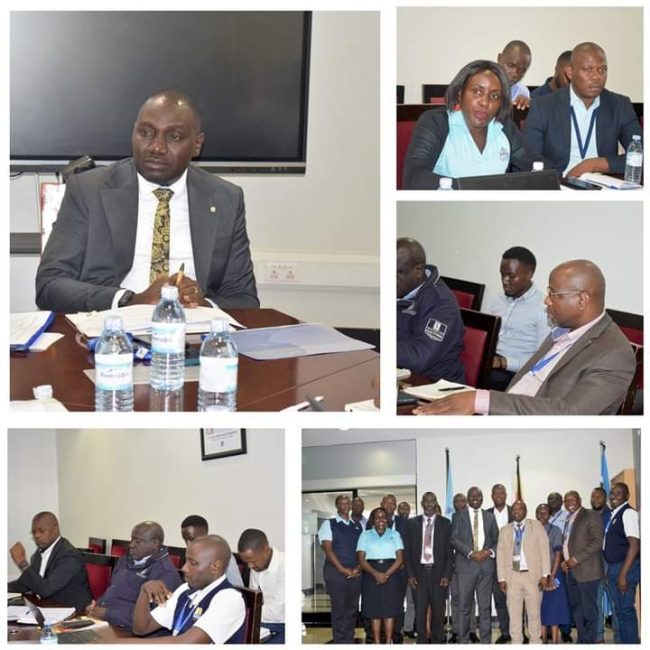
Tag: URA

  • Short-lived Reign: URA Board Chair Katongole bows out over Controversy

    Short-lived Reign: URA Board Chair Katongole bows out over Controversy

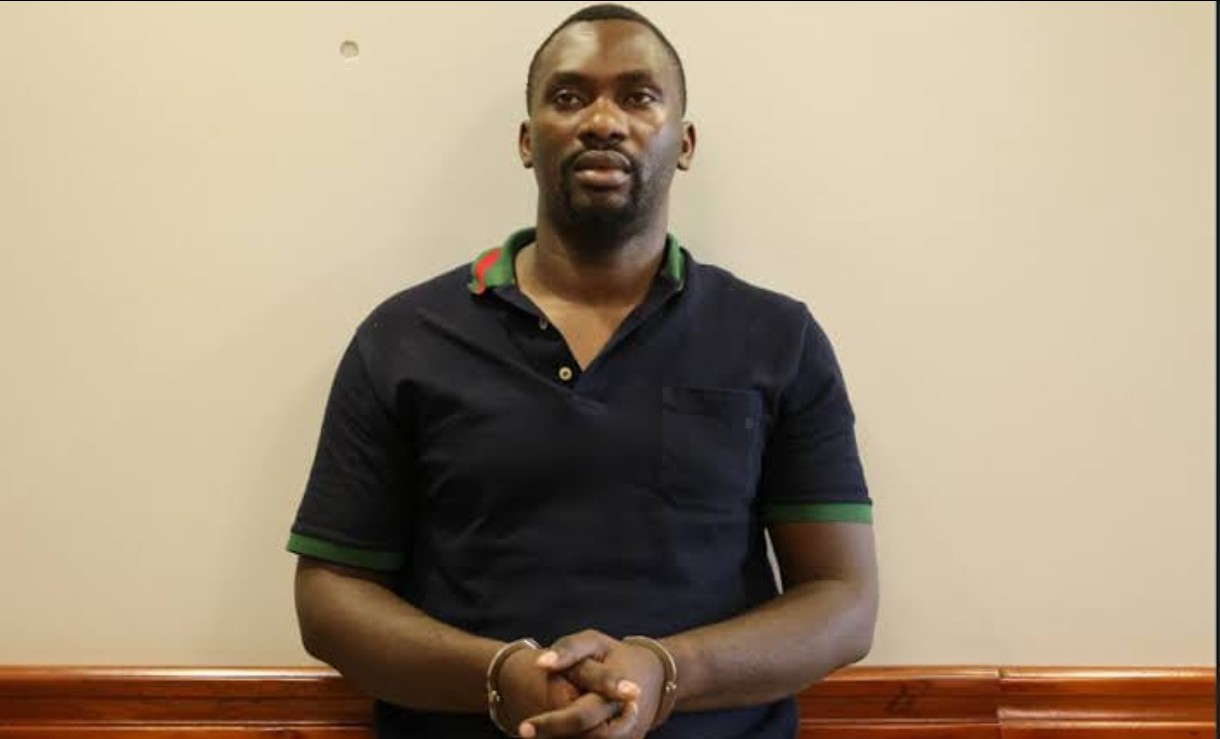
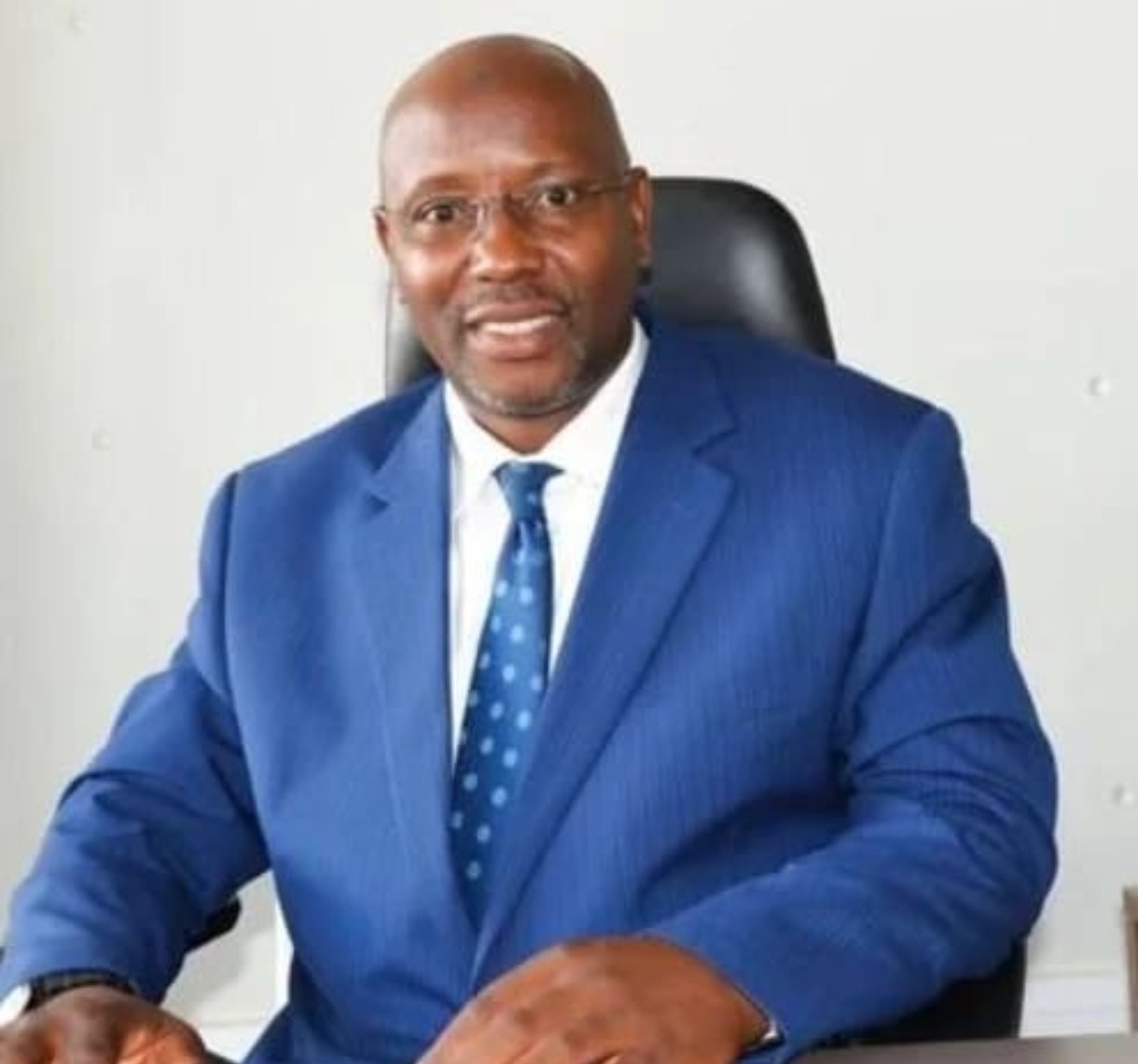
    Uganda Revenue Authority (URA) Board Chairman Emmanuel Katongole has thrown in the towel before seeing the first anniversary on the steering wheel of Uganda’s top tax body. Katongole who was appointed by the former Minister of Finance, Planning and Economic Development, Hon. Matia Kasaija in March this year took office officially on April 1, 2026. Though the details of his resignation are still scanty, his tenure in office for 6 months has been marred with controversies due to alleged intrigue, infighting and bickering among the top bosses at the tax body. Being a crisp and prolific businessman who was not used to open disagreements, he has chosen to lead a life free from accusations and counter accusations.
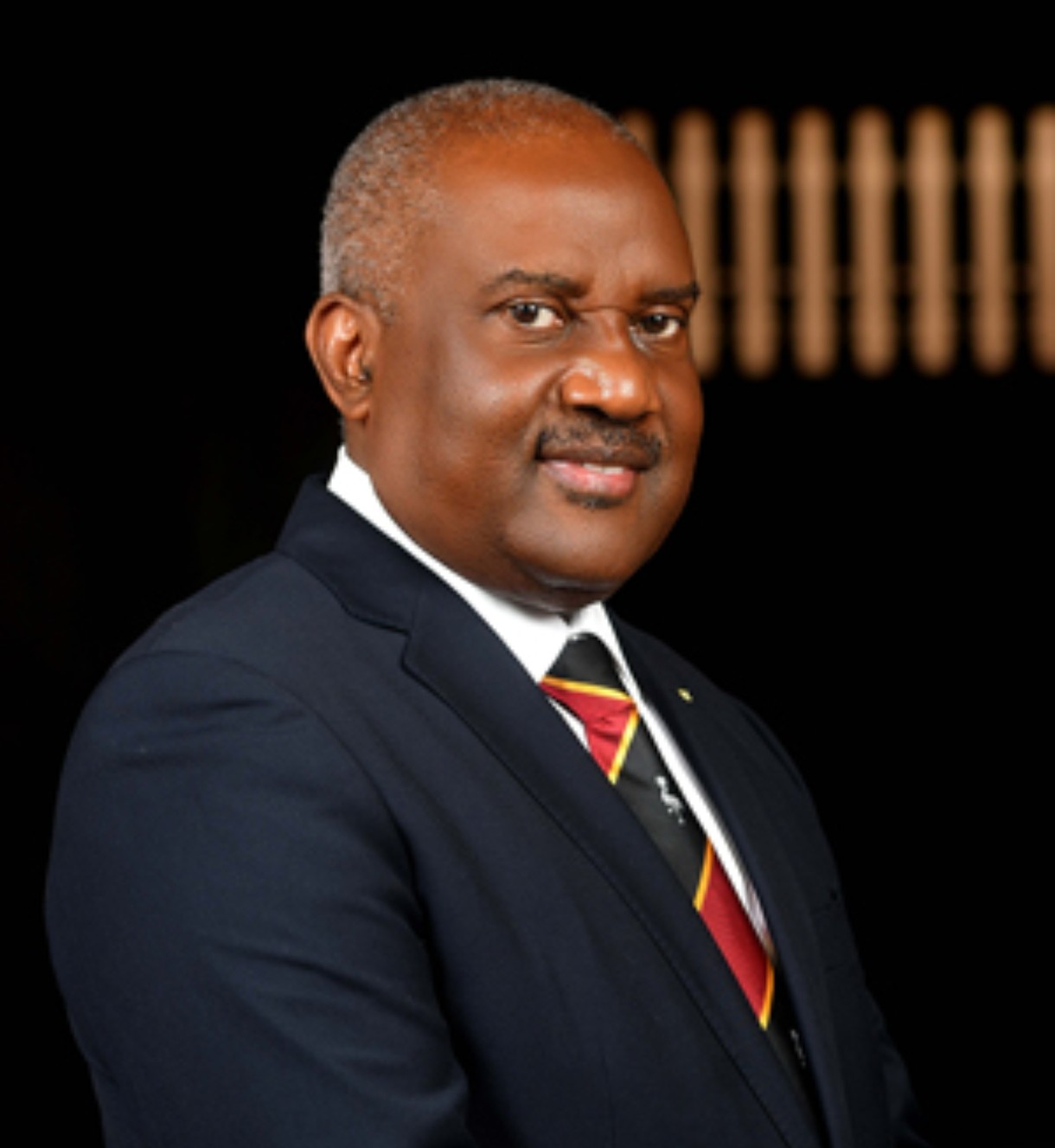
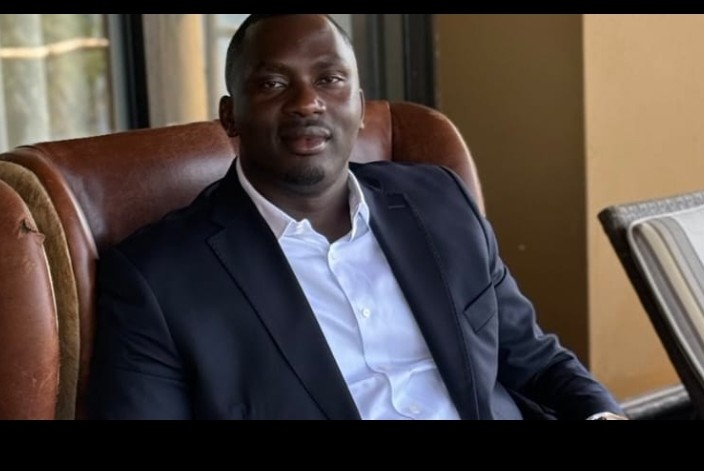
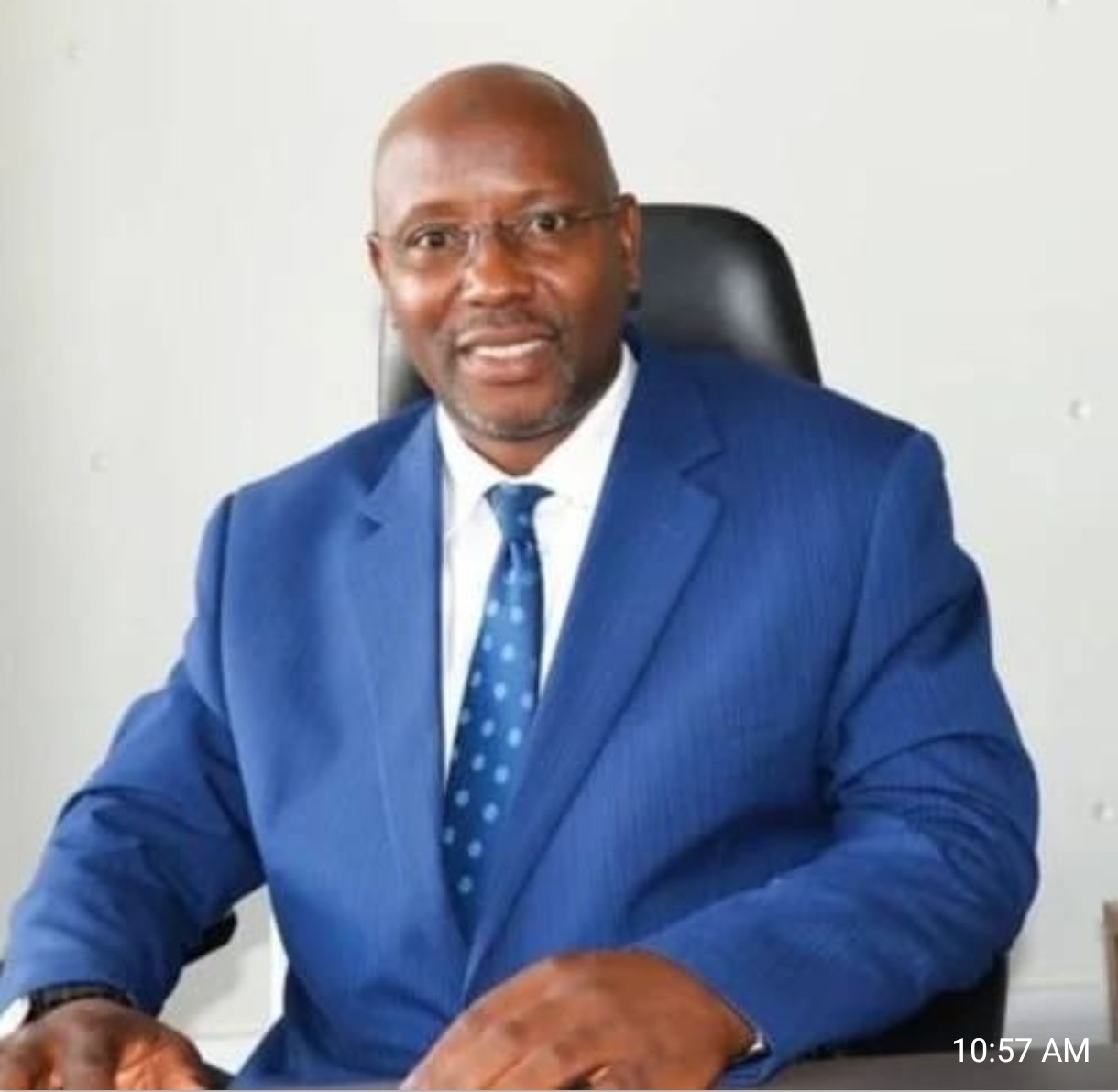
    Katongole

    Katongole replaced a seasoned banker Juma Kisaame who had served in the same capacity from March 2020 to March 2026. His appointment at the helm of the board was among other roles to oversee the further growth of the agency responsible for collecting the bulk of Uganda’s domestic revenue, a critical pillar of the government’s effort to fund infrastructure, public services and developmental programs.

    However, within the short time he chaired the board, he was either entangled in solving disciplinary issues or reconciling individuals for the smooth running of the agency.
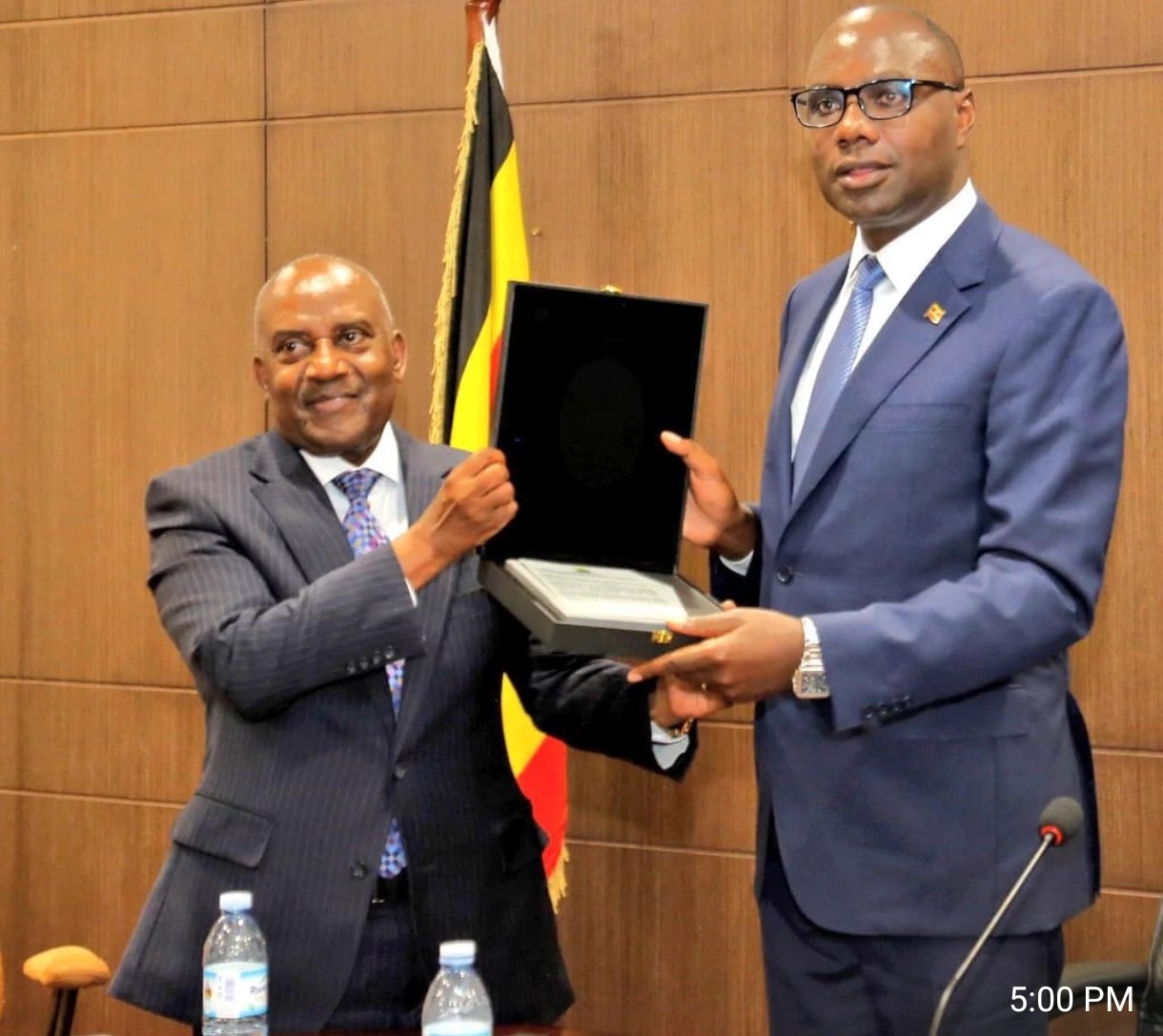
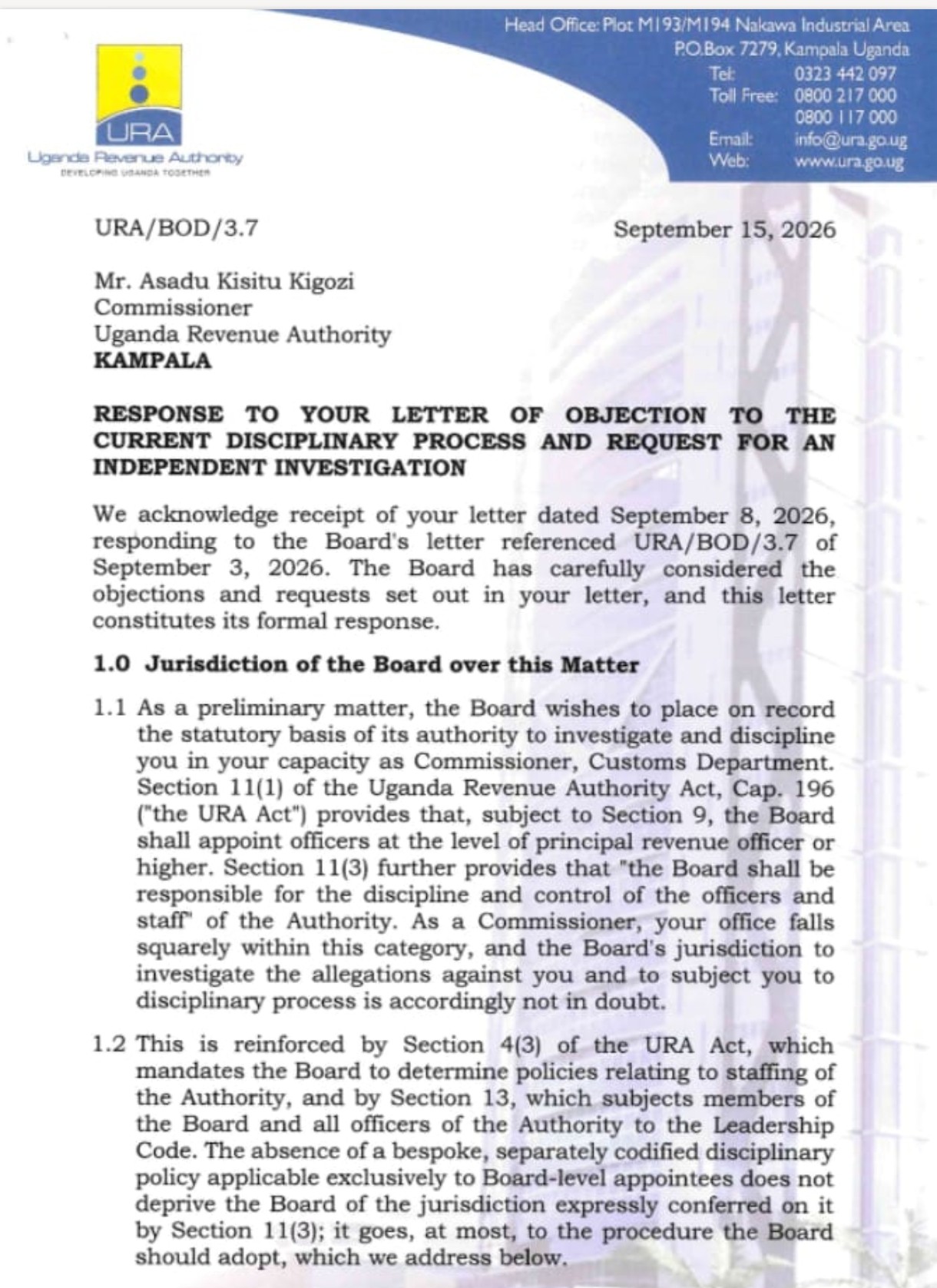
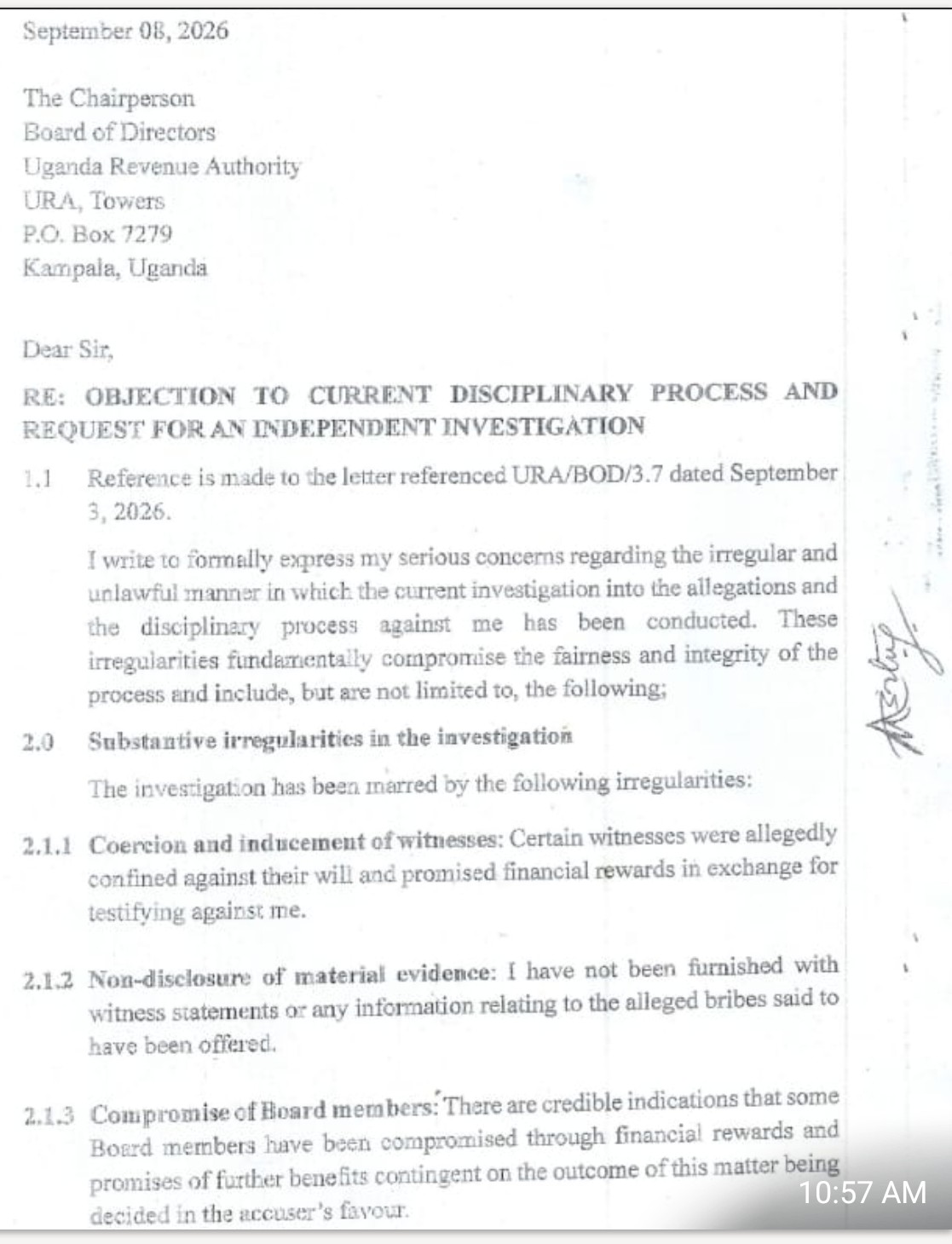
    In his last letter in the line of duty, Katongole wrote to the suspended Commissioner for Customs Hajji Asadu Kigozi Kisitu (whose whereabouts are still unknown) on September 15, 2026 he responded to issues the former commissioner had raised in relation to how the board was handling his issue. Asadu was controversially suspended pending investigations and disciplinary action. Katongole’s letter came after the URA Board Secretary Catherine Donovan Kyokunda had written various letters summoning Asadu to scheduled disciplinary hearings at the 19th floor, URA headquarters that kept flopping. Sources at the tax body contend that along the way the board itself got divided and could not pronounce itself to the action against Asadu. This forced Asadu to write to the Board Members citing substantive irregularities in his matter by poking holes in the investigation process. He revealed that there was coercion and inducement of witnesses, failure to disclose material evidence, compromise of board members, unlawful extraction of electronic data and breach of statutory time limits and waiver of right to discipline among others. His prayer to the URA Board was to commission an independent investigation by external individuals and constitute an independent committee to preside over the disciplinary proceedings, in line with the principles of natural justice and administrative fairness.
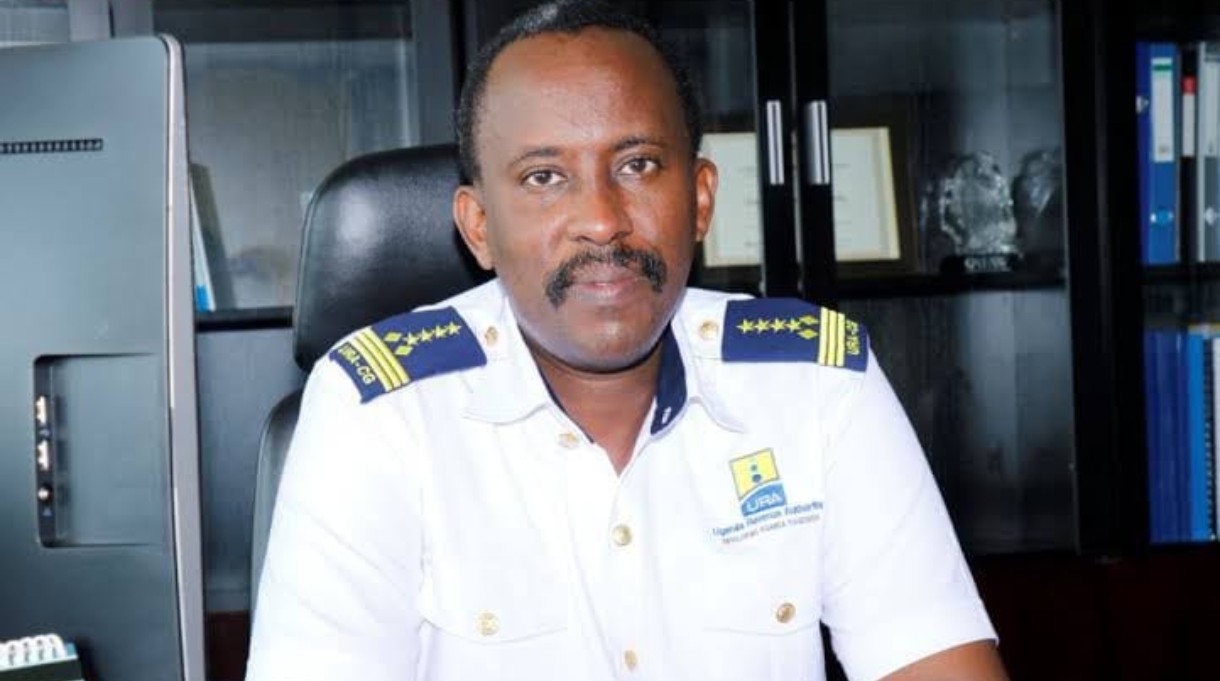
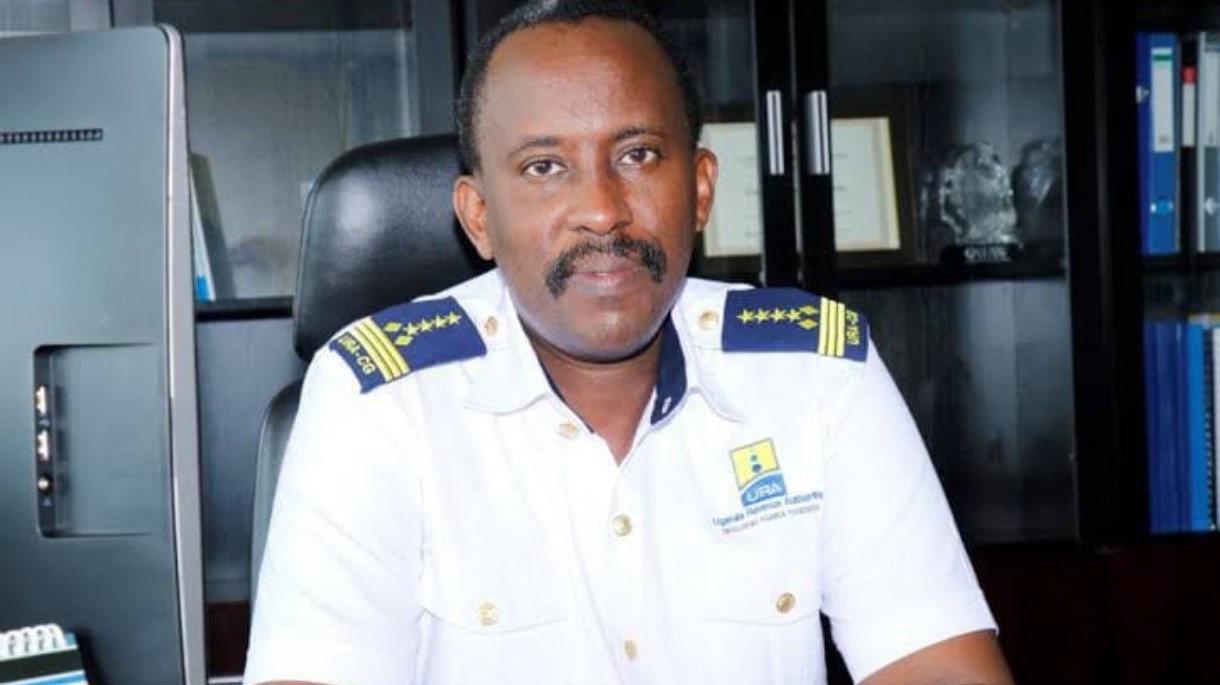
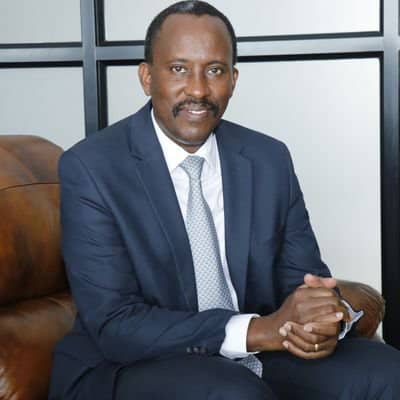
    URA Boss: Musinguzi Rujoki

    However Katongole in his letter dismissed the allegation that some board members had been compromised and duly explained to Asadu that it is within the mandate of the board to discipline and control the officers and staff of the Authority. In the same letter, the board chair squarely dismissed the allegations of coercion of witnesses and compromise of some board members and guided that as a matter of fair hearing Asadu should with immediate effect be furnished with particulars of the case against him including any witness statements or document the board intends to rely on during the hearing. The URA Board Chairman who suspected that the Commissioner General could be having a conflict of interest proposed that the latter be excluded from the deliberation and decision on the matter. Though this had been taken lightly, the insiders say it did not go down well with the Commissioner General. Katongole got concerned and fixed September 22, 2026 as a hearing date. However on the eve of the fixed date, Asadu was reportedly kidnapped and sped away to the unknown destination. His whereabouts are hitherto unknown. The board proceeded and sat at the 19th Floor, URA headquarters but did not take any action about Asadu’s matter since his family members were already crying to the public and police about his disappearance. Ironically in the same meeting, they discussed a matter of another suspended Assistant Commissioner for Compliance James Abola. The board handled the matter carefully and dismissed the officer. They remained stuck on Asadu’s decision.

    Earlier it was alleged that though the disciplinary action was scheduled for Asadu, some elements within URA had reportedly hatched a plan to kidnap him, later dump him at the Anti Corruption Court and later push for his interdiction on baseless accusations. According to an insider, this was planned after his perpetrators failed to gather enough evidence to pin him in the disciplinary hearing. These among others are the controversies Katongole faced at URA. He will go down in the records as the shortest serving URA Board Chairman.

    Who is Katongole

    Emmanuel Katongole (born 27 April 1962), is a Ugandan statistician, economist, businessman, entrepreneur and industrialist. He is the executive chairman of Cipla Quality Chemical Industries Limited (CQCIL), the only company in Sub-Saharan Africa, that is authorized to manufacture triple-combination anti retro-viral drugs. Since 2014, he has also been the chairman of the Uganda National Oil Company. He attended Namilyango College for his secondary education. He studied at Makerere University, graduating with the degree of Bachelor of Statistics (B.Stat). His Master of Arts in economic policy and planning was also obtained from Makerere University. He has attended numerous other short-term courses in economics, statistics and management, from institutions in Uganda and Europe. Besides Cipla Quality Chemical Industries Limited (CQCIL), Katongole owns the following businesses either wholly or in part: Vero Food Industries Limited – located at Kampala’s Industrial and Business Park, Namanve, Wakiso District, Tinosoft Limited – an information technology company, located in Kampala. Katongole is a Rotarian and is a member of the Rotary Club of Muyenga. He was also the district governor for Rotary District 9211, which comprises Tanzania and Uganda. He was also appointed chairperson of the National Response Fund to Covid-19 by the president of Uganda on 8 April 2020. He was also the chairperson for the installation of the new Archbishop of Kampala, His Grace Dr. Paul Ssemogerere, held on 25 January 2022. Katongole, a staunch Roman Catholic, was in February 2021 named as one of the eight parishioners that were to be conferred the award of papal knighthood.
  • In Shock: Suspended URA Commissioner For Customs Hajji Asadu Goes Missing

    In Shock: Suspended URA Commissioner For Customs Hajji Asadu Goes Missing

    Suspended Commissioner For Customs Asadu Kidnapped, Feared Dead

    Our Reporter,

    The suspended Uganda Revenue Authority (URA) Commissioner For Customs Asadu Kisitu Kigozi has gone missing according to his family members who clearly state they are also living in utter fear.

    Asadu has been haunted by some individuals within the tax body since last year. “We are not aware whether our relative is alive. His known phones are switched off and he cannot be traced in any of the relative’s homes. We fear that he could have been kidnapped or harmed,” one of his relatives revealed on the condition of anonymity. Sources close to Asadu at URA contend that there has been a hatched plan to kidnap him and later dump him at the Anti Corruption Court for interdiction on baseless accusations. According to an insider, this was planned after his perpetrators failed to produce evidence on the allegations against him for the disciplinary hearing. Another source says that there has been a botched plan to kidnap him in the previous days since suspicious armed people have been seen near his home every evening.

    This follows various letters by the URA Board Secretary Catherine Donovan Kyokunda to Asadu scheduling different disciplinary hearings at the 19th floor, URA headquarters. The meetings have hitherto flopped due to unknown reasons. However, it is on record that some elements within the tax body have tried to link him to the notorious smugglers but failed to get evidence to pin him. Fury raged especially when the preliminary investigations on the arrested notorious smuggler Timothy Segane and URA staff Emmanuel Lutaaya did not link Asadu directly.

    Incidentally Segane’s phone records indicate that the other senior URA staff who include Henry Kwarigonza (Acting Commissioner Customs), Moses Kyomuhendo (Manager Enforcement Operations), Fiona Nyamurungi Tubeine (Manager Trade – transit Monitoring) were in constant communication with him (alleged criminal).

    Having realized that his life is in danger, he sounded an alarm to the seemingly divided URA board for intervention. Asadu who is cognizant of the moves being made by his nemesis at the tax body raised concerns in the missive penned to the Board of Directors in which he exposed the suspicious and ulterior motives.

    In the letter to the Board Members, which was copied to the Minister of Finance, Planning and Economic Development, Attorney General, Inspector General of Government, the suspended Commissioner for Customs cites substantive irregularities by poking holes in the investigation process. He believes there is coercion and inducement of witnesses, failure to disclose material evidence, compromise of board members, unlawful extraction of electronic data and breach of statutory time limits and waiver of right to discipline officers among others. The self-effacing Asadu is not against the probe tagged to his name but his prayer to the URA Board is to commission an independent investigation conducted by external individuals and constitution of an independent committee to preside over the disciplinary proceedings, in line with the principles of natural justice and administrative fairness.

    In response to his letter, on September 15, 2026, Emmanuel Katongole, the Chairman of Board of Directors wrote to Asadu explaining that it is within the mandate of the board to discipline and control the officers and staff of the Authority. “As a Commissioner, your office falls squarely within this category and the Board’s jurisdiction to investigate the allegations against you and subject you to the disciplinary process is accordingly not in doubt…..,” the letter reads partly. In the same letter, the board chair dismissed the allegations of coercion of witnesses and compromise of some board members but agrees that as a matter of fair hearing Asadu should with immediate effect be furnished with particulars of the case against him including any witness statements or documents the board intends to rely on during the hearing. The URA Board Chairman who seems to suspect that the Commissioner General could be having a conflict of interest proposed that the latter be excluded from the deliberation and decision on the matter. Having conceded that the process has taken longer than is desirable and that the repeated postponement of the hearing dates is a legitimate concern, Katongole fixed September 22, 2026.

    The guidance of the Board Chairman seems to have displeased individuals within the tax body who want Asadu expeditiously prosecuted. And this leaves no doubt that his perpetuators are suspects to the alleged kidnap. Watch this space!

  • How the arrest of ‘fraudster’ Segane has torn apart URA Management

    How the arrest of ‘fraudster’ Segane has torn apart URA Management

    The top management at the Uganda Revenue Authority (URA) is in a state of oblivion after the preliminary investigations on the caged notorious smuggler Timothy Segane over alleged tax evasion, customs fraud and trader exploitation link some senior staff at the tax body.

    Segane was arrested late last month by a URA enforcement team in line to curtail revenue leakages, corruption and practices that frustrate legitimate trade.

    He is currently remanded at Luzira Prison till September 16, 2026 when he will appear in court to face several cases that include but not limited to tax evasion, under-declaration of customs duties and allegedly holding onto imported merchandise belonging to several traders.

    The sources within the investigation department have since established that the top fraudster whose arrest took long due to his alleged connections within the security apparatus has been working closely with some URA staff members. Although the investigators have not yet established the exact transaction between Segane and the URA staff, his phone records indicate that they often communicate.

    Insiders within the investigation unit claim that four senior staff that include Henry Kwarigonza (Acting Commissioner Customs), Moses Kyomuhendo (Manager Enforcement Operations), Fiona Nyamurungi Tubeine (Manager Trade – transit Monitoring) and Dr Godfrey Owich Okaka (Assistant Commissioner for Field Services) will soon be put to task to explain their association with Segane.

    It is not yet clear whether Segane’s litany of sins were committed in connivance with the mentioned senior officers but his apprehension may widen the magnitude of investigation.

    It should be mentioned that a few months ago, the Commissioner General John Musinguzi Rujoki together with some staff became suspicious about the business leakages and suspended the Commissioner of Customs Hajji Asadu Kisitu Kigozi and subjected him to disciplinary action. The Commissioner General wanted the board to take immediate action but this has not come to pass. On August 24, 2026, the Board Secretary Catherine Donovan Kyokunda wrote to Asadu inviting him for a disciplinary hearing scheduled for August 25, 2026 – the invitation was for hours. It is hitherto not known why the meeting flopped but what is on record following the letter this publication has accessed, the board secretary rescheduled a meeting to September 3, 2026 at 3:00pm on 19th floor, URA headquarters. The second meeting did not take place and no explanation/excuse has since been given.

    As the events to squeeze Asadu in a disciplinary hearing intensified, the most wanted man, Segane was also arrested and according to experts this may warrant the investigations to take an interesting twist with more people added to the charge sheet. The question to the Commissioner General however is; will he suspend more staff members suspected to be linked to illicit transactions at the tax body as established from the arrested agents confession and phone records? The concern is; Will the Commissioner General expose the names of those implicated or he will cover up his own team!

    Despite Asadu nemesis’ prayers that Segane’s arrest would directly implicate him, sources close to investigations intimate that the phone records so far exonerate the suspended Commissioner of Customs. This will soon confirm that his tormentors and persecutors are hiding behind the excuses of performance to exhibit their tribal, religious and sectarian connotations against Asadu. This does not only raise grave questions about fairness, equal treatment, and institutional integrity before the board, but creates gaps for further investigation about the staff members whose phone records have been linked to Segane.

    Just like a biblical sermon in Matthew 27:22-26, where the Jews and the teachers of the law took innocent Jesus to Pontius Pilate accusing him of calling himself a messiah and calling for his crucifixion. The Governor of the Roman Province of Judea did not see any evil in Jesus and when the multitude kept shouting that crucify him, he took water and washed his hands saying; I am innocent of the blood of this just person. He released Barabbas and delivered Jesus for crucifixion. The moral lesson in the allegory is that Asadu has been offered for crucifixion when the ‘Barabbases’ may remain free despite their transgressions being written in black and white.

    URA BOARD DIVIDED?

    Though Kyokunda’s second letter dated to September 27, 2026 to Asadu had provided about six days for preparation to crucify the latter, the meeting flopped again. It is not clear why some members shunned it but insiders say that due to some disagreements the board itself is divided. It is said that about three members are in bed with the URA management but the rest are watching the unfolding events from a distance since this circus comes at a time when the revenue performance of the tax body has dropped badly. The drama at URA in the past few months is a clear testimony that things are not going on well. It even gets worse when they wash their dirty linen in public. The traders and Ugandans of sound mind believe that the few people who include Emmanuel Lutaaya and the Uganda Revenue Authority (URA) Manager for External Operations in Customs (stationed in Dar es Salaam) Geoffrey Ssozi Kawere and Segane that have been arrested and publicly condemned are a tip of an iceberg to the bigger and complicated problem. The Uganda Revenue Authority (URA) has been characterized by infighting, bickering and intrigue that has resulted in leadership shake-up and unexpected resignations. In August last year the Commissioner for Domestic Taxes, Sarah M. Chelangat resigned. Though she did not detail the reasons for her resignation, insiders contend that the decision stemmed from a growing sense of under appreciation, bickering and internal frustrations. By the time she resigned, Chelangat was switched to the Tax Investigations Department but declined the appointment due to the alleged hidden motives in her bosses’ minds.

    About Segane

    Timothy Segane is a Ugandan clearing agent and the director of Timways Logistics and Enterprises Limited who was arrested and remanded in August 2026 on charges of smuggling and tax evasion. The Uganda Revenue Authority (URA) enforcement team arrested Segane on August 25, 2026, following allegations that he tried to bribe a customs officer. He faces four main charges before the Anti-Corruption Division of the High Court, including tax evasion, making false declarations to customs, corruption, and conspiring to break customs laws. URA officials accuse Segane of operating as an unscrupulous “container leader”. He allegedly withheld imported merchandise from various traders for months and falsely blamed the URA for the delays.

  • Hajjat Hanifah Karadi applauded for serving the community

    Hajjat Hanifah Karadi applauded for serving the community

    The President of Structured Imams & Amirats Sheikh Saidi Kasawuli has applauded Hajjat Hanifah Karadi for her tireless efforts in serving community.

    This was yesterday after afternoon at Structured Imams and Amirats Assembly of Uganda witnessing Iddi packages offered by Uganda Revenue Authority (URA) to the Imams & Amirats, a gesture of giving back to community at Kawempe Tula.

    Hajjat Hanifah Karadi appreciated URA for such a good gesture to the Muslim community in this holy month of Ramadhan.

  • Sudanese Plot To Usurp Trade Protocols Thwarted

    Sudanese Plot To Usurp Trade Protocols Thwarted

    A very well calculated scheme by a section of South Sudanese individuals to orchestrate trade protocols across the border with Uganda has left many stakeholders in utter shock about the management of public revenue and regional economic integration.

    This calls for the intervention of the two governments to investigate why some officials from South Sudan Revenue Authority are usurping powers of the relevant ministries to push for measures that may result in non-tariff barriers. This has not only sparked off debate about the compliance with regional trade protocols but it has inculcated fears on the motives by these individuals. It would be prudent enough for the respective finance ministries to intervene, restore order at the border before the situation gets out of hand.
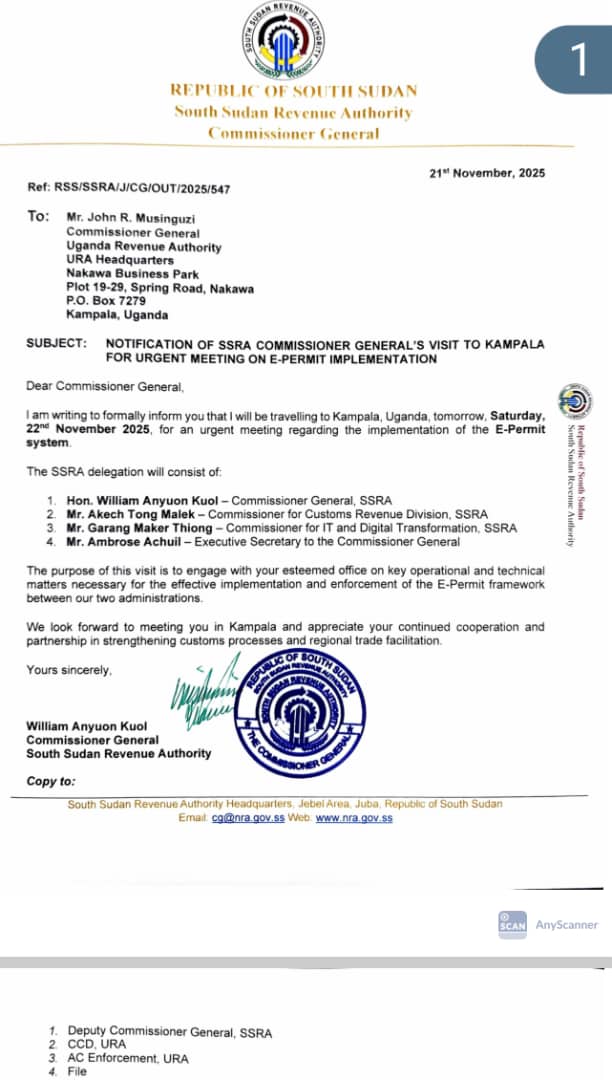
    Following the letter dated November 21, 2025 and referenced RSS/SSRA/J/CG/OUT/2025/547, the SSRA CG notifies the URA Commissioner General about the unscheduled urgent meeting regarding the implementation and enforcement of the E-Permit system between the two administrations.

    However, the URA Commissioner General has taken a lead in protecting both Ugandan and Sudanese traders by swiftly suspending the E=Permit enforcement for the destined goods to South Sudan due to predicted and detected adverse effects of the system.

    Following the controversy, there is already suspicion, delays, and rising business costs that have continued to cast a long shadow over cross-border trade, fueling fears that private enrichment is taking precedence over public revenue and regional integration.

    It should be noted that SSRA introduced the use of electronic import permits, a system they argue has been interpreted by some Ugandan enforcement teams as mandatory for goods entering South Sudan through Uganda whereas not.

    Stakeholders claim that this has led to instances in which officials on the Ugandan side began enforcing requirements that are not yet harmonized under regional frameworks.

    Business associations, traders and transporters contend that such actions could contradict regional trade agreements governing the free movement of goods and persons, including protocols under the East African Community (EAC) and related bilateral trade arrangements. They warn that additional layers of documentation may create delays, raise transport costs, and disrupt supply chains vital to both economies.

    “We are concerned that these new procedures, which appear to be outside the agreed regional frameworks, are slowing down trade and causing uncertainty for businesses,” said one of the concerned traders. “We need clarity from both governments.”
    Persistent confusion at the Uganda–South Sudan border points has intensified after traders, transporters, and civil society monitors alleged that a private company, working in connection with officials in South Sudan, is behind a controversial electronic import-permit system that many believe is driving unofficial fees and double taxation on goods bound for Juba.


    According to multiple trader associations, the electronic import permit system appears to have been initiated through a private company whose role has not been publicly clarified. Transporters report that they are often told they cannot proceed without purchasing these electronic permits, even when they have already paid customs duties at designated points.
    The way this system is designed, there are fears of double taxation as well as revenue leakage. Economic analysts monitoring the situation warn that if the allegations are verified, the scheme could be siphoning significant revenue away from official South Sudan government channels, leaving both traders and the state short-changed.

    The innocent traders are subjected to paying normal customs duties, border processing fees and additional charges linked to the electronic permit system. This is unfair because the receipts issued allegedly lack clear government coding and this may lead to funds being diverted to private accounts rather than the national treasury.

    A regional trade expert said “South Sudan’s economy is fragile, any unmonitored extractions, legal or otherwise, directly undermine public revenue and distort the cost of goods in the market.”
    On the Ugandan side, enforcement officers appear to be acting on what traders describe as ambiguous directives. This has created a scenario in which Uganda may inadvertently be enforcing requirements not recognized under regional law, potentially placing the country in conflict with EAC commitments.
    Prominent traders contend that neither the EAC nor bilateral Uganda–South Sudan agreements provide for electronic import permits issued through private intermediaries.
    The confusion has also strained the crucial Elegu–Nimule corridor through which a significant share of South Sudan’s essential imports pass. The transport delays and informal fees are already contributing to higher commodity prices in Juba and surrounding counties.

    CALLS FOR POLICY CLARITY

    Civil society groups, chambers of commerce, and logistics unions are now demanding a formal investigation into: the legal authority behind the electronic permit scheme, the identity and mandate of the private company involved, the transparency and accounting of fees collected and Uganda’s basis for enforcing a system not formally recognized regionally.

  • What role do professional Enablers play in tax fraud in Uganda

    What role do professional Enablers play in tax fraud in Uganda

    While most discussions around tax fraud focus on businesses and individual taxpayers, a growing area of concern is the involvement of professional enablers—accountants, auditors, lawyers, and tax consultants—who design, facilitate, or conceal fraudulent tax arrangements.

    These actors often operate behind the scenes, using their expertise and credibility to manipulate Uganda’s tax system.

    Professional enablers have a unique role. They are trusted advisers who understand tax law, financial reporting, and legal compliance. But when this knowledge is used to circumvent tax obligations rather than comply with them, the result is sophisticated fraud that is harder to detect and prosecute. In recent years, URA investigations have uncovered cases involving reputable firms colluding with clients to understate income, inflate expenses, forge invoices, or create fictitious entities.

    One notable case in 2023 involved a medium-sized audit firm in Kampala that prepared fraudulent books of account for a chain of restaurants. The firm helped the business understate gross receipts and inflate supplier invoices, leading to an under-declaration of over UGX 1.2 billion in VAT and income tax. Upon investigation, it was revealed that the same firm had manipulated records for at least four other clients using a similar template.

    Another common scheme involves law firms facilitating land transactions in which sale values are deliberately under-declared to evade Capital Gains Tax and stamp duty. These professionals not only draft the fake sale agreements but also advise clients on how to conceal the real purchase consideration through cash payments or offshore transfers.
    The Tax Procedures Code Act, 2014 (as amended) defines aiding and abetting tax evasion as an offence, punishable by penalties or imprisonment.

    However, many enablers rely on gaps in enforcement, professional privilege, and their perceived immunity due to social standing. As a result, tax fraud facilitated by professionals often goes unchecked unless detailed audits or tip-offs occur.
    To address this, URA has launched a dedicated High-Risk Professionals Compliance Programme (HRPCP), targeting professionals who repeatedly appear in non-compliance cases.

    Under this initiative, tax advisors and accounting firms with clients flagged for tax anomalies are themselves investigated and required to explain their role in return preparation, recordkeeping, and structuring.

    Additionally, URA is working closely with regulatory bodies such as the Institute of Certified Public Accountants of Uganda (ICPAU) and the Uganda Law Society (ULS) to ensure that members found complicit in tax fraud face disciplinary action. Several cases have already led to sanctions including deregistration and suspension of practising licenses.

    There is also growing focus on mandatory registration of tax agents and increased accountability in the tax advisory space. URA is currently developing a registry of authorised tax practitioners, and only those meeting ethical and technical standards will be allowed to represent clients before the authority.

    Professional enablers must understand that their reputation, licence, and liberty are at stake. The days of impunity are fast fading as URA tightens its enforcement and harnesses data analytics to identify suspicious patterns. Accountants, auditors, and legal advisers must serve as ambassadors of compliance—not architects of fraud.

    Ultimately, curbing tax fraud in Uganda requires not only targeting the taxpayers who evade, but also the professionals who make it possible. Without enablers, many fraud schemes would fall apart. It’s time to hold all parties accountable.

  • How to prevent Tax Fraud in the Real Estate Business Sector

    How to prevent Tax Fraud in the Real Estate Business Sector

    Here are the Modes of Tax Evasion in Uganda’s Real Estate Sector

    A common tax evasion tactic in Uganda’s real estate sector involves developers deliberately declaring lower property sale values to the Uganda Revenue Authority (URA) to reduce Capital Gains Tax liabilities. For example, a property sold for UGX 500 million may be reported at UGX 300 million, with buyers and sellers often colluding to conceal the true transaction amount. This deliberate underreporting significantly erodes tax revenues, depriving the government of funds needed for public services and infrastructure development.

    Some developers avoid taxation entirely by selling properties “off-book,” particularly in peri-urban areas like Wakiso and Mukono, where cash or mobile money transactions leave no paper trail. Additionally, developers create multiple shell companies to rotate property ownership among them, obscuring true beneficiaries and evading taxes. For instance, a developer may “sell” land to a subsidiary at an artificial price to claim false expenses or avoid Capital Gains Tax, making it difficult for authorities to trace real transactions without whistleblower assistance.
    Another evasion method involves misclassifying developed land as agricultural to benefit from lower property tax rates, even when the land hosts housing units, a practice reported in districts like Wakiso. Developers also inflate construction costs using fake invoices to reduce taxable profits, thereby minimizing Corporate Income Tax. Without independent audits or verification mechanisms, such fraudulent claims often go undetected during URA reviews.

    Multinational real estate firms exploit transfer pricing loopholes by charging excessive management fees to parent companies abroad, artificially reducing local profits and Uganda’s tax base. Additionally, some developers declare only a fraction of their occupied rental units to URA while collecting rent from all. Without cross-checking utility records or occupancy data, tax authorities rely on incomplete self-declarations, allowing significant revenue leakage. Strengthening audits, enforcing transfer pricing regulations, and improving data-sharing between agencies are critical to curbing these practices.

    Structural and regulatory gaps enabling evasion

    A. Weak Integration Between URA, Land Registries, and KCCA

    The Uganda Land Commission and the Ministry of Lands have not fully digitized their records or integrated them with URA. This weak linkage allows for manipulation of title records. Developers exploit this to hide sales or change land classifications. Additionally, there is no real-time database linking KCCA and municipal authorities with URA to track construction permits. Developers construct large buildings without ever being flagged for tax registration. This allows them to stay under the radar.

    B. Absence of a Property Valuation Database

    The Uganda Revenue Authority (URA) currently relies on self-reported property values due to the absence of a reliable valuation registry, creating opportunities for tax evasion. Developers exploit this weakness by deliberately undervaluing properties to reduce tax liabilities. Implementing an automated valuation system would establish objective, data-driven property assessments based on real market conditions. This technology would minimize manipulation while ensuring fair and consistent tax calculations. Such a system would significantly strengthen URA’s ability to capture accurate property values and maximize tax revenues.

    Strategies to stop evasion

    A coordinated effort between URA, KCCA, the Ministry of Lands, and local councils to integrate their property databases is crucial for combating tax evasion. Establishing a centralized digital portal would enable real-time tracking of property transactions and unregistered developments. This system would automatically flag discrepancies between reported values and actual market prices. Rwanda’s successful implementation of similar reforms demonstrates significant potential for increased tax revenues. Uganda could achieve comparable results by adopting this integrated approach to property registration and valuation.

    Mandating e-invoicing for all real estate transactions through the URA portal would create full transparency of property-related financial flows. This digital linkage would automatically capture sale prices, rental income, and construction expenses in real-time. The existing EFRIS system, when extended to the property sector, could effectively eliminate fake invoice schemes and underreporting. Such integration would provide URA with verifiable transaction data to cross-check developer declarations. Complete adoption of this electronic tracking system would significantly reduce tax leakages in Uganda’s booming real estate market.
    Use Utility Data for Cross-Verification. Utility data from UMEME and NWSC provides URA with powerful verification tools against landlord tax declarations. By comparing reported rental units with active water and electricity connections, authorities can easily detect underreported occupancy. For instance, a landlord declaring 5 rented units while 20 have utility services would trigger immediate scrutiny. This automated cross-checking system would significantly reduce undeclared rental income. Such data integration offers a low-cost, high-impact solution to improve property tax compliance.

    Local council leaders (LC1s and LC2s) should be motivated to report new real estate developments in their communities through incentive programs. Their on-the-ground presence gives them unique awareness of construction projects and property sales that often go unrecorded. User-friendly digital tools like SMS platforms or mobile applications could facilitate easy, real-time reporting from these local officials. This grassroots monitoring system would significantly expand URA’s visibility into informal property transactions. By leveraging local knowledge with simple technology, Uganda could dramatically improve tracking of taxable real estate activities.

    Many small-scale property developers plead unfamiliarity with tax obligations as justification for non-compliance. URA should implement mandatory tax education workshops specifically tailored for real estate developers and landlords. These sessions should clearly explain applicable taxes, filing procedures, and penalties for evasion. Simplified guides and visual aids could enhance understanding for those with limited financial literacy. By improving tax awareness, URA can reduce unintentional non-compliance while strengthening enforcement against willful evasion.

    The government should partner with industry stakeholders like the Uganda Real Estate Agents Association (UREAA) to conduct targeted training programs for developers and agents. Since developers often view peer networks and professional associations as more credible than government agencies, this peer-led approach would foster greater trust and engagement. By leveraging UREAA’s influence, tax authorities can deliver practical guidance on filing procedures, allowable deductions, and transfer pricing rules in a format that resonates with industry players. Such collaborative education initiatives would not only increase voluntary compliance but also create a culture of transparency, reducing the perception of taxation as adversarial. Ultimately, this public-private partnership model would bridge the gap between regulators and developers, leading to higher compliance rates and a fairer real estate market.
    Local Council officials should receive financial incentives for reporting new construction projects and property sales in their jurisdictions. Their frontline position gives them unmatched visibility of unregistered real estate activities that escape formal tax systems. User-friendly mobile reporting platforms with photo verification capabilities would enable instant documentation of developments.

    This grassroots monitoring network would dramatically expand URA’s coverage of taxable property transactions. Such a system would pay for itself through recovered tax revenues from previously undocumented projects.
    URA should maintain and regularly update a public register of developers sanctioned for tax evasion, published quarterly on all government platforms. This naming-and-shaming mechanism would deter tax fraud by damaging offenders’ reputations and business prospects. Prospective property buyers could consult this “tax compliance blacklist” to identify high-risk developers before transacting. Public exposure of violators would create peer pressure for industry-wide compliance. Such transparency measures would complement enforcement actions while empowering consumers to make informed decisions.

    Uganda should mandate automatic financial data exchange with foreign real estate investors under international tax treaties. This would expose profit-shifting schemes using offshore shell companies to evade Ugandan taxes. Implementing the Organisation for Economic Co-operation and Development- OECD’s Common Reporting Standard would enable URA to track overseas transactions by these developers. Such reciprocal information sharing would particularly help monitor multinational developers’ transfer pricing practices. These measures would protect Uganda’s tax base while maintaining an attractive investment climate.

    Implementing a UGX 5 million cash transaction limit for real estate purchases would force payments through traceable banking channels. This creates automatic documentation of property transactions for tax enforcement. Similar cash restrictions in India (₹200,000) and South Africa (R25,000) have successfully reduced illicit deals. Uganda could replicate these proven anti-evasion measures in its property market.
    To enhance tax compliance in Uganda’s real estate sector, commercial banks should be legally required to verify developers’ URA tax clearance status before approving project loans, forcing developers to regularize their tax affairs to access financing. This compliance-linked lending approach, successfully implemented in Rwanda, would create strong incentives for proper tax declaration while improving overall sector transparency. By tying financial access to tax compliance, Uganda could significantly reduce developer tax evasion and increase revenue collection from the booming property market.
    Professionals such as surveyors, valuers, lawyers, and accountants play a critical role in the integrity of the tax system. When these individuals intentionally assist clients in evading taxes, such as by falsifying property valuations, issuing fake invoices, or structuring fraudulent transactions, they directly undermine revenue collection efforts. To deter such unethical behavior, it is essential that regulatory bodies impose strict disciplinary actions, including license suspension or revocation. Strengthening oversight and accountability within professional associations ensures that these trusted experts do not become enablers of tax fraud.
    Conclusion
    To effectively combat tax evasion in Uganda’s real estate sector, the government must adopt a comprehensive strategy that combines technology-driven enforcement, stronger collaboration with professionals, and targeted taxpayer education. By implementing these measures, Uganda can secure fair taxation, protect public revenues, and foster a more transparent property market that benefits both investors and the broader economy.

  • Stanbic Bank Wins URA’s Best Client Service Bank 2024 Award

    Stanbic Bank Wins URA’s Best Client Service Bank 2024 Award

    Stanbic Bank Uganda has won the award for Best Client Service Bank 2024 during a high-profile gala event recently hosted by the Uganda Revenue Authority (URA) in Kampala.

    The country’s biggest financial institution and the anchor subsidiary of Stanbic Uganda Holdings Limited, was also the recipient of the ‘Innovation Award’, specifically for the impact of the FlexiPay digital platform.

    On behalf of the bank, Sam Bulenzi, the Head of Information expressed gratitude for the recognition. He reaffirmed the bank’s unwavering commitment to deliver unparalleled services and fostering innovation in the banking industry.

    Bulenzi said Stanbic Bank has been on a journey to ensure 100% reconciliation of all taxes collected, and digitization has been a key enabler for this objective during the past four years.

    He said Stanbic’s innovative practices have set new benchmarks within the industry and solidified its position as a leader in banking innovation.

    He said, “As Stanbic Bank Uganda, we bask in the glory of this well-deserved accolade. The institution remains steadfast in living its purpose; Uganda is our home, we drive her growth and committed to continue raising the bar for exceptional client service and innovations in the financial sector.”

    Bulenzi said by winning the 2024 Client Service Award, it means that the bank has served URA brilliantly. Stanbic emerged as the Best TAT in client query resolution, Top Bank in terms of volume of collections and Top Bank in terms of value collected.

    In selecting Stanbic Bank for the ‘Innovation Award’, URA recognized the bank’s pioneering spirit and forward-thinking approach in the banking sector. This is highlighted by its efforts to introduce cutting-edge technologies like FlexiPay and digital services to enhance the customer experience.

    FlexiPay is a payment option that allows customers to spread out the cost of their purchase over a set period of time, often with no interest. This can make large purchases more manageable for customers who may not have the funds to pay in full upfront. FlexiPay is typically offered by retailers or financial institutions and involves making a series of smaller payments, instead of one large payment.

  • MTN Uganda CEO pays a courtesy visit to URA

    MTN Uganda CEO pays a courtesy visit to URA

    Sylvia Mulinge, the CEO of MTN Uganda is willing to support the taxman in the quest to expand the tax base. Speaking at the URA offices, where she made a courtesy call yesterday, Mulinge said that she is interested in partnering with URA in the digitization journey to ease compliance of all taxpayers.

    “We need to have a conversation on digitization to regulate the money that is floating in the economy so that we can win our country over the donors,” Mulinge said.

    Mulinge also thanked URA for the good stakeholder management for the last 25 years that makes them feel valued as taxpayers.

    The URA Commissioner General, John R Musinguzi on the other hand, appreciated the team for their continued compliance and contributing the largest amount of tax.

    “The relationship between us is a good one and we should have more meetings to discuss how to broaden the tax base, areas of taxation, and digitization of payments because it is the only way to improve revenue collection,” Musinguzi said.

    Musinguzi also appreciated the digitization move citing improvement in tax compliance from online betting companies. He suggested to MTN to further the partnership to integrate the existing technologies like the Electronic Fiscal Receipting and Invoicing Solution(EFRIS) to bridge revenue leakages.

  • URA & UNBS agree to improve Trader’s experience

    URA & UNBS agree to improve Trader’s experience

    Uganda Revenue Authority (URA) and Uganda National Bureau of Standards (UNBS) management are set to harmonise cargo handling.

    In a December 5, 2023 bilateral meeting, the two organisations agreed to explore ways that will improve inter-agency cooperation and client satisfaction.

    This follows a backlog of complaints from Customs regarding cargo release delays and complaints about UNBS-tagged cargo being released by Customs.
    The engagement not only addressed the issues that each agency has with the other, but also drew up strategies to enhance partnership, achieve respective mandates of quality assurance and revenue collection, and synchronize operations.

    The meeting agreed to introduce Standard Operating Procedures (SOPs) or Standard Level Agreements (SLAs) in order to reduce delays for taxpayers and enhance efficiency in clearing times.

    “We need well-defined SOPs and SLAs to help us with clearance timelines and improving service delivery to our clients,” Abel Kagumire, the Commissioner Customs stated.

    A number of issues hindering their work were brought up which included: customs entries that were not undergoing UNBS selectivity; manual release by URA for verification at the owners’ premises without informing UNBS; delays in Asycuda API modifications to enable integration with the new UNBS e-portal system; persistent non-compliance by certain clearing firms and limited space in some bonds made available to UNBS.

    Away from the challenges, both parties agreed to further investigate the tagging and un-tagging of consignments, hold monthly and quarterly meetings to resolve pertinent issues before they escalate and encourage bond In-charges to communicate with UNBS where permission is granted for verification at owners’ premises.

    Furthermore, it was suggested that field staff from UNBS should start taking part in physical verifications to minimize delays.

    Eng. Paul Musimami, the Deputy Executive Director Compliance at UNBS pledged their commitment to enhance service delivery and minimize delays in cargo clearance by implementing measures such as the provisional release of goods under seal.

    The duo planned and also agreed to hold an engagement with clearing firms in January 2024.