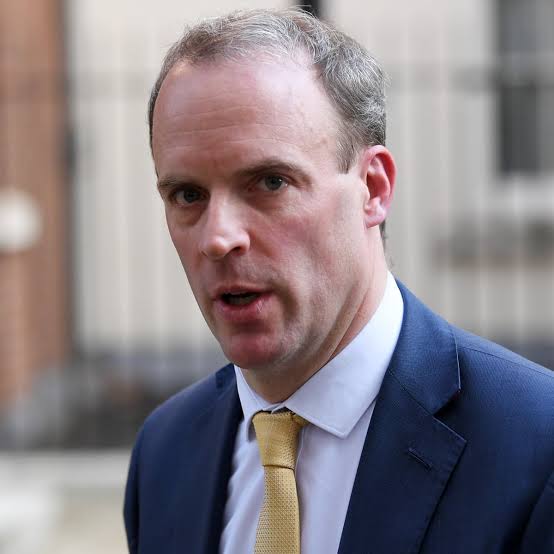
Tag: Dominic Raab

  • UK Foreign Secretary warns of growing threat of terrorism in Africa

    UK Foreign Secretary warns of growing threat of terrorism in Africa

    ·  Dominic Raab will highlight the growing threat of Daesh-linked groups in Africa

    ·  New UK funds will support efforts to combat terror in the Lake Chad Basin region

    ·  Foreign Secretary will also voice concern at recent violence in north-east Syria

    The UK Foreign Secretary will announce today (Monday) new UK funding to fight the growing threat of terrorism in West Africa.

    At a meeting of the Global Coalition against Daesh in Rome this afternoon, Dominic Raab will commit £12.6m to support efforts to counter the group in the Lake Chad Basin, which covers north-east Nigeria, Cameroon, Niger and Chad. The funds will be used to support both the regionally-led military fight against Daesh, and projects encouraging its fighters to leave the terrorist group.

    Foreign ministers from more than 45 countries are meeting today to discuss deepening cooperation to combat Daesh and its affiliate terrorist groups, including emerging threats across the African continent.

    The UK will highlight concern over the fragile security situation in Iraq and violence in displacement camps and detention centres in north-east Syria. Dominic Raab will urge Coalition partners to come together to tackle this pressing threat and target the longer-term drivers of terrorism, both in the Middle East and in areas of Africa where attacks from Daesh-linked groups have been growing,

    The UK is funding a new Conflict, Stability and Security Fund programme for the Lake Chad Basin region of West Africa, where Daesh’s affiliate, known as Islamic State West Africa (ISWA), is responsible for significant violence.

    This will support regional military efforts to counter Daesh and other groups, as well as efforts to safely demobilise suspected low-level members of terrorist groups.

    Foreign Secretary, Dominic Raab, said:

    “Two years since Daesh’s territorial defeat in Iraq and Syria, the threat of Daesh and its hateful ideology has not gone away. Worryingly it continues to grow in Africa which is why we must work with our Coalition partners to fight its poisonous propaganda on all fronts.

    “We stand shoulder to shoulder with our African partners to tackle the growing threat from Daesh-linked groups across Africa, particularly in the Lake Chad Basin.”

    Daesh recently released a new speech by its spokesman, the first since October 2020. The spokesman congratulated affiliates for their attacks, including in West Africa. Islamic State West Africa (ISWA) in Nigeria and the Lake Chad Basin regularly issues propaganda boasting horrific violence against both civilian and military targets. The funding announced today will help counter such propaganda.

    As set out in the Government’s Integrated Review, the UK is committed to burden-sharing with its security allies, and to serving as a “force for good in the world”.

    Monday’s meeting in Rome will mark the first time Global Coalition foreign ministers have met in person since November 2019, and will be co-hosted by Italian Foreign Minister Luigi Di Maio and US Secretary of State Anthony Blinken.

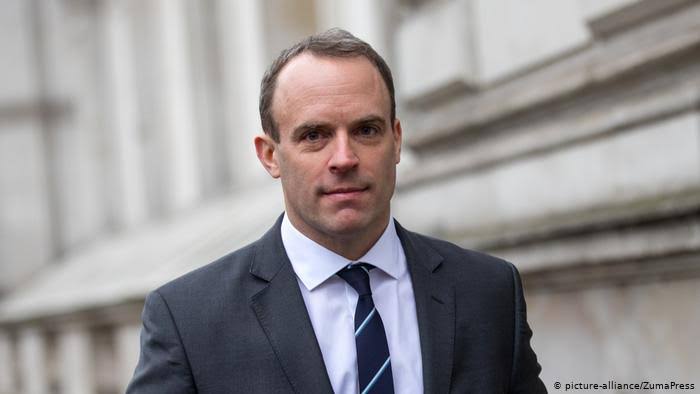
  • UK Foreign Secretary makes case for UK as a ‘Force For Good’ in keynote speech

    UK Foreign Secretary makes case for UK as a ‘Force For Good’ in keynote speech

    Foreign Secretary Dominic Raab set out how the UK’s role as a force for good in the world will be the “defining feature of Global Britain for the next decade”.

    In a keynote speech at Aspen Security Forum he stressed the need for the UK to use its force “because without power, without economic, military, diplomatic, cultural clout, we can do nothing“.

    And he made it clear that our force must be used to increase global security and living standards, both at home and across the world, in the face of a decline in democracy around the world.

    He argued that the UK’s force for good ambitions are “the right thing for a leading power to do, and it is squarely in the interests of the British people“.

    Following yesterday’s publication of the Government’s Integrated Review the Foreign Secretary explained how it provides a strategic blueprint for the UK’s foreign policy and national security approach until 2030.

     He said: “The Integrated Review provides a road-map, guided by our moral compass, our history, and our present day mission as a force for good in the world.

    “From our inventors to our entrepreneurs, from our diplomats and aid experts, to our brave armed forces all the people involved in delivering Global Britain share the unifying sense that we are part of a shared planet.

    “We believe that we can and should help alleviate the worst suffering in the world that we have a moral responsibility and an indivisible stake in our planet, our global economy, our global eco-system and the conditions of peace and stability that underpin them.”

    The Foreign Secretary will make clear that the UK’s motivation for its ambitious strategy is underpinned by a recognition that democracies and the institutions that underpin them are facing their greatest threat since the end of the Cold War. 

    He said: “Democracy is in retreat. This decade, the combined GDP of autocratic regimes is expected to exceed the combined GDP of the world’s democracies, but think about what that means for a second. 

    “Tyranny is richer than freedom, and that matters to us here at home. Because stable, freedom-respecting democracies are much less likely to go to war, house terrorists or trigger large scale flows of migrants and they are generally, not always, but generally easier to trade with, and easier to cooperate with to solve our shared problems.”

  • New Foreign, Commonwealth & Development Office will lead global action to ensure the world’s poorest are protected from ravages of coronavirus and famine

    New Foreign, Commonwealth & Development Office will lead global action to ensure the world’s poorest are protected from ravages of coronavirus and famine

    ·       Foreign Secretary urges countries to step up alongside the UK to fight back against coronavirus and growing risk of famine in developing countries.

    ·       UK announces a new £119m aid package to combat threat of coronavirus and famine as it takes on the G7 and COP26 Presidencies.

    ·       Dominic Raab appoints former Department for International Development Acting Permanent Secretary, Nick Dyer, as UK’s first Special Envoy for Famine Prevention and Humanitarian Affairs.

    The UK will lead a global call to action to protect the world’s poorest people from coronavirus and the increasing threat of famine, the Foreign Secretary Dominic Raab announced today (2 September 2020).

    The coronavirus pandemic, conflict, locust swarms and climate change have left 250 million people worldwide facing extreme hunger this year, with parts of Yemen, South Sudan, Nigeria and Burkina Faso on the brink of famine. Without international attention, many more will die from hunger and disease, and the pandemic will continue to spread in developing countries and to the wider world.

    As the new Foreign, Commonwealth & Development Office (FCDO) is inaugurated today, the Foreign Secretary pledged to use the UK’s diplomatic levers and aid expertise to build a stronger international consensus to fight back against the devastating impacts of coronavirus, conflict and climate change.

    The UK will commit a new £119 million aid package to tackle the combined threat of coronavirus and famines, which is expected to help alleviate extreme hunger for over 6 million people in Yemen, Democratic Republic of Congo (DRC), Somalia, Central African Republic, the Sahel, South Sudan and Sudan.

    Alongside the aid package, Dominic Raab has appointed Nick Dyer as the UK’s first Special Envoy for Famine Prevention and Humanitarian Affairs to work in partnership with other donors, UN agencies, NGOs and foundations to help prevent catastrophic famine.

    Foreign Secretary Dominic Raab said: “Coronavirus and famine threaten millions in some of the world’s poorest countries, and give rise to direct problems that affect the UK, including terrorism and migration flows.

    “Global Britain, as a force for good in the world, is leading by example and bringing the international community together to tackle these deadly threats, because it’s the right thing to do and it protects British interests.

    “We can only tackle these global challenges by combining our diplomatic strength with our world-leading aid expertise.”

    As the UK takes on the presidencies of the G7 and COP26, the Foreign Secretary will urge other countries to step up and help the developing world, as it faces a series of devastating challenges.

    The UK is already leading the way in the international search to find a coronavirus vaccine and has committed to equitable access for all to a successful vaccine, treatments and tests. It is the largest donor to Gavi, the Vaccine Alliance, which is helping to make sure the poorest countries can access any Covid-19 vaccine.

    In addition, the UK will continue to use its seat on the UN Security Council to call for life-saving humanitarian access for everyone who needs it and hold countries to account on their international legal obligations to allow aid workers to operate impartially in conflict zones. 

    The UK has committed to spending 0.7% of our national income on aid, and the formation of the FCDO today will make sure our diplomatic influence and development expertise are combined to the best effect on the global stage.

    The ongoing Integrated Review will inform the strategic priorities of the new department, to make sure UK aid and diplomatic efforts are a force for good and support the national interest.