Tag: Crane Bank

  • Celebrations At Crane Chambers as Court in London faults dfcu Bank over illegalities in Crane Bank takeover

    Celebrations At Crane Chambers as Court in London faults dfcu Bank over illegalities in Crane Bank takeover

    The Court of Appeal from the High Court of Justice Business and Property Courts in England issued a judgement quashing earlier decision by the lower court exonerating DFCU bank and its shareholders from fraudulently taking over Crane Bank.

    The Court of Appeal contends with Sudhir Ruparelia and 7 other applicants that DFCU bank and its shareholders bought Crane Bank Limited (CBL) through a well-crafted corruption scheme involving the officials of Bank of Uganda.

    The Court also recommends that Bank of Uganda officials at the center of the transaction should be prosecuted of corruption.

    The ruling comes against a backdrop of a lower court judgement in which a High Court of Justice of England and Wales on October 19, 2022, Lord Pelling QC sitting in London absolved both DFCU and BoU of wrongdoing in $211 million litigation.

    Judge Pelling based the ruling on grounds that, there was no serious issue to be tried, declaring that the Court has no jurisdiction to try the appellants’ claims against the respondents and setting aside service of the Claim Form on them.

    The Judge rejected the appellants’ arguments that their claims, or some of them, fell (or arguably fell) within one or more of the exceptions to the foreign act of state rule.

    However, 3 judges of the Court of Appeal ruled that the High Court should have found that there was at least a serious issue to be tried which include that the sale by BOU to DFCU was commercial rather than sovereign in character and all of the executive acts in question engaged the English public policy of combatting and not giving legal protection to bribery and corruption, therefore falling outside the foreign act of state rule (“the Public Policy Exception”).

    The 3 judges who include Justice Phillips, Justice PoppleWell and Sir Julian Flaux heard that the Appeal raised issues as to the scope and application of the foreign act of state rule and of the limitations and exceptions to which it is subject.

    “The first appellant, Crane Bank Limited (“CBL”), was formerly a major commercial bank in Uganda. The second to seventh appellants are shareholders in CBL. In these proceedings the appellants assert that from about Spring 2016 senior Ugandan government officials and officials of the Bank of Uganda (“the BoU”) engaged in a corrupt scheme to take control of CBL, making improper use of statutory and regulatory powers to do so, and then to sell its assets for the benefit of the parties to the scheme. The appellants allege that the first respondent (“DFCU Bank”), another Ugandan commercial bank, joined the corrupt scheme as purchaser of CBL’s assets from the BoU (acting as receiver of CBL), that purchase being at a gross undervalue. DFCU Bank’s holding company (the second respondent) and certain current and former executives and directors of DFCU Bank (the third to fifth respondents) are also alleged to have joined the scheme.’

    As a consequence, the appellants claim damages in excess of £170 million for conspiracy to injure by unlawful means and/or an account of profits alleged to have been made by the respondents (and all other defendants) by their dishonest assistance of the corrupt scheme or equitable compensation. The appellants further claim that DFCU Bank is liable to account for sums received on the basis of knowing receipt of assets transferred in breach of fiduciary duty. It is common ground that all these claims are governed by Ugandan law.”

    Ruling
    “I would allow the appeal on the ground that there are serious issues to be tried as to whether part or all of appellants’ claims fall within the Commercial Activity Exception and/or the Public Policy Exception.” LORD JUSTICE PHILLIPS ruled.

  • dfcu Bank takes over Crane bank officially

    dfcu Bank takes over Crane bank officially

    dfcu Bank has acquired all Crane Bank assets and assumed all liabilities. The takeover was confirmed by both the Central ‘Bank of Uganda’ (BoU) and ‘dfcu bank’. The Kyadondo Road based financial institution will close all Crane Bank branches from 28th – 29th January to effectively integrate both Crane Bank and dfcu bank systems.

    “We wish to inform our customers that all dfcu Bank branches and former Crane Bank branches will open from 8:30am to 6:00pm on Friday, 27th January 2017 and will remain closed on 28th-29th January, to effectively integrate both Crane Bank and dfcu Bank systems. Existing dfcu Bank customers will access their accounts via ATM and through mobile and internet banking platforms. Any inconveniences are highly regretted,” dfcu management said.

  • Crane Bank takeover backfires as billions are withdrawn

    Crane Bank takeover backfires as billions are withdrawn

    The banking sector has been left in fear after Bank of Uganda’s decision to take over management of Crane Bank, the third largest financial institution in the country, ignited a fear and shaken trust in the country’s financial sector.

    Our Sources yesterday got a confidential report, showing billions of shillings has since been hurriedly withdrawn from Crane Bank by several customers in what appears a loss of trust in the new management.

    Crane-bank

    “People are worried of their savings. The bank run has been on for several months but the recent development has caused more panic. The deposits are shrinking at a faster pace than we anticipated,” said a source at the troubled bank.

    This decision might cause more banks to face tough times as the customers will no longer trust them with their money especially with the presence of Mobile Money. Other business people have reasoned out that they could put their money in real estate business than the panicky banking sector.

    The Central Bank last week put Crane Bank under statutory management due to being a “significantly under capitalised institution as defined by law.”

    BoU further said the commercial bank “poses a systemic risk to the stability of the financial system and that the continuation of Crane

    Bank’s activities in its current form is detrimental to the interests of its depositors.”

    Despite assuring customers and the public that it will “continue to protect depositors’ interests and maintain the stability of the financial sector,” BoU has failed to win in the court of public opinion hence the panic.

    Experienced bankers told this website that BoU should not have rushed to takeover Crane Bank on grounds of being undercapitalized especially at a time when the private financial firm was about to announce a potential investor.

    13012735_1230063010345130_254376932581222492_n

    BoU officials who talked to us on condition of anonymity said the Central Bank “has been engaging Crane Bank to take corrective steps since last year; and Crane Management and shareholders fell short.”

    Former top officials at Crane Bank said several investors were interested but “we wanted one with strong potential to consolidate our network expansion with the view of extending services to the indigenous businessmen and farmers in upcountry areas. BoU was impatient.”

    Officials further said Bank of Uganda should have provided capital at low rates to keep Crane Bank strong during the liquidity squeeze triggered by non-performing loans to indigenous businessmen.

    “Bank of Uganda itself has been making losses for three years in a row. How can its leadership be trusted at Crane Bank? People deposit money in banks basing on three things: – trust of shareholders, directors and management,” said a former banking officer who preferred anonymity to speak freely.

    “Look at the bigger banks; 85 percent of their profits are bank charges. The profits are repatriated back home. And they don’t invest in our farmers like Crane Bank. Why take a man down who is trying to give indigenous people ability to grow and create greatness?” the ex-banker wondered.

    Economy on its knees

    Government sources said Crane Bank was accused of flouting corporate governance and management rules and that capital erosion was due to provision for high NPLs; prohibited insider loans; and misstatement of

    Bank’s financial position due to failure to follow proper accounting standards.

    Yet, ex Crane Bank sources said they at all times received clean bills of health from auditors, wondering why the Central Bank did not take action long ago if it found the financial institution’s accounts lacking integrity.

    “It’s just throwing around excuses. The problem is not Crane Bank’s liquidity problems but failing to manage the economy properly,” an ex official at Crane Bank told this investigative website.

    It is understood some of the bad loans given by Crane Bank were for real estate which has gone down. That’s partly the reason for the NPLs.

    Senior bankers told this website that borrowers should prepare for tough times.

    “The guys that will suffer are those that borrowed. They will be asked to pay earlier than they had anticipated,” said a senior banking official in Kampala.

    Some of the distressed companies seeking a bailout from government are yet to clear loans worth billions of shillings from Crane Bank.

    For example, Club Silk is struggling with a loan of Shs5bn from Crane Bank. Others are AZK Enterprises (Shs1.2bn), Franco Ssonko (Shs

    3.5bn), Hooray Investments Holdings (Shs 120bn), Shumuk Aluminum Industries Ltd (Shs 17bn), and Sebei Cooperative (Shs 500m).

    Most of the affected companies are engaged in mining, manufacturing, hospitality, agro-processing and real estate.

    They claim failing short to finance their bank loans was caused by low profitability, poor performance of the economy and high interest rates.

    High on the list of companies struggling in what is seen as a recession are Steel Rolling Mills Ltd which has a liability of Shs 75bn from Standard Chartered Bank.

    The steel processing firm’s asset value is estimated at Shs 132bn and currently employs about 1,000 workers.

    Steel & Tube Company which employs 2,500 people in Kampala is yet to clear two facilities worth Shs 99bn from Stanchart and Bank of Africa.

    In the manufacturing sector, Shumuk Aluminum Industries has failed to pay back a loan of Shs 8.2bn from DFCU bank; Shs 6.6bn from Baroda Bank and Shs 17bn from Crane Bank.

    Officials at Crane Bank say the big companies’ challenges directly affect the profitability and performance of its lenders.

    Shilling depreciation

    Other companies attribute their woes to the depreciation of the shilling against the United States Dollar.

    According to Bank of Uganda, the depreciation pressures which started in early 2014 continued through June 2015, with the shilling depreciating by 1.8 percent year-on-year on a trade weighted basis and by 29.1 percent against the USD to an average mid-rate of Shs3, 398.49 per USD.

    The depreciation pressures were largely driven by the continued global strengthening of USD; continued weakening of the current account deficit; reduction in Foreign Direct Investment (FDI) inflows on account of deferred investments in the oil sectors because of low global oil prices; net portfolio outflows and elevated demand for foreign exchange from the key sectors of the economy including energy manufacturing and offshore players; and bearish sentiments in the foreign exchange market.

    The South Sudan war has equally affected cross border trade thus leading to low foreign exchange revenues from the troubled country into Uganda’s economy.

    The powerful Foreign Affairs Minister Sam Kutesa who over the weekend attended the wedding reception of Sudhir Ruparelia’s daughter, Sheena, said “reaffirmed they will be there for Sudhir as he has been there for them.”

  • ‘BoU killing Uganda’s Financial Sector’- Crane Bank

    ‘BoU killing Uganda’s Financial Sector’- Crane Bank

    Crane Bank insiders have spoken out following Bank of Uganda’s decision to take over management of the commercial bank and suspension of its board. For the last 6 months, Crane Bank management has been engaging Bank of Uganda as it also negotiated with potential investors to recapitalize, an insider at Crane Bank said expressing betrayal by the central bank.

    13012735_1230063010345130_254376932581222492_n

    “This is malice, Bank of Uganda has made it difficult for us to recapitalize. One wonders what their intentions are. We are engaging investors to shares in the bank and here comes Bank of Uganda. We are not a broke bank, look at our assets, we can recover,” the insider, who has been privy to the negotiation lamented.

    Sudhir Ruparelia, the owner of Crane Bank in various media reports confirmed that the bank was talking to a potential investor to buy some shares in the bank. Bank of Uganda said any commercial bank can sell shares to a potential investor but must meet the requirements of the law. The central bank also said Crane Bank was financially stable when social media messages suggested that the commercial bank was dissolving. A statement by Christine Alupo, Bank of Uganda communication director refuted such claims.

    An official at the bank has predicted that such decision by Bank of Uganda will hurt the economy. He said the central bank is malicious. He warned that banks will suffer as people will not trust them with their money. This he said will result into disastrous liquidity.

    “People will get their money out of banks and the banks will have no money. This is not good for the industry which is fragile. This is a mistake by the central bank.” The official explained.

    img_2811

    Bank of Uganda governor said the action to take over management of Crane Bank was taken upon a determination by Bank of Uganda that Crane Bank Limited is a significantly undercapitalized institution as defined by the law, poses a systemic risk to the stability of the financial system and that the continuation of Crane Bank’s activities in its current form is detrimental to the interests of its depositors.

    Mutebile has since appointed Statutory Manager Edward Katimbo Mugwanya to act as Managing Director.

    It remains unclear if BoU will get another investor or hand over the bank to another financial institution in Uganda.

  • Bank of Uganda takes over Crane Bank

    Bank of Uganda takes over Crane Bank

    The Bank of Uganda (BoU) has with effect from today, 20th October 2016, taken over management of Crane Bank Limited.

    Bank of Uganda (BoU)  take over comes amid rumors that the bank was closing.

    img_2810

    ” I don’t normally comment on individual banks, however BoU is there to protect customers deposits and ensure a sound fine system, ” Mutebile said.

    img_2811

    Information reaching our desk shows BoU has also appointed a Statutory Manager of The Affairs of Crane Bank Ltd. Crane bank will remain open and operational as normal but under the management and control of Bank of Uganda.

    14690839_1234591473254111_5860810202532525702_n

  • Crane Bank speaks out on social media saga, assures customers of continued service

    Crane Bank speaks out on social media saga, assures customers of continued service

    The management of Crane Bank has spoken out on the social media saga rocking the financial institution. The bank has assured its customers that all is well with the institution and thanked them for the continued support and loyalty.

    img-20161015-wa0011

    The Crane Chambers Kampala Road based bank said with its customers, it has demonstrated its strength and solid base. The bank has promised and assured the general public of continued service.

  • ‘All WhatsApp messages, pictures about fate of Crane Bank circulating on social media are false’ – Management

    ‘All WhatsApp messages, pictures about fate of Crane Bank circulating on social media are false’ – Management

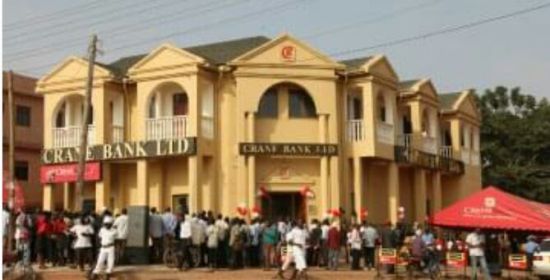
    The management of Crane Bank has called on the general public to ignore messages and pictures circulating on social media platforms about the bank. The management said a picture of people lining up to enter Crane Bank is an old picture taken during the opening of Crane Bank, Ntinda branch.

    This picture was taken during the opening of Ntinda branch years ago
    This picture was taken during the opening of Ntinda branch years ago

    “The picture they are sharing on social media is of Crane Bank Ntinda’s official opening long time ago but it is claiming people are lining up to pick their money from the bank. This is false. Work at Crane is moving on well and the public is urged not to be diverted, the bank is very safe.

    img-20161014-wa0016

    Our sources who passed at Ntinda branch say all is well and there is no cause for alarm. Another hoax is that of Katoto saying he is about to lose his life savings. All these are a hoax aiming at tarnishing reputation of the bank. This comes a day after Bank of Uganda (BoU) dismissed the baseless rumours about the bank’s rumoured closer.

    This is also false
    This is also false