Tag: Ministry of Gender

  • Minister Anyakun Esther Davinia  gives update on the Election for Representatives of the Workers to Parliament & District Councils

    Minister Anyakun Esther Davinia gives update on the Election for Representatives of the Workers to Parliament & District Councils

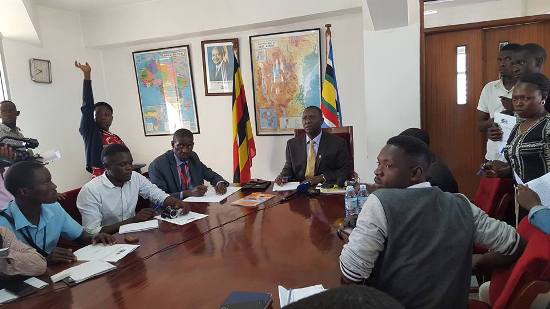
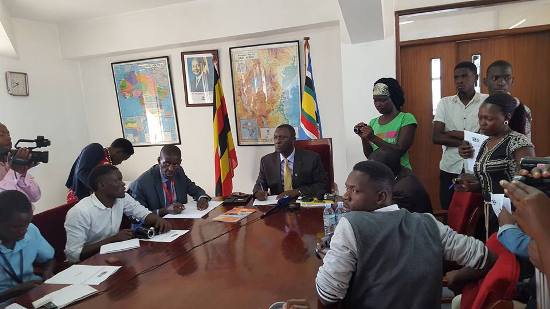
    The Minister of State for Labour, Employment and Industrial Relations Hon. Anyakun Esther Davinia updated the nation on the Election for Representatives of the Workers to Parliament and District Councils.

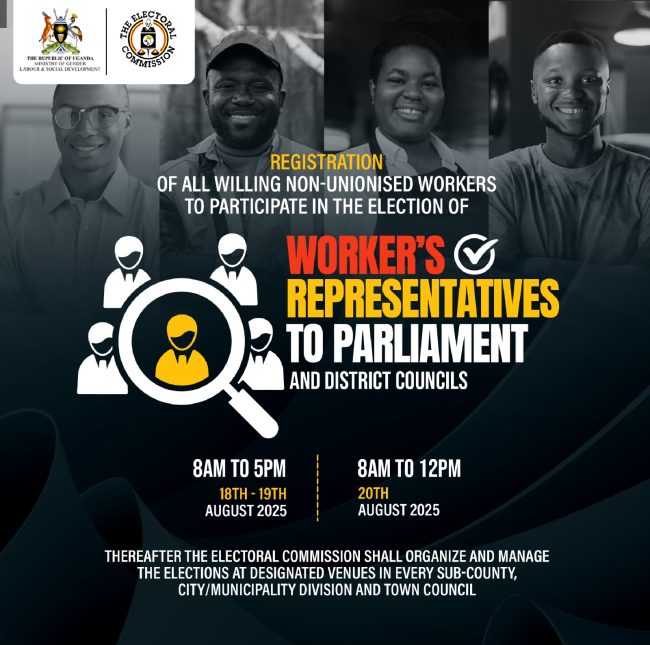
    Addressing the Media at the Media Centre about the registration and convening of willing non-unionised workers at Subcounty, City/Municipality Division and Town Council for the Electoral Commission to organize and manage elections.

    The Ministry in consultation with the Electoral Commission has scheduled conferences for the willing non-unionized workers’ election at Subcounty, City/Municipality Division and Town Council today Wednesday, 20th August 2025.

    Section 15 of the Parliamentary Elections Act, Cap.177 provides that the five workers representatives to Parliament shall be elected by an electoral college constituted by delegates as follows;
    the Chairman General, Vice Chairman General, Secretary General, Deputy Secretary General, Treasurer General and Deputy Treasurer General of NOTU and four other persons nominated by NOTU at least two of whom shall be women;
    the Chairman General, Vice Chairman General, Secretary General, Deputy Secretary General, Treasurer General and Deputy Treasurer General of COFTU and four other persons nominated by COFTU at least two of whom shall be women;
    the Chairperson, General Secretary and Treasurer of every registered Labour union;
    seven delegates nominated directly to the Electoral Commission by every registered labour Union at least three of whom shall be women.
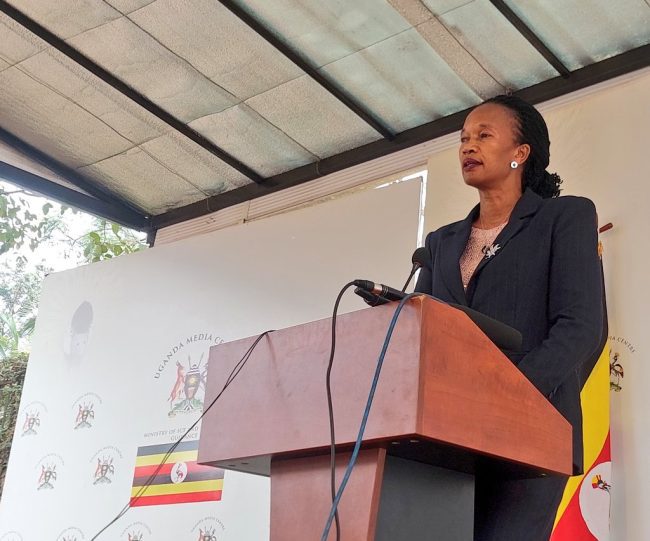
    Hon. Anyakun Esther Davinia addressing the Press

    Ten delegates at least three of whom shall be women, nominated by the non-unionised workers in each of the following regions –(i) Central (ii) Eastern (iii) Northern and (iv) Western. This provision requires the Minister responsible for workers to convene all willing non-unionised workers at every sub-county in Uganda for Electoral Commission to organise and manage the elections at the sub-county and district conference.

    Similarly, section 10 (g) of the Local Governments Act, Cap. 138 makes provision for the composition of district councils to include 2 members representing workers one of whom shall be a female elected in accordance with the Labour Unions Act. Furthermore, Regulation 3 the Labour Unions (Election of Workers Representatives to District Councils) Regulations, 2016 provide for two workers representatives to district council to elected by the district electoral college constituted by the electoral commission as follows:
    twenty delegates nominated directly to the Electoral Commission by the Secretary General of every registered labour unions with membership in the district, at least six of whom shall be women; and
    ten delegates, at least three of whom shall be women nominated by the non-unionised workers in the district.

    The same regulation requires the secretary general of a registered labour union to submit to the Registrar a list of the Members of the labour Union in each district for the Registrar to submit the same to the Electoral Commission.

    A registered labour union shall be eligible to submit its list of nominated delegates if it meets the following conditions;
    has been duly registered by the Registrar of Labour Unions for at least six (6) months prior to the elections in accordance with section 15(5) of the Parliamentary Elections Act, Cap. 177;
    has submitted proof of conducting its annual general meetings for the past three (3) years;
    has submitted its annual returns to the Registrar of Labour Unions for the past three years in accordance with section 49 of the Labour Unions Act, Cap. 228.

    Leaders of Labour Unions (Chairpersons, General Secretaries and Treasurers) who wish to be nominated must be registered with the Registrar of Labour Unions as officials of their respective unions. In addition to this requirement, all other eligibility criteria outlined in (5) below shall also apply to union leaders.

    A person is eligible to be nominated as a member of a registered union if he or she meets the following requirements;
    A citizen of Uganda aged 18 years and above;
    Has a National Identity Card;
    a registered voter with proof to that effect;
    is registered as a member of a Union.
    employed and his/her employment is verifiable by an employment contract; and
    is an employee with salary pay slips of five months preceding the nomination.
    has evidence of subscription/check off to the Labour Union for five months preceding the nomination.
    Official(s) of a Registered Labour Union, should have evidence of registration as official(s) by the Registrar of Labour Unions.

    A person is eligible to be registered as a willing non-unionised worker if he/she;
    is a citizen of Uganda aged 18 years and above;
    Possesses a National Identity Card;
    is a registered voter with proof to that effect;
    is employed and his/her employment is verifiable by an employment contract;
    verifiable payment record/slips for at least three months preceding the registration;
    holds a valid employment Identity Card;
    is not a member of a registered Labour Union; and

    To support this process, the Ministry has developed comprehensive guidelines on the Elections of Workers’ Representatives to Parliament and District Councils. These guidelines are intended to:

    support the Electoral Commission to develop a register for workers;
    ensure proper submission of nominated persons from the registered unions to the Electoral Commission;
    guide public officers who will participate in receiving and verifying nomination lists from the registered Labour Unions;
    guide the public on the registration of willing non-unionised workers for Electoral Commission to hold elections at the sub-counties, Districts and Regions; and
    guide public officers to conduct and supervise the process of registering willing non-unionized workers at Sub-Counties/Town Councils and Municipality Divisions.

    The Ministry has published this information in both print and digital media to enable the public to access details on:
    the legal framework governing these elections;
    procedures for submission of labour union membership lists;
    eligibility of registered unions to nominate representatives;
    eligibility for nomination as a member of a registered Labour Union;
    submission of lists of registered Labour Union members to the Registrar of Labour Unions;
    procedures for registration and participation of willing non-unionised workers in the elections;
    eligibility for registration as a willing non-unionised worker; and
    procedures for nomination of delegates for the election of Workers’ Councilors to Local Government Councils.

    Yesterday the ministry hosted sub-regional training for all Labour Officers, Community Development Officers and Officers designated to register the willing non-unionised workers about the exercise.

    It is the expectation of Government that all stakeholders will adhere to these provisions, thereby ensuring that the election of Workers’ Representatives reflects the aspirations of the labour-force and contributes meaningfully to Uganda’s development agenda.

    All necessary preparations have been completed to ensure the smooth execution of these activities. I therefore call upon all eligible workers, trade unions, employers, local authorities, and other stakeholders to actively participate and support this process as per stipulated timelines.

    Furthermore, all the willing non-unionised workers should ensure they report to every Subcounty, City/Municipality Division and Town Council to continue registration today Wednesday, 20th August 2025, from 8:00am to 12:00pm for the Electoral Commission to take over at 2.00pm to organize and manage elections.
  • Minister Tumwebaze wants Policy on Libraries reviewed

    Minister Tumwebaze wants Policy on Libraries reviewed

    The Minister of Gender, Labour and Social Development, Hon. Frank Tumwebaze has directed officials at the National Library of Uganda (NLU) to expedite the review of the policythat governs the libraries and publishing sector.

    While inspecting the NLU headquarters in Kampala on Tuesday, the Minister noted that the current policy framework had been overtaken by time and this was affecting the functionality of public libraries.

    “The culture of reading is an asset and a resource. Knowledge is wealth and it’s actually the future. We therefore urgently need a policy framework to guide publishing and libraries in Uganda,” Tumwebaze observed.

    He said this would go a long way in safeguarding the readers against objectionable content but also take care of the publishers’ intellectual property rights.

    Recalling his days as a student at Makerere University when they utilised the library along Buganda road, Tumwebaze said libraries shouldn’t be an option but necessary facilitiesestablished in each local government because people need them as information reference points.

    “For example, libraries should be places where people easilyaccess government policies and laws and all other authenticpublications like reports,” he said, adding that Libraries need to be established whether private or public, but under a uniform regulatory framework.

    On the advent of information overflow online, the Minister cautioned that not all information off internet is authentic and should be used with caution depending on the source.

    “We can’t have a generation that purely depends online. We must strengthen libraries because its stock up can easily be restricted to authentic content.” He noted.

    The acting Permanent Secretary, Ministry of Gender, Labour and Social Development, Mr. James Ebitu revealed that the review of the policy had been discussed at top management level and additional inputs were being made before it’s forwarded to Cabinet for approval.


    He was optimistic that the proposed changes would enable the libraries operate in a manner that fits the current information age.

    He also revealed that plans are underway to repossess NLU land in Nakawa for construction of a facility to house the libraries headquarters.

    Currently, NLU which operates under the gender ministry is resident in a rented building along Buganda road in Kampala.

    The NLU Director, Mr. Adonia Katungisa said there arecurrently 42 operational public libraries and over 100 community libraries in Uganda.

    He said its NLU’s mandate to collect, organise, preserve and disseminate Uganda’s documented heritage and also oversee local governments and communities in the establishment and management of public and community libraries, and also take lead in promoting a reading culture in the country.

    Katungisa added that it’s among their objectives to develop sound library services, plans and policies related to national development policies, priorities and aspirations and promised to ensure that the policy review is completed.

  • Minister Tumwebaze Meets with UN Women Delegation

    Minister Tumwebaze Meets with UN Women Delegation

    A delegation from the UN Women Country office in Kampala has today paid a courtesy call to the Minister of Gender, Labour and Social Development, Hon. Frank K. Tumwebazeduring which they discussed issues pertaining to the fightagainst Gender Based Violence (GBV) and the need to strengthen reporting on social development interventions.

    The UN Women team, including respective programme officers, was led by the Country Representative, Dr. Maxime Houinato while the Minister was flanked by the acting Permanent Secretary, Mr Ebitu James, the Commissioner Gender and Women Affairs, Ms Angela Nakafeero and her assistant Ms Margaret Kyomukama.

    The Minister called for renewed energy to fight GBV in society noting that the vice is prevalent although cases largely go unreported for various reasons.

    “GBV is real due to push factors like alcohol abuse and unfaithfulness among partners which has been escalated by technology adoption” The Minister said, adding that there is need to strengthen law enforcement and mind-set change among the populace.

    He also called for a review of how job opportunities can be quantified with investments in the social development sector.

    “Budgets must create jobs. Every public investment project should be subjected to a tool to establish what jobs are being created,” he observed.

    Dr. Maxime commended Minister Frank K. Tumwebaze for his vision saying it was forward-looking and with potential to cause impact.

    He revealed that half of UN Women’s intervention in Ugandais in the area of fighting GBV and violence against women.

    He decried the high cost implications of GBV and warned that it denies the communities much-needed development projects.

    “Uganda is incurring over Shs 77 billion in cost or opportunity costs in managing violence against women. This is a huge cost which could go into various development projects,” Dr. Maxime noted.

    He also emphasized the need to tackle GBV through a behavioural change approach.

    On the investment in social development interventions, Dr.Maxime decried the low value accorded to it and urged for increased lobbying to change the status quo.

    “We want people to be used to investing in the sector withoutthinking that it’s too much for Gender,” he noted.

    The Minister and the UN Women team agreed to have a follow up meeting where partnership in the areas discussed would be concretized.

  • Children off streets as Ministry of Gender drive gains momentum

    Children off streets as Ministry of Gender drive gains momentum

    Kampala: The number of destitute children on the streets around Kampala has drastically gone down following a Ministry of Gender, Labour and Social Development drive to have then withdrawn, rehabilitated and resettled.

    A survey conducted on Monday and Tuesday indicated that hotspots like Kitgum House, Wandegeya and Fairway roundabout as well as Kampala and Jinja roads among other areas were spotting no street children as was the phenomenon before the campaign.


    The Minister of State for Children and Youth Affairs, Hon. Florence Nakiwala Kiyingi, observed that the operation is barely in the third month but the results are already impressive.

    At the close of last Financial Year, the Ministry of Finance released Shs. 1 billion of the Shs. 3.4 billion that had been approved for the operation to evacuate and resettle the children whose numbers had exponentially grown especially in and around Kampala streets.

    Hon. Nakiwala says the funds were sent out to multipleinstitutions including the Ministry of Gender, Labour and Social Development, as the lead agency, Kampala Capital City Authority (KCCA) and Ministry of Internal Affairs among others that had a defined role to play in ensuring that the operations is successful.

    “I want to thank all partners for a job well done so far because I conducted an on-spot assessment of the hotspots where street children used to flock and I am happy to report that they are not there anymore,” Nakiwala noted.

    She specifically commended the civic actors, the various Children’s Homes where some of the children were taken for temporary custody and leaders of all categories in Kampala and beyond for pooling efforts together to ensure that the children are safely evacuated from the streets.

    She reported that the children are undergoing rehabilitation andresettlement while others are getting skilled in various fields, which is a path to becoming citizens that actively make a contribution to national development.

    Nakiwala also appreciated the general public in Kampala for heeding to the call against issuing handouts to children on the streets and reechoed the appeal to anyone willing to sponsor the children to do so through registered Children’s Homes.

    She revealed that all police units have been availed with a list of registered Children’s Homes in the country, which now add up to 160 spread across the regions, and emphasized that only those should be dealt with because their operations are sanctioned and monitored by Government.

    She appealed to the Ministry of Finance to release the balance of the Shs2.4 billion that was approved for the withdraw and resettlement of street children so that the momentum is maintained.

    The minister further notified the public that all abandoned children are supposed to be taken to the nearest police station as the immediate action. She cautioned that it’s against the Ugandan laws to take an abandoned child into your homes without the involvement of the police and probation officers.    

    “It is also wrong for Home owners or administrators to go around communities looking for children promising them scholarships and other niceties without the stipulated legal backing. Otherwise children should remain in the custody of their fathers and mothers or foster parents or better still in their original communities,” Nakiwala said.

  • Government disburses shs421m to women groups

    The Government through the Ministry of Gender, Labour and Social Development has disbursed Shs421m to help women initiate various commercial ventures under the new Uganda Women Entrepreneurship Programme (UWEP).

    According to the Ministry’s Permanent Secretary, Pius Bigirimana, the funds will benefit a total of 94 Women Groups in the districts of Otuke, Kamuli, Kisoro, Nakasongola, Kiruhura, Kaliro and Mayuge.

    Otuke got Shs 67.1 million for 8 women groups, Kamuli has Shs 60.5 million for 15 women groups, Kisoro got Shs 70.9 million for 21 groups, Nakasongola received Shs 45.8 million for 19 groups, Kiruhura Shs 68.5 million for 9 women groups, Mayuge got Shs 56.8 million for 14 groups and Kaliro got Shs 51 million for 8 women groups.

    Pius Bigirimana
    Pius Bigirimana

    Kaliro in particular will receive an extra Shs 30 million to bring their total allocation to Shs 81 million.

    “The beneficiary groups are composed of 10-15 members, and for the money sent out so far, there is a total of 1,222 women beneficiaries. It should however be noted that the seven districts that have received funding are part of the nine slated to get funds under the first schedule of disbarment.” Bigirimana said.

    The other districts awaiting funding include; Kampala City Council Authority, which was approved to receive Shs 127 million and Wakiso with Shs 211 million.

    Districts under the second schedule of disbursement includes; Kalangala, Ntungamo, Bundibugyo, Kayunga and Nebbi. Their fund allocations are yet to be approved.

    Files for Koboko, Kitgum and Kibaale are still being reviewed meanwhile the three districts of Moroto, Kole and Katakwi are yet to submit files for funding.

    The Permanent Secretary emphasized that the money is to be used by the respective groups to run businesses of their choice; make profit and payback for the benefit of other women in the same districts. He explained that repayments made within the first twelve months (one year) will not carry any interest while repayments made after 12 months will attract a service fee of 5% per annum. The service fee is only incorporated to cater for inflation.

    Minister of Gender, Labour and Social Development; Janat Mukwaya
    Minister of Gender, Labour and Social Development; Janat Mukwaya

    UWEP was initially pronounced by President Yoweri Museveni during last year’s commemoration of the International Women’s Day in Kabale District. Cabinet went ahead to approve the Programme on 3rd February, 2016 before a national launch was done through a Press Conference that was held at the Media Center on 10th February, 2016 by the Prime Minister Dr. Ruhakana Rugunda.

    The Programme is an exceptional Government initiative established with the ultimate aim of helping women gain access to interest-free credit while equipping them with skills for enterprise growth, value addition and marketing of their products and services.

    The National Programme Coordinator, Brenda Kifuko Malinga, said the programme is envisaged to increase participation of women in business development, increase their incomes, livelihood security and overall quality of life.

    “Through this initiative, the Ugandan woman’s aggregate contribution to national economic development is predicted to grow as they engage in various commercial ventures.” She noted.

    She added that UWEP is consistent with national planning frameworks including Uganda Vision 2040 which emphasizes reduction of gender inequality as a prerequisite for accelerating and sustaining social economic transformation. Furthermore, UWEP is in conformity with the regional and global obligations on gender equality and women’s empowerment that Uganda is party to.

    Initially implemented in the districts of Wakiso, Koboko, Kitgum, Kisoro, Bundibugyo, Kiruhura, Kaliro, Kamuli, Moroto, Katakwi, Mayuge, Nakasongola, Kalangala, Ntungamo, Otuke, Kole, Kibaale, Kayunga and Nebbi, the Programme has been rolled out to cover all districts and municipalities this Financial Year 2016/2017.

    The primary target beneficiaries of the Programme are women within the age bracket of 18-65 years and much emphasis is placed on integrating the most vulnerable categories of women including; Unemployed women, vulnerable Groups e.g. Single young mothers, Widows and Gender-based Violence (GBV) survivors, Women with Disabilities, Women living with HIV/AIDS, Women heading households, Women slum dwellers and Women living in hard to reach areas and ethnic minorities.

    The Uganda Women Entrepreneurship Programme (UWEP) is a Government of Uganda fully-funded project running on a revolving basis under the administration of the Ministry of Gender, Labour and Social Development. From 20 districts last Financial Year, the programme is now covering the entire 115 District Local Governments, Kampala City Council Authority (KCCA) and 41 Municipalities this Financial Year (2016-2017).

    How women access the money

    Women form groups of 10-15

    They access the Expression of Interest forms from the Sub County or Division within their locality

    No physical assets/collateral required

    Accessible to both existing and new groups,

    Formal registration of groups not a pre-condition for access (but encouraged after access of funds as part of enterprise sustainability).

    The programme is implemented through Government structures. The Community Development Officers at Sub Counties and Divisions are the programme Focal Persons.

  • Bigirimana briefs the country on the status  of Labour and employment

    Bigirimana briefs the country on the status of Labour and employment

    Government to create ‘Green Jobs’ for Youth, Women

    Government has been recommended for adhring to labour laws and ethics at International Labour Conference in Geneva. This was revealed by the Permanent Secretary in the Ministry of Gender, Labor and Social

    Development Pius Bigirimana during a press briefing at the Ministry of Thursday.

    13413706_738633219613260_4460596858029639348_n

    He also told journalists on Thursday that green jobs will be created to support young people with startups seeking to reduce environmental degradation and protecting the eco-system.

    13413755_738633232946592_2184144789493275667_n

    Making reference to the ongoing Youth Livelihood Project from which at least 100,000 young people have benefited and 7,000 jobs created,

    Bigirimana said the ‘green jobs’ project will equally be successful.

    The majority of the beneficiaries of the two year program are engaged in agricultural projects followed by trade and services.

    “On the issue of absence of land to carry out activities such as tree planting, he said; “It is true that some youths don’t own land yet but they can rent out land and use it for these projects. This is what most beneficiaries of the Youth Livelihood project did.”

    13417583_738633176279931_1849352224504204077_n

    Similarly, government will roll out the Women Entrepreneurship Program for which Shs 40Bn was allocated in the 2016/17 financial year budget. Below is the full statement:

    PRESS BRIEF ON THE 105TH INTERNATIONAL LABOUR CONFERENCE HELD ON THE 30THMAY –11TH JUNE 2016, IN GENEVA, SWITZERLAND

    1.0 INTRODUCTION

    The 105th International labourConference washeld in Geneva,Switzerland from the 30thMay –11th June 2016.The International Labour Conference brings together governments’, workers’ and employer’s delegates of the ILO member States. Often called an International Parliament of Labour, the Conference establishes and adopts international labour standards and is a forum for discussion of key social and labour questions. The International Labour Conference is the highest decision making body for ILO.

    It also adopts the Organization’s budget and elects the Governing Body.

    Each Member State is represented by a delegation consisting of two government delegates, an employer delegate, a worker delegate, and their respective advisers. Every delegate has the same rights, and all can express themselves freely and vote as they wish.

    This year the Uganda Delegation was led by Hon Wilson MuruliMukasa, former Minister of Gender, Labour and Social Development deputized by the Permanent Secretary (Mr. Pius Bigirimana) as the Alternate Head of Delegation. The delegation comprised of Government Officials, representatives of Employers and representatives of Workers.

    2.0. KEY ISSUES DISCUSSED AT THE 105TH SESSION OF THE INTERNATIONAL LABOUR CONFERENCE

    2.1 Report of the Committee of Experts on the Application of Conventions and Recommendations.

    Uganda has ratifies all the ILO Core Conventions and domesticated them through the enactment of the Employment Act, Labour Unions Act, Labour Disputes (Arbitration and Settlement) Act, Occupational Safety and Health Act, and the Workers Compensation Act.

    Further, Uganda has reactivated the Industrial Court which has so far handled over six hundred cases. The Minimum Wages Advisory Board was appointed and is undertaking studies on the minimum wage for Uganda; the board has so far submitted four reports to the Minister. In accordance with Sections 21 and 22 of the Employment Act no. 6 of 2006, a Tripartite Labour Advisory Board has been appointed. Its main function is to advise the Minister on any matter falling under the Act or any other matters affecting employment and industrial relations as may from time to time be referred to the Board by the Minister.

    Consequent to the above and other measures taken by Government, Uganda was not included among the Member countries required to defend themselves before the Committee on Application of Standards. Uganda was commended by Mr. Guy Ryder, the Director General of ILO for the numerous positive achievements registered.

    2.2 Employment and Decent work for peace, security and disaster resilience

    The International Labour Conference, 2016, noted that, the expansion of the world economy has been too weak to close the significant employment and social gaps that have emerged since the beginning of the global crisis in 2008. Around 197 million people were unemployed in the world in 2015, and the projections are for a further increase in global unemployment by more than 3 million people over the next two years.

    Since 2007, more than 76 million jobs have been lost and this jobs gap is set to widen further mainly due to a continuous decline in the labour force in developed countries and rising unemployment in emerging economies.

    Unemployment is a recipe for disruption of peace, insecurity and social disaster.The Government of Uganda registered her complements to the ILO for its support towards the realization of decent work globally and Uganda in particular. As a country, Uganda is committed to economic growth with employment creation, promotion of green jobs,and enhancement of Labour productivity and protection of workers’ rights. In that regard, the following achievements have been registered:

    1. Implementation of the Youth Livelihood programme;
    2. Development of the Women Entrepreneurship Programme;
    3. Rehabilitation of Youth Training Centers country-wide;
    4. Roll out of the Green Jobs and Fair Market Programme
    5. Implementation of the Decent Work Country Programme;
    6. Registration of work places under the Occupational Safety and Health Act;
    7. Implementation of the National Employment Policy;
    8. Implementation of the National Action Plan on the Worst Forms of Child Labour;
    9. Development of the National Programme of Action on Employment;
    10. The development of the Youth Employment Action Plan; and
    11. The development of the National Social Security Policy for Uganda among others.

    13423719_738633292946586_5577019956992183155_n

    2.3 Decent work in Global Supply Chains (GSCs)

    The term “global supply chains” refers to the cross-border organization of the activities required to produce goods or services and bring them to consumers through inputs and various phases of development, production and delivery. This definition includes foreign direct investment (FDI) by multinational enterprises (MNEs) in whollyowned subsidiaries or in joint ventures in which the MNE has direct responsibility for the employment relationship.

    It also includes the increasingly predominant model of international sourcing where the engagement of lead firms is defined by the terms and conditions of contractual or sometimes tacit arrangements with their suppliers and subcontracted firms for specific goods, inputs and services.

    Many countries have attracted FDI and global supply chain sourcing, which has created employment allowing millions of people to move from jobs based mainly on low-productivity subsistence agriculture into jobs in mines, plantations, manufacturing or services.

    Some countries have also capitalized on MNEs and lead firms to transfer

    Knowledge, skills and technology to local workers, public institutions and private firms.

    Global supply chains have become a common way of organizing investment, production and trade in the global economy. In many countries, particularly developing countries, they have created employment and opportunities for economic and social development.

    The dynamics of production and employment relations within the global economy, including in some global supply chains, can have negative implications for working conditions.

    In order to promote decent work in global supply chains, the Government of Ugandahas fostered environments that are friendly to production, investment, transportation, communication, and trade. This is in addition to ensuring macroeconomic stability, access to finance, and the overall ease of doing business.

    Actualisation of Decent Work calls for a concerted effort. Accordingly, I call the Social Partners (workers and employers) to continue supporting Government in promoting decent work under global supply chains including conducting workers education, protection of worker’s rights, Strengthening regional and international cooperation among workers in supply chains through global Union Federations, Encouraging Regional and International Collective Bargaining Framework Agreements, Maintaining common and equitable terms and conditions of service across firms and borders, Promoting compliance with local and international standards, Elimination of the Worst Forms of Child Labour by ensuring that our children are not engaged in hazardous work, Enhancement of OSH Compliance through provision of a safe working environment, Gender mainstreaming in global supply chains to address issues of women unemployment, Prioritization of apprenticeship and youth employment to address youth unemployment, and Promotion of green jobs to protect the environment.

    5.0 Way forward

    In line with the ILC recommendations, in order to promote decent employment, the Government of Uganda will:

    1. Strengthen the Industrial Court to enable it execute its mandate;
    2. Intensify Labour and OSH inspections;
    3. Continue with registration of work places,
    4. Conduct specialized training for Labour and OSH Inspectors;
    5. Develop the Labour productivity Policy for Uganda;
    6. Establish the National Productivity Center;
    7. Review the existing Labour Laws; and
    8. Review the Second Decent Work Country Programme.

    The Ministry reaffirms the commitment of the Government of the Republic of Uganda to the ILO objectives of defending social justice and promoting fair globalization in the transformation of the world of work.

    Thank you.