GROW financing is helping women entrepreneurs in Western Uganda expand businesses, create jobs and strengthen household incomes
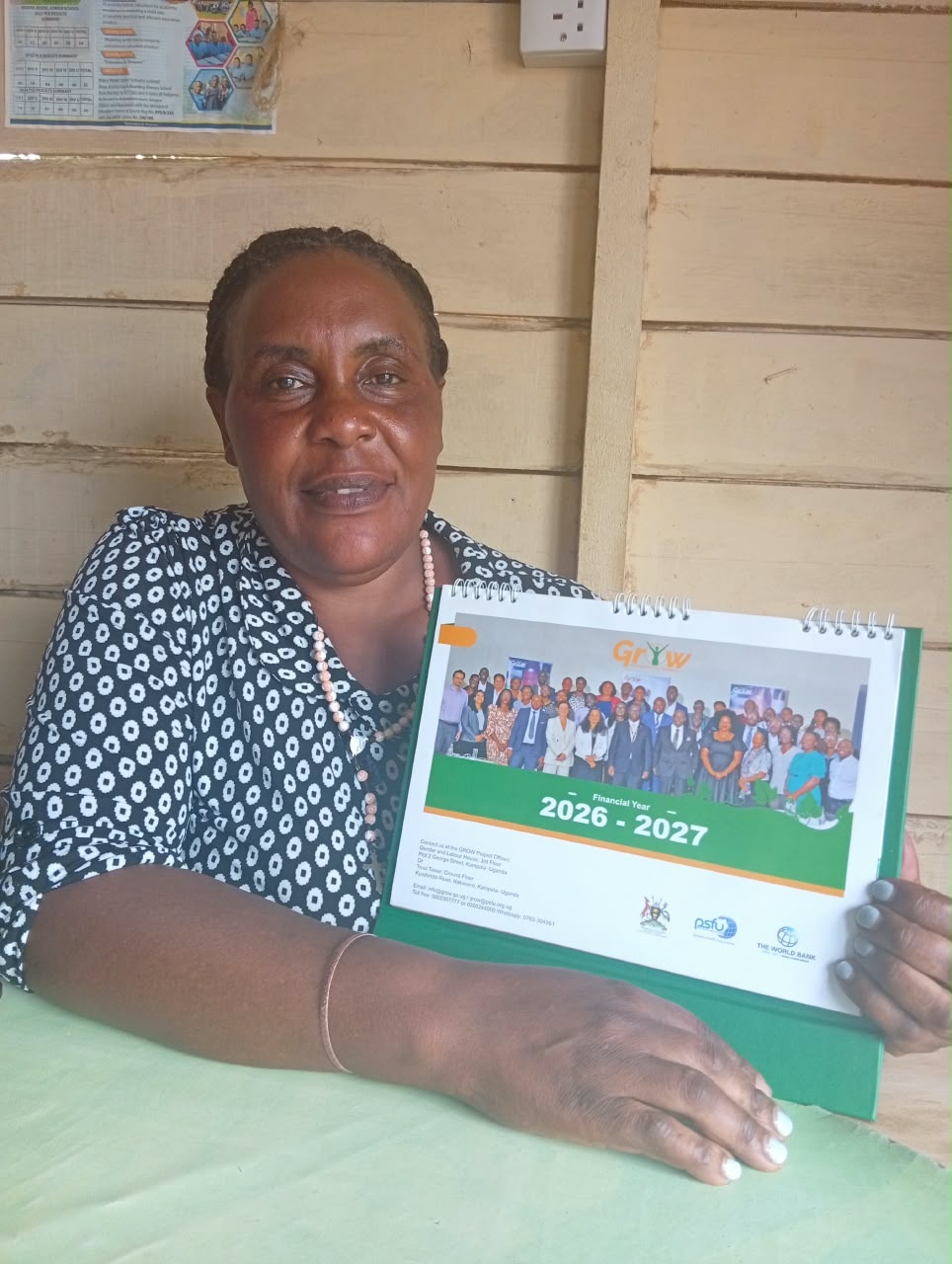
The magical smiles of Christine Muheirwe at her restaurant at Nakivale Camp in Western Uganda bespoke great confidence.
As she takes a seat, Muheirwe is happy for World Bank and the government of Uganda for distributing finances into commercial banks for women to expand their businesses.
She said as an entrepreneur in Western Uganda she applauds the Government of Uganda and the World Bank for supporting their businesses through the Generating Growth Opportunities and Productivity for Women Enterprises (GROW) project, saying access to affordable credit is helping them expand enterprises, improve household incomes and create employment.
Shs55 million supports restaurant and jobs
Christine Muheirwe, an entrepreneur in Nakivale, Isingiro District, accessed Shs55 million through Opportunity Bank to support her restaurant business.
“The investment has helped me run an enterprise that employs 12 people, comprising five men and seven women,” she said during an interview.
Her business demonstrates how financing directed at women entrepreneurs can also support employment beyond the individual borrower, creating opportunities for other members of the community.
For small enterprises operating in trading centres and growing communities, access to capital can help owners improve operations, serve more customers and sustain jobs.
Muheirwe’s experience also illustrates the importance of financial institutions in connecting eligible women entrepreneurs to the GROW financing programme.
The project works through participating financial institutions, which assess applications and provide loans to qualifying businesses under the programme’s lending arrangements.
Women diversify into agriculture and property
Jenifer Twangabe, from Karenengyezo Village in Kiruhura District, accessed a Shs10 million loan, which she invested in cattle fattening, goat rearing and poultry.
Her choice of enterprises reflects the importance of agriculture and livestock to livelihoods in Western Uganda, where farming remains a significant source of household income.
By investing in several agricultural activities, Twangabe is seeking to strengthen her income-generating capacity and broaden her business opportunities.
The women, operating businesses in different sectors, say the financing has enabled them to increase stock, invest in agriculture, develop rental properties and establish or expand income-generating ventures that were previously constrained by limited capital.
The GROW project is a Government of Uganda initiative supported by the World Bank and implemented through the Ministry of Gender, Labour and Social Development, in partnership with the Private Sector Foundation Uganda (PSFU).
The initiative is designed to improve women entrepreneurs’ access to finance, business development services and markets, while addressing barriers that have historically limited the growth of women-owned enterprises.
The World Bank committed US$217 million to support the project, which provides eligible women entrepreneurs with loans through participating financial institutions.
Under the programme, eligible businesses can access loans ranging from Shs2 million to Shs200 million, with interest rates capped at 10 per cent per annum and repayment periods of up to 24 months, subject to the applicable loan terms.
Unlike grants, the loans must be repaid, making business planning, proper use of the funds and timely repayment important to the sustainability of the programme.
From small businesses to expanding enterprises
Fortunate Turyakera, an entrepreneur from Kamwenge District, accessed a Shs10 million GROW loan to strengthen her drinks business and coffee production.
She said the funding had helped her improve her business operations and contribute more to her family’s income.
“I want to thank the World Bank for thinking about women and giving us these funds. Our lives and family income earnings changed,” she said.
Turyakera’s experience illustrates how access to capital can help women entrepreneurs strengthen existing businesses while investing in additional economic activities.
For many small-business owners, limited working capital makes it difficult to purchase stock in sufficient quantities, respond to customer demand or diversify their sources of income.
Through the GROW project, the women are seeking to overcome some of these constraints and build businesses capable of supporting their families and employing other people.
Arinairtwe Annah, who has operated a retail and grocery business for about 12 years, also accessed a Shs10 million loan to support her enterprise.
She welcomed the financing, saying the interest rate was more favourable than the terms she had previously encountered from other lenders.
“I want to thank the GROW team leaders and the World Bank for giving us the money at a low interest rate compared to the banks we used to have,” she said.
Her experience highlights the importance of affordable credit to entrepreneurs who need capital to maintain stock, meet customer demand and keep their businesses operating.
Edurae Kefuruka also accessed Shs10 million, which she invested in rental-property development.
She earns about Shs200,000 per month from her rental units, providing her with an income stream from the property investment.
Rental income can help households meet recurring expenses, although returns depend on factors including occupancy, maintenance costs and the ability of tenants to pay.
The two entrepreneurs demonstrate how women can use access to finance to pursue different investment opportunities, depending on their circumstances and business plans.
Small loans supporting household enterprises
Lucky Ainemani, from Central Zone Village in Rusherere Sub-county, accessed a Shs5 million loan to support her retail business.
She also engages in agriculture and goat rearing, combining trading with other income-generating activities.
Her experience reflects the reality of many rural entrepreneurs who depend on more than one economic activity to sustain their households and manage fluctuations in business income.
Nirere Valentine, from Kibaale B in Rushasha Sub-county, Isingiro District, accessed a Shs1.5 million loan through EBO Bank.
She makes monthly repayments of approximately Shs19,920.76, according to the loan details provided.
For entrepreneurs operating on a small scale, access to relatively modest amounts of credit can provide working capital for business activities. However, borrowers must balance loan repayments against sales, operating costs and household expenses.
The beneficiaries’ experiences point to the need for continued business guidance alongside financing to help entrepreneurs keep proper records, manage cash flow and sustain their enterprises.
Financing women-owned businesses
The GROW project forms part of Uganda’s efforts to improve women’s participation in enterprise development by addressing financial and other barriers that affect women-owned businesses.
The World Bank-supported initiative seeks to enable women entrepreneurs to access formal credit and build businesses with the potential to grow, create employment and contribute to local economic activity.
Its impact is not measured only by the amount of money disbursed, but also by how the financing is used, whether businesses expand, and whether borrowers can repay their loans while maintaining sustainable incomes.
The experiences of Turyakera, Annah, Muheirwe, Twangabe, Kefuruka, Ainemani and Valentine show the different ways women are applying financing to retail trade, hospitality, agriculture, livestock and property development.
For the women, access to capital has opened opportunities to strengthen their enterprises and improve their economic independence.
As the programme continues, effective monitoring, financial literacy, business development support and responsible lending will remain important to ensuring that women-owned businesses can grow beyond the initial loan and contribute to Uganda’s wider economic development.