How GROW financing is helping women entrepreneurs in Western Uganda expand enterprises, create jobs and strengthen household incomes
By Brian Mugenyi
mugenyijj@gmail.com
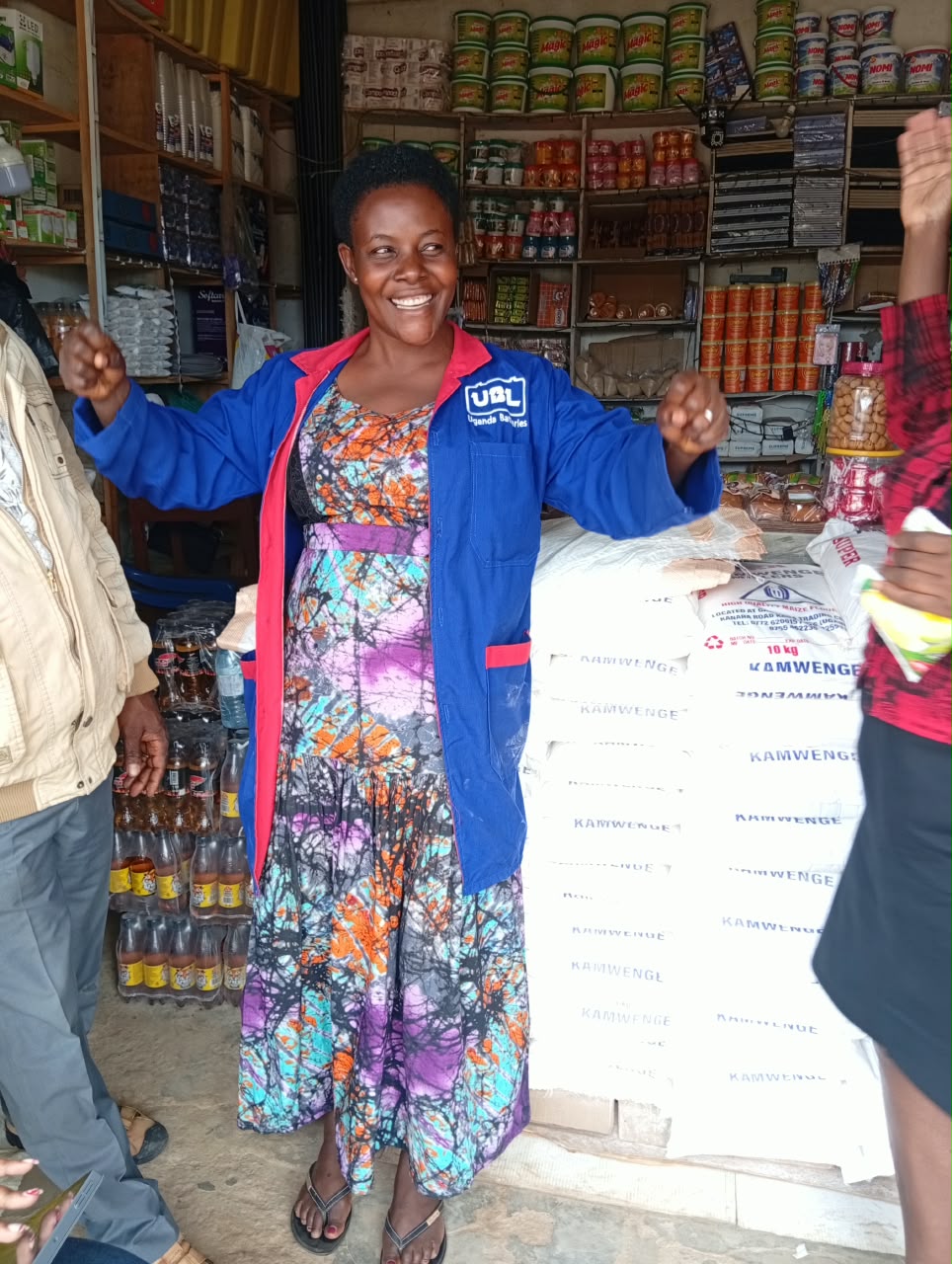
Western Uganda: At first glance, Fortunate Turyakera’s business in Kamwenge looks like one of thousands of small enterprises scattered across Uganda.
But behind the shelves of drinks and the movement of customers is a bigger economic story: what happens when capital reaches a woman who already knows how to run a business.
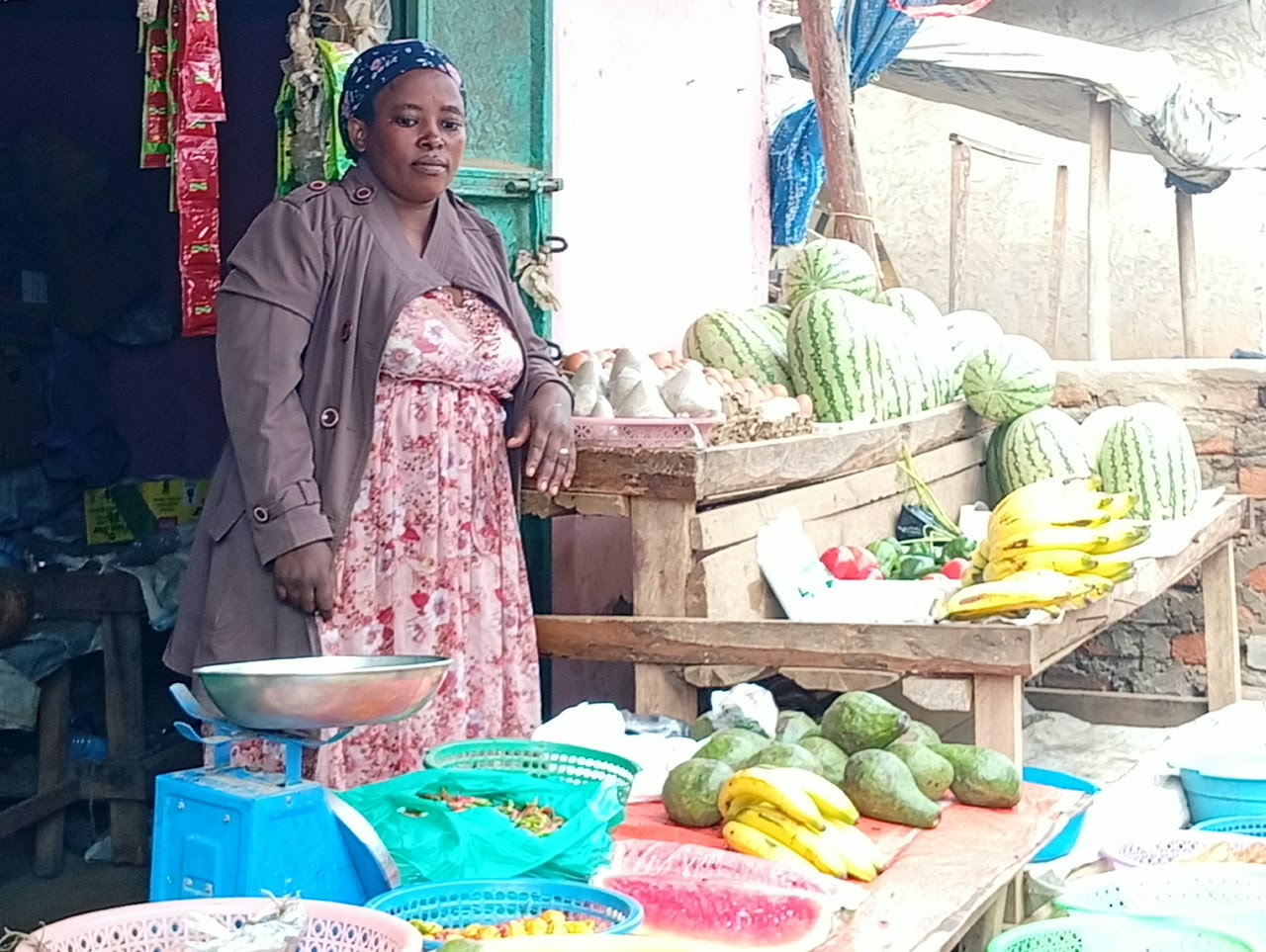
Turyakera received a Shs10 million GROW loan, which she says has enabled her to increase stock in her drinks business while continuing to invest in coffee production.
“I want to thank the World Bank for thinking about women and giving us these funds. Our lives and family income earnings changed,” Turyakera said.
Her story is one of several emerging from Western Uganda, where women entrepreneurs are using financing under the Generating Growth Opportunities and Productivity for Women Enterprises (GROW) Project to expand businesses in retail, restaurants, agriculture, livestock and property.
The World Bank is not itself a commercial bank lending directly to these individual women. Rather, GROW is a Government of Uganda project funded by the World Bank and implemented by the Ministry of Gender, Labour and Social Development together with the Private Sector Foundation Uganda. Its purpose is to increase women’s access to entrepreneurial services and help enterprises grow from micro to small and from small to medium scale.
That distinction matters.
Because development finance works through a chain.
The World Bank provides financing and development support.
Government designs and implements programmes.
Financial institutions extend eligible credit.
Women invest in businesses.
Businesses employ people.
Workers earn incomes.
Families spend and invest.
And local economies begin to move.
That is the chain now being experienced by women beneficiaries of GROW.
The World Bank’s bigger economic engine
Globally, the World Bank Group is one of the major institutions financing development.
In its 2025 financial year, the World Bank Group says it provided $118.5 billion in loans, grants, equity investments and guarantees to partner countries and private businesses. Of this, $34 billion was committed in Sub-Saharan Africa.
The institution finances government programmes, infrastructure and institutional development, while its wider group includes the International Finance Corporation (IFC) and the Multilateral Investment Guarantee Agency (MIGA), which support private investment and provide guarantees.
This makes the World Bank’s role much broader than simply providing money.
It is part of an international development-finance system through which capital, technical knowledge, policy support and investment guarantees are connected to projects in developing economies.
In Uganda, that role is now visible in programmes such as GROW.
The World Bank’s new 2026–2035 Country Partnership Framework for Uganda places private-sector-led transformation, jobs, financial access and productivity at the centre of its development strategy.
Under the framework, the World Bank Group says it expects to provide approximately $2 billion per three-year IDA cycle, building on an existing portfolio of about $4 billion, while seeking to catalyse private investment and mobilise additional private capital.
The institution has also set a target of expanding access to financial services to 14 million people and businesses, including nine million women, over the coming decade.
That is the bigger economic picture behind the smaller transactions happening in Western Uganda.
Shs10 million changes one business
Back in Kamwenge, Turyakera is concerned less about global financial architecture and more about what the money can do inside her enterprise.
The Shs10 million has enabled her to increase stock in her drinks business while maintaining coffee production.
Her enterprise now represents more than a source of personal income.
It is part of a chain involving suppliers, customers, transporters and the household economy.
The same pattern appears in the story of Arinairtwe Annah, who has operated a retail and grocery business for about 12 years.
She also received Shs10 million.
“I want to thank the GROW team leaders and the World Bank for giving us the money at a low interest rate compared to the banks we used to have,” Annah said.
For a woman who has spent more than a decade building a retail enterprise, additional working capital can determine how much stock she can hold, how many customers she can serve and how quickly the business can turn over its capital.
A Shs55 million restaurant becomes an employer
In Nakivale, Christine Muheirwe offers another example.
She accessed Shs55 million through UGAFOD Bank to support her restaurant business.
Christine says she learnt about GROW through bank officers and friends who encouraged her to apply.
“I am very happy with GROW loan money and I am looking forward to more loans from UGAFOD Bank. I learnt about the GROW loan from bank officers and friends who encouraged me to take the loan, and I am happy with the expansion of my business,” she said.
But the economic impact of her financing does not stop at the restaurant.
Christine says the business employs 12 workers — five men and seven women.
“As a restaurant, I employ five men and seven women. I pay them and make profit out of the GROW business,” she said.
That is where development finance becomes local economic activity.
The original capital may begin with a financial institution.
But once invested, it moves through wages, food purchases, rent, supplies, transport and household consumption.
One enterprise becomes connected to several others.
From drinks to cattle, goats and poultry
GROW beneficiaries are not investing in one type of business.
In Karenengyezo Village, Kiruhura District, Jenifer Twangabe received Shs10 million and invested it in cattle fattening, goats and poultry.
Edurae Kefuruka used Shs10 million for rental-property development.
“Thank you GROW Team leader for giving us the funds with funders. I am grateful. I get clients in my rentals and I hope to expand it with time. Today I charge Shs200,000 per month from all the rentals,” Kefuruka said.
In Central Zone Village, Rusherere Sub-county, Lucky Ainemani received Shs5 million for her retail business and has combined the enterprise with agriculture and goat rearing.
In Kibaale B, Rushasha Sub-county, Isingiro District, Nirere Valentine says she received Shs1.5 million through EBO Bank to support her retail business.
Her reported monthly repayment is approximately Shs19,920.76.
Different businesses.
Different amounts.
Different locations.
But one economic principle runs through them: capital is being converted into productive activity.
Why women matter to the growth equation
The GROW project specifically targets women-owned micro and small enterprises.
According to the programme, women-owned enterprises are businesses in which women hold at least 51 per cent ownership. The project supports both registered and some unregistered women-owned businesses, while particular financing products have additional requirements.
The programme combines financing with entrepreneurship training, financial literacy, digital-market skills, business management, mentorship, networking and market-linkage support.
This matters because money without business knowledge can quickly disappear.
A loan must be invested.
Stock must move.
Customers must be retained.
Workers must be paid.
Repayments must be made.
Profits must be reinvested.
The real measure of finance, therefore, is not simply how much is disbursed.
It is what the capital produces.
The GROW chain
The World Bank describes GROW as a project designed to increase access to entrepreneurial services for female entrepreneurs, including women in refugee-hosting districts.
The official programme also identifies indirect beneficiaries, including family members, communities, suppliers, service providers and distributors of products from women-owned enterprises.
This is the economic chain.
Finance → enterprise → production → employment → household income → consumption → reinvestment.
When that chain works, development money does not remain in a financial institution.
It circulates through communities.
A restaurant buys food.
A shop buys stock.
A farmer buys livestock.
A property owner develops rooms.
Workers receive wages.
Suppliers make sales.
Families meet their needs.
The local economy gains another cycle of activity.
Western Uganda becomes a case study
Western Uganda provides a useful window into this process because GROW covers refugee-hosting districts as well as the wider country.
The World Bank says its Uganda programme is also focused on expanding access to finance, strengthening private-sector productivity and creating more and better jobs.
The GROW project itself says it operates across Uganda’s districts, cities and municipalities.
For women such as Turyakera, Annah, Muheirwe, Twangabe and Kefuruka, those broad policy objectives have become tangible business decisions.
How much stock should I buy?
How many workers can I employ?
What asset can I acquire?
How much can my business produce?
How much can I reinvest?
Those are the questions through which global development finance eventually reaches the household.
The money is only the beginning
There is, however, another side to the story.
A loan is not a grant.
Capital has to be repaid.
A business must survive changing prices, competition, customer demand and other market pressures.
The GROW programme therefore combines its financing with business-development services, training, mentorship and networking.
The women beneficiaries also carry the responsibility of turning borrowed capital into productive enterprises.
That is where the next chapter of the GROW story will be written.
Not in conference rooms.
Not in policy documents.
But in shops, restaurants, farms, workshops and homes.
From global finance to a woman’s business
For the World Bank, the objective is development.
For the Ugandan Government, the objective is enterprise growth and economic empowerment.
For financial institutions, it is lending to eligible businesses.
But for Fortunate Turyakera, the equation is much simpler.
She received Shs10 million.
She bought more stock.
She continued coffee production.
Her household income changed.
For Christine Muheirwe, Shs55 million became a restaurant employing 12 people.
For Jenifer Twangabe, capital became cattle, goats and poultry.
For Edurae Kefuruka, it became rental property.
This is how the global money economy eventually reaches the village.
It travels through institutions, programmes, banks and entrepreneurs until it becomes something people can touch:
a business.
A job.
A salary.
A shop full of stock.
A productive farm.
A household with another source of income.
The World Bank may operate at the level of billions of dollars and international development policy.
But the ultimate test of that money is much closer to home.
It is whether capital can cross the distance between a global financial institution and an entrepreneur in Western Uganda—and, along the way, create an enterprise capable of creating income for someone else.
That is the economic chain GROW is trying to strengthen: global finance becoming local enterprise, and local enterprise becoming household opportunity.