By Bryan TOSHI BWANA
A child of the NRA Liberation Struggle and an ardent NRM Sympathiser.
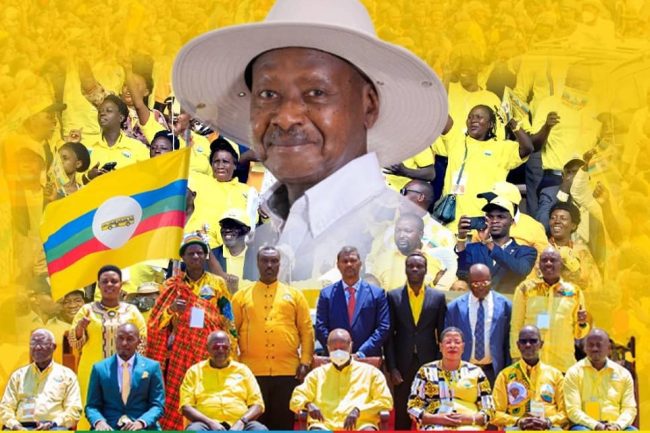
Uganda’s ruling National Resistance Movement (NRM) was born of insurgency and idealism. Four decades on, it faces a generational stress-test. A test largely on it’s internal democracy, service delivery, and how to speak to a younger electorate shaped by social media and climate anxiety rather than bush-war memory.
The NRM’s Ten Founding Principles and Why They Still Matter
I am yet to get a hold of the 2026 manifesto, but yo me, NRM’s best-known manifesto todate, is the Ten-Point Programme (first circulated in 1984). Below are the ten points, with a brief look at what each was meant to achieve and why it remains relevant now:
1. Democracy – Popular and parliamentary democracy, anchored in local councils (LCs). Relevance today: internal party primaries, open competition, and transparent selection to CEC/NEC posts are the litmus tests for this promise.
2. Security for all people and property – Ending state-instigated violence. Relevance: community trust hinges on rights-respecting policing and non-partisan security.
3. National unity; eliminating sectarianism – De-ethnicising power. Relevance: rhetoric that frames regions as personal fiefdoms undercuts the national compact.
4. Defend and consolidate national independence – Strategic autonomy in policy and diplomacy. Relevance: avoid capture by donor or domestic interest groups in priority-setting.
5. Build an independent, integrated, self-sustaining economy – From import substitution to basic industries. Relevance: industrial policy must translate into jobs that young Ugandans can actually see.
6. Restore and improve social services; rehabilitate war-ravaged areas – Health, education, roads. Relevance: last-mile delivery at parish and village level is where legitimacy is won or lost.
7. Eliminate corruption and misuse of power – The programme’s moral core. Relevance: credible enforcement beats slogans.
8. Redress past injustices and displacement – Including land issues and marginalised regions. Relevance: a rules-based land policy and fair compensation mechanisms reduce conflict.
9. Co-operate with African states to defend human and democratic rights – Pan-African solidarity. Relevance: consistency at home strengthens Uganda’s voice abroad.
10. Mixed economy strategy – Public–private balance. Relevance: unleash enterprise while protecting public goods and natural capital.
(NRM later distilled its ethos into four core principles—Patriotism, Pan-Africanism, Democracy, and Socio-economic Transformation, without replacing the original ten.)

Recalling how a Guerrilla Movement Won—And Why Grassroots Structures Were Key
The NRM/NRA took to the bush after the disputed 1980 elections, amid widespread abuses and insecurity. Its distinctive advantage was not only military organisation but grassroots legitimacy, built through Resistance Councils in liberated zones (Luwero Triangle), which later evolved into the LC system in national law. This bottom-up structure gave people a stake and a voice long before social media.
That early “popular governance” thesis is what made the movement credible enough to capture Kampala in January 1986—and to govern afterward with a decentralisation frame. The question in 2025 is whether those habits of accountability still live inside the party itself.
The Leadership Challenge: Renewal vs. Entitlement
The NRM NEC meeting at State House, Entebbe (August 23, 2025) starkly staged the dilemma. First Deputy PM Rebecca Kadaga argued seniority and long service; Speaker Anita Among argued present-tense mobilisation and deliverables. President Museveni cut through with a pointed rebuke—“You do not own Busoga”—signalling that regional gate-keeping will not be a winning claim. Among, for her part, boasted she had “brought over 10 MPs from the opposition to NRM” and pledged never to move a displeasure motion against her party leader. The exchange crystallised two modes of power: entitlement by history vs. relevance by results.
The bigger structural issue is succession and circulation of elites. Uganda’s 2017 constitutional change removing the presidential age limit widened the runway for incumbency; public opinion has since tilted toward restoring term and age limits, according to Afrobarometer. Inside the party, multiple juniors and seniors alike have clung to posts, creating bottlenecks for the next cohort. That is increasingly hard to square with the NRM’s first principle, the Republic of Uganda’s democracy.
What Uganda’s Gen Z Is Watching and Doing
Uganda is among the world’s youngest societies; digital adoption is rising fast (over 12 million internet users as of 2024). Youth are organising issue-by-issue online—e.g., the #UgandaParliamentExhibition campaign exposed alleged procurement excesses and brought parliamentary accountability into mainstream conversation.
Across the Africa, Gen Z has changed the tempo of politics:
Kenya (2024–25): youth-led, networked protests forced the withdrawal of a contentious Finance Bill and triggered cabinet upheaval. Rights monitors documented dozens of deaths; the movement used X/TikTok to hold leaders to account and to crowd-source legal aid and data. Lesson: leaderless does not mean aimless; delivery and integrity beat war stories.
Senegal (2024): an unprecedented youth surge helped usher in an outsider reformist younger president. This is evidence enough that generational renewal can be channelled through elections, not only protests. (Ceteris Paribas)
The through-line: relevance beats loyalty. Young voters respond to tangible progress on jobs, corruption control, climate, urban services—and to leaders who treat them as partners, not spectators.
Evidence Check: Governance Scores & Service Delivery
Corruption & civic space: International indices rate Uganda poorly on clean governance and political freedoms; watchdogs have chronicled a long-running slide since the mid-1990s—even as the NRM expanded local government and stabilised security. (Transparency International, Freedom House, HRW; Ibrahim Index background.)
Poverty & growth: World Bank data show poverty at ~30% (2019/20, national line) with notable reductions over the long arc yet recent setbacks; growth has lifted GDP per capita over time but job intensity lags population growth. Implication: the legitimacy dividend now rests on last-mile service delivery and youth employment, not macro-stability alone.
Comparative warning signs abound: money politics hollowed out South Africa’s ANC (2024 vote share below half, forcing a coalition) and Kenya’s KANU ultimately lost power after decades of incumbency. Parties that fail to refresh leadership and curb patronage commonly pay at the ballot box.
What Renewal Would Look Like (in my eyes) Measured Against the Ten Points
1. Codify internal term limits & open primaries for CEC/NEC and parliamentary flag bearers; publish results polling-station by polling-station. (Points 1 & 7.)
2. Merit before seniority: criteria for party offices should be deliverables (past 3–5 years), not CV length. (Points 1 & 6.)
3. Youth mainstreaming, not tokenism: set quotas for under-35s across party structures; fund youth policy labs on climate adaptation, agri-value chains, and digital SMEs. (Points 5, 6 & 10.)
4. Hard anti-corruption enforcement: asset declarations online; time-bound investigations; plea deals tied to full recovery; protect whistle-blowers. (Point 7.)
5. Village-level scorecards: LC-era accountability, updated. Promise and publish ward-level service delivery dashboards (schools, health centres, water points, wetlands and natural forests protection). (Points 1 & 6.)
6. Green growth pact: wetlands restoration, forest co-management, climate-smart agriculture, and domestic tourism circuits. These will be game changers when it comes to Ugandan youth jobs guarantees. (Points 5, 6 & 10.)
7. Pan-African learning loops: institutionalise exchanges with parties navigating renewal (e.g., post-coalition South Africa; reformist platforms in Senegal) to stress-test NRM reforms. (Point 9.)
On Busoga, Power and Humility
The Busoga exchange matters because it symbolises a broader truth: no region is a personal estate. When a leader suggests or implies otherwise, it is only fair to expect a backlash from the party and the public. To me. H.E Museveni’s “You do not own Busoga” line to Rt Hon Kadaga during the CEC meeting drew a bright boundary; Speaker Among’s results-first pitch showed how younger voters hear politics now. The party’s own DNA, the Ten-Point Programme, sides with systems over personalities.
In recuptulation, the NRM stands at its most critical crossroads in four decades. Its survival will not be guaranteed by nostalgia for the bush struggle, but by the courage to practice the very democracy, service delivery, and integrity it once promised in the Ten-Point Programme.
Uganda’s young citizens are no longer swayed by titles, seniority, or liberation credentials. They are measuring leadership in climate-smart jobs created, corruption punished, wetlands restored and protected, Mineral resources responsibly harnessed, rivers,lakes and forests sustainably utilised, an interconnected, durable transport system and schools and hospitals that work. They demand relevance, not rhetoric.
If the mighty NRM can reclaim its grassroots soul, curb patronage, embrace generational renewal, and enforce accountability from village to cabinet level, it will endure and inspire a new cycle of trust and legitimacy. If it fails, history offers a blunt verdict: liberation movements that refuse to renew themselves are eventually renewed by the electorate.
The Ten-Point Programme is still a compass pointing forward. The real test is whether the NRM has the humility, discipline, and vision to follow it religiously both inside the party, and across the state.