Tag: Zambia

  • #40Days40FinTechs Zambia & Malawi Edition – Day 8!! BongoHive: Powering Start-ups and Boosting Financial Inclusion in Zambia

    #40Days40FinTechs Zambia & Malawi Edition – Day 8!! BongoHive: Powering Start-ups and Boosting Financial Inclusion in Zambia

    In Zambia’s capital, Lusaka, an innovation hub is playing a pivotal role in transforming dreams into sustainable enterprises. BongoHive, one of the country’s leading technology and innovation spaces, has been nurturing start-ups and driving financial inclusion for over 14 years.

    With many African innovators struggling to overcome high operational costs, lack of access to office space, limited internet connectivity, and other logistical challenges, innovation hubs like BongoHive provide much-needed support. They offer affordable workspaces, mentorship, training, and networking opportunities that allow start-ups to move from ideation to implementation.
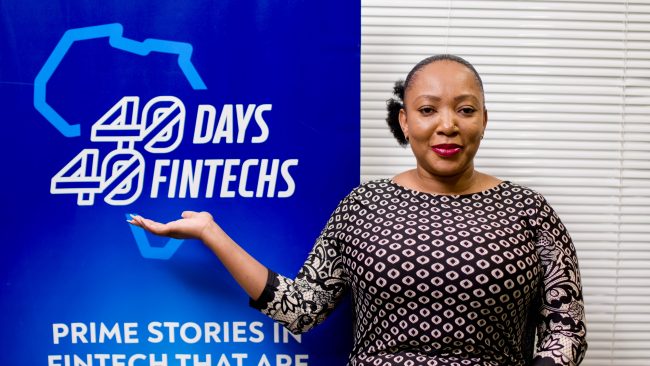
    “We exist to unlock Africa’s potential by helping entrepreneurs build sustainable, scalable businesses,” said Tilyenji Mundungani, Marketing and Communications Lead at BongoHive. “To date, we’ve supported more than 2,800 start-ups, including over 1,000 women-led enterprises.”

    Among BongoHive’s flagship programs is the Standard Chartered Women in Tech initiative, which has funded 160 Zambian female founders with grants of up to $20,000 each. Through such targeted programs, BongoHive is not only enabling access to capital but also addressing gender disparities in the start-up ecosystem.

    Recognizing a widespread gap in financial literacy, BongoHive has launched various programs focused on equipping entrepreneurs with the financial knowledge they need to thrive. These include the Investor Ready Hackathon, delivered in partnership with MTN Zambia, and the FinTech For You initiative, which strengthens financial understanding among budding innovators.

    Still, Mundungani acknowledges that challenges persist. “Rigid policies, limited funding, and difficulty accessing global markets are major hurdles. But we’re committed to pushing through—and we welcome partnerships that can help us support more start-ups, especially women-led businesses.”
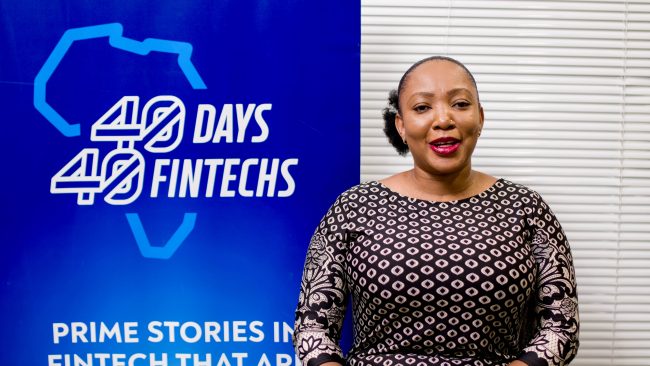
    BongoHive featured on Day 8 of the #40Days40FinTechs initiative – Zambia and Malawi edition. While it is not a FinTech itself, the hub is home to several FinTech innovators who are building the future of inclusive finance.

    Now in its fifth year, 40 Days 40 FinTechs has showcased over 200 innovations from East and Southern Africa, giving visibility to impactful solutions and opening doors to partnerships, funding, and mentorship. The initiative promotes financial inclusion through tools like the Level One Project, Mojaloop, and other inclusive financial technologies.
  • Malawi’s Tradeflow Analytics wins the Zambia/Malawi Women in FinTech Hackathon

    Malawi’s Tradeflow Analytics wins the Zambia/Malawi Women in FinTech Hackathon

    Malawian FinTech Start-up Trade Flow Analytics have been announced winners of the inaugural Zambia/Malawi Women in FinTech Hackathon, walking home with $2,000 while Mighty Fin from Zambia came second and scooped $1,000.

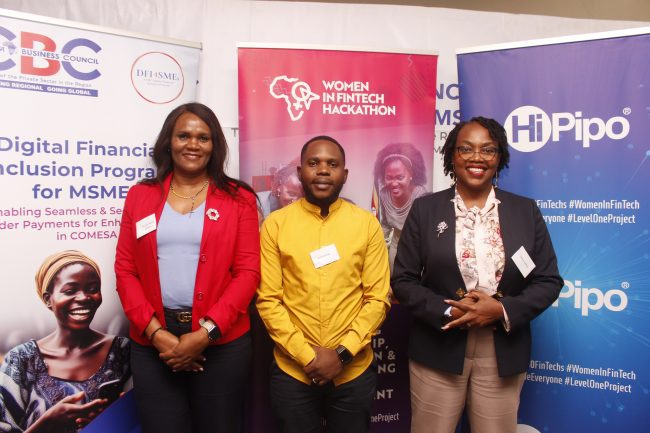
    Organised by HiPipo in collaboration with COMESA Business Council (CBC), the Women in FinTech Hackathon is part of HiPipo’s Include Everyone program being scaled in the COMESA region starting with Zambia and Malawi.

    Speaking at the closure of a week-long Hackathon held at Lusaka Legacy Resort, the CBC Chief Operating Officer, Dr Jonathan Pinifolo, noted that while TradeFlow Analytics were the winners, all the 16 participating teams should be proud of themselves because they all exhibited potential to develop solutions that transform lives.

    “All teams were very good and they exhibited an understanding of what we were looking for. For instance, they were all able to incorporate and integrate the Mojaloop Open source software and Level One Project Principles in their solutions,” he said.

    TradeFlow Analytics is a web solution that relies on data analysis to provide trade information to cross-border traders including available markets and foreign exchange rates. On the other hand, Mighty Fin are developing a savings and loan application called Mama Pay targeting informal women traders and small-scale businesses.

    “Our product is based on data and analytics. With the right information, we believe that informal traders can grow their business. We want to make all informal cross-border traders financially included,” noted Deborah Jalakasi, the co-founder of Data Analytics.
    “We are very excited, we didn’t expect this. We tried our best. We had two sleepless nights. We believe God has done it for us. We are still a startup. We want to do the technical implementation and make our product live,” she added.
    As a woman innovator, Deborah thanked the organisers of the Hackathon for the insightful session targeting women-led organisations and promised that they “are also going to go out there and inspire other women…improve other women.”

    Meanwhile, Vwanganji Bowa, the team leader of Mighty Fin, noted that the Hackathon has ‘tested our resilience’ and they are now focused on building a robust platform that can serve across the COMESA region.

    Both teams appreciated Comesa Business Council, HiPipo and Gates foundation for championing this event where teams were trained in various aspects such as ideation, conceptualisation and development of Minimum Viable Products.

    “We are not going back the way we came,” said Jalakasi.
    The HiPipo FinTech Events Manager Charlotte Neeza encouraged all participating teams to continue with their ideas because all of them were good enough to make it to the market.
    “We have had six teams from Malawi and ten teams from Zambia. While only two teams have been selected to take the prize money, all other teams are winners. We will continue supporting them and believe that have the capacity to become successful solutions serving people at the bottom of the pyramid,” she said.

  • Women in FinTech Hackathon for Zambia and Malawi kicks off

    Women in FinTech Hackathon for Zambia and Malawi kicks off

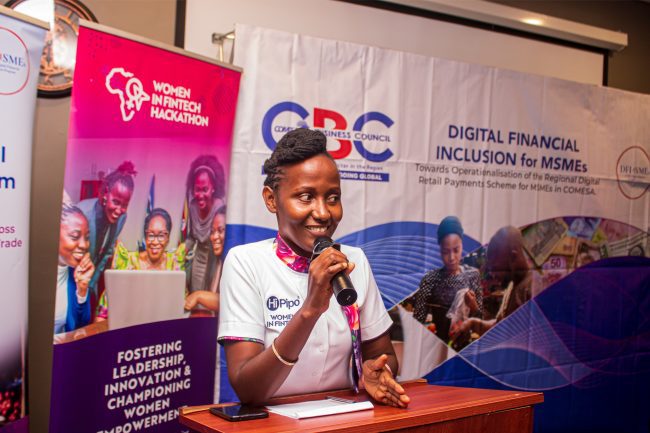
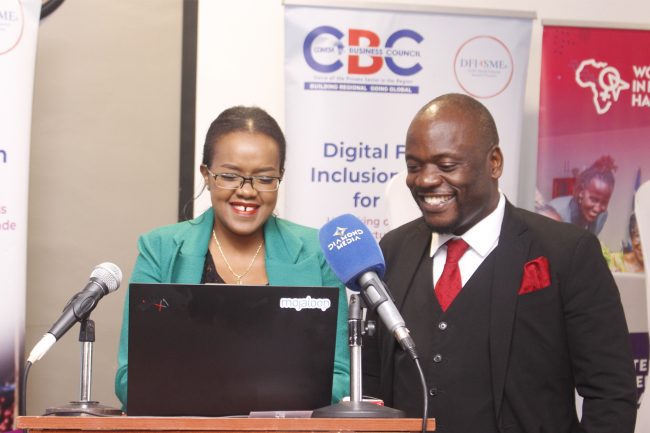
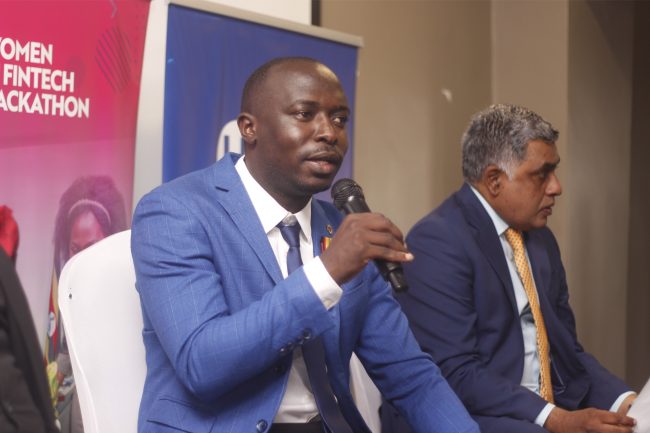
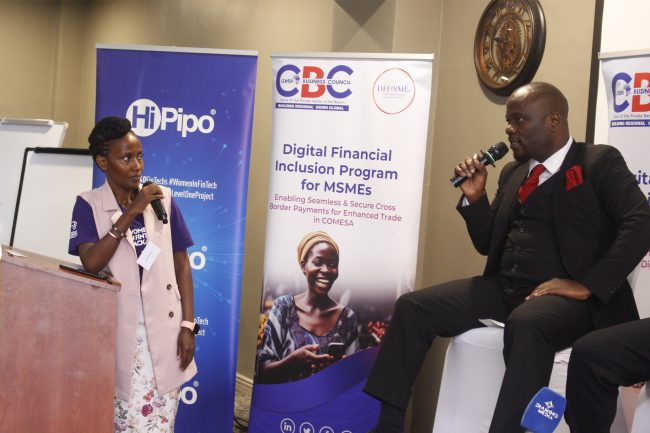
    The COMESA Business Council (CBC) and HiPipo have today kicked off the inaugural Women in FinTech Hackathon for Zambia and Malawi with a call to women innovators to develop relevant solutions that can leverage on the market of over 600 million population in this region.

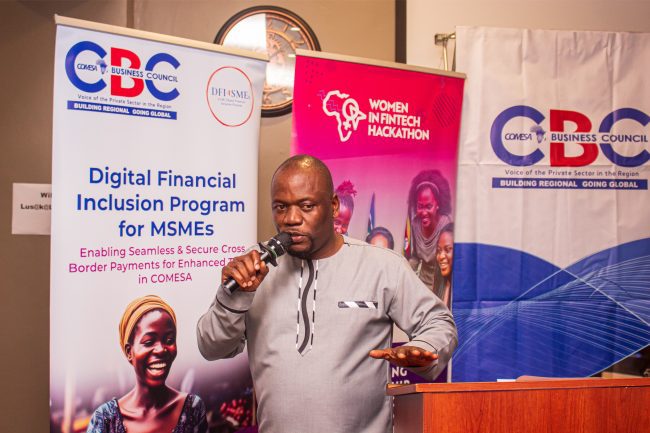
    Speaking at the launch of the Hackathon held at the Lusaka Legacy Resort in Zambia this morning, the CBC Chief Executive Officer Teddy Soobramanien noted that when women entrepreneurs are empowered, there is a ripple effect on the rest of the region because women are always more likely to come up with solutions that tackle everyday problems.

    “I would like to appreciate HiPipo from Uganda for this initiative. For the start, we are looking at Zambia and Malawi but I think this conversation should continue to the rest of the 21 COMESA countries because what we have already done is bearing fruit,” he said.

    “FinTechs want the market for their products and COMESA has over 600 million people and Africa has over 1.2bn people. So, with the Western world currently facing their own challenges, Africa has to take care of themselves. Women and men of Africa have the potential to develop and stop relying on external factors. This is very good project that is here to help women entrepreneurs build financial inclusion and technology.”

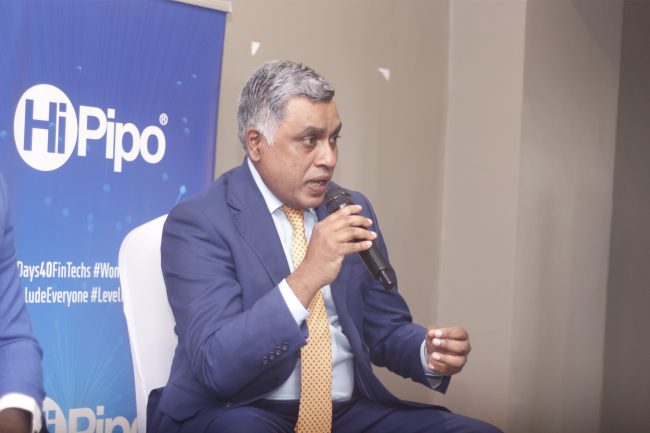
    According to the HiPipo CEO Innocent Kawooya, the Women in FinTech initiative is part of HiPipo Include Everyone program that we are scaling in the COMESA Region in partnership with CBC and with support from the Gates Foundation. The initiative is designed to bridge the gender gap in Digital Financial Services (DFS), empowering women to become leaders in FinTech innovation, especially women in cross-border trade.

    “When we started the Women in FinTech initiative six years ago, rarely would you find women leading FinTech conversations. Today, we have more women holding C-Level leadership positions. We believe that leaders are made and this initiative has groomed women into becoming leaders, registering organisation that have become big corporations that have broken through and become leaders in innovation,” he said.

    “So, this means participants in this Hackathon have an opportunity to be mentored and become part of the changemakers in the COMESA region.”
    Kawooya says that following five years of success in Uganda, where over 500 women have been trained in FinTech ideation, development, and sustainability, the Hackathon is now expanding into the COMESA region!

    “This convening means that the leaders we want are going to be made by all of you. We have the capacity to encourage mobile network operators to integrate your solutions. Now you have connections throughout the COMESA region as long as you have a viable solution. We believe that when we empower women, we build stronger economies and build inclusive economies for a long time.”

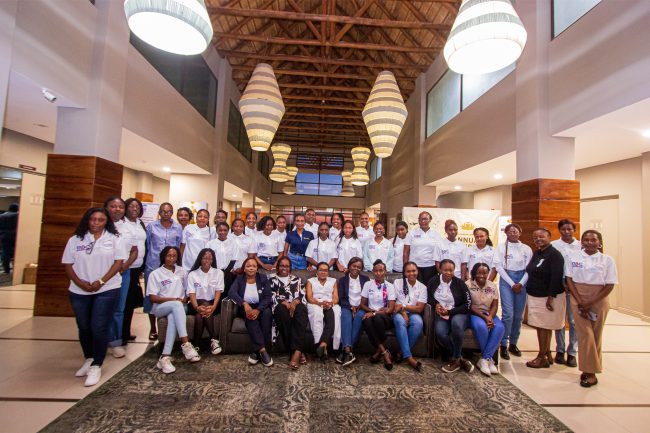
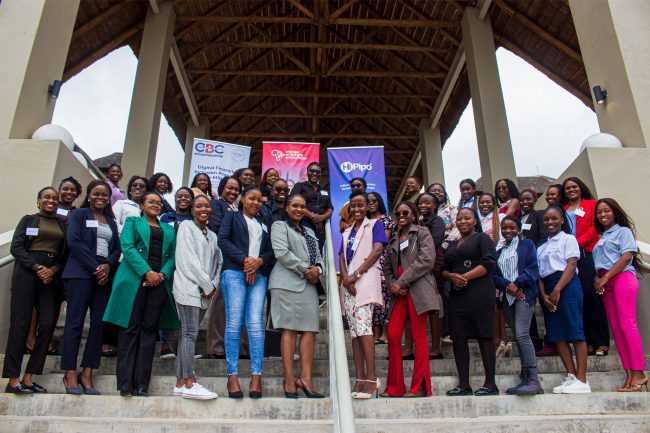
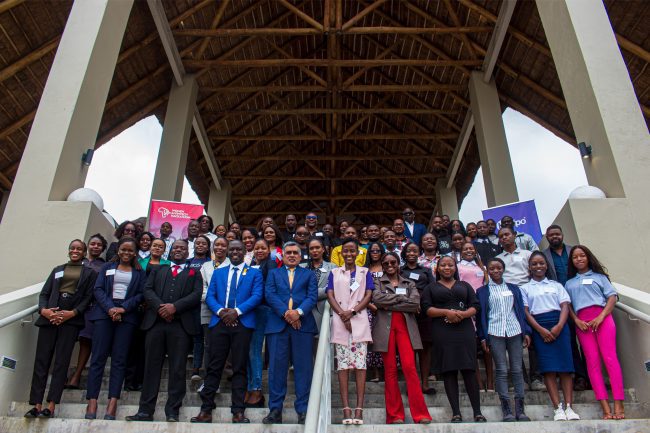
    The inaugural Zambia/Malawi cohort has attracted 17 participating teams (6 from Malawi and 11 from Zambia) who are going to be taken through hands-on experience with Mojaloop Open-Source Software (OSS) and Level One Project tools as well as Mentorship from industry experts & global facilitators.
    At the end of the Hackathon, women innovators will be equipped with essential tools, skills, and winners will receive financial support.

    “This all-encompassing approach ensures that every individual, irrespective of gender, can leverage digital financial services to enhance their quality of life,” noted Charlottee Neeza, the FinTech Events Manager at HiPipo.

  • Airtel Africa and UNICEF announce multi-million dollar partnership to scale-up digital learning for children across Africa

    Airtel Africa and UNICEF announce multi-million dollar partnership to scale-up digital learning for children across Africa

    Airtel Africa and UNICEF announced today a five-year pan-African partnership to help accelerate the roll-out of digital learning through connecting schools to the internet and ensuring free access to learning platforms across 13 countries.

    By providing equal access to quality digital learning, particularly for the most vulnerable children, the partnership will help to ensure that every child reaches their full potential.

    Airtel Africa, a leading provider of telecommunications and mobile money services in Africa, is the first African private sector partner to make a multimillion-dollar commitment to ‘Reimagine Education’, a global initiative launched by UNICEF in 2020 calling for public and private sector investment in digital learning as an essential service for every child and young person across the globe.

    This initiative aims to to give children a chance to catch up on their learning needs amid the ongoing global pandemic.

    “Hundreds of millions of children in Africa have seen their education disrupted or put on hold because of the COVID-19 pandemic,” said UNICEF Executive Director Henrietta Fore.

    “By championing digital education for children in Africa, this partnership with Airtel Africa will help put children’s learning back on track.” Airtel Africa’s financial and in-kind contribution for this partnership is $57 million over five years to 2027.

    The programme will call on technology and expertise, in addition to direct financial support to connect schools and communities to the internet, enable free access to online educational content for learners. It will also provide vital data insights to inform UNICEF’s work to scale-up digital learning and help ensure it is sustainable and meets students’ needs across Africa.

    “As a business, we have focused on education as a key area of our corporate social responsibility, and we are delighted that this partnership with UNICEF will enable us to accelerate results. It also coincides with the launch of our new sustainability strategy, which lays out our commitment to education,” said Olusegun Ogunsanya, CEO of Airtel Africa.

    “We are excited to be working with UNICEF to advance the education agenda on the continent through facilitating connectivity and online access to play a role in driving change,” he added.

    The Airtel Africa and UNICEF pan-African partnership will benefit learners in Chad, Congo, Democratic Republic of the Congo, Gabon, Kenya, Madagascar, Malawi, Niger, Nigeria, Rwanda, Tanzania, Uganda and Zambia.