Tag: UNICEF Uganda

  • UNICEF mouns/Sympathies with accident victims

    UNICEF mouns/Sympathies with accident victims

    Kapchorwa: UNICEF Uganda has mourned the recent fatal accident in Kapchorwa which claimed the lives of 20 pupils of King David Junior School Ndejje. In a Statement by the UNICEF Representative to Uganda, UNICEF says Every child has the right to travel to school and return home safely. 

    UNICEF is deeply saddened by the recent road accidents that have claimed the lives of school-going children in Uganda, leaving families, schools and communities in mourning.
    On behalf of UNICEF, I extend heartfelt condolences to the families, classmates and communities affected. No parent should send a child to school and never see them return home.
    These are preventable deaths, and every child lost on Uganda’s roads is one too many
    Every child has the right to travel to school and return home safely. Road safety is a child rights issue, linked to survival, education and a safe environment.

    Dr. Robin Randy, UNICEF Representative Uganda

    UNICEF commends the Government of Uganda’s efforts to strengthen enforcement of traffic rules and improve safety in and around schools, and the Ministry of Education and Sports’ swift response, including the suspension of all school trips and strengthening new guidelines for school travel.
    Schools have been reminded to use only roadworthy, licensed vehicles driven by qualified, well-rested drivers, conduct proper risk assessments and maintain adequate teacher supervision throughout every journey. Ever so, more urgent action is needed to reduce speeding near schools, provide safe crossings and walking paths and strengthen emergency care.
    Globally, road traffic injuries are the leading cause of death for children and adolescents aged 5 to 19, with low and middle-income countries carrying the greatest burden. Lower speeds save lives: a child hit at 30 kilometres per hour has a much better chance of survival than one hit at 50″. Dr Robin Nandy UNICEF Representative to Ugande

  • Airtel Uganda & UNICEF scaling Digital learning at schools across Uganda as 45,200 students & 1,820 teachers reached

    Airtel Uganda & UNICEF scaling Digital learning at schools across Uganda as 45,200 students & 1,820 teachers reached

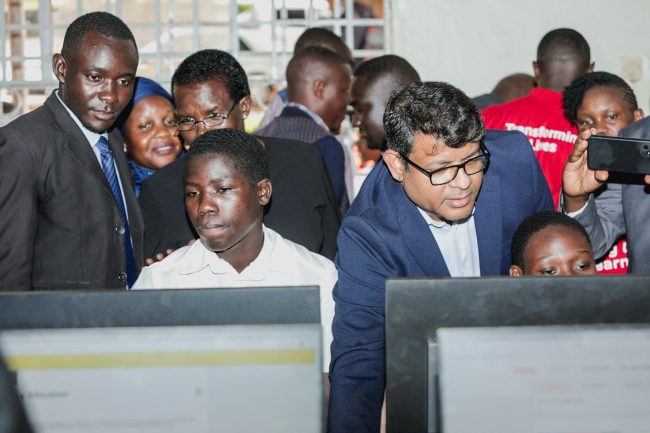
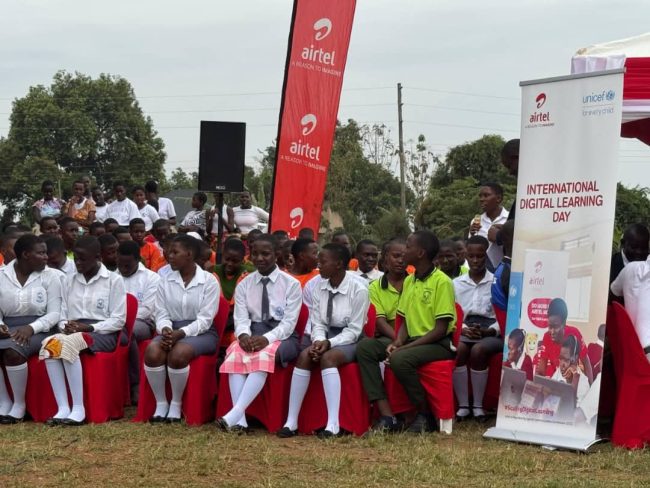
    Kampala: Airtel Uganda and UNICEF Uganda have today connected the 130th School to fast internet in their digital learning partnership to reach 200,000 in-school and out-of-school learners across Uganda.

    The announcement was made during the 2nd commemoration of the UNESCO International Day of Digital Learning under the theme Digital learning realities in low-resourced contexts. The celebration was officiated by the Acting Commissioner Library, E-Learning and ICT, Ministry of Education, Mr. Patrick Muinda who represented the Minister and First Lady at Kasengejje Secondary School in Nansana Wakiso on Wednesday.

    Since launching their collaboration in September 2022, Airtel Uganda and UNICEF have successfully connected internet and resourced 129 primary & secondary schools across the country. Today’s announcement confirms plans to connect an additional 71 schools and youth community centers by June 2025, bringing the total to 200 schools nationwide. This initiative has already benefited over 45,200 learners and equipped 1,820 teachers with digital teaching literacy.

    Speaking at the event, Mr. Soumendra Sahu the Managing Director, Airtel Uganda said, “No child should fail homework in any household with a smartphone. This network is important for breaking barriers to equitable education and giving undeniable opportunities to children to grow to their full potential. We are creating this potential at the schools to ensure teachers can access modern online resources to deliver brilliant life-changing lessons to our learners. We are honored to contribute to Uganda’s Education Digital Agenda and are committed to leveraging our extensive robust 4G+5G network to transform learning experiences for young people across the nation.”

    This partnership directly addresses the significant disparities in educational opportunities through providing free online digital resources and tools for schools in the underserved school communities.

    “Every child deserves access to quality education, regardless of their social context,” said Mr. Patrick Mutumbo, the Technology for Development Manager at UNICEF. “Our partnership with Airtel Uganda exemplifies how public-private collaborations can accelerate progress toward digital inclusion through increasing access to and use of digital tools and devices that contribute to mass adoption of ICT integration in schools. Today, we also applaud the dedicated teachers for spearheading the integration of digital learning, while prioritizing online safety to ensure a secure and inclusive learning environment for all children. We collaborate to enable every child to benefit from digital learning resources that expand their horizons and prepare them for future success.”

    The successful integration of Information and Communication Technologies (ICTs) in our supported schools has enabled targeted training for 50 educators, significantly enhancing their capacity to effectively incorporate digital tools into their teaching methodologies. Notably, the trained teachers showcased exemplary models of ICT integration during the event, leveraging online tools to design engaging, interactive, and student-centered lessons. This innovative approach has made complex concepts more accessible, enjoyable, and easier to learn.

    The Ministry of Education and Sports has been instrumental in identifying schools that require digital infrastructure support, demonstrating a commitment to bridging the digital divide in Uganda’s education sector. This collaborative approach facilitates targeted resource allocation, ensuring that communities with the greatest needs receive adequate support. By working together, we can create a more equitable and effective education system.

    In his remarks, the acting Commissioner, Library, E-Learning and ICT, Mr. Patrick Muinda, commended the partnership: “The success we’re seeing today is a result of effective collaboration between the private sector, development partners, and government. This initiative by Airtel Uganda and UNICEF directly supports our national vision of transforming education through digital technologies. By connecting our schools and providing supplementary digital resources, we are changing how our children learn and prepare for the future. The government remains committed to supporting partnerships that bring us closer to achieving inclusive, equitable, and quality education for all Ugandan children.”

    As Uganda continues its journey toward digital transformation in education, partnerships like the one between Airtel Uganda and UNICEF serve as powerful catalysts for change. By combining Airtel’s technological infrastructure with UNICEF’s expertise in education and child development, this initiative is creating meaningful impact across the country. As more students and teachers gain access to digital learning tools, Uganda moves closer to its vision of a digitally empowered society where every child can develop the skills needed for success in the 21st century.

  • Dr. Robin Nandy, UNICEF Representative, Presents Credentials to Minister of State for Foreign Affairs

    Dr. Robin Nandy, UNICEF Representative, Presents Credentials to Minister of State for Foreign Affairs

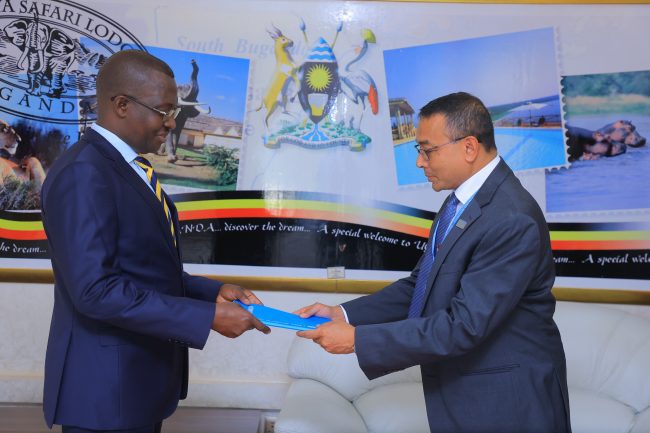
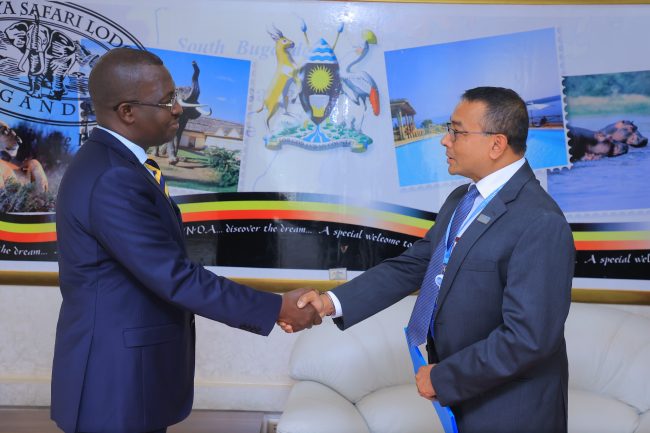
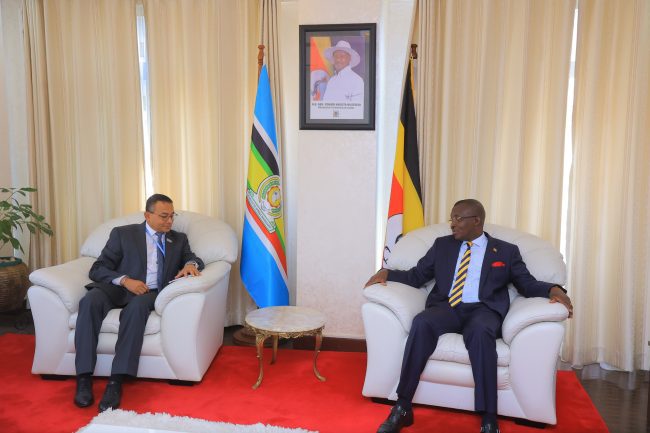
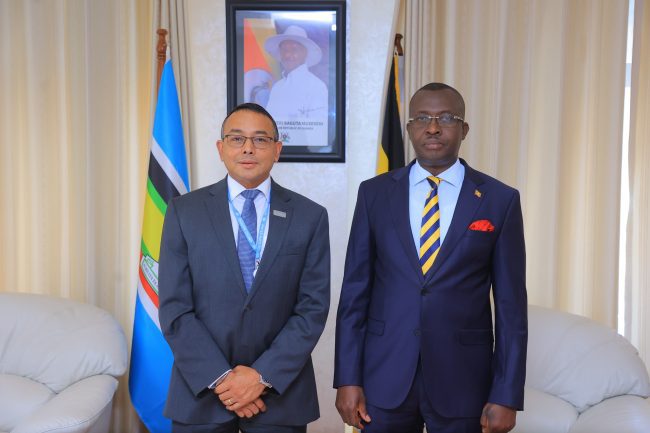
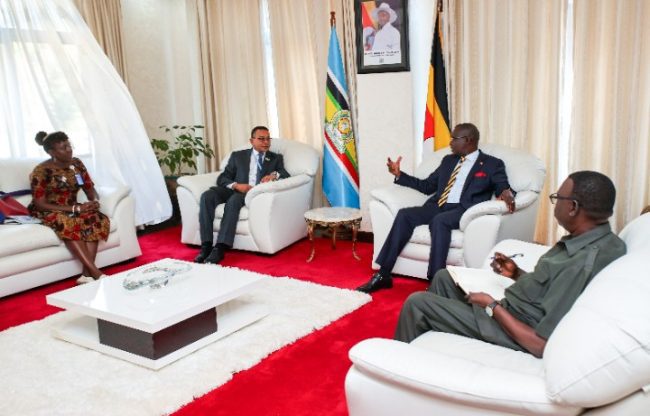
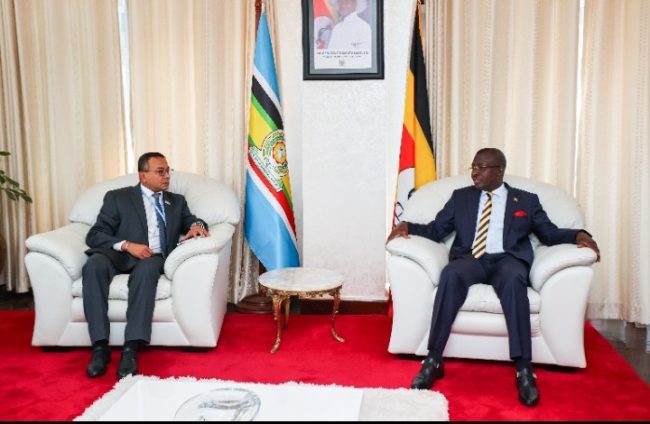
    Kampala: The Honorable Minister of State for Foreign Affairs, Hon. John Mulimba, today received Dr. Robin Nandy, the new UNICEF Representative to Uganda, who officially presented his credentials at a meeting held at the Ministry of Foreign Affairs in Kampala.

    In his remarks, Hon. Mulimba warmly welcomed Dr. Nandy to Uganda and acknowledged UNICEF’s unwavering partnership in promoting the health, education, and well-being of children in Uganda. The Minister praised the longstanding cooperation between Uganda and UNICEF, particularly in advancing key development goals that benefit Uganda’s children, who he described as the bedrock of the country’s future.

    Hon. Mulimba highlighted the importance of addressing emerging global challenges such as climate change and pandemics, stressing that these issues directly impact the welfare of children. He underscored Uganda’s commitment to working closely with UNICEF to confront these challenges, while also focusing on the broader social issues of teenage pregnancies and early marriages. The Minister called for a collaborative approach that emphasizes mindset change among Ugandans in order to achieve meaningful and lasting progress.

    Further, Hon. Mulimba reaffirmed Uganda’s dedication to continuing its strong partnership with UNICEF and assured Dr. Nandy of an open-door policy during his tenure in Uganda. He expressed confidence that Dr. Nandy’s leadership will enhance Uganda-UNICEF cooperation and contribute to the realization of key national development objectives.

    Dr. Robin Nandy expressed his gratitude for the warm reception and emphasized that UNICEF’s country cooperation program, under the UN Cooperation Framework, is fully aligned with Uganda’s development priorities. He noted that despite limited resources, well-coordinated plans for cooperation would attract funding and ensure successful program implementation. Dr. Nandy highlighted UNICEF’s focus on fostering positive social and behavioral change, as well as enhancing resilience in Uganda’s communities, particularly in addressing issues that affect the most vulnerable children.

    The meeting concluded with both parties reaffirming their commitment to working closely together to ensure the continued success of development programs aimed at improving the lives of children and enhancing Uganda’s capacity to respond to emerging challenges.

    Dr. Robin Nandy brings to Uganda a wealth of experience in global health and development, having previously held leadership roles in countries such as Iran, Indonesia, and India. His extensive background in immunization, child survival, and humanitarian response will be instrumental in guiding UNICEF’s efforts to advance child rights and support Uganda’s development agenda.

  • Airtel and UNICEF join efforts to improve access to digital learning in underserved schools in Uganda

    Airtel and UNICEF join efforts to improve access to digital learning in underserved schools in Uganda

    Adjumani/Kampala: Airtel and the United Nations Children’s Fund – UNICEF have launched a five-year partnership in Uganda to help accelerate digital learning through connecting 100 primary and secondary government schools in marginalized communities to learning platforms.

    The launch in Uganda is part of the Airtel Africa and UNICEF pan-African partnership that will benefit learners in the countries of Chad, Congo, the Democratic Republic of the Congo, Gabon, Kenya, Madagascar, Malawi, Niger, Nigeria, Rwanda, Tanzania, Uganda, and Zambia.

    In Uganda, 200,000 in and out of school learners are targeted. The out of school beneficiaries will benefit from the partnership through community youth centres in districts where UNICEF is implementing interventions for the most marginalized children.

    The partnership aims to:
    • Champion digital education advocacy to reform policies and frameworks through data insights and the promotion of tools and platforms.
    • Increase access to educational content through access without the need for data (zero-rating) learning platforms, including Learning Passport.
    • Invest in school connectivity to fast-track young people’s access to educational resources and opportunities where Airtel Uganda will provide free of charge access to the internet for schools that have been identified.

    The partnership will see the roll-out of digital learning by connecting schools to the internet and ensuring free access to learning platforms in Uganda and other Airtel Africa Operating Countries.
    Through this collaboration, Airtel and UNICEF are committed to leveraging technology to promote inclusive and equitable learning opportunities in underserved areas helping to build a brighter and more promising future for young people.


    Representing the Airtel Uganda Managing Director, Manoj Murali, at the launch event in Adjumani, the Chief Commercial Officer at Airtel Uganda, Amit Kapur said, “UNICEF has been a principal advocate in the well-being of children and young people, through championing initiatives that call for access to quality education, good health, among other elements that support their upbringing.”

    “As Airtel Uganda, we collaborate with other stakeholders who participate in humanitarian activities like what UNICEF is doing, and today, we are pleased to announce that together with UNICEF we aim to scale-up digital learning for children across Uganda,” he added.

    UNICEF was represented by the Technology for Development Manager, Patrick Mutumbo and he said, “UNICEF’s partnership with Airtel Africa to expand access to digital learning is an equalizer in supporting the needs of every child in Uganda. The existing digital divide denies the most marginalized children equal access to education. It leaves children, particularly girls from the poorest households and rural communities further behind, with little opportunity to catch up with peers in urban settings in Uganda.”

    As a key service provider in the telecommunications space, Airtel Uganda has built a 100% 4G network that covers the whole country, and through teaming up with partners like UNICEF, a 5-year partnership which is part of Airtel’s long-term commitment to building Uganda’s next important human resources has been launched.

    The partnership also seeks to champion digital education advocacy to reform policies and frameworks through data insights and the promotion of tools and platforms. Beyond digital learning, the Airtel Cares program supports transformative initiatives in health, agriculture, and education to reduce the burden of inequality in Uganda. Initiatives in maternal health, supporting the fight against HIV/AIDS, Sickle Cells and Fistula are some of the other interventions.
    “The launch of this initiative is a highlight of UNICEF’s commitment to every child’s education,” Mutumbo stated.

  • Japan gives UNICEF US$1.5 million to improve tracking of under-immunized and unimmunized children

    Japan gives UNICEF US$1.5 million to improve tracking of under-immunized and unimmunized children

    Kampala; The Government of Japan has provided a US$1.5 million (UGX5,710,860,000) contribution to the United Nations Children’s Agency – UNICEF, to support the Government of Uganda to improve tacking of under-immunized and unimmunized children at community level.

    UNICEF will utilize the funds to roll out a digital health information system that will help reach unimmunized and under-immunized children with required vaccines, and those targeted for COVID-19 vaccination; assist health workers to plan for vaccination supplies; and track COVID-19 vaccination.

    A recent “zero-dose” survey conducted in four urban districts revealed that there is still a significant number of children who are either not immunized or under-immunized.

    Adongo Mirriam, 42, the EPI focal person at Ogur Health Centre IV in Lira District, Uganda sets of with a motor bike to Lwalu Village to conduct vaccination of children who have been brought by their mothers and are waiting for her at the outreach unit. Because of the solar-powered fridges procured and installed by UNICEF, vaccines in this area have been stored and used effectively within the community

    Before a child celebrates their 1st birthday, they should have received BCG, Diphtheria-HepB-Hib, Hepatitis B, OPV, IPV, Rotavirus, Yellow Fever, Measles-Rubella, PCV vaccines. 10-year-old girls in school and community are required to receive the HPV vaccine.

    The absence of an accurate or near-accurate source of the actual number of children who have defaulted on vaccine doses, complex data collection forms, lack of a simplified way to visualize stock status, defaulters, and children due for immunization in each month, difficulty in ensuring accurate monitoring of vaccine stocks, receipts and deliveries are some of the challenges impacting the way immunization services are delivered.Once the digital tracking system is implemented, the Ministry of Health and partners will be able to improve the quality of services and coverage to reach the unimmunized and under-immunized wherever they are through outreaches and improved planning.

    350 health workers and 60 Ministry of Health and Regional Referral Hospital officials will directly benefit from this innovation while 1.3 million under 5 children in the pilot districts of Kamuli, Kampala, Kamwenge, Lamwo, Mukono, Ntungamo and Wakiso, will benefit indirectly. The intervention will also benefit 10 million under five children at national level and 21 million vaccinated children aged 12-18 years that will be vaccinated against COVID-19. The project targets are to be realized by the end 2024.

    Adongo Mirriam, the EPI focal person and midwife at Ogur Health Centre IV, in Lira District, preparing to start vaccinations at an outreach centre in Lwalu Village. UNICEF with funding from the Government of Japan, purchased cold-chain equipment available, including new solar-powered technology, to strengthen Uganda’s cold chain infrastructure. This equipment was distributed to various health facilities across the country

    “The Government of Japan is pleased to announce a US$1.5 million contribution to UNICEF, to support the Ministry of Health to implement a digitized health information microplanning system that will address challenges experienced in the delivery of immunization services and to achieve Universal Health Coverage (UHC). In addition, at the 8th Tokyo International Conference on African Development (TICAD 8) held in August 2022, Japan pledged to work on countermeasures against COVID-19, promotion of UHC, strengthening of health and medical systems, and building better health security. This cooperation is an embodiment of this pledge”, says H.E. Fukuzawa Hidemoto, the Ambassador of Japan to the Republic of Uganda.

    With the financial support from the Japanese Government, UNICEF’s intervention will contribute to the improvement of estimation of “zero-dose” children and better identification of where such children are located at the lower community level within the districts.

    UNICEF Representative to Uganda – Munir Safieldin (Phd.), says collecting accurate data in a timely manner will improve the immunization coverage specifically through better estimates as to the quantity and location of the target population at the community level.

    With this funding from the Government of Japan, the Ugandan government with support from partners will be able to better manage routine and supplementary immunization, COVID-19 vaccination, vitamin A supplementation, deworming and community nutrition screening data for Uganda.

    UNICEF will work closely with the Ministry of Health Uganda National Expanded Programme on Immunization, Health Information Management Division, Community Health Department to implement the project.

  • World Immunization Week: UNICEF Goodwill Ambassador Liam Neeson headlines week-long commemoration of global vaccination efforts and calls for greater investment

    World Immunization Week: UNICEF Goodwill Ambassador Liam Neeson headlines week-long commemoration of global vaccination efforts and calls for greater investment

    Global partners pledge $1 for every like, share, or comment on social media posts mentioning ‘UNICEF’ using the hashtag #longlifeforall until May 10Videos available to download here

    New York: UNICEF Goodwill Ambassador Liam Neeson is leading UNICEF’s global immunization initiative with a global message thanking the scientists, parents, health workers and others who have been so critical in helping to immunize children over the last two decades.

    In a video released ahead of World Immunization Week, Neeson talks about how the efforts of scientists such as Jonas Salk, who developed the first vaccine against polio, and dedicated workers who fill vials at factories or deliver vaccine injections, have made it possible to save two to three million child lives each year.

    “Vaccines are a remarkable human success story. Over the last 75 years, billions of children have been vaccinated, thanks to scientists, to health workers, to volunteers. If you’ve ever been vaccinated, or vaccinated your children, then you are part of the arm-to-arm chain that keeps all humanity safe,” said Liam Neeson, UNICEF Goodwill Ambassador.

    “We live our lives free of worry about catching smallpox. Once a terrifying diagnosis, polio is no longer a threat in most of the world. The conversation about vaccines in recent years has lost sight of how much good they have done for each of us. We need to celebrate this. It is perhaps one of the biggest collective achievements in human history.”

    Every like, share, or comment on posts mentioning a UNICEF social media account and using the hashtag #longlifeforall from now until May 10 will unlock US $1 to UNICEF, from the United Nations Foundation’s Shot@Life campaign and the Bill & Melinda Gates Foundation – up to a total of US$10 million – to help ensure all children get the life-saving vaccines they need.

    Despite the successes, an alarming 23 million children missed out on vaccinations in 2020. This number can only be reduced through greater commitment to and investment in immunization services. UNICEF is the world’s leading provider of vaccines to children in over 100 countries.

    With Gavi, the Vaccine Alliance and partners UNICEF supplies vaccines to reach 45 per cent of the world’s children under five. UNICEF also works with Governments in over 130 countries to strengthen national health and immunization programmes. In Uganda, UNICEF and its partners have made great strides in reducing vaccine-preventable deaths, diseases, and disabilities.

    This progress is attributable to the introduction of new vaccines, as well as increasing rates of vaccination uptake, substantially contributing to the steady decline in under-five mortality since 1990.

    “The last two years have taught us that a health care system that leaves some children exposed, is a health care system that leaves all children exposed,” said UNICEF Executive Director Catherine Russell.

    “The best way for the world to recover from this pandemic – and to prepare for future health emergencies — is to invest in stronger health systems, and immunization and essential health services for every child.”  World Immunization Week – celebrated every year in the last week of April – is spearheaded by the World Health Organization and brings together global partners to promote the use of vaccines to protect people of all ages against disease.

    The theme for this year is #LongLifeForAll, with ‘long life’ reflecting the importance of lifespan vaccinations.  “We are in a race against time to restore the immunization services disrupted by the COVID-19 pandemic and accelerate progress against all vaccine-preventable diseases,” said Gargee Ghosh, President of Global Policy and Advocacy at the Bill & Melinda Gates Foundation.

    “That is why we are thrilled to work with UNICEF and other partners around the world to ensure children – especially those in the world’s poorest countries – have access to the vaccines they need to live a long, healthy life.”

    “UNICEF ensures that nearly half of the world’s children under five are ‘protected by love’ with lifesaving vaccines,” said Martha Rebour, Executive Director of Shot@Life, United Nations Foundation. “We are honored to support and promote their work during World Immunization Week and hope that others will join us in our advocacy for these critical global vaccine programs.”
  • Belgian Government funds UNICEF’s urban cash assistance and mentorship programme for vulnerable adolescent girls in Kampala

    Belgian Government funds UNICEF’s urban cash assistance and mentorship programme for vulnerable adolescent girls in Kampala

    Kampala: The Government of Belgium has today announced a financial contribution of EUR 4.2 million (approx. 16bn Ugandan shillings) to UNICEF that will see 3,000 vulnerable in and out-of-school girls in Kampala receive support through mentorship, linkages to essential social services and a cash transfer to enable them to transition safely into adulthood.

    The four-year Belgian contribution to UNICEF will support its ongoing GirlsEmpoweringGirls (GEG) social protection programme implemented in partnership with Kampala Capital City Authority in the five divisions of Kampala.

    “With our support, Belgium aims to demonstrate the impact of innovative financing modalities such as cash assistance in order to help inform the establishment of social protection mechanisms in Uganda,” said H.E Rudi Veestraeten, Ambassador of Belgium in Uganda and South-Sudan.

    In Uganda, adolescent girls living in urban areas bear the burdens of poverty and exclusion, while remaining vulnerable to exploitation and abuse. Worse still, the COVID-19 pandemic has exacerbated deprivations while posing new challenges for children and young people.

    Adolescent girls, in particular, are vulnerable to a host of challenges, including teenage pregnancies, which contribute to school dropouts and reduce income-generating opportunities. Interventions like the GirlsEmpoweringGirls programme, which target the most vulnerable, are some of the most effective ways of addressing these vulnerabilities.

    Indeed, global evidence has shown that social protection programmes that include cash transfers have had a positive impact on vulnerable children and young people. Such programmes require concerted efforts by all stakeholders, under the leadership of the government, to ensure they are well planned and effectively rolled out.

    Like many developing countries, Uganda still faces challenges that require efforts to safeguard the well-being of many women and children in the country. According to World Bank (2020), the COVID-19 pandemic has unequivocally demonstrated the strategic role of social protection. However as of July 2021, effective social protection coverage was estimated at 2.9 per cent, with the government spending only an average of 0.25 per cent of GDP on social protection, on average.

    “As stakeholders, we have a duty to ensure that all children enjoy their rights as enshrined in the Convention on the Rights of the Child, including the right to protection,” Dr Munir Safieldin, UNICEF Representative in Uganda, noted.

    “With the financial contribution from the Belgian Government, we will work with the Government of Uganda, through Kampala Capital City Authority (KCCA) to scale up the GEG programme from the current 1,500 to 3,000 in and out-of-school adolescent girls. We are confident this unique intervention will keep growing and help sustain demand for critical services by young people in Kampala,” he added.

    The programme will be managed by Kampala Capital City Authority (KCCA) and implemented by two civil society partners.

  • UNICEF deploys over 450 climate-resilient emergency tents to support school reopening in Uganda

    UNICEF deploys over 450 climate-resilient emergency tents to support school reopening in Uganda

    KAMPALA/COPENHAGEN/NEW YORK; UNICEF is deploying 457 high performance tents to support school reopening in flood-affected districts in Uganda, marking the first time the newly innovated tents are rolled out in an emergency.

    The unique 72 square metre tents – which can be easily transported and reused – include ventilation systems and elevated shade nets to keep internal temperatures cooler in hot and dry climates; electrical and solar kits for lighting and energy; and three-layered windows to help block out disease-carrying mosquitos. The straight walls allow for more space for social distancing.

    An aerial view of a High Performance Tent classroom installed at Bulembia Primary School in Kasese District. This school is a beneficiary of the UNICEF high performance tents that have been installed as temporary learning structures after their classrooms were washed away by a flooding neighboring River Nyamwamba pushing learners to squeeze in a few classrooms and others studying outside. UNICEF is offering these new improved multipurpose tents to support learning in emergencies.
    Following destruction of classrooms and other infrastructure in primary schools by a flooding neighboring River Nyamwamba, UNICEF is installing high performance tents as temporary learning structures The new improved multipurpose tents are supporting safe learning in emergencies

    “For nearly two years, children across the country have suffered prolonged pandemic-related school closures, combined with extreme weather events that have destroyed schools across the country. Their education and well-being have suffered immensely.  UNICEF is working with the government to help every child recover the education they have lost ,” said Dr. Munir Safieldin, UNICEF Representative in Uganda. “The new tents will provide safe environments for children in disaster-affected areas, ensuring they continue to learn, play and interact.”

    Pupils of Bulembia Primary School in Kasese District enjoy play during a break off after attending classes in the installed High Performance Tent (HPT)- in the background.
    The school is a beneficiary of UNICEF’s emergency High Performance Tents because its classrooms, furniture and books were washed away by a flooding neighboring River Nyamwamba leading to overcrowding of pupils in a few remaining classrooms and others studying under the trees. UNICEF is offering these new improved multipurpose tents to support safe learning during emergencies.
    Following destruction of classrooms and other infrastructure in primary schools by a flooding neighboring River Nyamwamba, UNICEF is installing high performance tents as temporary learning structures The new improved multipurpose tents are supporting safe learning in emergencies

    Children in Uganda endured the longest school closures globally, missing 83 weeks of their learning. The government projected a third of schoolchildren would drop out completely. The devastating impact of COVID-19 restrictions has been compounded by heavy flooding in some parts of the country.

    At the end of January, UNICEF installed seven high performance tents in Kasese, western Uganda, where water damage caused by heavy flooding destroyed schools. Additional ordinary tents have been installed in districts including Ntoroko, Sheema and Buliisa. UNICEF is also providing 540 desks and 30 blackboards to schools affected by flood damage.

    Joy Kyomugasho, conducts a P.2 English lesson in the installed High Performance Tent (HPT) at Bulembia Primary School in Kasese District.
    This school is a beneficiary of UNICEF’s emergency High Performance Tents because its classrooms, furniture and books were washed away by a flooding neighboring River Nyamwamba leading to overcrowding of pupils in a few remaining classrooms and others studying under the trees. UNICEF is offering these new improved multipurpose tents to support safe learning during emergencies.
    Following destruction of classrooms and other infrastructure in primary schools by a flooding neighboring River Nyamwamba, UNICEF is installing high performance tents as temporary learning structures The new improved multipurpose tents are supporting safe learning in emergencies

    Uganda was one of three countries to field test the prototypes, which were used as health centres for South Sudanese refugees in the northwest of Uganda, Bidi Bidi Refugee Settlement, Yumbe. UNICEF worked hand-in-hand with the manufacturers to refine and improve the product’s features, particularly those that keep the tents cool in hot and dry climates.  The tents were also tested in the Philippines for wet and humid weather and Afghanistan for extreme cold.

    “It’s fantastic to see these new and innovative tents bring rolled out to support children. The straight walls mean there’s more space in the tents for desks and social distancing, while the improved ventilation will keep these classrooms cooler so the children can focus on their lessons,” says Kristoffer Gandrup-Marino, Chief, Product Innovation, UNICEF Supply Division.

    Musoke Nuliet, conducts a P.3 Mathematics lesson in the installed UNICEF High Performance Tent (HPT) at Bulembia Primary School in Kasese District. ÒI am happy. We had no rooms to conduct classrooms since classes were washed away by floods. Now we have shelter to teach our pupils. The tents are large and well ventilated. I love them and I thank UNICEF.Ó Musoke said.
    The school is a beneficiary of the UNICEF high performance tents that have been installed as temporary learning structures after their classrooms were washed away by a flooding neighboring River Nyamwamba pushing learners to squeeze in a few classrooms and others studying outside. UNICEF is offering these new improved multipurpose tents to support learning in emergencies.
    Following destruction of classrooms and other infrastructure in primary schools by a flooding neighboring River Nyamwamba, UNICEF is installing high performance tents as temporary learning structures The new improved multipurpose tents are supporting safe learning in emergencies
  • Catherine Russell assumes functions as new UNICEF Executive Director

    Catherine Russell assumes functions as new UNICEF Executive Director

    New York; Catherine Russell took office today as UNICEF’s new Executive Director, becoming the fourth woman to lead the organization in its 75-year history.

    “It is an honor and a privilege to join UNICEF and help lead its remarkable work for children at such a crucial moment,” said Russell.

    “At a time when millions of children globally are still reeling from the impact of the COVID pandemic and other crises, UNICEF is leading the call to protect their rights and their futures. I look forward to the work ahead”.


    From 2020 to 2022, Ms. Russell served in the US government as Assistant to the President and Director of the White House Office of Presidential Personnel. She previously served from 2013 to 2017 as Ambassador-at-Large for Global Women’s Issues at the U.S. Department of State.

    In that post, she integrated women’s issues across all elements of U.S. foreign policy, represented the United States in more than 45 countries, and worked with foreign governments, multilateral organizations and civil society.

    She was the principal architect of the ground-breaking “U.S. Global Strategy to Empower Adolescent Girls.”

    Previously, Ms. Russell served as Deputy Assistant to the President at the White House under President Barack Obama, Senior Advisor on International Women’s Issues on the Senate Foreign Relations Committee, Associate Deputy Attorney General at the Department of Justice, and Staff Director of the Senate Judiciary Committee.

    Before re-entering government service in 2020, she taught at the Harvard Kennedy School as an Institute of Politics Fellow.

    She also served as the board co-chair of the Women’s Foreign Policy Group, as a board member of Women for Women International, as a member of the Sesame Street Advisory Board, as a member of the non-profit organization, KIVA Advisory Council, and as a member of the Thomson Reuters Foundation’s Trust Women initiative.

    Ms. Russell holds a Bachelor of Arts in Philosophy, magna cum laude, from Boston College and a Juris Doctor degree from the George Washington University Law School. She is the eighth Executive Director to lead the 20,000-person-strong agency.

  • Government of Sweden announces new funding to UNICEF for improving the lives of mothers and children in Uganda

    Government of Sweden announces new funding to UNICEF for improving the lives of mothers and children in Uganda

    Kampala: The Government of Sweden has today announced new funding to UNICEF to improve the lives of mothers, children and youth in Uganda under the agency’s new Country Programme 2021-2025.

    The five-year funding worth 165,000,000 Swedish Kronor (app. UGX 67 billion/US$18,7 million) will be utilized by UNICEF to support the most vulnerable and underserved women and children in rural areas as well as in urban settings including refugees and host populations and those affected by humanitarian crises.

    Importantly, the new funding will enable UNICEF to contribute to the accelerated mass COVID-19 vaccination campaign, critical for continuity of learning and safe reopening of schools and closely linked to the prevention of teenage pregnancies. Undernutrition in children is another government priority where UNICEF support is critical and that will be boosted by this contribution.

    Under the new UNICEF Country Programme 2021-2025, UNICEF is committed to continue supporting government efforts to ensure increased access to and use of quality integrated health, nutrition, HIV, newborn, and water and sanitation services; improved learning for all children and young people; and protection of all boys and girls in Uganda from all forms of violence, abuse, neglect and exploitation, including harmful practices.

    The Swedish Ambassador, Ms. Maria Håkansson, was pleased to announce the extension of the long-standing partnership with UNICEF.

    “The support comes at a critical time in Uganda’s fight against the COVID-19-pandemic. In the short term our support will enable UNICEF to play a critical role in the Government’s accelerated mass vaccination campaign that started last week. This will help prevent the expiry of millions of doses of vaccine and contribute to safe reopening of schools,” said Maria Håkansson.

    She added, “Around half of Uganda’s population is below 18 years of age and 25 per cent of teenage girls in Uganda are already mothers or pregnant with their first child. Keeping girls in schools reduces the risks of early childbearing and child marriage.”

    The UNICEF Representative to Uganda, Dr. Munir Safieldin, thanked the Government of Sweden for the continuous support extended to UNICEF especially at this critical time when the nation is slowly recovering from the pandemic.

    “Since its declaration, children and young people are bearing the brunt of the COVID-19 pandemic. The new funding received is clear evidence of our shared commitment to improve the lives of children in Uganda, that have been greatly affected by the pandemic,” said Dr. Safieldin.

    “UNICEF remains extremely grateful for the Swedish support which will go a long way in supporting the Government of Uganda to ensure boys and girls  have access to critical health care, protection services and are able to return safely to school and learn.”

    The Government of Sweden is a significant partner to UNICEF Uganda since 2013, supporting the joint work undertaken by UNICEF Uganda and the Government of Uganda, most recently in the areas of maternal and newborn health, adolescent health, HIV/AIDS, and building health systems that facilitate the delivery of services. Under the recently concluded Government of Uganda-UNICEF Country Programme 2016-2020 that coincided with the beginning of the COVID-19 pandemic, Sweden supported the continuity of essential health services for children and women and other COVID-related emergency needs.

    Dr. Safieldin emphasized that “the new funding will build on the gains made for children and support the country to build back better.”

    While UNICEF’s mandate covers the entire country, The Government of Uganda-UNICEF country programme 2021-2025, particularly aims at accelerating change for Uganda’s  most deprived children and will be implemented in 29 districts with the highest numbers or rates of child deprivation and or districts that are especially vulnerable to external shocks such as refugee movements and the impact of climate change.