Tag: SACCOs

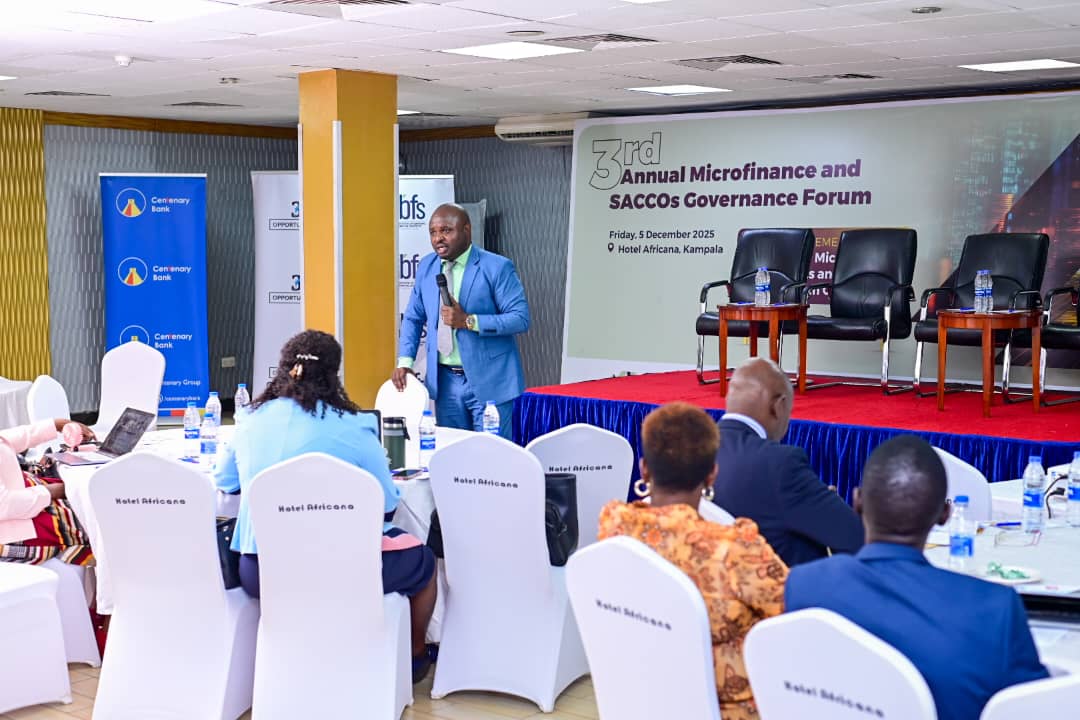
  • UIBFS hosts 3rd annual Microfinance & SACCOs Governance Forum 2025 themed ‘The role of Microfinance Institutions and SACCOs in wealth creation’

    UIBFS hosts 3rd annual Microfinance & SACCOs Governance Forum 2025 themed ‘The role of Microfinance Institutions and SACCOs in wealth creation’

    Kampala: The Uganda Institute of Banking and Financial Services (UIBFS) on Friday hosted the third Annual Microfinance and SACCOs Governance Forum at Hotel Africana, Kampala Under the theme: The role of Microfinance Institutions and SACCOs in wealth creation.

    The main objective of this conference was to provide an in-depth understanding on how Microfinance institutions and SACCOs can contribute to wealth creation through empowering their members, hence leading to economic development.

    Speaking during the event, the CEO of UIBFS, Mrs. Masadde Goretti stated that the Institute’s mandate is to promote professionalism and continuous learning within the banking and finance sector, and this is made possible through forums such as this.

    “Microfinance Institutions and SACCOs play a critical role in empowering citizens especially the bottom of the pyramid citizens, hence uplifting communities. However, the demands of modern governance and sustainable wealth creation require us to continually rethink and improve our approaches. Today’s discussions on wealth creation will provide valuable insights on how to help Microfinance Institutions and SACCOs contribute to the 10-times growth program,” she says.

    The guest of honor Mr. Kaggwa Moses, the Director Economic Affairs- Ministry of Finance, Planning & Economic Development delivered an insightful session on “The role of Microfinance institution and SACCOs in wealth creation.” He noted that SACCOs and Microfinance institutions are central to Uganda’s financial inclusion agenda, reaching 85% of Ugandan adult population which were not financially included.

    He said, “Before that, Banks, we call them high street banks. They don’t entertain what they see as poor people. If you have no collateral, if you don’t have a title, they don’t want you. If you come with your money, and they ask you for your source of finance, source of employment, source of income, and you don’t have, they may not bank you. But we know that SACCOs and microfinance institutions have played a very good role in this”.

    The keynote speaker, Prof. Allan Katwalo Member, Board of Trustees CEO Summit Uganda also shared his remarks on the topic: “Aligning MFIs Governance Frameworks with national wealth creation and financial inclusion goals.”

    Other speakers at the event included; Denis Tukahikaho, PhD, Cluster lead; Financial services specialist for PSFU and GROW of the World Bank Project who spoke about: “Carbon credit banking in an emerging economy”.
    Mr. Charles Isingoma , the Managing Director Hofokam Ltd Who gave insights on the “Challenges of transforming MFIs for Regulation in Uganda”

    Mr. Geoffrey Okidi, Agriculture & MSME Lead Financial Sector Deepening Uganda (FSDU) Talked about “Governance’s role in ensuring digital transformation promotes wealth creation among underserved communities”

    Brig. Gen. Godfrey Muwanguzi, Deputy Chief Coordinator of Operation Wealth Creation (OWC). Spoke about ; “Aligning Microfinance Operations with National Development Plan (NDP IV).”

    Mrs. Racheal Vanesa Muhwezi, Assistant Commissioner Microfinance Regulation-Ministry of Finance, Planning & Economic Development Spoke about “Corporate Governance in line with Regulation and Supervision.”

  • Stanbic Bank boosts unsecured SACCO loans from sh200m to sh4 billion

    Stanbic Bank boosts unsecured SACCO loans from sh200m to sh4 billion

    Kampala: Stanbic Bank Uganda has announced an increase in its unsecured loan offering to Savings and Credit Cooperative Organizations (SACCOs) from sh200 million to sh4 billion, attained at an interest rate of only 10%.

    This bold step was unveiled during the bank’s SACCOs Forum, recently hosted at Onomo Hotel in Kampala.
    Francis Karuhanga, the Chief Executive of Stanbic Holdings Uganda Limited (SUHL) said the decision to elevate the SACCO preposition is a strategic response to the feedback gained from the previous engagements with Cooperative leaders across the country and the growing demand for affordable financial solutions, a move that perfectly aligns with the government’s National Development Plan.

    Karuhanga said the increased loan limit is expected to empower SACCO groups, especially those led by women and youth providing them with greater financial resources to invest in their enterprises, improve operations, and contribute positively to the social-economic transformation of the unbankable community.

    “In line with our Purpose; Uganda is our home we drive her growth, we believe that by doing this we are not only creating opportunities for our customers but also transforming the lives of people who we cannot reach as a bank. Statistics show that all banks in Uganda only serve 5 million people yet the Savings and Credit Cooperative Organizations serve close to close to 20 million people. Therefore it’s paramount for us as the leading drivers of Uganda’s economic development to provide access to inclusive and affordable financing solutions,” Karuhanga said.

    James Junguru the Stanbic Manager handling Savings and Credit Cooperative Organizations said that the new sh4 billion ceiling allows for significant enhancements in loan distributions, facilitating larger projects and financial turnaround for these cooperative societies, which play a vital role in the livelihoods of many Ugandans. For SACCOs to access this financing, it need to have been in operation for at least three years, with audited books of account and credible leadership.

    “Stanbic bank has already disbursed over sh200 billion and is currently undertaking comprehensive support and resources to help SACCO members understand the new opportunities available to them. These offers include investment alternatives like treasury bills and unit trusts through our sister company SBG Securities, affordable insurance packages for their loans and assets, and an opportunity to integrate their systems into our Flexipay platform which simplifies collections, distribution, and managing records among others,” Junguru said.

    Augustine Tamale, a leader from the Vision Group SACCO, thanked the bank for organizing the interactive event. He said developments like increasing the SACCO unsecured loan ceiling is a great opportunity to help them remain liquid at all times.

    “This move is very important because when our members save money, they expect to get helped in time of need up to three times their total savings. However, as SACCO leaders we are always looking for investment opportunities to help our groups make money and grow our assets and pay dividends,” he said.

    Tamale added, “However sometimes members may come looking for more money at a time when we have just invested for example in a real-estate site where money can’t be realized immediately. Therefore an intervention like increasing our credit ceiling will help us serve our customers better.”
    Uganda boasts of 33,000 SACCO groups which include the Parish Development Model (PDM), and Village Savings and Loans Associations (VSLAs). SACCOs are a major link between the bank and the un-bankable populace which is over eight million people.

    Tunde Thorpe, the Stanbic Bank Head of Transactional Banking, described the move as part of the LOVE month celebrations under which the bank continues not only to give back to communities but also offer innovative solutions that best suit the needs of its customers.

    “Stanbic as an institution remains committed to fostering an inclusive financial environment that empowers individuals and supports sustainable development across the country. We know that this initiative has come at a crucial time as the country continues to navigate economic recovery in the aftermath of the pandemic. Our increased loan limit aims to encourage investment, stimulate economic activity, and ultimately drive growth within local communities,” Thorpe said.