Tag: National Resistance Movement

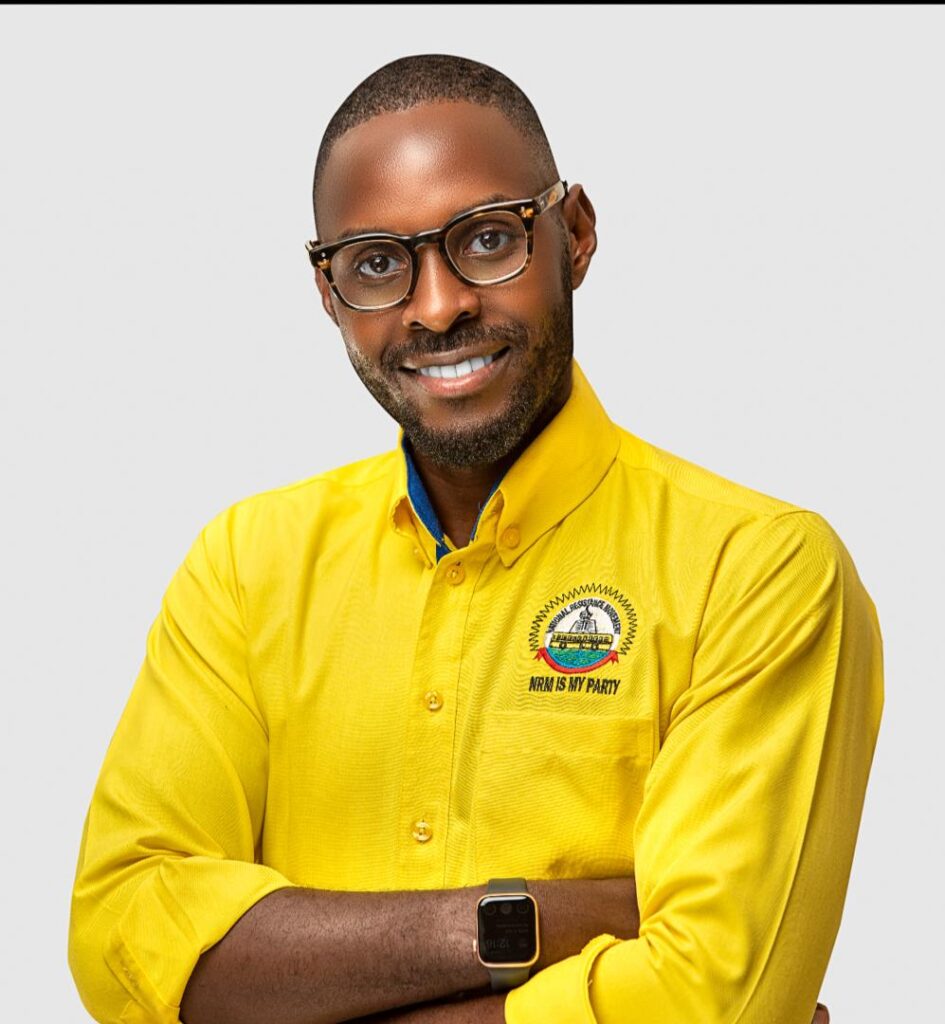
  • All Eyes on Seth Murari Ahead of NRM Mayoral Primaries in Mbarara

    All Eyes on Seth Murari Ahead of NRM Mayoral Primaries in Mbarara

    The ruling National Resistance Movement (NRM) is set to hold its party primaries for mayoral candidates across all districts this Thursday, July 24.

    In Mbarara City, all eyes are on Seth Murari—a name that has steadily grown in popularity, especially among the youth who make up the bulk of the city’s electorate. Widely recognized for his commitment to sports and youth empowerment, Murari has emerged as a symbol of inspiration and progressive leadership.

    Many young people in Mbarara view Murari’s bid for mayor as a long-awaited opportunity to support someone who has consistently advocated for their needs. His involvement in organizing sports tournaments and community activities has fostered unity and strengthened grassroots networks, even without holding an official political role.

    From social media platforms to the streets of Mbarara, Murari’s name is often associated with hope, energy, and forward-thinking. His impact has already been felt through various youth-centered initiatives that have brought real change to local communities—earning him praise beyond traditional political circles.

    Murari remains confident ahead of Thursday’s primaries, expressing optimism about his chances and readiness to elevate Mbarara City to greater heights.

    A former key figure in the Office of the National Chairman (ONC), Murari played a vital role in re-engaging disillusioned youth, especially in Kampala, and later expanded his outreach to Mbarara. His focus on practical empowerment rather than political rhetoric has helped reposition him as a transformative leader within the NRM and beyond.

  • EALA RACE: Ambrose Nampwera wants of Trade Barriers eliminated among East Africa countries

    EALA RACE: Ambrose Nampwera wants of Trade Barriers eliminated among East Africa countries

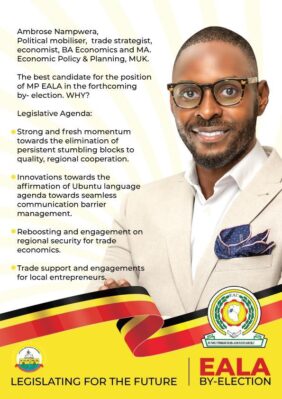
    As the race for the member of Parliament representing  Uganda in East Africa Legislative Assembly (EALA) heats up, Mr. Nampwera Ambrose has unleashed what his Agenda is as he runs for the seat.

    Ambrose who is a Ugandan trade strategist, political Mobil and economist has vowed to work for the removal of barriers hindering cross-border trade when elected a Member of Parliament for the East Africa Legislative Assembly (EALA). “I bring strong and fresh momentum towards the elimination of persistent stumbling blocks to quality, regional cooperation in the areas of trade.

    Ambrose Nampwera

    He also wants to promote innovations towards affirmation of Ubuntu Language agenda towards seamless communication barrier management.

    He told this website that he wants to work on boosting and engaging regional security for trade economics.

  • Photos: Bebe Cool mobilizes support for M7 in Kumi

    Photos: Bebe Cool mobilizes support for M7 in Kumi

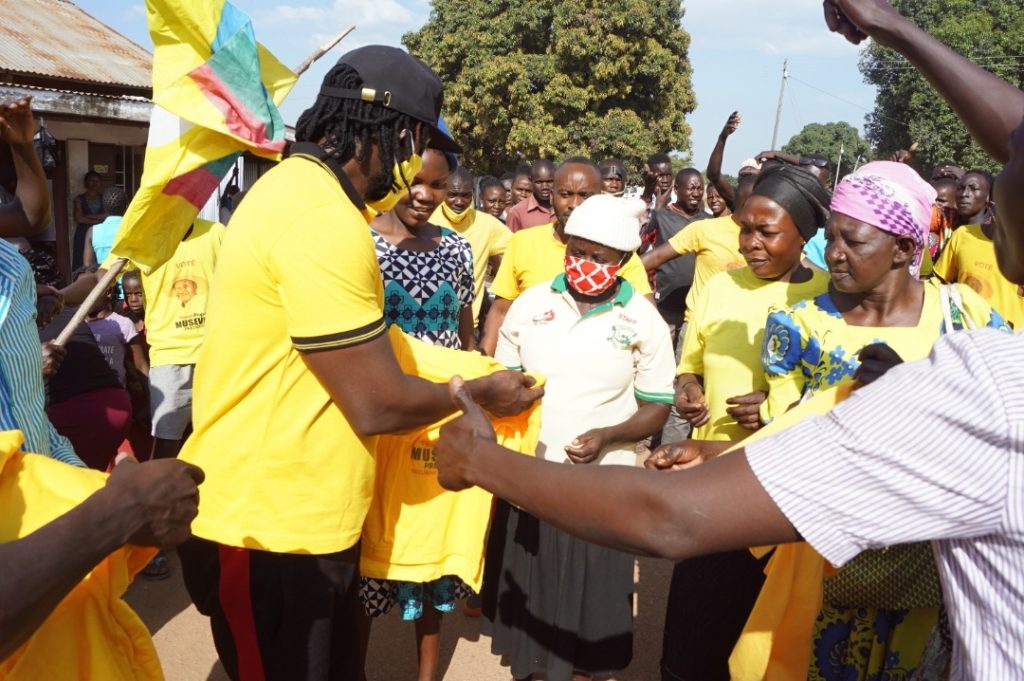
    Big size singer and National resistance Movement (NRM) chief mobilser Bebe Cool has called on people of Kumi to vote for President Yoweri Kaguta Museveni in next year’s presidential elections.


    In a scientific campaign dubbed door to door, Bebe Cool alongside Big Eye and Catherine Kusasira reached out to Kumi people and convinced them to for the old man with a hut.


    While he mobilized NRM supporters in the area, President Yoweri Kaguta Museveni was in the vicinity meeting NRM leaders in the region.

  • A multi–million dollar monument to be built in Entebbe

    A multi–million dollar monument to be built in Entebbe

    A twenty one (21m US dollar) monument is to be constructed in Uganda, in recognition of the efforts by the National Resistance Army (NRA) dead or alive members who have contributed vitally much to the Liberation struggle in Africa in particular and Uganda in general.

    The monument shall among other things recognize those who spearheaded liberation struggles in Uganda most importantly the twenty seven (27) that launched the 1980-86 guerrilla war that brought peace to Ugandans and the entire region.

    Artistic impression of the monument

    The brain behind this initiative is NRM TRUST AND REWARD TEAM whose patron is the Deputy Speaker of the National Assembly Jacob Oulanya, deputized by a successful business man in Mbarara town, Eric Rutahigwa.

    The three phase monument Tourism attraction centre, shall be constructed along Entebbe Highway because of its being strategic hence easy to attract a good number of tourists as its near Entebbe International airport and being near Uganda Wild Life Centre (Entebbe zoo).

    Jacob Oulanya

    “It’s going to have a national and International outlook and construction work is due to commence in July 2017 and it is estimated that on conclusion, Government shall be earning between 400m -800m shillings annually and that more than 300 people will get employment” Gerald Ahimbisibwe, the chairman of NRM Trust and Reward team explained.

    Hon. Mwine Mpaka, the Youth MP Representative western region sounded similar sentiments saying the idea was a well thought of.

    In regard to the monument for peace, senior elders of this country have been consulted and they enlightened the team about the background of peace that is being enjoyed by Ugandans and the entire region.

    “In a consultative meeting that was conducted with senior elders at Golden Leaf Motel in Mbarara elders revealed that the past regimes prior to 1986 were characterized and masterminded by an enormous bloodshed, sectarianism, military rule, insecurity and violation of human rights and that it was the NRA which liberated Ugandans from a killer government that had claimed lives of more than 500,000 people.

    A contribution from Mrs. Evangilista Kabucuriro Kokoya, a 78 year resident of Bukiro Kashari , Mbarara District revealed that “ When I remember what happened during Amin’s regime, I really shade tears. People died innocently, there was no respect for life, and all was a situation of hopelessness.

    That’s why I will support NRM until I breath my last” other elders including Iswarara Moses 68 from Kikyenkye Ibanda, Adolf Manyindo from Fort portal, Ahiirwe Nathan Bungonzya 56 from Itendero-Kabwohe, Sheema District, Rt. Rev. Canon Y.K. Labon 74 from Butare Ntungamo, Rev Can Bangirana Alfred Rupiiha 73 from Igara Kyeizooba Bushenyi District, Dr Asiimwe Birondwa from Sanga , Kiruhura District, Mr. Remegio Muhweezi from Rubirizi  District among others all expressed all expressed their appreciation to the NRA/NRM government for having liberated Uganda from what was called “ a grave yard” and called upon Ugandans to preserve the existing peace as a glass that may break into pieces project to recognize NRA bush was comrades and elders who scarified for existing peace as the monument shall be a communication tool that peace as a tenet of development should be preserved for now and future generations.

    Gerald Ahimbisibwe, the Chairperson of NRM Trust and Reward Team says that the monument shall be constructed along Entebbe Road because it’s a strategic area which will attract a number of tourists being near the Airport and Entebbe zoo. According to Ainebyoona Brain, the spokespersons of the project, the monument will not only be for Ugandan but Africa in general since Uganda has become a fountain of peace not only to its boundaries but also across the borders.

  • Keynote Address by H.E. Yoweri Kaguta Museveni Chairman NRM to The newly elected NRM MPs Retreat On Understanding the NRM Revolution and Ideology

    Keynote Address by H.E. Yoweri Kaguta Museveni Chairman NRM to The newly elected NRM MPs Retreat On Understanding the NRM Revolution and Ideology

    In the Book of Mathew Chap: 23:23. it says that: “They left undone what they ought to have done and did that they ought not to have done and there is no truth in them”. In exact quotation it says:“…Woe to you, scribes and Pharisees, hypocrites! For you pay tithe of mint and anise and cummin, and have neglected the weightier matters of the law: justice, mercy and faith. These you ought to have done, without leaving the others undone”. Verse 24 says: “….. Blind guides, who strain out a gnat and swallow a camel…”.

    All this means that you concentrate on peripheral issues but neglect much more fundamental issues. That was exactly the problem of Uganda and many parts of Africa prior to the rise of the NRM in the 1960s as part of the Student Movement and also the rise of the other Liberation Movements.

    Prior to 1862, when the first European, Hannington Speke, came to Uganda, this area was under tribal kings and chiefs ruling over the fraternal but divided peoples of this area. You had the kingdoms of Bunyoro, Buganda, Nkore, Rwanda and the chiefdoms of Mpororo, Busoga, Lango (Bukiri), Buhaya, Acholi (Gani), etc. On many occasions, these kingdoms and chiefdoms were at war fomented by the myopic and ego-centric kings fighting for looting ─ “kunyaga”. There had been, according to mythology and history, some period of peace, prior to 1500 AD, during the time of the Bachweezi, when much of Nkore, Bunyoro, Buganda, Bukiri, etc, had been united.

    However, the Bachweezi dynasty had collapsed and had been replaced by the new dynasties of the Kabakas in Buganda, the Babiito in Bunyoro-Tooro, the Bahiinda in Nkore-Karagwe-Buhaya and the Bainginya in Rwanda. It is these that were promoting wars among our people.

    President Yoweri Museveni addressing new NRM MPs at Kyankwazi today

    President Yoweri Museveni addressing new NRM MPs at Kyankwazi today

    Our peoples are either similar or linked. Certainly, linguistically, all the interlacustrine Bantu speak, more or less, one language with different dialects. These Bantu dialects have linkages with the Nilotic dialects which, more or less, are one language, so do the Bantu dialects have linkages with the Nilo-Hamitic and the Sudanic languages (Ateso-Akarimojong and Lugbara-Madi). Examples: the Madi word for home is “aku”. What is the Bantu word for home? It is “eka” for many of the dialects. The Lugbara word for syphilis is: “oyaa”. In some Bantu dialects, the word for syphilis is: “ebihooya”. The word for daughter in Luo is “nyara”. Those who speak Bantu dialects know what that word means ─ very much connected with daughter-making. The word for anthem in Acholi is “Lubala”. The word for clan anthems in Luganda is “Mubala”. One of the first European visitors to come to Africa, was HM Stanley.

    In his Book: “Through the Dark Continent Vol II” on page 3, he wrote as follows: “The Wajiji, Wazinja, Wazongora, Wanyambu, Wanya-Ruanda, Kishakka, Wanyoro and Wanyankori, Wasui, Watuusi, Wahha, Warundi and Wazige; all these tribes are related to each other and their language shows only slight differences in dialect”. On page 366, of his other Book: “The Rescue of Emin Pasha” he further, says as follows: “By a gradual rise from Amranda southward we escape after a few miles out of the unlovely plains to older land producing a better quality of timber.

    Before we were 100 feet above the lake a visible improvement has taken place, the acacia has disappeared and the myombo, a tree whose bark is useful in native cloth and for boxes and which might be adapted to canoes, flourished everywhere. At Bwanga, the next village, the language of the Wahuma, which we had heard continually since leaving Albert Nyanza, ceases and the Unyamwezi interpreters had now to be employed, which fact the skeptical Zanzibaris hailed as being evidence that we were approaching Pwani (the Coast)”. There you are.

    This complete stranger, who had only been to this area two times, could quickly notice that the Bantu dialects spoken between the Ituri Forest and Mwanza in Tanzania were, essentially, one language which he called the “Wahuma” language. Indeed, many Bahima speak different dialects of the same language. Stanley had noticed what some people, these days, call Runyakitara language. However, our ego-centric chiefs were promoting tribal chauvinism, division and wars among these fraternal peoples. When the foreigners, therefore, came, we could not resist them because we were divided. By 1900, the old arrangement had been defeated and a colonial one was put in place. In addition to the old tribal chauvinism that had been being promoted by the kings and chiefs, a new pseudo polarization was added ─ that of religious polarization.

    This meant Catholic against Protestant and vice-versa, Christian against Moslem and vice-versa. This was due to importing into Central Africa the nonsensical conflicts of Europe (Catholics vs Protestants) and the Middle East and the Balkans (the Christian crusaders vs the Moslems). The conflicts between the Protestants and Catholics in Europe had been called the “Thirty years wars” ─ between 1618 and 1648.

    The combined sectarianism of tribalism and religion, reinforced by gender chauvinism, was, therefore, the dominant ideology of the opportunistic political elite by the time of Independence in 1962. It is this sectarianism and gender chauvinism that could not allow our Independence leaders to build a capable State (Army, Police, Judiciary, Civil Service, etc., etc). They could also not build wide unity to guarantee peace (obusingye) and stability (obutebekana).

    Hence, the unstable, unprincipled political arrangement of the coalition government of UPC and Kabaka Yekka of 1962-64. It was called: “Omukago”. It reminds me of The Democratic Alliance (TDA). It soon collapsed, with disastrous consequences for Uganda ─ the 1966 crisis, the 1971 coup detat, the killings of 1966 to 1986. You could even add the Kony wars and the cattle-rustlers of Karamoja.

    They all had linkages with these ideological mistakes. Some of us had belonged to the old political parties: Democratic Party (DP), Uganda Peoples Congress (UPC) and Kabaka Yekka, formed on the basis of religious and tribal sectarianism; DP for Catholics, UPC for Protestants and Kabaka Yekka for Baganda Protestants.

    This was a pseudo-ideology trying to base itself on peoples’ identity rather than people’s interests. Exploiting identity and eclipsing people’s legitimate interests. This is when the pre-cursors of the NRM ─ the student study groups, USARF (University Students African Revolutionary Front), etc., came in and started rejecting this pseudo-ideology based on the legitimate interests of the people. What is primary to people’s prosperity and security: identity or interests? The real most positive element of human interaction is interests ─ especially prosperity.

    As a Munyankore, who guarantees your prosperity? Is it the Banyankore that do so or not? The answer in the pre-colonial, colonial and post-colonial times is categorical, clear and unambiguous. It is not the Banyankore that guaranteed our prosperity but the other communities (tribes) of Uganda, the Great Lakes and East Africa.

    In the colonial times and post-colonial times, I went to school because of Baganda money. How? It is the Baganda traders ─ Walusimbi and “Bukyenya” ─ that were buying our cattle during the monthly cattle auctions (at Ntungamo, Rubaare or Kagarama). That is how Mzee Kaguta got money to pay for my school fees. Later, these traders were joined by a European, known as Shear, operating out of Ishaka town, who was buying cattle for Kilembe Mines when it started operating around 1956. Our cow, Mpuuga ya siina, tossed this white man with its horns and it earned a praise-name (ekikubyo) from Mzee Kaguta for that feat. He refused to sell it. Today, the mutual support for our people’s prosperity is much clearer.

    The Banyankore are prosperous because the other Ugandans and other Great Lakes people buy their milk, beef and bananas. The international community buy their coffee, their tea, etc. Even in the pre-colonial times, Banyankore prosperity was assisted by cloth (emyeenda) from the East African Coast, by ebitooma (embugu) from Kookyi and Buhaya, etc. They would adorn themselves with emiringa (copper bracelets) from Buleega (Congo).

    It is parasites who attempt to eclipse people’s interests with the issue of identity: Hutu vs Tutsi, Cattle-keeper vs Cultivator, Northerners vs Southerners, Christians vs Moslems, Whites vs Blacks, etc., etc. It is parasites who push these lines. When such parasites push that line, we have no alternative but to deal with it as we did in South Africa, the Sudan, Rwanda-Burundi or here in Uganda.

    Otherwise, the legitimate interest of the people is prosperity and that prosperity is, most of the times, supported by inter-tribal linkages rather than the intra-tribal linkages. It is the different tribes that buy what we produce rather than our own tribes. With this realization, the NRM, therefore, evolved, quite early, two principles: patriotism and Pan-Africanism. Patriotism meant unity within Uganda so as to ensure our prosperity and security.

    Pan-Africanism was so as to promote unity in East Africa and Africa in order to guarantee the same prosperity and security even better. The unity of Uganda, the market of Uganda, is not enough to guarantee our prosperity (buying what we produce) and strategic security (to defend our sovereignty against the imperialists). The unity of East Africa, the unity of Africa can do these two better than the mere unity of Uganda. Therefore, the two first principles of NRM became patriotism and Pan-Africanism.

    However, to benefit from Pan-Africanism and from Uganda’s unity, the society had to undergo a group metamorphosis ─ a socio-economic transformation. One cause of parochialism and sectarianism of ideology is a stunted society in terms of socio-economic transformation. The absence of a productive middle class, national bourgeoisie, compounds the problem of ideological bankruptcy.

    You either have a bureaucratic bourgeoisie depending on Government salaries who believe in exclusion rather than inclusion because they stand better chances of getting jobs and promotions with the principle of the “fewer the better” or you have the comprador (agent) bourgeoisie who depend on imports for a livelihood, thereby turning our market into a dumping ground for foreign products and ensure a constant hemorrhage of our forex that continues to enrich external interests and cause economic anaemia to our own country. The comprador bourgeoisie, by flooding our markets with foreign products, are supporting the prosperity of the foreigners.

    The National bourgeoisie (the manufacturers, the farmers, the exporters, etc), tend to be patriotic and also Pan-Africanist because their interests compel them to look for markets in the region and abroad. The National bourgeoisie will, however, not grow by itself. This is where our third principle comes in. This is the principle of socio-economic transformation.

    The NRM and other reformers before it had to trigger socio-economic transformation that would see our mainly peasant society, with a heavy dose of a petty bourgeois class (civil servants, teachers, etc), metamorphose into a middle-class and skilled working class society.

    The middle-class should have a high proportion of the National bourgeoisie (the manufacturers, the farmers, the service providers, the infrastructure developers) and not just traders ─ especially not importers of goods and services that can, more economically, be made here. This is, indeed, the difference between Europe and Africa.

    Around 1400 AD, Europe was a three class society: the feudalists (aristocrats), the peasants (farmers) and the artisans (black smiths, textile people, carpenters, ceramics people, etc). By the time of the French Revolution (1789) two new social classes had emerged: the bourgeoisie (middle-class) and the proletariat (industrial, farm and services workers). Africa in 1400 AD was similar to Europe at that time, with feudalists, artisans and farmers (cattle keepers or cultivators). Unfortunately, Africa did not go through an industrial revolution (invention of machines). Hence, by 1900 AD, at the dawn of colonialism, Africa was still a three class society: feudalists, artisans and farmers (peasants).

    The colonialists destroyed the feudal class because it was competing with the colonialists for political power and also destroyed the artisan class because it was making goods which colonialism wanted imported from outside ─ plates, spoons, hoes (chillington hoes rather the indigenous enfuka), pangas, etc. It is only the peasants that survived.

    They were, later on, joined by small groups of the petty bourgeoisie in the form of clerks and interpreters and later by petty traders. It is only now that the national bourgeoisie (the Mulwanas, the Madhivanis, the Methas, the Sudhirs, the Mwebesas, etc), are beginning to emerge. Those add to our economic strength by producing products that we consume or we export; thereby, ameliorating the hemorrhage on our economy where money flows from here to the outside to our detriment.

    Therefore, principle number three of the NRM that enables us to understand the anatomy of the society so that we know the elements that are able to strengthen us and those that can weaken us, the need to understand the proportions of social-economic transformation, is very crucial and unique. It is unique because it is only the NRM that understands the importance of this. What stimuli did we use to encourage this process? Apart from peace, we used four other stimuli.

    These were: education for all (UPE, USE), liberalization of the economy, improved health (especially immunization) and improved infrastructure (roads, electricity, telephone, the ICT backbone, piped water, safe water in the villages etc). As a consequence of these steps, the literacy rate is now 75%, up from 43% in 1986. The social base for socio-economic transformation has, therefore, been laid. We are going to use it to transform the society permanently. We need correct policy stimuli to do so and I will bring those out later. Liberalization helped the creation of the middle-class by removing the State (Government) from doing business.

    The State used to monopolize the business of hotels, transport, imports, etc. These sectors are now being manned by the private sector. This creates efficiency and spreads wealth. The fourth principle of the NRM is the democracy. Democracy is clear enough.

    Ugandan’s democracy, the democracy pushed by the NRM, is much richer than anything, anybody, has attempted to do in the world, other than the ancient Greeks who produced direct democracy, in the City States. We have empowered women, the youth, the workers, the disabled, the soldiers, etc. I must, however, condemn in the strongest terms possible those who pollute our democracy by trying to cheat in any election.

    Some of the practices in our Primaries were shameful. I corrected the few cases I had time to attend to. These were Kanungu and Namutumba. In a recent article, I analysed those mistakes. I do not have to repeat here the contents of that article. It is attached. The NRM democracy must be kukyenuura-based through production of wealth and jobs creation. Kukyenuura means to solve a solvable need. Having seen the four NRM principles, let us cast a glance at the way forward from where we are today. This is where our quotation, the one we started with, comes in handy: “They left undone what they ought to have done and they did that they ought not to have done and there is no truth in them”. This is where the political elites of Uganda and Africa let our people down.

    Over the last 50 years, the NRM has identified 10 strategic bottlenecks. Here below, they are restated.

    (i) ideological disorientation;

    (ii) a weak state, especially the army, that needed restructuring;

    (iii) the suppression of the private sector;

    (iv) the underdevelopment of the human resource (lack of education and poor health);

    (v) the underdevelopment of the infrastructure (the railways, the roads, the electricity, the telephones, piped water, etc);

    (vi) a small internal market;

    (vii) lack of industrialization;

    (viii) the underdevelopment of the services sector (hotels, banking, transport, insurance, etc.);

    (ix) the underdevelopment of agriculture; and

    (x) the attack on democracy.

    As you can see, we have been handling many of the strategic bottlenecks: ideological disorientation, a weak State, emancipating the private sector, the human resource development (education and health), modernizing the infrastructure, integrating the fragmented markets, etc, etc.

    Hence, we have got a better base than ever before. We are, therefore, in a position to tackle, step by step, the residual problems and convert Uganda into a middle-income country by 2019 and an upper middle-income country by 2040. In this term, the first step to take is for all of the political class to remember what it says in the Church of Uganda Prayer Book.

    It says: “Omuntu omubi kwarihinduka, yareka eby’okushiisha ebi yaakozire, yakora ebiragiro kandi ebihikire n’ebishemeire, aryakiza amagara gye kuza omukufa”. In English, it is translated as: “But if a wicked man turns from all his sins which he has committed, keeps all my statutes and does what is lawful and right, he shall surely live, he shall not die”.

    Therefore, if the political class repent their sins of being estranged from the legitimate interests of the people, they will have their political lives prolonged. I am a veteran of fighting poverty and working for socio-economic transformation in Uganda. I started this struggle, in earnest, in the Christmas of 1966 in the Butaka area (Rwakitura, Rushere, Naama, etc).

    That effort succeeded and, since 1995, I have been drawing the attention of the political class to that living example. Like the parable of the sower goes, much of the seeds fell on rocky ground and did not germinate. In that area, we were able to get the society to go through four steps. Step one, end nomadism. Step two, go from subsistence farming to commercial farming. Step three, do so, with ekibaro, cura, aimar, otita, (calculating profitability). Then step four, stop land fragmentation through inheritance. The area is now quite prosperous.

    The whole exercise was described in detail in my essay entitled: “From Obwiiriza to Amatafaari”. However, the political class has refused to learn from that lesson in many cases. The population in the cattle keeping areas have, however, totally changed. In Nyabushozi, Kazo, Kashoongyi, Bukaanga, Isingiro, Kabula, Ssembabule, Gomba, Ngoma, Kyenkwaanzi, etc, etc., the cattle keeping communities have shifted from the indigenous long horn cattle to the Friesian dairy cattle ─ selling milk and getting money per day.

    In the Government Research stations and also working with some farmers, we also worked out a packaging for the crop areas. In the 1996 Manifesto, as a sequel to my 1995 poverty eradication country ─ wide tour, we worked out the four acres plan.

    Have one acre of clonal coffee, one acre of fruits, one acre of pasture for six zero grazing cows and one acre of food crops (bananas, cassava or Irish potatoes). Add to these, back yard activities of poultry for eggs, pigs, rabbits, etc. and fish farming where there are wetlands nearby. It is now 20 years plus when the NRM has been telling you about how to get 68% of our households out of poverty through commercial agriculture as far as those families with land are concerned. Those with smaller pieces of land than the 4 acres, can also earn good incomes from onions, from tomatoes, vegetables, mushrooms, etc.

    In the Manifesto, I pledged to enhance the wealth funds: NAADS, Youth, Woman, Micro-finance and the Innovation Fund. This is the medicine for the ones with small pieces of agricultural land. Those with big pieces of land have much more flexibility. They can commercially undertake anything they fancy: maize, tobacco, cotton, sugarcane, beef ranching, fruits, coffee or whatever. On account of scale, whatever they do, will bring in good income.

    Agriculture, however, will not be the only path for socio-economic transformation although it will provide raw-materials for a wide spectrum of industries ─ dairy, beef, textiles, fruits, grain milling, coffee, tea, cocoa, sugar, wood products, tobacco, medicinal herbs, etc., etc. The other industries will be based on minerals. These will include: cement in Hima, Tororo, Bugisu and Karamoja; fertilizers ─ Tororo; steel – Tororo, Muko and Kanungu; gold ─ Buhweju, Mubende, Busia, etc, etc; petroleum ─ Hoima; marble ─ Karamoja; copper ─ Kilembe; aluminium ─ Busoga; tin ─ Ruhaama; vermiculite ─ Bugisu; coltan ─ Kisoro; uranium-nuclear energy ─ many places; etc., etc.

    Apart from industries based on agriculture and those based on minerals, there are also those based on human skills such as the Kiira electric car, the Kayoola electric bus, the multiple computer applications developed by our computer scientists, etc., etc. The services sectors are already providing important stimuli for modernization ─ tourism, transport, banking, trading, insurance, professional services, etc., etc. Therefore, the future is bright. We, however, need to provide a conducive policy framework to assist this transformation.

    Let us, for instance, take the issue of second-hand clothes, second-hand shoes, second-hand vehicles, etc. These products came in to keep our people going when our industries collapsed under Idi Amin. We, however, need to review them because they cause huge hemorrhage of our forex and also cause huge loss of jobs to the outside. When you produce textiles from our cotton, you create 6 levels of jobs: growing the cotton, ginning the cotton, spinning it, weaving it, tailoring it and printing the colours into the fabric. The total demand of textiles in Uganda, annually, is 226 millions of metres, worth US$270 million. If all these textiles are manufactured here, we shall need about 400,000 bales of cotton, each weighing 185 kilogrammes.

    All these dollars will remain here and we shall create direct employment of 80,000 people. A vertically integrated leather industry producing shoes for us, will do the same, taking advantage of our millions of skins and hides. In Ethiopia, the assembling of cars and motor-cycles rather than importing already built cars has created 160,000 jobs.

    There are our groups that have made a livelihood out of importing second-hand clothes, second-hand shoes, second-hand cars, second-hand computers, etc. We need to discuss with them and assist them to re-orient their businesses. Why don’t you distribute the locally manufactured goods instead of distributing the foreign goods that kill the jobs for your children? The logic is not that difficult to understand. The five wealth and job creation funds will assist those who cannot raise their own capital.

    These funds are: the NAADS Fund, the Youth Fund, the Women Fund, the Micro-Finance Fund and the Innovation Fund. These should be interest free or low-interest loans to those who cannot borrow from banks. These funds will do three things: First, help us to eliminate the 68% “baroreezi” (spectators) of the homesteads that were identified by the 2002 census as being outside the money economy. Wealth creation is one area where we do not welcome “abaroreezi” (spectators). I am a fan and spectator for Chameleon, Bebe-Cool, Kusasira, etc.

    However, with wealth creation, we must all be players. No spectators. Many of the 68% of the homesteads will be converted from subsistence farming to commercial, small scale farming. This will boost greatly agricultural production and provide a huge amount of raw-materials to the agro-based factories.

    Milk is already a good example; so is maize. Secondly, these wealth and job creation funds will assist our youth groups, women groups to enter and progress forward in the activities of cottage industries (wine-making, wood products, cloth weaving, knitting, etc.), small scale industries (maize-mills, fruit processing, etc.), services and internal distribution (produce buying, oxen fattening, etc).

    This money can be used to acquire common user facilities for the youth groups, women groups, etc., or any other relevant machinery. I have assisted some of the youth groups to start maize-milling operations, animal feeds mixing, etc.

    Thirdly, these funds will help our scientists to actualize their inventions ─ the Kiira electric car, Kayoola mini-bus, etc. Through Foreign Direct Investment (FDI) and the activities of the bigger investors, we shall create bigger units ─ factories for sugar, steel, fertilizers, etc. As already pointed out above, the sky is now the limit.

    The market of Uganda, that of the region and the international market access we have negotiated for with the USA, India, China, WTO and EU, will help us to absorb the huge production consequent to these efforts. We cannot go wrong. Africa is the epi-centre for the huge socio-economic transformation that is coming next. Let us not miss the bus again.

    There is, however, one problem that must be dealt with. This is the corruption of public servants ─ judicial staff, medical personnel, staff dealing with licensing projects, etc. as well as some elements of the political class. This corruption will be eliminated.

    There will be no equivocation on this issue. “Enjokyi, ihakuurwa omuriro” (you use fire to tame aggressive bees). The way we defeated the indiscipline of the army, is the way we are going to defeat corruption. I thank you.
  • NRM Primaries – Dishonesty and Inadequate Capacity – Cause Temporary Challenges by Party Officials and Candidates

    NRM Primaries – Dishonesty and Inadequate Capacity – Cause Temporary Challenges by Party Officials and Candidates

    By Yoweri Kaguta Museveni

    President Yoweri Kaguta Museveni who is also the NRM Presidential flag bearer has penned a piece on the NRM Primaries. Here is the piece for your own information;
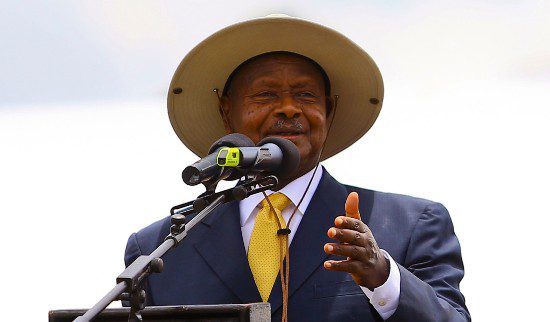
    As I wrote in the other day’s paper, the careerist attitudes that have flooded into the Party, caused problems for leaders (mainly financial) and disoriented voters (expecting meaningless bribes from the leaders).

    To remind the reader, careerism means going into leadership as a job (murimu, omurimo, aswam-atesot, tic-luo, azi-lugbara) rather than going into leadership as a mission. We the freedom fighters joined, initially, the struggle and subsequently politics, not as a career, but, as a Mission with specific aims. Aim one – to oppose politics based on sectarianism of religion and tribe.

    Aim two, to oppose the marginalization of the women, the youth (waiting for the age of 21 to vote instead of voting at the age of 18, for instance) and the disabled. We characterize these two aims as patriotism (uzalendo, mwoyo gwa Uganda). Aim three, Pan-Africanism (the economic and political integration of Africa), leading to the Political Federation of East Africa and the Common Market of Africa.

    This is to create a bigger market for our farmers, manufacturers, etc. and guarantee our strategic security visa visa the potential imperialists and hegomonists in the World. Aim four, socio-economic transformation. Aim five, disciplined democracy. Aim six, building a disciplined, patriotic Army with a Pan-Africanist orientation. Without these, I cannot be in politics. In fact I have been in the struggle for a long time because I believe that all these six, including the Political Federation of East Africa, will be realized. Otherwise, there would be no reason to waste my time and energy with politics. I have my job, career, as a farmer and it is very rewarding and also satisfying.

    President Yoweri Kaguta Museveni

    President Yoweri Kaguta Museveni

    Flooding into the Movement of careerist attitudes and the poor work by the Secretariat over the years, created dishonesty – using any means to get into that “job” of political leadership as a “career”. Dishonesty meant bribing and cheating. On account of bribing and cheating, many that were aggrieved opposed the use of the Electoral College to select flag bearers. Why? This was because the delegates would be “bribed” into supporting the flag-bearers that the electors of the delegates would not have supported. The fewer, the easier to bribe. The demand, therefore, became “no delegation of power but direct democracy” like in the ancient Greek cities. This village-based direct democracy, ancient Greece style, actually worked well when we had just come from the bush because supporters could line behind candidates. There would be no argument. It would be self evident and uncontestable. Along the way, however, the idea of secret ballot came on board.

    The candidate should not know who voted for him/her and who did not. This, therefore, meant a massive General Elections being called a Party Primaries. This means a lot of work and a lot of money – organize a secret ballots election in 60,000 villages for eight positions: Constituency MP, Woman MP, District Chairperson, Sub-County Councillor to the district, Sub-County Chairman, etc., etc. In this last Party Primaries, the Party spent a total of Ug. Shs. 30 billions. The National Electoral Commission spends Ug. Shs. 560 billion on 28,010 polling stations, not 60,000 like the NRM does.

    This would still be manageable if there were two elements: honesty by the Contestants and Party Election officials and thorough preparations by the candidates themselves. Honesty on the part of the contestants and the Party election officials must be clear enough to the reader. I am sure there is no need for elaboration. On the issue of the candidates preparing enough, the crucial element is having a reliable and alert polling agent at the village polling station. When the opposition rigged the by-election in Bushenyi, I brought a solution to the NRM. Let the candidates select candidate agents they personally trust – two of them per polling station. One should observe how the voting is going on.

    The other should record the names of everybody that comes to vote that day: “Museveni, Mukasa, Mugisha, etc”. At the end of the polling, at 1700 hours, you will have recorded that, for instance, 300 village voters voted on that day, name by name. These are villagers that are known to everybody. Even the village members that are staying away from the village that may come back from the towns to vote in the villages are known. Museveni of Rwakitura, who stays in Kampala, is known. Soon after polling, the ballot boxes are opened in the presence of everybody, votes are counted, results are announced, recorded and every candidate agent signs.

    The elections are finished. The rest is adding up – famously called “tallying”. If these candidate agents are honest – the two of them – nothing will go wrong whatever the other weaknesses – dishonesty, inefficiency, etc., of the candidates and election Party officials.

    If the candidate agents are chased by Police or hired hooligans, then the results of that polling station should be canceled and repeated. The Secretary-General, working with the Electoral Commission of the NRM should ensure this. It seems, however, many candidates did not also have reliable agents at the village polling stations. Some could be bribed by opponents, etc.

    It is this mixture of inadequate funding for such a massive exercise; dishonesty caused by the careerism (jobism rather than mission); and the inadequate preparation by the candidates to ensure, through reliable polling agents who record the voters by name and observe the counting and declaration of results, that their votes are guarded; that is responsible for the present post primaries arguments among our contestants. Given all his, my advice to the NRM Electoral Commission has been as follows: listen to the illustrated complaints carefully and, where the situation is clear, cancel the results.

    Where it is not clear because of some missing steps, then, counsel the stakeholders by pointing out, in detail, where the gaps are. The Administrative Secretaries of the Party at the district would have helped in this if politicians had not pushed for their Political Assistants that have no objectivity and, therefore, no value. I hope that when our political leaders and cadres read this short analysis, they will be able to see that there is need for collective effort by all of us to remove the original causes of this distraction from the long, mission – oriented journey of the NRM.

    The original causes are careerism which breeds dishonesty and the inadequate preparations by all concerned. When, for instance, we talk of reliable polling agents by candidates, immediately the talk of money comes in. How will these agents be paid? That is part of the problem. If there are people who are concerned about their area (district, constituency, sub-county, etc.), why should they not volunteer for free for just two days in five years to support the candidate they want to be Member of Parliament for their area, or Chairman of a district or the Chairman of a Sub-county or Councillor to the district? How about me who endangered my life for a total of 13 years for free to fight for the freedom of the country? How about my colleagues who did the same? Were we fools? In the Book of Mathew Chap: 23:23; it says: “They left undone what they ought to have done and did that they ought not to have done and there is no truth in them” This is a wrong spirit and logic.

    It must be expunged. As a flag bearer of the NRM, I expect, at least, 4 Volunteers to guard my votes against the cheating by whoever might think of doing so. The most important are these two at the polling station. One will be to record the names of people who come to vote and the other one to observe the voting process. Should these volunteers be paid or should they give voluntary service as a contribution to our cause? They could even bring their packed lunch.

    This may mean the need for four observers so that when the two pull aside to eat their lunch, the other two remain on duty. Is it really too much to have some of our supporters give voluntary service to our cause two times (a day each time) in five years? NRM members reflect on this. Besides, the NRM members should massively fundraise for the Party so that the Party has adequate money for its activities. It is not correct to make no financial contribution and you only complain when there are difficulties.

    The NRM account number is 1100039293 (Shs. Account) and 1100069362 (Dollar Account) in the Housing Finance Bank. As to the long-term solution to the malpractices that were witnessed in the NRM Primaries, there are three possible remedies.

    Remedy one is to keep the present system. It can work with honesty and more alertness by the candidates and their agents although it is very expensive for the Party. Remedy two is to go back to the electoral colleges. This can only work if honesty is upheld by everybody and bribing is banished. The third remedy is to go back to lining behind candidates.

    This would remove the secrecy but it would be transparent. The fourth remedy is to go computerized with finger-prints digitally read by a computerized digital reader like the one we are acquiring for the National Electoral Commission. Therefore, NRM members and leaders, should know that these problems are temporary and are solvable. Be strict with honesty and alertness.

    These problems will disappear. Otherwise, in future, we will have to rely on the honesty of the computerised finger-print reader.

    Yoweri K. Museveni Gen. (rtd) CHAIRMAN NRM

  • Come to Kololo Airstrip – Bebe Cool

    Come to Kololo Airstrip – Bebe Cool

    Big size singer Bebe Cool has called on Ugandans to come to Kololo Airstrip and support President Yoweri Museveni after his presidential nomination at Namboole.

    Museveni who is the NRM party flag bearer for 2016 presidential elections will address a rally at Kololo Airstrip after his nomination at Namboole this Tuesday at midday.

    NRM EC Chairman Tanga Odoi declares Yoweri Museveni as NRM flag

    NRM EC Chairman Tanga Odoi declares Yoweri Museveni as NRM flag bearer at Namboole on Sunday

    The singer who is one of the singers that sang the NRM campaign song ‘Tubonga Nawe’ ran to his social media platforms to invite Ugandans to join Uganda’s longest serving president as he bids for another term in office.

    Come to Kololo Airstrip; Bebe Cool called on Ugandans

    Come to Kololo Airstrip; Bebe Cool called on Ugandans ‎

    ”To all who love and appreciate peace, development and support NRM and HE president YOWERI KAGUTA MUSEVENI, let us meet at Kololo Airstrip on Tuesday 3rd November at 10am as our candidate launches his campaigns. I love my UGANDAN, I love my YOWERI KAGUTA MUSEVENI. KOLOLOOOOOOOOOOOOO TUBONGEEEEEE,” Bebe Cool posted.

    Meanwhile Bebe Cool denied that he collapsed last week. “I am the healthiest artiste in Uganda therefore I don’t have any plans of collapsing”, he said. Posting on his wall, the singer said he was in South Africa at the alleged time of collapse at of one the Shell Petrol stations.‬

    “Friends and fans allover the world, some fools used my old picture when I had been shot to lie to people that I had health issues today, all I can say to you is that am the most healthy artist in UGANDA and I don’t have any plans of fainting any time soon.
    I think they are scared of my new dancehall hit ‘Killing ‬it’ with Miss Patty Monroe. Enjoy,” he posted.

  • President Museveni endorsed as NRM 2016 presidential flag bearer

    President Museveni endorsed as NRM 2016 presidential flag bearer

    H.E. Yoweri Kaguta Museveni has been elected National Chairman of National Resistance Movement and endorsed as the Party Presidential Flag bearer for 2016 elections.

    He was endorsed today at NRM delegates Conference taking place at Namboole today to tomorrow evening.

    NRM EC Chairman Tanga Odoi declares Yoweri Museveni as NRM flag bearer in next year's elections

    NRM EC Chairman Tanga Odoi declares Yoweri Museveni as NRM flag bearer in next year’s elections

    Museveni will be nominated on Tuesday morning by the National Independent Electoral commission as presidential candidate at Namboole. He will later address a rally at Kololo Airstrip to kick off his campaigns.

    NRM‬ is a Party of correct ideology ─ uniting the people of Uganda and rejecting sectarianism of religion or tribe as well as being against gender chauvinism (discriminating against women, youth or disabled).

    This is how the NRM healed the disunity of the people of Uganda. When you hear the NRM garnering 75% in 1996, 69% in 2001, 60% in 2006 and 68% in 2011, it is because we healed those sicknesses.

    First Lady Janet Museveni at Namboole on Sunday

    First Lady Janet Museveni at Namboole on Sunday

    We healed the sicknesses of sectarianism. The people of Uganda are now more united than at any one time in the last 500 years. This is because before colonialism, we were divided into small tribal states ─ Bunyoro, Buganda, Nkore, Bukiri, Gani, Busoga chiefdoms, etc.

    During colonialism, in addition to tribal sectarianism, religious sectarianism added itself. On account of sectarianism, the Ugandans could not build a capable State ─ Army, Judiciary, Civil Service, etc.

    One of the Chief Justices was actually murdered by the President of that time. That meant that there was no peace.

    Hence, this is the first time Uganda has got unity and peace for the first time in 500 years. After Independence, the lack of unity and lack of peace got worse, until the NRM time.

  • Invitation cards were very clear – Bebe Cool

    Invitation cards were very clear – Bebe Cool

    Big size singer Bebe Cool has expressed his disappoint at those criticising their diner with the president on Friday. Bebe said the meant meeting was not about presenting issues affecting entertainment industry like copy rights and others. “The invitation cards were very clear, it was about Tubonga Nawe experience and that’s all so those complaining have totally gone wrong,” Bebe Cool said.President with some of the artistes who sang Tubonga Nawe

    President with some of the artistes who sang Tubonga Nawe

    Below is what the singer wrote on his wall explaining what purpose of Friday function was and what happened.

    Bebe Cool; I wish to remind, correct, and guide my fellow musicians/fans who have totally gone wrong on the issue of president YOWERI KAGUTA MUSEVENI dining with artists and not talking about copyright. The invitation cards were very clear YOU ARE INVITED TO THE TUBONGA NAWE EXPERIENCE not to the copyright law dinner.

    Janet Museveni and his husband President Yoweri Museveni at Tubonga Nawe launch at Speke Resort Munyonyo on Friday

    Janet Museveni and his husband President Yoweri Museveni at Tubonga Nawe launch at Speke Resort Munyonyo on Friday

    To host a president, there is a lot u have to go through but the most important is to understand why your hosting him and PROTOCOL requires u include all details as why u inviting him in your invitation letter.

    In this case we invited him to grace this function so that we could show appreciation, launch a song for him and show him that we are ready to support him during the coming campaigns.  [adrotate banner=”3″]

    We also made sure we share that moment with comedians and fashion designers despite the little time given of which the two hours he spent with us was really a lot. If u remember well, we did not even perform for him, neither did we even sing the song we were unveiling.

    We stuck to program because a responsible person is expected to do so when u host responsible people. As artists we do have an office that is in charge of copyright and they too were invited to attend the event because they r stake holders too but it’s important to remember that we had a programme and we were to follow it.

    Juliana Kanyomozi and First Lady Janet Museveni

    Juliana Kanyomozi and First Lady Janet Museveni

    The president has no problem what so ever with the copyright law but only he appointed ministers to take care of that but when it comes to addressing him about that, better u also invite the responsible ministers too coz they too become stake holders.

    All that wasn’t on the agenda. U can’t invite a president to a wedding and start addressing him about politics or police coz then u run a risk of not hosting him again. If u want to address him about copyright then invite him for a copyright conference and I believe he will attend but at an appropriate time. This moment is a moment to show him support.

    They will be a right moment when we will invite him and address him about the general problems our fraternity faces not only copyright. I also wish to ask you to always honour invitations coz then when u attend, u will understand the purpose of the function and if u don’t understand please always ask the organisers before you mislead people. Otherwise thank you all for understanding.

  • Top artistes show solidarity to President Museveni with campaign song

    Top artistes show solidarity to President Museveni with campaign song

    For the first time in a show of solidarity, Uganda’s top selling artistes have come together in a music collaboration geared at endorsing the candidature of the NRM flag bearer and incumbent President H.E Y.K Museveni.

    In a gesture of unity, the artists who are the biggest role models to Uganda’s Youth segment have come together to throw their support behind the ruling President.

    The high tech collaboration and music video entitled “Tubonga Nawe” will be unveiled at an exclusive VIP Reveal Party at the plush Speke Resort Munyonyo tomorrow.

    Artistes doing the song's video at  Namboole recently

    Artistes doing the song’s video at Namboole recently

    The dinner which will be attended by all Ugandan Press and celebrities including Artists, Socialites, Fashionistas and opinion leaders will see the unveiling of this monumental musical production by H.E the President himself. [adrotate banner=”3″]

    Speaking to members of the press, the 14 artists that worked on this monumental song spear headed by Dr. Jose Chameleone, Bebe Cool and Juliana Kanyomozi expressed their joy at working together for a common cause.

    “The adage that two heads are better than one comes to life in this phenomenal production. We each gave this song our unique sound to produce perhaps Uganda’s greatest hit for a while to come,” Said Bebe Cool.

    “I love the chemistry that came together as we each lent our genres and voices to this production. It was truly phenomenal” added Judith Babirye.

    Other artists on the production include Judith Babirye, Pastor Bugembe, Mun G, Rema Namakula, Radio and Weasel, King Saha, Haruna Mubiru and Iryn Namubiru.