Tag: National Medical Stores

  • Opinion: Why Uganda must unite to End Drug Theft

    Opinion: Why Uganda must unite to End Drug Theft

    By Martha Asinguza

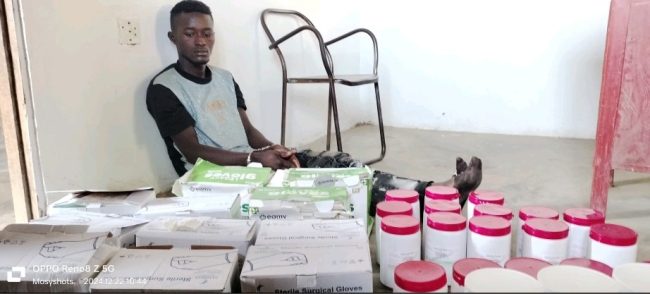
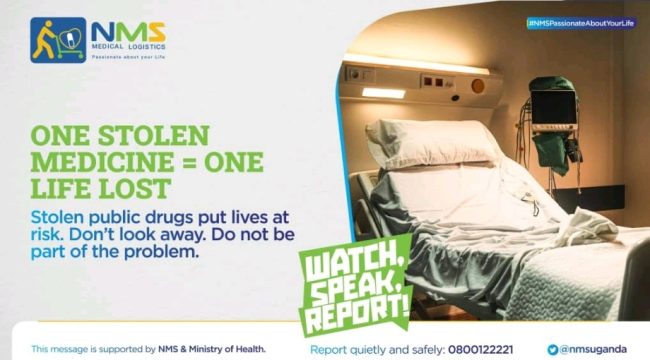
    Drug theft in Uganda is not just a technical hiccup—it is a national challenge that undermines service delivery and puts lives at risk. When medicines meant for the public are stolen or diverted, the cost is borne by ordinary Ugandans, especially mothers and children in rural areas.

    Government, through the National Medical Stores (NMS), has invested heavily in improving supply systems such as the Last-Mile Delivery initiative. But even with such progress, challenges remain. Drugs disappear from facilities, stockouts persist, and patients are sometimes asked to pay illegally. This is unacceptable. The solution lies in collective responsibility.

    Health workers—doctors, nurses, pharmacists, and store managers—are custodians of these medicines. They must manage stock with integrity, prescribe responsibly, and speak out when malpractice occurs. Professional duty is more than treating patients; it is also protecting public resources.

    At the same time, oversight institutions must be more vigilant. District leaders, MPs, RDCs, and DHOs should work together to monitor drug deliveries, verify records, and protect whistleblowers. Community engagement forums should be used to inform the public about what has been supplied.Security agencies and the judiciary must treat drug theft as a serious crime. Offenders should face swift and fair prosecution. Every conviction sends a strong message that misusing public medicines is an attack on national wellbeing.

    Communities, too, have a role. Citizens should learn to identify government-supplied drugs—clearly marked “Government of Uganda – Not for Sale”—and report suspicious cases. Active citizen participation strengthens the fight.

    Ending medicine theft is a shared national duty. No Ugandan should be turned away from a health facility because supplies were stolen. Together, we can build a transparent, trusted, and reliable health system where every drug reaches its intended patient.

    The author is a student at Makerere University.

  • MP Lagen urges Local Officials to follow up on Drug Deliveries to Save Lives

    MP Lagen urges Local Officials to follow up on Drug Deliveries to Save Lives

    Hon. Lagen David Atuka, Member of Parliament for Agago County, has urged local government officials to carry out strict follow-up on drug deliveries to health facilities, warning that theft and diversion of medicines are denying lifesaving treatment to rural communities.

    Lagen said the lack of medicines in government health centres forces many patients to turn to private clinics, where treatment is often unaffordable.

    “The fact of the matter is that our people in the community are suffering because once the drugs are not there at the health centres, many members of the community are forced to go to the private clinics and spend a lot of money to buy the drugs to support themselves,” he said.

    “Be mindful, the majority of our people don’t have the money to buy some of these drugs from private facilities or the pharmacy,” he added.

    “Because of that high level of vulnerability, some people return home to die when they don’t find the expected help from a government hospital.”

    He described drug theft from public facilities as a criminal act that must be met with strict accountability.

    “The issue of drugs getting lost from the health centre or the government hospital is criminal and must be taken seriously,” Lagen stressed.

    “The authorities must be responsible for the loss of those drugs, which is why local officials need to follow up.”

    Lagen said district and sub-county officials, Resident District Commissioners (RDCs), and health unit management committees should ensure that every consignment of government drugs is tracked from storage at local health centres, verifying quantities and ensuring transparency.

    “When the drug has been taken to the hospital or the health centre, local officials must follow up to find out whether it has been issued to patients or not,” he said. Recent studies found that many Ugandans are aware of drug theft in their areas, with some cases involving the diversion of vital medicines to private markets or smuggling across borders.

    Lagen urged community members to work with their leaders to protect the medicines supplied for their benefit. “This is about saving lives,” he said. “If we don’t track and protect our medicines, we are abandoning our people to suffering and death. Follow-up at the local level is not optional—it is our duty.”

  • When Medicines Vanish: Understanding the Human Impact of Drug Theft in Uganda

    When Medicines Vanish: Understanding the Human Impact of Drug Theft in Uganda

    For many Ugandans, a trip to the local health center offers hope—for relief, treatment, and sometimes even survival. Yet when essential medicines are unavailable, that hope can give way to uncertainty.

    Uganda’s National Medical Stores (NMS) continues to deliver a wide range of medicines and supplies—like antimalarials, antibiotics, and Mama Kits—to thousands of public health facilities. However, some of these medicines go missing after delivery. Kenneth Amuriat, a local leader in Kolir trading centre, Bukedea district, eastern Uganda, “when medicines are not available, patients must look for alternatives, often turning to private pharmacies.” He adds: “For lower-income households, these unexpected costs strain already tight budgets.”

    “I had to buy antibiotics for my child from a private chemist when the health center had none,” says Janet Nakato, a mother of four in Iganga. “It cost Shs 12,000, which I hadn’t planned for.”

    Up to 40% of household health spending in Uganda goes toward medicines. When government-supplied drugs are inaccessible, families bear the cost.

    Hidden Health Effects

    Gaps in availability can lead to treatment delays or interruptions, particularly for chronic conditions like HIV and TB. This increases the risk of complications and, over time, undermines long-term treatment outcomes. Inconsistencies also place extra pressure on regional hospitals, which absorb patients who would otherwise be treated at lower-level facilities. Trust is central to healthcare. Repeated shortages—whether from theft or increased patient demand—can erode public confidence in government services.

    However, many communities are finding ways to respond. Local health committees, whistleblowers, and even youth groups have helped flag irregularities and restore accountability, a practice Ugandans need to uphold. Medicine theft is not unique to Uganda, nor is it insurmountable.

    Engaging local leaders, and reporting pilferage are some of the steps Ugandans can take. With that spirit, and the right collaboration, it’s possible to build a health system where medicines not only reach the shelves—but the people they are meant to heal.

  • NMS receives COVID-19 Health Supplies from the French Government

    NMS receives COVID-19 Health Supplies from the French Government

    The National Medical Stores (NMS) has Tuesday afternoon received COVID-19 health supplies which were donated to Uganda by France.
    The items include one million FFP2 face masks, 54,000 testing kits and nine respirators.

    The donation valued at Shs 10.8bn was handed over to Uganda at a ceremony held at NMS headquarters in Entebbe in the presence of the Prime Minister Rt. Hon. Robinah Nabbanja, Health Minister Dr. Ruth Aceng, French ambassador to Uganda, Jules-Armand Aniambossou, State Ministers of Health, NMS Board member Dr Christine Ondoa, the Dr Diana Atwiine the Permanent Secretary in the Ministry of Health and the NMS General Manager, Moses Kamabare.’

    According to Dr Diana Atwiine the Permanent Secretary in the Ministrty of Health, ‘‘the Ugandan government spent UGshs 368 million on the shipment of the consignment from France to Uganda’’
    Nabbanja thanked the government of France for the generous donation of items which will help in the fight against the COVID-19 pandemic. The Prime Minister called for more international solidarity, especially in accessing COVID-19 vaccines, saying that the fight covid-19 is one that can only be won when the international community acts collectively and in solidarity.

    ‘‘This contribution is further testimony of the long standing solidarity between the French people and the people of Uganda’’, she declared, adding that France has ably demonstrated her friendship with Uganda in many ways and consistently over the years.

    On his part, H.E Aniambossou applauded Uganda’s effort in the fight against COVID19 and reaffirmed the French government’s solidarity with the government of Uganda
    “We appreciate Uganda’s exemplary efforts in the fight against the pandemic. France will always stand in solidarity with Uganda in the common struggle’’, he said.
    Nabbanja thanked National Medical Stores for supporting the National Response to the COVID- 19 pandemic by receiving and warehousing PPEs, Test Kits, and other response supplies from and on behalf of the government of Uganda and adequately distributing them to points of entry and hospitals across the country.

    NMS has a modern 7,200 square Metre warehouse at Entebbe (present location) which is used for the orderly receipt, storage and packing of medical supplies destined to public health facilities across Uganda.

    NMS mandate is to procure, store and deliver drugs mainly to public health facilities.
    The institution has in the last few months been storing and distributing COVID-19 vaccines across Uganda.
    This is in addition to the regular distribution of essential medicines and health supplies.
    Health Minister Dr Ruth Aceng said France’s donation was a much-needed boost to our response in the fight against the COVID-19 pandemic.
    She added: Not so long ago, on 17 June,2021 I was here at NMS with the French Ambassador receiving 175,200 doses of AZ vaccines donated by the French Government under the dose sharing arrangement through COVAX Facility. That support came in handy and helped the Government of Uganda towards ensuring that we vaccinate the Ugandan population.
    Aceng said the donation of masks, testing kits and respirators will be deployed in various health facilities involved in the fight against the COVID-19 pandemic.
    ‘Accountability for these supplies is very important for us but we also understand that it is in your interest that the supplies are used for the intended purpose’’ said Aceng.
    The Prime Minister called for more international solidarity, especially in accessing Covid 19 vaccines, saying that the fight against Covid 19 is one that can only be won when the international community acts collectively and in solidarity.
    “No one can be safe unless everyone is safe, because the world is now very connected through trade, travel and tourism. This Covid 19 has shown us that the pandemic doesn’t know or respect national boundaries’’, said Nabbanja.
    ‘But we continue to see a disparity in access to vaccines with developed countries vaccinating their people while developing countries are struggling to get vaccines’’
    Nabbanja said the COVID-19 cases are reducing slightly, urging the public to

    NATIONAL MEDICAL STORES
    continue to wash hands with soap, avoiding crowds, keeping a distance and lining up for vaccination when your turn comes.
    Results of COVID-19 tests done on 25 July 2021 confirmed 71 new cases, with the test positivity rate dropping to 6.6 percent, according to the Ministry of Health. The cumulative confirmed cases are now 92,795.
    The Ambassador of France said that the donation was a gesture of solidarity towards a friendly country in the fight against a common enemy. He reaffirmed the commitment of his government to continue standing in solidarity with Uganda in the fight against the Covid-19 pandemic.
    NMS will distribute the donated items to respective public health facilities upon receiving dispatch instructions from the Ministry of Health.
    Since the outbreak, France has donated over 50,000 litres of alcohol-based hand sanitizers to UPDF, 15,000 euros to support the development of simple, rapid, low-cost Covid-19 diagnostic tests by Makerere University school of public health, and the recent 175,200 doses of the AstraZeneca vaccines that came through the Covax facility.

  • Eid Fete: NMS Donates to Katabi Muslims

    Eid Fete: NMS Donates to Katabi Muslims

    National Medical Stores (NMS) has this Tuesday evening donated items worth millions of shillings to the Muslim community in Katabi, Entebbe ahead of Eid al-Fitr celebrations.


    “We are very grateful for this donation by NMS,” said Sheikh Mugenyi Asooka of Masjid Noor Katabi.
    “We asked the NMS General Manager Mr Moses Kamabare to support us during this Eid al-Fitr. We are glad he sent food and a bull which we will share with our families,” he added.


    The items donated by NMS include 300kgs of posho, 200kgs of sugar, cooking oil, maize flour, wheat flour, salt, beans and a bull.
    “For us, Eid is a moment of joy and celebration. By donating to us, NMS has made our Eid extra special,” said Nuriat Nampijja, a mother of three.


    NMS has for the last five years been donating food items to various mosques during such festivities.
    “Today is a testament of our commitment to continue working together,” said NMS public relations official, Esther Bamukunda.
    “We will keep doing this. We know you as our brothers and sisters. We love you so much,” she added.
    NMS is a government institution whose mandate is to procure, store and deliver drugs and essential health supplies across Uganda.
    The organization recently conducted a free yellow fever vaccination exercise in Arua.

    Eid al-Fitr marks the end of Ramadan, the Muslim holy month of fasting.
    Eid al-Fitr will begin on Thursday May 13 as the Shawwal moon was not sighted on Tuesday, according to the Haramain Sharifain Twitter account posting live from the Tumair observatory in Saudi Arabia.
    Eid al-Fitr is traditionally celebrated with large gatherings for worshippers to pray and break their fasts.

  • NMS Partners Distrust Gov’t Financial System

    NMS Partners Distrust Gov’t Financial System

    National Medical Stores (NMS) has spoken out on MPs’ concerns that the institution is not using the Integrated Financial Management System (IFMIS), saying this situation was partly caused by strict engagement conditions set by their donor partners.

    NMS’ partners such as like USAID, GAVI and Global Fund contract and pay the entity for storage, delivery and distribution of the essential medicines and vaccines donated to the people of Uganda.
    Such donors were, because of the past experiences such as the Global Fund scandal, reluctant to deposit their tax payers’ money via the Consolidated Fund and remained apprehensive of potential accountability inconsistencies in case they didn’t deal with NMS directly as the service provider.

    Lawmakers this Thursday afternoon said this could lead to abuse of public funds.
    Public Accounts Committee (PAC) chairperson Nandala Mafabi said NMS should be held to account for delaying to subscribe to the financial system used by other government institutions.
    MPs also observed that donor support funds should be appropriated by Parliament for accountability.

    However, State Minister of Finance Hon David Bahati said an amendment to existing laws is being prepared to provide for this requirement.
    He explained that it’s not only NMS but several other institutions receiving tight conditions from donors.
    NMS procures, stores and delivers essential medicines, health supplies and vaccines across Uganda.

    NMS says it has generated revenue for the Government through earning service fees for the provision of medicines storage, delivery and distributions’ services on behalf of the donors.
    Mafabi recently reported NMS to President Museveni, calling for an investigation into the operations of the institution over alleged corruption.

    The report compiled by IGG exonerated NMS of any wrongdoing.
    It indicated that donor funds were transparently captured by NMS management and the same was reflected in the entity’s budget as scrutinized and approved by the Board.
    “According to the financial statements, NMS’ expenditure was in line with the approved budgets,” the IGG’s report reads in part.
    The report indicates that the investigators referred to several audits routinely conducted by the Office of the Auditor General, covering both Government and donor funding, which rated NMS highly having inquired into the management of funds donors pay to NMS for warehousing, delivery and distribution of medicines and vaccines and no foul play ever being detected.
    “An audit [into all that] by the OAG on the NMS accounts for the FY ended 30th June 2019 did not indicate any mismanagement of funds,” said the IGG.