Tag: NAGRIC

  • NAGRC&DB Develops High-Milk-Yielding Pure Ankole Dairy Cattle at Nshaara Conservation Ranch

    NAGRC&DB Develops High-Milk-Yielding Pure Ankole Dairy Cattle at Nshaara Conservation Ranch

    Kiruhura: Uganda’s iconic Ankole Longhorn is taking on a new dimension at Nshaara Conservation Ranch, where the National Animal Genetic Resources Centre and Data Bank (NAGRC&DB) is using systematic genetic selection, pedigree management, performance recording and improved nutrition to develop a high-milk-yielding pure Ankole dairy population without replacing the breed with exotic dairy genetics.

    Approximately three years ago, NAGRC&DB initiated a deliberate programme to identify superior pure Ankole cattle with greater milk-production potential at Nshaara Conservation Ranch in Kiruhura district. The programme involved screening animals within the available population and incorporating selected superior Ankole genetics from other recognised sources, including the Kisozi Ankole Longhorn conservation and improvement herd.

    The intention was not to crossbreed or replace the indigenous Ankole with exotic dairy genetics, but to exploit the natural genetic variation that already exists within the breed and progressively concentrate desirable dairy traits through selection.
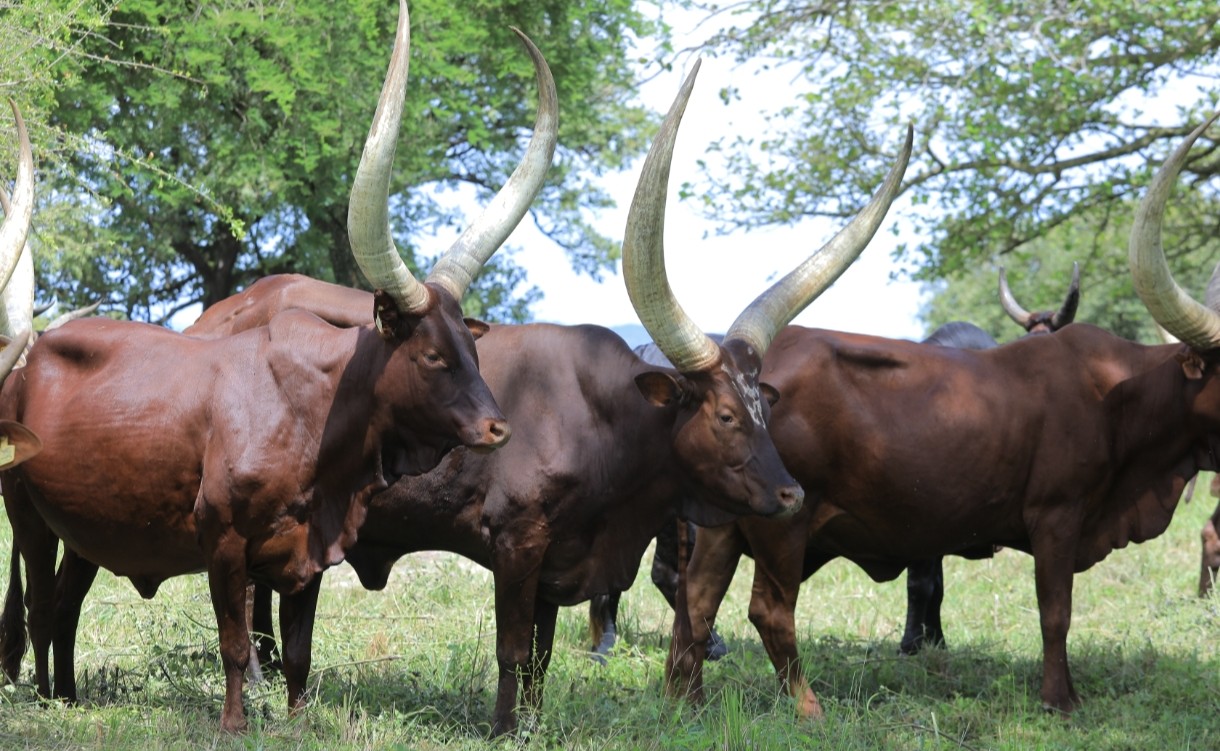
    The programme began by establishing clear selection criteria for the nucleus population. Milk yield was prioritised as the principal productive trait, followed by lactation length, udder conformation and calving interval. This allowed the ranch to identify cows that combined relatively high milk output with sustained lactation and reproductive efficiency. Replacement heifers were subsequently evaluated using information on their dams’ milk production, growth and fertility together with physical assessment of body structure, udder characteristics and temperament. As superior female lines became identifiable, the programme increasingly focused on the selection of breeding bulls from high-performing maternal families. Because genetic improvement of milk production can be transmitted through sires to their daughters, candidate bulls are selected partly on the milk-production performance of their dams. This is complemented by assessment of growth rate, body size and stature, age at maturity, reproductive soundness, testicular development, libido, temperament and other functional characteristics. Bulls originating from highly productive cows are consequently prioritised to advance the milk-production trait within subsequent generations.
    According to Dr. Innocent Tuwangye, Manager of Nshaara Conservation Ranch, the approach is centred on improving the Ankole from within its own genetic population. “We are not trying to turn the Ankole into an exotic dairy cow. We are identifying superior dairy traits that already exist within the pure Ankole population and systematically selecting and multiplying those genetics. The objective is to develop an Ankole animal that produces more milk while retaining the adaptability, resilience and genetic identity for which the breed is known,” he said.

    The production records are complemented by information on reproductive events and animal health. These data are maintained in physical farm records and in NAGRC&DB’s Integrated Livestock Management Information System (ILMIS), allowing the breeding team to progressively build individual performance histories and link production outcomes to particular animals and maternal lines.

    Historical performance, including peak yields across successive lactations, is then used to inform subsequent selection decisions. By 2023, the programme had generated sufficient production records to begin demonstrating measurable performance at herd level. Average recorded milk productivity stood at 5.2 litres per active cow-day, with annual recorded production of approximately 56,040 litres. The active milking population increased from 24 cows in January to 35 cows by December of that year.

    Selection, performance recording and herd management continued into 2024. Average productivity subsequently increased to 7.0 litres per cow per day, while annual recorded milk production rose to approximately 106,358 litres. The milking population also expanded from 36 cows at the beginning of the year to 47 cows by December. By December-2025, average productivity had risen further to 8.6 litres per cow per day, while annual recorded production reached approximately 168,285 litres. The milking population expanded from 47 cows in January to 60 cows by December. Taken together, the records indicate an approximately 65.4 percent increase in average productivity between 2023 and 2025, alongside a progressive expansion of the selected milking population.

    At individual-animal level, the improvement has been equally encouraging. Whereas an Ankole cow under the traditional production conditions produces averagely 2 litres during morning milking, selected cows in the programme are now regularly recording approximately 5–10 litres from a single morning milking session with a few exceptionals that produce up to 12 litres between the second and seventh lactations. The emerging results also demonstrated that genetic potential alone was insufficient to sustain higher production.

    NAGRC&DB therefore strengthened nutritional management by supplementing conventional grazing with hay and silage produced at Nshaara. The highest individual yields were observed under this improved feeding regime, providing an important practical link between genetic improvement and adequate nutrition. “Our records are increasingly showing us that breeding and feeding must move together,” Dr. Peter Beine – the Executive Director NAGRC&DB explained.

    “Selection identifies the animal with superior genetic potential, but nutrition determines how effectively that potential is expressed. We are therefore using the production data not only to select our breeding animals but also to refine feeding and management protocols for the emerging Ankole dairy population.”

    The programme is now entering an important phase in which the emphasis shifts from identifying a few exceptional animals to consolidating superior performance across families and successive generations. An individual cow attaining a peak morning yield of 14 litres demonstrates the productive potential present within the Ankole population, but the longer-term breeding objective is to make superior performance increasingly repeatable, heritable and predictable. This will require continued pedigree recording, identification of elite cows, selection of replacement heifers from proven maternal lines, use of bulls originating from superior dams and systematic evaluation of the resulting progeny.

    “Our real measure of success will not simply be one exceptional cow,” Dr. Peter Beine said. “The breeding objective is to establish a population in which superior milk production can be consistently reproduced from one generation to another. That is why pedigree integrity, individual animal identification, performance recording and selection of proven maternal and sire lines are central to what we are doing at Nshaara.”

    What began at Nshaara as the identification of naturally superior milk-producing Ankole cows is steadily developing into a structured breeding programme aimed at producing a genetically stable, productive and resilient pure Ankole dairy population placing Uganda’s own indigenous cattle genetics at the centre of the country’s future livestock productivity agenda.
  • NARO Receives Jianzhou Big Ear Goats from China for Research and Breeding

    NARO Receives Jianzhou Big Ear Goats from China for Research and Breeding

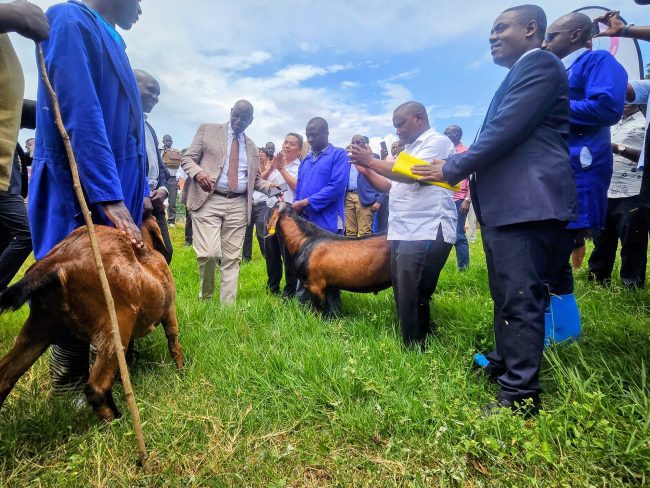
    Entebbe: The Ministry of Agriculture, Animal Industry and Fisheries (MAAIF) has handed over a consignment of Jianzhou Big Ear goats from China to the National Agricultural Research Organisation (NARO) to support research and breeding initiatives. The goats, imported in July under the FAO-China-Uganda South-South Cooperation Project Framework, were cleared for release after successfully completing the mandatory 21-day quarantine.

    Speaking at the handover ceremony on Thursday at the National Animal Genetic Resources Centre and Databank (NAGRC&DB) farm in Entebbe, the Minister of State for Animal Industry, Hon. Bright Rwamirama, said the goats will be used to improve local breeds through crossbreeding.

    Minister Bright Rwamirama (center) presiding over the goat transfer event at NAGRC & DB in Entebbe

    “We already have some competitive breeds, such as the Boer from South Africa. However, certain indigenous breeds like the Kigezi and Bitanga do not gain sufficient weight. With this new breed from China, we will conduct research to establish whether they are indeed ‘wonder goats.’ If proven, we shall import more and make them available to farmers,” Hon. Rwamirama said.

    He recalled how Uganda received a foreign order for goats three years ago but failed to sustain supply after delivering only three consignments. The minister emphasized the need to adopt high-performing breeds to strengthen food security and expand opportunities for agro-industrialization.

    Minister Bright Rwamirama (center) presiding over the goat transfer event at NAGRC & DB in Entebbe

    “We are no longer talking about just production but productivity, because our population is growing while land remains static,” he added. Receiving the goats on behalf of NARO, Dr. Swidiq Mugerwa, Deputy Director General in charge of Research, said the Jianzhou Big Ear goats are known for their rapid growth and high meat yield, attaining an average weight of 45kg in just 18 months. “The purpose of introducing this breed is to enable Ugandan farmers to boost both milk and meat production, thereby increasing household incomes and improving livelihoods,” Dr. Mugerwa explained.

    He noted that Uganda’s goat population is dominated by three indigenous breeds; Mubende, Small East African, and Kigezi goats. The Mubende can reach about 35kg in two years, while the Small East African averages 25kg in the same period. In comparison, the Jianzhou Big Ear goat reaches 45kg in just one and a half years, making it superior in growth performance.

    Mr. Julius Twinamasiko, National Coordinator of the South-South Cooperation Project, said NARO will oversee research and breeding, while NAGRC & DB will lead multiplication. He praised FAO for facilitating the procurement and acknowledged the Chinese government’s support, calling for the project’s extension to consolidate the progress achieved since its inception in 2012.

    Minister Bright Rwamirama (left) and Dr. Swidiq Mugerwa inspect the Chinese goats during the handover event at NAGRC & DB in Entebbe

    So far, under the project, China has dispatched 64 experts and technical officers to Uganda in areas such as crop production, livestock, aquaculture, and value addition. FAO’s South-South Cooperation Project focal point, Mr. Martin Ameu, added that the Chinese goats are well-suited to Ugandan conditions and are expected to significantly enhance the productivity of local breeds.

  • Rwakakamba Morrison hails MAAIF, NARO & NAGRIC for drought resistant cow grass

    Rwakakamba Morrison hails MAAIF, NARO & NAGRIC for drought resistant cow grass

    Senior economist and farmer Mr. Rwakakamba Morrison has praised the Ministry of Agriculture, Animal Industry and Fisheries (MAAIF) and its sister agencies NARO and NAGRIC for giving farmers drought resistant cow grass Pakchong-1.

    At Ikuniro Farm in Rujumbura, Rukungiri , Rwakakamba said they have managed to give out free Pakchong-1 cuttings to neigbourhood farmers. This Super Napier, is a high-yielding, drought resistant and fast growing with high protein content, and ability to produce significant amounts of green fodder. This hybrid is a result of crossing Napier grass with Pearl Millet. It’s great for cows and goats.

    With Rukungiri’s (and wider Kigezi) land size constraints — it’s vital to grow Pakchong-1 on the farm, or snake it along farm boundary lines.

    “We are thankful to the Ministry of Agriculture Animal Industry and Fisheries (MAAIF) and its sister agencies NARO and NAGRIC that made available these cuttings at their various mother gardens in Uganda. When great rains return after august 15th, we will be able to accommodate more farmers for free seed/cuttings,” Rwakakamba Morrison said.

  • Exposed: How Dr. Charles Lagu, the estranged NAGRIC ED turned corruption shame into a tribal war

    Exposed: How Dr. Charles Lagu, the estranged NAGRIC ED turned corruption shame into a tribal war

    A fortnight ago, operatives raided Dr Charles Lagu’s home in Mbarara District to effect an arrest sanctioned by State House anti-corruption head Col. Edith Nakalema who has the will of the President.
    Whereas Lagu first dramatized the arrest, he would later hand himself in to Mbarara Police and later transferred to Kampala. He was charged with corruption at Buganda Road Court and remanded to Kitalya Prison pending his bail application.
    Today (Friday) Charles Lagu is expected in Court.
    An investigator at Nakalema’s office earlier told this website Mr Lagu had been hunted for over a month on corruption related charges following investigation at National Animal Genetic Resource Center and Data Bank (NAGRIC & DB) whose finding were shocking.

    Dr. Charles Lagu

    “We had been looking for him for over a month, so he knew we wanted to arrest him and he decided to hide. That is why after getting a tip that he was at his home we deployed heavily to prevent him from escaping,” said an investigator at the Unit.
    While in prison, Lagu was interdicted by his line Minister Minister Vincent Bamulanzeki Ssempijja while directing Board Chairman Dr. Johnson Nkuuhe to immediately find his replacement.
    However, a clique of people including MPs, government officials and lawyers have ganged up against Sempijja’s decision to interdict Lagu saying it is illegal.
    But according to Uganda Public Service Standing Orders an interdiction should occur while an investigation over a particular misconduct is being carried out.
    And in Lagu’s case there are wide range of investigations being conducted by Nakalema led team against Dr Lagu alleged misuse of public office, defying the President’s directive, mismanagement of money and causing government a financial loss.

    Investigations
    This website had launched an independent investigation into the conduct NAGRIC’s Executive Director Dr Charles Lagu who earlier had been perceived to have got the job on merit without external influence.
    While interviewing several workers of the entity, many didn’t have kind words for Mr Lagu who they accuse of playing a tribal card in office.
    “He decided to lay off all staff who are perceived as Baganda and replaced them with Northerners saying NAGRIC must be led by West Nilers,” said a staff who asked not to be named because the matter is in Court. This had created displeasure at the institution resulting into the departure of knowledgeable scientists who felt frustrated by Lagu’s work approach.
    In fact, while Nakalema was conducting her investigations, workers raised this allegation in presence of Lagu.
    Also we established that Lagu had created allies within government who benefited from his schemes and in return pay allegiance and protection in case trouble arises. That is why many MPs, Ministers and other prominent Ugandans have come out to defend Lagu as reputable but mostly they are fighting his interdiction.
    This website obtained files with names of over 1000 Ugandans who have been “gifted” with animals including hens, goats, pigs and cows from NAGRIC farms.

    Some of the government officials who received brooded chicks from NAGRIC

    MPs from West Nile were given 200 brooded goats and 5000 chicken.
    It should be noted that the process of brooding these animals is costly and is facilitated by tax payers’ money.
    Disappearance of 41 bulls
    Investigators are probing how brooded bulls totaling to 51 disappeared from NAGRIC stock farms which include Aswa, Kasolwe, Lusenke, Njeru, Rubona and many others across the country without accountability.
    However, Lagu claims that he had donated the bulls to Hon Ssempijja during the Kalungu NRM celebrations event
    We have since established that the bulls Lagu brought to the function were not 41 as alleged but 10.
    And he didn’t bring them on the Minister’s orders as earlier alleged but he willingly contributed them.
    According to information abstained, in October 2019 Minister Ssempijja wrote to all Ministry of Agriculture agencies about the scheduled event to celebrate NRM achievements in Kalungu District attendance  and showcase achievements under his policy guidance since since 2016.
    In his memo, Ssempijja communicated that all the agencies must showcase their innovations at the event.
    Some of the agencies include NAADS, Control of Trypanosomiasis in Uganda, Diary Development Authority (DDA), NAGRIC, UCDA, among others.
    All these agencies received one generic communique of the Minister requesting them to attend and showcase.
    For the record the Minister never asked for any gifts within his memo.
    While at the event NAGRIC boss presented 10 brooded which he would later hand over to the Minister as a contribution to the showcasing event from the agency. However, Lagu had planned a move to inflate the number of the bulls and also allege that all the 41 had been given Ministry of Agriculture during the event.
    The National Animal Genetic Resources Centre and Data Bank (NAGRC&DB) was established by the Animal Breeding Act, 2001. It’s one of the statutory semi-autonomous bodies of the Ministry of Agriculture, Animal Industry and Fisheries (MAAIF). Formation of NAGRC&DB was part of the fulfilment of the aspirations in the National Animal Breeding Policy (1997), document and the Action Plan for its implementation providing guidelines to all actors in the animal breeding and production value-chain. The actors included input suppliers, farmers, companies, researchers, extension workers and civic leaders on suitable breeds for the various ecological and production systems.