Tag: Ministry of Health Uganda

  • Stanbic Bank, Health Ministry Launch Awareness Campaign on Preeclampsia—’high blood pressure during pregnancy’

    Stanbic Bank, Health Ministry Launch Awareness Campaign on Preeclampsia—’high blood pressure during pregnancy’

    Kampala: The Stanbic Uganda led Corporate Society for Safe Motherhood in partnership with the Ministry of Health have flagged off a ten-day campaign to raise awareness on Preeclampsia—a condition of high blood pressure which affects women during pregnancy.

    The campaign was flagged off at the Kawempe National Referral Hospital in Kampala as part of events leading to the commemoration of the World Preeclampsia Day on May 22, 2024, in Arua City, under theme ‘Predict Prevent Prevail.’

    Other members of the Corporate Society for Safe Motherhood include MTN Uganda, Stanbic Bank Uganda, Uganda Registration Services Bureau (URSB), Crown Beverages, Azam, Sumz Foods, Bidco Uganda Limited and Harris International.

    Preeclampsia is a serious condition that can occur during pregnancy, typically after the 20th week characterized by high blood pressure and potential organ damage, posing serious risks to both the mother and the unborn child.

    The condition kills an estimated 76000 pregnant women every year, out of at least 10 million who are affected globally, according to the Preeclampsia Foundation.

    “Pregnancy shouldn’t be a death penalty for women. As such, we are committed to contributing to efforts geared towards reducing or eliminating conditions such as preeclampsia and other health related complications that account for thousands of maternal and neonatal deaths,” said Diana Ondoga, the Corporate Social Investment Manager at Stanbic Bank Uganda.

    The Ministry of Health Permanent Secretary, Dr. Diana Atwine emphasized the need for proactive measures to address Preeclampsia like early antenatal attendance to ensure the well-being of expectant mothers across the country.
    “We encourage pregnant women to seek for pre-birth care as early as possible to facilitate timely detection and prevention—this is the only way we can save the lives of women at risk,” said Atwine.
    Atwine called upon the men to support their wives during the entire pregnancy cycle because their involvement and support can make a significant difference in their partners’ experience.
    “Some women recently came to hospital after spending time thinking she was bewitched—they prayed and did everything but didn’t know it was preeclampsia and by the time she was finally brought to hospital, it was extremely late to save her,” Atwine said adding that the need to change the mindset in our communities is one of the major reasons the Ministry is rolling out the 10 days of activism.

    According to the Ministry of health, the country has registered significant strides in averting preventable mortality with the maternal mortality reducing from 336 to 189 deaths per 100,000 live births and the newborn mortality reducing from 27 to 22 deaths per 1000 live births.

    According to the Ministry of Health, Preeclampsia is the second leading cause of maternal deaths contributing 13% of the maternal mortality and makes a significant contribution to preterm birth.

  • Ministry of Health gets ready for Wave 3 of Mosquito Nets Distribution

    Ministry of Health gets ready for Wave 3 of Mosquito Nets Distribution

    The government of Uganda through the Ministry of Health is distributing mosquito nets under the campaign ‘Under The Net’.


    The campaign which is aimed at eliminating and ending malaria in the country will cover the entire nation.
    Wave 1 and Wave 2 have already been done covering just over 50 Districts in Western and Eastern Uganda.

    The Ministry is now ready and set to start Wave 3 of mosquito net distribution under the campaign the above campaig.


    The distribution is expected to begin next month and will cover Kampala and Wakiso districts.


    The Ministry has advised the recepients to wait calmly for their turn to receive mosquito Nets in their respective homes.

  • Mosquito nets distribution Wave 2 underway in 28 districts

    Mosquito nets distribution Wave 2 underway in 28 districts

    The distribution of Mosquito nets Wave 2 by the government is underway in 28 districts across the country.
    The general public is requested to register and pick their mosquito net when the teams come to their houses.

    The Wave 2 kicked off on 9th August and will go on until 21st August.
    State Minister for Health in charge of General duties Hon. Robinah Nabbanja launched district activities for distribution of mosquito nets in Kakumiro District on Monday.
    The Ministry of Health has called on every individual to sleep under a mosquito net every night and prevent Malaria.
    The districts to be covered in Wave 2 are; Sheema, Kakumiro, Buhweju, Bundibugyo, Mbarara, Kabalagala, Bunyangabo, Bushenyi, Isingiro, Kabale, Kabarole, Kanungu, Kasese, Kazo, Kiruhura, Kiboga, Kisoro, Kyankwanzi, Lyantonde, Mitooma, Nakaseke, Ntoroko, Rubanda, Ntungamo, Rubirizi, Rukiga, Rukungiri and Rwampara.
    #SleepUnderTheNetUg campaign is aimed at kicking Malaria out of Uganda, embrace it.
  • #SleepUnderTheNetUg:  Summary of Malaria Study in Uganda

    #SleepUnderTheNetUg: Summary of Malaria Study in Uganda

    Malaria remains a leading cause of illness and death in Uganda. Most of the country’s 43 million population is at risk. And the disease accounts for between a third and half of all outpatient consultations. Each malaria episode costs a family on average 9 US dollars.

    Even though Uganda had the 2nd largest reduction in malaria cases (1.5 million) between 2017 and 2018, Uganda is still the 3rd highest contributor of malaria cases and the 7th highest contributor of malaria deaths according to the 2019 WHO’s World Malaria Report. Furthermore, malaria has a significant negative impact on the economy of Uganda due to decreased productivity, lower school attendance and performance, and reduced foreign investments.

    Political commitment to fight malaria is reflected in the Government’s manifesto of 2016 which listed malaria as one of the diseases targeted for elimination. At the highest level, H.E. President of Uganda is an active member of the African Leaders Malaria Alliance and has personally signed and launched the Mass Action Against Malaria (MAAM) to drive the country’s elimination agenda. Furthermore, a Parliamentary Forum for Malaria was formed with the Right Honourable Speaker of Parliament as its patron. The Government has abolished user fees in 2001 to guarantee free treatment in all public facilities and waived government taxes insecticide-treated nets (ITNs), malaria medicines and laboratory supplies.

    In recent years, malaria prevalence, incidence and mortality have all declined steeply. However, this fell short of the targets from the Uganda Malaria Reduction Strategic Plan 2014-2020. Despite efforts, the Uganda Ministry of Health reported an increase in malaria cases from about 1 million cases in June 2018 to 1.4 million in June 2019. The upsurge affected about half the country with approximately 65 districts involved. The affected regions included: West Nile, Acholi, Lango, Busoga, Bunyoro, Buganda, Karamoja, Teso, Eastern and Western Uganda.

    It is now observed that accurate diagnosis of malaria infection is critical for effective management and reduction of malaria transmission. While rapid diagnostic tests (RDTs) can confirm the presence of infection, currently available RDTs have limitations including their poor performance with lowlevel infections. Detecting these low-level infections becomes critical as the malaria burden decreases to fully eliminate parasite reservoirs.

    There is also a need to increase case detection and treat all asymptomatic reservoirs at all levels. For that purpose, a new generation of highly sensitive rapid diagnostic tests (HS-RDTs) has been developed by Abbott with a significantly lower limit of detection (LOD) of parasites. The first of these is the ultra- sensitive NxTek Eliminate Malaria P.f (formerly known as the Alere™ Malaria Ag P.f).This test has a tenfold improvement in LOD of HRP2 protein (produced by the parasites), from 800 pg/mL to 80 pg/ml.

    The results of this study indicate a significant increase in sensitivity for Pf (Plasmodium falciparum, the parasite causing the deadliest form of malaria) detection in lowdensity, sub-clinical infections with HS-RDTs. compared to conventional RDTs (cRDTs). The HS-RDT is highly promising and has received WHO pre-qualification as an effective diagnostic tool. This tool is being evaluated as an elimination tool to inform malaria elimination strategies.

    For use with the HS-RDT, Abbott has introduced another innovation, the Data Logger Smartphone App (SMAPP), to support enhanced case detection and surveillance systems. This allows the healthcare worker to log a visually read RDT test result, as well as patient demographics, and transmit them securely together with the GPS location and the time of the test to the Uganda National Health Laboratory Services server. The system displays geospatial tests information on a map andenables health program managers to see data in near realtime. The Smartphone Data Logger app also enables the user to view information on the tests they performed, the patients and their results. This empowers healthcare workers and managers to utilize real-time data for evidence-based decisionmaking, quality services, and improved disease management.

    The combination of HS-RDTs and the Data Logger SMAPP provides an opportunity for real-time disease surveillance and elimination interventions. This allows the MoH to implement strategies such as test and treat, index case finding, and identification of disease hotspots. The simplicity of the two technologies allows for utilization of integrated community case management (ICCM) service providers to play the leading role in implementing malaria elimination strategies, with real-time technical oversight.

    In 2019, a project was designed to evaluate the feasibility of healthcare workers and ICCM service providers using HS-RDTs and the Data Logger Smartphone App (SMAPP)to identify malaria infections at health facilities and at the community level for targeted treatment. This purpose of the project was to inform accelerated disease control strategies and provide insight towards malaria elimination in Uganda. Identifying tools that can accelerate progresswould be of great importance to the Ugandan malaria elimination programme, as well as to the larger community. If the HS-RDT is shown to be superior to the cRDT, then it paves the way for their potential adoption into routine use at health facilities and communitiesthroughout Uganda.

    Findings from the study indicated the following:

    In the outpatient group (OPD), the parasite positivity rate was 13.3% for HS-RDTs, more than double that of 6.4% with cRDTs on the same patients., A large percentage of these was from school-age children and adolescents (5-17 years).

    In the antenatal care group (ANC), 11% (384/3490) of the pregnant women were positive with malaria parasites despite existing prophylactic measures provided during pregnancy (intermittent preventive treatment and insecticide-treated bed nets). HS-RDTs again detected most of these positive cases (10.4%), much more than cRDTs (7.0%).

    In the community setting, 79.7% (2,397/3,009) of childrenunder-five years tested positive with malaria parasites. These 2,397 children led to the testing of 8,888 asymptomatic people in their households with HS-RDTs. From these family members, 21.1% (1,877) were positive.

    Health workers from different backgrounds and withtraining levels were able to learn how to effectively perform the HS-RDT tests and use the Data Logger technology.

    This study demonstrated the ability to of HS-RDT to detect asymptomatic cases and increase case findings of lowparasite density infections. This provides more opportunities to eliminate parasite reservoirs.

    Increased sensitivity as demonstrated by HS-RDTs was at an acceptable level of accuracy (sensitivity, specificity and positive predictive value) when a subset was compared to PCR.

    Realtime data reporting facilitated quick decisionmakingthanks to the Data Logger.

    Findings from this study will further accelerate efforts toward the Uganda Malaria Reduction and Elimination Plan (UMREP) 2021 – 2025.

    The government of Uganda is currently distributing mosquito nets to entire population as a method of combating on malaria.

    The Permanent Secretary Ministry of Health Dr. Diana Atwine had this to say;

    “We are using high sensitive method compared to our conventional testing, it showed that we are missing out up to 12% of the people who test using the other convention and yet when you use the sensetive one you are able to pick more. We want to scale up the testing in the community and we look out for all the possible malaria cases to be able to follow up. The strategy is to visit homes and test all family members and with this, we will be able to know the source and eliminate it. With this, we will also be able to reduce on the cases in hospitals and also on the money used for treatment. This will increase productivity in the population because most of mothers out there spend most times in clinics and hospitals with children. As we distribute mosquito nets, we are looking at elimination method,” Dr. Diana Atwine, PS Ministry of Health said.

    Dr. Diana Atwine, PS Ministry of Health
  • Mosquito Nets distribution Wave 2 set to start this month

    Mosquito Nets distribution Wave 2 set to start this month

    The Second Wave for distribution of treated Mosquito Nets by government of Uganda through the Ministry of Health is set to start on 9th August to August 21st.

    The Wave will cover 28 districts. All the people in the districts listed are encouraged to register with their LC1 authourities to get their nets from 9th to 21st August. Always #SleepUnderTheNetUg

  • Uganda continues to register fall in COVID-19 cases as 8 are registered

    Uganda continues to register fall in COVID-19 cases as 8 are registered

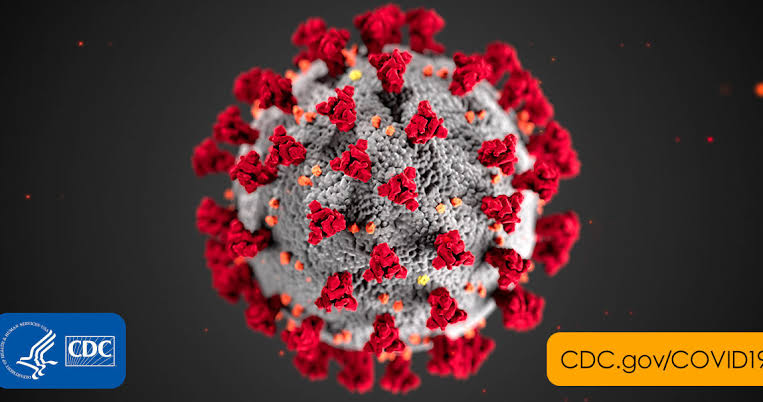
    For the second day running, Uganda has registered a fall in new cases of COVID-19 caused by Coronavirus.
    Results from samples tested on 09 June 2020 confirm 8 new COVID-19 cases in the country.  This brings total confirmed cases to 665 in Uganda.
    The country has registered Total COVID-19 recoveries of 119.
  • Uganda registers 4 new cases of COVID-19 with 2 from community

    Uganda registers 4 new cases of COVID-19 with 2 from community

    The Ministry has confirmed 4 news of COVID-19 in Uganda bringing the total to 164. 
    Results from samples tested on 19th May confirm 4 new COVID-19 cases out of 2,228 samples.
    2 cases are among truck drivers while the other 2 are contacts to previously confirmed truck drivers.
    The 2 are Ugandan truck Drivers who arrived from Tanzania via Mutukula and the two are currently admitted at Masaka Referral Hospital.
    The other 2 are 28 year old Uganda from Buikwe and a contact to previous confirmed truck driver and another is a 26 year old Ugandan male, a resident of Kyambogo who has also been in quarantine and is a contact of the previous positive truck driver.
    Meanwhile The  Minister for Health Hon. Jane Ruth Aceng yesterday flagged off emergency essential supplies to support the frontline health workers in the COVID-19 response at the border points of entry.

    The supplies worth USD 25,000 were donated by IGAD secretariat represented by Ms. Lucy Ongod. Stay safe, keep distance #Tonsemberera.
  • COVID-19 UG: 12 Ugandan truck drivers test positive as 32 foreigners who tested positive sent back

    COVID-19 UG: 12 Ugandan truck drivers test positive as 32 foreigners who tested positive sent back

    Last night the Ministry of Health confirmed 12 new COVID-19 cases confirmed from 1,743 samples of truck drivers. All new cases are Ugandans. 

    The total confirmed COVID-19 cases are now 260.

    The Ministry also confirmed that 32 foreign truck drivers who tested positive for COVID-19 were turned back to their respective countries.

  • COVID-19 cases jump to 61 in Uganda

    COVID-19 cases jump to 61 in Uganda

    The Ministry of Health has confirmed a new COVID-19 case in Uganda.

    The Director General Health Services Dr. Henry G. Mwebesa confirmed a 1 new case confirmed today.

    The new case is a 32 year old Kenyan truck driver who arrived from Kenya at Malaba border.

    Total Confirmed Cases of COVID-19 in Uganda is now 61.


    1,019 samples were tested today. Plans are underway to evacuate the driver to Entebbe Grade B hospital for treatment.

  • Stabex International donates UGX 20m to COVID-19 Taskforce

    Stabex International donates UGX 20m to COVID-19 Taskforce

    Stabex International said they are delighted to lend support to Uganda’s efforts in fighting against COVID-19 pandemic.

    They made a donation of UGX 20 Million inform of gas cylinders and fuel vouchers to the Ministry of Health- Uganda workers to help during this moment.

    The donation was handled over by Mr. Otim Gilbert, the Marketing Manager Stabex International and was received by Dr. Diana Atwine, the Permanent Secretary Ministry of Health.