Tag: Innocent Kamwokya

  • Lupiya: Redefining SME Lending in Zambia Through Inclusive FinTech Innovation

    Lupiya: Redefining SME Lending in Zambia Through Inclusive FinTech Innovation

    #40Days40FinTechs Zambia and Malawi Edition – Day 17

    Across Zambia, many small and medium-sized enterprises (SMEs) struggle to stay afloat not due to poor business models, but because access to affordable credit remains elusive.

    High collateral demands, lack of formal financial records, and prohibitive interest rates leave promising entrepreneurs locked out of growth opportunities.

    It is this financing gap that inspired Evelyn Chilomo Kaingu and her co-founder to launch Lupiya, a neobank with a bold mission: to make lending accessible to the underserved using technology and alternative data.

    Founded in 2016 with just $500, Lupiya has grown into one of Zambia’s most impactful FinTechs, now serving over 120,000 customers and having raised over $15 million in capital.

    “We started Lupiya out of frustration,” says Evelyn, who is also the CEO. “We couldn’t access credit for our own small business because we didn’t have collateral. So, we built a bank that removes that barrier for others like us.”

    Lupiya uses AI-powered credit scoring to assess borrowers without requiring traditional documentation. This allows SMEs with informal transaction histories often operating largely in cash to qualify for loans. The platform is fully digital, offering access via web, mobile app, and USSD for basic phone users, ensuring even rural communities are included.
    Among Lupiya’s standout products are its instant loan (available exclusively through the app) and agriculture financing, which now includes solar-powered irrigation and horticulture support. For all offerings, customers only need their National Registration Card (NRC) to apply.

    Despite the impressive growth, Kaingu notes challenges remain. Default risk and limited data sharing across platforms make customer targeting and risk management difficult. She advocates for open data frameworks and interoperable systems to enable greater innovation and cross-platform collaboration.

    Lupiya was featured on Day 17 of the #40Days40FinTechs Zambia and Malawi edition, a continental initiative showcasing trailblazing FinTechs driving inclusive finance. Having highlighted over 200 FinTech stories across Uganda, Kenya, Tanzania, Rwanda and now Zambia and Malawi the initiative is amplifying African-led solutions that close the financial inclusion gap.

    “Visibility matters,” Kaingu says. “The 40 Days 40 FinTechs initiative is a powerful platform that celebrates African ingenuity. We’re proud to be part of it.”

  • Kiddies Commute: Making Child Transportation Safer and Smarter in Zambia

    Kiddies Commute: Making Child Transportation Safer and Smarter in Zambia

    When it comes to transporting children whether to school, church, shopping centers, or birthday parties many parents face daily struggles.

    Finding trusted drivers and reliable vehicles is often stressful and time-consuming. In most cases, parents end up handling transportation themselves, sacrificing their time and peace of mind.
    Recognizing this challenge firsthand, Tetiwe Nzimah decided to find a solution.

    Drawing inspiration from her experiences growing up in the Copperbelt, where her mother operated a daycare and primary school, Nzimah witnessed the risks associated with unregulated child transport. Unsafe driving, overloading, and even reports of kidnappings left her determined to offer a better alternative.

    This led to the birth of Kiddies Commute, a tech-driven platform dedicated to safe, reliable, and trackable child transportation in Zambia. Through an easy-to-use mobile app, parents can book rides, make secure digital payments via mobile money or bank transfers, and monitor trips in real time from pick-up to drop-off. Every driver on Kiddies Commute undergoes thorough vetting and specialized training to ensure children’s safety and comfort.

    “We aim to give parents peace of mind by providing a dependable commute for their children. Our system simplifies the process parents create an account, book rides, pay digitally, and track journeys from start to finish,” Nzimah explained.
    Despite facing typical start-up hurdles such as limited mentorship opportunities, funding access, and user resistance to new technologies, Kiddies Commute continues to grow. Nzimah praised the #40Days40FinTechs initiative for its role in amplifying start-ups like hers.

    “This initiative offers us visibility and builds a collaborative ecosystem where innovation can thrive,” she noted.
    Kiddies Commute was featured on Day 13 of the #40Days40FinTechs Zambia and Malawi edition, an expansion of a program that has already celebrated over 200 FinTech innovations across East Africa. The initiative’s goal remains to foster financial inclusion, support economic growth, and empower startups through resources like Level One Project guidelines and Mojaloop Open Source Software.

    As Kiddies Commute continues its journey, it’s proving that with the right mix of innovation and determination, safer child transportation is not just possible — it’s here.

  • iMoSyS: Using FinTech to Deliver Clean Water and Digital Services to Underserved Communities

    iMoSyS: Using FinTech to Deliver Clean Water and Digital Services to Underserved Communities

    #40Days40FinTechs Zambia and Malawi Edition – Day 11

    Access to safe water remains a major challenge for many low-income communities across Africa. In Malawi, iMoSyS, a 15-year-old ICT company, is using FinTech to change that reality.
    Through its innovative iTap platform, iMoSyS has reimagined water access. iTap functions like an ATM, but instead of dispensing cash, it provides clean water. Families in underserved areas are issued digital cards that they top up using mobile money. With a simple swipe, they can access clean water from any of the 500+ kiosks installed across Malawi—impacting close to 500,000 people so far.

    “We work with utility companies to expand access to clean water. Our solution is simple, efficient, and tailored for the communities that need it most,” said Gehazi Jenda, Senior Software Developer at iMoSyS. The platform recently expanded into Uganda, where several kiosks are now operational.
    Beyond water, iMoSyS is also bridging digital service gaps through Alonda—a mobile marketplace connecting service providers with customers. With over 1,500 providers and 70,000 users, Alonda supports payments via mobile money and VISA, easing commerce for users across economic backgrounds.

    However, Jenda highlights key challenges to digital transformation in Malawi, including low smartphone penetration, limited digital literacy, and hesitancy toward digital payments. “FinTech must remain inclusive. Solutions need to work for users with basic phones and minimal tech exposure,” he emphasized.

    iMoSyS was featured on Day 11 of the #40Days40FinTechs initiative in Zambia and Malawi, which celebrates innovations driving financial inclusion across Africa. Now in its fifth year, the initiative has spotlighted over 200 FinTechs from East to Southern Africa, offering platforms like iMoSyS the visibility and support to scale impactful solutions.

    As FinTech continues to evolve, innovators like iMoSyS are proving that technology can be a powerful force for inclusion—whether through mobile payments, digital marketplaces, or even clean water.

    #40Days40FinTechs Zambia & Malawi edition | Day 11. Watch more here… https://youtu.be/l3ngqbWf0NU
  • #40Days40FinTechs Zambia & Malawi Edition – Day 8!! BongoHive: Powering Start-ups and Boosting Financial Inclusion in Zambia

    #40Days40FinTechs Zambia & Malawi Edition – Day 8!! BongoHive: Powering Start-ups and Boosting Financial Inclusion in Zambia

    In Zambia’s capital, Lusaka, an innovation hub is playing a pivotal role in transforming dreams into sustainable enterprises. BongoHive, one of the country’s leading technology and innovation spaces, has been nurturing start-ups and driving financial inclusion for over 14 years.

    With many African innovators struggling to overcome high operational costs, lack of access to office space, limited internet connectivity, and other logistical challenges, innovation hubs like BongoHive provide much-needed support. They offer affordable workspaces, mentorship, training, and networking opportunities that allow start-ups to move from ideation to implementation.

    “We exist to unlock Africa’s potential by helping entrepreneurs build sustainable, scalable businesses,” said Tilyenji Mundungani, Marketing and Communications Lead at BongoHive. “To date, we’ve supported more than 2,800 start-ups, including over 1,000 women-led enterprises.”

    Among BongoHive’s flagship programs is the Standard Chartered Women in Tech initiative, which has funded 160 Zambian female founders with grants of up to $20,000 each. Through such targeted programs, BongoHive is not only enabling access to capital but also addressing gender disparities in the start-up ecosystem.

    Recognizing a widespread gap in financial literacy, BongoHive has launched various programs focused on equipping entrepreneurs with the financial knowledge they need to thrive. These include the Investor Ready Hackathon, delivered in partnership with MTN Zambia, and the FinTech For You initiative, which strengthens financial understanding among budding innovators.

    Still, Mundungani acknowledges that challenges persist. “Rigid policies, limited funding, and difficulty accessing global markets are major hurdles. But we’re committed to pushing through—and we welcome partnerships that can help us support more start-ups, especially women-led businesses.”

    BongoHive featured on Day 8 of the #40Days40FinTechs initiative – Zambia and Malawi edition. While it is not a FinTech itself, the hub is home to several FinTech innovators who are building the future of inclusive finance.

    Now in its fifth year, 40 Days 40 FinTechs has showcased over 200 innovations from East and Southern Africa, giving visibility to impactful solutions and opening doors to partnerships, funding, and mentorship. The initiative promotes financial inclusion through tools like the Level One Project, Mojaloop, and other inclusive financial technologies.

  • #40Days40FinTechs Zambia & Malawi Edition – Day 7: Digital Bridge for Women Traders: Cross Border Connect opens New Markets Through Tech

    #40Days40FinTechs Zambia & Malawi Edition – Day 7: Digital Bridge for Women Traders: Cross Border Connect opens New Markets Through Tech

    Across Africa, informal cross-border trade remains a lifeline for millions—and women are at the helm. According to reports, women constitute between 70% to 80% of all informal cross-border traders, driving local economies and supporting households. Yet, the journey for many of these traders is riddled with challenges: from exploitation and harassment to poor market access and unreliable logistics.

    That’s where Cross Border Connect steps in.
    Founded by a trio of young female tech professionals, Cross Border Connect is reimagining how women engage in trade by offering them a safer, more accessible digital alternative. Their mobile-first marketplace enables women-led businesses in Malawi and Zambia to reach new markets, accept digital payments, and connect with customers across borders—right from their phones.

    “We built this platform to address real, painful challenges that women traders face daily,” said Kondwani Nyirongo, software engineer and co-founder of Cross Border Connect. “From security threats to foreign exchange issues and a lack of market information—we wanted to build a safe digital space where women could thrive economically.”

    The app acts as a virtual middleman, allowing sellers to upload products and buyers to browse, connect, and pay seamlessly. Once a purchase is confirmed, sellers coordinate delivery—cutting out unsafe travel and face-to-face risks. But for Nyirongo and her team, success isn’t just about transactions; it’s about trust.

    “Digital tools are still new for many of our users,” she noted. “We’ve learned that digital and financial literacy are just as important as the tech itself. That’s why we’re actively engaging our users through training and awareness.”
    The team is now looking to scale their solution beyond Malawi and Zambia and hopes to partner with stakeholders across the COMESA region. They’re calling on mentors, funders, and digital finance experts to join them in accelerating access and impact.

    Featured on Day 7 of the #40Days40FinTechs Zambia and Malawi Edition, Cross Border Connect is part of a broader movement to highlight FinTech innovation across Africa. Led by HiPipo in partnership with the COMESA Business Council, the initiative has showcased over 200 FinTechs in East Africa and now expands to Southern Africa with the same mission: championing inclusive finance through local solutions.

    As the continent embraces a digital future, platforms like Cross Border Connect are proving that inclusive innovation starts from the grassroots—powered by the people, and for the people.

  • #40Days40FinTechs Zambia & Malawi Edition Day 2: Angle Dimension Driving Malawi’s Digital Financial Leap

    #40Days40FinTechs Zambia & Malawi Edition Day 2: Angle Dimension Driving Malawi’s Digital Financial Leap

    Malawi, nestled in the Great Rift Valley with a population of 22 million, is emerging as a hotspot for digital innovation. Among the players accelerating this shift is Angle Dimension, a homegrown software company that’s redefining how financial services operate in the country.

    Founded in 2011 by a team of four visionaries, Angle Dimension was built to fill a gap in locally developed, affordable, and reliable software solutions. Today, it stands tall as a key enabler of digital and financial inclusion in Malawi.

    At the core of its FinTech portfolio are two standout solutions: Aspect Financials 360 and Smart Identity. Aspect Financials 360 is already in use by 10 SACCOs and microfinance institutions—each serving up to 30,000 users. It provides both core banking functions and internet banking, enabling users to check balances, view statements, and conduct transactions digitally.

    Meanwhile, Smart Identity is helping banks and insurance companies streamline KYC, customer verification, and authentication processes—making financial interactions more secure and efficient.

    “Our solutions are making transactions digital, real-time, and paperless. This saves both time and money for users,” says Angella Shumba, Business Analyst at Angle Dimension. However, she notes that a shortage of skilled tech talent remains a challenge, which the company is tackling through bootcamps and practical training programs.

    Angle Dimension’s story is being showcased as part of the #40Days40FinTechs Zambia and Malawi edition—a regional initiative that has already spotlighted over 200 FinTechs across East and Southern Africa. The initiative, powered by HiPipo and partners, promotes financial inclusion by supporting innovation, sharing success stories, and connecting FinTechs to essential tools like Level One Project principles and Mojaloop Open Source Software.

    Malawi’s digital revolution is underway—and companies like Angle Dimension are making sure it’s inclusive and impactful.

    #40Days40FinTechs #IncludeEveryone

  • Malawi’s Tradeflow Analytics wins the Zambia/Malawi Women in FinTech Hackathon

    Malawi’s Tradeflow Analytics wins the Zambia/Malawi Women in FinTech Hackathon

    Malawian FinTech Start-up Trade Flow Analytics have been announced winners of the inaugural Zambia/Malawi Women in FinTech Hackathon, walking home with $2,000 while Mighty Fin from Zambia came second and scooped $1,000.

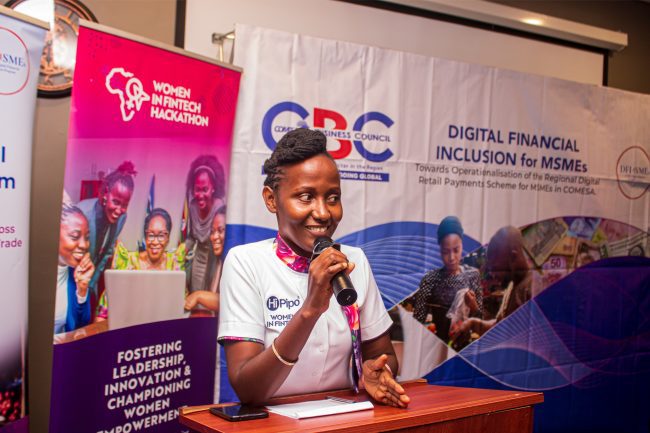
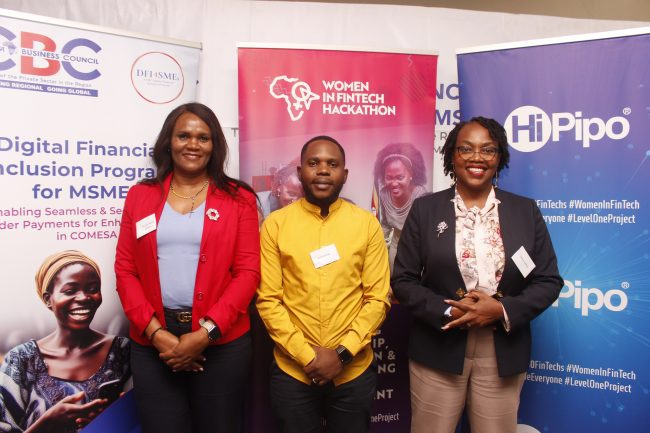
    Organised by HiPipo in collaboration with COMESA Business Council (CBC), the Women in FinTech Hackathon is part of HiPipo’s Include Everyone program being scaled in the COMESA region starting with Zambia and Malawi.

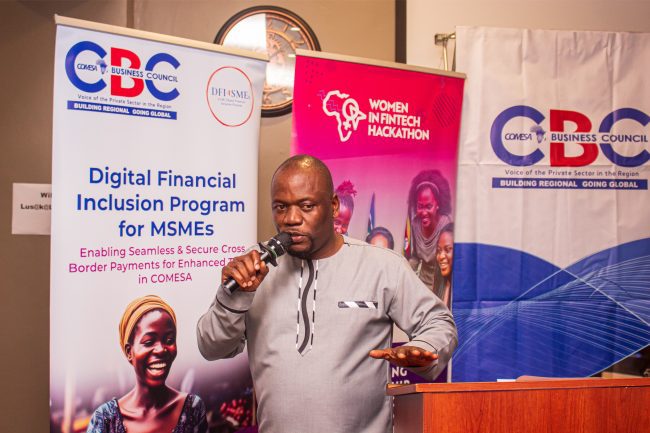
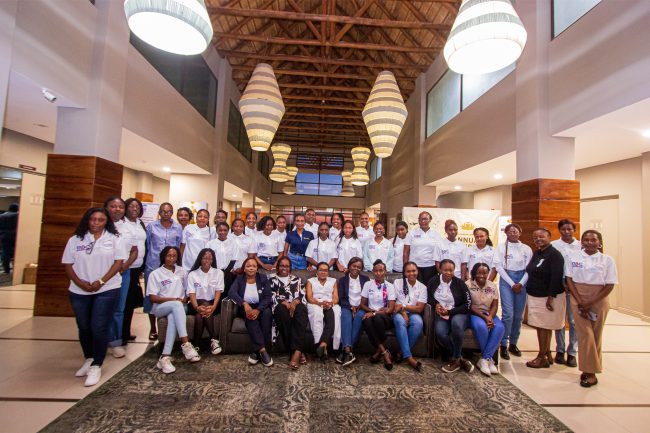
    Speaking at the closure of a week-long Hackathon held at Lusaka Legacy Resort, the CBC Chief Operating Officer, Dr Jonathan Pinifolo, noted that while TradeFlow Analytics were the winners, all the 16 participating teams should be proud of themselves because they all exhibited potential to develop solutions that transform lives.

    “All teams were very good and they exhibited an understanding of what we were looking for. For instance, they were all able to incorporate and integrate the Mojaloop Open source software and Level One Project Principles in their solutions,” he said.

    TradeFlow Analytics is a web solution that relies on data analysis to provide trade information to cross-border traders including available markets and foreign exchange rates. On the other hand, Mighty Fin are developing a savings and loan application called Mama Pay targeting informal women traders and small-scale businesses.

    “Our product is based on data and analytics. With the right information, we believe that informal traders can grow their business. We want to make all informal cross-border traders financially included,” noted Deborah Jalakasi, the co-founder of Data Analytics.
    “We are very excited, we didn’t expect this. We tried our best. We had two sleepless nights. We believe God has done it for us. We are still a startup. We want to do the technical implementation and make our product live,” she added.
    As a woman innovator, Deborah thanked the organisers of the Hackathon for the insightful session targeting women-led organisations and promised that they “are also going to go out there and inspire other women…improve other women.”

    Meanwhile, Vwanganji Bowa, the team leader of Mighty Fin, noted that the Hackathon has ‘tested our resilience’ and they are now focused on building a robust platform that can serve across the COMESA region.

    Both teams appreciated Comesa Business Council, HiPipo and Gates foundation for championing this event where teams were trained in various aspects such as ideation, conceptualisation and development of Minimum Viable Products.

    “We are not going back the way we came,” said Jalakasi.
    The HiPipo FinTech Events Manager Charlotte Neeza encouraged all participating teams to continue with their ideas because all of them were good enough to make it to the market.
    “We have had six teams from Malawi and ten teams from Zambia. While only two teams have been selected to take the prize money, all other teams are winners. We will continue supporting them and believe that have the capacity to become successful solutions serving people at the bottom of the pyramid,” she said.