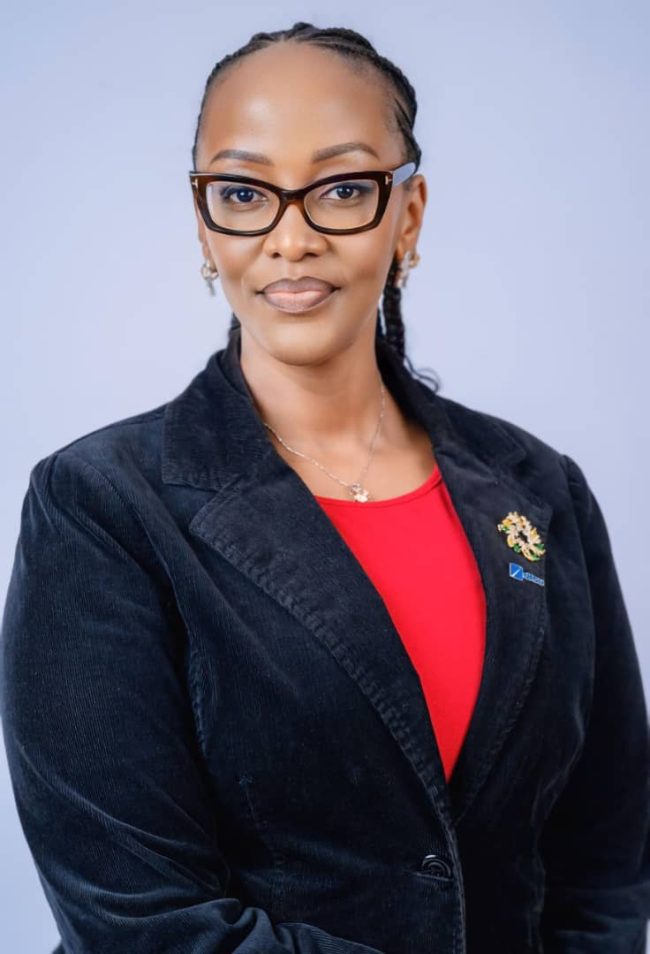
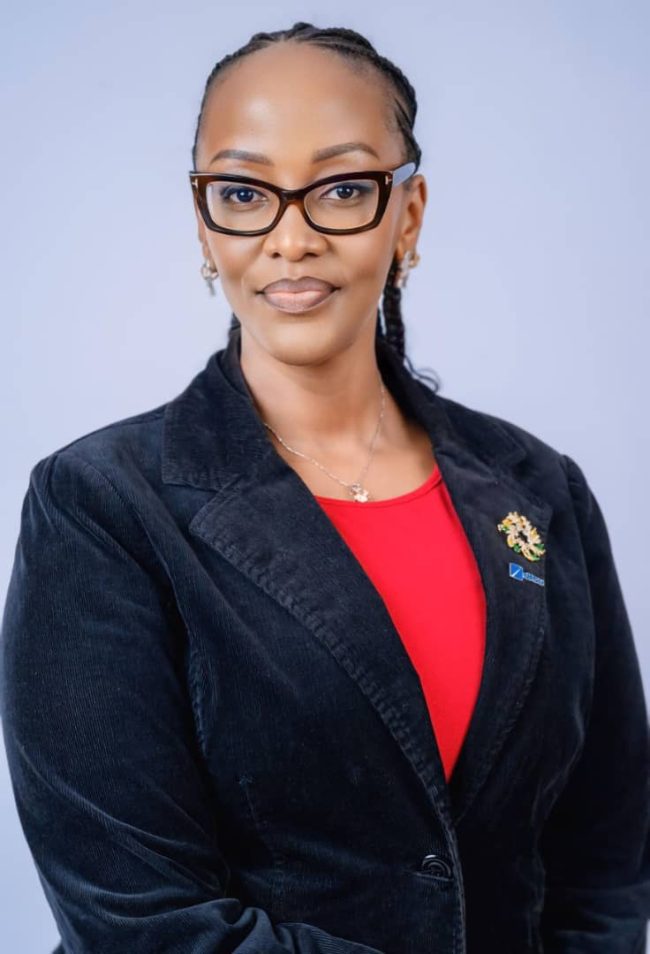
Tag: Helena Mayanja

  • dfcu Bank Opens Strategic Branch in Namanve  Park to Power Uganda’s Industrial Growth

    dfcu Bank Opens Strategic Branch in Namanve Park to Power Uganda’s Industrial Growth

    Kampala: dfcu Bank has today officially opened its Namanve branch, planting its flag firmly in the heart of one of Uganda’s fastest-growing industrial hubs. Set within the bustling Namanve Industrial Park, the event signaled strong confidence in Uganda’s growing industrial and manufacturing future.

    The branch becomes dfcu’s 55th nationwide presence and the second bank to establish a physical footprint inside the park.

    Hon. David Bahati, the Chief Guest and Minister of State for Trade, Industry and Cooperatives cuts the ribbon as dfcu Bank opens the Namanve Industrial Park branch

    The official opening was graced by David Bahati, Minister of State for Trade, Industry and Cooperatives, and a long-standing dfcu customer. As a Certified Public Accountant and a champion of industrialization, Hon. Bahati underscored the significance of situating financial services within industrial zones. He congratulated dfcu for aligning with government priorities and highlighted that Uganda currently has 12 operational industrial parks, with plans to expand to 22 nationwide.

    The industrial sector now contributes 16.5% to Uganda’s GDP, with manufacturing alone generating approximately Shs 8 trillion and employing over 1.4 million Ugandans. The Namanve Industrial Park itself hosts more than 400 factories and employs around 4,000 people.In this context, Bahati described the new branch as a practical tool for unlocking productivity, improving cash flow, and accelerating growth for manufacturers.

    dfcu Bank executives pose for a groiup photo with Chief Guest Hon. David Bahati during the launch of dfcu Namanve branch

    While commending dfcu for its improved service and competitive rates, he also encouraged the banking sector to continue working toward more affordable lending to further catalyse industrial expansion. He urged dfcu to replicate the Namanve model in other industrial parks as government expands the country’s manufacturing footprint. Margaret Karume, Chief Credit Officer at dfcu Bank, stated that the branch aims to serve customers within the industrial park and surrounding regions, bringing financial services closer to where businesses operate.

    “We have a cash depositor machine that allows cash deposits 24 hours a day, 7 days a week all year round. This initiative supports both corporate and personal customers, and we are fully committed to transforming lives and businesses in Uganda,” she said.

    Also present was George Musisi, newly declared Member of Parliament for Kira Municipality following the 2026 general elections, and another long-standing dfcu customer. He welcomed the development, applauding dfcu for bringing services closer to the community and supporting the industrial sector in a tangible way.

    Hon. George Musisi, the newly elected Kira Municipality Member of Parliament speaks during the launch of the dfcu Branch Namanve Industrial Park

    Musisi emphasized that while due diligence remains essential, banks should strive to balance compliance with efficiency. “Quick access to finance is crucial to prevent reliance on money lenders due to extensive paperwork in banks,” he noted, calling for streamlined processes that protect both the bank and its customers.

    Hon. George Musisi, the new Kira Municipality MP (4th left), Hon. David Bahati, Minister of Trade, Industry and Cooperatives (5th left), Kate Kiiza and dfcu ecutives pose for a group photo

    For business leaders like Faridah Ally, Manager at LaganDott Namanve Ltd, the new branch represents both convenience and continuity. LaganDott has served as the official road construction and infrastructure company in the park since 2021. Having opened her first dfcu account five years ago, she described the bank as a steady partner in her company’s growth journey. Waida Fred Moses, Vice Chairperson for Namanve Industrial Park, pledged full support to the bank.

    “As leaders, we pledge our full support to dfcu. As local leaders, we must cooperate with institutions that come to serve our community. We have worked with many organisations in this area, and I commit myself and our leadership to supporting dfcu.”

    Margret Karume, the dfcu Chief Credit Officer speaks during the launch event of dfcu Bank in Namanve

    dfcu Bank continues to partner with government and industry to advance Uganda’s development agenda under the “Tenfold Growth Strategy,” which aims to expand the economy to $500 billion by 2040. Implemented through the Fourth National Development Plan, the strategy focuses on accelerating agro-industrialization, mineral value addition, oil and gas commercialization, and transitioning subsistence households into the money economy through the Parish Development Model.

    Uganda remains among the world’s fastest-growing economies, buoyed by resilient macroeconomic performance and rising private sector credit activity, with projections placing the country among top performers by 2031.

  • How dfcu is Transforming Corporate Social Impact

    How dfcu is Transforming Corporate Social Impact

    Ms Helena Mayanja – Head, Corporate Affairs & Sustainability at dfcu Bank gives detailed insights on how the bank is transforming corporate social impact. Below is her interview on the matter;

    What is the Rotary Club of Kampala Blue Hearts, and why is it historic for Uganda?

    A: On August 30, 2025, dfcu Bank launched Uganda’s first corporate Rotary Club. The Rotary Club of Kampala Blue Hearts is a groundbreaking partnership between dfcu Bank and Rotary International that allows our people to actively serve communities while building networks and driving humanitarian impact.

    Why is this significant for dfcu Bank?

    A: The launch of dfcu Bank’s corporate Rotary Club is significant because it formalizes our long-standing commitment to community transformation in a globally recognized framework of service. For dfcu, it’s not just about writing cheques or supporting causes from a distance — it’s about giving our employees a structured platform to engage directly with communities, build partnerships, and deliver sustainable impact. It also positions the Bank as a thought leader in redefining how corporate institutions can integrate social responsibility into their culture, ensuring that service is lived out daily, not treated as an afterthought.

    How does the partnership align with dfcu’s mission?

    A: It reflects our four community pillars: enterprise development (especially Women in Business), financial inclusion, vocational education, and health. Together with Rotary, we’re extending our role beyond banking to empower communities and embed ESG principles into the way we operate.

    How does this embody Rotary’s motto, “Service Above Self”?

    A: By pioneering corporate service through Blue Hearts, dfcu demonstrates that companies, like individuals, can live out Rotary’s call to service—improving lives through education, healthcare, and economic empowerment.

    Helena Mayanja

    What will dfcu’s UGX 1 billion pledge support?

    A: Over the next three years, our commitment will fund mobile medical camps across Uganda. These will deliver general consultations with a special focus on sickle cell anaemia , maternal and child health support, immunizations, cancer and chronic disease screenings, HIV testing, dental and eye care, family planning, nutrition counseling, and blood donation drives. For more complex needs, referrals to hospitals will be provided. It’s about bringing vital care directly to underserved communities.

    How does this encourage other businesses to act?

    A: Kampala Blue Hearts sets a precedent: corporates can integrate service into their DNA. By leading with action, dfcu hopes to spark a movement where Ugandan businesses partner with networks like Rotary to drive sustainable community transformation.

    How does this reflect Rotary’s focus and dfcu’s ESG commitment?

    A: The partnership aligns with Rotary’s seven areas of focus; from education to disease prevention and strengthens dfcu’s ESG promise. It prioritizes social impact, transparency, and accountability while deepening trust with the communities we serve.

    What motivated dfcu to join hands with Rotary?

    A: Rotary’s unmatched global network and humanitarian legacy made it a natural fit. This partnership reflects our ambition to extend beyond banking – to transform lives through sustainable, purpose-driven action.

    What opportunities exist for public involvement?

    A: The public and organizations can join us by supporting The Rotary Club of Kampala Blue Hearts’ initiatives; whether at medical camps, blood donation drives, or other community projects. Together, we can amplify impact and create a healthier, more prosperous Uganda.

  • Jazz as a Catalyst for Economic Growth, dfcu Bank’s vision for Uganda

    Jazz as a Catalyst for Economic Growth, dfcu Bank’s vision for Uganda

    By Helena Mayanja

    In Uganda’s dynamic and evolving cultural landscape, the creative economy is emerging as a vital driver of sustainable development. From music and fashion to film, art, and gastronomy, Uganda’s creative industries are demonstrating the potential to stimulate economic activity, create employment, and boost economic growth. dfcu Bank is proud to be at the forefront of this movement, championing initiatives that integrate culture, community, and commerce. A shining example is the inaugural dfcu Jazz in the Pearl Festival, which promises to be a vibrant celebration of Ugandan talent and creativity.

    dfcu Jazz in the Pearl Festival, scheduled for May 10, 2025, at the Kampala Serena Hotel, will showcase the country’s rich musical heritage through performances by world-renowned saxophonists Isaiah Katumwa and Kirk Whalum, alongside Tshaka Mayanja and the Black Roots Academy of Soul. But the festival represents much more than just a musical event; it symbolizes dfcu’s broader commitment to fueling Uganda’s creative economy and positioning Uganda as a cultural powerhouse in East Africa.

    Helena Mayanja_Head Corporate Affairs and Sustainability_dfcu Bank

    Unlocking the Potential of Cultural and Creative Industries (CCI)

    The global rise of Cultural and Creative Industries (CCI) has proven that investing in creativity leads to tangible economic returns. Countries that nurture their artists, filmmakers, musicians, and designers have seen growth not only in tourism but in entrepreneurship, innovation, and exports. Uganda stands at the cusp of this transformation.

    By supporting events like dfcu Jazz in the Pearl, dfcu is investing in an entire ecosystem by providing opportunities for local entrepreneurs, artisans, food vendors, transport operators, event organizers, and countless others connected to the creative economy. This holistic approach mirrors successful models seen globally where cities such as Nashville (“Music City”) and Cape Town have leveraged cultural events to drive broader economic development.

    Building a Sustainable Creative Economy

    While music festivals undeniably stimulate tourism which is a key pillar of Uganda’s economy, their impact extends much further. Festivals create marketplaces for creative products and services, inspire innovation, attract investment, and foster skills development. Local musicians gain platforms to perform, collaborate, and expand their professional horizons. Artisans find audiences for their crafts. Young entrepreneurs discover new markets and business opportunities.

    Championing Uganda’s Creative Future

    dfcu Bank’s investment in the dfcu Jazz in the Pearl Festival is part of a broader vision: to transform lives, businesses, and communities by unlocking new avenues for economic growth. As seen with international festivals like the Montreux Jazz Festival in Switzerland and the Cape Town International Jazz Festival in South Africa, such platforms can generate millions of dollars for local economies, support thousands of jobs, and put cities on the global cultural map.
    In the same spirit, dfcu Bank believes that Uganda’s vibrant creative community—if nurtured and promoted—can become a significant engine of growth, innovation, and national pride.

    By weaving together culture, commerce, and community, dfcu is helping to lay the foundation for a thriving and sustainable creative economy for generations to come.

    The author is the Head – Corporate Affairs & Sustainability at dfcu Bank

  • A fusion of tradition and global influence; unpacking the cultural relevance of jazz to Uganda and Ugandan music

    A fusion of tradition and global influence; unpacking the cultural relevance of jazz to Uganda and Ugandan music

    By Helena Mayanja, Head Corporate Affairs & Sustainability, dfcu Bank

    Born in the early 20th century in the cultural melting pot of New Orleans, jazz emerged as a powerful expression of the African American experience; blending blues, ragtime, and West African rhythms into a genre defined by improvisation, soul, and innovation.

    Over time, jazz evolved into a global phenomenon, celebrated for its ability to cross borders and bring people together through the universal language of music.
    In Uganda, this global genre has found fertile ground. The fusion of Ugandan sounds with the improvisational spirit of jazz has given rise to a vibrant musical movement that honours heritage while embracing innovation.

    As Uganda’s creative economy grows, jazz is emerging as a strategic cultural and economic asset. The “dfcu Jazz in the Pearl” festival, event promises to celebrate Uganda’s place in the global jazz landscape. Through this initiative, dfcu stands at the front of a cultural movement that uplifts local talent and positions Uganda as a rising hub for cultural tourism and artistic excellence.
    But what makes jazz so culturally relevant to Uganda? The answer lies in the genre’s historical connection to African rhythms, its ability to communicate across cultures, and its growing influence on the next generation of Ugandan musicians.

    Helena Mayanja, Head Corporate Affairs and Sustainability, dfcu Bank

    A genre born from African rhythms, spirituals and blues; it has deep roots in the cultural history of the African diaspora. Uganda, as a country with a vibrant and diverse musical heritage, shares many of the rhythms, modes, and melodic structures that are characteristic of jazz.

    As Uganda’s music scene grows, jazz provides a platform for artists to explore the depths of their cultural heritage while simultaneously engaging with a global language of music that speaks to audiences worldwide. In jazz, we find a shared African heritage.
    While jazz’s African roots are evident, the genre has taken on a life of its own globally. For Uganda, the growing popularity of jazz offers a gateway to the international music scene, presenting the country’s musicians with new opportunities for visibility and collaboration. Through international collaborations, jazz becomes a global connector, placing Uganda on the International Stage.

    For young Ugandan musicians, jazz aligns with their aspirations to push boundaries and experiment with global sounds while remaining rooted in their cultural identity. Just as Afrobeats has taken the global stage, jazz presents another avenue for Ugandan musicians to establish themselves on global platforms, showcasing the country’s artistic innovation and its potential as a cultural powerhouse in East Africa.
    dfcu Bank’s commitment to cultivating Uganda’s cultural and creative economies is exemplified through sponsorships like the dfcu Jazz in the Pearl Festival which create jobs, promote tourism, and generate income for a variety of sectors, from hospitality to transportation.

    By supporting the arts, dfcu Bank is playing a pivotal role in shaping the future of Uganda’s music industry. As jazz continues to inspire, it will undoubtedly remain an integral part of Uganda’s cultural and musical future, bringing the world to Uganda and taking Uganda’s music to the world.

    The writer is the Head – Corporate Affairs and Sustainability at dfcu Bank

  • Bridging the Gap: How the GROW Project is Connecting Women Entrepreneurs to Financial Resources in Uganda

    Bridging the Gap: How the GROW Project is Connecting Women Entrepreneurs to Financial Resources in Uganda

    By Helena Mayanja, Head – Corporate Affairs and PR, dfcu Bank

    The launch and execution of the GROW Initiative, a program which offers a monumental opportunity for women entrepreneurs across the country, to receive funding, business advisory and networking opportunities, in a bid to grow profitable businesses has been positively received around the country.

    Already, thousands of women entrepreneurs have benefited from Government-led initiative, and the return on investment promises to be monumental for both the individual business owners and the country at large.

    By equipping women with access to financial resources, skills development, and mentorship, this initiative will support individual entrepreneurs and drive the broader economic growth of our nation.

    The landscape of female entrepreneurship in Uganda is evolving rapidly, yet challenges persist. Women make up 50.45% of Uganda’s population and contribute significantly to the country’s economy, with almost 40% of businesses owned by women. However, despite this strong presence, few of these women-led businesses survive beyond five years. A combination of limited access to finance, inadequate business skills, and a lack of mentorship are some of the barriers to growth.

    At the official launch of the GROW Initiative (The Generating Growth Opportunities and Productivity for Women Enterprises), held by the Private Sector Foundation Uganda, the need to offer a crucial lifeline to women entrepreneurs across Uganda was clearly highlighted.

    The World Bank- funded project and an initiative by the Government of Uganda, intends to create a robust economic ecosystem where women can thrive and the multiplier effect from its implementation will transform our society on a large scale.

    As one of the implementing Financial Institutions of this project, dfcu Bank enters into GROW with the legacy of supporting women entrepreneurs throughout our exixtence in Uganda. Our Women in Business (WiB) program has been at the forefront of supporting women-led businesses in Uganda. Launched in 2007, the program was designed to address the unique challenges faced by women in business, offering tailored financial solutions, training, mentorship, and networking opportunities.

    Since its inception, the WiB program has reached over 80,000 women, providing them with the tools and support required to succeed in their entrepreneurial journeys. Located at our Head Offices is a Women in Business Advisory Centre which was set up to support women entrepreneurs – and it is led and run by a formidable team of women bankers, financial advisors and strategists.

    Through our Business Accelerator Program and the Rising Woman Competition, we have reached, trained and financed thousands of women running small, medium and large enterprises across the country.

    With over 50 locations across the country, dfcu Bank is uniquely positioned to offer a comprehensive support system that addresses both the financial and non-financial needs of women entrepreneurs.

    One of the critical components of our involvement in the GROW initiative will be leveraging the extensive network and resources of the dfcu Women in Business program to reach and empower thousands of women entrepreneurs. This will include providing access to capital at favourable terms, business management training, and opportunities for women to connect and learn from each other.

    The impact of the GROW initiative will be profound and is set to change the narrative for women entrepreneurs in Uganda.

    Led by our Purpose, ‘Transforming Lives and Businesses in Uganda”, dfcu will continue to execute the GROW Project, as we bank on the fortitude of Ugandan, female, business owners.

    In the near future, we look forward to working closely with our partners, stakeholders, and the incredible women entrepreneurs across Uganda to turn the vision of GROW into a reality.

    The writer is the Head of Corporate Affairs and PR at dfcu Bank