
Tag: Dr.Sabrina Kitaka

  • Dr. Sabrina Kitaka’s tips on the Ketogenic diet for weight loss

    Dr. Sabrina Kitaka’s tips on the Ketogenic diet for weight loss

    #MyPlateMyFoodMyHealth

    Did you know that the popular ketogenic diet, also called the keto diet is mostly fat, protein with minimal carbs?

    The ketogenic diet is a dietary therapy that forces the body to burn fats rather than carbohydrates. Many ladies and gents struggling with weight loss after the age of 40 could benefit from this keto diet. Dieting alone without exercising is not healthy, so count those 10,000 steps daily to remain healthy and sleep for at least 6 hours every day.

    Remove that stress from your day to day activities. Dr Sabrina Kitaka, a senior pediatrician says that while on a Keto diet, one can turn fats into fuel while eating the food you love. ‘

    The Keto Diet is an effective way of losing weight and maintaining a good weight loss program to keep healthy,’ says Dr Kitaka.

    ‘With the Keto diet, you eat fewer carbohydrates and replace it with fat, resulting in a state called ketosis. A ketogenic diet is an effective way for weight loss and certain health conditions as demonstrated in many studies.’

    Dr Kitaka Sabrina added that whilst thinking about which fat source to use in your keto diet, I would suggest ghee. Yes ghee, the Omuzigo gwente. You may be wondering why? With research conducted over the years, it has come to light that instead of harming the body, ghee is right for you. It turns out our grandmothers were right in cooking food in ghee and adding it to our bowls of steaming meals and rice. In the scriptures, Ghee has been equated to gold. A keto diet is especially useful for losing excess body fat without hunger, and for improving type 2 diabetes or metabolic syndrome.

    On a keto diet, you cut way back on carbohydrates, also known as carbs, in order to burn fat for fuel, Dr Kitaka Sabrina added. ‘Ghee revs up the body’s metabolism making it an ideal medium for weight loss. Consumption of ghee makes it burn the other fats in the body and thus causes weight loss.’

    Marketing Manager Fresh Dairy – Vincent Omoth noted that Fresh Dairy is a family brand constantly ensuring that families have access to dairy products that maintain their health and nutrition.

    ‘For instance, Fresh Dairy Ghee is pasteurized making it safe for human consumption, comes in 500ml and 1 Litre tins and is available countrywide at stores nearest you. Fresh Dairy Ghee is great as a blend in Uganda’s popular Katogo, can be used to replace oil in daily frying, adds aroma and taste to food among several other benefits,’ he added.

    Dr Kitaka highlights the following as nutritional values of consuming ghee:Ghee is a calorie-dense food. 100 ml of ghee gives as much as 883 calories of energy. Ghee is also rich in Vitamin A, Vitamin E and Vitamin K especially if the source of ghee is the milk from grass-fed cows. It also contains butyric acid.Ghee has healthy fats. Research proves that ghee is low in fat. It has healthy fats which make it add good cholesterol to the body. Ghee does not cause heart diseases like other forms of fat.Ghee helps the digestive system. In the olden times, our ancestors used to have a spoonful of ghee before every meal. It lined the gut and reduced chances of ulcers and cancer.Ghee strengthens the immune system.

    Ghee is rich in Butyric Acid, which helps the body in producing T cells that fight diseases. Ghee is a dependable source of critical oil-soluble vitamins A and E that are needed for a healthy liver, balanced hormones, and fertility.Ghee is also an anti-inflammatory because of the antioxidants it contains

    Ghee is good for lactose intolerant individuals because it doesn’t cause allergies in those who suffer from dairy or casein intolerance.

    Ghee is one of the safest dermatological cosmetics. It is skin-friendly and helps treat burns. Ghee is rich in antioxidants, fatty acids and a natural emollient, hence helping you with maintaining healthy skin by locking in moisture, improving skin repair, treating cracks and softening the skin. This is also one of the popular traditional benefits of ghee.

    Ghee is an appetizer in children and adults alike. This is another reason to add Ghee to your child’s food.Ghee is great for applying to your hair and scalp because it eases a dry, itchy scalp due to its moisturizing properties. Ghee is rich in Vitamin K, which helps in calcium absorption. It helps in the prevention of tooth decay and prevents atherosclerosis. Ghee helps with thyroid dysfunction since its usage results in balancing hormones

    Ghee does not break into free radicals at a high temperature. Free radicals are responsible for cancer, amongst other diseases. This makes it an ideal medium and a stable fat to cook and fry food in.Ghee treats Menstrual problems. Ghee tends to balance the hormones in the body making it an ideal contender if you are looking to relieve yourself of menstrual issues like PMS and irregular periods.

    Ghee enhance taste of any dish that it is added to – a bowl of offals becomes tastier after adding ghee.

    Regular consumption of ghee leads to a reduction in stress and anxiety levels. #MyPlateMyFoodMyHealth
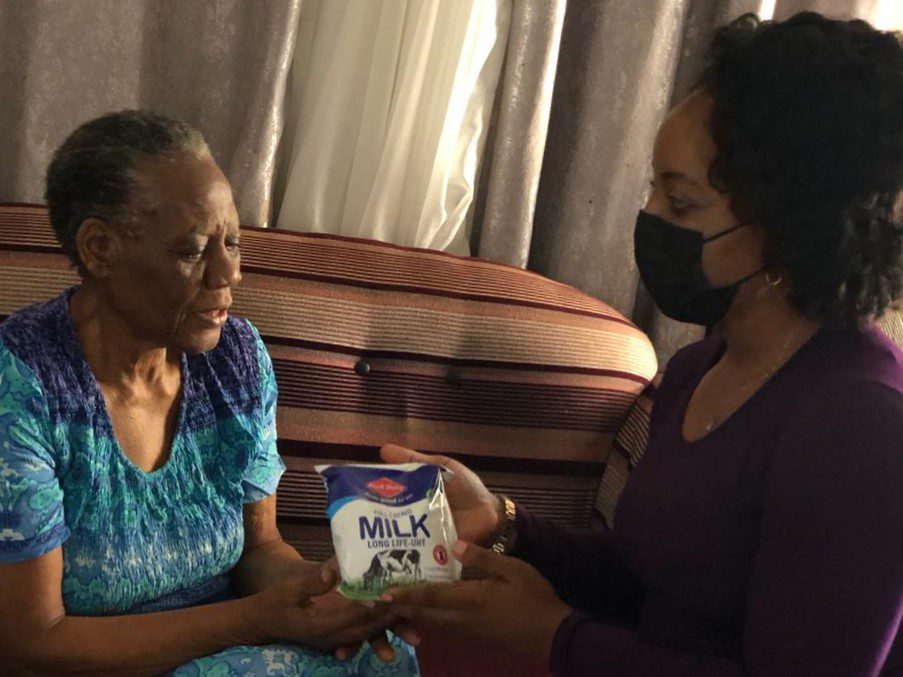
  • Dr Sabrina Kitaka advises the Elderly to drink milk too

    Dr Sabrina Kitaka advises the Elderly to drink milk too

    #DrinkMilk4GoodHealth

    Many times, we hear about the importance of drinking milk during childhood and adolescence, and during pregnancy but milk also offers many benefits to people in their 60’s and beyond.

    These individuals are called elderly or seniors and they are the grand parents or great grandparents. Worldwide, the proportion of older persons (aged 60 years and above) stands at 11% and it’s anticipated to double by 2050 (UNDESA 2013).

    In sub-Saharan Africa, older persons comprise 5% of the population (UNFPA 2012).

    In Uganda, the current population of older persons is estimated at 1.6 million (5% of the population) and it is expected to increase to 5.5 million in 2050 (UBOS and ICF International 2012).

    Right is Dr Sabrina & Left is her mum

    Dr Sabrina Kitaka, a senior pediatrician says that many people who take care of their elderly parents will understand very well how much importance they attach to their memories of good feeding and how they desire to re-live their youthful memories of dancing and running around in the sun.

    “As people age, their nutrition is so important because it contributes heavily to their well-being and reduces their visits to the hospital. One important food which the elderly should not miss in their diet is milk, especially if they have not developed lactose intolerance.”

    Dr Sabrina highlights four important reasons for older adults to get more milk in their diet:

    1. Milk provides Potassium

    Potassium is a nutrient many seniors who skip dairy products lack in sufficient quantity. Too little potassium and too much sodium in the blood are risk factors for high blood pressure, also known as the “silent killer,” which is common among older adults. High blood pressure in seniors increases the risk of chronic kidney disease, heart attack, and stroke. Most seniors already consume too much salt in their diets, but boosting potassium intake can help reduce this risk.

    2. Milk provides Glutathione

    A recent study published in the American Journal of Clinical Nutrition found a correlation between milk intake and levels of an antioxidant called glutathione in the brain in older adults. Study participants who drank milk a short while before being tested had higher levels of glutathione, which is believed to reduce oxidative stress associated with Alzheimer’s disease and other conditions.

    3. Milk provides Calcium

    One of the primary benefits of milk is the high level of calcium, an essential nutrient for building and maintaining bone strength in seniors. Calcium is extremely important for preventing osteoporosis, especially for senior women. A single cup of nonfat milk has almost 300 mg of calcium, which is almost half the recommended daily intake for seniors.

    4. Provides Vitamin D

    Humans produce vitamin D in the skin through exposure to sunlight. While the sun is the source of most of the vitamin D in the body, the skin becomes less effective at producing this essential vitamin with age. Vitamin D is important for healthy bones because it helps the body absorb calcium. Milk is a good source of vitamin D for boosting calcium intake and reducing your loved one’s risk of osteoporosis and fractures. A serving of reduced-fat milk contains 2 IUs of vitamin D, one-fifth of the recommended daily intake.I therefore encourage our loved ones to consume milk regularly and reap these health benefits.

    “My own mother who is a retired nurse recently celebrated her 82nd birthday, and one of the gifts we took for her was a carton of Fresh Dairy Longlife UHT milk with an extended shelf-life of 90-days with or without refrigeration. She likes to drink a glass of milk with her breakfast. I am happy to note that some of the elderly members of my community church have now reverted to taking their milk and have given testimonies of how much their health has improved over the last few weeks. #DrinkMilk4GoodHealth.”

  • Dr. Sabrina Kitaka tips on why children and Teens should drink one glass of milk every day

    Dr. Sabrina Kitaka tips on why children and Teens should drink one glass of milk every day

    #DrinkMilk4GoodHealth

    Dr Sabrina Kitaka, a senior pediatrician says that milk as a beverage taken correctly is considered as a beneficial product for growing children and teenagers.

    Milk contains the daily required sources of water, proteins, calcium, vitamin A, vitamin B, and vitamin D which are much needed for growth, as well as strengthening teeth and bones for growing children.

    Marketing Manager Fresh Dairy – Vincent Omoth highlights that Fresh Dairy Long life UHT milk now offers convenience to consumers because it lasts up to 90 days with or without it being refrigerated, tastes as good as fresh milk and is now available in both 500ml and 200ml packs.

    Dr Sabrina adds that milk cannot be used as a whole meal, but rather as a healthy nourishment to a balanced diet. It is important to limit your child’s milk intake to 480 – 720 milliliters a day. Include iron-rich foods in your child’s diet, such as meat, poultry, fish, beans, and iron-fortified foods. Continue serving iron-fortified cereal until your child is eating a variety of iron-rich foods. Is milk good for growing girls?Dr Sabrina mentions that while calcium is the main benefit of milk for teen girls, milk also provides protein. Most milk is also fortified with vitamin D, which improves calcium absorption.Why should children and teens drink milk every day?Dr Sabrina emphasizes that Children and teenagers are advised to drink milk on a regular basis because milk contains almost all the essential nutrients. Milk contains an appropriate balance of protein, carbohydrates and fat.

    Many children and teenagers have been removed from milk after their first birthday because of myths and a fear for developing lactose intolerance or excessive weight gain if too much milk is consumed. Worldwide, only 2 percent of the world’s population is lactose intolerant. Even lactose-intolerant adults may find that 1 glass of milk is tolerated, whereas an additional glass of milk or other milk product may produce symptoms.Dr Sabrina highlights that Milk has some benefits for the skin too.

    Milk works as a natural cleanser and treats acne. The lactic acid in milk pulls out the dirt by deep cleansing clogged pores and removing acne-causing bacteria called microbes present on your skin surface. Raw milk soothes and calms the acne-affected area. It decreases skin inflammation and gives you clear, smooth, and grease-free skin. Dr Sabrina adds that milk also moisturizes the skin because it has biotin and other moisturizing elements that help in nourishing your dry, cracked, withered, and flaky skin. It goes into deeper layers of skin and gives your skin conditioning and moisturization from the inside.

    Milk also provides hydration to your skin and helps get rid of itchiness. Using milk as a face mask or cleanser gives you soft and glowing skin by boosting cell regeneration. Vitamins in milk help in maintaining healthy and youthful skin. You can make gram flour and milk masks to lock moisture into your face.If one was to look at the cost benefit analysis of giving your child or teenager a glass of milk per day, I would certainly go with the more beneficial approach of allowing that much needed glass of milk as children grow, Dr Sabrina says.

    ‘Children and teenagers are encouraged to eat a balanced diet, exercise regularly and sleep for at least 8 hours a day.’