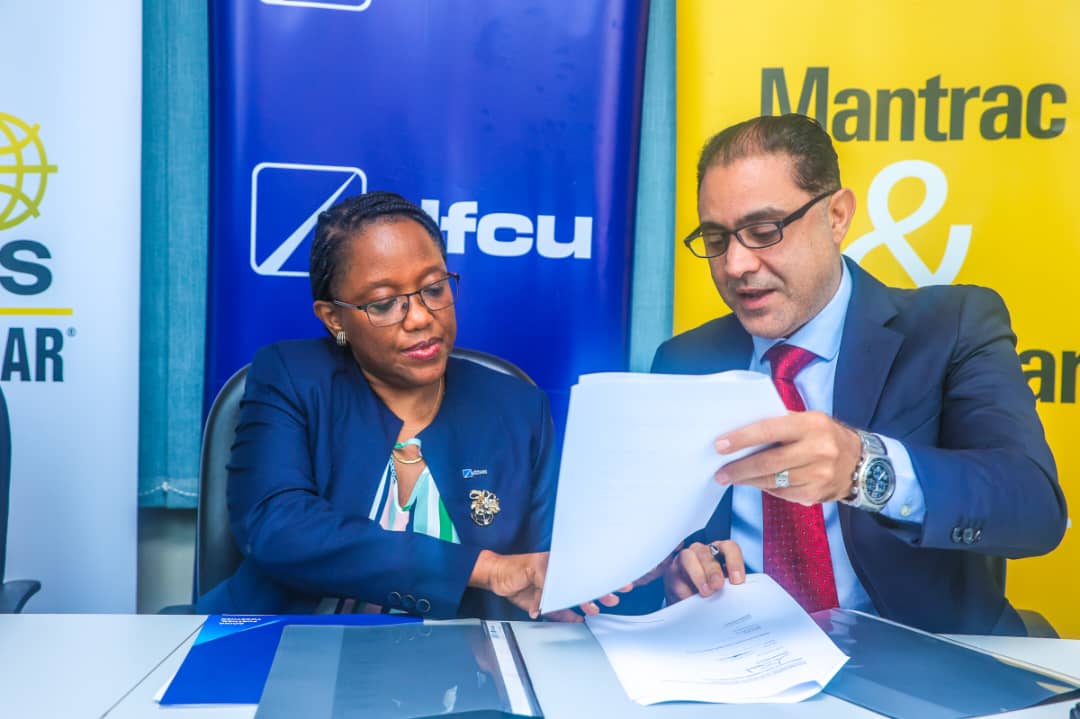
Kampala: dfcu Bank has announced a strategic partnership with MANTRAC Uganda, the authorized dealer of Caterpillar equipment, to provide businesses with affordable, flexible, and comprehensive financing solutions for brand-new machinery and power systems.
This collaboration is set to empower Ugandan enterprises, especially those dealing in construction, agriculture, logistics, mining, and manufacturing, to acquire world-class equipment and grow their operational capacity.
The partnership offers dfcu Bank customers access to MANTRAC’s wide range of high-quality Caterpillar machinery, including wheel loaders, excavators, motor graders, tractors, dump articulated trucks, mining equipment, warehousing machinery, and power generation systems.
These assets are essential for industries driving Uganda’s economic development and infrastructure expansion. Speaking about the partnership, Kate K. Kiiza, dfcu Executive Director, Chief of Corporate and Institutional Banking at dfcu, noted that this partnership aligns with the Bank’s purpose to ‘’Transforming lives and businesses in Uganda’’ by empowering businesses through innovative financing solutions.
She said, “Our Vehicle and Asset Financing solution has always been about enabling growth. At dfcu Bank, we are committed to powering Uganda’s growth by supporting the sectors that keep our economy moving, ranging from construction and agriculture to logistics and manufacturing. Through this partnership with MANTRAC Uganda, we are bridging the financing gap that has long limited businesses from acquiring world-class machinery. Our goal is to empower customers to scale operations with modern, efficient, and durable equipment while enjoying affordable and flexible financing options’’.
Under this partnership, dfcu Bank will provide up to 90% financing for the purchase of new machinery, requiring only a 10% down payment from the customers.
Additionally, customers can enjoy repayment periods of up to 60 months, with competitive interest rates, and a fast loan approval process within 0 to 30 days. These terms have been designed to meet the needs of both large corporates and small and medium enterprises (SMEs) across different sectors.
The partnership caters to companies, sole proprietors, and organizations involved in industries such as construction, manufacturing, agriculture, mining, logistics, and power generation enabling them to scale operations efficiently without the heavy upfront cost of asset acquisition.
In addition to the financing benefits, customers purchasing equipment through this arrangement will enjoy Mantrac’s extended warranty of 24 months or 4,000 hours, after-sales service, operator training, and tracking devices for asset monitoring, ensuring long-term reliability, safety, and value for money.
This partnership is part of the bank’s Vehicle and Asset Financing (VAF) product where the bank deals with various car importers in Uganda. Customers will have access to Mantrac’s full range of Caterpillar equipment including: Construction machinery such as wheel loaders, excavators, motor graders, articulated dump trucks, and tractors.
Mining equipment designed for durability and productivity in tough environments. Power systems such as Generators and backup power solutions that guarantee reliability for commercial, industrial, and institutional use. Warehousing and material handling equipment, enhancing efficiency in logistics and storage operations.
Ms Helena Mayanja – Head, Corporate Affairs & Sustainability at dfcu Bank gives detailed insights on how the bank is transforming corporate social impact. Below is her interview on the matter;
What is the Rotary Club of Kampala Blue Hearts, and why is it historic for Uganda?
A: On August 30, 2025, dfcu Bank launched Uganda’s first corporate Rotary Club. The Rotary Club of Kampala Blue Hearts is a groundbreaking partnership between dfcu Bank and Rotary International that allows our people to actively serve communities while building networks and driving humanitarian impact.
Why is this significant for dfcu Bank?
A: The launch of dfcu Bank’s corporate Rotary Club is significant because it formalizes our long-standing commitment to community transformation in a globally recognized framework of service. For dfcu, it’s not just about writing cheques or supporting causes from a distance — it’s about giving our employees a structured platform to engage directly with communities, build partnerships, and deliver sustainable impact. It also positions the Bank as a thought leader in redefining how corporate institutions can integrate social responsibility into their culture, ensuring that service is lived out daily, not treated as an afterthought.
How does the partnership align with dfcu’s mission?
A: It reflects our four community pillars: enterprise development (especially Women in Business), financial inclusion, vocational education, and health. Together with Rotary, we’re extending our role beyond banking to empower communities and embed ESG principles into the way we operate.
How does this embody Rotary’s motto, “Service Above Self”?
A: By pioneering corporate service through Blue Hearts, dfcu demonstrates that companies, like individuals, can live out Rotary’s call to service—improving lives through education, healthcare, and economic empowerment.
Helena Mayanja
What will dfcu’s UGX 1 billion pledge support?
A: Over the next three years, our commitment will fund mobile medical camps across Uganda. These will deliver general consultations with a special focus on sickle cell anaemia , maternal and child health support, immunizations, cancer and chronic disease screenings, HIV testing, dental and eye care, family planning, nutrition counseling, and blood donation drives. For more complex needs, referrals to hospitals will be provided. It’s about bringing vital care directly to underserved communities.
How does this encourage other businesses to act?
A: Kampala Blue Hearts sets a precedent: corporates can integrate service into their DNA. By leading with action, dfcu hopes to spark a movement where Ugandan businesses partner with networks like Rotary to drive sustainable community transformation.
How does this reflect Rotary’s focus and dfcu’s ESG commitment?
A: The partnership aligns with Rotary’s seven areas of focus; from education to disease prevention and strengthens dfcu’s ESG promise. It prioritizes social impact, transparency, and accountability while deepening trust with the communities we serve.
What motivated dfcu to join hands with Rotary?
A: Rotary’s unmatched global network and humanitarian legacy made it a natural fit. This partnership reflects our ambition to extend beyond banking – to transform lives through sustainable, purpose-driven action.
What opportunities exist for public involvement?
A: The public and organizations can join us by supporting The Rotary Club of Kampala Blue Hearts’ initiatives; whether at medical camps, blood donation drives, or other community projects. Together, we can amplify impact and create a healthier, more prosperous Uganda.
dfcu Foundation has officially launched the Financial Expansion for Agribusiness Transformation (FEAT) Program, a strategic initiative designed to strengthen Uganda’s agribusiness sector. The program targets smallholder farmers (SHFs) and agribusiness enterprises with the goal of improving productivity, profitability, and access to markets and finance—particularly for women, youth, and vulnerable communities.
Backed by dfcu Foundation and Rabo Foundation, FEAT is set to support 2,280 agribusinesses and impact over 100,000 individuals across value chains in coffee, livestock-dairy, cereals, and oilseeds.
Best Farmers launch 2025
The program also plans to train 80,000 learners—50% women and 40% youth—reaching over 400,000 Ugandans based on average household size. To drive financial sustainability, FEAT will facilitate UGX 100 billion in financial linkages while introducing a Catalytic (Revolving) Fund Facility to support early-stage enterprises that are not yet ready for commercial credit.
Complementing finance, participants will access capacity building in leadership, governance, financial literacy, marketing, price risk management, and climate-smart agriculture through Management Business Advisors, AgriTech experts, and digital platforms such as dfcu Foundation’s SOMA e-learning platform and the Bean Book tool for coffee exporters.
Mabel Ndawula
Mabel Ndawula, Executive Director of dfcu Foundation, said: “At its heart, FEAT is a collaborative effort to unlock real opportunities for farmers and entrepreneurs—through access to finance, markets, and skills. The combined strength of Rabo Foundation’s global expertise and dfcu’s deep local commitment ensures that smallholder farmers and SMEs can move from subsistence to prosperity, driving inclusive growth and resilient rural economies.”
Charles Mudiwa, CEO of dfcu Bank, added: “Agriculture remains the backbone of Uganda’s economy, and supporting its transformation is central to dfcu’s purpose of building better lives and businesses. Through FEAT, we are not only expanding access to finance but also investing in the skills, technologies, and partnerships that make agribusiness more competitive, resilient, and inclusive. This program reflects our long-term commitment to empowering Uganda’s farmers and positioning agriculture as a driver of sustainable national growth.”
Sonja Timmer, Lead Impact Finance, Africa at Rabo Foundation, noted:.“The FEAT program builds on our longstanding partnership with dfcu Foundation, whose team brings deep local expertise in Uganda’s agribusiness sector. It reflects our shared belief that entrepreneurship in smallholder value chains is key to sustainable growth. FEAT is more than a program: it aims to be a catalyst for change, equipping agri-entrepreneurs and farmers with training, tools, and financial solutions to scale their businesses sustainably and improve livelihoods.”
Why FEAT Matters
Agriculture employs 73% of Uganda’s workforce but continues to face barriers in finance, markets, and business skills.
FEAT combines capacity building, blended finance, and digital innovation to address these gaps. By prioritizing women, youth, and climate-smart practices, FEAT strengthens competitiveness, resilience, and inclusivity in the agribusiness sector.
By Gloria Ssuuna Namutebi – Senior Manager, Vehicle & Asset Finance, dfcu Bank
In today’s economy, owning a productive asset; a vehicle, a motorcycle, or a piece of machinery, is more than a convenience. It’s a catalyst for financial independence, business growth, and generational wealth. At dfcu Bank, we understand this deeply. That’s why our Vehicle and Asset Financing (VAF) offering is more than a product. It’s a strategy for national progress.
For over six decades, dfcu Bank has led Uganda’s leasing and asset financing landscape, unlocking value for entrepreneurs, SMEs, and corporate clients. Our legacy is rooted in creating access to tools that move goods, support livelihoods, and transform businesses.
Today, we are taking that mission further.
Inclusive by Design, Impact by Default
Traditionally, Asset Finance was seen as the preserve of large companies or high-income earners. dfcu Bank challenges this narrative. Our VAF proposition is built for everyone; from salaried professionals and SMEs to informal sector players like boda-boda riders, market vendors, and traders. We assess not just traditional payslips, but alternative income streams, recognizing that economic activity in Uganda is diverse, informal, and dynamic.
By opening the door to those historically excluded from mainstream financing, we are not just offering loans – we are unlocking opportunity.
Whether it’s a boda rider financing a new motorcycle, a farmer acquiring a second-hand pickup to transport produce, or a logistics SME expanding its fleet, we are enabling Ugandans to invest in tools that create income, build equity, and drive prosperity.
Tailored Solutions for Uganda’s Cash Flows
dfcu Bank offers a full suite of financing options designed to meet our clients where they are:
Asset Finance/Loan: Direct financing for vehicles and equipment, ideal for individuals and micro-businesses.
Finance Lease: Perfect for businesses looking to use income-generating assets without large upfront costs.
Insurance Premium Financing (IPF): Enables clients to spread insurance payments over time, ensuring uninterrupted protection.
We know cash flow isn’t always monthly, which is why we offer flexible repayment terms to align with our clients’ earning cycles. Whether you’re a teacher with a side hustle, a mechanic with weekend gigs, or an agribusiness that earns post-harvest, we have a plan that fits your world.
Fast, Simple, Empowering
Accessing dfcu’s VAF solution is deliberately simple because our support goes beyond the transaction.
We help clients source reliable vehicles, structure sustainable repayments, and even finance their insurance, thus creating a full ecosystem of asset empowerment.
Purpose in Motion
Our slogan, “Going Further Together,” and purpose, “Transforming Lives and Businesses in Uganda,” come alive every time a dfcu-financed truck moves goods across districts, or a first-time car owner beats the odds and builds a new life.
Vehicle and Asset Financing is dfcu Bank’s strategic response to the needs of a growing, ambitious Uganda. It’s how we turn dreams into drive, side hustles into enterprises, and movement into momentum.
The writer is Gloria Ssuuna Namutebi – Senior Manager, Vehicle & Asset Finance, dfcu Bank
The media recently had the opportunity to speak with Dr. Emma Naluyima, a Ugandan veterinary doctor with a Bachelors in Vet Medicine (BVM) and a Masters in Health Services Research (MHSR) and also a selected judge for the dfcu Bank – Vision Group Best Farmers Competition 2025.
Over the years, Dr. Naluyima has not only built a successful farm but has also empowered several youth and women to perceive agriculture as a profitable and transformative venture. Her approach combines technical expertise, innovation and a deep understanding of the best sustainable farming practices.
In this Q&A, Dr. Naluyima shares her inspiring journey, from how she got into piggery farming to the key lessons she has learned over the years. She discusses the transformative impact agriculture has had on her life, how support from financial institutions like dfcu Bank has helped her expand her operations, the challenges she continues to face, the opportunities available in the piggery industry, and her vision for the future. Her story provides lessons for aspiring farmers, agriculturalists, and anyone passionate about the potential of agriculture to change lives and communities.
Dr. Emma Naluyiima
Briefly introduce yourself and tell us about your background
My name is Dr. Emma Naluyima. I am a veterinary doctor by profession, a passionate farmer, an educator, a farming consultant, a wife, and a mother.
How long have you been practicing piggery farming, and what kept you going all these years?
I have been practicing farming and specializing in piggery farming and utilizing small pieces of land for profit for about 19 to 20 years. I started with a piggery. The venture has been good to me, it’s profitable and empowering, especially for women and youth. Many people say pigs eat a lot, but that’s often due to misinformation. A pig weighing around 100 kilograms only needs about 3 kilograms of well-balanced feed per day. The challenge now is the high cost of feed. When I started, the maize brand cost was UGX 50 per kilo. Today, it can go as high as UGX 1,200.
What are some of the key lessons you have learned over the years in managing a successful piggery?
Success in farming is characterised by three key pillars, as these include good genetics, proper feeding, and strong management. These three complement one another. For example, good genetics mean nothing without quality feed. And even if you have both, poor management will fail you. Management is about attention to detail, ensuring timely insemination, keeping accurate records, and responding fast. If you miss a service date, you delay your production cycle, and that affects your income. It’s all interconnected.
How has piggery farming impacted your life personally, financially, and professionally?
I am grateful for this piggery project because it has transformed my life. I paid for my Master’s degree using revenue from selling pigs. Piggery, when done right and with good genetics, proper feeding, and solid management best practices, is very rewarding. The problem is, many people want shortcuts, they buy high-quality animals but don’t feed or manage them well, which leads to disappointment.
How did you come to know about the dfcu Bank agricultural financing or farmer support programs?
I learned about dfcu Bank at a time when I needed financing for my piggery farm. Initially, dfcu seemed like a bank for “big people,” especially corporates and the wealthiest. However, that perception changed when they supported us as Best Farmers and gave us money. It was during that time that I opened an account and began banking with them.
In which ways has dfcu Bank supported your piggery project? (e.g., financing, training, market linkages)
dfcu has supported me with various financing solutions which I have used to further expand operations, restock and import new pig breeds. Unfortunately, Covid-19 hit soon after, and I had to restructure the loan. I love dfcu, the way they work, the responsiveness, and the respect they give farmers. Even when I win awards and prizes, I always ask that the funds be sent through my dfcu Bank account.
How important has this support been in scaling up your operations?
The loans have been a turning point in my life. Despite some setbacks like swine fever striking and losing a significant number of animals, the support was essential. It helped me get started, and the lessons I learned through that experience have helped me bounce back stronger.
What was your reaction when you were announced as a winner of the dfcu Bank – Vision Group Best Farmers Awards?
Winning the dfcu Bank – Vision Group Best Farmers Award was one of the most humbling and uplifting moments of my life. When my name was announced, I was completely overwhelmed with joy and disbelief, considering I was only farming on one acre. I felt a deep sense of recognition for the years of hard work, sacrifices, and commitment to transforming my farm into a sustainable and impactful agribusiness.
Have you received any new opportunities following this recognition, win, and award?
Absolutely. The recognition has opened doors both locally and internationally. People approach me, some I have never met, telling me how my story has inspired them. I have received invitations to speak at various events, and I have even been part of global forums, including the World Food Prize community. The award was a springboard that expanded my reach and amplified my voice in the agricultural space.
What are some of the major challenges you face in piggery farming today?
Swine fever remains a major challenge because there’s no vaccine yet. However, over time, we have developed strategies to reduce its impact. Every time we are hit, we learn and improve.
We have also diversified our feeding model, we use hydroponics and black soldier fly larvae to feed chickens and fish, which helps generate income to support pig feeding. We also repurpose animal waste for fertilizer. This multi-enterprise approach helps us manage costs and remain profitable even when feed prices are high.
How do you manage risks such as diseases, market fluctuations, or feed shortages?
Our approach to managing risks is built around diversification. Because we have different enterprises on the farm, like cows, a school, and pigs, when one faces a challenge, another keeps us going on. Let me give you an example. When we get milk from the cows, we don’t rush to sell it raw. Instead, we add value by processing it into products. And even before selling the processed milk, we first look at the balance of how much we need for the pigs. We actually “sell” some of the milk to the pigs, and they grow faster as a result. That alone increases the value of the pigs, so we eventually sell them at a better price. We do this deliberately: for example, instead of selling a litre of milk at UGX 3,000, we feed a quarter-litre to the pigs and get more out of it long-term. This approach helps us reduce dependence on external feed and stabilize income even during market shifts or disease outbreaks.
What opportunities do you see currently in the piggery industry, especially for smallholder farmers?
Once you understand your business, the opportunities are endless. If you understand it well, it becomes clearer. And that’s the mindset farmers need. Who are your customers? What are their needs? What’s the value chain? What gives me an edge is that I am a vet by profession, so I had technical knowledge from the start. But I didn’t keep that to myself. I trained other farmers. Back then, we had to import everything from vaccines to equipment. But now, local companies are producing what farmers need because the industry has grown and there’s demand. The piggery sector has developed. Now, all industries, whether it’s pigs, cows, or poultry, have support systems. I had the opportunity to travel, gather knowledge, and bring in what I needed. But I didn’t spread myself too thin, I stayed focused on production. Today, I don’t even import anything for myself unless it’s something I know isn’t available locally. That’s how much the industry has grown. So for new farmers, the opportunity is real, they have blueprints, access, and knowledge right in front of them.
How accessible are local and international markets for your piggery products?
Honestly, the market demand is huge. We cannot even meet it. Uganda is the second-largest consumer of pork in Africa, after China globally. The problem is not market access, it’s production. Many people don’t want to breed pigs consistently, yet the demand is there. At just two to two-and-a-half months, a pig consumes 45 kgs of feed to weigh 25-30kg. Their target weight is 100kg at 6 months. That’s rapid growth and fast turnover if managed well. The issue isn’t a lack of customers, it’s a lack of commitment to producing on a large scale. This could also be due to a lack of access to finance. That is where banks like dfcu bridge the gap.
What advice would you give to fellow Ugandans who are aspiring to venture into piggery farming?
The number one thing is knowledge. Many people rush in and burn their fingers because they don’t understand the business. It’s not just about piggery—it applies to any kind of business, even hardware. Do a visibility study. Pay professionals. Seek information. Don’t guess. Get trained, use experts, and invest in understanding the business before putting in your money. Farming, like any other business, needs a clear plan and the right expertise.
Where do you see your piggery project in the next 10 – 20 years?
We have already achieved a lot. Going forward, our focus is on turning the farm into a full-fledged learning and training centre in Uganda and internationally. We are currently known as the best breeders, but most importantly, we want to be the go-to source of knowledge and practical training in piggery. I have people reaching out from Ghana, India, and beyond, but the biggest challenge is accommodation. We can only train during school holidays because we don’t have a proper accommodation facility. So in the next 10–20 years, we aim to build a training centre or hostel. A place where farmers can come, stay, learn practically, and return empowered to do the same in their communities. We want to formalize the knowledge-sharing process and expand our impact.
Kampala: An unforgettable night of music, elegance, and soul swept through the Kampala Serena Hotel as legendary saxophonists Kirk Whalum and Isaiah Katumwa headlined the inaugural dfcu Jazz in the Pearl Festival on Saturday, May 10, 2025.
The sold-out concert brought together lovers of jazz, Ugandas cultural elite, and high-profile guests for an evening that set a new standard for live musical experiences in the region.
Opening with a vibrant performance by the Black Roots Academy of Soul and jazz veteran Tshaka Mayanja, the festival struck a powerful chord with the audience, blending rich instrumentation and timeless classics that paid homage to global jazz and R&B legends.
Uganda’s own Isaiah Katumwa, returning from the United States, lit up the stage with his signature sound and crowd-favourite My Joy. As fans danced and cheered, Katumwa shared emotional reflections on returning home and his upcoming 30-year milestone in jazz.
This festival is a homecoming, said Katumwa. I thank dfcu Bank for giving me this platform after six years away, and for supporting my journey as I prepare to celebrate 30 years in jazz.
The nights crescendo came with a soul-stirring performance by Grammy Award-winning American saxophonist Kirk Whalum, whose mix of classic jazz, gospel, and emotive storytelling left the audience in awe. His closing worship session, just before midnight, drew a standing ovation and cemented the evenings spiritual and cultural impact.
Kampala has welcomed me with such warmth, said Whalum. Its an honor to perform here again, and Im grateful to dfcu Bank for making this extraordinary night possible.
Beyond the stage, the festival was a feast for the senses. Guests arrived dressed in glamorous fashion, mingled in elegant surroundings, and engaged with curated lifestyle experiences that elevated the evening to a premium cultural affair.
Charles Mudiwa, CEO – dfcu Bank, emphasized the banks vision for the festival as a celebration of artistic excellence and lifestyle.
At dfcu, we believe in creating experiences that inspire. The dfcu Jazz in the Pearl Festival connects people through music, community and shared joy.
With plans already underway for its 2026 return, the dfcu Jazz in the Pearl Festival is set to become a fixture on Uganda’s cultural calendar, bringing world-class talent and unforgettable experiences to audiences year after year.
As May 10th draws near, Kampala’s jazz lovers are polishing their playlists and pressing their best outfits for the dfcu Jazz in the Pearl Festival at Serena Hotel.
It’s more than just a concert—it’s an experience that blends world-class sound, Ugandan soul, and serious style.
This year, Grammy-winning saxophonist Kirk Whalum leads the lineup, bringing his smooth, gospel-laced jazz to the Pearl of Africa. With a career that includes collaborations with Whitney Houston and 12 Grammy nominations, he’s set to deliver a soul-stirring show. Alongside him, Uganda’s own Isaiah Katumwa, the trailblazing Tshaka Mayanja, and the vibrant Black Roots Academy of Soul round out a spectacular evening.
The Stars Are Aligned
Headlining is Kirk Whalum, the smooth sax legend whose gospel-infused jazz has earned him global respect and 12 Grammy nominations. Sharing the stage are Uganda’s finest:
Isaiah Katumwa, with his rich Afro-jazz fusion,
Tshaka Mayanja, the godfather of Uganda’s jazz scene,
and the electric Black Roots Academy of Soul, young guns who are redefining modern jazz with African soul.
What Makes dfcu Jazz in the Pearl So Special?
It’s more than a concert—it’s also:
A luxury setting at Serena Hotel
Delicious bites and cocktails
A chic networking lounge
Insta-worthy photo zones
New to Jazz? No Problem.
Each set is unique—improvisation is part of the magic.
Feel the rhythm—jazz is meant to be lived.
You don’t need to know every song. Just listen with your heart.
Style Tip:
Smart, smooth, and sophisticated. Jazz fashion is all about making an impression.
Your Ticket to Groove
Grab your pass to Uganda’s most soulful night.
UGX 300,000 (Regular), UGX 6,000,000 (Table of 8)
Available at dfcu Bank branches, Quicket, and selected outlets.
Kampala: dfcu Bank partnered with the Uganda Women Entrepreneurs Association Limited (UWEAL) to empower and recognize the achievements of women entrepreneurs at the Annual Women Business Leadership Conference 2024 and Award Dinner Gala held on November 28th and 29th, 2024, at Motiv, Lugogo.
The conference was a climax for UWEAL’s Women Entrepreneurs Month where a number of awareness activities like; Enterprise skill training and Policy advocacy forums were organised to spotlight the vital role women play in Uganda’s economic growth.
As a champion of women in business, dfcu Bank’s collaboration with UWEAL underscored its long-standing legacy of empowering female entrepreneurs in Uganda. The Bank has supported Ugandan women entrepreneurs for the past 60 years through initiatives like the Women in Business (WiB) program, the Government of Uganda’s GROW Loan, and the Rising Woman competition.
Since launching its prolific Women in Business program in 2007, dfcu Bank has impacted the lives of over 85,000 women entrepreneurs across Uganda. The program has not only provided access to financial resources, but it has also equipped over women entrepreneurs across Uganda with business knowledge and skills through training in areas such as risk management and business formalization, ensuring long-term success for their ventures.
Through the dfcu Rising Woman competition, dfcu Bank has reached over 60,000 women since the competition’s inception in 2018. The program has facilitated regional training sessions, proposal writing competitions, and mentorship opportunities, while awarding over UGX 120,000,000 in seed capital to exceptional women entrepreneurs.
dfcu Bank’s Chief Retail Banking Officer, Annette Kiconco, highlighted the transformative potential of empowering women, “When women succeed, families and communities thrive. Women entrepreneurs not only grow businesses but also create employment opportunities and invest in their communities. At dfcu, we are committed to fostering this multiplier effect by supporting women entrepreneurs with the tools they need to achieve their goals.”
More recently, dfcu through the GROW initiative has also further compounded this impact by addressing the unique challenges faced by women in business. Over the past three months, dfcu Bank has disbursed approximately UGX 5 billion in GROW loans to women entrepreneurs across the country empowering them to expand their enterprises.
“With over 40% of Uganda’s SMEs owned by women, there is no doubt that Uganda’s businesswomen are resourceful and creative in solving market problems. But beyond just doing business, we want to make sure that our businesswomen are also thriving. This is the objective of this forum this year and the reason we’ve collaborated with partners like dfcu Bank that can provide practical solutions for problems faced by women-led businesses,” UWEAL Chairperson of Board of Directors, Elizabeth Rumanyika Kasenene noted at the conference.
Through its partnership with UWEAL for the WBLC and Award Dinner Gala, dfcu Bank reaffirmed its dedication to creating financial solutions tailored to the needs of women entrepreneurs. The Bank’s innovative approach integrates financial assistance with mentorship and training, creating a sustainable environment where women can thrive and contribute to Uganda’s economic transformation.
UWEAL, established in 1987, has been a leading advocate for women in business, fostering local and international partnerships to create market linkages and advocating for policies that enable women to compete favourably in the business arena.
Kampala: dfcu Limited (“dfcu”) informs its shareholders and the public that the English High Court has held a case management conference in the ongoing legal proceedings initiated by Crane Bank Limited (“CBL”) and other parties against dfcu and others.
The case management conference was an interim hearing in which the court issued directions on procedural steps for the claims. It is important to note that the High Court did not make any findings regarding the allegations brought by CBL and others against dfcu and the co-defendants. Instead, the court ordered that the parties take steps to prepare for a full trial, which is scheduled to take place no earlier than October 2026.
Additionally, the High Court dismissed an application by CBL and others to limit their exposure to dfcu’s costs at this stage of the proceedings. Should dfcu successfully defend the claim, the company will seek to recover legal costs from CBL and the other claimants. CBL and others have been ordered to pay dfcu’s costs associated with this application.
The High Court also rejected a request by Rajiv Ruparelia, Sheena Ruparelia, and Meera Ruparelia to withhold documents in the case, ruling that, as parties to the claim, they are required to provide disclosure of relevant documents.
dfcu continues to assert that the claim lacks merit and remains committed to vigorously defending its position throughout these proceedings.
dfcu upholds the highest ethical standards and global best practices in all its operations. We are focused on delivering long-term value to our shareholders and providing excellent service to our customers.
Our subsidiary, dfcu Bank, remains financially strong and capitalised well beyond the requirements of the Central Bank.
By Helena Mayanja, Head – Corporate Affairs and PR, dfcu Bank
The launch and execution of the GROW Initiative, a program which offers a monumental opportunity for women entrepreneurs across the country, to receive funding, business advisory and networking opportunities, in a bid to grow profitable businesses has been positively received around the country.
Already, thousands of women entrepreneurs have benefited from Government-led initiative, and the return on investment promises to be monumental for both the individual business owners and the country at large.
By equipping women with access to financial resources, skills development, and mentorship, this initiative will support individual entrepreneurs and drive the broader economic growth of our nation.
The landscape of female entrepreneurship in Uganda is evolving rapidly, yet challenges persist. Women make up 50.45% of Uganda’s population and contribute significantly to the country’s economy, with almost 40% of businesses owned by women. However, despite this strong presence, few of these women-led businesses survive beyond five years. A combination of limited access to finance, inadequate business skills, and a lack of mentorship are some of the barriers to growth.
At the official launch of the GROW Initiative (The Generating Growth Opportunities and Productivity for Women Enterprises), held by the Private Sector Foundation Uganda, the need to offer a crucial lifeline to women entrepreneurs across Uganda was clearly highlighted.
The World Bank- funded project and an initiative by the Government of Uganda, intends to create a robust economic ecosystem where women can thrive and the multiplier effect from its implementation will transform our society on a large scale.
As one of the implementing Financial Institutions of this project, dfcu Bank enters into GROW with the legacy of supporting women entrepreneurs throughout our exixtence in Uganda. Our Women in Business (WiB) program has been at the forefront of supporting women-led businesses in Uganda. Launched in 2007, the program was designed to address the unique challenges faced by women in business, offering tailored financial solutions, training, mentorship, and networking opportunities.
Since its inception, the WiB program has reached over 80,000 women, providing them with the tools and support required to succeed in their entrepreneurial journeys. Located at our Head Offices is a Women in Business Advisory Centre which was set up to support women entrepreneurs – and it is led and run by a formidable team of women bankers, financial advisors and strategists.
Through our Business Accelerator Program and the Rising Woman Competition, we have reached, trained and financed thousands of women running small, medium and large enterprises across the country.
With over 50 locations across the country, dfcu Bank is uniquely positioned to offer a comprehensive support system that addresses both the financial and non-financial needs of women entrepreneurs.
One of the critical components of our involvement in the GROW initiative will be leveraging the extensive network and resources of the dfcu Women in Business program to reach and empower thousands of women entrepreneurs. This will include providing access to capital at favourable terms, business management training, and opportunities for women to connect and learn from each other.
The impact of the GROW initiative will be profound and is set to change the narrative for women entrepreneurs in Uganda.
Led by our Purpose, ‘Transforming Lives and Businesses in Uganda”, dfcu will continue to execute the GROW Project, as we bank on the fortitude of Ugandan, female, business owners.
In the near future, we look forward to working closely with our partners, stakeholders, and the incredible women entrepreneurs across Uganda to turn the vision of GROW into a reality.
The writer is the Head of Corporate Affairs and PR at dfcu Bank