Tag: Census Uganda

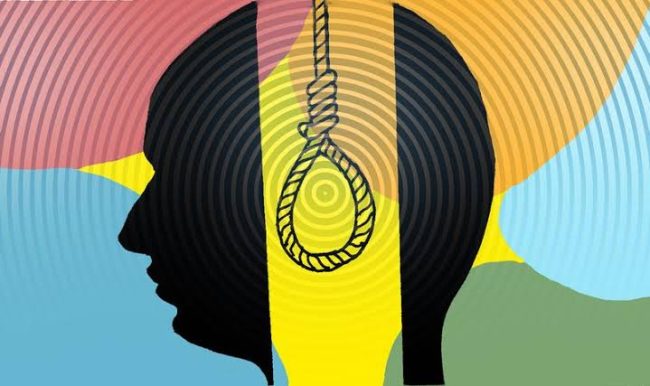
  • One in every 100 Ugandans is Prone To Committing Suicide

    One in every 100 Ugandans is Prone To Committing Suicide

    The recently released final census report 2024 corroborates the fact that Uganda’s mental health crisis is actually deeper than is always appreciated. That actually, 1 in every 10 Ugandans (or 10%) aged 10 years and above, is experiencing “psychological distress” of some sort.

    Uganda’s population is roughly 46m people and of these, about 14m are children aged 9 years and below. So, this means that those aged 10 years and more, who the mental distress part of the census report refers to, number up to 32m; ten percent of which translates to 3.2m persons.

    The report further shows that of that 3.2m, 8% suffer from probable depressive disorder; 4% from probable bipolar effective disorder; 4% anxiety disorders and 1% suffer from suicidal tendencies.

    It’s recommended in the report that the government undertakes comprehensive scientific investigations to properly identify and diagnose the extent of “psychiatric disorders” in the country. That the GoU should leverage census data as an entry point and “sampling frame” to study the problem more deeply in order to come up with the appropriate mitigation measures.

  • The 2024 Census Report & Why Museveni Must Invest More In Youths & Religious Institutions

    The 2024 Census Report & Why Museveni Must Invest More In Youths & Religious Institutions

    Led by UBOS Chairman Dr. Albert Byamugisha and Executive Director Dr. Chris Mukiza, the authors of 2024 final census report have highlighted the reasons why the government of President Museveni can’t afford to ignore prioritising and investing in interventions which directly empower Uganda’s youths, religious leaders and religious institutions.

    It’s made very clear in the 351 page report that of the roughly 46m people Uganda has, only 0.2% (roughly 85,559) are ireligious and confessed to having nothing to do with rsligion at all. The rest-99.8%- made it clear that they are religious with a whopping 82% of them confessing to be Christians & 13% being Muslims.

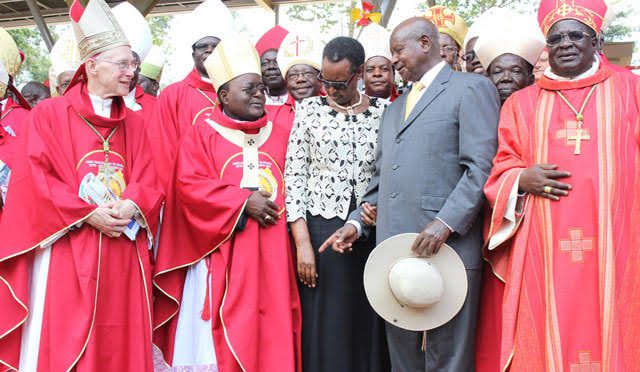
    The report indicates that such “levels of religiosity” illustrate the enormous influence religious leaders and clergy wield in contemporary Uganda. Accordingly, the GoU is urged to tap into this influence and deliberately involve the clergy, religious leaders and institutions into the implementation, popularisation and rolling out of key mindset change and social economic transformation programmes and interventions.

    That the clergy have to deliberately be involved in civic education and community mobilization in order to increase the success of interventions like Parish Development Model and public health undertakings among others.

    Simultaneously, the same report shows why the GoU has no option but to prioritize the empowerment and capacitation of it’s youths and the country’s young people more than ever before. That of the 45.9m people in the country, roughly 50% are children aged 0-17 years; 24% are youths aged 18-30 years and a mere 5% comprises of seniors or older persons aged 60 years and above. The remaining 21% comprises of adults aged 30-60 years.

    The report authors base on all this statistics to propose steps that have to deliberately be undertaken by the GoU to effectively harness the attendant ‘demographic dividend.’ That, to ensure that such a young population is turned into an opportunity, as opposed to being a burden, the GoU should deliberately invest in their quality education, skilling and health access to meaningfully secure their future.

    That it’s only through investing in their collective appropriate health, education and skilling that the GoU will ever be able to sustainably increase the employability of its youths. That the same will enhance productivity of labor in Uganda. And its only through increased skilling that the GoU’s job creation and monetization of the economy programme interventions will sustainably yield the desired outcomes.

    The report also calls on the GoU to become more deliberate and invest more in long term planning aimed at achieving sustainable management and use of the country’s land resources which are inelastic yet the population density (number of persons living per square kilometer) increased from 2014’s 173 persons to 190 only 10 years later.

  • Report Shows Number of People Who Don’t Believe in Religion is Growing In Uganda [78k in 2014, 85k Today]

    Report Shows Number of People Who Don’t Believe in Religion is Growing In Uganda [78k in 2014, 85k Today]

    The newly-released 2024 census report has shed light on how Ugandans’ views on matters of faith have evolved over the last 10 years (2014-2024).

    Based on what individual Ugandans told enumerators during the May 2024 population & housing census enumeration exercise, the final report shows that the number of Ugandans who despise religion and don’t subscribe to any religious affiliation has increased to 85,559 people compared to 2014 when it was only 78,254.

    According to the 2024 final census report, authored by a group of eminent staticians and analysts led by UBOS Governing Board Chairman Dr. Albert Byamugisha and Executive Director Dr. Chris Mukiza, this increase has even been higher and more pronounced among all the other religious groups.

    The report shows that of the Ugandan population of roughly 46m people, 99.8% are religious (meaning they subscribe to some religion) and only 0.2% confessed to belonging to no religion whatsoever. 82% of Ugandans are Christians and 13% are Muslims.

    The same report shows that the largest number of Ugandans are Catholics (16.6m), followed by Protestants or Anglicans (13.3m). Ten years ago, Catholics were 13.4m and Anglicans 10.94m. Pentecostals or Balokoles today are 6.5m as opposed to 2014’s 3.8m, Muslims today are 6m as opposed to 4.7m in 2014 and SDAs today are 0.91m as opposed to 0.59m in 2014.

    The others have evolved or grown as follows in the last 10 years (2014-2024): Orthodox 65,150 vs. 48,421; traditionalists 56,332 vs. 33,805 and Jehovah’s witness 46,147 vs. 22,270.

    There is also another category designated in the report as ‘others’ comprising of Bahai, Hindus, Buddhists and Owobushobozi among others. These combined stood at 704,334 as at May 2024 compared to the 548,348 which the 2014 census revealed them to be 10 years earlier.

    These findings will fascinate and equally intrigue many as some of these religious groups that have been analysed had all along been thought to have more or less numbers than has been disclosed through the 2024 census process.

  • Only 13% Ugandan Internet users use it for business & the rest for Social chats

    Only 13% Ugandan Internet users use it for business & the rest for Social chats

    The 2024 National Population & Housing census results show that 9% of individuals aged 10 years and above (2.8m people) used internet facilities in the 12 months preceding the census. And of these, the report says, 67% used it for social networking while 16% used it for academic purposes and 13% used it for business or office work.

    The UBOS census report says only 1% used the internet to access health-related information. The report further shows that internet usage was higher in urban areas (17%) compared to rural areas (4%).

    There were notable differences in internet use by sex with 11% of males having used the internet compared to 8% of females. Disparities by sub region showed that Buganda (19%) had the highest proportion of internet users while Karamoja had the lowest proportion of internet users (3%).

    The same report shows that 43 percent of individuals aged 10 years and above (13.6 million persons) in Uganda owned a mobile phone as of May this year (when the census was conducted). The report adds that 56.7% of the population doesn’t have a mobile phone.

  • Intriguing Census stats: 17% of Uganda’s Youths aged 18-30 years have never attended school

    Intriguing Census stats: 17% of Uganda’s Youths aged 18-30 years have never attended school

    The 2024 Census report has a chapter on characteristics of Uganda’s youth and adolescent population; clearly distinguishing them from other age groups of the population.

    Having opted to rely on Uganda’s National Youth Policy (2015) and National Youth Council Act (2015) respectively, for purposes of 2024 census, UBOS defined a youth to be a person aged 18-30 years and an adolescent to be a person aged 10-19. In contrast, globally a youth is aged 15-24 and yet the East African Community definition puts a youth between 15 and 35 years.

    The census report indicates that as of May 2024, adolescents (aged 10-19) were 25% of Uganda’s population of 46m people and the youths (18-30) constituted 23%. In comparison, the youths were 19% under the 1991 National Population and Housing Census (NPHC), 24% in 2002 and 22% in 2014. The adolescents were 22% in 1991 and 25% in 2014.

    The 2024 NPHC report shows that 82% of the country’s youth population are literate (implying they can read and write). And among adolescents, the literacy rate stands at 76%. The report also indicates that 32% of the 10,698,913 households we have in Uganda are headed by people aged 30 years and below (29% by youths and 3% by adolescents aged 19 years and below). The average size of this youth-headed household is 3 members, according to the Census report.

    Before disclosing sub regions with more literate youths and adolescents, the NPHC 2024 report also discloses that only 1% of the Ugandan youths benefited from the Youth Livelihood Programme (YLP) into which the GoU sunk billions of shillings for a period of over 5 years of implementation.

    Generally speaking, beyond just YLP, the Census report establishes that of all Ugandans aged 30 years and below, only 12% are benefiting from the different programmes of government. This will intrigue many planners and policy makers, including Members of Parliament.

    The report also shows that among female Ugandans aged 10-19, 31 in every 1,000 give birth annually. The birth rate is even much higher among women aged 15-19 and it stands at 61 in every 1,000 annually.

    Buganda sub region and Lango have the highest population of their population that is youthful; basically aged 30 years and below. They tie at 25% as Kigezi sub region has the lowest at 19%. When it comes to adolescents’ population, West Nile has the highest proportion of its population that is adolescent or aged 10-19. And it’s 27%. The same is lowest in Karamoja at 22%.

    YOUTHS LITERACY RATES:

    When it comes to having the highest literacy rate among the youths and adolescents; Buganda sub region leads. Whereas it’s 90% among the youths, it stands at 88% among adolescents. Karamoja has the lowest literacy rate among youths and adolescents-tying at 29%. Overall, nationally, female youths are more literate (78%) than their male counterparts (73%).

    Other sub regions fair as follows when it comes to literacy rates among their youths aged 18-30; Acholi 83%, West Nile 70%, Bunyoro 76%, Tooro 79%, Ankole 87%, Lango 84%, Karamoja 29%, Teso 85%, Elgon 84%, Bukedi 81%, Busoga 81% and Kigezi 86.

    When it comes to literacy among Uganda’s adolescents (10-19 years), Buganda is at 88%, Busoga 73%, Bukedi 70%, Elgon 77%, Teso 74%, Lango 74%, Acholi 69%, West Nile 62%, Karamoja 29%, West Nile 62%, Bunyoro 69%, Tooro 73%, Ankole 85% and Kigezi 83%.

    There are other intriguing findings relating to the youths in the census report: 17% of the Ugandan youths aged 18-30 years have never attended school. This ought to be inquired into as to why because since 1997 and 2007, the GoU has respectively been offering free primary and secondary education. Among adolescents (aged 10-19 years), 65% are currently in school and 14% have never attended school anywhere. Another 21% attended school at some point but dropped out.

    Another finding is that 26% of the Ugandan youths (those aged 18-30) completed primary education of some sort, and 20% completed secondary education. Among adolescents (10-19 years), 61% completed primary education of some sort. And more intriguingly, 18% of all Ugandan youths (aged 18-30) have no formal education at all. And the figure is 16% among Uganda’s adolescents.